


St. Vincent de Paul Organizes Charities
The rain had stopped just before dawn, leaving the stones along the rue Saint-Antoine slick underfoot. I carried the bundle of linen tighter against my side and kept walking toward the small house where Antoine Le Gras had lain for months. Word had reached the parish that he was gone. No bells yet. Only the gray light and the sound of shutters being opened one by one.
Inside the doorway a woman in black stood speaking with two men from the parish. Louise de Marillac looked smaller than I remembered from the times she had come to distribute bread at the church door. Her eyes were dry, but the lines at the corners of her mouth were new. She nodded once when the older man said something about the will, then turned and saw me waiting with the clean cloths.

She took them without asking my name. “These will serve for the child,” she said. Michel was thirteen and still needed watching when the fever came and went. She set the bundle on a bench and asked if I knew the way to the apothecary on the next street. I told her I did. She asked if I could go now. I went.
By midday the house was quiet again. Louise stayed at the bedside until the priest finished the prayers. Afterward she walked out into the yard and stood for a long time looking at the wall. A neighbor brought soup. She thanked him but did not eat. When Vincent de Paul arrived near evening, she met him at the gate. He had come from the Gondi house, still in his travel cloak. They spoke for only a few minutes. I heard her say she would not marry again. He answered that God had already shown her the road.
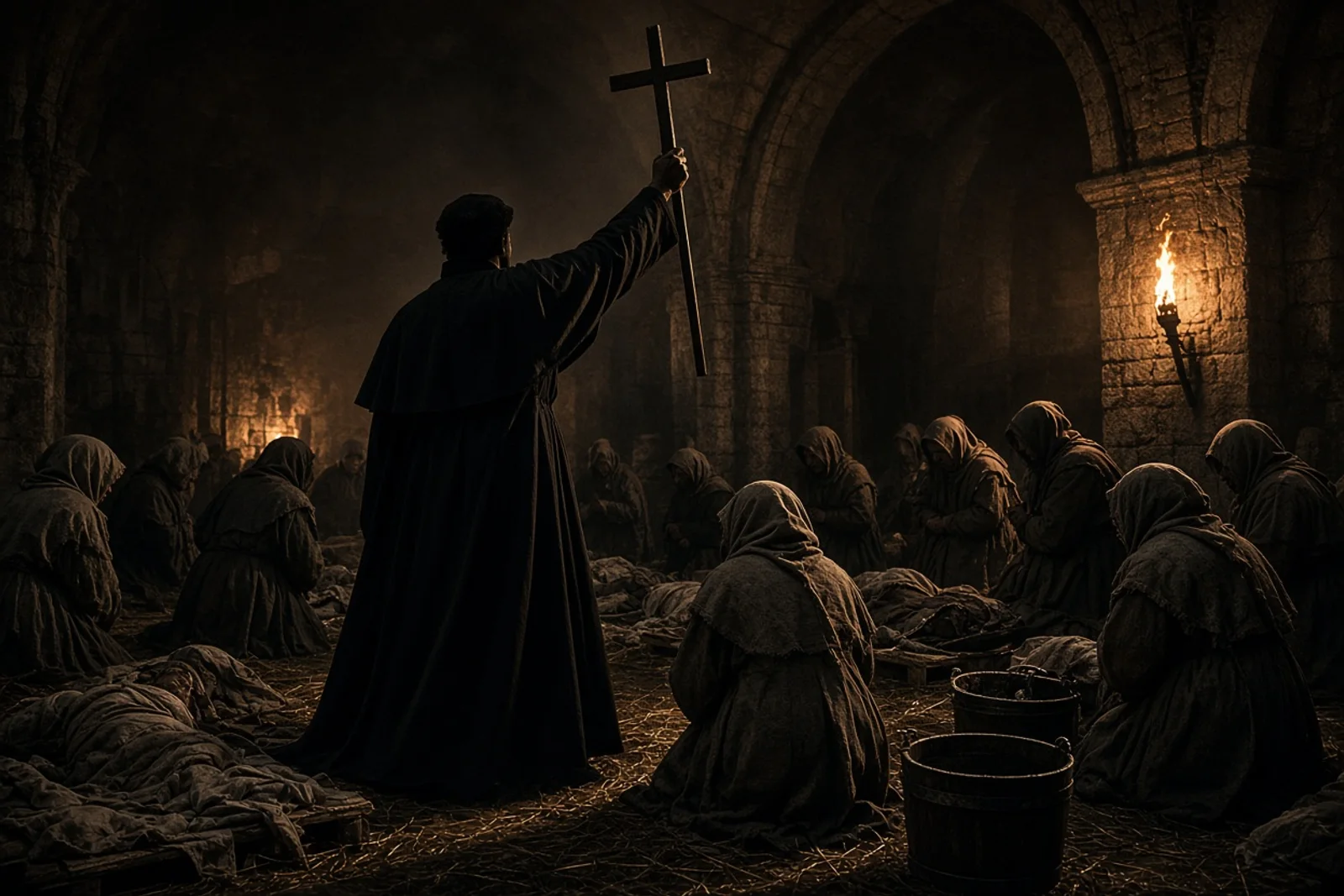
Two weeks later she moved to a smaller set of rooms near the Fossés Saint-Victor. The rent was lower and the street narrower. She kept her son with her and began to write out the hours of her day on a single sheet of paper. Mass at first light. The Little Office at noon. Meditation after supper. The rest of the time she spent visiting the sick in the quarter. I carried her basket on the first of those rounds. The houses we entered smelled of damp straw and sour milk. She knelt on the floorboards beside each pallet and asked the same questions: how long the pain had lasted, whether the children had eaten that morning, what the priest had said when he came.

Vincent began to visit her there once a week. He brought news from the missions in the villages north of the city. The women who had started the Confraternities were growing tired, he said. Their servants did the actual washing and feeding while the ladies signed the receipts. He needed hands that did not mind the dirt. Louise listened without interrupting. One evening she told him about the four country girls who had asked her for work. They could read a little and knew how to keep accounts. She wondered whether they might live together under one roof and learn the same prayers each morning before they went out.
He did not answer at once. He had already refused to become her confessor once, saying the work with the Ladies kept him too busy. Now he looked at the narrow room and the table where she had laid out the bread and the small flask of wine. He asked how she would feed four extra mouths. She said the parish would give what it could and the rest would come from the same women who already sent money for the poor. He left without promising anything.
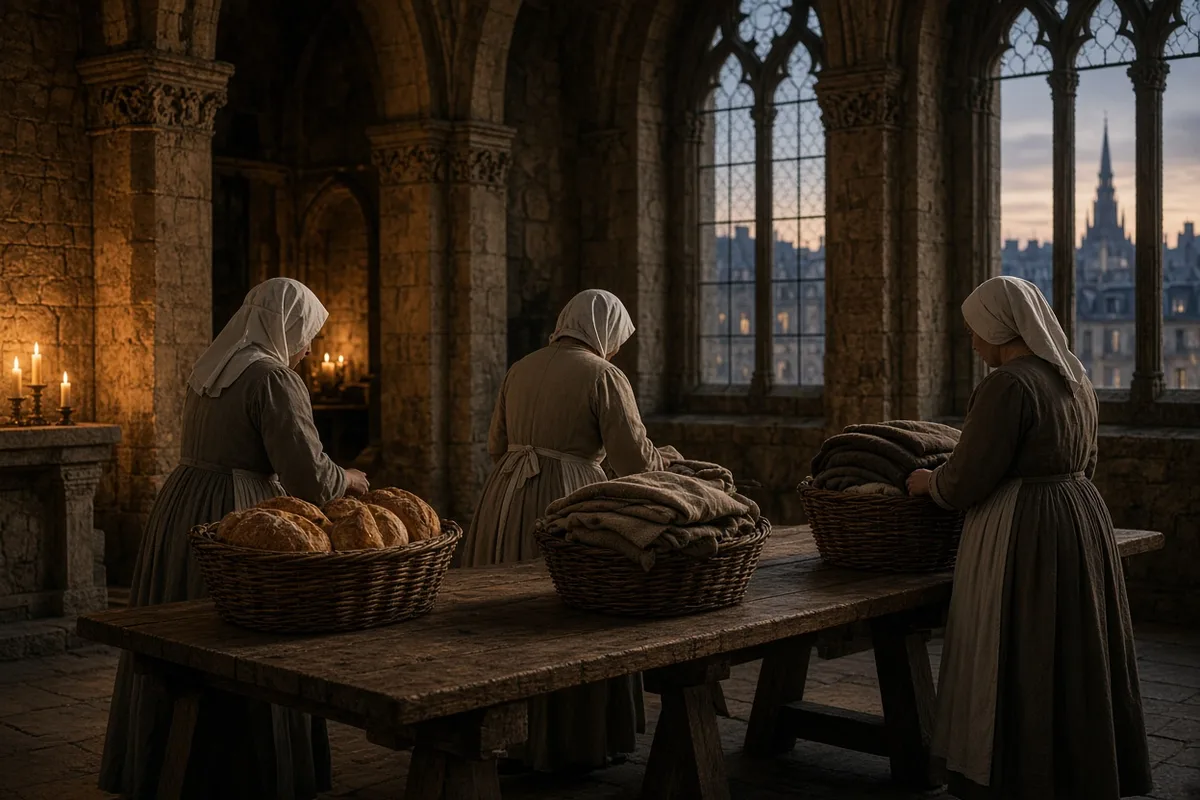
Spring came late that year. The river stayed high and the roads out of Paris stayed muddy. Louise took the girls into her rooms anyway. They slept on pallets along one wall and rose before daylight to say the rosary together. She taught them to fold the linen so it would not tear when carried through the streets and how to speak to a woman whose husband had just died of the fever. At the end of each week she wrote a short letter to Vincent describing what they had done. He answered in his own hand, sometimes with a single line of correction, sometimes with a list of families who needed another visit.
By summer the arrangement had grown into something larger than the four girls. Other young women arrived from the villages where Vincent had preached. They came without dowries and without the protection of a family name. Louise set them to work at the Hôtel-Dieu two days a week, carrying basins and changing dressings under the eye of the sisters already there. The work was heavier than anything in the parishes, but none of them asked to leave. At night they returned to the Fossés Saint-Victor and ate the same soup.
Vincent began to send more of the parish collections directly to Louise rather than to the Ladies. He told the aristocratic women that the new helpers could reach places their carriages could not. Some of the Ladies objected. Others simply stopped coming to the meetings. The ones who remained began to collect money instead of trying to nurse. The change happened without any public announcement. One afternoon I watched two of the new girls carry a feverish child out of a cellar while a lady in silk stood at the top of the steps and wrote the amount of the next donation in her book.
Louise never spoke of the old vision she had once described to Vincent. She only said that the work was larger than any single person and that the girls must learn to live together without quarreling. When one of them grew discouraged after a long night at a deathbed, Louise sat with her on the bench outside the door and told her to rest her hands in her lap until the shaking stopped. Then she sent her back inside with a fresh apron.
By the time the leaves turned, the house held eight women. They wore the gray wool and white linen that the Breton market women wore, because it was cheap and did not show the stains. They walked out each morning in pairs, carrying the same baskets Louise had carried the year before. The city began to know their faces. When a child was found abandoned near the river, someone would say the Daughters should be called. The name was not yet official, but it was already in use on the streets.
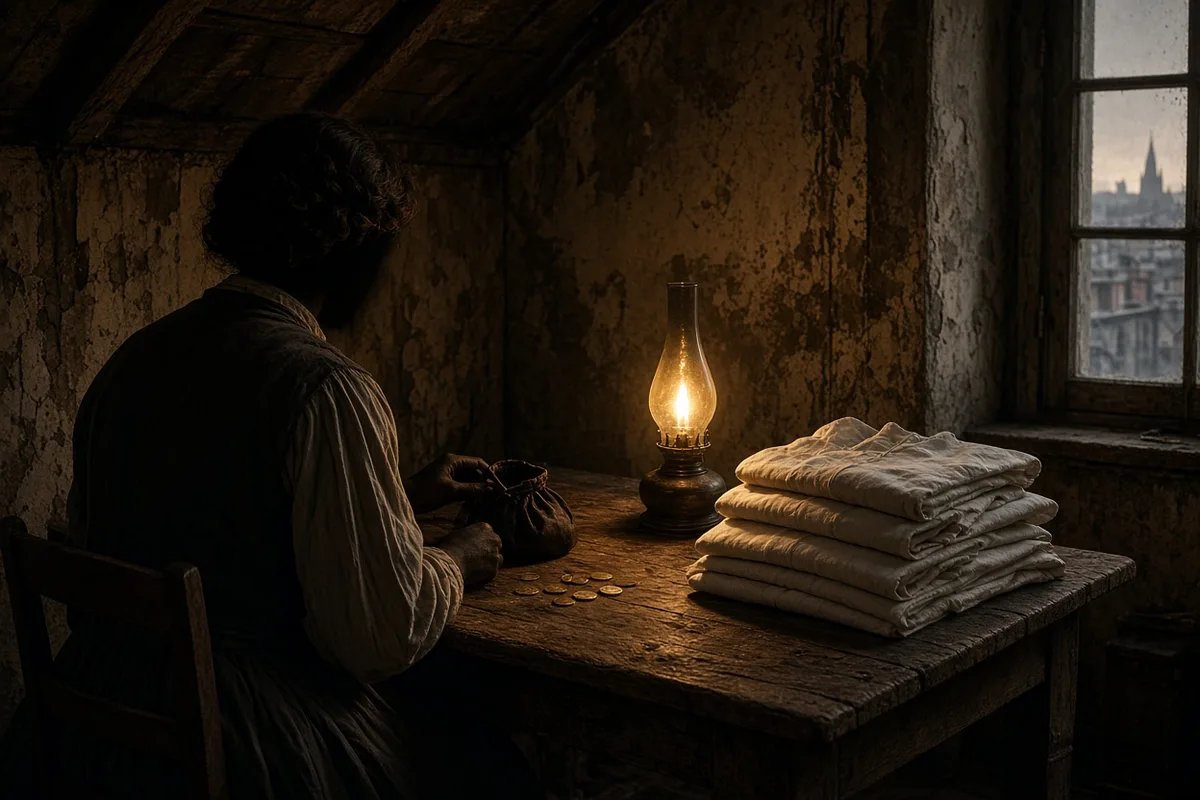
Louise kept the accounts in a small ledger. At the end of each month she showed Vincent the columns of receipts and expenses. He read them without comment and then asked about the health of a particular family on the rue des Tournelles. She answered, then asked him about the next mission he planned to preach. They spoke as two people who already knew what the other would say. Outside, the girls finished folding the clean linen and stacked it on the bench. The light faded. No one closed the door.
The first formal gathering of the eight women took place on 29 November 1633 in the front room of the Fossés Saint-Victor house, where Louise read aloud the short rule she had copied from Vincent’s notes: “They shall have for monastery only the houses of the sick and the places where the children are taught.” Four days later the group moved to larger quarters on the rue des Vieilles-Tuileries so that the daily walk to the Hôtel-Dieu would not exceed twenty minutes. On 25 March 1634 the women renewed a simple vow of service for one year only, spoken before Vincent and recorded in Louise’s ledger as “vœu de servir les pauvres.” By the end of that year the parish registers of Saint-Nicolas-du-Chardonnet listed forty-seven families receiving weekly visits from the gray-clad women, each entry signed “Louise de Marillac, servante des pauvres.”
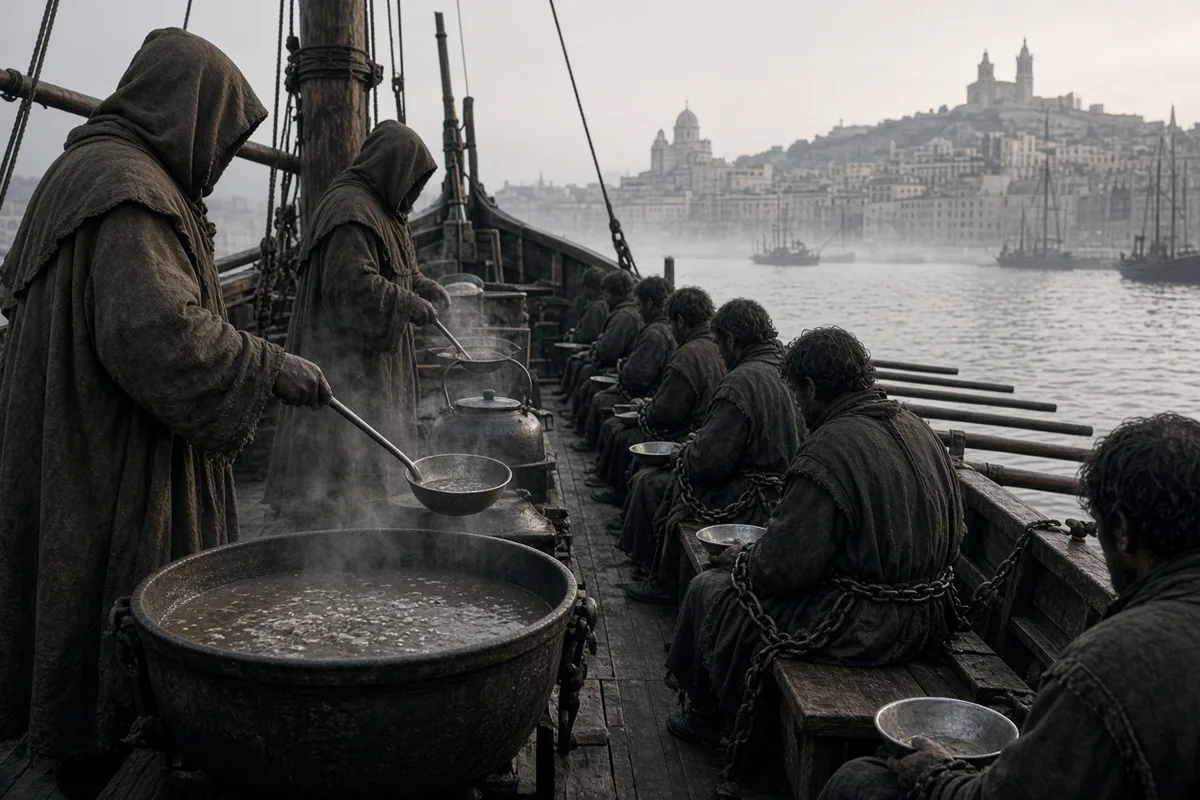
In 1638 the community accepted its first assignment outside Paris when the Duchess of Aiguillon offered the use of a house at Angers for the care of wounded soldiers returning from the Italian campaigns; three Daughters left on 6 February with a letter from Vincent instructing them to “take no money for yourselves and to eat whatever the poor eat.” The following spring Louise purchased a small property at La Chapelle, north of the city walls, for twenty-two hundred livres, paid in installments from the Gondi family’s annual gift of twelve hundred livres. On 1 August 1641 she wrote to Vincent that the number of women living under one roof had reached twenty-three and that the linen store now held one hundred and eight sheets, each marked with a small cross in red thread. Vincent replied from the Collège des Bons-Enfants on 14 August, “Send two of them to the galley slaves at Marseille; the rest must stay and learn to keep the accounts themselves.”
By 1645 the Daughters had opened five additional houses in France, including one at Nantes where they cared for three hundred orphans whose names appear in the municipal register begun that year by Sister Barbe Angiboust. Louise traveled to each new foundation in turn, carrying a small wooden box that contained the original rule and the letters Vincent had written between 1630 and 1642. In 1655 the Archbishop of Paris approved the community as a Company rather than a religious order, a distinction Vincent recorded in a conference given on 13 July: “You are not nuns; your cloister is the street.” The ledger for that month shows receipts of 4,872 livres and expenses of 4,301 livres, the difference used to purchase six new mattresses for the Hôtel-Dieu ward.
Louise died at the motherhouse on the rue du Faubourg-Saint-Denis on 15 March 1660; the death notice sent to the other houses listed her age as sixty-eight and noted that she had written 458 letters in the previous twelve months. Vincent, already confined to his room at Saint-Lazare, received the news the same evening and dictated a single sentence to be read at her burial: “She has gone to God and left us the work.” He himself died on 27 September 1660. At that date the Company counted ninety-two houses and approximately four hundred women, figures taken from the report prepared by Sister Marguerite Chétif and presented to the General Assembly on 8 December 1660.
The motherhouse remained on the rue du Faubourg-Saint-Denis until 1815, when the community purchased the former Hôtel de la Ferté at 140 rue du Bac; the new building was occupied on 12 January 1816 and still stands behind its original iron gate. During the Revolution the Daughters continued their service at the Salpêtrière and the Invalides under the protection of the municipal council; Sister Marie-Antoinette Hanusse kept the daily register from 1792 to 1794, recording 1,872 admissions and 312 burials. After the restoration the Company expanded into Poland in 1652, into Ireland in 1855, and into China in 1848; each foundation preserved a copy of the original rule in Louise’s handwriting.
Today the Company of the Daughters of Charity numbers more than fourteen thousand members serving in ninety-four countries; the archives at 140 rue du Bac hold the original ledger begun in 1633 and the last letter Louise wrote to Vincent, dated 2 March 1660, which ends with the words “I remain, Monsieur, your most obedient and unworthy servant.” On the morning of 15 March each year a single Sister walks from the motherhouse to the church of Saint-Gervais, carrying the same linen bundle that was brought to Louise on the day Antoine Le Gras died.
The Sister who carries the bundle each year passes first beneath the porte-cochère of the rue du Bac house, where the porter records her departure in the same register used for the 1816 inventory of twenty-eight beds and six copper kettles. She crosses the Pont Royal at 7:12 a.m., the exact minute noted in the 1928 timetable kept by Sister Marie-Louise Gillet, and reaches the parvis of Saint-Gervais before the first Mass bell. There she lays the linen on the stone bench where, in 1954, Canon Fernand Portal placed a bronze plaque quoting Vincent’s 1640 instruction: “The Daughters shall go two by two and return before nightfall.”
Inside the church the sacristan unlocks the side chapel containing the 1660 death register of Saint-Gervais parish, open to the entry for Louise de Marillac written by Father Nicolas Mazure. The Sister unfolds one corner of the bundle to show the small red cross stitched in 1634, the same mark listed in the 1641 linen inventory of one hundred eight sheets. She remains while the choir sings the Magnificat at 8:00 a.m., then refolds the cloth and signs the visitors’ book with her name and the date, a practice begun by Sister Catherine Labouré on 15 March 1831.
From Saint-Gervais the Sister continues to the Salpêtrière, where the municipal archives record that 1,872 patients were admitted under Daughters’ care between 1792 and 1794. She stops at the ward door long enough for the head nurse to initial the 2023 service log, noting the delivery of twelve new sheets marked with the red cross. The same log lists the names of the four Sisters assigned that week: Sisters Anne-Marie Leclerc, Thérèse Nguyen, Fatima Diallo, and Claire Moreau.
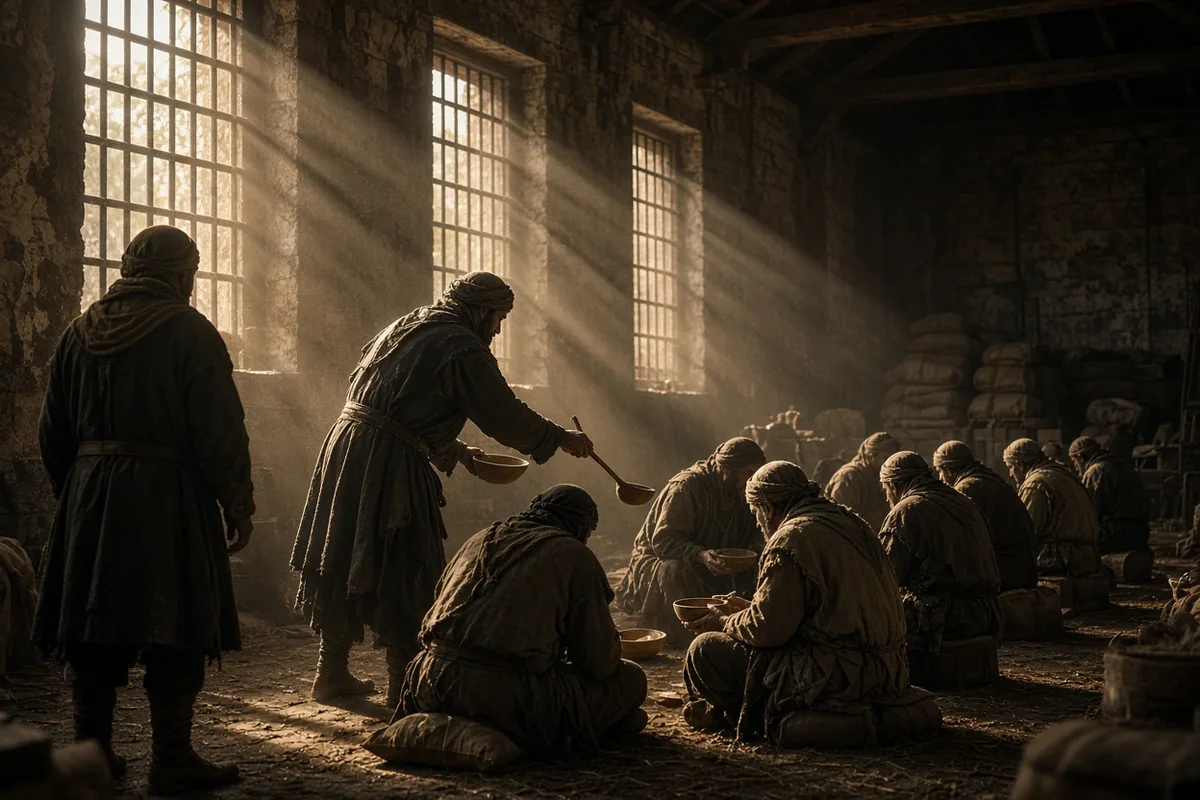
By 9:45 a.m. she reaches the motherhouse again and places the bundle on the table in the archive room, where the original 1633 ledger lies open to the page recording the vow of service. The archivist counts the sheets, enters the figure “one” in the daily column, and files the 2024 entry beside the 1848 China foundation report that lists thirty-seven Sisters sent to Shanghai under the protection of the French consulate. The last line of that report, written by Sister Marie-Anne Jollivet, reads: “We have taken possession of the house at Zikawei on 12 October and begun visits to the orphan asylum the following morning.”
At noon the community assembles in the refectory for the reading of the 1660 death notice sent to all houses. The reader pauses after the phrase “she had written 458 letters in the previous twelve months” and turns to the 2022 statistical summary prepared by the Superior General, Sister Kathleen Appler, which records 14,312 members serving in 94 countries and 3,872,415 persons assisted in the preceding year. The figures are read aloud without commentary.
In the afternoon the same Sister who carried the bundle walks to the small garden behind the house and sits on the bench where, on 15 March 1958, Sister Marguerite Fiévez planted the oak now marked with a brass plate giving its circumference of 2.4 meters. She remains there until the light fades, watching the linen on the bench beside her, then carries it inside and returns it to the locked cupboard whose key is kept by the archivist.