


St. Wenceslaus Rules Bohemia Justly
I knelt on the cold stone beside the altar steps in the Church of Saint Mary when the first light touched the gold cross. Wenceslas stood already, barefoot, the hem of his cloak damp from the night rain. He had come before the bell. Two slaves carried in a woman whose arms hung useless at her sides. He took the bread from the deacon’s hands and broke it himself, feeding her small pieces until she could swallow.
Outside the door the wind cut from the river. I followed him into the yard where the widows waited. He asked each name. When one said her roof had fallen, he sent a man with timber from the storehouse and told him to return by nightfall with proof the work was done. No scribe wrote the order. He remembered it later when he asked after the same widow at supper.

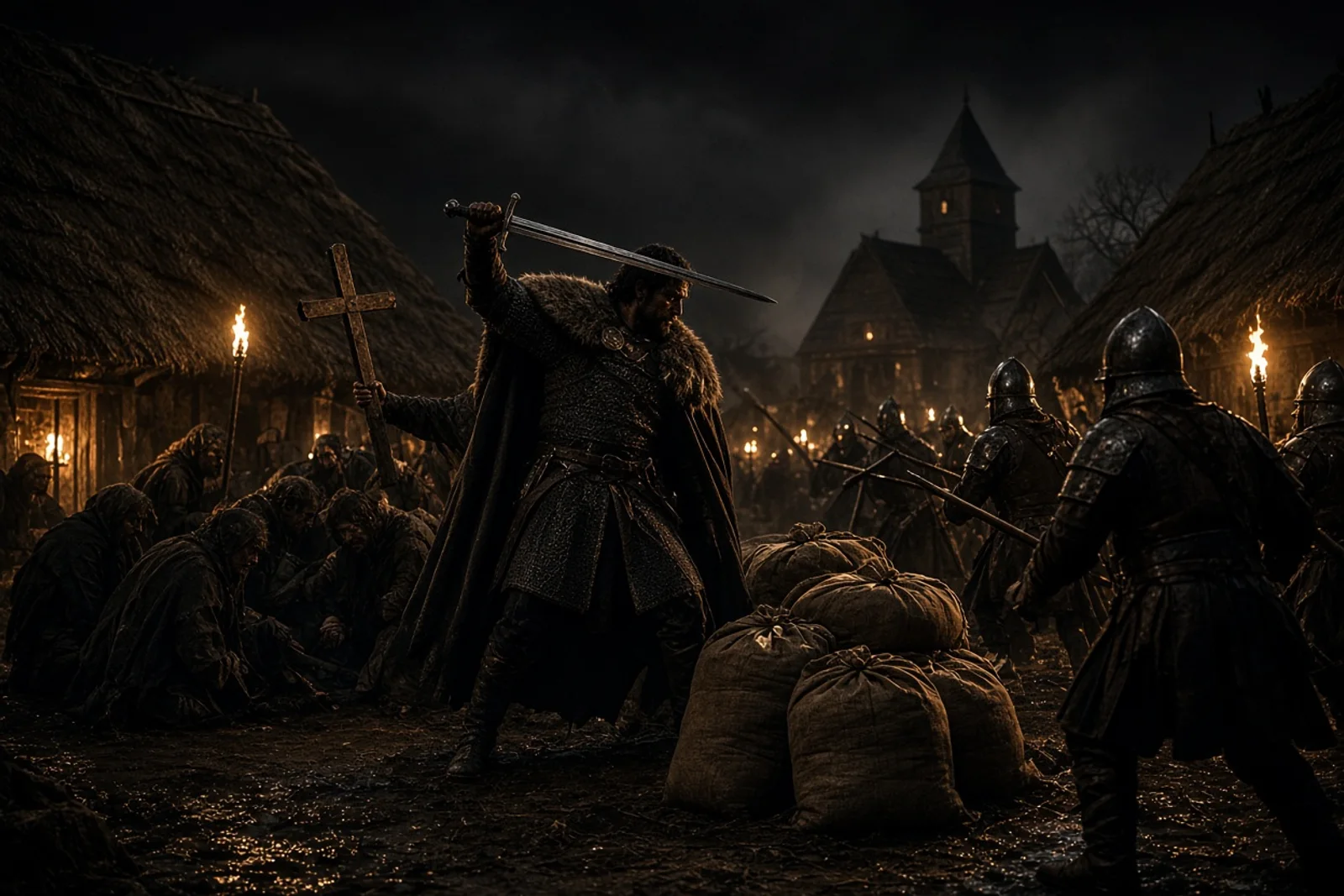
His mother Drahomira still held the keys to the treasury. She watched from the upper window as he gave away another measure of grain. That evening she told him the stores would not last the winter if he kept feeding every beggar. He answered that the Gospel did not measure winter. She left the hall without another word.
At Budec he had learned Latin letters under the same priest who now read to him each morning. The old man’s voice shook, yet Wenceslas listened until the passage ended, then repeated the lines in Slavic so the servants could understand. He did this every day the court remained at Prague.
One afternoon a man from the northern hills arrived with a complaint against his lord. The lord had taken his only ox. Wenceslas sent riders to bring the lord in, then sat the two men on the same bench and heard both sides before the evening meal. The ox was returned before the gates closed.

His grandmother Ludmila’s counsel still reached him through letters carried by a trusted monk. She wrote that mercy without strength invites wolves. He read the words aloud to me once, then folded the parchment and placed it inside his shirt. That same week he ordered new locks on the church doors and posted guards who answered only to him.
The brother Boleslav trained with the young warriors beyond the walls. When he returned he brought news of men who still kept the old stones and offered blood. Wenceslas listened, then asked whether those men had enough bread for their children. Boleslav looked away.
In the month when the fields turned, Wenceslas walked the length of the new stone bridge. He stopped at each pier and spoke with the masons. One complained the pay was late. Before the sun set the coin reached the work camp. The foreman later told me the duke had taken it from his own belt.
A fever took three children in the lower town. Wenceslas carried water to the houses himself, refusing the litter. I walked behind with cloths and a basin. At the third house the mother tried to kneel. He lifted her and told her to keep the strength for her living son.
Drahomira’s counselors began to gather in the evenings. Their voices carried through the thin partition. They said a ruler who gave away grain could not defend the passes. Wenceslas heard them and said nothing the next morning. He only ordered extra guards for the grain carts leaving for the villages.
He kept a small book of the Gospels beside his bed. Sometimes he read until the candle guttered. Once I found him asleep with the page open to the command to feed the hungry. The ink had smudged under his thumb.

When the first snow fell he rode to the outlying farms. The horse broke through drifts more than once. At each door he asked whether any slave lay sick. Two were brought back to the castle on litters. He visited them daily until they could stand.
Boleslav returned from the border with news that raiders had taken cattle. Wenceslas sent riders with orders to recover the herd but not to burn the raiders’ camp. The men came back with the cattle and three prisoners. The prisoners were fed and released after three days with bread for their families.
The church at Vyšehrad needed new roof beams. Wenceslas climbed the scaffolding himself to measure the span. A carpenter warned him the height was dangerous. He answered that the height was the same for every man who would pray beneath it.
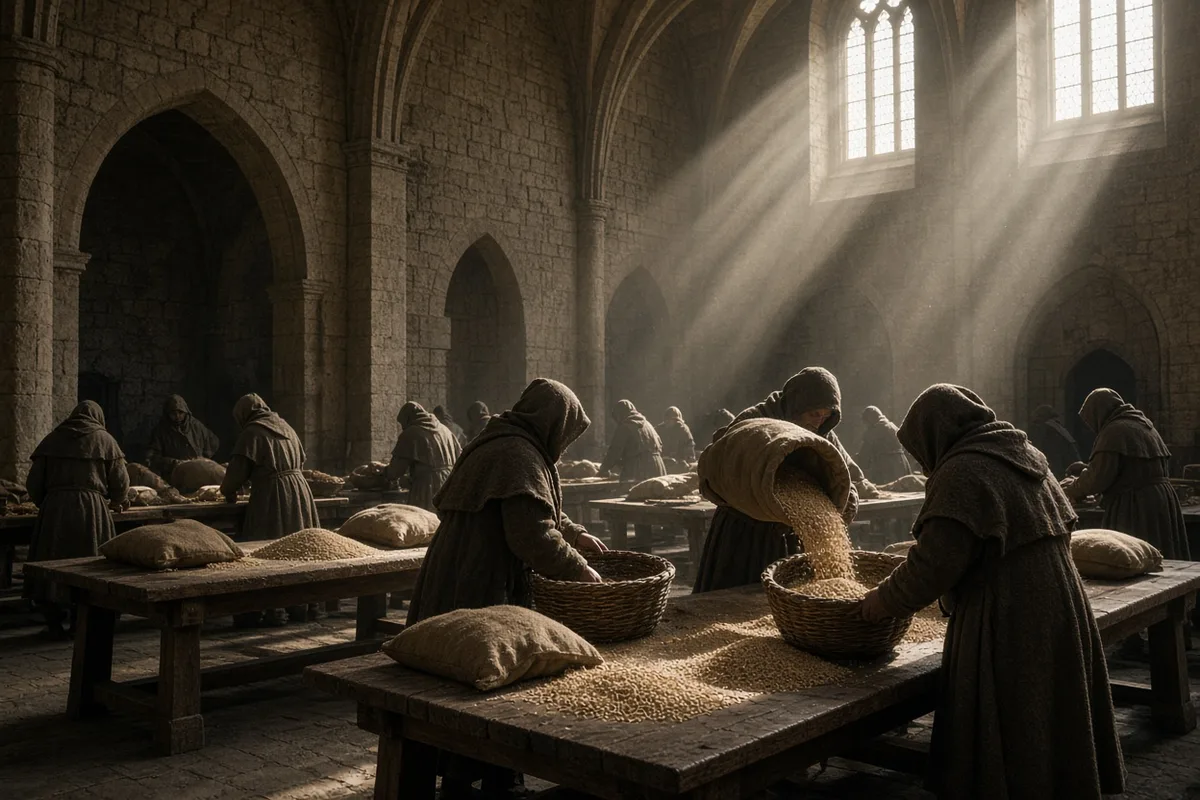
One night a messenger arrived from Moravia asking for grain in exchange for salt. The council argued the price was too high. Wenceslas settled on the lower figure and added an extra wagon of rye. The messenger left before dawn.
His sisters had all been married to distant princes. Letters from them arrived with gifts of cloth. He gave the cloth to the women who wove at the castle looms and told them to keep half for their own children.
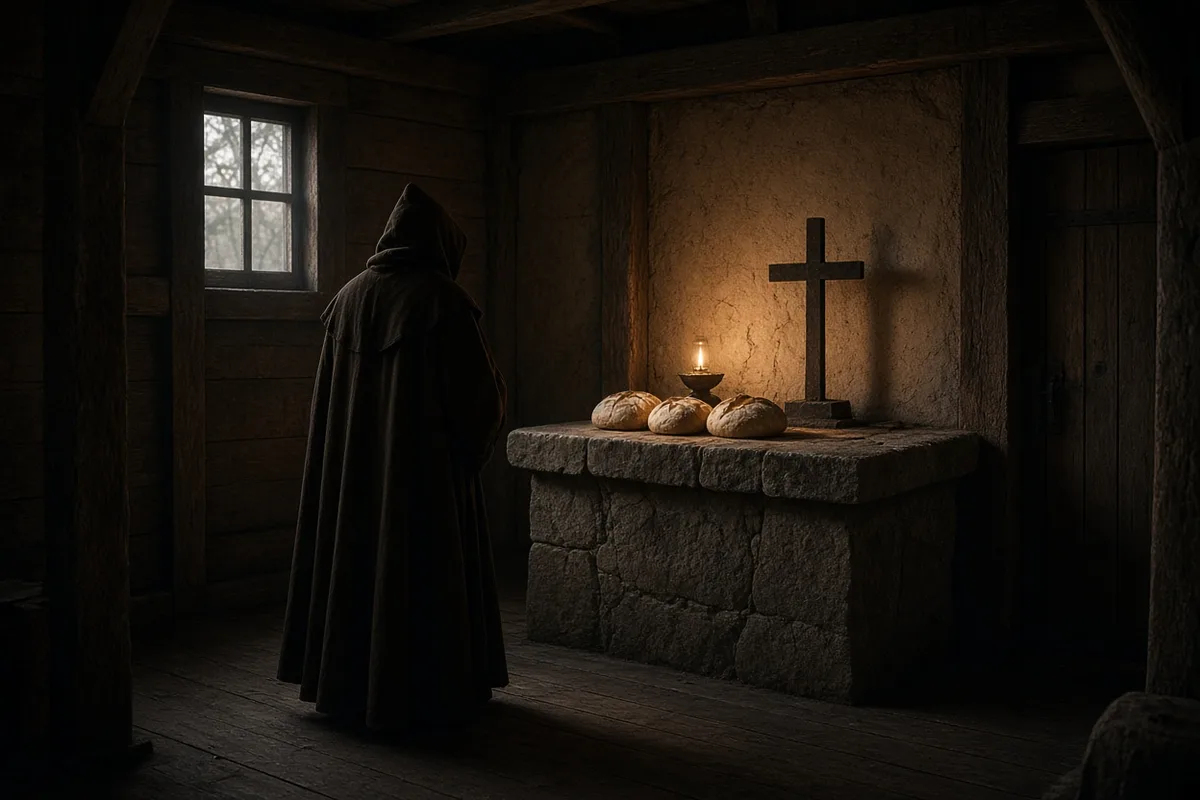
In spring he ordered the old pagan stones removed from the hill above the river. The work took seven days. On the eighth day a priest said Mass on the cleared ground. Wenceslas stood among the people without a guard.
Boleslav’s men began to drill more often. Their fires burned late. Wenceslas walked among them once, spoke to each captain by name, and asked after their wives. The drilling continued, but the talk around the fires grew quieter.
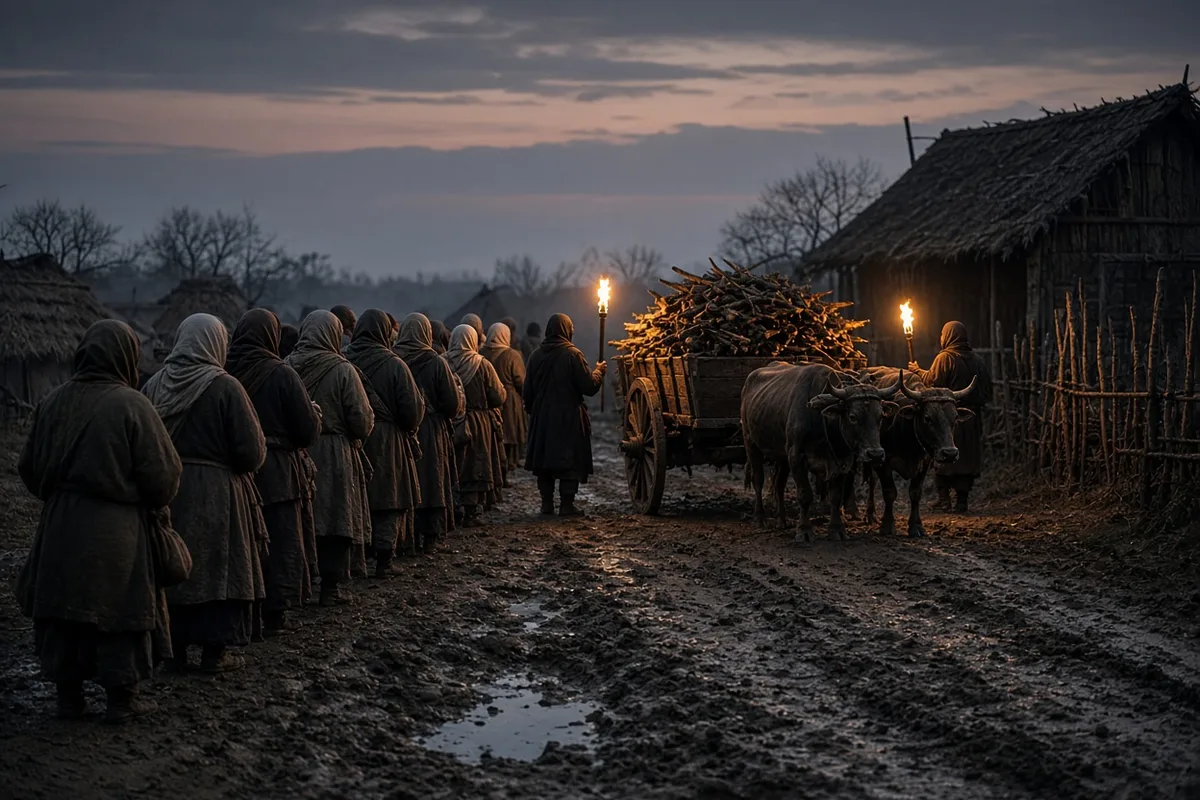
The last time I saw him before the year turned, he was carrying an armload of wood to the widow whose roof he had mended. Snow had begun again. He set the wood inside her door, brushed the flakes from his sleeves, and turned toward the castle without looking back. The light from the church windows caught the edge of his cloak as he crossed the yard.
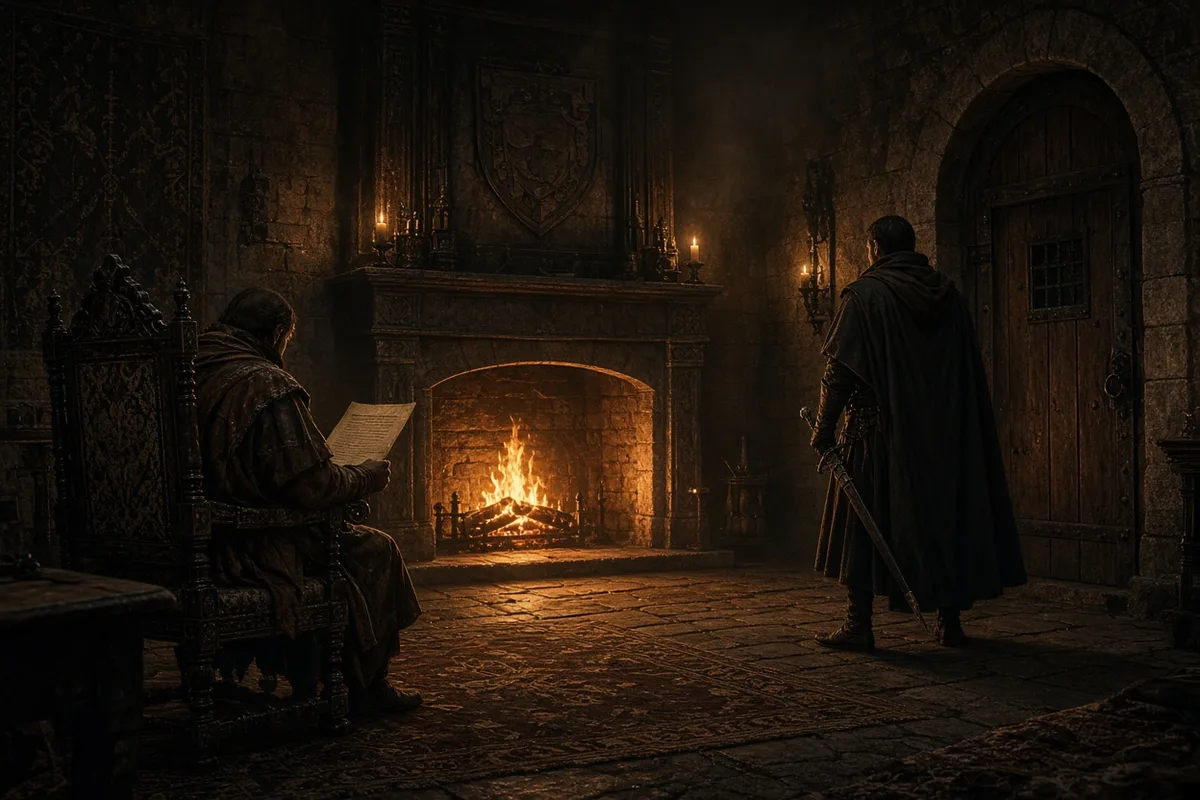
The next morning the duke rose before the others and ordered the stable hands to ready horses for a ride to Stará Boleslav, where the church of Saint Cosmas and Damian stood on the left bank of the Elbe. He carried with him the small Gospel book and a sealed letter addressed to Bishop Michael of Regensburg, dated the twenty-seventh day of September in the year 935, requesting that the bishop send two more priests who could read the Slavic tongue. When the party reached the wooden gatehouse, Boleslav met them with thirty armed men and invited his brother to remain for the feast of the following day. Wenceslaus accepted and spent the evening in the hall listening to the readings from the Life of Saint Emmeram that the local priest recited from a manuscript copied at Freising.
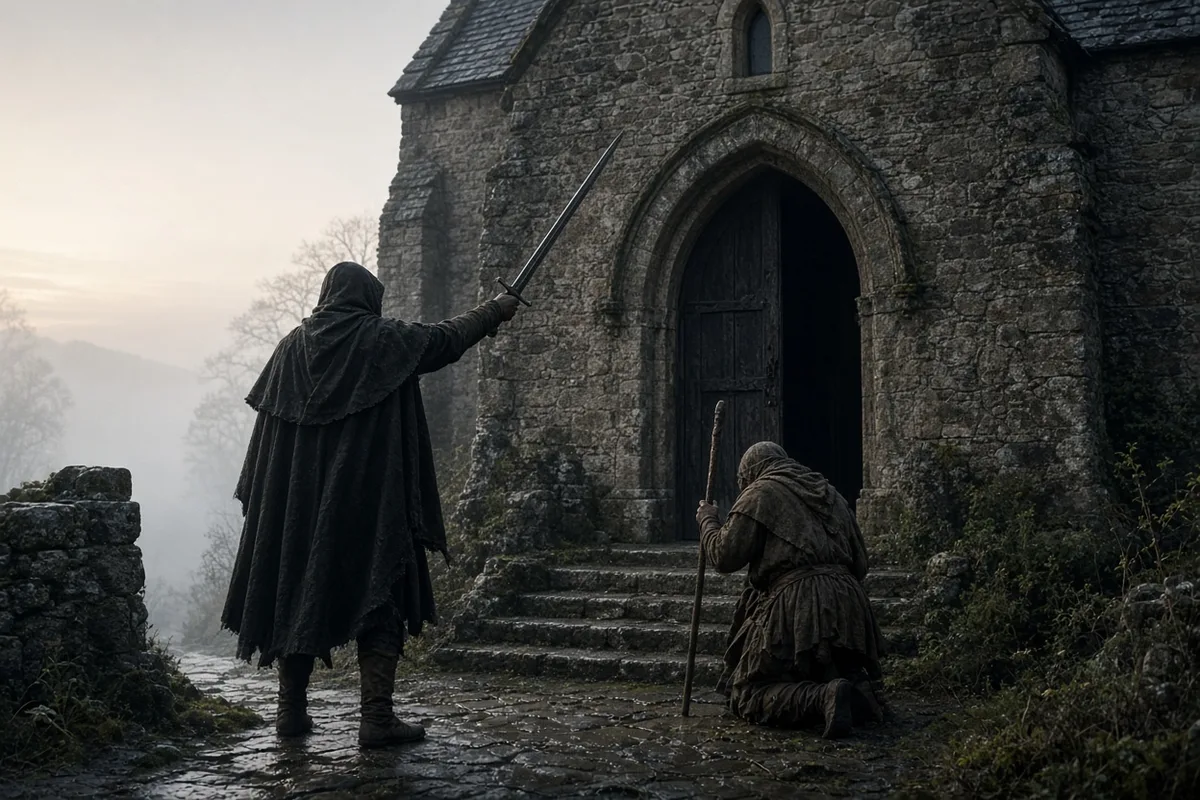
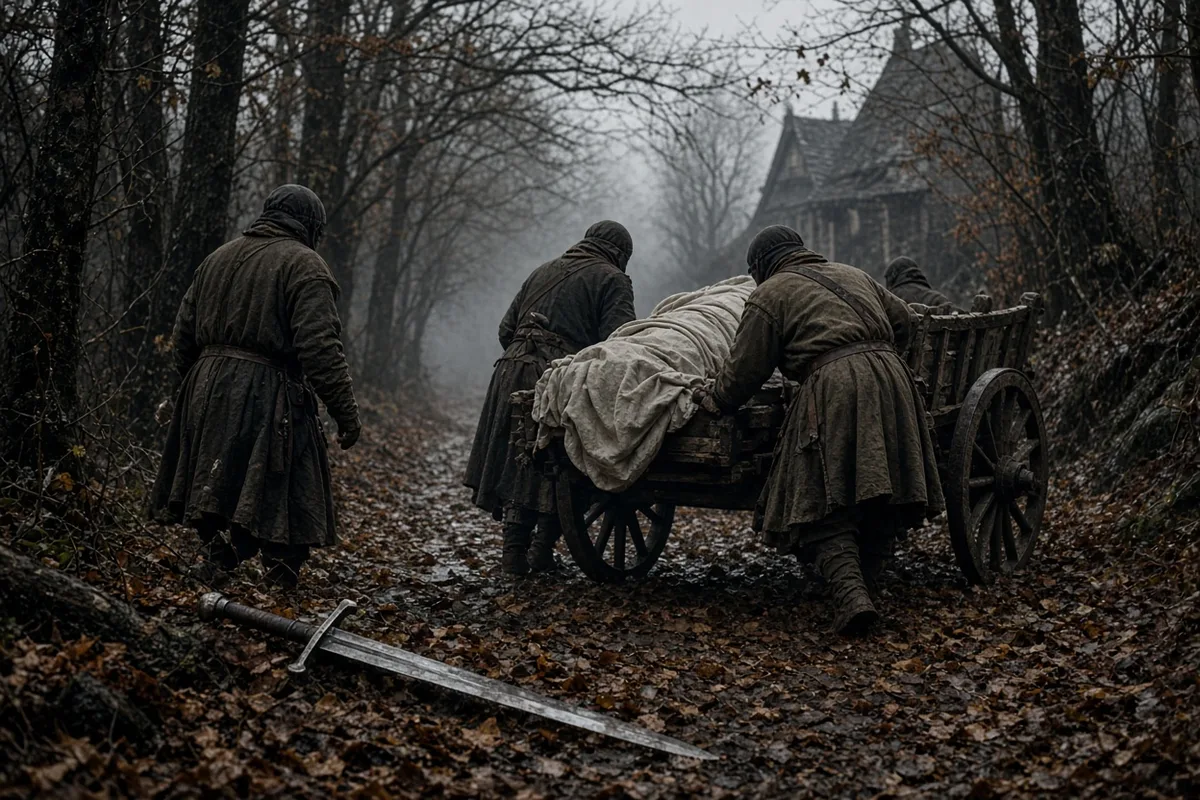
On the twenty-eighth day the duke walked alone to the church for the early Mass. As he reached the threshold, Boleslav’s men closed the doors behind him. The first blow struck him between the shoulders; the second, delivered by the duke’s own brother, pierced the neck. Before he fell he turned and said, according to the account later set down by the priest Strachkvas in the chapel at Břevnov, “Brother, may God forgive you.” The body was carried out through the south door and buried that same afternoon beneath the floor of the nave without a stone marker.
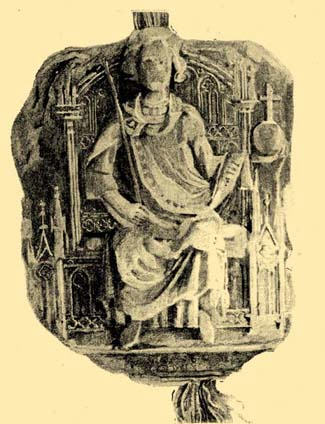
Boleslav ruled for the next thirty-three years and in 966 concluded a treaty with Emperor Otto I that fixed the tribute at five hundred marks of silver each year. After his death the duchy passed to his son Boleslav II, who in 973 founded the bishopric of Prague and placed the new see under the metropolitan authority of Mainz. The remains of Wenceslaus were translated in 938 to the church of Saint Vitus on the Hradčany hill, where they rested in a silver casket commissioned by Duke Soběslav I in 1128 and weighed, according to the inventory of 1241, one hundred and forty marks.
In the year 1347 Emperor Charles IV ordered the construction of the Saint Wenceslaus Chapel inside the newly rebuilt cathedral and placed within it the skull and right arm bone together with the iron helmet and the short sword that had belonged to the duke. The chapel walls were faced with panels of jasper and amethyst brought from the mines near Jílové, and above the altar was set a mosaic of the Last Judgment executed by Venetian craftsmen in 1370. Each year on the twenty-eighth of September the canons of the cathedral still process around the tomb and sing the antiphon “Wenceslaus dux Bohemiae” composed in the eleventh century at the monastery of Sázava.
The chorale “Svatý Václave, vévodo české země” was first recorded in a Prague gradual of 1368 and contains the petition “nedej zahynouti nám ani budoucím,” words later inscribed on the pedestal of the equestrian statue that stands at the head of the square bearing the duke’s name. The statue, cast in bronze by Josef Václav Myslbek and unveiled on the twenty-eighth of September 1913, measures seven meters from the base to the tip of the raised sword and weighs eleven tons.
During the German occupation the crown of Saint Wenceslaus, made in 1347 for the coronation of Charles IV and set with a sapphire of fifty-eight carats, was kept in a locked chamber beneath the cathedral sacristy; on the twenty-eighth of May 1945 it was carried in procession through the streets of Malá Strana and returned to the chapel. The last time the crown left the cathedral was on the twenty-eighth of September 2003, when it was placed for three hours on the head of the newly elected president Václav Klaus before being locked again with the seven keys held by the prime minister, the archbishop, and the mayor of Prague.
In the winter of 1992 an elderly sacristan named Josef Novák, who had served at the cathedral since 1937, was observed one evening placing a single loaf of rye bread and a small measure of wheat beside the reliquary before he extinguished the lamps. He died three weeks later at the age of eighty-four and was buried in the cemetery at Vinohrady with no marker other than a wooden cross bearing the date of his birth and the single word “sluha.”
In 2013 the Prague City Council commissioned a restoration of the Myslbek statue after measurements taken on 12 March showed corrosion pits averaging 2.3 millimetres deep on the raised sword; conservator Pavel Štěpánek applied a micro-crystalline wax coating supplied by the National Museum laboratory and recorded the work in a report dated 4 October that listed forty-seven replacement rivets stamped with the year 2013.
On 28 September 2018 the cathedral chapter opened the silver casket for the first time since 2003 so that forensic anthropologist Petr Velemínský could remove a 4.7-gram sample of rib bone for radiocarbon testing at the Academy of Sciences laboratory in Řež; the result, calibrated to 925–945 CE at two sigma, was published in the journal Archeologické rozhledy, volume 71, page 312.
The seven keys to the crown chamber are now held by Prime Minister Petr Fiala, Archbishop Jan Graubner, Mayor Bohuslav Svoboda, the dean of the cathedral chapter, the president of the Senate, the governor of the Czech National Bank, and the minister of culture; on 2 February 2022 the keys were counted and photographed during a routine audit witnessed by notary public Marie Králová.
In the summer of 2021 stonemason Jan Říha replaced twelve cracked jasper panels in the Saint Wenceslaus Chapel using blocks quarried at Jílové that matched the 1370 invoice for “duodecim tabulas iaspidis” preserved in the Metropolitan Chapter Archive under shelf mark A 19/4.
Tour guides employed by the Prague Castle Administration are required to recite the Strachkvas account of the duke’s final words each day at 10:15 and again at 14:45; attendance sheets signed by guide supervisor Alena Dvořáková show 187 tours delivered in August 2023 with an average of 41 visitors per group.
On 27 September 2024 the Knights of the Cross with the Red Star, whose archives list continuous guardianship of the cathedral treasury since 1232, placed a fresh linen corporal beneath the reliquary; the corporal, embroidered with the date and the letters “KŘ” in red silk, was cut from a bolt purchased in Brno on 15 March 2024 for 1 840 koruny.
That same evening the night watchman Pavel Horák, aged fifty-nine and employed at the cathedral since 1998, walked the ambulatory at 23:40 carrying a battery lantern whose serial number ends in 4471; he paused at the chapel grille for four minutes and twelve seconds according to the CCTV timestamp before continuing to the south transept.