



Stop hunting one right life—prototype several instead

In 60 seconds
- Careers are wicked problems with no fixed success criteria, so waiting for certainty before acting produces years of paralysis.
- Five design habits—curiosity, bias to action, reframing, process awareness, and radical collaboration—produce better life decisions than willpower or longer plans.
- A short written workview and lifeview act as a compass; options are judged by coherence with both, not by abstract bestness.
- A Good Time Journal kept two to three weeks tracks real energy and engagement better than reverse-engineering from a five-year destination.
- Three Odyssey Plans plus cheap prototypes—conversations and short trials—generate lived evidence before any big leap.
- Job search and follow-through work mainly through expanding referral conversations and a four-to-six-person accountability team, not cold applications or solo reflection.
The big idea
Burnett and Evans argue that feeling stuck about work and life is not a failure of analysis but a design challenge that needs iteration. They hold that a personal compass, multiple plausible futures, and small real-world prototypes produce better information and more satisfaction than the search for one correct path.
The book in brief
The book opens by renaming career confusion. Choosing what to do with your working life is a wicked problem: no fixed criteria for success, no way to test every option in advance, and satisfaction that only shows up once you are living it. Treating the question as a puzzle with a hidden right answer—found through enough reflection, tests, or mentor advice—guarantees paralysis. Gravity problems, the unchangeable constraints, must be set aside so energy goes only to problems that can actually move.
The method starts inside the head and on the page. Five habits borrowed from design studios—curiosity, bias to action, reframing, awareness of process, and radical collaboration—replace pure willpower. Before any path is drawn, two short statements form a compass: a workview of what work is for and a lifeview of what makes a life meaningful. Coherence between them becomes the filter for every later choice; a high-pay, high-travel role will grind against a lifeview that prizes time with young children no matter how polished the job looks.
Navigation then shifts from destination to daily signal. Because long-term goals are poor predictors of satisfaction, a Good Time Journal logs ordinary activities for two to three weeks against simple engagement and energy ratings. Patterns at the margin—reports that drain, presentations that charge—become the trustworthy material for redesign, even inside a job you are not yet leaving.
Options multiply next. The Odyssey Plan requires three distinct five-year futures: a continuation of the current path, a version if that path vanished tomorrow, and a wildcard freed from money and reputation. Side-by-side scoring on resources, liking, confidence, and compass coherence exposes hidden criteria and often lets a piece of the wildcard fold back into ordinary life. Promising directions are not leaped into; they are prototyped through low-risk conversations with people already doing the work and short immersive trials that reveal daily rhythm rather than romanticized story.
The same logic rewrites the job hunt and the close of the decision. Most good roles move through networks before they are posted, so structured life-design interviews aimed at learning and introductions outperform résumé blasts. Once a short list exists, the authors push satisficing over maximizing: choose a good-enough option, commit, and stop reopening it. A standing team of four to six people supplies the outside mirror and accountability that solo journaling misses, catching stalled “someday” plans and blind spots before the whole practice quietly dies.
Context
Bill Burnett and Dave Evans created Stanford’s popular life-design course and draw directly on design practice at firms such as IDEO. Their 2016 book imports prototyping, reframing, and wayfinding into ordinary career decisions for readers who feel stuck, bored, or forced into transition.
The key ideas
1
Wicked, not solvable once
Burnett and Evans treat careers as wicked problems with no single correct answer knowable in advance, so analysis aimed at certainty produces paralysis instead of progress.
Puzzle frame
One hidden right answer found by more reflection, tests, and advice before any move
Design frame
Many low-cost experiments whose lived feel supplies the evidence reflection cannot
A wicked problem has no fixed success criteria and no way to know you have found the right answer before you live it. Career choice fits: you cannot test every path, and satisfaction depends on factors that only appear in the living. Most people still hunt for a hidden correct answer through more reflection, personality tests, or mentor advice.
That hunt freezes action. Years pass waiting to feel sure. The authors reject the frame. Instead of one big decision reached by analysis, they want iteration: small, low-cost versions of possible futures whose actual feel teaches more than how they sound on paper.
They separate these movable questions from gravity problems—unchangeable conditions such as chronic illness or a parent’s lasting disapproval. Gravity problems should not soak up the energy reserved for problems that can still move. The opening methodological claim is simple: stop waiting for certainty and start generating evidence through action.
In practice: A student convinced she must locate her one true passion before choosing a major stays functionally stuck; the authors hold that passion more often follows sustained engagement than precedes it.
2
Five habits over willpower
The authors insist five design habits—curiosity, bias to action, reframing, process awareness, and radical collaboration—outperform better planning or sheer willpower.
Design thinking rests on habits of mind more than on any single tool. Curiosity treats your own dissatisfaction as interesting data rather than something to suppress. Bias to action runs a small real-world test instead of debating hypotheticals forever—one conversation in a field beats ten more articles.
Reframing notices a belief steering you into a dead end and restates the problem until it becomes workable again. Awareness of process watches how a choice is being made—fear, appearance to others, or genuine curiosity—not only what is chosen. Radical collaboration treats life design as social, because other people see patterns you miss.
None of the five is original to the authors; they come straight from studio practice. The contribution is the claim that the same habits apply to a career decision as to a product decision, and that jumping straight to a plan while skipping them is what produces bad plans.
In practice: The reframe of “I need to find my passion before I can commit” into “engagement usually comes before passion, so I need to try things to generate it” turns a blocker into a next step.
3
Compass before path
Burnett and Evans hold that short written workview and lifeview statements, checked for coherence, matter more at the start than picking any specific job.
A workview states what work is for—income, status, service, mastery, creative expression. A lifeview states what makes a life meaningful—family, faith, achievement, freedom, community. Most people have never written either, so they judge opportunities against an implicit and often self-contradictory standard.
The exercise is not philosophy for its own sake. It produces a working document you actively check decisions against. Coherence between the two views matters more than either being correct in the abstract.
When income sits at the top of the workview while time with young children sits at the top of the lifeview, any high-paying, high-travel role will generate constant friction. The mismatch, not the job design, is the problem. Every later prototype and plan is filtered by this compass: an option is better or worse only by how well it coheres with values already named.
In practice: A person who prizes income at work yet treats time with young children as the core of a good life will feel chronic friction in a high-travel role no matter how much they once wanted the title.
4
Spot gravity problems
The authors argue that misdiagnosing an unchangeable gravity problem as a fixable one wastes years that could go to problems that actually move.
Gravity problem
Unchangeable condition; effort here yields exhaustion and self-blame
Actionable problem
Can be moved by reframing, prototypes, and small tests
A gravity problem is a condition, not a puzzle: a parent who will never approve, a physical limitation, a market downturn. Treating it as solvable produces repeated failed attempts and then self-blame.
The design move is reframing, not surrender. “How do I get my father to respect this choice” becomes “how do I build a good life while carrying his disapproval.” The same chapter pairs gravity problems with dysfunctional beliefs—assumptions such as “it’s too late to change” or “I should already know what I want”—each given a reframe that opens options instead of closing them.
The practical skill is diagnostic. Before spending energy, ask whether the problem is actionable at all. Later tools—prototyping, wayfinding, planning—only work on problems that can move. Applied to gravity, they create the illusion of progress and deeper discouragement.
In practice: Instead of endless effort to win a father’s approval for a career choice, the workable question becomes how to build a good life and career while carrying that disapproval.

5
Energy over destination
They propose wayfinding by daily energy and engagement because long-term goals poorly predict what will actually satisfy you.
Wayfinding means moving forward without a fixed map or destination. Rather than reverse-engineering life from a five- or ten-year goal, keep a Good Time Journal for two to three weeks. Log activities with two simple ratings: engagement (how absorbed you were) and energy (charged or drained).
The point is not one grand answer. It is small repeatable patterns—writing reports drains while presenting them energizes; mentoring produces more flow than the technical work itself. These markers are treated as more trustworthy than stated preferences, because people are bad at predicting future happiness in advance.
Redesign then happens at the margins. Do more of the components that already generate energy, even inside a job you are not leaving yet. Stakes drop: you need only notice a handful of concrete activities that already work and build outward, a smaller claim than “find your calling.”
In practice: Someone discovers that writing reports drains them while presenting the same material energizes them, then looks for ways to shift time toward the energizing piece without quitting.
6
Three lives, not one
Burnett and Evans treat three separate five-year Odyssey Plans as the way to break the myth of a single correct path and reveal hidden values by comparison.
Plan A extends the current direction. Plan B asks what you would do if that path disappeared tomorrow—job loss or industry collapse. Plan C is the wildcard: money and reputation no object, forcing a self not constrained by what looks respectable.
Each plan gets a title, a short narrative, a rough timeline, and scores on resources required, how much you like it, confidence you could pull it off, and coherence with the compass. The exercise never asks which plan is best. Its value is comparative.
Seeing three real plans side by side exposes criteria you were applying unconsciously. Often a piece of the wildcard—teaching, building with hands, working outdoors—can fold into Plan A without abandoning it. Abstract fear of the wrong choice becomes three concrete, comparable choices.
In practice: A common outcome is that Plan C contains teaching or outdoor work that can be folded into Plan A rather than requiring a total leap.
7
Prototype before leaping
The authors argue career decisions should be tested through small, cheap, real-world trials the same way products go through prototypes before production.
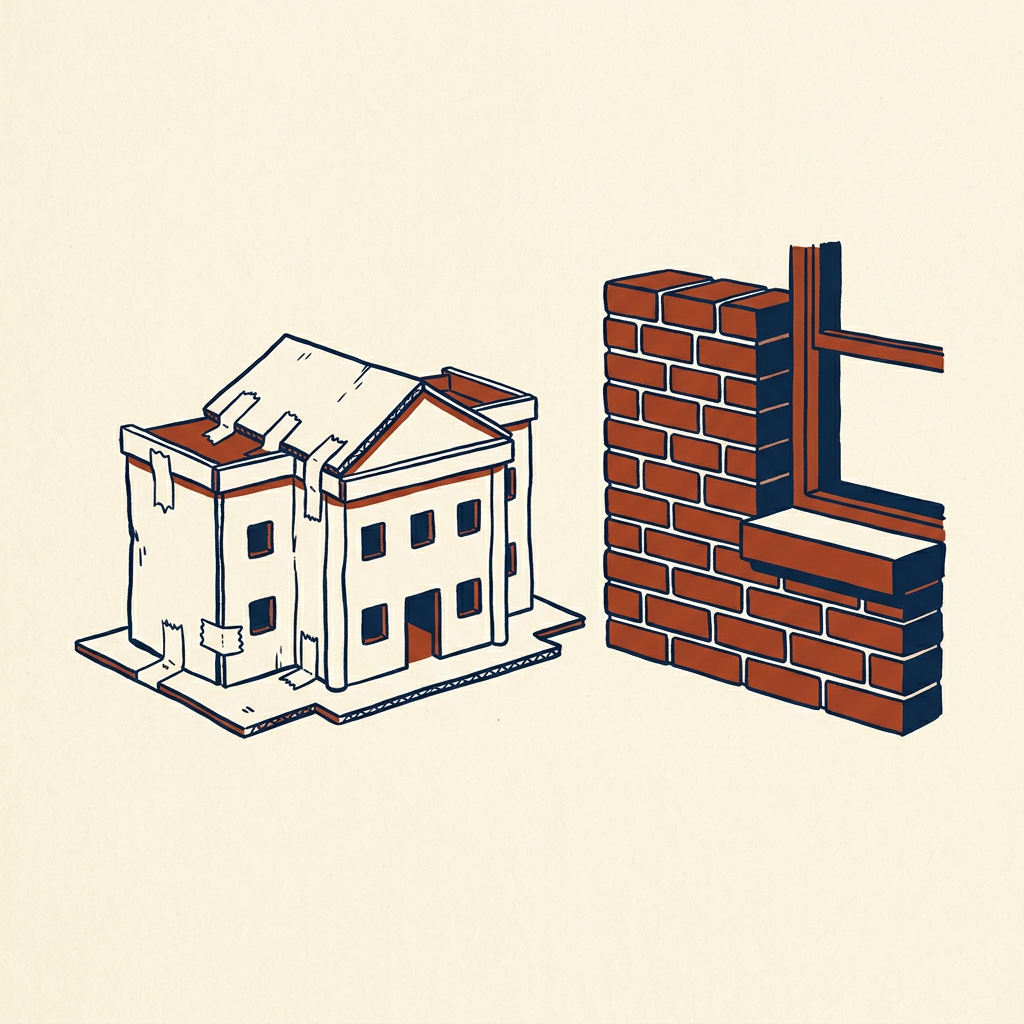
A life-design prototype is any low-risk activity that generates real information about what a possible future feels like, not what it sounds like in the abstract. Two main types appear: prototype conversations—informal talks with people already doing the work, aimed at specific questions—and prototype experiences—weekend volunteering, a course, a side project, or a day of shadowing.
Imagination is a poor simulator of lived experience. Direct contact supplies the physical demands, daily rhythm, romanticized parts, and tedious parts that months of research miss. The build-test-learn loop from product development is imported wholesale into personal decisions.
Only after prototypes yield evidence does a larger commitment make sense. The fastest route to good information is the smallest real version you can actually try.
In practice: A corporate employee curious about running a small farm spends several weekends working on a real farm and learns the physical demands and tedious stretches before quitting anything.
8
Conversations over applications
They claim a life-design job search should run mainly through structured network conversations because many roles fill through connections before public posting.
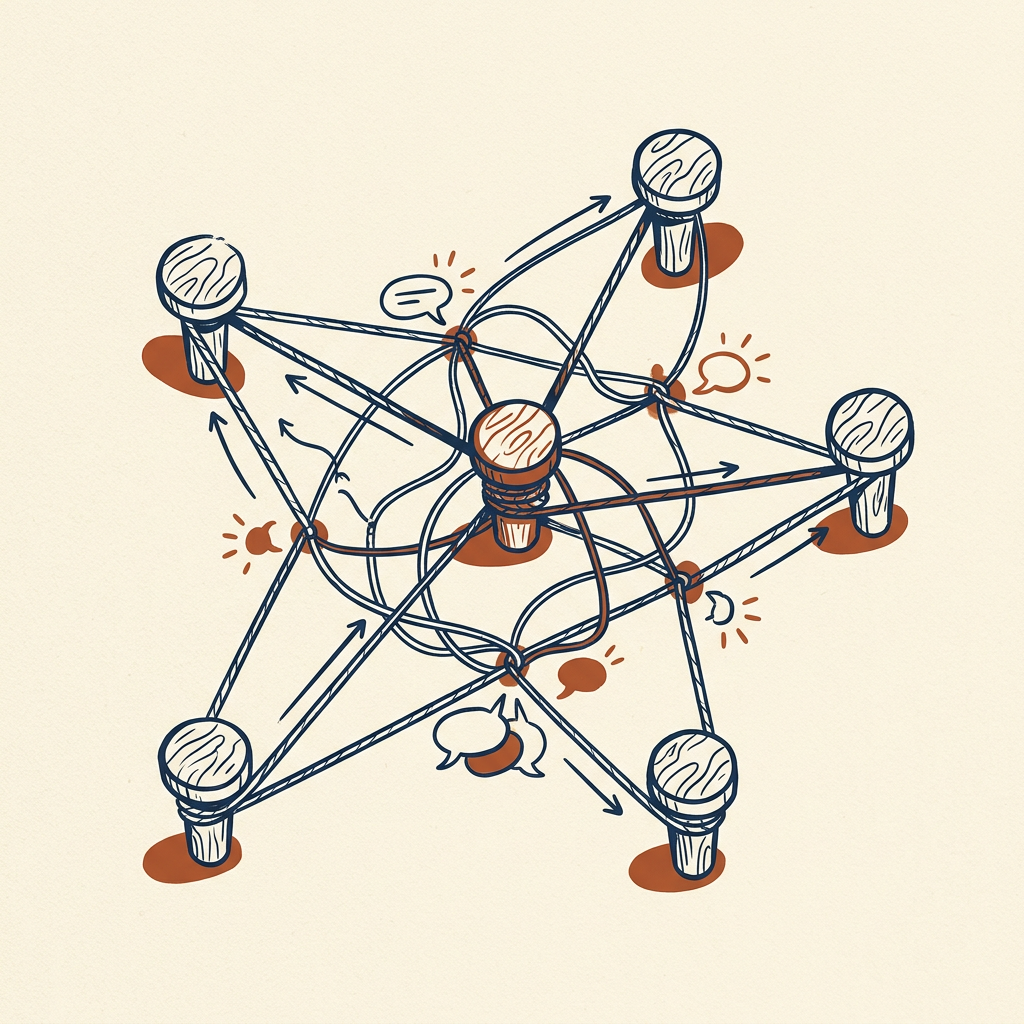
The conventional loop—submit résumé, wait, repeat—competes for a shrinking share of openings that are still posted. The alternative is the life-design interview: a prototype conversation aimed at people in roles or organizations of interest.
The explicit goal is not to ask for a job; asking creates pressure and closes doors. The goal is to learn day-to-day reality and to be introduced naturally to one or two more people doing related work. Repeated, the conversations build a widening web that surfaces opportunities early and presents the seeker as a known, curious quantity rather than one more résumé.
The method assumes enough time and social capital to run many low-stakes talks. Still, the testable claim is that informal referral and conversation outperform cold application as a channel into real roles.
In practice: Rather than sending another cold application, the seeker asks for a short conversation about someone’s actual day and leaves with introductions to two more people in related work.

9
Good enough, then commit
Burnett and Evans hold that treating decisions as good-enough choices to commit to beats endless search for the objectively best option.
Maximizer
Keeps comparing after a good option appears; energy goes to paths not taken
Satisficer
Commits once criteria are met and invests fully without reopening
Satisficers commit once criteria are met and move into action. Maximizers keep comparing even after a good option appears and spend energy on paths not taken. More options and more deliberation often yield less satisfaction, not more.
The practical sequence is to use Odyssey Plans and prototypes to narrow to a short list, choose deliberately, and stop reopening the decision. Letting go emotionally once the choice is made means investing fully rather than half-committing while still shopping.
This is the book’s most openly psychological chapter. It asserts the mechanism more than it demonstrates it, yet the instruction is clear: a closed, good-enough loop outperforms perpetual optimization.
In practice: Someone who takes one of two job offers then spends the next year quietly resenting it while wondering about the other undermines the outcome by refusing to close the loop.
10
Team, not solo slog
The authors argue life design works better inside a small accountability group because self-assessment of patterns and blind spots is unreliable.
People are poor judges of what actually energizes them, what they are avoiding, and which beliefs are quietly dysfunctional. An outside group catches what solo reflection misses.
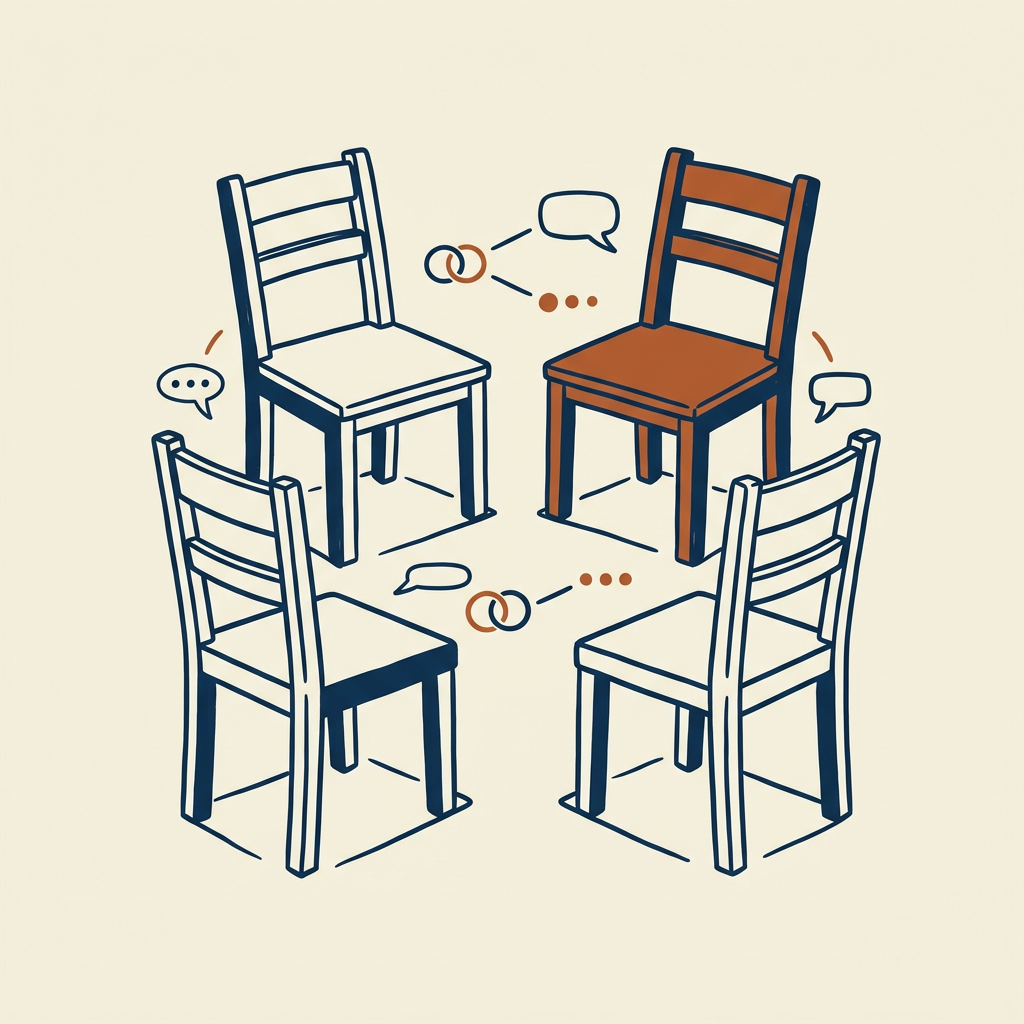
Form a life-design team of four to six people who meet regularly with light structure: each shares what they are working through, others ask curious nonjudgmental questions rather than giving advice, and the group tracks commitments between sessions. This makes radical collaboration a recurring practice.
The group supplies two things: accountability that turns intentions into completed prototypes and conversations, and an outside mirror that notices energy shifts or dodged topics before the person does. Without it the whole process can quietly stall once the book is closed.
In practice: A group member kept offering “someday” plans until the others pointed out she had avoided one specific, doable next step for months—something journaling alone had not surfaced.
Key terms
- wicked problem A question with no fixed success criteria and no way to know the right answer before you live it
- gravity problem An unchangeable condition that should be reframed and carried, not attacked as if effort will fix it
- workview A short written statement of what work is for—income, service, mastery, and the like
- lifeview A short written statement of what makes a life meaningful—family, faith, freedom, community
- wayfinding Moving forward by reading present energy and engagement when the destination is still unknown
- Good Time Journal A two-to-three-week log of activities rated for engagement and energy to reveal repeatable patterns
- Odyssey Plan Three different five-year life plans scored side by side for liking, confidence, resources, and coherence
- prototype A small, low-risk conversation or trial experience that shows what a possible future actually feels like
- life design interview A structured conversation to learn someone’s real workday and gain introductions, never to ask for a job
- dysfunctional belief An assumption such as “it’s too late” that quietly closes options until it is reframed
What to do
- Write one paragraph each for your workview and lifeview, then mark where they clash.
- Start a Good Time Journal today and for two weeks log activities with simple engagement and energy ratings.
- Ask one person doing work you are curious about for a twenty-minute conversation focused on their actual day.
- Draft one alternate five-year plan you have never taken seriously and score it against your current plan on liking, confidence, resources, and coherence.
- Find three people willing to meet monthly as an accountability group and bring one concrete commitment to the first meeting.
Questions to think with
- Where are you still treating a gravity problem as if more effort will solve it?
- What do the last two weeks of energy and engagement ratings actually show about your current days?
- If your current path disappeared tomorrow, what would Plan B look like in concrete detail?
- Which dysfunctional belief is quietly ruling out options you have never tested?
- Who could sit on a four-to-six-person team that would notice your dodges better than you do?
The other side
The book’s claims rest almost entirely on anecdotes from Stanford students and workshop participants plus appeals to design practice, not on controlled evidence that the method improves satisfaction over time. Design thinking itself has been called under-specified and oversold; a career cannot be iterated with a product’s speed or reversibility. Prototyping, informational interviews, and multiple five-year plans assume disposable time, a usable network, and financial cushion many readers lack—a single parent on two jobs or a worker in a licensed field has far less room. The line between gravity and a hard-but-workable challenge is left to intuition. Relentless optimism can minimize real structural stakes such as debt, health, or caregiving, where some choices do foreclose others for years.
Who it's for
Twenty-somethings who chose a major or first job by default and feel no attachment, mid-career professionals who are competent yet bored or misaligned, and anyone in transition after layoff, caregiving, or retirement who wants a structured way to generate options. Readers with some slack in time, money, and network will get the most from running the exercises as written.