



Tara Brach says suffering equals pain multiplied by resistance
In 60 seconds
- Most people live inside a trance of unworthiness that treats every minor slip as proof they are fundamentally flawed.
- Suffering is primary pain multiplied by resistance; strip the resistance and the original pain becomes bearable and informative.
- Acceptance needs two capacities together: mindfulness to see clearly and compassion to hold what is seen without cold judgment.
- The RAIN sequence—recognize, allow, investigate, nurture—turns acceptance into a brief real-time practice during ordinary distress.
- Fear shrinks when met as finite bodily sensation; resentment softens only after the grief it was protecting is actually felt.
- Self-compassion and compassion for others are the same trained capacity, so healing the inner trance widens presence with other people.
The big idea
Brach contends that chronic suffering arises less from difficult events than from the trance of unworthiness and the resistance, judgment, and shame we pile on top of ordinary pain. Meeting what is present with mindfulness and compassion—especially through the RAIN sequence—removes that second wound and, over time, widens the same capacity toward others.
The book in brief
Brach starts from a diagnostic claim: many people operate inside a background trance of unworthiness, a standing verdict that they are not enough. Minor events—a missed reply, a work mistake—get treated as fresh proof of an old case rather than as ordinary setbacks. Clients usually name only the symptoms (anxiety, overwork, people-pleasing, numbing) and miss the shared root, so symptom-only fixes leave the trance free to resurface in a new form.
She then separates primary pain from secondary suffering. The original hurt—a loss, a criticism, a bodily sensation—is often less crushing than the mind’s aversion, denial, and self-blame layered on top. Acceptance, in her framing, is not resignation about circumstances; it is the removal of that resistance layer so the actual experience can be met directly while still taking practical action.
The method requires two wings working together. Mindfulness sees clearly without editing; compassion holds what is seen with warmth. Either alone can fail—cold observation that still condemns, or vague kindness that never contacts the specific pain. She converts the claim into a trainable skill: name the feeling specifically while offering a gesture or phrase of care.
That skill becomes concrete in RAIN—recognize, allow, investigate, nurture—a short sequence usable in ordinary distress, not only on the cushion. She applies it first to fear, arguing that avoidance and reassurance-seeking keep fear large, while staying with the raw bodily sensation lets it rise and fall as a finite event. She then applies the same logic to resentment: anger often protects unfelt grief, and forced forgiveness without processing that grief tends not to hold.
Later chapters widen the frame. Lasting relief loosens over-identification with the personal story of “my problems,” treating feelings as weather inside a more spacious awareness without bypassing them. The arc closes by treating self-compassion and compassion for others as one capacity: training presence with one’s own pain reliably widens patience and curiosity toward a partner’s anger, a child’s fear, or a stranger’s rudeness. The point of the inner work, she holds, is relationship, not private peace as an end in itself.
Context
Tara Brach draws on Buddhist practice and her work as a clinical psychologist. The book mattered because it married Western therapeutic language with meditation practice at the moment mindfulness was entering the clinical mainstream, offering readers a method rather than only a philosophy.
The key ideas
1
The trance of unworthiness
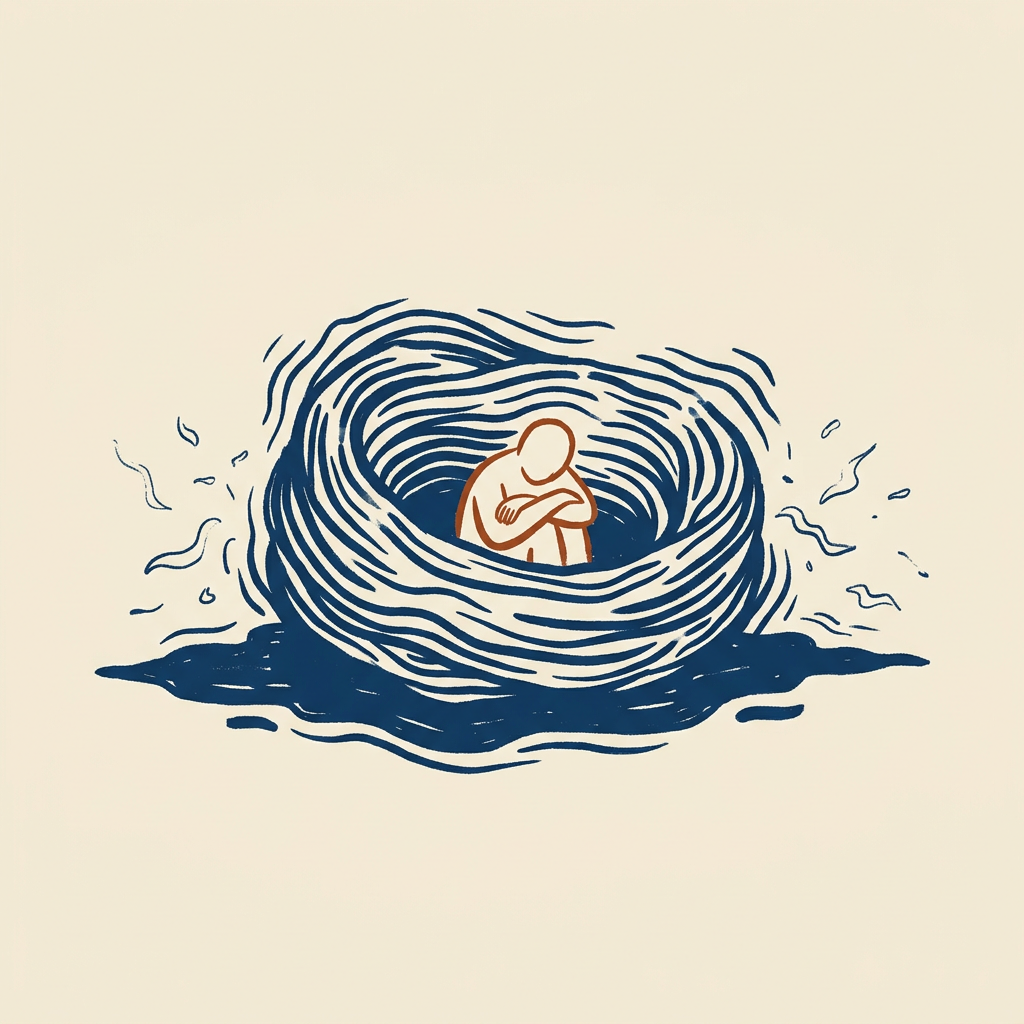
Chronic suffering stems from a default belief that one is fundamentally flawed, not from any single failure.
Surface symptoms
Anxiety, overwork, people-pleasing, numbing treated as separate problems
Shared root
A standing verdict of not-enoughness that minor events reactivate as proof
Brach opens by naming a background hum of not-enoughness that colors perception before any specific trigger arrives. It differs from ordinary sadness or disappointment: it is a standing verdict against the self that minor events merely reactivate and then treat as confirmed proof.
A missed email becomes evidence of being unlovable; a workplace mistake becomes evidence of being incompetent as a person, not only in a task. She traces the pattern to childhood conditioning, where children internalize caregivers’ anxieties, criticisms, or inattention as verdicts on their worth and then spend adulthood defending against or trying to disprove that verdict.
The trance works because it feels like fact rather than belief. People do not experience “I have a story that I’m unlovable”; they experience unlovability as a feature of the world, reconfirmed daily. Clinically, clients rarely name the trance; they describe anxiety, overwork, people-pleasing, or numbing without seeing the shared root.
Interventions aimed only at the symptom leave the trance untouched, so it resurfaces in a new form. Accurate recognition comes first: acceptance without diagnosis easily becomes another self-improvement project driven by the same trance it claims to treat.
In practice: A missed email reply is experienced not as a small social slip but as fresh proof of being unlovable.
2
Resistance as second wound
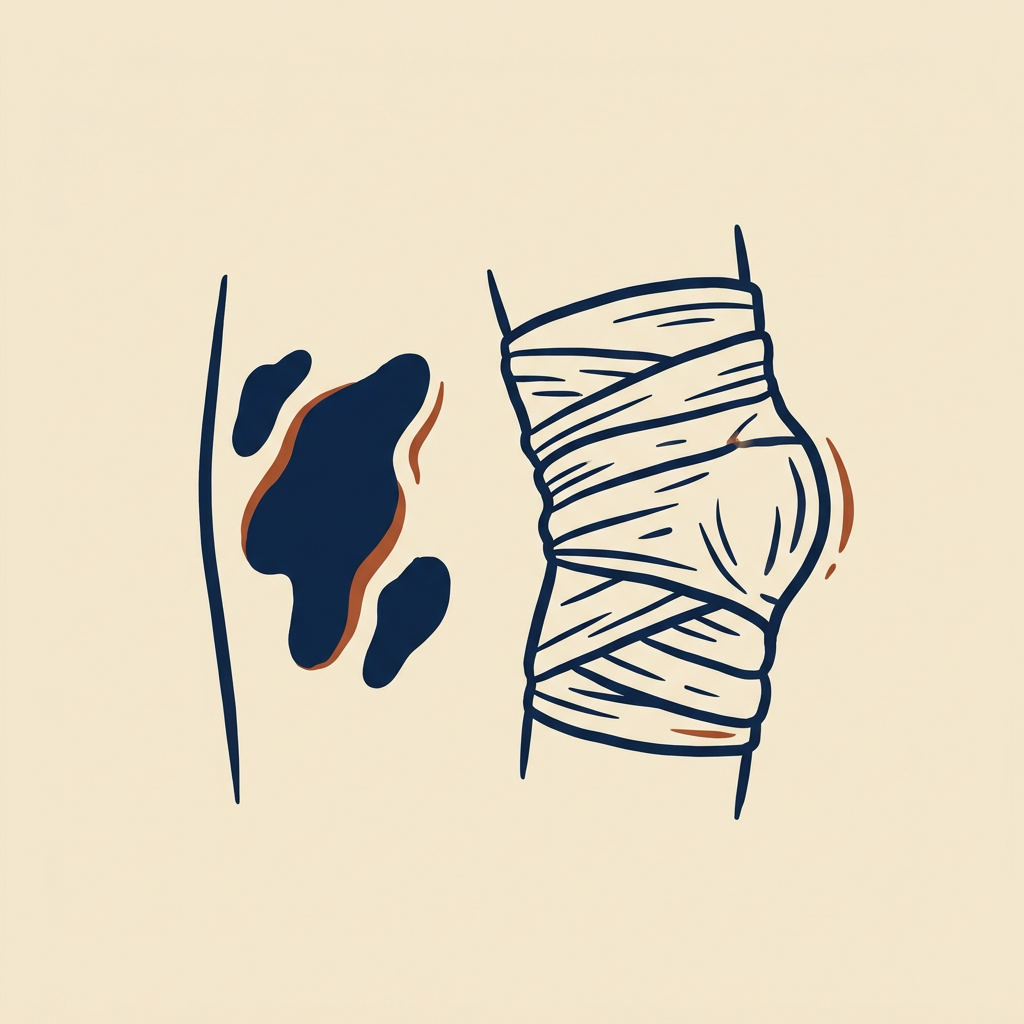
Suffering equals pain multiplied by resistance, so relief comes faster from dropping resistance than from erasing pain.
Primary pain
The raw loss, criticism, or bodily sensation as it arrives
Secondary suffering
Aversion, denial, self-blame, and ‘I should be over this’ layered on top
Building on the trance, Brach separates primary pain—a loss, a criticism, a bodily sensation—from secondary suffering, the mind’s aversion, denial, or self-blame toward that pain. Resistance is the reflex to control, deny, or judge whatever is unpleasant, and she argues it is often more painful than the original experience.
Someone grieving a breakup feels the grief itself, then suffers further from the story that they should be over it already or that needing comfort proves weakness. Strip the secondary layer and the grief remains, yet it becomes bearable and even informative rather than crushing.
Acceptance here is not passivity about circumstances. One can fully feel fear about a job loss while still applying for new jobs. The distinction answers a common charge against acceptance-based work: feeling an emotion is not the same as resigning to a situation that needs change.
The practical question the rest of the book answers is how, concretely, to stop the resistance reflex once it is recognized.
In practice: A client with chronic anxiety found the anxiety itself was only a tolerable tightness in the chest; what felt unbearable was the narrative that it meant she was broken and would never function normally.
3
Two wings together
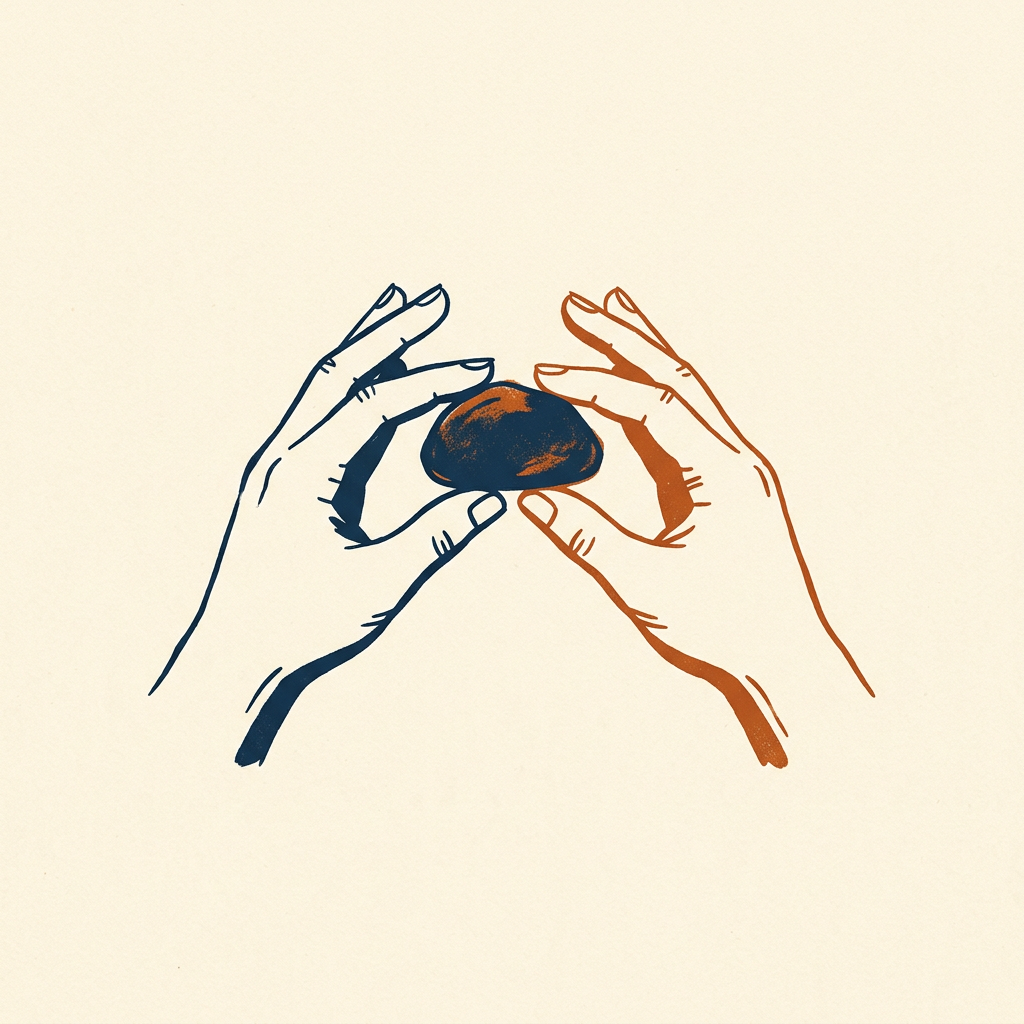
Acceptance requires mindfulness and compassion at once; either practiced alone can become another form of avoidance.
One wing alone
Cold noting that still condemns, or vague kindness that never contacts the pain
Both wings
Clear seeing paired with warmth so the specific feeling can be fully met
Brach names two distinct capacities. Mindfulness sees clearly what is happening without editing it. Compassion holds what is seen with warmth rather than judgment. They must operate together.
Mindfulness without compassion can turn into cold clinical noting that still implicitly condemns—registering “I am anxious” in the tone used for a defect. Compassion without mindfulness can become vague unfocused kindness that never actually contacts the specific pain, a bypass that skips difficulty rather than meeting it.
She uses the image of a mother with a crying child: the mother must actually see and understand what is wrong, not only soothe generically, and must respond with warmth, not only assessment. The procedural instruction is concrete—silently name the emotion specifically (“this is shame,” “this is fear”) while placing a hand on the chest or offering an internal phrase of care.
Naming and holding is active work, not surrender. That pairing converts the earlier philosophical claim into a skill with two trainable parts and sets up the meditation instructions that follow.
In practice: Readers are told to name an emotion silently and specifically while placing a hand on the chest or offering a brief internal phrase of care so the feeling can be registered without triggering more resistance.
4
The RAIN sequence
A four-step loop—recognize, allow, investigate, nurture—turns abstract acceptance into a practice that can interrupt reactivity in minutes.
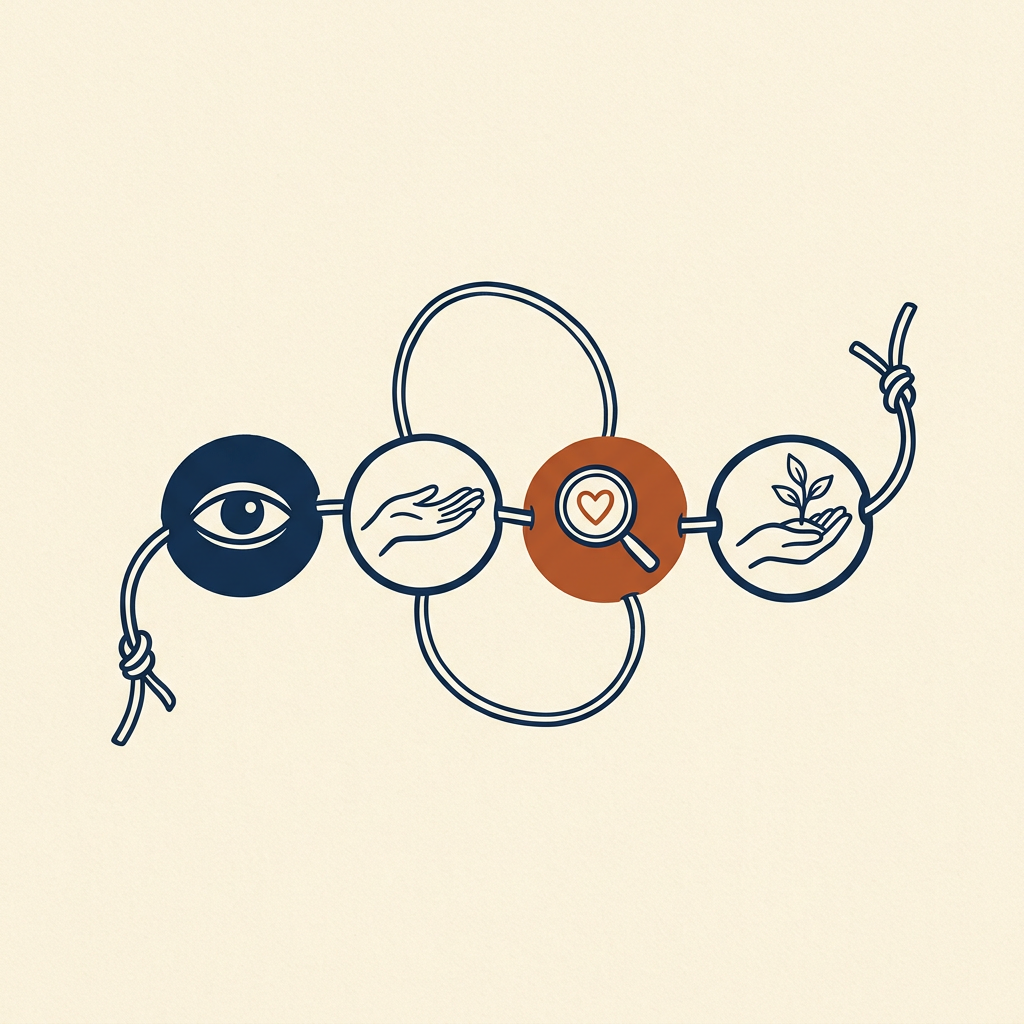
RAIN is Brach’s signature tool: Recognize what is happening, Allow it to be there, Investigate with curiosity what it actually feels like in the body, and Nurture with self-compassion. She presents it as usable in ordinary distress, not only in seated meditation.
Order matters. Recognition names the experience honestly—“I am furious”—rather than the socially edited “I am a little annoyed.” Allowing drops, even briefly, the effort to fix or suppress. Investigation asks where it lives in the body, what it wants, what it believes, treating the emotion as information rather than an enemy. Nurture offers the self the warmth one would offer a friend, often through a simple phrase or a hand on the body.
The point is not instant erasure of the feeling. It is widening the gap between trigger and reaction enough for choice to enter. Everything before this chapter is diagnosis; everything after is application of the same sequence to shame, fear, and relational injury.
Practiced on small daily irritations first, the sequence becomes familiar before it is needed under real pressure.
In practice: A man prone to explosive anger at his children recognized heat in his chest, allowed it, investigated and found underneath it a fear of being an inadequate father, then nurtured that fear instead of acting from the anger.

5
Meeting fear directly
Fear shrinks only when approached as a bodily sensation; avoidance and reassurance-seeking keep regenerating it.
Avoidance path
Rehearsal, distraction, and reassurance that confirm danger and keep fear large
Direct path
Locate throat tightness or stomach churn and stay with the finite sensation
Brach applies RAIN specifically to fear, treating it as unusual among emotions because avoidance actively strengthens it. She loosely distinguishes fear (some proximate trigger) from more free-floating anxiety, yet meets both the same way: locate the physical sensation and stay with it past the point where the mind flees into planning, distraction, or reassurance.
Mental rehearsal before feared events can worsen the problem over time because each rehearsal is itself resistance confirming the situation as dangerous. The alternative is to notice fear rising, find it as tightness in the throat or a churning stomach, and stay with the raw sensation for a minute rather than narrating about it.
Examined as a physical event, fear is time-limited and finite. Elaborated into a story—“I will humiliate myself and everyone will notice”—it becomes limitless and keeps regenerating. Sensation observed without story has a rise-and-fall arc; narrated fear does not resolve on its own.
The claim is testable in personal experience rather than offered only as reassurance, giving readers a falsifiable practice.
In practice: A client with severe social anxiety who rehearsed conversations before parties found the anxiety worsened; staying instead with throat tightness and stomach churn for a minute before the event changed the pattern.

6
Forgiveness through grief
Resentment often protects deeper vulnerability, so real forgiveness requires feeling that underlying hurt rather than deciding to let go.
- Surface angerThe grudge maintained as a protective wall
- Unfelt griefThe hurt or longing the anger has been shielding
- Processed feelingGrief acknowledged so the anger loses its structural necessity
Brach extends acceptance into relationships by treating grudges as resistance masquerading as strength. Maintaining anger at someone who wronged us can keep a wall up so the underlying hurt or grief does not have to be felt directly.
This reframes forgiveness away from moral duty toward a practical sequence: forgiveness becomes possible once the grief beneath the anger has actually been felt, not before. Forced or premature forgiveness—deciding intellectually while the hurt remains unprocessed—tends not to hold; the anger returns under stress.
The same somatic logic used with fear applies here. Emotions processed in the body have a natural resolution; resentment is not dissolved by willpower or moral effort but by completing the emotional processing it was interrupting.
Apology and reconciliation are treated as secondary to that internal work rather than as preconditions for it. Softened judgment is not obligatory simply because grief has been felt.
In practice: A woman furious for decades at an emotionally absent father softened only after using RAIN to sit with the grief of never having been truly seen by him—the feeling the anger had protected her from.

7
Sky around the weather
Lasting relief loosens identification with ‘my problems’ so feelings arise inside a wider awareness that is not defined by any single story.
In the more explicitly Buddhist section, Brach moves from working specific emotions to questioning the sense of self that experiences them. Much suffering, she holds, comes from treating thoughts and feelings as definitive statements about who one is rather than as passing events.
She distinguishes this from dissociation or spiritual escapism: RAIN is still practiced fully; the feeling is simply no longer the entire horizon. The metaphor is sky and weather—emotions can be violent weather, yet awareness is the sky that contains them without being damaged.
A practical move is periodically asking “who is aware of this?” during difficult moments. The question creates a small distance from intensity without denying reality. Feelings keep arising; what changes is the relationship to recurrence, so each new wave is met with familiarity and curiosity rather than dread.
This explains why RAIN is not sold as a permanent cure for any pattern. It changes the frame in which patterns appear, setting up self-compassion as a durable orientation rather than a technique used once.
In practice: A client with recurring panic attacks found the panic less totalizing once she could notice “awareness is here, and panic is also here” rather than “I am panic.”

8
One compassion capacity
Self-compassion and compassion for others are the same capacity, so training one reliably strengthens the other.
The final substantive move argues that the boundary many people draw between kindness to self and kindness to others is largely artificial. People who are harshly self-critical are often, in subtler ways, impatient or judgmental toward others even when they present as generous.
The same internal reflex that says “I should be better” toward the self says “they should be different” toward others. RAIN applied consistently to one’s own difficult emotions trains a general capacity for presence with suffering, which then transfers to a partner’s anger, a child’s fear, or a stranger’s rudeness—with less reactivity and more curiosity about what sits underneath.
Brach is explicit that this is not altruistic obligation—practice so you become better for others—but an observed consequence. The wall between self-acceptance and acceptance of others turns out thin once examined.
The book’s arc closes here: it began with a private trance of unworthiness and ends by treating restored relational capacity as the actual point of the practice.
In practice: A father who spent months practicing RAIN on his own irritability found himself spontaneously more patient with his teenage son’s moods because his tolerance for uncomfortable emotional states had widened.
Key terms
- Trance of unworthiness A background belief that you are fundamentally flawed, felt as fact rather than as a story, and reactivated by minor events.
- Primary pain The original difficult experience—a loss, criticism, or bodily sensation—before the mind adds judgment.
- Secondary suffering The extra layer of aversion, denial, self-blame, and resistance piled on top of primary pain.
- Resistance The reflex to control, deny, or judge whatever feels unpleasant, often more painful than the original hurt.
- Two wings Mindfulness (clear seeing without editing) and compassion (holding what is seen with warmth), which must work together.
- RAIN A four-step practice: Recognize what is happening, Allow it, Investigate it in the body, Nurture with self-compassion.
- Spiritual bypass Using spiritual-sounding kindness or forgiveness to skip over unprocessed pain instead of meeting it.
- Spacious awareness The sky-like capacity that can witness feelings as passing weather without being defined or damaged by them.
What to do
- Run one small daily irritation through RAIN before reacting: name it honestly, let it stay thirty seconds, find it in the body, then offer yourself the brief warmth you’d give a friend.
- When fear rises before a social or work moment, locate the throat tightness or stomach churn and stay with the raw sensation for a minute instead of rehearsing outcomes.
- Next time old resentment loops, ask what grief or hurt the anger might be protecting and sit with that underlying feeling for a few minutes rather than rehearsing the grievance.
- While a hard feeling is present, silently ask “who is aware of this?” once to notice awareness and the feeling both here.
- Place a hand on your chest when shame or self-criticism spikes and name the emotion specifically—“this is shame”—before trying to fix yourself.
Questions to think with
- What minor daily events do I treat as fresh proof of an old verdict about my worth?
- When I feel stuck in anxiety or anger, what is the primary sensation in the body and what story am I adding on top of it?
- Where am I practicing only one wing—cold noting without warmth, or vague kindness that never contacts the real pain?
- What grief or vulnerability might my longest-running resentment be protecting me from feeling?
- How does my tone toward my own struggle show up, even subtly, in how I meet other people’s moods?
The other side
The book rests heavily on clinical anecdote and Buddhist doctrine rather than controlled evidence; vivid client stories are selected and retold by the author without long-term outcome tracking. It was written largely for people stable enough to sit with feelings, and instructing someone to stay with overwhelming sensation without careful pacing can retraumatize; later trauma-informed work added safeguards the original underdeveloped. The forgiveness chapter presents anger dissolving after grief is felt as near-universal and understates cases where anger remains a legitimate response to unresolved harm without obligating reconciliation. The spacious-awareness framing is a substantive metaphysical claim, not only a technique, and readers with different philosophical commitments may find the practical tools workable without that frame.
Who it's for
Readers caught in chronic self-criticism after willpower and positive thinking have failed, and therapy clients or clinicians seeking a bridge between meditation and emotional healing. Longtime meditators who want to apply mindfulness to shame and self-judgment rather than only to stress will get the most from the full book.