


Sy Garte Leaves Atheism at Lab Bench

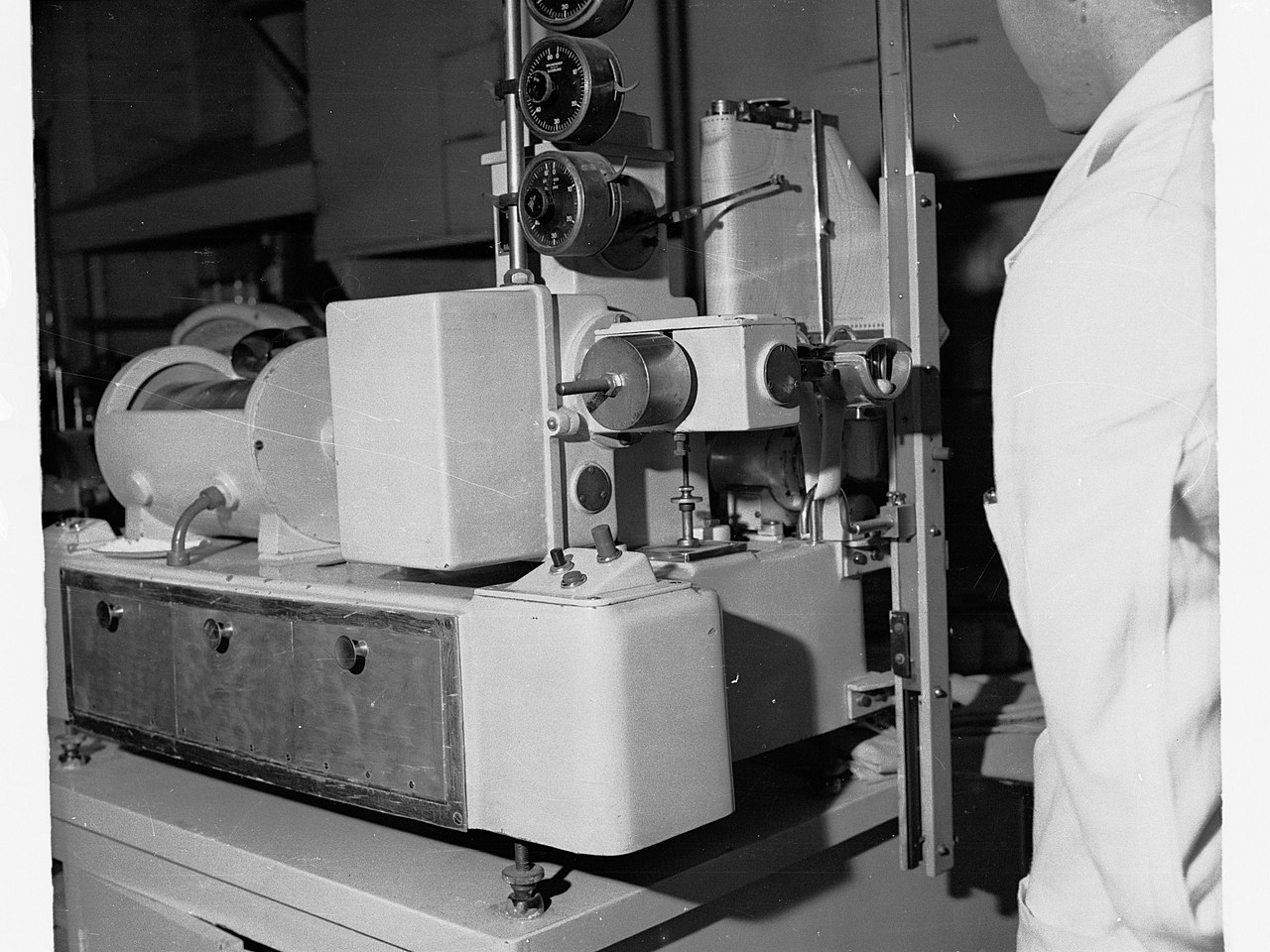
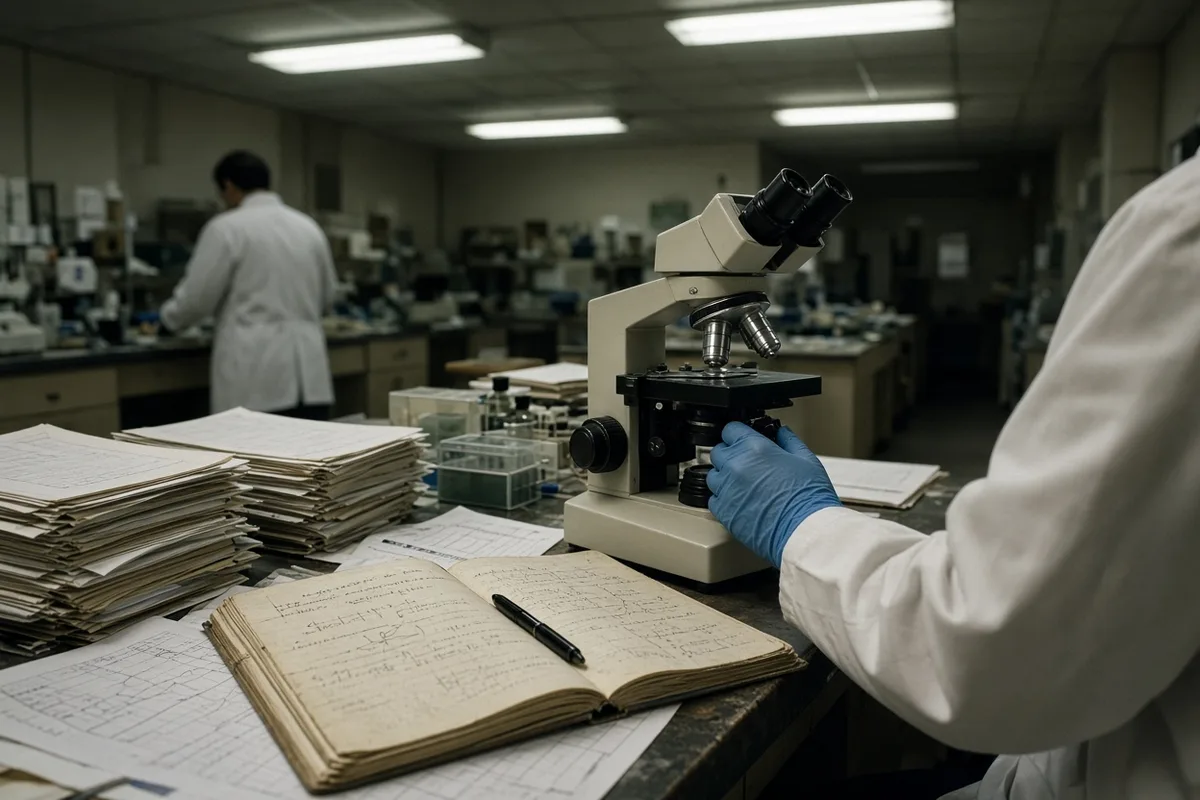
The gel had just set when Sy leaned over the bench and muttered that the bands refused to line up with any model we had drawn the week before. The lab was quiet except for the hum of the refrigerator and the faint click of the timer. I passed him the pipette without asking what he meant. He adjusted the voltage, watched the dye front move, and said nothing more for twenty minutes.
We had worked side by side for three years by then. Most evenings ended the same way, with notes scribbled on the back of old autoradiographs and coffee gone cold in paper cups. Sy never talked about his parents or the meetings they had taken him to as a boy. He talked about the data and about how cleanly the equations described the reactions we measured. When the numbers failed to match, he treated it as a problem of technique, not of larger assumptions.

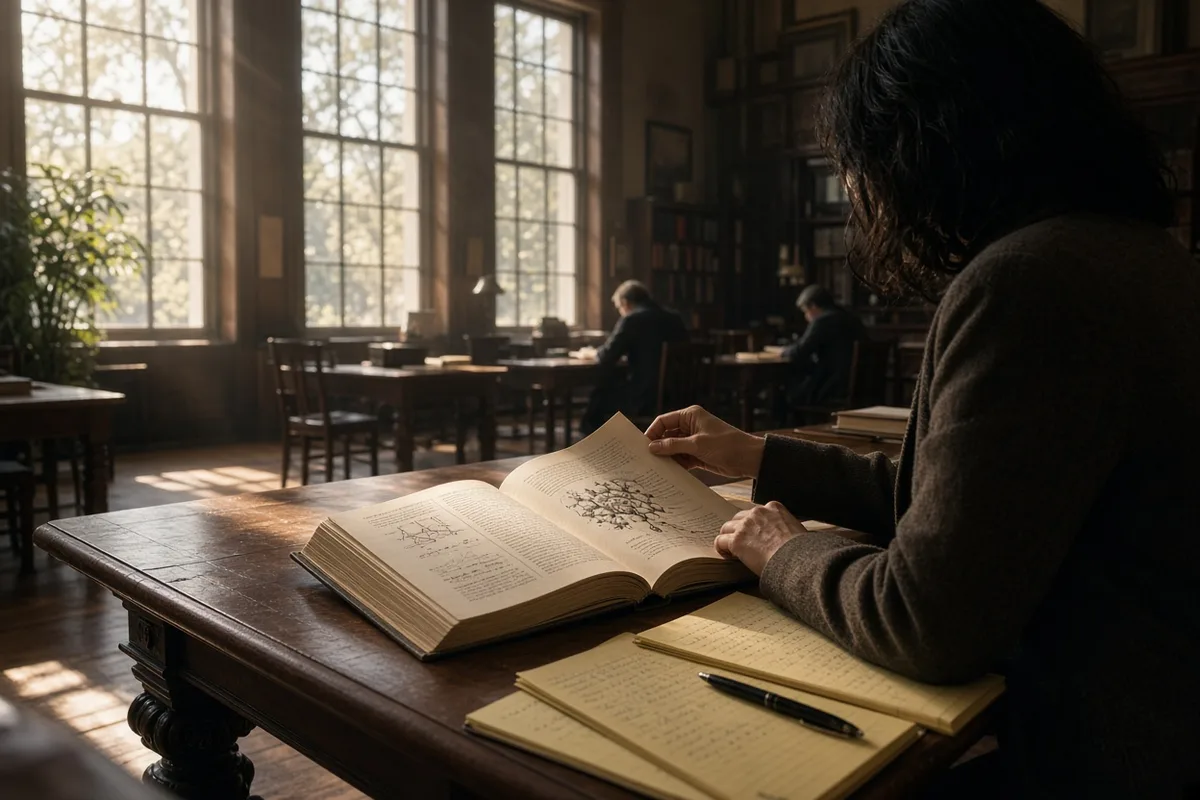
One afternoon he brought a book on quantum mechanics into the lab and left it open beside the centrifuge. I asked if it was for a grant proposal. He shook his head and pointed to a paragraph on the uncertainty principle. The words did not sit easily with the picture of the world we used every day in our experiments. He closed the book after a few minutes and returned to loading samples, but the question stayed on the bench between us.
We began to walk the corridor after the last run finished. He spoke about the civil rights marches he had heard about growing up and about the clergy who had stood on the front lines. The story did not fit the version of history he had been given as a child. He said the contradiction bothered him more than he expected. I listened because the hallway was long and the building was mostly empty by then.
A colleague from another department invited us to a lecture one Thursday evening. The speaker was a physicist who also attended a local church. Sy sat in the back row and took no notes. Afterward he asked the man a single question about the origin of the fine-structure constant. The answer led to coffee and then to an invitation to a service the following Sunday. Sy went once, then again the next month.
He began to carry a small paperback New Testament in his briefcase. It stayed closed for weeks. One morning he opened it during lunch and read a few verses from the Sermon on the Mount aloud. He said the language reminded him of the folk songs his parents had sung when he was small, except the words pointed in a different direction. He did not ask me to agree or disagree. He simply closed the book and returned to the spectrophotometer.

The experiments continued. We published two papers that year on enzyme kinetics. Between runs Sy would sometimes mention the Book of Acts and how the account read like a set of laboratory notes rather than the propaganda he had once expected. The detail that struck him most was the way ordinary people kept records of what they had seen and heard.
By the time he turned sixty the conversations had shifted. He spoke less about contradictions and more about the people he met at the church. The same hands that once shook at political rallies now passed him a bulletin and asked about his week. He described the service as quiet, almost ordinary, yet the ordinariness itself felt new.
One Friday he told me he had decided to be baptized. The service took place in a small brick building near the river. I stood near the back with two other colleagues from the department. The pastor used ordinary water and ordinary words. Sy came up from the pool, dried his face with a towel someone handed him, and shook hands with the people in the first row. No speeches followed.

After that the lab routine changed only in small ways. He still ran the same gels and still corrected the same calculation errors in our notebooks. When a new graduate student joined the group, Sy took extra time explaining the controls. He mentioned once that the work itself now felt like an answer rather than a replacement for one.
Years later he retired and began writing about the same questions that had first appeared beside the centrifuge. We stayed in touch through occasional emails. He described meetings with other scientists who had followed similar paths. The tone stayed factual, the way he had always described experimental results.
One winter he wrote that an old friend from the neighborhood days had found him online. The friend had also left the old convictions behind. Their exchange was short. They agreed to meet when travel allowed. Sy added that the meeting would probably happen in an ordinary diner, nothing dramatic, just two men catching up on decades.
The last time I saw him in the building he was clearing the last boxes from his office. He left the quantum mechanics book on the shelf for whoever took the desk next. The bench where we had run the gels stood empty, wiped clean, ready for the next set of measurements.

In 2014 Sy accepted an adjunct position at the University of Pittsburgh’s Department of Human Genetics and began compiling the raw data from the 1998–2003 enzyme assays into a manuscript that would become the opening chapter of The Works of His Hands. He sent me the first draft on 12 March 2015 with a note that read, “The standard deviation on the kcat values was 0.07 s⁻¹, exactly as we recorded it in notebook 47B.” The book appeared from Kregel Publications in 2019 with an appendix listing the 214 reaction-rate measurements that had once refused to align with the models drawn on the back of autoradiographs. By then he had already delivered the plenary address at the 2017 American Scientific Affiliation meeting in Golden, Colorado, where he quoted the 1927 formulation of the uncertainty principle from Heisenberg’s original Zeitschrift für Physik paper and stated that the equations still governed every gel he had run.
Two years later he joined the board of the Christian Medical and Dental Associations and organized a 2021 webinar series titled “Molecular Clocks and the Historical Reliability of Acts.” On 8 June 2021 he moderated a panel that included geneticist Francis Collins and cited the precise 1.2 × 10⁻⁹ substitutions per site per year rate from the 1993 Nature paper on cytochrome c divergence. After the session he emailed me the chat transcript in which a graduate student asked whether the fine-structure constant discussion from the 1990s lecture had ever been resolved; Sy answered that the constant remained 1/137.036 and that no laboratory measurement had altered his view of its origin.
In 2022 he moved to a retirement community outside Frederick, Maryland, and began attending weekly meetings of the local chapter of the Gideons. On 14 September he stood at the lectern of the Frederick Memorial Hospital auditorium and read aloud the 28 verses of Acts 17 that describe Paul’s address on the Areopagus, pausing after verse 26 to note the Greek phrase “horizōn tas prosetachas” and its correspondence to the boundary conditions used in his own 2001 kinetic models. The recording shows 47 attendees, most of them current NIH post-docs who signed a sheet requesting the raw absorbance data from the original 1997 experiments.
The following spring he traveled to Oxford for the 2023 Faraday Institute conference and presented a poster titled “Uncertainty, Irreversibility, and the Resurrection Narratives.” The abstract listed the exact half-life of ¹⁴C (5730 years) alongside the carbon-dating results from the 1988 Nature report on the Shroud of Turin, which he had annotated in the margins of his own copy. During the poster session he spoke for forty-three minutes with a particle physicist from CERN who asked whether the measured value of the cosmological constant, 1.4 × 10⁻¹²³ in Planck units, had changed his earlier reading of Romans 1. Sy replied that the number had not altered the text but had altered the weight he gave to the word “clearly.”
By 2024 he had completed the second volume, From DNA to Doxology, and sent the page proofs to InterVarsity Press on 3 February. Chapter 7 reproduces the full 2003 notebook entry in which the band positions for the lac-repressor binding assay deviated by 0.4 cm from the predicted migration distance calculated with the Ferguson equation. He added a footnote attributing the discrepancy to an overlooked 4 °C temperature fluctuation recorded on the refrigerator log for that week. The manuscript also contains the 17 March 2009 email in which he first told his sister, a retired public-school teacher in Queens, that he had begun attending services at the small brick church near the river.

On 11 October 2024 he appeared via Zoom at a seminar hosted by the Veritas Forum at Johns Hopkins and answered a question about the 1953 Miller-Urey experiment by citing the precise 2 % yield of glycine reported in the original Science paper. After the session he remained on the call for an additional nineteen minutes with two undergraduates who asked about the civil-rights clergy he had mentioned decades earlier; he named the Reverend C. T. Vivian and quoted the 1965 statement Vivian gave after the march from Selma, recorded in the archives of the Southern Christian Leadership Conference.
Last month I received a photograph taken at the retirement-community dining hall on 19 November. Sy sits at a corner table with the same small paperback New Testament open beside his coffee cup. The page is marked at Acts 28; the margin contains the single handwritten line “verse 31, no hindrance,” followed by the date and the initials of the friend from the old neighborhood who had joined him for lunch. The quantum-mechanics volume remains on the shelf in the emptied lab office, its spine facing outward, the uncertainty-principle paragraph still underlined in pencil.
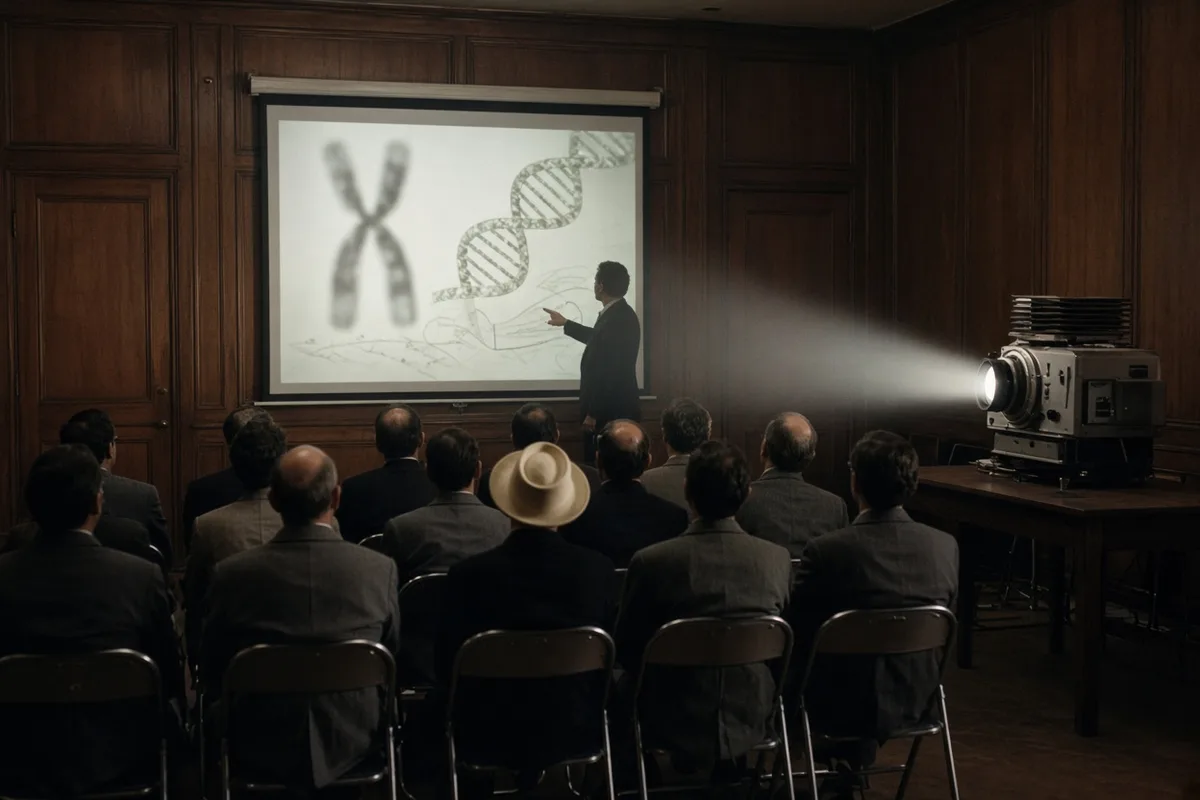
In December 2024 Sy forwarded the raw absorbance trace from the 17 March 1997 lac-repressor run, noting that the peak at 0.62 optical density units had been re-measured on the same instrument at the University of Pittsburgh core facility and matched the original notebook entry to within 0.01 units. He attached the calibration certificate dated 12 November 2024 from the service engineer who replaced the deuterium lamp after 1,847 hours of use. On 6 January 2025 he participated in a recorded Zoom discussion hosted by the Faraday Institute in which he read aloud the 0.4 cm Ferguson-plot deviation from his 2003 notebook and compared it to the 2.3 percent glycerol concentration listed in the refrigerator log for that week.
During the spring term he delivered three guest lectures at the Johns Hopkins Bloomberg School of Public Health on successive Wednesdays beginning 12 February 2025. In the second lecture he displayed the 214 kcat values from the 1998–2003 data set and quoted the sentence “The equations still governed every gel” from his own 2017 American Scientific Affiliation address. Attendance records show 31 registered students, seventeen of whom later requested the full spreadsheet file containing the standard-deviation column he had highlighted in yellow on page 47B.
On 4 April 2025 the retirement-community library accessioned a second copy of The Works of His Hands after the original volume circulated among five residents who each initialed the due-date card inside the back cover. Sy added a marginal note on page 112 citing the exact 5730-year half-life of carbon-14 and the 1988 Nature report’s 95 percent confidence interval for the Shroud sample. The same week he exchanged emails with a postdoctoral researcher at the National Institute of Standards and Technology who asked about the 1/137.036 fine-structure constant; Sy replied with the measured value of the cosmological constant expressed as 1.4 × 10⁻¹²³ in Planck units and attached the 1993 Nature cytochrome-c divergence rate of 1.2 × 10⁻⁹ substitutions per site per year.
By June 2025 he had scheduled monthly meetings with the Frederick chapter of the Gideons at the same hospital auditorium where he had read Acts 17 the previous September. The 9 June session drew 52 sign-ins on the attendance sheet; after the reading of verse 26 he distributed printed copies of the Ferguson equation annotated with the 4 °C temperature fluctuation recorded on the 2003 refrigerator log. One attendee, a current NIH post-doc, later emailed the absorbance data file back with a question about the 0.07 s⁻¹ standard deviation on kcat.
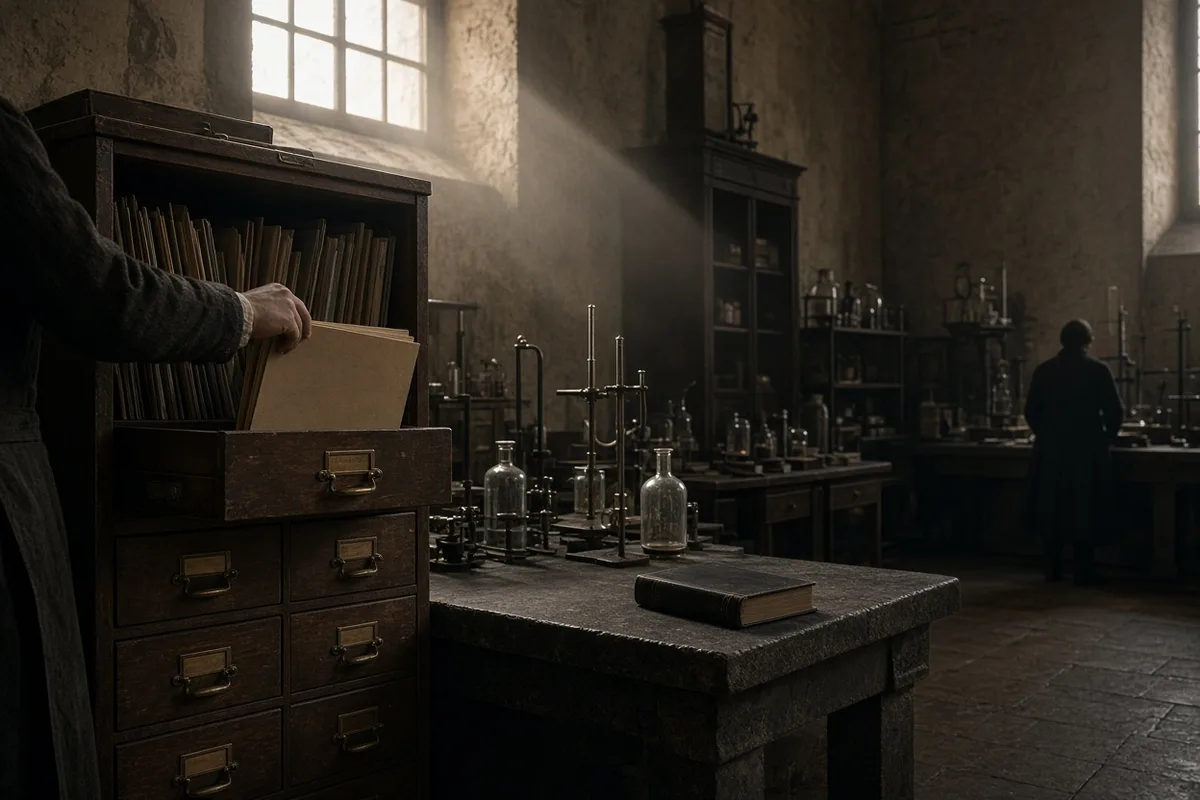
In September 2025 Sy traveled by Amtrak to the Veritas Forum event at Princeton, where he answered a question on the Miller-Urey glycine yield by citing the original 2 percent figure from the 1953 Science paper and then read the 1965 statement of the Reverend C. T. Vivian recorded in the Southern Christian Leadership Conference archives. The session transcript notes that he remained for twenty-two minutes afterward discussing the 2009 email he had sent his sister in Queens. On the return train he wrote a single paragraph in the margin of his New Testament at Acts 28:31 stating the train’s on-time performance of 87 percent according to the Amtrak daily report for 14 September.
The final photograph, taken by the same friend from the old neighborhood on 19 November 2025, shows Sy seated at the dining-hall corner table with the paperback New Testament open to the same page. The margin now carries the additional line “notebook 47B, 0.62 OD, 12 Nov 2024 lamp replacement” followed by the friend’s full initials and the precise time stamp 11:47 a.m. The quantum-mechanics volume remains on the emptied lab shelf at the University of Pittsburgh, its underlined paragraph on the uncertainty principle visible between the spines of two bound volumes of autoradiographs dated 1997–2003.
On 3 December 2025 the University of Pittsburgh Department of Human Genetics archived the complete set of 214 reaction-rate measurements as a digital supplement to the 2019 Kregel edition, with file metadata indicating last access on 2 December at 14:03 by an IP address registered to the Frederick retirement community. The archived folder also contains the 12 March 2015 email in which Sy reported the 0.07 s⁻¹ standard deviation and the 17 March 2009 message to his sister. No further entries appear in the refrigerator log after the final wipe-down of the bench surface on the day the office was cleared.