



Isaacson traces computing breakthroughs to teams and open networks

In 60 seconds
- Ada Lovelace’s 1843 notes cast Babbage’s unbuilt Analytical Engine as a symbol machine for music and images, not just numbers, and she wrote an algorithm for Bernoulli numbers while corresponding constantly with him.
- Claude Shannon’s 1937 thesis turned Boolean logic into on-off relay circuits inside funded US networks; Konrad Zuse’s parallel binary machines, built alone in wartime Germany, stayed historically marginal.
- ENIAC’s 1945 hardware fame hid six women programmers—including Kay McNulty, Jean Bartik, and Betty Holberton—who invented plugboard programming by trial and error, were paid less, and were cut from a famous 1946 photo.
- Bell Labs’ shared-corridor mix produced the 1947 transistor; Fairchild’s later spinoffs, the Fairchildren, plus stock options and venture capital, made talent mobility Silicon Valley’s growth engine.
- ARPA’s packet-switched ARPANET (four nodes in 1969) and open TCP/IP, then Berners-Lee’s unpatented 1989 web, fueled permissionless growth until browsers, search, and platforms pulled toward proprietary control.
- Isaacson’s close holds that mixed government, academic, and industry networks—not solitary heroes—made the digital age, so future innovation needs long-horizon funding and institutions that force cross-discipline contact.
The big idea
Isaacson argues that computing’s breakthroughs came from collaborative networks spanning government, academia, and industry, not lone geniuses. Teams blending humanities and engineering, plus mixed public, private, and academic funding, produced the transistor, the microchip, the PC, and the web.
The book in brief
In 1843 Ada Lovelace annotated Charles Babbage’s unbuilt Analytical Engine and saw a machine that could process any symbol by rules—music, images, what she called poetical science. She wrote an algorithm for Bernoulli numbers and drew a hard line between a calculator and a programmable general machine. Babbage never finished the hardware; patrons fled; the conceptual leap sat without institutional follow-through for a century. Isaacson opens here because the pattern never changes: breadth plus dialogue seeds the leap, and vision without support goes nowhere.
The path from logic to circuits ran through George Boole’s true-false algebra, then Shannon’s 1937 proof that electrical relays could enact it. That blueprint entered Bell Labs and wartime US and British networks that could fund and scale it. Zuse’s binary machines, built in German isolation, showed the countercase: comparable insight without peers and patrons stayed marginal. ENIAC, finished in 1945 at Pennsylvania for Army trajectories under Mauchly and Eckert, made the electronic general-purpose machine real. Six women programmed it by wiring plugboards with no manuals; a 1973 court later stripped clean origin stories by tying key concepts to Atanasoff’s earlier Iowa work.
In 1947 Bardeen, Brattain, and Shockley at Bell Labs replaced vacuum tubes with the transistor inside Mervin Kelly’s forced mix of theorists and experimentalists. Ego and credit fights followed; Shockley’s later Palo Alto firm drove Noyce, Moore, and others out to Fairchild in 1957. Noyce and Kilby hit the integrated circuit in 1958–59; Noyce’s planar version won on manufacturability. Fairchild alumni—the Fairchildren—left again, founding Intel in 1968 with Grove and seeding National Semiconductor, AMD, and a Bay Area norm of collaborative competition unlike IBM’s loyalty hierarchy.
The 1970s shifted outside the big labs. Homebrew Computer Club tinkerers in Menlo Park, steeped in counterculture sharing, backed Wozniak’s Apple I designs; Jobs turned the Apple II (1977) into a finished consumer machine. Xerox PARC had already built the GUI, mouse, and networked personal computing, then failed to ship them; Jobs’s 1979 visit fed Lisa and Macintosh. Gates and Allen’s 1975 BASIC for the Altair and Gates’s 1976 anti-piracy letter staged the open-hacker versus proprietary fight that neither side fully won.
ARPA money and Licklider’s collaboration vision produced ARPANET’s first four university nodes in 1969. Baran and Davies’s packet switching, then Cerf and Kahn’s open TCP/IP, made a failure-resistant, non-proprietary internet anyone could build on. Berners-Lee’s 1989 web at CERN—HTML, HTTP, URLs, given away unpatented—plus Mosaic in 1993 from a federally funded Illinois center, exploded public use. Netscape rose and fell to Microsoft’s bundled Explorer and a late-1990s antitrust case; Page and Brin’s PageRank, commercialized as Google in 1998, rode the same open crawlable structure. Isaacson lands on a repeating cycle of open platforms, proprietary grab, and unfinished tension, and on a prescription: fund long-horizon research, force cross-disciplinary institutions, and stop organizing as if lone genius were the engine.
Context
Walter Isaacson published The Innovators in 2014 as a synthesis of the digital age from Lovelace through Google, aimed at readers tired of solitary-inventor myths. Reviewers in Nature and the Financial Times treated it as a wide public narrative built largely on secondary sources and prior biographies rather than new archives, valuable for the throughline if not for specialist discovery.
The key ideas
1
Poetical science first
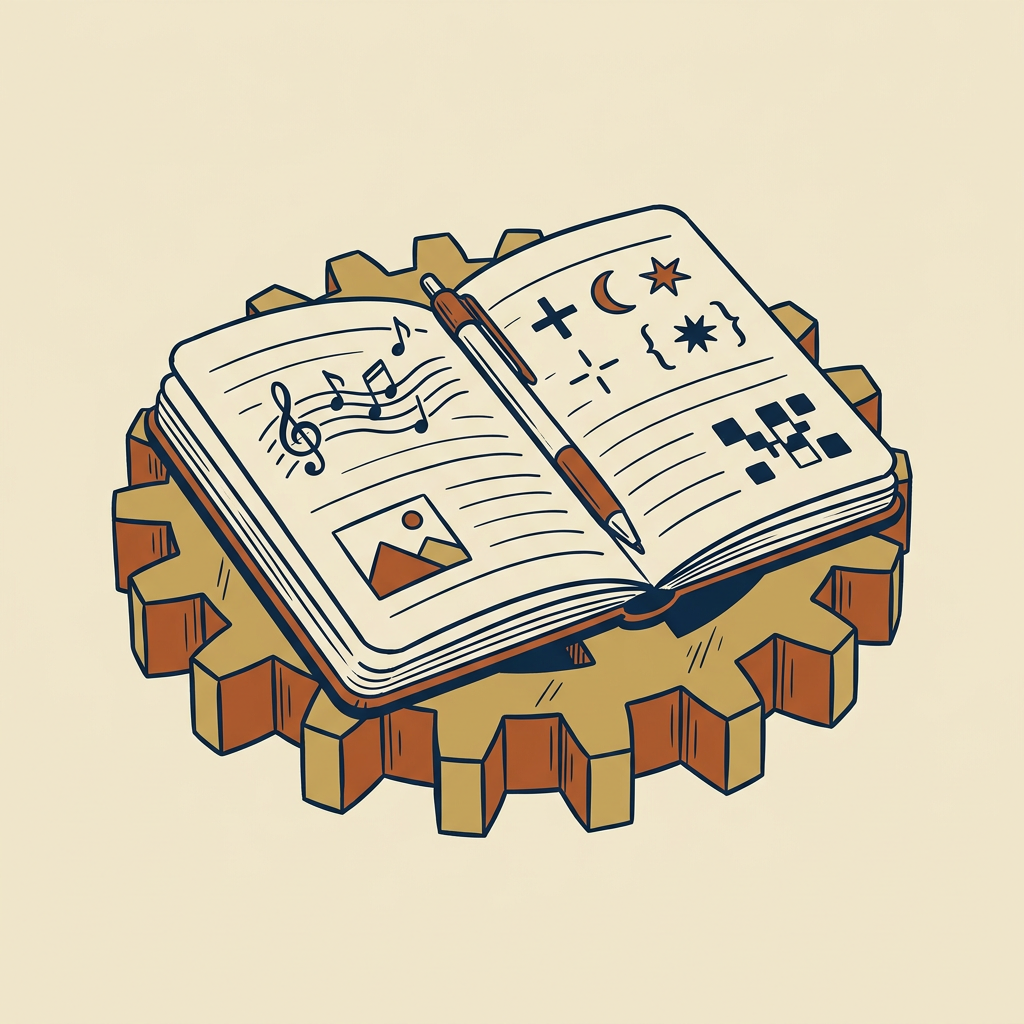
Lovelace showed in 1843 that a calculating engine could manipulate symbols, music, and images—an imaginative leap Babbage’s unfinished hardware never matched alone.
Babbage
Unbuilt Analytical Engine; brilliant, unfinished, patrons alienated
Lovelace
1843 notes, Bernoulli algorithm, poetical science, programmable-machine distinction
Isaacson opens on Ada Lovelace, Byron’s daughter, steered toward mathematics yet fused it with poetic range. Annotating Babbage’s Analytical Engine, she argued the machine could follow rules for any symbol, not only numbers, and named that fusion poetical science.
Her notes included what is often called the first computer program: an algorithm for Bernoulli numbers. She also split a mere computer from a programmable machine that could switch tasks—an conceptual cut Babbage did not finish into working metal.
She did not work alone. She translated, annotated, argued, and extended his designs in constant correspondence. Funding collapse and Babbage’s gift for alienating patrons left the engine unbuilt; the chapter plants the caution that vision without institutions stalls for generations.
In practice: Babbage held the engineering ambition and Lovelace the symbol-processing leap, yet neither alone produced a working machine, and the world waited roughly a century for the pieces to reassemble.
2
Logic becomes switches
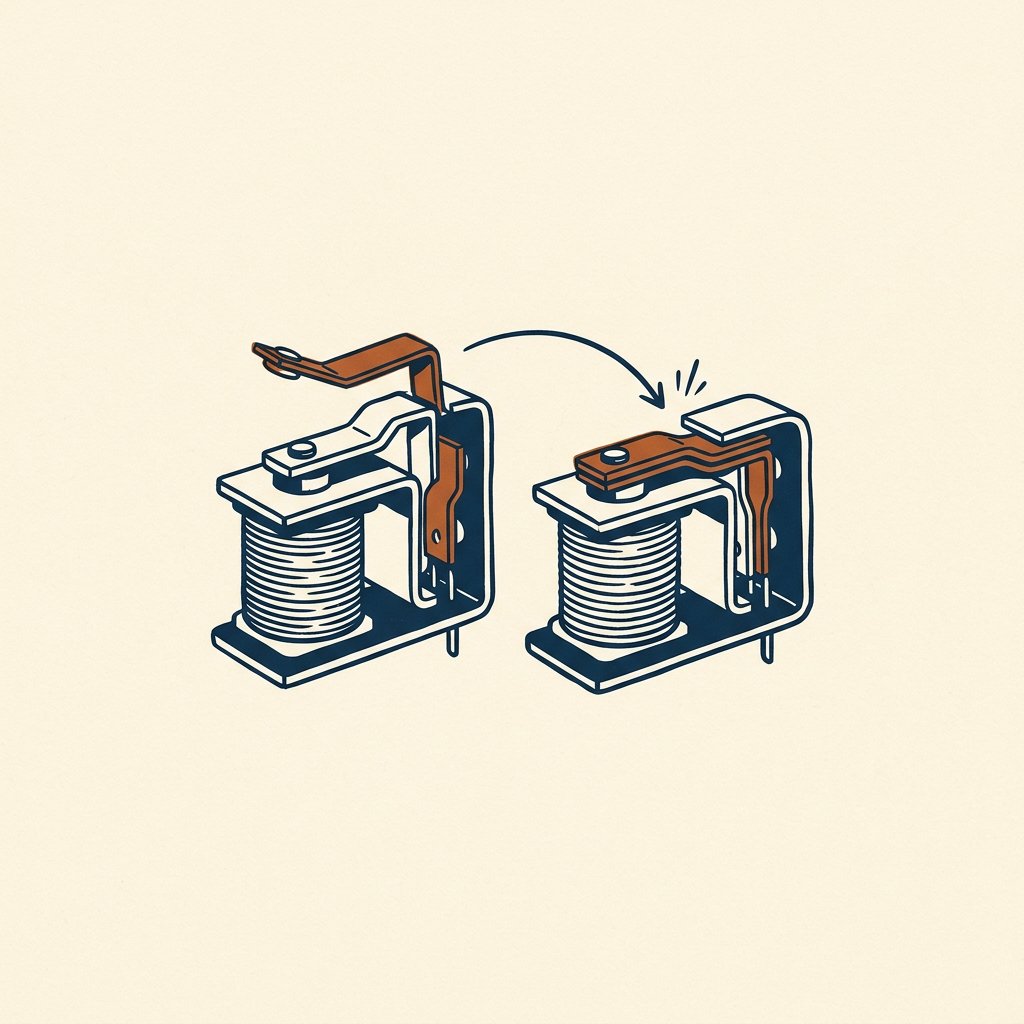
Shannon’s 1937 thesis made Boolean algebra buildable from electrical relays, and that insight spread only because it entered funded research networks Zuse never reached.
Shannon, 1937
Boolean logic on relays inside Bell Labs and MIT networks that could fund, test, scale
Zuse, wartime
Binary machines built alone in Germany; historically marginal influence
George Boole’s nineteenth-century algebra of true and false sat as philosophy until Shannon, at MIT and Bell Labs, showed relay switches could enact any logical or arithmetic operation. Isaacson treats the thesis as a quiet pivot: abstract reasoning gained a hardware blueprint.
Wartime urgency in the US and Britain pulled mathematicians and engineers into shared military-academic projects that could test and scale the idea. The same years held a stark foil.
In Germany, Konrad Zuse built binary calculating machines largely alone, cut off by war from Allied research traffic. Impressive machines, thin later influence. Isaacson uses the split to show that proximity to peers, money, and rival teams often decides whether an idea changes the world or stays in a drawer.
In practice: Shannon’s switches became a shared blueprint inside Bell Labs and wartime labs; Zuse’s comparable binary machines, built in isolation, did not steer the immediate path of electronic computing.
3
Programmers without credit
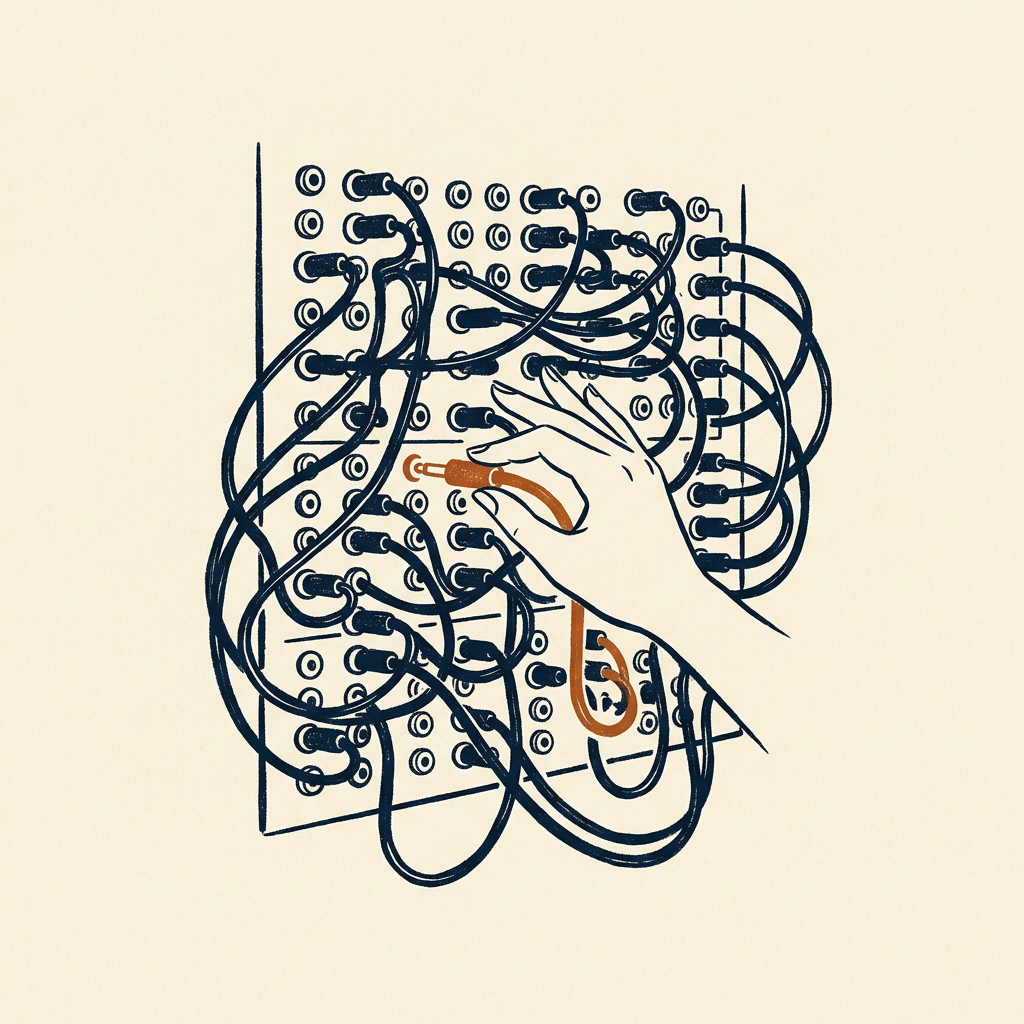
ENIAC’s 1945 success was as much the six women who invented plugboard programming as the hardware Mauchly and Eckert got famous for.
- KKay McNultyENIAC programmer, plugboard wiring
- JJean BartikENIAC programmer, foundational practice
- BBetty HolbertonENIAC programmer, trial-and-error methods
- MMauchly & EckertHardware leads; later patent fight lost in 1973
- JJohn AtanasoffEarlier Iowa work cited when ENIAC patents fell
ENIAC at the University of Pennsylvania calculated artillery trajectories for the Army. Isaacson gives long attention to Kay McNulty, Jean Bartik, Betty Holberton, and three peers who wired plugboards and switches with no manuals and no precedent, inventing practice by trial and error.
They earned less than male counterparts, vanished from a famous 1946 public photograph’s credit, and dropped out of most histories for decades. Hardware took the glory; the work of making it useful disappeared.
Legal aftermath undercut singular origin stories further. Mauchly and Eckert’s patent fight ended in a 1973 federal ruling that key ENIAC concepts derived from John Atanasoff’s earlier Iowa State work. Isaacson positions ENIAC as one node among overlapping university, military, and corporate efforts that borrowed and disputed credit.
In practice: The six ENIAC programmers were excluded from the 1946 photo’s public credit even after physically creating the machine’s first working instruction sequences.
4
The lab as inventor
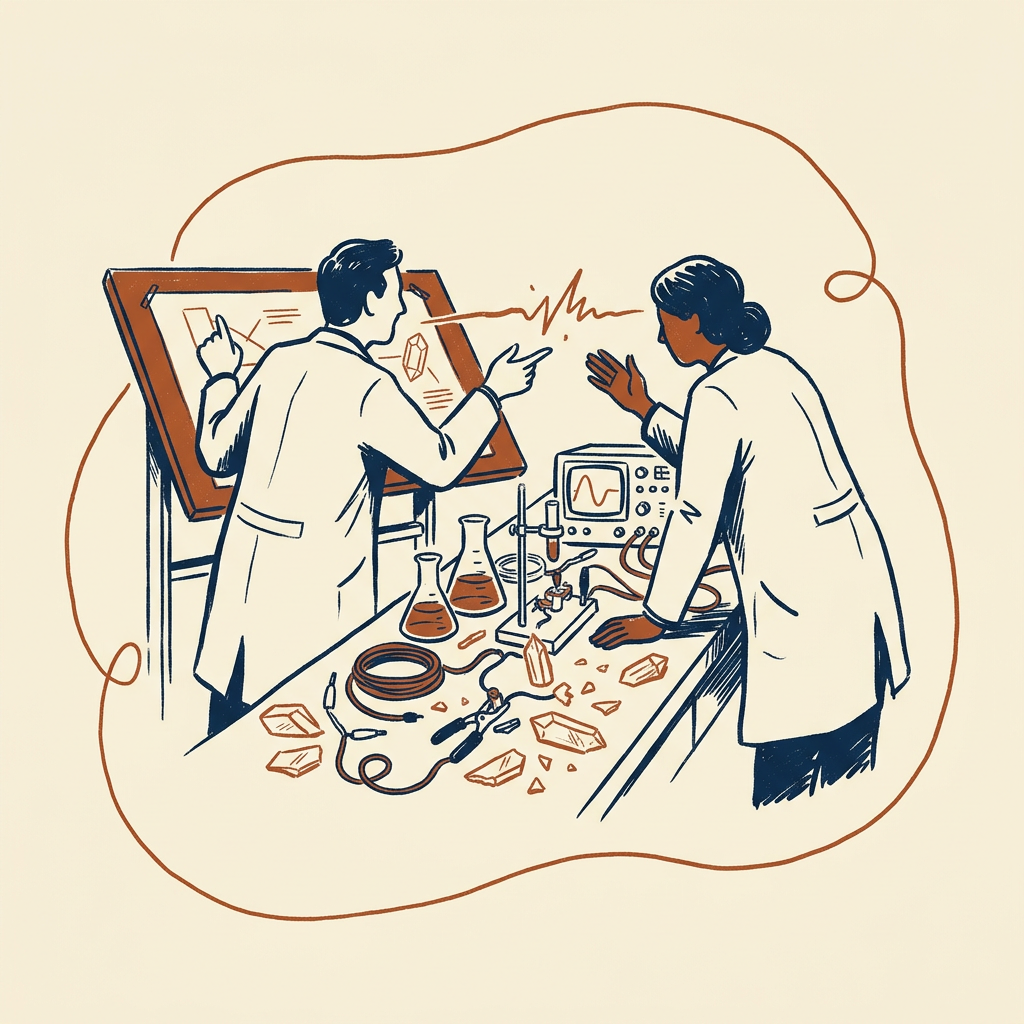
The 1947 transistor emerged from Bell Labs’ deliberate mix of theorists and experimentalists under one roof, not from one man’s solo flash.
- 1Shared roofKelly mixes physicists, chemists, metallurgists, engineers in corridors and cafeterias
- 2FrictionBardeen-Brattain experiments meet Shockley’s theory and resistance
- 31947 devicePoint-contact transistor replaces vacuum tubes
- 4DefectionShockley Semiconductor talent flees to Fairchild, 1957
William Shockley, Walter Brattain, and John Bardeen produced a solid-state replacement for bulky vacuum tubes. Isaacson centers the institution: Mervin Kelly housed physicists, chemists, metallurgists, and engineers in shared corridors and cafeterias expressly to force contact.
Bardeen and Brattain worked as an experimental pair; Shockley, more theoretical and famously difficult, pushed and sometimes blocked them. The device came from friction and correction. Shockley was initially off some key steps, then maneuvered for credit and his own junction design—ego and lab politics shaping whose name stuck.
Shockley left for Palo Alto to found Shockley Semiconductor. Recruited talent, including Robert Noyce and Gordon Moore, fled his management to found Fairchild Semiconductor in 1957, inadvertently seeding Silicon Valley. Government and corporate labs could absorb long, expensive uncertainty small firms could not.
In practice: Kelly’s cafeteria-and-corridor rule put unlike specialists in daily collision; the transistor came out of that collision and the later defections from Shockley’s firm.
5
Spinoffs as the engine
Fairchild’s repeated employee departures—the Fairchildren—plus stock options and venture capital made disloyalty the Bay Area’s innovation mechanism.
- 1Fairchild trainsEngineers learn planar chips and mixed teams
- 2Exit with optionsStock options and venture capital lower the cost of leaving
- 3New firmIntel, AMD, National Semiconductor and others launch
- 4Ideas recirculatePeople and methods cross company lines while firms compete
↻ and round again
Robert Noyce at Fairchild and Jack Kilby at Texas Instruments independently built the integrated circuit in 1958 and 1959, each solving how to link transistors on one piece of material without fragile hand-wiring. Noyce’s planar method, from colleague Jean Hoerni, proved more manufacturable and became the standard.
Isaacson tracks what followed as the larger story. Fairchild became a training ground people left to found new firms. Noyce and Gordon Moore quit in 1968 to start Intel with Andy Grove; other alumni launched National Semiconductor and AMD.
Arthur Rock’s style of stock options and venture capital let engineers leave without losing everything. Ideas and people circulated across rivals even as firms competed—collaborative competition unlike East Coast loyalty culture at IBM. Noyce’s open floors and unreserved parking at Intel became a wider Valley template.
In practice: Noyce and Moore’s 1968 exit from Fairchild to Intel, carrying Grove, was one turn in a diaspora that also produced AMD and National Semiconductor.
6
Garages outrun labs
The personal computer came from Homebrew hobbyists and counterculture sharing, while Xerox PARC invented the GUI then failed to commercialize it.
Homebrew / Apple
Club sharing, Apple I from open schematics, Apple II as finished 1977 consumer box
PARC / Xerox
GUI, mouse, networked PC invented early 1970s; management fails to commercialize
Isaacson moves to the 1970s Homebrew Computer Club in Menlo Park, where Steve Wozniak and others swapped schematics under openness norms borrowed from 1960s counterculture. The Apple I grew from designs Wozniak already shared; Jobs pushed the Apple II in 1977 into a polished consumer product instead of a kit.
Xerox PARC had already created the graphical user interface, the mouse, and networked personal computing in the early 1970s. Xerox management did not bring them to market. Jobs’s 1979 PARC visit fed Apple’s Lisa and Macintosh windows-and-icons work—originators and shippers often diverged.
Bill Gates and Paul Allen founded Microsoft in 1975 around a BASIC interpreter for the Altair 8800. Gates’s 1976 open letter against hobbyist software piracy marked an early clash between hacker sharing and proprietary control. Isaacson frames the era as a contest neither ethic wholly won.
In practice: After the 1979 PARC visit, Apple shipped Lisa and Macintosh with windows and icons while Xerox still sat on its own research.
7
Packets without a center
The internet worked because ARPA funded a decentralized packet design and kept TCP/IP open, a Cold War choice that later allowed permissionless build-out.
- 1960sARPA funds packet-switching research; Licklider’s collaboration vision
- 1969ARPANET links four university nodes
- mid-1970sCerf and Kahn’s TCP/IP interconnect networks as open protocols
Isaacson traces origins to the Defense Department’s ARPA in the 1960s. J.C.R. Licklider pushed interactive networked computing for human collaboration; Bob Taylor and Larry Roberts built ARPANET, linking four university nodes in 1969.
Paul Baran and Donald Davies, working independently, broke messages into packets that could take any route and reassemble, surviving single-point failure. Contracts spread across university labs and firms like BBN so many hands set standards without one commercial owner.
Vint Cerf and Bob Kahn’s mid-1970s TCP/IP let separate networks merge. The protocols stayed non-proprietary—the decision Isaacson calls decisive for later growth. Free-market Valley lore often erases that government-funded open plumbing. Design meant to ride out nuclear war also fit unplanned innovation by anyone with a link.
In practice: ARPANET’s first four university nodes in 1969 ran on packet routes and later open TCP/IP that no company could lock.
8
Openness then control
Each computing layer repeats the same loop: open collaborative platforms spark growth, then proprietary players consolidate, and the tension never fully ends.
- 1Open releaseBerners-Lee gives away web standards; TCP/IP stays non-proprietary
- 2Explosive useMosaic 1993 and later Google 1998 ride crawlable commons
- 3Proprietary pushNetscape monetizes; Microsoft bundles Explorer
- 4Unresolved tensionAntitrust, new platforms; neither full commons nor full control wins
↻ and round again
Tim Berners-Lee built the World Wide Web at CERN in 1989 with HTML, HTTP, and URLs to link documents across the existing internet, then gave the work away unpatented—echoing TCP/IP’s open ethic. Mosaic, from Marc Andreessen and Eric Bina at Illinois’s federally funded supercomputing center in 1993, made the web visual and public.
Andreessen co-founded Netscape, which dominated briefly until Microsoft’s bundled Internet Explorer, backed by the Windows monopoly, displaced it and drew a major late-1990s antitrust case. Isaacson reads the sequence as the book’s pattern made plain: openness grows the pie; growth invites consolidation.
The same arc covers cheap transistor licensing, Xerox missing PARC’s spoils, and Larry Page and Sergey Brin’s PageRank at Stanford, shipped as Google in 1998 on the crawlable web Berners-Lee refused to lock. Isaacson notes the cycle rolling into social media and mobile, still unsettled.
In practice: Mosaic’s 1993 release triggered mass adoption; Netscape’s lead then yielded to Microsoft’s bundled Explorer and antitrust court.
9
Ingredients over heroes
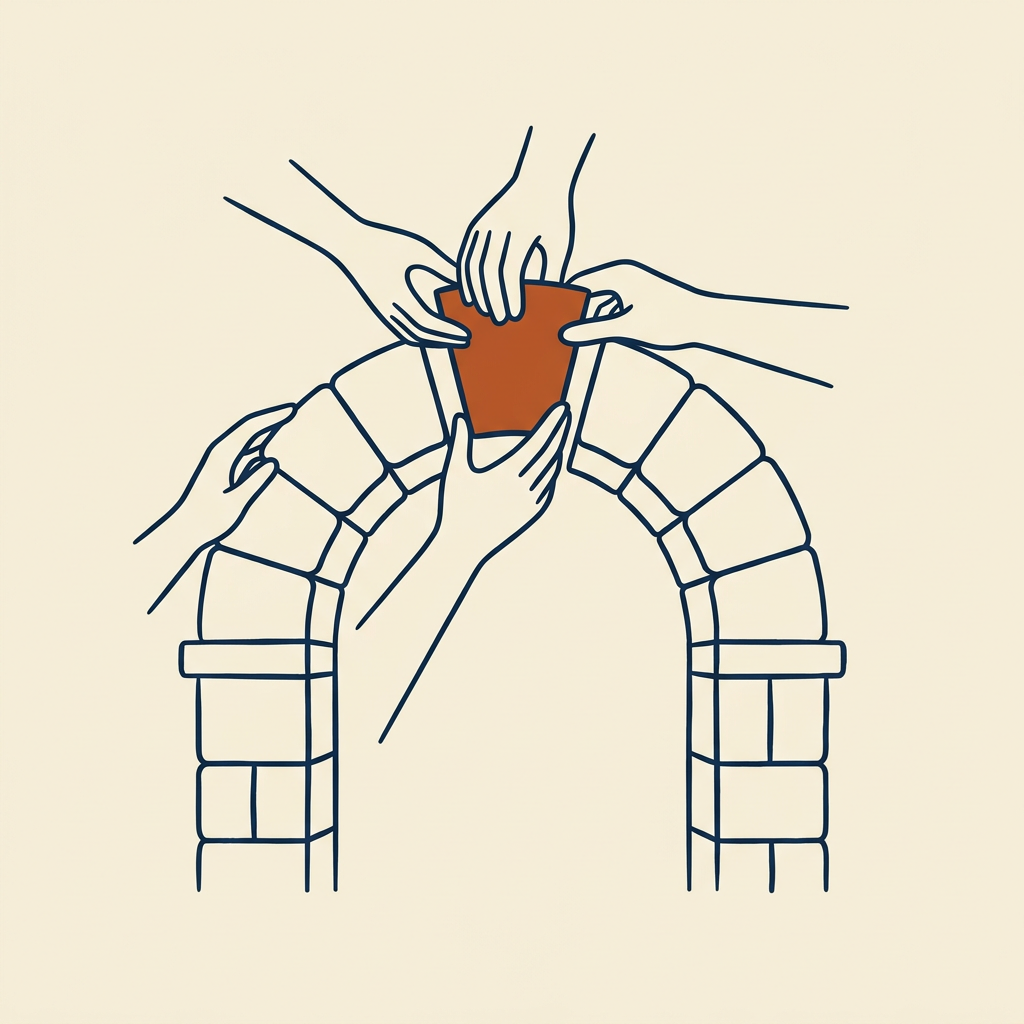
Major digital breakthroughs arrived nearly simultaneously across teams, so Isaacson prescribes funded cross-discipline institutions instead of waiting on isolated genius.
The close gathers Lovelace and Babbage, the transistor trio, ENIAC’s programmers, the Fairchildren, Jobs and Wozniak, Berners-Lee and Andreessen. Isaacson holds that credit myths distort how to organize next.
Recurring structural pieces include ARPA-style government money for long-horizon work markets underfund; labs like Bell and PARC that force discipline mixing; Bay Area tolerance for failure and for leaving firms; and pairings of visionaries with executors who grind ideas into products. Connectors such as Noyce or Jobs often mattered more for assembly and translation than for originating every core technique.
Simultaneous invention—the transistor, the integrated circuit, packet switching—counts as evidence that shared intellectual environments reach readiness together. His prescription is concrete: fund basic research, build institutions that compel collaboration across lines, and stop concentrating credit and control in single heroic names.
In practice: Packet switching, the transistor, and the integrated circuit each had independent teams reach the result near the same time, which Isaacson reads as environment maturity rather than one unrepeatable mind.
Key terms
- poetical science Lovelace’s name for a machine that follows rules for symbols, music, and images, not only numbers
- Fairchildren Engineers who left Fairchild Semiconductor to found Intel, AMD, National Semiconductor, and other firms
- packet switching Breaking messages into pieces that travel any open route and reassemble, avoiding one point of failure
- TCP/IP Open protocols Cerf and Kahn designed so separate networks could interconnect without a proprietary owner
- Homebrew Computer Club 1970s Menlo Park hobbyist group that freely swapped schematics and shaped early personal computing
- PageRank Page and Brin’s Stanford algorithm for ranking web pages, commercialized as Google in 1998
- planar technology Hoerni’s Fairchild method that made Noyce’s integrated circuit manufacturable at scale
- great man theory The lone-hero credit story Isaacson’s cases are written to dismantle
What to do
- List every uncredited collaborator on your last project by name, the way ENIAC’s six programmers were left off the 1946 photo.
- Seat unlike disciplines in shared space on your next team, copying Mervin Kelly’s Bell Labs corridor-and-cafeteria rule.
- Shield one research line from quarterly pressure this quarter, following the open-ended ARPA and PARC funding pattern.
- If you lead a small firm, check whether exits to new ventures are punished—Fairchild’s spinoffs and stock options made that permeability the growth path.
- When telling a product origin story, name the prior lab or club the insight came from, as with Jobs’s 1979 PARC visit and Apple’s later GUI.
Questions to think with
- Where does your workplace still hand glory to hardware or to a single founder while erasing implementers?
- Would Shannon’s relay insight have spread on Zuse’s isolated path, and what does that say about how you fund quiet infrastructure?
- Which of your tools rest on unpatented commons like TCP/IP or Berners-Lee’s web stack, and who is trying to close them now?
- If the transistor, microchip, and packet switching each had near-simultaneous inventors, how should your org rewrite performance credit?
- What long-horizon bet would die under your current incentives but might have survived inside ARPA or early Bell Labs?
The other side
Isaacson’s collaboration thesis persuades as description but stays thin as causation: he shows many hands on each breakthrough yet never explains rigorously why Bell Labs shipped while equally staffed, funded Xerox PARC failed commercially, gesturing at culture without a testable claim. The story is almost entirely Cold War American; Zuse gets a few pages, Turing and Bletchley Park’s Colossus get less than their weight, and postwar Japanese, Chinese, and Indian work nearly vanishes. Nature and Financial Times reviewers flagged heavy reliance on secondary sources and prior biographies, especially on Lovelace and Turing, so specialists met synthesis rather than new facts. Historian Marie Hicks and others argue the ENIAC women’s chapter treats sexism as credit lapses instead of enforced labor policy that systematically pushed women out of computing. Written in 2014, the book’s celebration of Valley disruption and talent mobility also reads blind to later fights over labor, monopoly, and social harm it never anticipates.
Who it's for
Tech workers who want the human history behind tools they already use, plus managers and founders seeking evidence on team structure versus lone-genius myth. General readers curious about how invention actually happens will get the fullest payoff from the complete book.