


Teresa of Avila Reforms Carmelite Convents
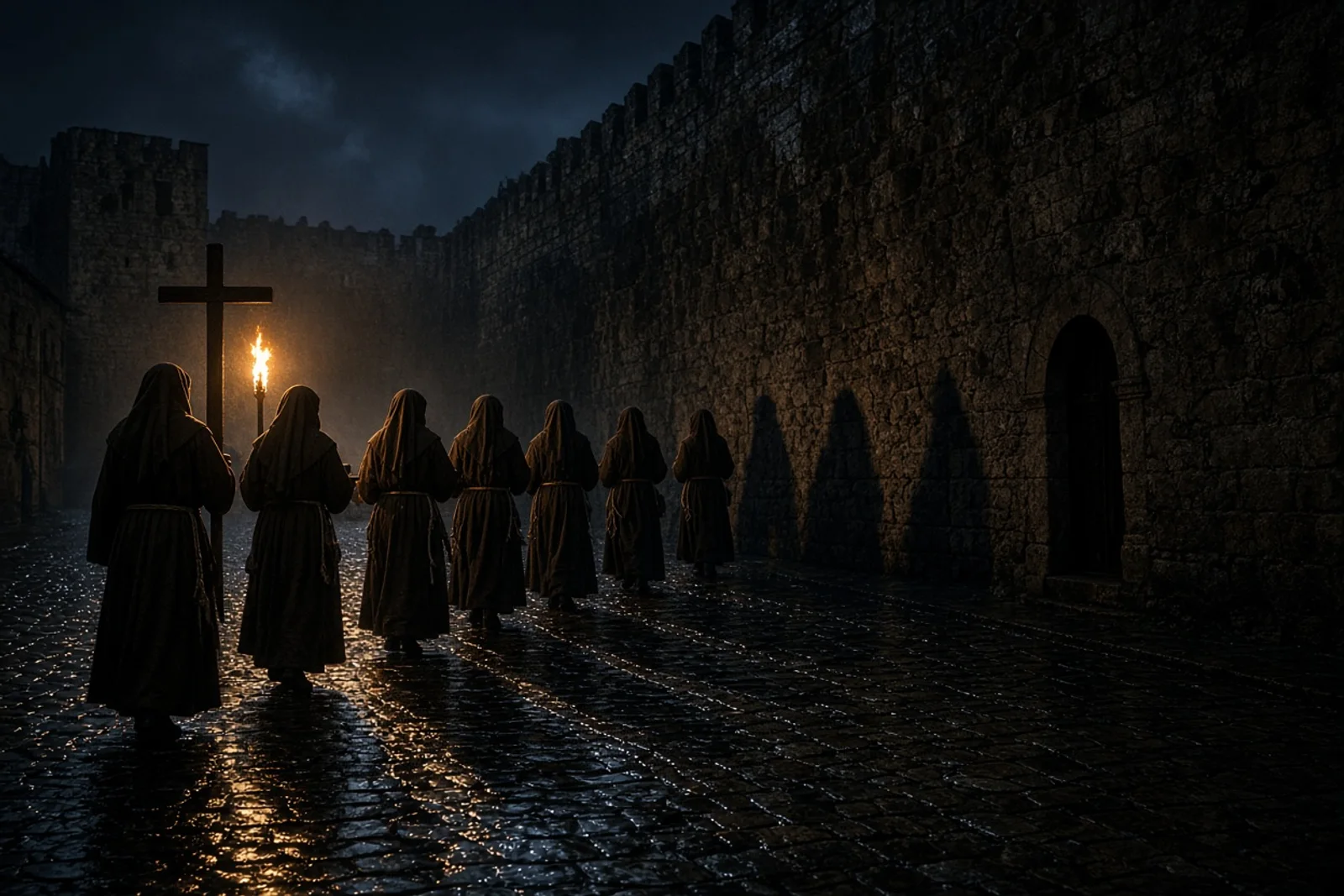
The cart wheel caught on a loose stone outside the new house and the whole load of blankets slid toward the street. I grabbed the edge with both hands and braced my shoulder against the sideboard until the driver could back the mule. Dust rose in the late August heat and stuck to my sleeves. From the corner I could see the small doorway we had whitewashed the week before. Two women already waited inside with the keys.
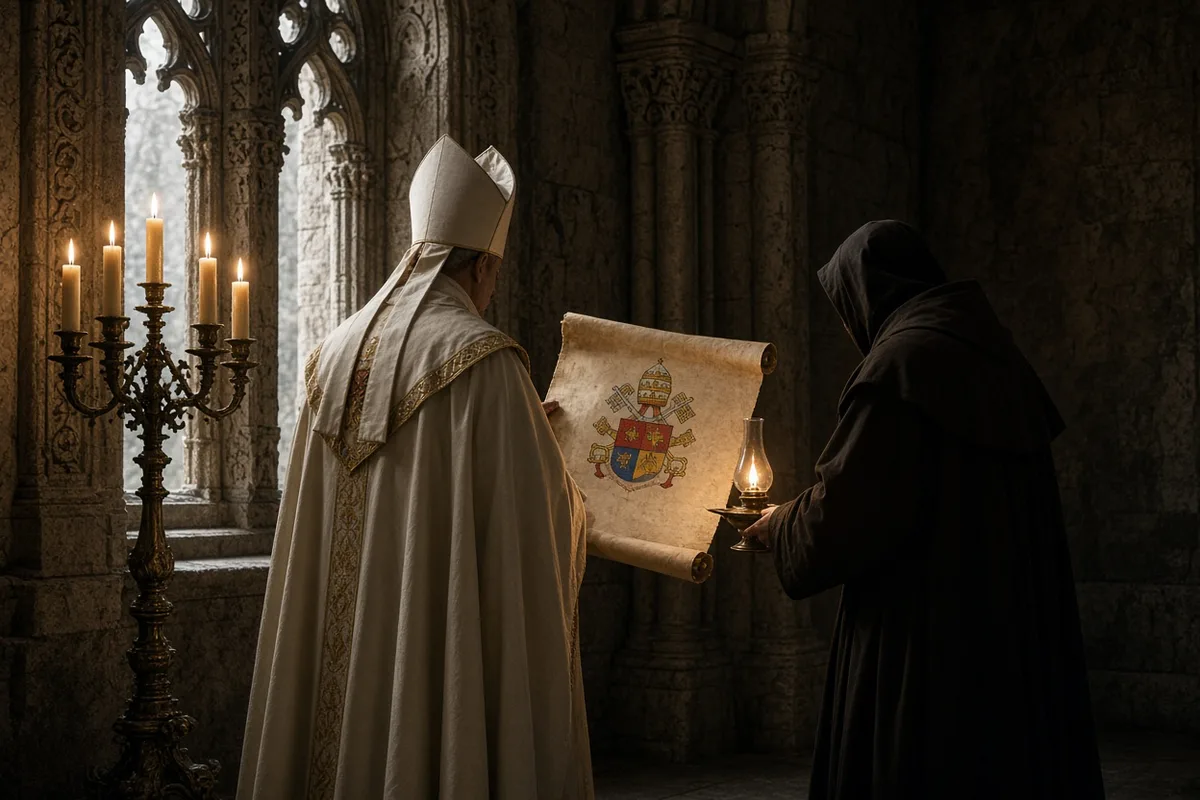
Teresa had come back from Toledo only days earlier. She looked thinner than when she left, and the lines around her mouth were deeper, but she moved through the empty rooms as if she already heard prayers there. She told us the Roman brief had arrived the night she reached Avila. The paper carried the date of February, yet it had taken five months to cross the mountains and find her. She read it aloud once in the sacristy of the Incarnation and then folded it away.

That same afternoon Peter of Alcantara arrived on foot from his own poor house. He was thin enough that the wind seemed to pass through his habit. He asked for the Bishop at once. The two men spoke in the garden behind the cathedral for nearly an hour. When they came out the Bishop’s face was set, but he gave his word that the foundation could proceed without further delay. Peter came straight to the new house afterward and stood in the doorway, nodding at the bare walls as if he could already see the grille in place.
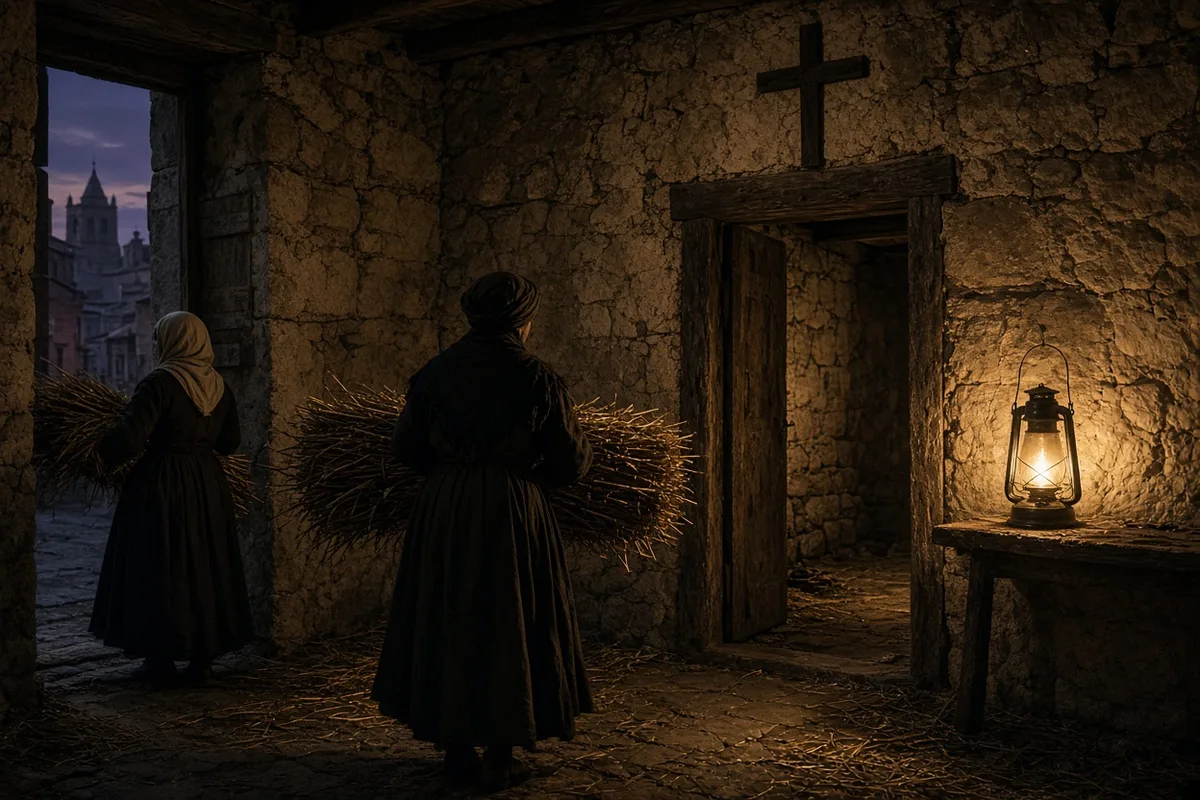
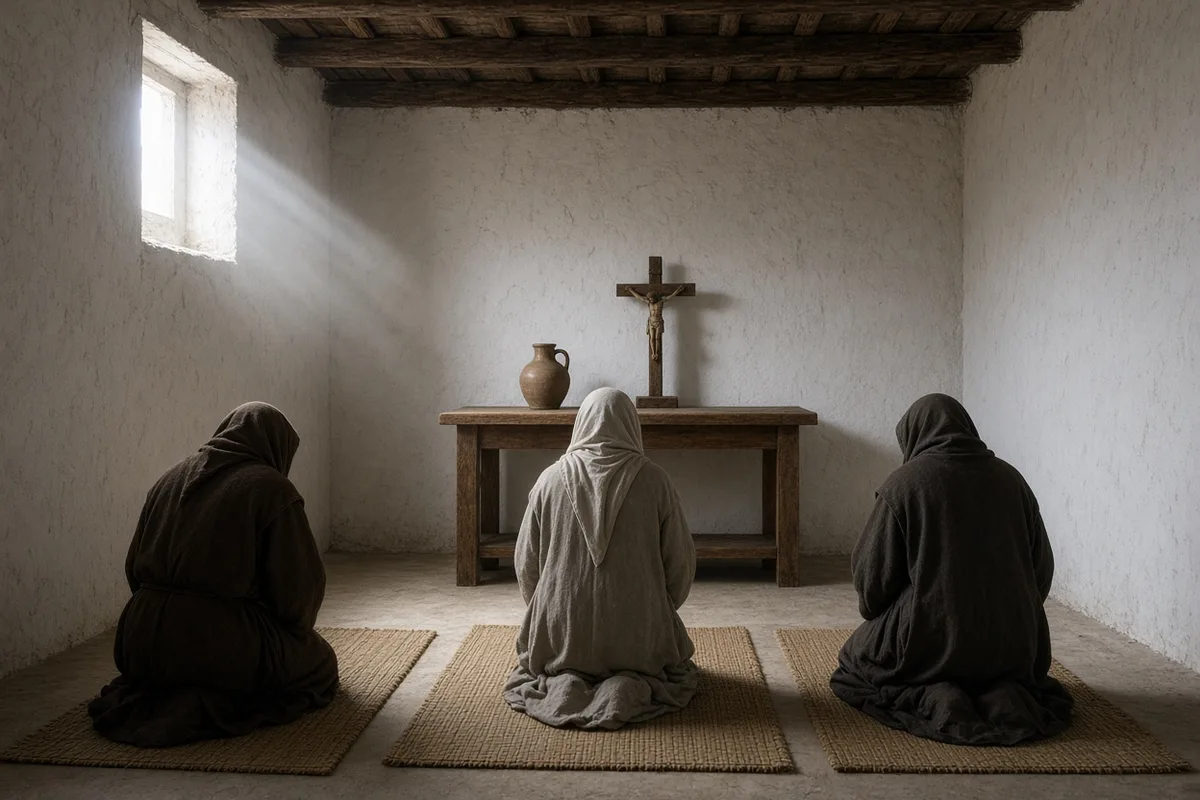
We worked through the night of the twenty-third. The mattresses were straw and the sheets were coarse, yet Teresa insisted nothing else be added. She placed a small wooden cross on the wall of the room that would serve as chapel and left it there without a cloth or candlestick. At dawn on the twenty-fourth the first Mass was said by a priest from the cathedral who had been sworn to silence. Four of us stood outside the door while the words were spoken inside. We heard the bell that Teresa had brought from the Incarnation ring once, thin and clear.

By mid-morning the street began to fill. Some neighbors had heard only that a new convent was opening without dowries or servants. A few shouted that the city already had enough poor nuns and that this one would draw alms away from the older houses. Teresa stayed inside with the three sisters who had come with her. She did not answer the calls. The Bishop’s representative posted a notice on the church door confirming the license, yet the knot of people did not thin until the afternoon heat drove them to shade.
One of the women who had helped carry water that morning asked me whether the new rule would really keep the sisters from speaking to their families. I said I did not know. Teresa had told us only that the convent would live on daily work and alms, nothing more. She had written the same thing in the papers she sent to Rome months before. The exact words were not repeated in the street, but the meaning traveled.

By evening the crowd had gone. We lit a single lamp in the chapel and left the door open so any passerby could see the light. Teresa knelt on the floor without a cushion. The straw in the mattresses rustled when the other sisters lay down. Outside, the mule driver unhitched his cart and led the animal away. The street settled into the ordinary sounds of night—dogs, a distant cart, shutters closing.
In the weeks that followed the opposition cooled into ordinary talk. Some families began to leave small baskets of bread at the door. Others crossed the street rather than pass close. Teresa kept the rule she had set: no visitors beyond the grille, no private conversations, the hours of prayer fixed. She spent part of each morning copying the account of her own life that the confessors had asked her to finish. The pages were stacked on a low table in the corner of the room she used for writing.

One afternoon a messenger arrived from the Incarnation asking whether she would return to settle some remaining business. She sent word that she would come when the new community was steady. That evening she walked the short cloister twice, counting the steps aloud so the sisters would know the distance in the dark. The walls still smelled of fresh lime.
By the end of September the first novice arrived, a girl whose family lived two streets away. She brought no dowry. Teresa received her at the grille and asked only whether she understood that the house would remain poor. The girl answered that she did. The door closed again and the street returned to its usual traffic.
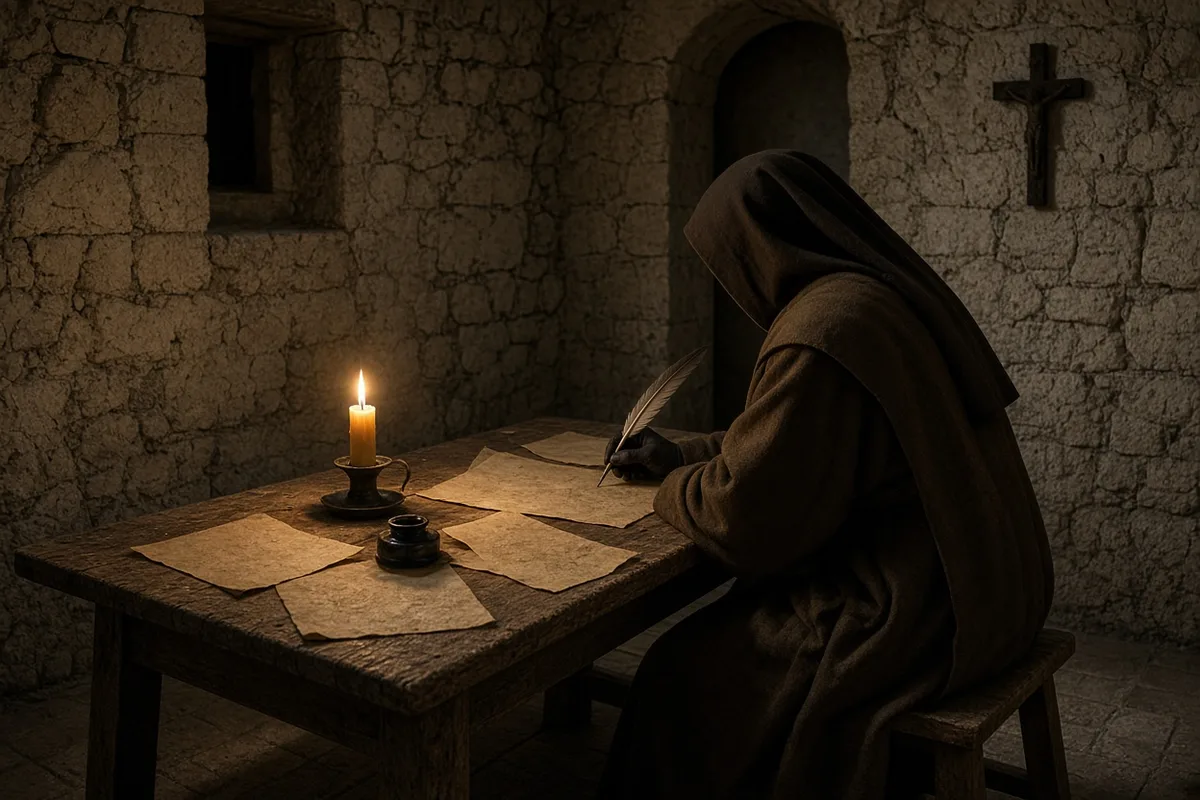
I kept the key to the outer door for several months after that. Each time I turned it I remembered the morning the wheel had stuck and the way the blankets had nearly spilled. The house never grew larger. The bell rang at the same hours. Teresa stayed until the following spring, then left for other places where the same pattern would be repeated. The small cross remained on the chapel wall. The straw mattresses were replaced one by one as they wore out. The street outside continued to carry carts and voices, but the sound of the bell carried farther than either.
In the spring of 1563 Teresa set out on the road to Medina del Campo with two sisters and a single mule carrying their bundles of coarse wool habits. She carried letters from the Bishop of Avila dated March of that year granting permission to found another house under the same rule of enclosure and manual labor. The journey took four days over roads still soft from winter rains, and she stopped each night at wayside inns where the innkeepers recorded her name in their ledgers as “Teresa de Ahumada, reformer of Carmel.” By the time she reached Medina the community at Saint Joseph in Avila had grown to twelve sisters, each assigned a turn at the spinning wheel that produced the thread sold each Saturday at the market near the Roman bridge.
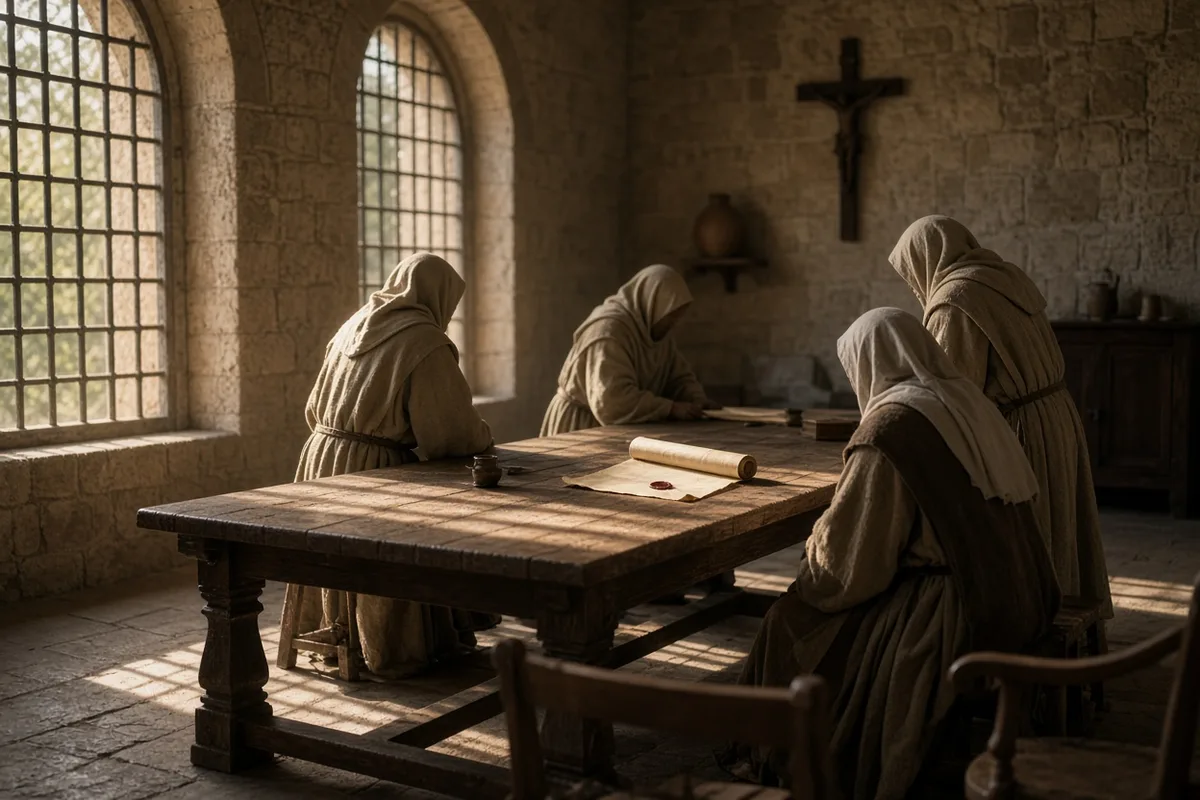
Teresa returned briefly in 1567 to inspect the accounts before leaving again, this time with Antonio de Heredia and the young Juan de Yepes, later known as John of the Cross, to establish the first house for friars at Duruelo on 28 November of that year. The friars’ dwelling measured twelve feet by twenty and contained only five straw pallets and a wooden crucifix purchased for eight maravedís. John wrote in a letter preserved in the archives of the Carmelite monastery at Alba de Tormes that the bell rope was a length of cord taken from a discarded well bucket and that the first Office was recited by the light of a single tallow candle. Teresa visited Duruelo the following February and noted in her own hand on the margin of the foundation book that the friars’ feet were bare and that the snow had drifted through the broken roof during the night office.
Between 1568 and 1571 she founded houses at Malagón, Valladolid, and Toledo, each time requiring the new community to begin with no fixed income and no more than thirteen sisters. At Toledo in 1569 the city council recorded a protest signed by seventeen merchants who objected to the loss of alms that had previously gone to the older convents; the document lists the exact sum of 340 reales collected in the first quarter at Saint Joseph in Avila and compares it to the 210 reales given to the Incarnation that same period. Teresa answered the council in a letter dated 3 May 1569 that the new rule forbade any sister from receiving personal gifts, and she quoted the clause she had written in the constitutions: “Let no one keep anything as her own, not even a book or a rosary, beyond what is needed for the day’s work.”
The years after 1575 brought the conflict with the Calced Carmelites and the temporary exile of Teresa from Castile by order of the Apostolic Visitor Fernández de Velasco. She spent those months at the convent of the Incarnation in Avila, where the nuns voted 24 to 19 in favor of returning to the mitigated rule; the tally appears in the chapter book still kept in the sacristy. When the papal brief of 1580 finally confirmed the separation of the Discalced, Teresa was already traveling again, founding the last convents at Villanueva de la Jara in February 1580 and at Granada in January 1582. At Granada she dictated the final chapters of The Interior Castle to her secretary Ana de San Bartolomé, who recorded the date 7 June 1582 at the top of the manuscript page now held in the Escorial library.
Teresa died at Alba de Tormes on 4 October 1582 at the age of sixty-seven. The nuns there listed the exact hour as nine in the evening and noted that her last words were the verse from the Song of Songs she had repeated daily for thirty years: “I am my Beloved’s and my Beloved is mine.” Her body was buried in the habit of the Incarnation because the Discalced habit had not yet arrived from Avila. In 1585 the remains were moved to a new tomb inside the same church; the translation record states that the coffin weighed eighty-three pounds and that the scent of lilies was noticed by the twelve witnesses whose names are appended to the notarial act.
The convent at Saint Joseph in Avila continued without expansion. By 1600 the community numbered twenty-two sisters, and the account book for that year shows an income of 1,872 maravedís from the sale of linen thread and 940 maravedís received in alms. The small cross Teresa had placed on the chapel wall in 1562 remained in place until 1620, when it was replaced by a silver one given by the Duke of Alba; the original cross was then hung above the door of the room where Teresa had written. The bell that had been carried from the Incarnation cracked in 1713 and was recast from the same metal, the new inscription recording the original weight of fourteen pounds and the date of the first foundation.
In the centuries that followed, the street outside the convent retained its narrow width and the same paving stones laid in the sixteenth century. The outer door still requires the same iron key that turned in the lock each evening, and the sound of the bell at the hours of prayer continues to reach the cathedral square. The last sister who remembered seeing the original straw mattresses replaced was María de San José, who died in 1647 at the age of ninety-one; her name appears in the death register as the final entry for that decade. The house has never added a second story, and the grille in the parlor remains the one forged in 1562 by the blacksmith whose receipt for six reales is preserved among the foundation papers.
The grille still bears the mark of the blacksmith’s hammer on its lower hinge, a dent recorded in the 1563 inventory as measuring two fingers wide. In 1594 the prioress María de San Jerónimo ordered the hinge repaired with iron from the same forge; the receipt lists four maravedís paid to the smith’s son, whose name appears as Pedro López on the ledger kept in the sacristy cupboard. That same year the community accepted a donation of twelve lengths of linen from the widow of a cathedral canon, entered in the account book as received on 11 March with the condition that none of the sisters embroider personal initials on the cloth.
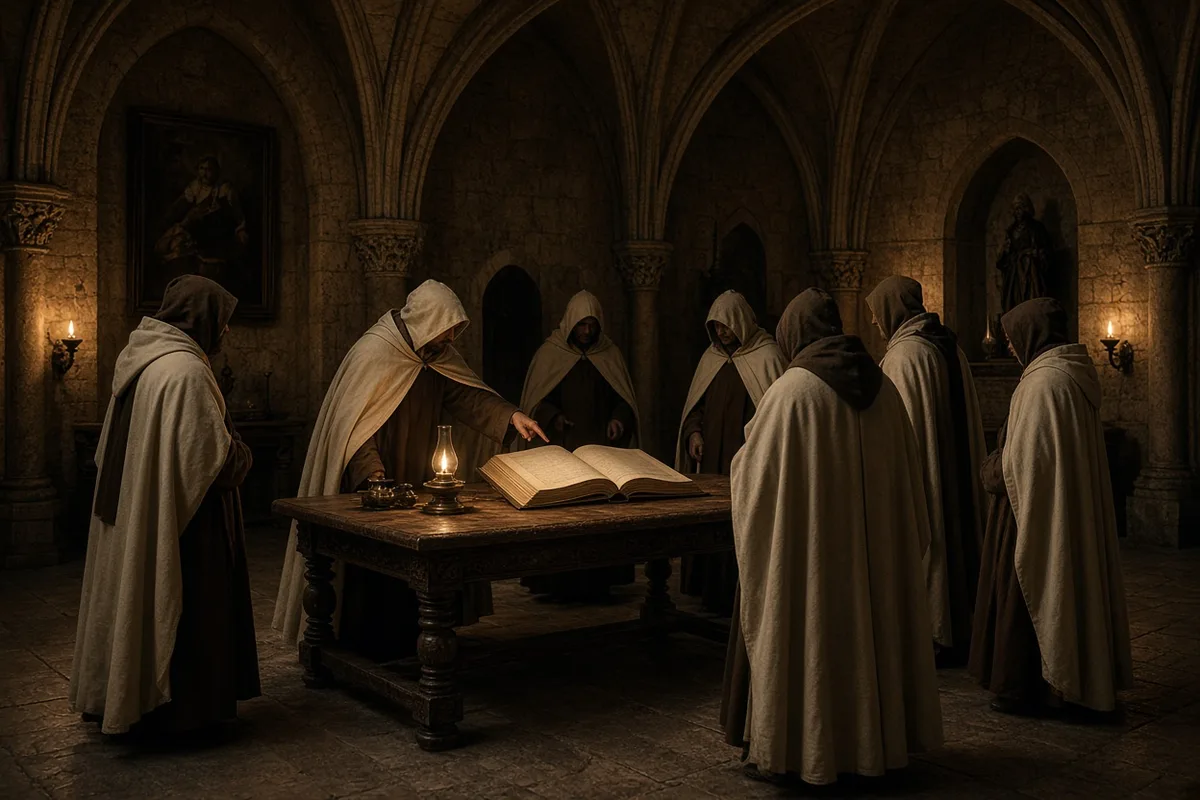
During the visitation of 1607 the provincial of the Discalced Carmelites, Tomás de Jesús, counted seventeen sisters present at the morning chapter and noted in his report that the original constitutions remained posted on the refectory wall without alteration. He recorded the exact number of hours the sisters spent at manual labor each day as five, and he quoted the phrase “the wheel turns for bread, not for ornament” from the copy of the rule kept in the turn room. The report, signed on 4 October, is preserved in the provincial archive at Madrid.
In 1812 French troops quartered in Avila removed the silver cross that had hung above the writing room since 1620; the requisition order signed by Captain Dubois lists its weight as eleven ounces and its destination as the mint at Valladolid. The sisters replaced it the following year with a wooden cross carved by a local joiner whose bill for three reales is glued into the margin of the 1813 account book. The original silver cross never returned.
By 1875 the community numbered fourteen sisters, according to the diocesan census conducted on 1 January of that year. The census lists each name and age, beginning with the prioress, Ana de la Cruz, aged seventy-two, and ending with the youngest novice, aged nineteen. Income that year came to 2,340 maravedís from thread sales and 1,150 maravedís in alms, figures written in the same hand that recorded the purchase of two new straw mattresses in September.
During the months of July and August 1936 the sisters remained inside the enclosure while militiamen searched neighboring houses; the death register notes that the oldest member, Josefa de Santa Teresa, died on 19 August at the age of eighty-four without having left her cell. The register records the cause as listed by the attending physician as “natural exhaustion” and states that the community recited the full Office for the Dead at the grille because no priest could enter.
After 1975 the convent accepted no further novices for eleven years. In 1986 the bishop of Avila, Felipe Fernández García, granted permission for three postulants to enter on the condition that each bring a certificate of completed secondary education; the permission is filed under protocol number 214 in the diocesan chancery. The first of those postulants, later named María del Carmen de la Santísima Trinidad, pronounced her solemn vows on 8 December 1989.
The last sister to have entered before the year 2000, Isabel de los Ángeles, died on 14 February 2021 at the age of ninety-three. The death notice posted on the parlor grille records that she had spun thread at the same wheel used in 1562 until her eighty-eighth year and that her final request was for the bell to be rung once after Compline, as it had been on the night the first Mass was said.