



The brain rebuilds itself through competition, not fixed wiring

In 60 seconds
- Genes only lay rough scaffolding; experience and competition fill the brain's trillions of connections.
- Active useful input expands cortical maps while quiet regions shrink, producing phantom limbs and skill-driven enlargements.
- After stroke or hemispherectomy, healthy tissue can absorb lost functions when intensive use tips the competition.
- Vibrating interfaces can deliver sound or novel data through skin, and the brain learns channels evolution never built.
- Critical developmental windows make many forms of rewiring far easier early in life, so plasticity is powerful but not ageless.
- Sensory loss becomes a routing problem and brain injury a redistribution problem once the hardwired metaphor is dropped.
The big idea
Eagleman argues the brain is livewired: a system that continuously reallocates cortical territory through competition for relevant input rather than executing a genetic blueprint. That single principle, he holds, explains recovery after injury, devices that substitute or add senses, and why the old hardwired metaphor underestimates both resilience and technological possibility.
The book in brief
Eagleman opens by rejecting the hardwired computer metaphor for the brain. Genes, he notes, cannot encode the trillions of synaptic connections; they only lay down rough scaffolding and general rules. Fine structure emerges from experience, and cortical tissue takes on whatever job its input teaches it.
He then details the competitive mechanism behind that flexibility. Active, meaningful signals claim neural real estate while unused regions lose ground to neighbors. The same land-grab dynamic that shapes ordinary development also explains why maps reorganize after loss of a body part and why intensive skill practice physically enlarges the corresponding cortical areas.
From there the argument turns medical. Stroke and traumatic injury destroy tissue, yet patients sometimes regain functions when homologous regions or neighboring areas absorb the work. Children who lose an entire hemisphere can still develop largely normal cognition and movement because the remaining half reorganizes under competitive pressure. Therapies that force use of a weakened pathway outperform passive rest for the same reason.
That task-agnostic quality of cortex opens a technological path. If tissue will interpret whatever useful stream reaches it, devices can deliver sight-like or sound-like information through touch, or even feed data evolution never supplied. Eagleman frames eyes, ears, and skin as interchangeable peripherals attached to a general-purpose processor.
He closes by checking the enthusiasm. Developmental windows make some rewiring far easier early in life; after those windows close, circuits lock in enough to support stable memory and identity. Livewiring remains powerful across the lifespan but is neither unlimited nor age-independent. The payoff is practical: treat sensory loss as a routing problem, injury as a redistribution problem, and the edges of human perception as an engineering question.
Context
David Eagleman published Livewired in 2020 to replace the hardwired metaphor with a competitive, plastic model of the brain. The book mattered because it pushed neuroscience away from strict localization and toward implications for medicine and technology that a fixed-circuit view could not predict.
The key ideas

1
Myth of hardwiring
The brain's structure is not fixed by genes but is largely set by competition that adapts to whatever input arrives.
Hardwired myth
Fixed components perform fixed functions set by genes
Livewired view
Territory is allocated by competition for useful input
Eagleman dismantles the idea that the brain arrives as finished circuitry with fixed jobs. Genes simply lack the bandwidth to specify trillions of synaptic connections, so they supply only rough scaffolding and general rules. Experience writes the rest.
That principle shows up when default input never arrives. Visual cortex tissue in someone born blind does not sit idle; touch and sound processing colonize it. The tissue's function is assigned by use, not pre-labeled by DNA.
He likens the result to a city that grows from traffic and resource flow rather than a master plan drawn in advance. Cortical territory follows relevance and competition. Once structure is understood as provisional, sensory loss, injury, and new devices all become forces that can reshape the system in ways a hardwired model would never allow.
In practice: Braille readers show activation in visual cortex when reading with their fingers, evidence that the same tissue has taken on touch processing.
2
Competition for territory
Neurons and regions survive and expand by competing for input and relevance, not by running a preset program.
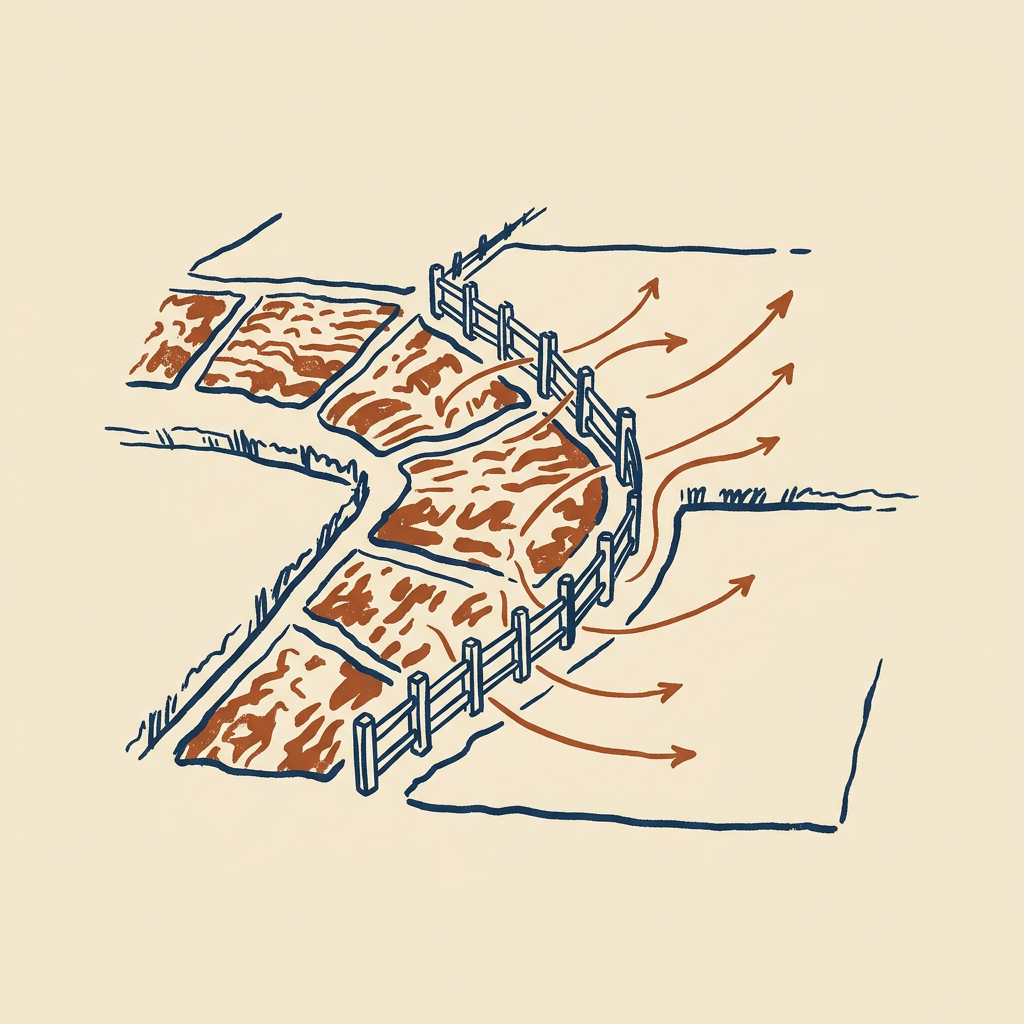
Once the hardwiring metaphor falls, Eagleman turns to the land-grab mechanics that replace it. Neurons receiving frequent, meaningful signals strengthen connections and claim more cortical real estate; quiet neighbors lose ground.
The same dynamic continues through life, though it slows with age. When a finger or limb goes unused, its cortical map shrinks and adjacent active regions expand into the space. After amputation the territory once devoted to an arm does not go dark; the neighboring face map invades it, so a touch on the cheek can feel as if it comes from the missing hand.
Intensive practice runs the process in reverse. Repeated finger work on a string instrument enlarges the cortical area representing those fingers compared with non-musicians. Eagleman treats this competitive principle as more fundamental than any region's traditional job description: a region does whatever the input teaches it to do. Recovery from damage, on this view, is less about fixing broken hardware than about tipping the competition so undamaged tissue inherits the work.
In practice: After arm amputation, the face map expands into former arm territory on the cortical strip, producing phantom sensations when the cheek is touched—work Eagleman draws from Ramachandran.

3
Recovery after injury
The brain routes around damage by reassigning tasks to healthy tissue, so traditional static prognoses often underestimate recovery.
Stroke and traumatic injury supply Eagleman's main clinical evidence. When the region that once controlled speech is destroyed, some patients regain language by recruiting homologous areas in the opposite hemisphere. The undamaged side simply wins the competition for the job.
More extreme still are cases in which an entire hemisphere is removed to halt severe seizures. Children in that situation can develop remarkably normal cognition and movement because the remaining half reorganizes to absorb lost duties. A strict localization model, in which each region holds one irreplaceable function, cannot explain that outcome.
He points to constraint-induced movement therapy as a practical lever: restraining the healthy limb forces use of the weakened one and drives resource reallocation toward the damaged pathway, beating passive rest. He is careful that the process is not limitless. Age, damage size and location, and rehab intensity all matter, and residual deficits usually remain. Still, he argues clinicians should stop declaring functions permanently lost the moment responsible tissue is destroyed and instead ask what competitive pressures could recruit neighbors.
In practice: Children who undergo hemispherectomy to stop seizures can still build largely normal cognitive and motor function as the remaining hemisphere takes on the missing work.
4
Sensory substitution
Because cortex is task-agnostic, devices can route new data through unused sensory pathways and the brain will learn to read them.
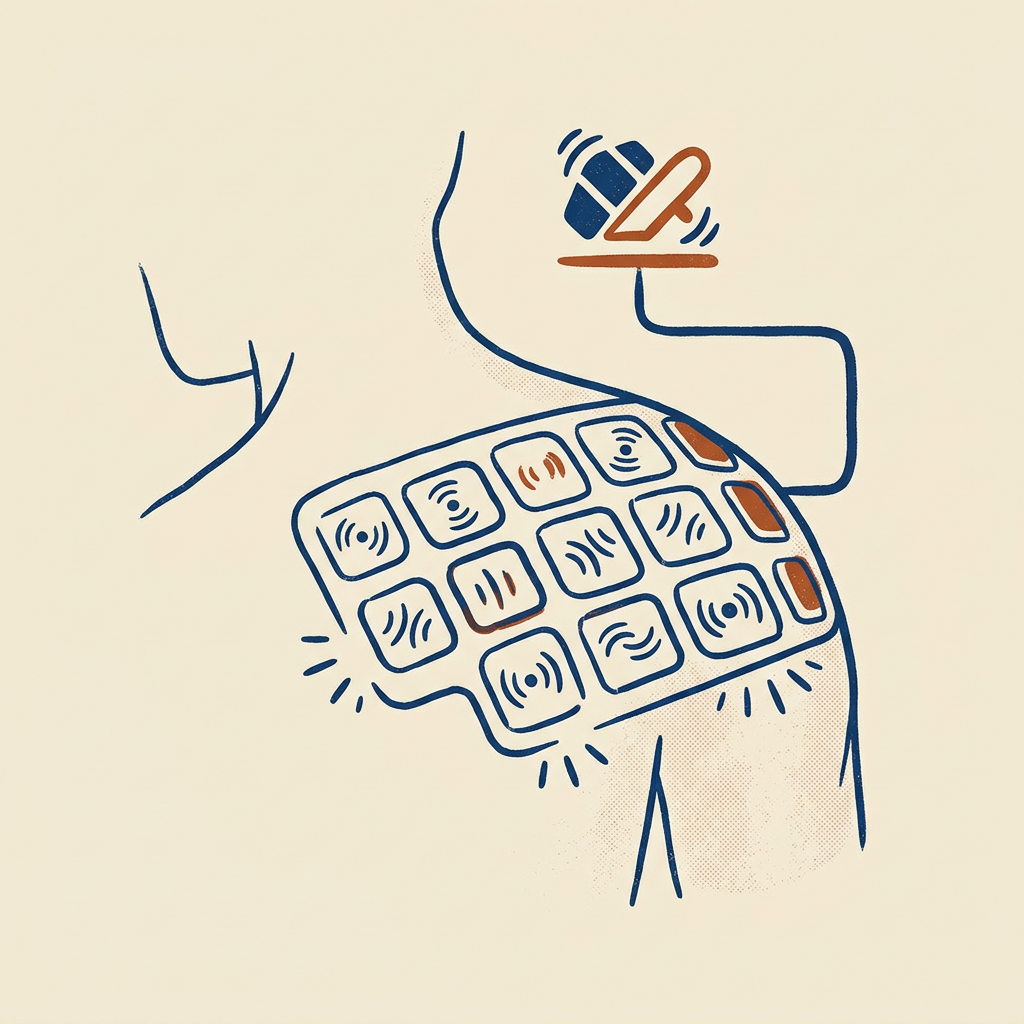
If cortical tissue will do whatever job its input teaches, then the delivery channel matters less than the usefulness of the stream. Eagleman traces this idea through sensory substitution history, beginning with grids of vibrating motors driven by a camera so blind participants could learn to perceive shapes through skin on the back.
His own lab extended the approach with a vibrating vest that turns sound into torso vibration patterns. Deaf users, after weeks of training, learn to understand speech through touch alone. The device does not simulate hearing; it supplies raw data and lets the brain discover structure the same way it once learned to parse light on the retina.
He names the underlying principle the Potato Head model: eyes, ears, and skin are plug-and-play peripherals, and the brain is the general-purpose processor behind them. Deafness and blindness become data-delivery problems solvable by any open channel. Success still depends on the competitive plasticity described earlier; the new pathway must win cortical territory through early or intensive use.
In practice: Eagleman's VEST converts sound into patterns across the torso so deaf users can learn to understand speech by touch after weeks of training.
5
Expanding the sensorium
Human senses are an arbitrary set technology can deliberately enlarge beyond what evolution supplied.
Substitution replaces a missing channel. Eagleman next asks why stop there. If the brain will interpret novel streams, humans can add senses that never existed in our species.
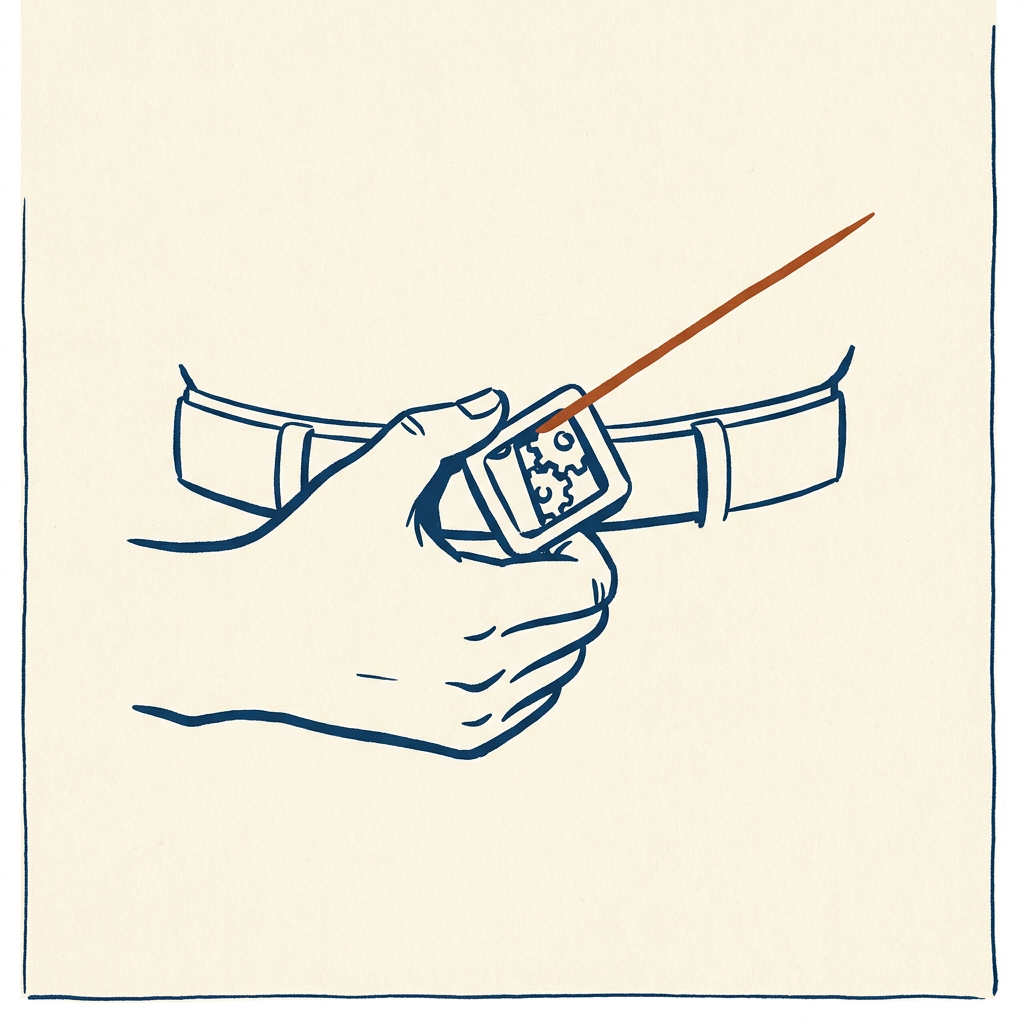
He describes a vibrating belt that continuously signals magnetic north; wearers learn to navigate by it without conscious effort. The same vest-style interface can carry real-time stock or weather data, giving an intuitive feel for information with no natural sensory counterpart. He calls this sensory addition.
Biological precedents make the leap less alien: migratory birds already sense magnetic fields and certain fish sense electrical fields. Nothing in principle blocks a human brain from learning an artificially delivered version of such data. Perception, on this account, is not a direct readout of the world but a construction built from whichever streams arrive and get reinforced. Engineered streams would simply widen that construction and raise longer questions about interfaces that skip peripheral organs altogether.
In practice: A belt that always buzzes toward magnetic north lets wearers develop an unconscious compass sense for navigation.

6
Limits of plasticity
Rewiring capacity is gated by developmental windows that make many changes far easier early in life than later.
After chapters of flexibility, Eagleman introduces the brake. Critical periods are windows when particular forms of plasticity run high; afterward they taper sharply. Classic deprivation work on kittens showed that blocking vision in one eye during an early window left the animal functionally blind in that eye for life, because cortex had already been ceded to the open eye.
Human congenital cataracts follow a parallel pattern. If left uncorrected through early childhood, vision may never fully develop even after later surgery, though intensive training can still produce partial late gains. Language learning shows a milder version: second-language fluency and accent grow harder after childhood without becoming impossible.
The trade-off is necessary. A brain that stayed maximally plastic forever could not stabilize long-term memory, expertise, or a consistent identity. Some circuits must lock. Livewiring is real and lifelong, yet age-related and region-specific constraints mean therapies and devices built on plasticity must respect those windows—especially the premium on early intervention for childhood sensory deficits.
In practice: Kittens deprived of input to one eye during a critical early window, in the Hubel and Wiesel work Eagleman cites, remained blind in that eye even after normal vision was restored later.
Key terms
- livewired Eagleman's term for a brain that continuously reconfigures itself from the data it receives rather than running fixed programs
- hardwired The rejected metaphor of the brain as fixed circuitry with genetically assigned jobs
- land-grab dynamic The competitive process in which active neurons claim cortical territory and quiet ones lose it
- sensory substitution Routing information for a lost sense through a different open channel so the brain can learn to interpret it
- Potato Head model The claim that sense organs are interchangeable peripherals and the brain is a general-purpose processor behind them
- sensory addition Deliberately giving the brain new data streams that have no missing sense to replace, such as magnetic or market data
- critical periods Developmental windows when certain kinds of rewiring are especially easy and after which they taper
- VEST A vibrating vest that turns sound into torso vibration patterns so users can learn to perceive auditory information by touch
What to do
- Push for intensive, repetitive rehabilitation early after stroke or injury instead of accepting a static prognosis
- Design wearable or accessibility tools around frequent, relevant, behaviorally meaningful data rather than passive alerts
- Front-load high-repetition practice when learning a language, instrument, or rehab movement while plasticity is most responsive
Questions to think with
- If cortical jobs are assigned by competition, how should doctors rewrite the prognosis conversation after focal brain damage?
- What data stream with no natural sense would be most worth teaching the brain through a substitution device?
- Where does the need for stable memory and identity set a hard stop on how plastic we should want adult brains to stay?
- How much of a substitution device's success depends on the user's attention and motivation rather than the hardware alone?
- What would change in education if critical-period constraints were treated as design parameters rather than afterthoughts?
The other side
The book is strongest on documented cortical remapping, lab-tested substitution devices, and recovery after stroke and hemispherectomy. It thins out in the speculative sensory-addition chapters, where compass-belt and stock-vibration work comes from small pilots, often tied to Eagleman's company Neosensory, without large-scale or long-term everyday validation. Critics noted that learning to detect a trained pattern is not the same as adding whole new senses, and the book sometimes blurs that gap. It also underplays how heavily plasticity depends on attention, motivation, and behavioral relevance, which limits how far lab results generalize. Scope is narrow: little is said about maladaptive rewiring in mood disorders, addiction, or trauma. Brain-computer interface timelines receive more optimism than infection risk and signal degradation currently warrant.
Who it's for
Readers tracking how injury patients regain functions once written off as lost, engineers building sensory substitution or brain-machine tools, and psychology or neuroscience students looking for a plasticity-first alternative to strict localization textbooks will get the most from the full argument.