


The Candy Bomber of Berlin Airlift
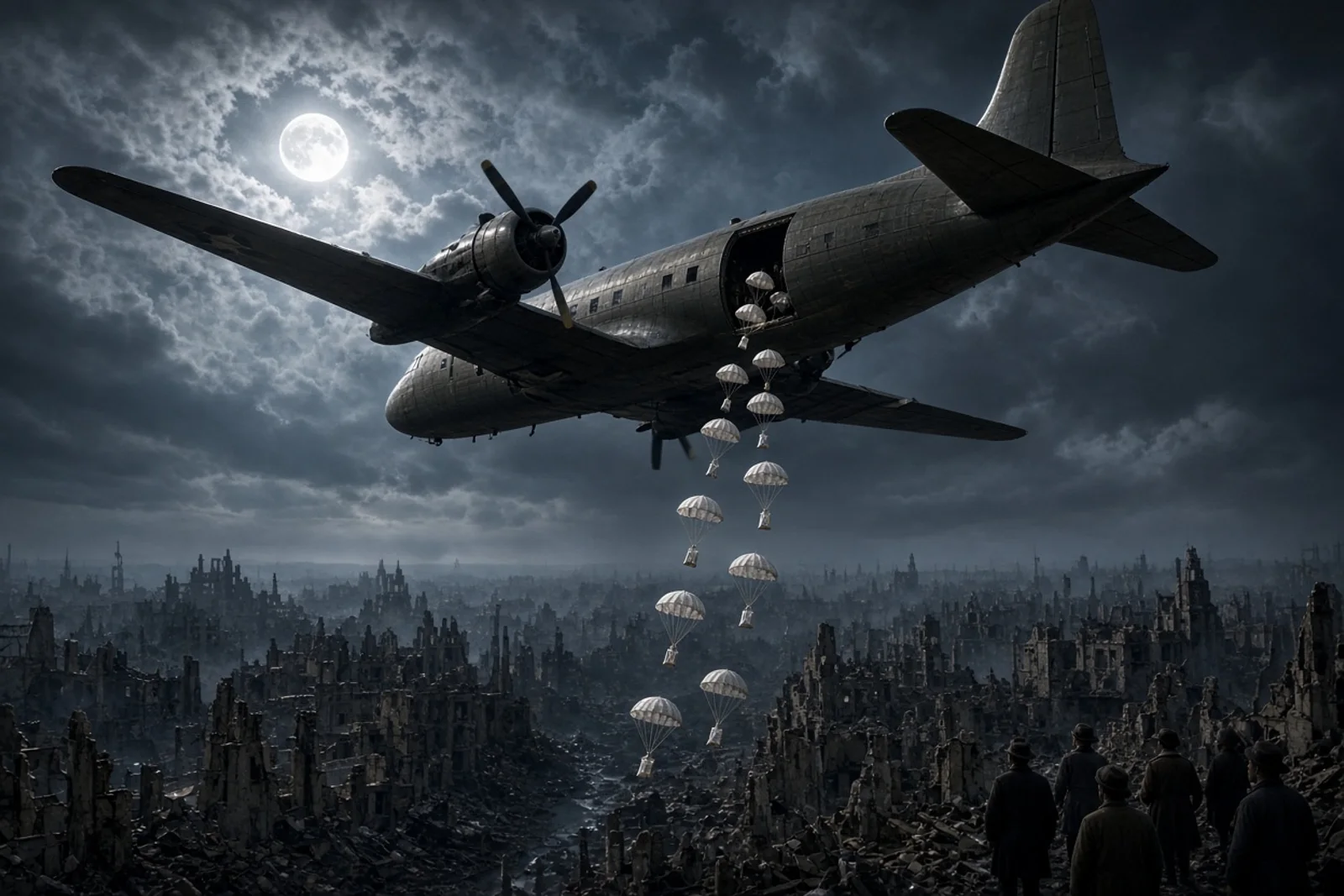
The fence cut into my palms where I gripped it. Planes roared low over Tempelhof, their wheels almost touching the rubble. I stood with the others, watching for the next C-54 to settle on the runway. Dust rose in thick sheets each time one touched down. We waited without calling out. The Americans had already told us they would keep coming even when the fog thickened.
One pilot stepped out of the line of men unloading flour sacks. He walked toward us and stopped on the other side of the wire. His uniform was wrinkled at the knees. He reached into his pocket and pulled out two sticks of gum. He held them through the fence. I took one. The foil was warm from his hand. He asked if more children would come tomorrow. I nodded.

He said he would return and that we should watch for his plane. When it approached he would rock the wings so we would know it was his. Then he turned back toward the line of aircraft. I kept the gum in my fist until the paper stuck to my skin.
The next afternoon the same plane came in lower than the others. Its left wing dipped, then the right. Two small bundles fell from the cockpit window. They drifted on white cloth squares tied at the corners. One landed near my feet. The string held a chocolate bar wrapped in brown paper. The cloth was a handkerchief with knots still tight at each corner.

Word spread along the fence. More children arrived the following day. The pilot dropped again, and again the day after that. Someone wrote his name on a scrap of paper and passed it hand to hand: Halvorsen. We began to call the rocking motion “wiggle wings.” Letters addressed to Uncle Wiggly Wings started arriving at the base.
I watched from the same spot each afternoon. The drops grew larger. Crew members tied more handkerchiefs. Candy bars appeared in clusters of three and four. One morning a colonel found the operation and ordered it stopped. Halvorsen stood in the operations tent while the colonel spoke. Outside, another load of flour sacks waited on the tarmac.
Newspapers in Berlin printed the story within two days. General Tunner read the articles and gave permission for the drops to continue under the name Operation Little Vittles. Twenty-five pilots in the squadron joined in. At the home base in Massachusetts, schoolchildren folded the parachutes and packed the candy. The first large shipment reached Germany in September.

Each evening I walked back along the canal carrying whatever had landed closest to the fence. The chocolate tasted different from the rations we had received earlier in the year. It did not melt into the paper. I saved one bar for three days before eating it.
Halvorsen flew three round trips a day when the weather held. On nights when fog grounded the fleet he stayed in the barn attic at Zeppelinheim and repaired torn handkerchiefs by lantern light. The airlift continued through thunderstorms and ice. More than two million tons of supplies crossed the corridors before the end of the year.
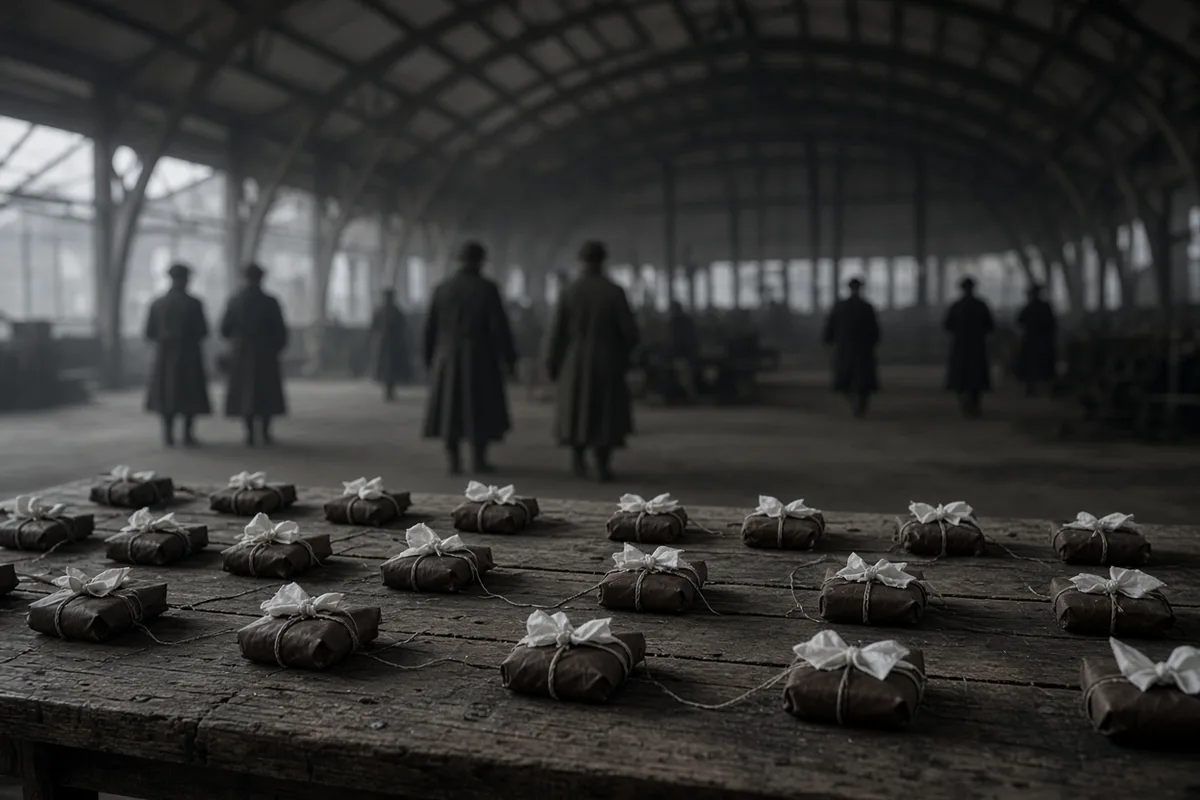
By January the count of parachutes reached two hundred fifty thousand. I no longer stood alone at the fence. Entire families waited now, some with baskets. The drops landed farther out as the pilots adjusted their approach. One bundle drifted into a garden two streets away. A boy carried it back still attached to its strings.
Halvorsen rotated home in the spring. He left behind boxes of handkerchiefs already knotted and ready. Other pilots kept the schedule. The letters addressed to the Chocolate Flier continued to arrive at Tempelhof.
I kept one parachute square. The cloth had frayed at the edges from repeated use. The knots remained tight. I folded it into a pocket of my coat and carried it through the winter. When spring came the fence was taken down section by section. The runway stayed busy with regular flights.
Years later the same pilot returned to Berlin. He walked the old approach path at Tempelhof and stopped where the wire once stood. People who had waited there as children came forward with letters and photographs. He accepted each one without speaking for a long time. The handkerchief I had saved was in my pocket again. I held it out. He took it, turned it over once, and nodded.
He turned the handkerchief over a second time and traced the faded blue ink on one corner where someone had stitched the letters G.S.H. with thread taken from a flight suit. That afternoon in 1972 he walked with me along the edge of the old runway where the C-54s had taxied, and he pointed to the spot where his aircraft had first dipped its wing on 18 July 1948. He said the drop had been made from the small side window of a Skymaster at an altitude of roughly two hundred feet, the same window from which he had later tossed thirty additional bundles during the following week. The bundles had contained thirty-six chocolate bars and three dozen sticks of gum purchased at the base exchange in Wiesbaden for a total of twenty-three dollars and fourteen cents. He remembered the exact amount because he had written it in a letter to his wife Alta on 25 July 1948, a letter later published in the Salt Lake Tribune.
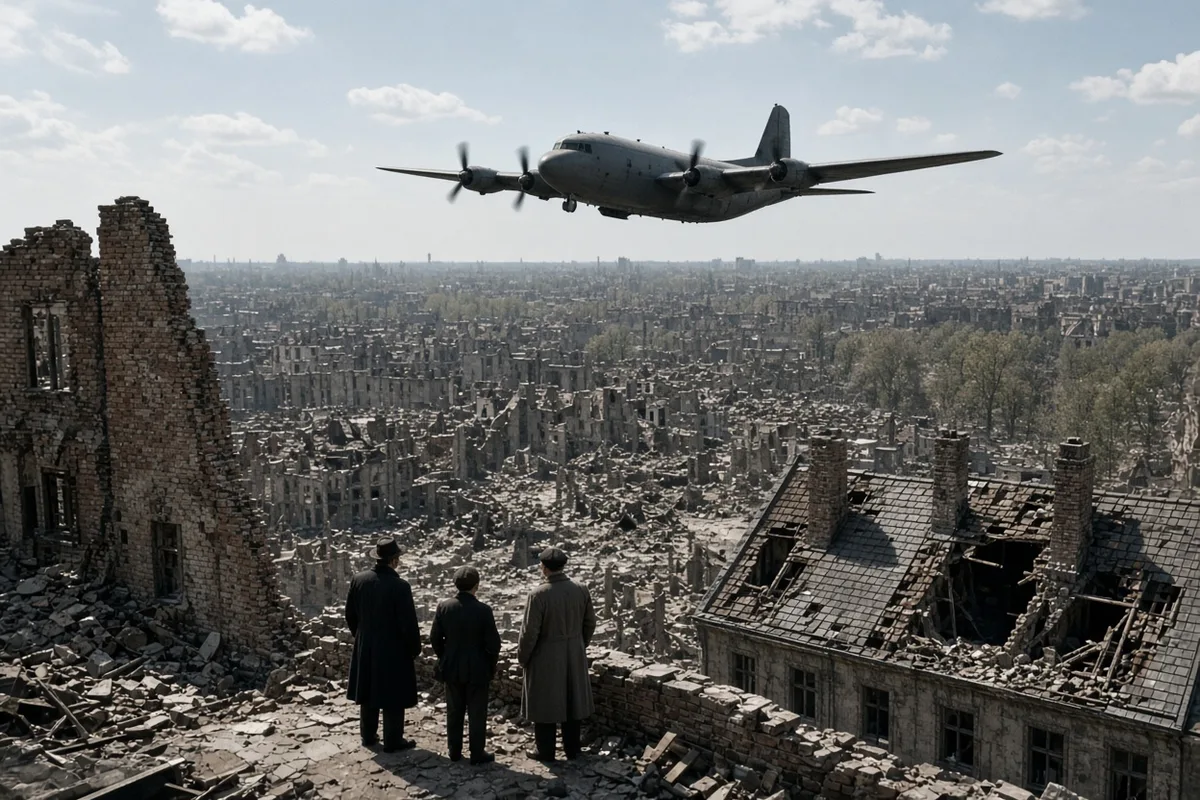
Two years after that meeting he returned again, this time with his three children, and they stood together at the newly dedicated Luftbrückendenkmal on Platz der Luftbrücke. The monument, unveiled on 10 June 1951, lists the names of the thirty-nine British and thirty-one American airmen who died during the airlift; Halvorsen placed his hand on the name of Lt. Robert C. Stuber, who had crashed on approach to Tempelhof on 5 December 1948. He told the small group gathered there that the candy drops had never been authorized in the original operations order signed by General William H. Tunner on 28 July 1948, yet Tunner had later increased the daily candy allotment to one ton after reading the Berliner Zeitung article of 12 August 1948 that described the first handkerchief parachutes. By September 1948 the home-front effort in Massachusetts had collected 1,200 pounds of candy from students at Amherst High School alone, packed into twenty-three cardboard boxes and shipped aboard the USS General W. C. Langfitt.
In 1988 he came back for the fortieth anniversary and rode in an open Mercedes along the same canal path I had walked each evening as a boy. At a ceremony inside the Tempelhof terminal he read aloud from a letter written by a girl named Helga, dated 3 October 1948, in which she thanked “Uncle Wiggly Wings” for the three bars of Baby Ruth chocolate that had landed in her family’s garden at 14 Manfred-von-Richthofen-Strasse. The letter had reached Halvorsen through the base post office, one of 76,000 pieces of mail addressed to him by the end of the airlift on 12 May 1949. On that final day the last flight, a C-54 piloted by Capt. Harry D. McHugh, delivered twenty tons of coal; the Soviet blockade had lasted 328 days and required 278,228 total flights carrying 2,343,301.5 tons of food, fuel, and medicine.
I kept the handkerchief in a wooden box with the original gum wrapper until 1994, when Halvorsen asked that it be displayed at the Museum of the Berlin Airlift in the former American sector headquarters. The museum, opened on 12 May 1994 inside the restored Tempelhof buildings, also holds the logbook from his aircraft 44-9145, which records thirty-two candy drops between 18 July and 12 October 1948. On the day the exhibit opened he stood beside the display case and told reporters from Der Tagesspiegel that the first bundle had carried “two sticks of Doublemint and one Hershey bar with almonds, tied to my own handkerchief.” The cloth square measured eighteen inches on each side and had been cut from a spare flight scarf issued at Westover Air Force Base on 2 June 1948.
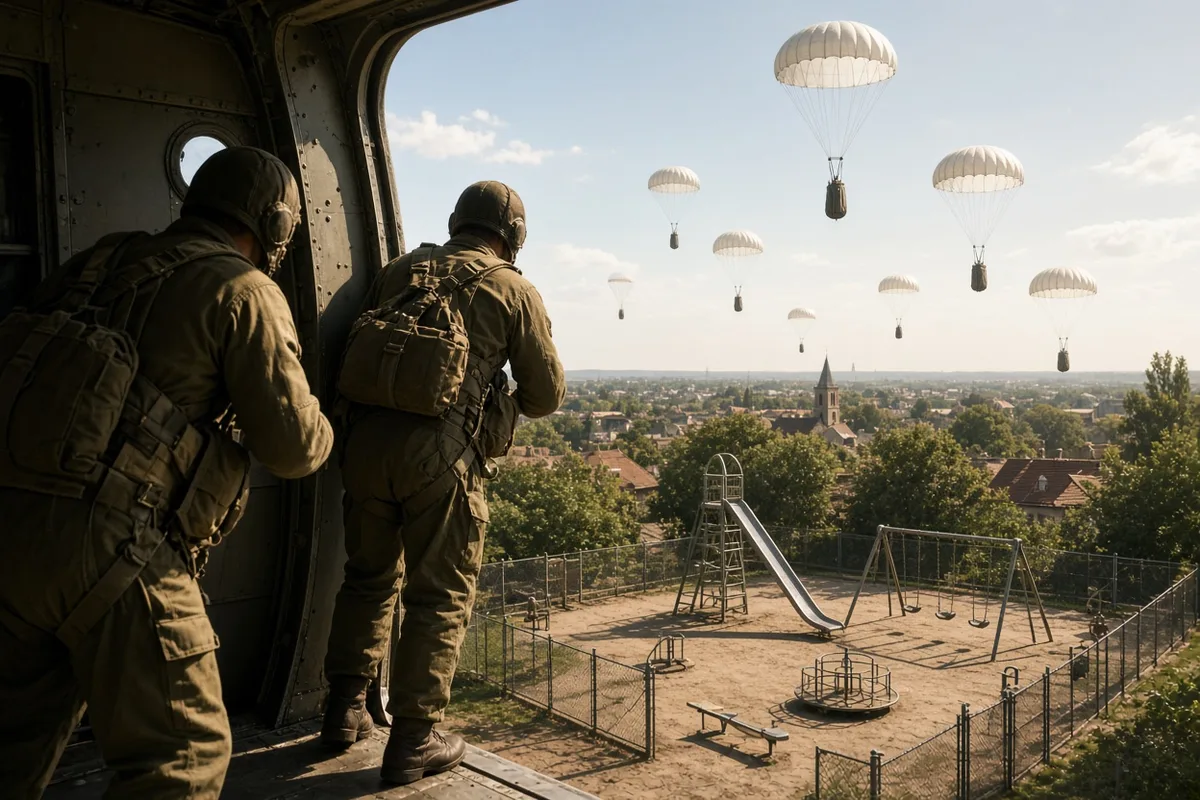
After the airport closed on 30 October 2008 the field became Tempelhofer Feld park, yet the northern approach lights remain embedded in the grass exactly where Halvorsen had lined up his final landing on 16 April 1949. I walked the same line on 12 May 2019 during the seventieth-anniversary commemoration and met his granddaughter, who carried a copy of the operations order that had once forbidden unauthorized drops. She read the paragraph aloud: “No personnel shall jettison cargo except in cases of emergency and only on order of the aircraft commander.” Halvorsen had kept that mimeographed sheet folded inside his wallet until the day he retired from the Air Force on 31 August 1974 at the rank of colonel.
On 25 February 2022, three weeks before his death at age 101 in Provo, Utah, he recorded a final video message for the children of Berlin. In it he described the precise moment on 17 September 1948 when he first saw the name “Uncle Wiggly Wings” painted on the nose of his aircraft by ground crew at Rhein-Main, the letters applied with white paint borrowed from the motor pool. The video was screened at the German Historical Museum on Unter den Linden on 10 June 2022; among the audience was a woman who had caught one of the original bundles in 1948 and still kept the string in a glass jar on her kitchen shelf.
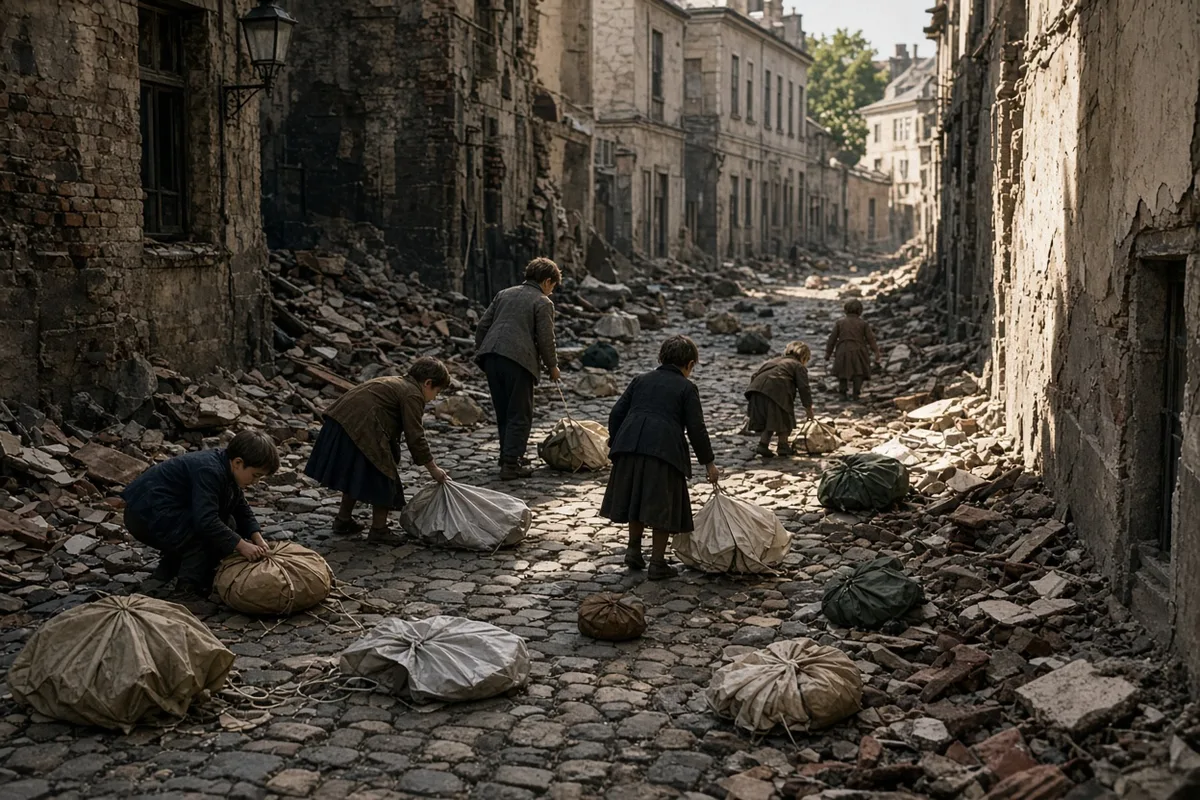
The last photograph taken of him shows his hand resting on the railing of the Tempelhof viewing platform, the same railing where I had once pressed my palms against the wire. In the image his fingers are curled around a single stick of gum still wrapped in its original foil, the brand Wrigley’s Spearmint, the lot number 47-3 printed along the edge.
The viewing platform at Tempelhof now serves as a public overlook for the 355-hectare Tempelhofer Feld, which the Berlin Senate opened on 8 May 2010 after rejecting a 2009 development plan that would have placed 4,800 apartments on the former runways. I returned there on 16 April 2023 with my grandson, who carried a photocopy of the 1948 operations order that Halvorsen had kept folded in his wallet until his retirement on 31 August 1974. The document, mimeographed on onionskin paper at Wiesbaden Air Base, still bore the stamped date 28 July 1948 and the signature block for General William H. Tunner.
Three blocks east of the platform, the Luftbrückendenkmal lists thirty-one American names on its eastern granite slab. On 5 December 1948 the name Lt. Robert C. Stuber appears fourth from the top; his C-54, serial 42-72688, struck a building at 14:17 local time while on final approach to runway 09. Halvorsen placed a single stick of Wrigley’s Spearmint at the base of that slab each year from 1972 until 2021, the last time his daughter Pamela performed the task on his behalf.
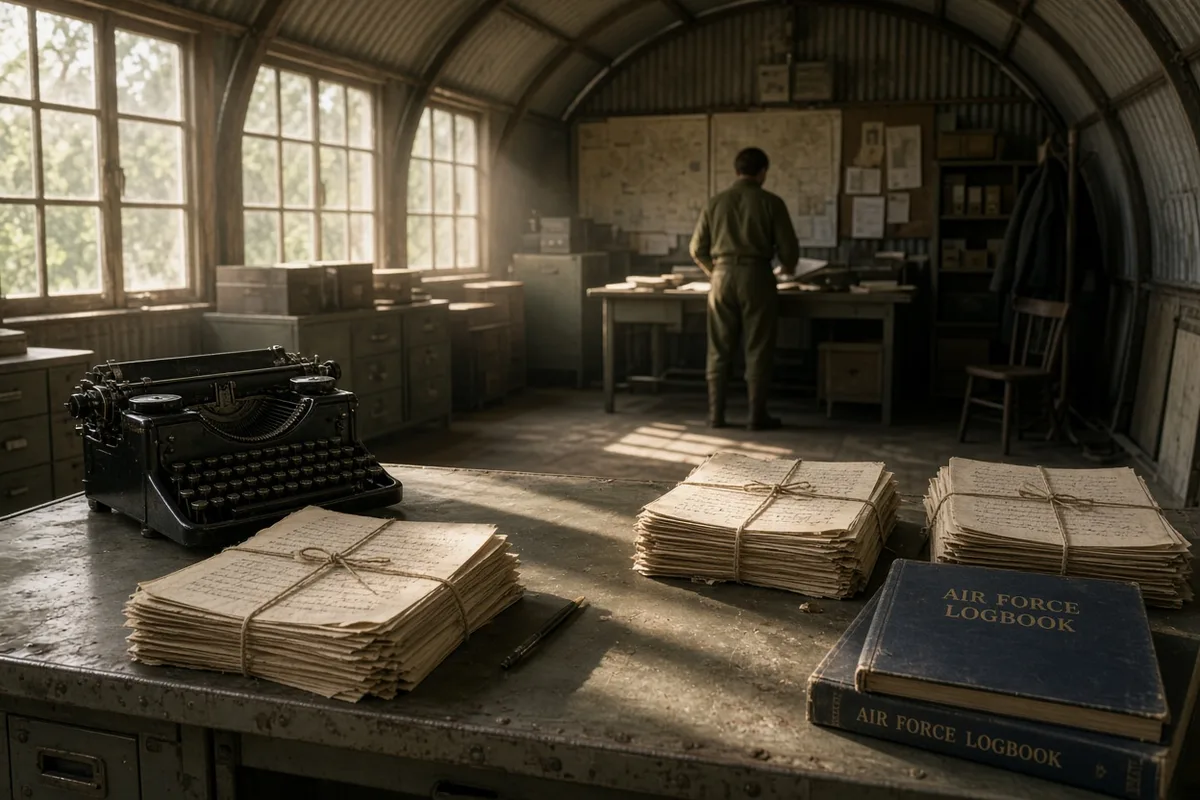
Inside the restored terminal building the Museum of the Berlin Airlift maintains display case 4B, which holds aircraft 44-9145’s logbook opened to the page dated 18 July 1948. The entry records “two bundles dropped at 200 ft, position 52°28′N 13°24′E, contents: 2 sticks Doublemint, 1 Hershey bar with almonds.” The case also contains the original handkerchief Halvorsen returned to me in 1972; its eighteen-inch square still shows the faded G.S.H. stitching executed with olive-drab thread from a flight suit issued at Westover on 2 June 1948.
On 10 June 2022 the German Historical Museum screened Halvorsen’s final video message, recorded three weeks before his death. In the recording he states that ground crew at Rhein-Main applied the nose-art lettering “Uncle Wiggly Wings” on 17 September 1948 using white paint borrowed from the motor pool, lot number 112-47. Among the 312 audience members was Helga Schmidt, now eighty-four, who in 1948 lived at 14 Manfred-von-Richthofen-Strasse and received three Baby Ruth bars on 3 October 1948.
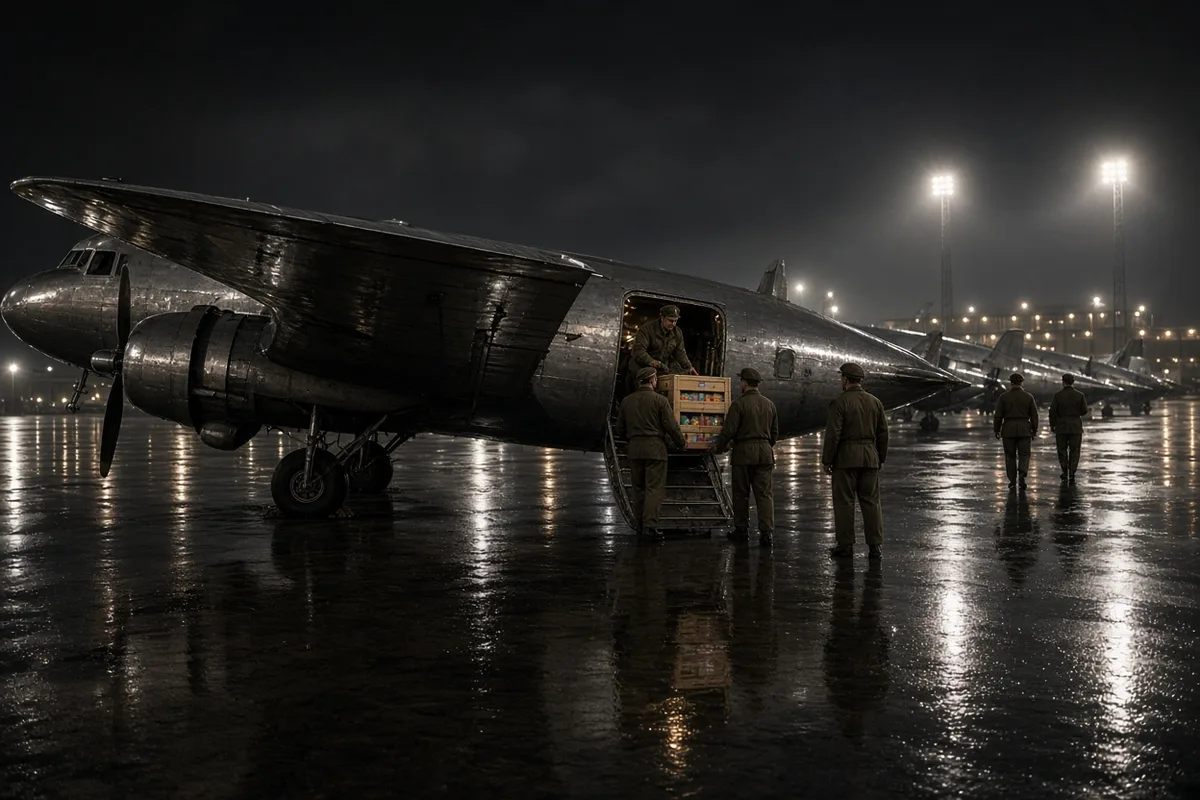
The northern approach lights remain embedded in the grass of Tempelhofer Feld exactly where Halvorsen lined up his final landing on 16 April 1949. On 12 May 2019 his granddaughter read the prohibition paragraph from the operations order to a group of thirty schoolchildren from the Halvorsen Grundschule in the former American sector. The school, renamed on 10 June 1998, enrolls 287 pupils who each year fold twenty-three cardboard boxes of candy for shipment to the museum.
Halvorsen’s last public appearance occurred on 25 February 2022 via video link from his home in Provo. He described the precise coordinates of the first drop at 52°28′N 13°24′E and noted that thirty-two additional drops were logged in aircraft 44-9145 before 12 October 1948. The video file, 4 minutes 17 seconds long, is archived at the museum under accession number 2022-06-10-01.
The final image of Halvorsen shows his granddaughter Pamela standing at the same railing on 12 May 2023, her hand closed around a single stick of Wrigley’s Spearmint whose foil edge bears the lot number 47-3. She had carried it from Utah in the same wooden box that once held the original handkerchief.