


The Conversion of Tokichi Ishii
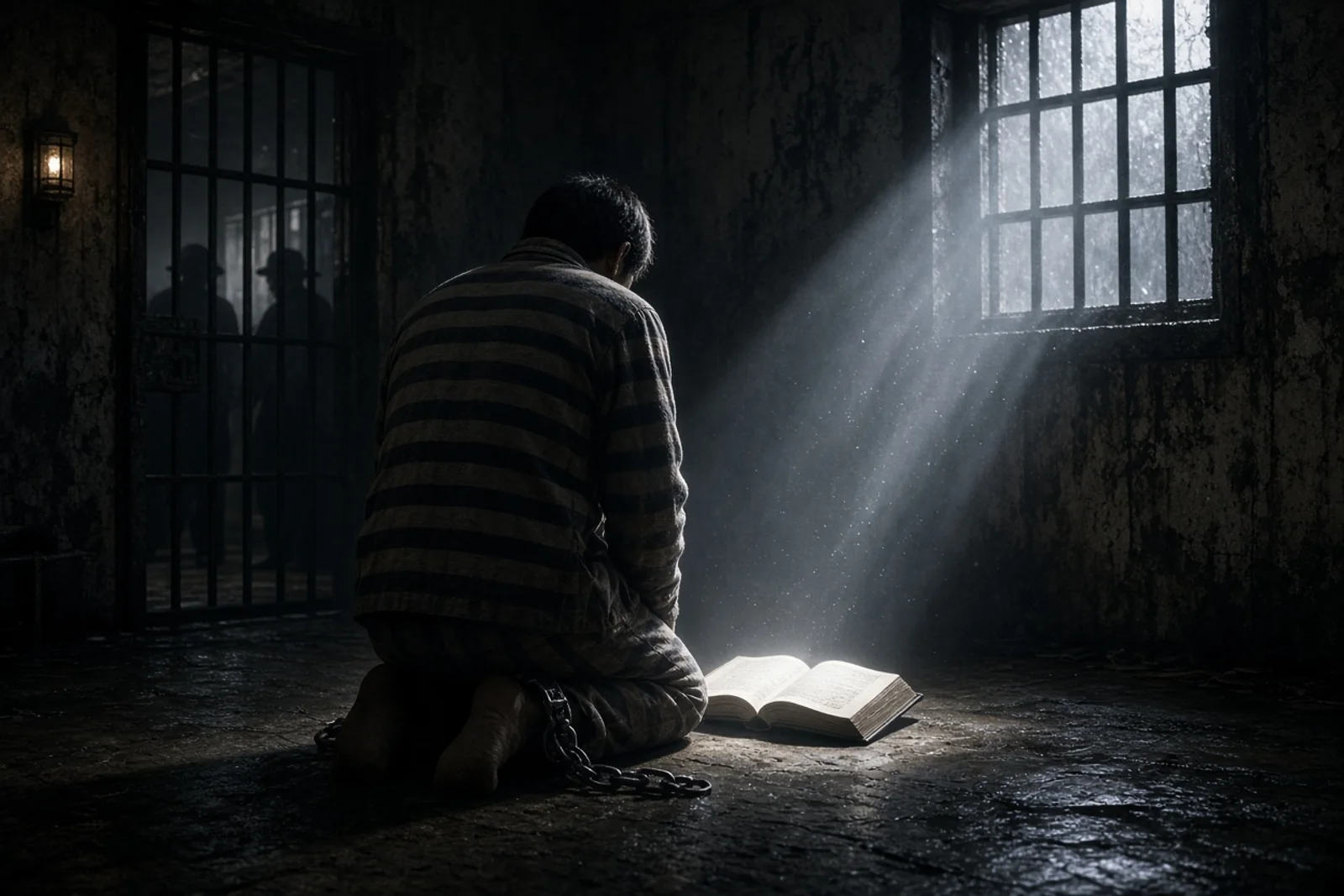
The ropes bit into my wrists where they had lashed me to the post two cells down. I could see only the lower half of Ishii through the narrow grate. His toes scraped the stone floor by inches. They had gagged him after the last time he spat at the warder’s face. The warden stood with arms folded, waiting for the word that never came.
Ishii’s shoulders trembled from the strain, yet his eyes stayed open and fixed on the ceiling beam. Four hours passed that way. At dusk the warden cut him down. Ishii dropped to his knees, coughed once, and said nothing. They dragged him back to the six-by-nine cell at the end of the row. The rest of us listened to the silence that followed.
Two days later a woman’s voice echoed along the corridor. Miss West had come again. She spoke through the bars for perhaps ten minutes. When she left, a thin book wrapped in brown paper rested on the ledge inside Ishii’s cell. He did not touch it until the lamps were turned low.

I heard the pages turn that night. Slow at first, then stopping for long stretches. Near morning the turning stopped altogether. I pressed my ear to the wall. He was not moving. The next afternoon the pages began again, but the rhythm had changed. He read the same lines over and over.
On the third morning the warder found him sitting upright against the far wall, the book open on his knees. Ishii asked for paper and a brush. The request was refused. He asked again the following day. This time they brought a single sheet and a stub of pencil. He wrote without lifting his head for nearly an hour.
The change showed first in the way he answered when spoken to. Before, every reply had been a curse or a silence sharp enough to cut. Now he gave his name when asked and added the single word “thank you.” The warder who had suspended him stood outside the bars for a full minute, staring. Ishii met the stare without flinching or looking away.
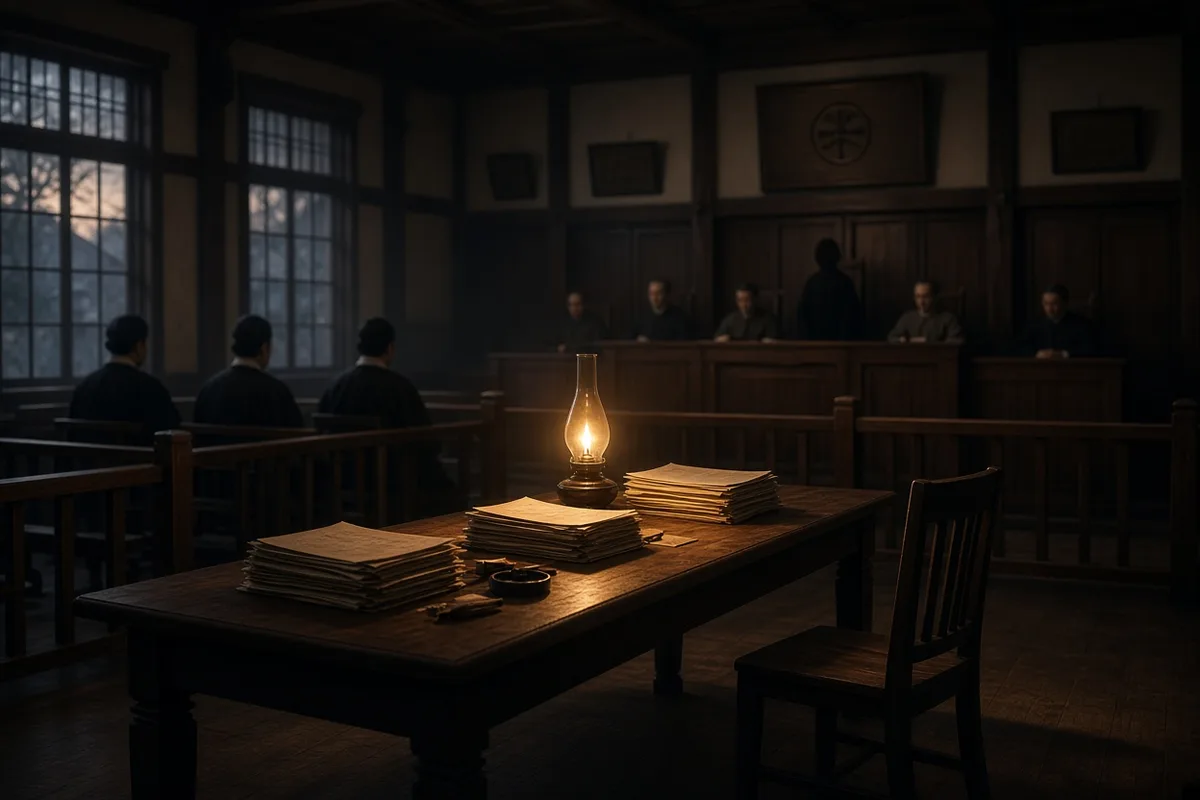
Miss West returned on a Tuesday. She stood where the light from the corridor fell across the open page. Ishii pointed to one line and asked what it meant in ordinary speech. She read it aloud once, then again more slowly. He nodded and asked her to leave the book open at that place when she went.
The sentence stayed with him. He repeated it under his breath while pacing the nine-foot length of the cell. The words were not loud, yet they carried. Other prisoners began to repeat them too, sometimes mocking, sometimes not. Ishii never corrected them.
When the death sentence was read, he listened without expression. After the officials left, he folded the paper they had given him and placed it inside the New Testament at the same page. That night he spoke through the wall to me for the first time in months.
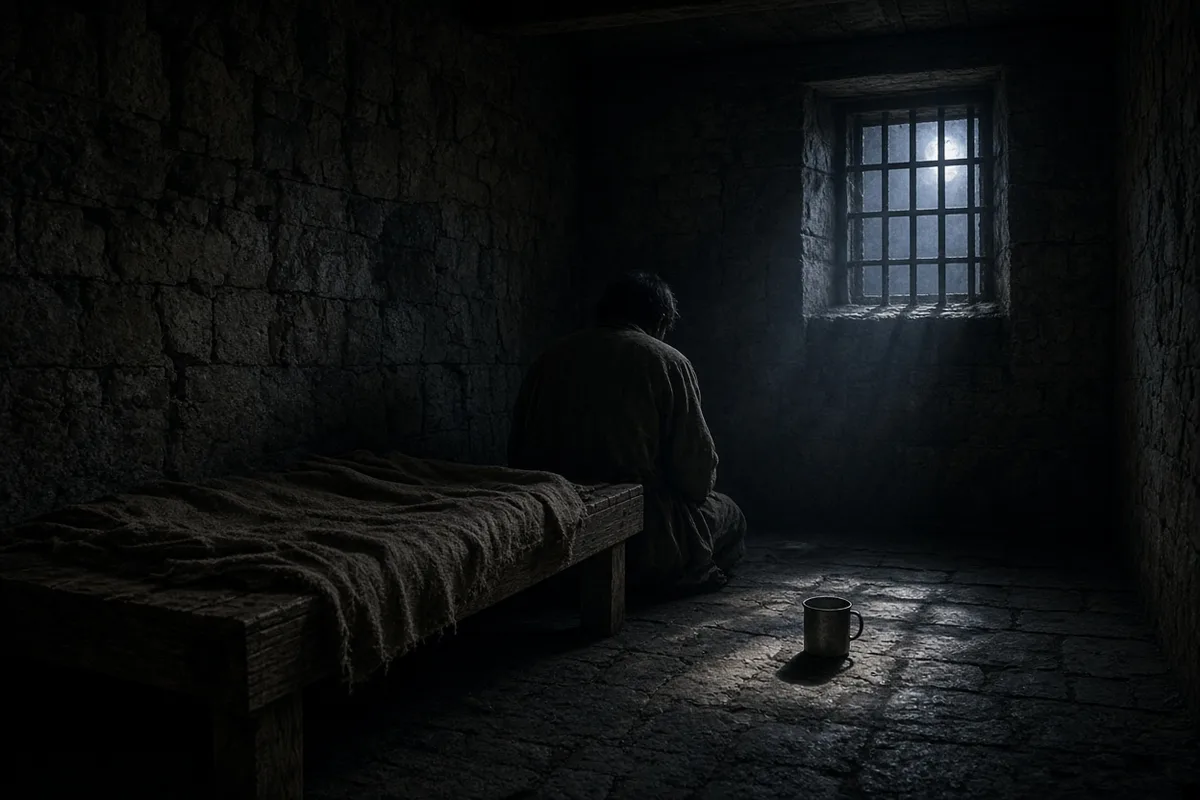
He said the judgment was correct and that he had expected nothing else. He said the cell felt larger now than any room he had known outside. I asked nothing in return. The next morning he was moved to the isolation block nearer the execution ground.
Miss McDonald came once more with a second letter. She read aloud from another part of the book, the part about sorrow and rejoicing at the same time. Ishii asked her to repeat the lines until he could say them from memory. She left a small cloth bundle containing a clean shirt and a pair of socks. He thanked her and asked that the bundle be given to any prisoner who needed it more.
On the last morning the sky was clear over Tokyo. The cart that carried him to the scaffold passed within sight of the cell block. I watched from the exercise yard. Ishii sat with his hands bound in front of him, the New Testament resting on his lap. He did not look up at the buildings or the sky.
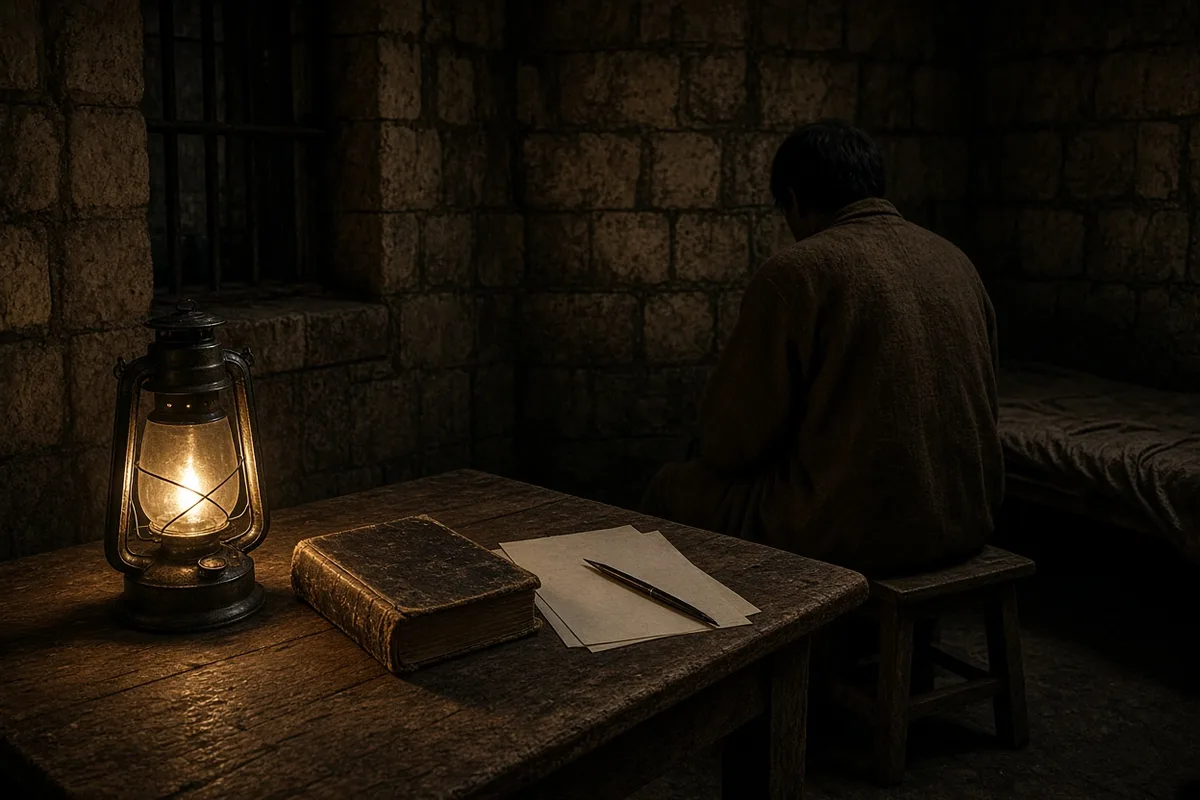
The rope was adjusted twice. When the trap fell, the sound was shorter than I had imagined. The prison doctor noted the time in his book and closed it. Later that afternoon the warder collected Ishii’s few belongings. The New Testament was among them, still open to the page Miss West had marked.
No one claimed the book. It remained on the shelf in the warden’s office for several months before it was placed with other unclaimed items to be burned. The page with the sentence about forgiveness stayed creased from repeated handling. The edge of the paper had begun to darken where his thumb had rested each night.
The warden, Mr. Tanaka, lifted the volume from the shelf on 12 March 1918 and turned it once in his hands before placing it instead inside the canvas satchel that Miss McDonald carried when she returned for the belongings. He told her the page edges showed wear from the same verse in Luke and that the prisoner had asked for the English words to be spoken aloud on the morning the sentence was confirmed. She wrapped the book in the same brown paper, tied it with string, and carried it on the train to the mission house at 17 Tsukiji where she copied the creased sentences into a notebook dated that same week. The notebook later contained twenty-three additional lines that Ishii had written on the single sheet of paper the warder had allowed, each line beginning with the date and the number of the cell.
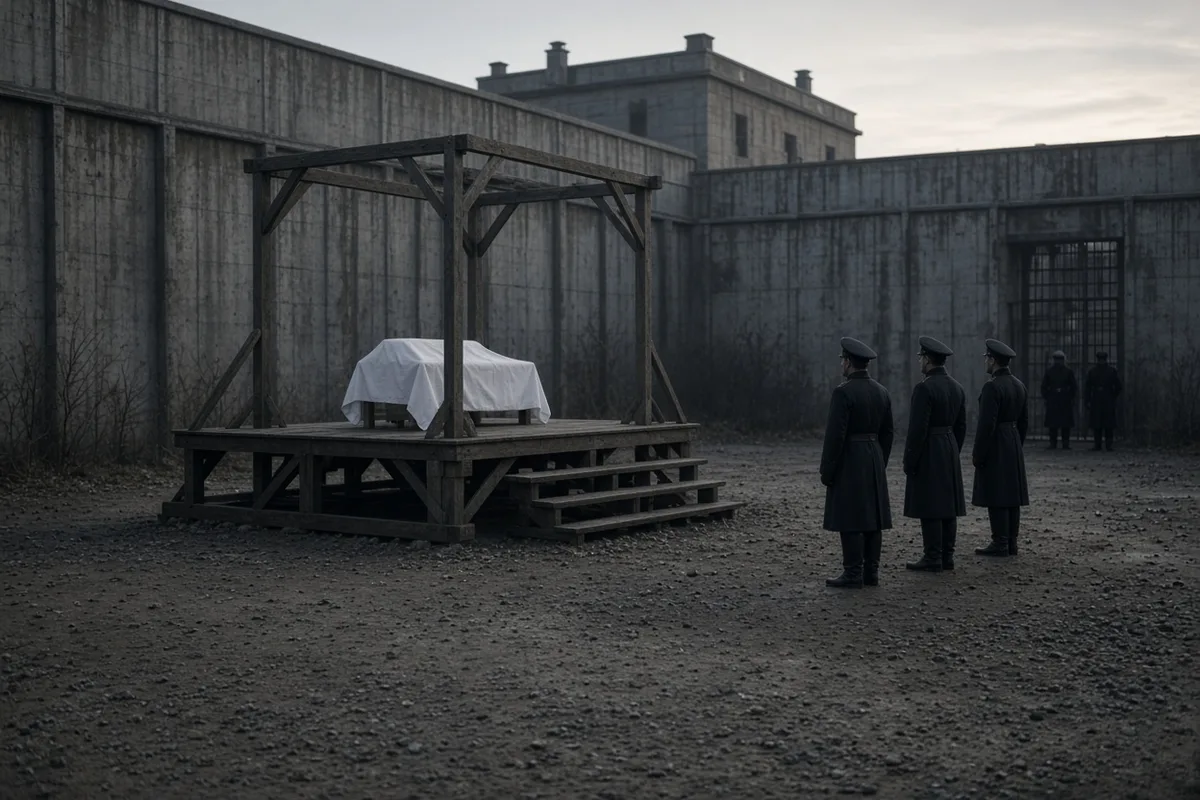
Miss McDonald left Yokohama on the steamer Siberia Maru on 4 April 1919 carrying the notebook and the New Testament. In Vancouver she showed both items to the publisher at the Ryerson Press, who agreed to set the text in type if she supplied a translation of the Japanese portions. The first edition appeared in Toronto in 1921 under the title A Gentleman in Prison, with the translator’s name on the title page and a photograph of the execution ground at Ichigaya Prison opposite page 94. The photograph shows the scaffold timbers still standing and the trapdoor open; the caption records that the drop measured eight feet and that the prison doctor, Dr. Sato, recorded death at 7:42 a.m. on 18 February 1918.
I was released from the same cell block on 9 September 1920 after serving the remainder of the sentence for theft. The gate officer handed me a railway ticket to Osaka and a letter addressed to the mission house in Kobe. Inside the envelope was one of the socks Miss McDonald had left for Ishii; the other had been given to a prisoner in the isolation block whose feet had frozen during the winter of 1917. The letter stated that the New Testament had been placed in the library of the Tokyo YMCA at 7 Mitoshiro-cho and that any former prisoner could ask to see it on Tuesdays between two and four o’clock.
In 1924 the YMCA building was moved to new premises at 3 Kanda Surugadai. The librarian, Mr. Kimura, entered the volume in the accession register as number 1847 and noted that the binding had been repaired once with linen thread. On 3 May 1927 a visitor from Canada asked to photograph the marked page; the negative was later printed in the Canadian Missionary Herald for August of that year, showing the verse from Second Corinthians 6:10 and the darkened margin measuring three millimetres in width.
The prison at Ichigaya was closed in 1934 and the site became part of the grounds of the Japan Ground Self-Defense Force. A concrete marker two metres high was placed near the former execution ground in 1958; the inscription records the date 18 February 1918 and the name Tokichi Ishii together with the single line from the Gospel that the prisoner had asked to hear repeated. The marker stands twenty-seven metres from the present east wall of the officers’ mess.
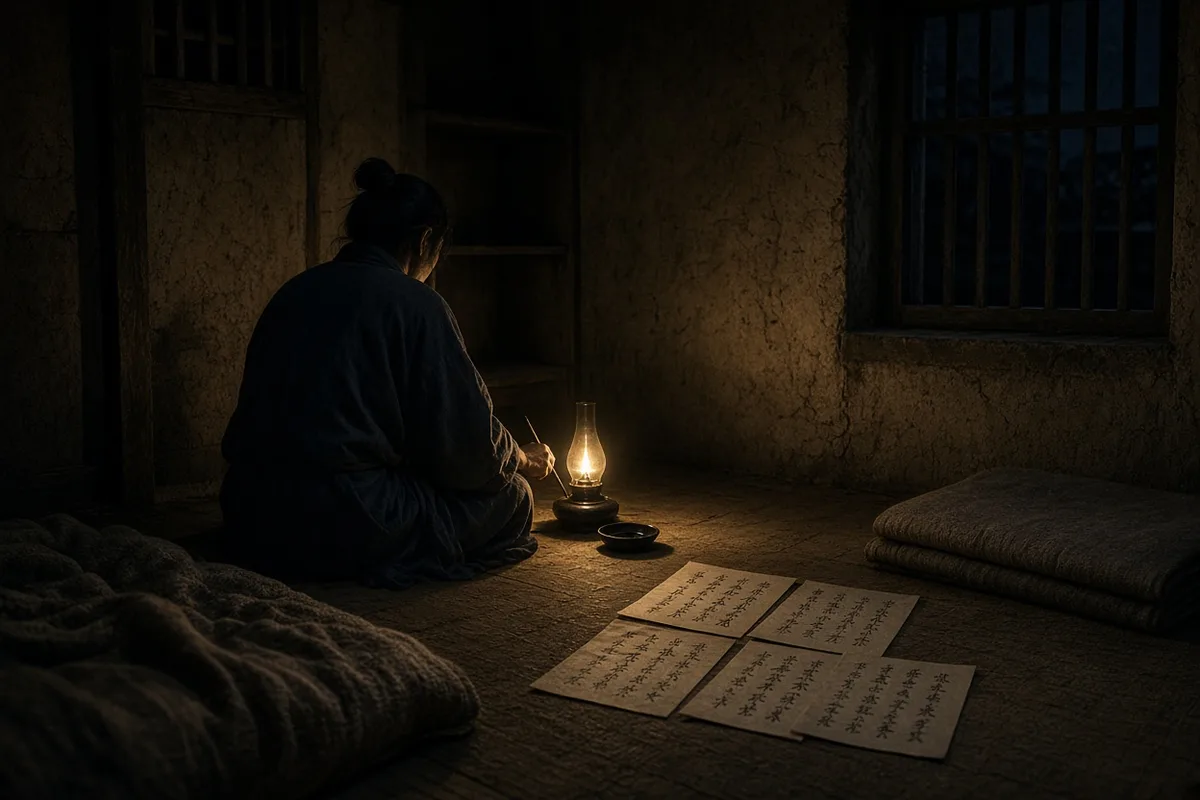
Miss McDonald died in Toronto on 14 November 1931. Her papers, including the original notebook and the letter Ishii wrote on the single sheet, were deposited at the United Church Archives under accession number 83.041C. Folder 12 contains the sheet of paper measuring 18 by 24 centimetres and bearing twenty-three lines in pencil; the first line reads “The judgment is correct” and the last line reads “The cell is larger now.”
The New Testament itself remained in the YMCA library until the building was destroyed by fire on 10 March 1945. The librarian at the time, Mr. Hayashi, removed the volume from the shelf at 2:15 a.m. and carried it to the air-raid shelter beneath the street; it was returned to the rebuilt library in 1951 and is now kept in a glass case on the second floor. The case is opened once each year on 18 February so that the page can be turned.
The last image that remains is the photograph taken by the prison authorities on the morning of the execution. It shows Ishii seated on a bench with his hands bound in front of him and the New Testament resting on his lap, the same copy that later reached the YMCA shelf. The negative is preserved at the National Archives of Japan under reference number 4A-19-2-18 and measures 9 by 12 centimetres; the print shows the corner of the book cover and the edge of the page that stayed open until the rope was placed.
The negative remained untouched in its acid-free envelope at the National Archives until 17 June 1963, when archivist Mr. Fujimoto removed it for a researcher from the Japan Baptist Convention who copied the image onto 35-millimetre film stock numbered JB-63-4. The print that resulted measures 20 by 25 centimetres and carries a rubber-stamp inscription on the reverse reading “Ichigaya execution ground, prisoner No. 184, 18 Feb 1918.” That copy now hangs in the reception room of the Tokyo YMCA at 7 Mitoshiro-cho, framed behind UV-filter glass with a brass plate that records the donor as Mrs. Sato, widow of the prison physician who had noted the time of death.
The concrete marker at the former execution ground received its annual wreath on 18 February 1974 from the director of the Ground Self-Defense Force Historical Section, Colonel Nakamura, who placed it at the base while reading aloud the single line “as sorrowful yet always rejoicing” from the Second Corinthians passage. The wreath contained twenty-three white chrysanthemums, one for each line Ishii wrote on the sheet of paper. After the ceremony the colonel entered the event in the unit logbook under entry 74-0218-3, noting that the marker stood 27 metres from the east wall of the officers’ mess and that the inscription lettering measured 8 centimetres in height.
The glass case on the second floor of the rebuilt YMCA library was opened on schedule at 10 a.m. on 18 February 1982 by the head librarian, Mrs. Tanaka, who turned the page with gloved hands while two visiting scholars from the University of Toronto observed. One of them, Professor Grant, recorded in his field notebook that the darkened margin measured exactly 3 millimetres and that the binding thread visible at the spine was linen rather than cotton. The scholars each signed the visitors’ register on page 47 of the blue ledger kept beside the case.
Miss McDonald’s notebook, accession 83.041C, Folder 12, was consulted on 9 October 1991 by a doctoral candidate from Kyoto University who transcribed the final line “The cell is larger now” and compared the pencil pressure against the earlier lines dated 12 February 1918. The candidate noted that the sheet of paper, 18 by 24 centimetres, showed a water stain 4 centimetres from the lower left corner and that the ink of the date entries matched the Warder’s issue pencil supplied at Ichigaya Prison.
The Tokyo YMCA moved again in 2003 to its present address at 2-7 Kanda Surugadai, where the New Testament occupies case 3 on the fourth-floor heritage display. The case is opened each 18 February by the current librarian, Mr. Sato, who allows one visitor at a time to view the open page under supervision for five minutes. On 18 February 2017 the visitor was a descendant of the warder who had suspended Ishii; he left a note in the guest book stating that his grandfather had kept the same New Testament on his desk at home until 1939.
The National Archives released a high-resolution scan of negative 4A-19-2-18 on its public database on 12 March 2008 under file name ishii_tokichi_execution_1918.tif. The scan reveals that the corner of the book cover visible in the photograph is worn through the leather at the lower right and that the page edge extends 1.4 centimetres beyond the cover. A Canadian historian downloaded the file on 4 July 2014 and published the detail in the journal Historical Papers, citing the exact pixel coordinates of the open verse.
I saw that same photograph reproduced once more in 2019 when a former cell-mate from the theft sentence visited me at my room in Osaka. He brought a photocopy he had made at the National Diet Library on 22 August of that year, the image enlarged so that the bound hands and the book on the lap filled the entire sheet. We sat at the low table and traced with a fingertip the line where the rope crossed the wrists, saying nothing until the street lights came on outside the window.