


The Dog Who Saved His Owner From a Train
The signal at the crossing outside Shirley blinks the same way it has for eleven years of my life on this line, and I've come to trust it the way you trust a heartbeat you don't think about anymore. Midnight runs are quiet. Freight doesn't complain, doesn't ask for the radio, doesn't need small talk. Just the cab, the headlight cutting a corridor through the dark, and the weight of everything behind me rolling along at a speed that feels slow until you understand what it takes to stop it.
That night the air had the damp chill that early May throws at you in Massachusetts, warm during the day and then suddenly not. I remember the smell of wet gravel through the vents. I remember thinking the town was asleep, the way small towns are at that hour, porch lights off, one dog barking somewhere far from the tracks. I had no reason to expect anything different from any other night I'd taken this stretch through Shirley.
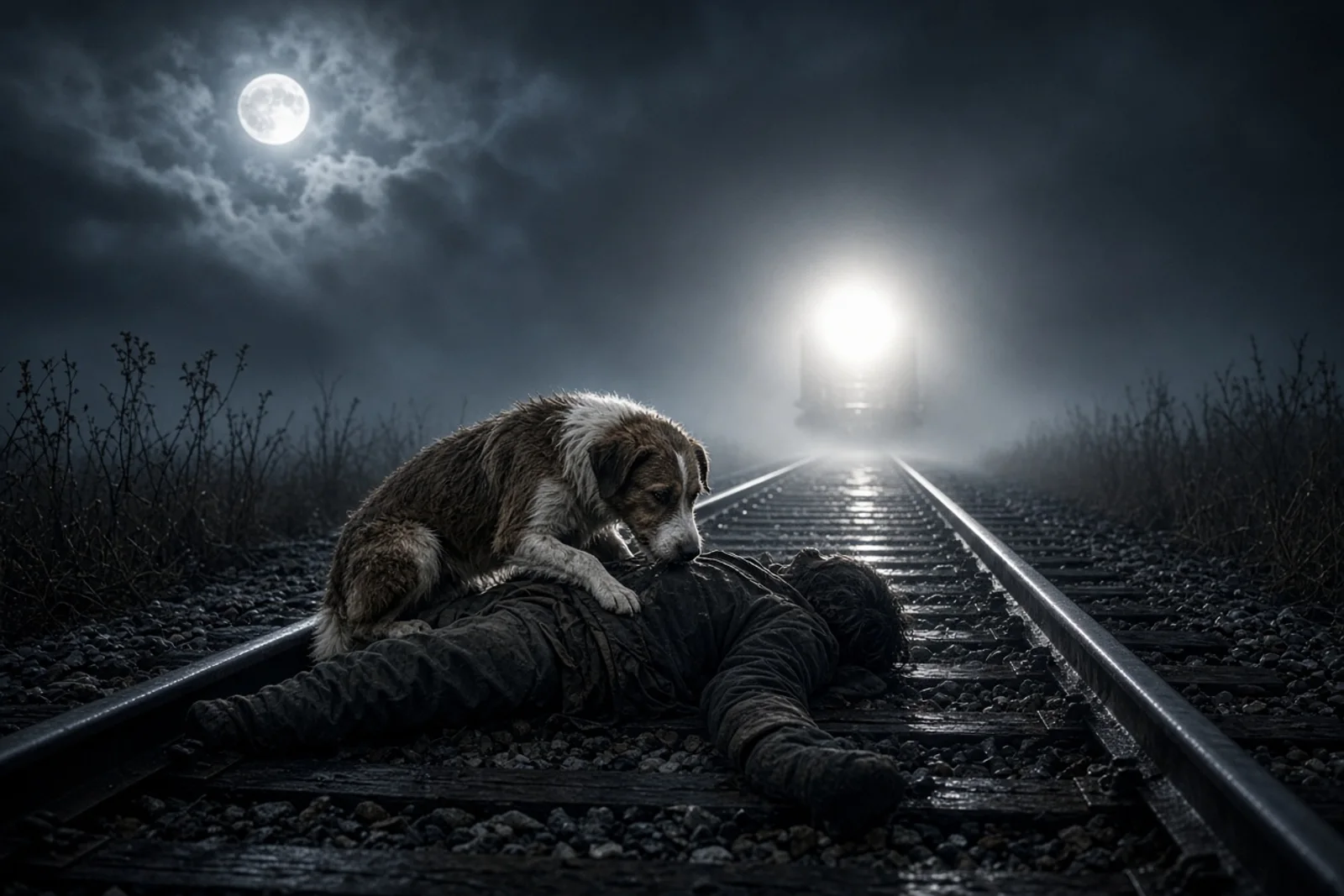
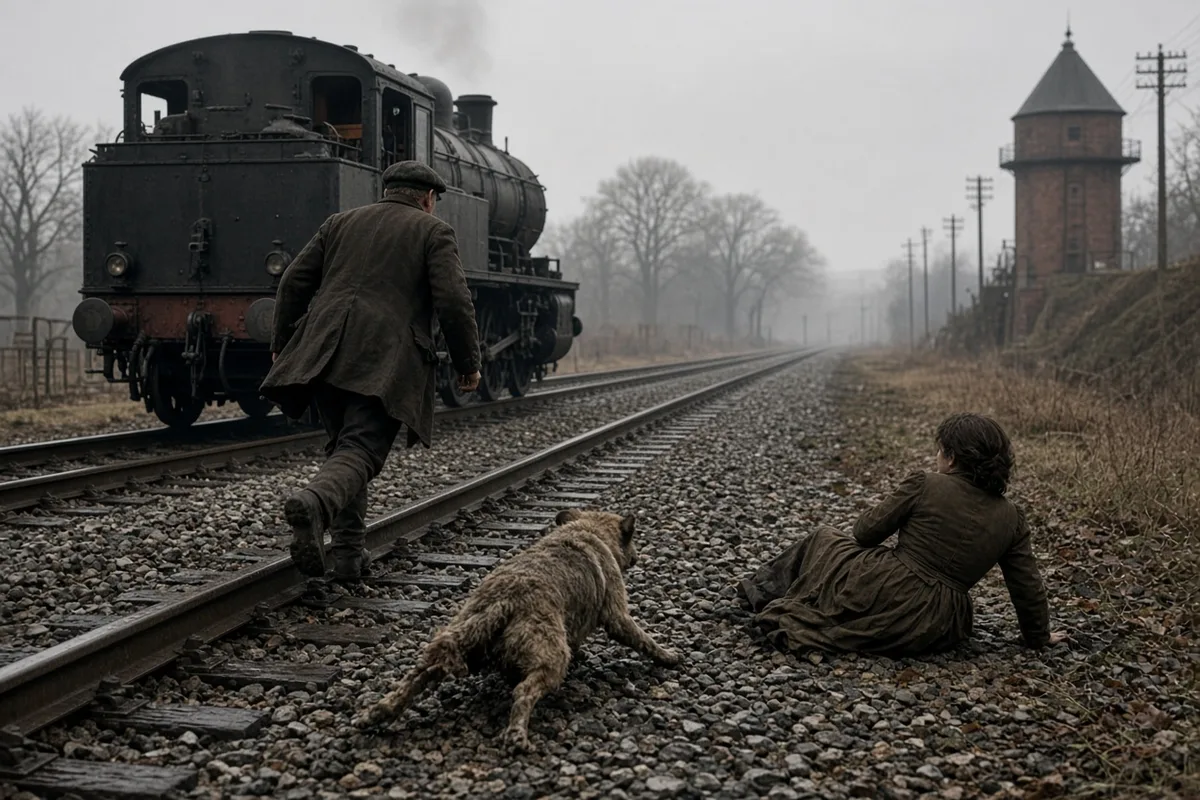
Then the light found something on the rail bed ahead. Not debris. Not a shadow thrown by a signal box. Shapes. Low and moving, wrong in a way my eyes needed a second to sort out — a shape on the ties, and another shape beside it, small, frantic, working at the first one like it was trying to drag the whole world off the rail.
I hit the horn. I hit the brakes. Anyone who has run freight knows what that means and what it doesn't mean — it means a ton of steel groaning to slow itself over a length of track that swallows city blocks before it gives you anything close to a stop. I was already past the point where wanting to stop and being able to stop were the same thing.
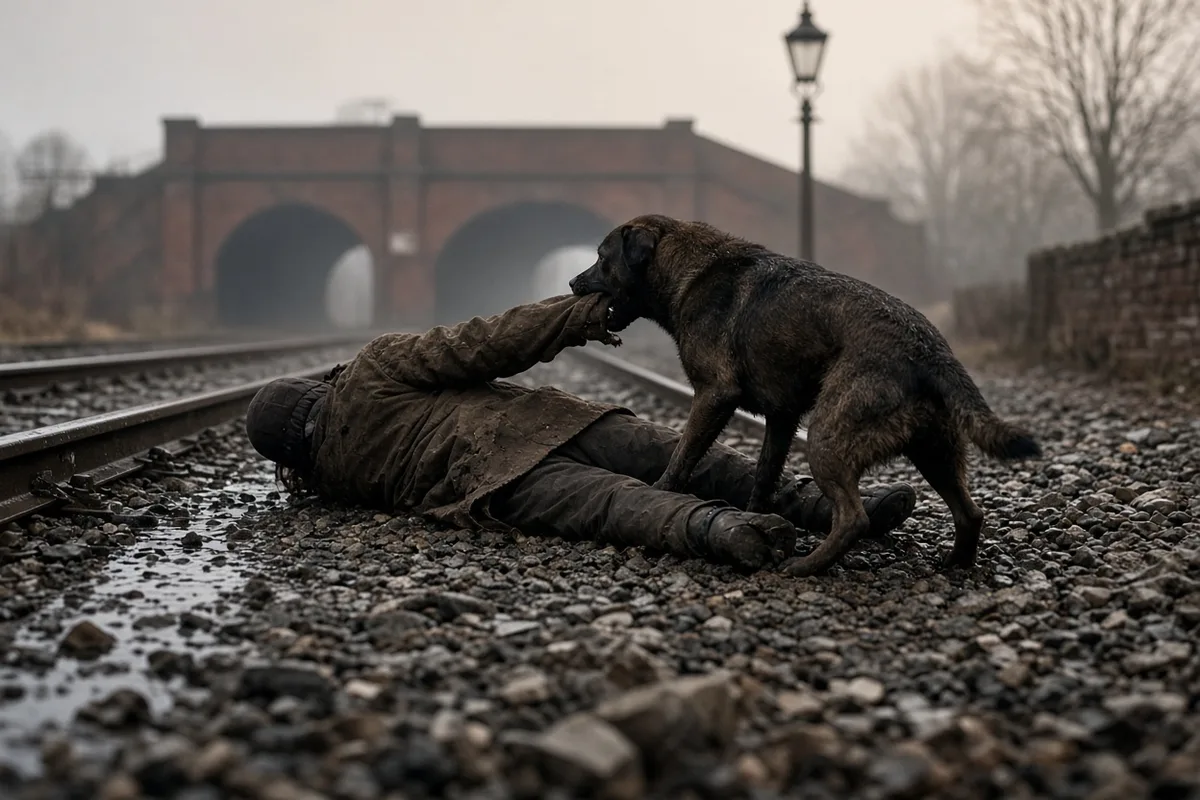
The shape on the ties was a woman. I understood that almost the same instant I understood the second shape was a dog, and that the dog had its teeth in her clothing, hauling at her with everything in its body, the way you'd pull a fallen friend from a burning room. I have turned that image over more times than I can count since. A dog, alone in the dark, deciding that a freight train was a thing to be fought.
I couldn't tell in that first breath whether they were going to clear the rail. The horn was still sounding. My hand was still on the brake, uselessly, the way your hand stays on a wheel after the car's already gone into the skid. The world narrowed down to that one strip of gravel and steel lit up gold by my own headlamp, and the only thing moving in it was that dog, dragging.
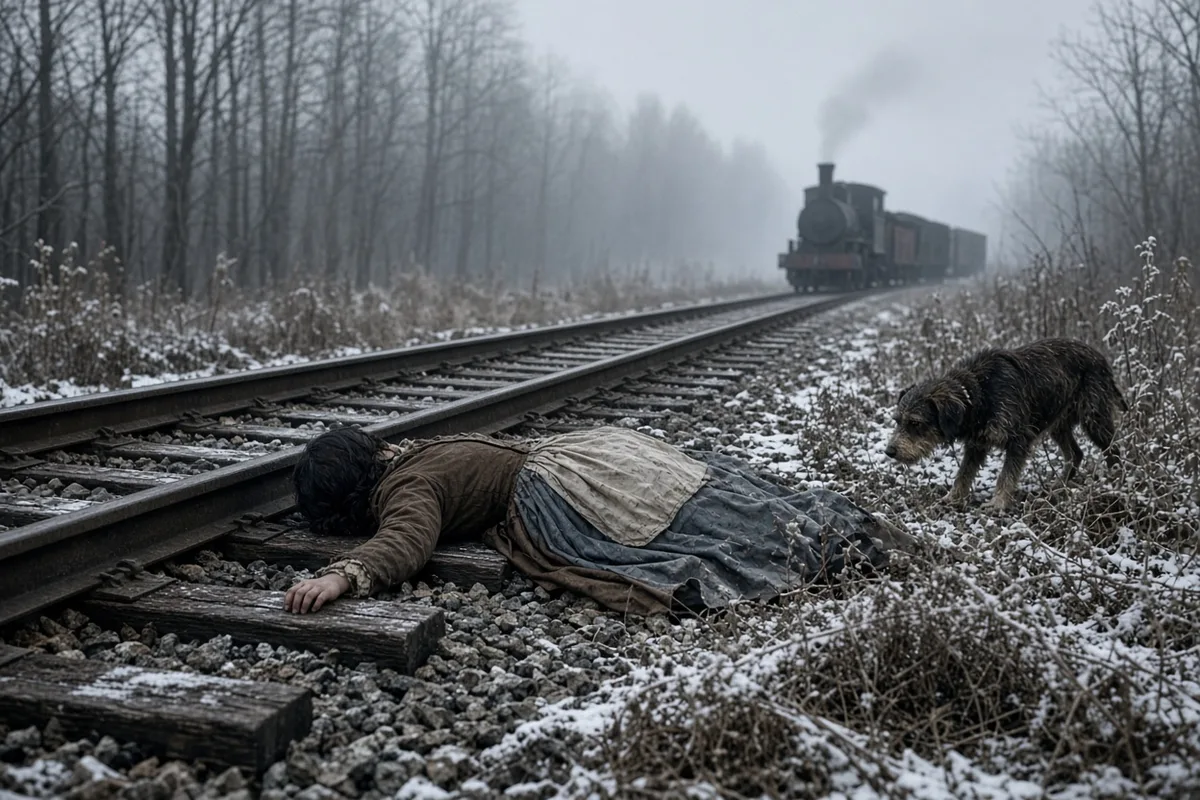
She got the woman clear. I want to say that plainly because it deserves to be said plainly — she got her owner off that rail before the wheels reached them. But the dog herself didn't clear in time. I felt it more than saw it, the particular give in the wheels that tells you you've caught something you didn't want to catch, and by the time the train had shuddered down to a stop, dragging itself out over track I couldn't see the end of, I already knew what I was going to find when I walked back.
I climbed down into the dark with my flashlight shaking a little in my hand, which I am not ashamed to admit. I found the woman first, on the ground off the rail bed, unconscious, unmarked as far as I could tell. Christine Spain, fifty-four years old, though I didn't know her name yet, only knew that she was breathing and that seemed, in that moment, like the only fact in the world worth having.
Then I found the dog. Lilly. Eight years old, a pit bull with a build made for exactly the kind of stubborn, physical work she'd just done, and now her right front leg was torn open, the skin and muscle gone from it in a way I will not describe past what needs describing, blood dark and steady against the gravel. She was in more pain than I have ever watched an animal be in. And she had not left the woman's side.
I called it in. I don't remember choosing my words, only that they came out steadier than I felt, and somewhere behind me the last of the freight cars sat groaning faintly on the rail, engines idling, headlight still burning down that empty corridor of track like it hadn't just been party to the worst thing I'd seen from that cab in eleven years.
The police and fire crews came fast for a rural crossing at midnight. I remember the lights before I remember the faces, red and blue washing over the ballast, over the woman's still body, over the dog who would not move from where she lay against her owner even as strangers in uniform knelt down around them both. Lilly stayed. That's the word everyone kept using afterward, and it's the right one. She stayed.
An animal control officer got her onto a stretcher and into a vehicle bound for an emergency hospital in Acton, and I heard later — because I stayed close to this story the way you stay close to something that happened through your hands even when it wasn't your fault — that a Boston police officer named David Lanteigne met them in that parking lot with a feeling of dread sitting heavy in his chest, certain he was about to see the dog he'd rescued three years earlier die in front of him.
He said the first thing he saw was her eyes. Big, and looking right at him, like she was checking that he'd arrived rather than the other way around. He saw the ruin of her right front paw next to those eyes and understood the two things at once, the damage and the recognition, and then he saw her tail start to move against the table. Wagging. Even then.
Lanteigne had brought Lilly home three years before thinking a shelter dog might make a good companion for his mother, who had spent long years fighting alcoholism and depression and the kind of anxiety that doesn't announce itself so much as it just sits in a person's chest and stays. He told people afterward that Christine doted on that dog past all reason, that she'd defrost bags of green beans and cut them small and stir them into Lilly's food like it mattered, because to her it did. He said her drinking had eased since Lilly came into the house. He said it plainly, the way you say a fact you've watched happen with your own eyes over years.
What none of us knew standing at that crossing was that Christine had relapsed that same week, after hearing news that undid something in her, and that whatever had brought her out onto those tracks after midnight had nothing to do with the dog who followed her there and everything to do with a private collapse none of the rest of us were present for. She was arrested at the scene. She was arraigned the next day in Ayer District Court, charged with obstruction and danger on a railroad track, with walking on a railroad track, with animal cruelty, and though she'd been intoxicated she wasn't charged for that directly — she was simply held for her own protection until the night passed through her.
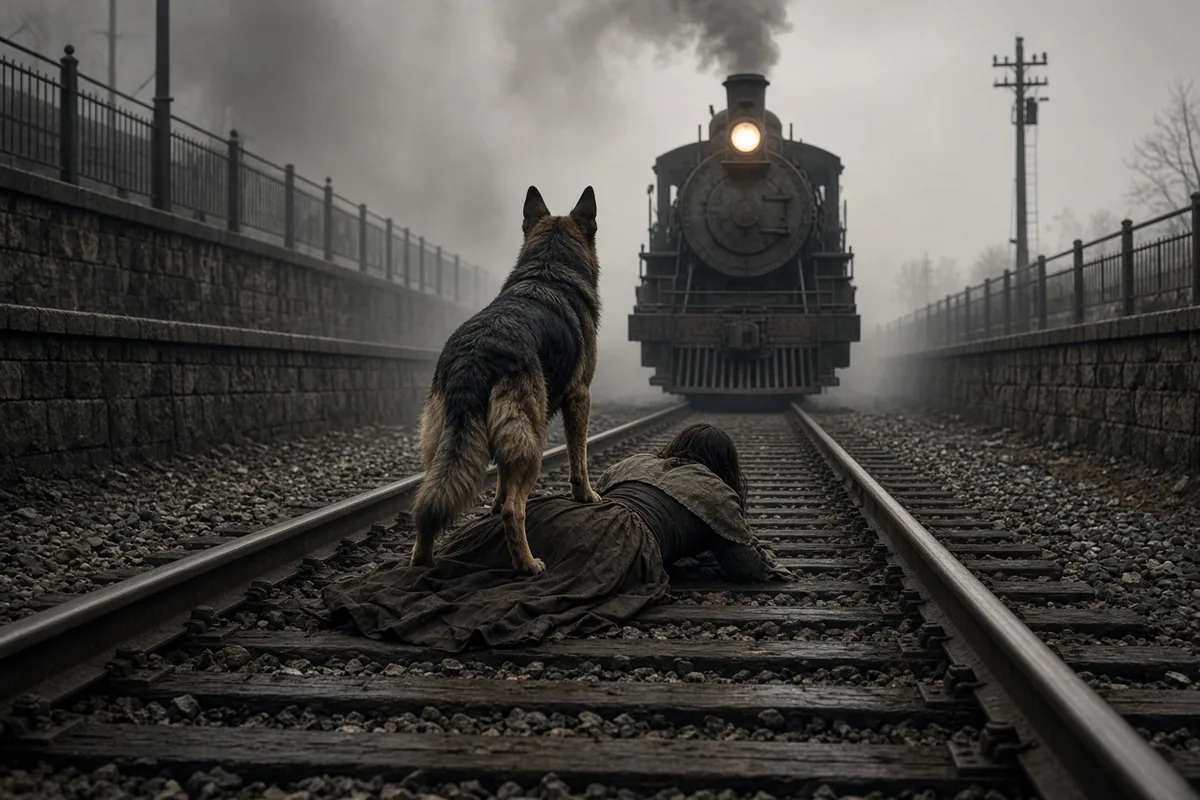
I think about that a long time, the two of them out there in the dark, one of them past the reach of her own judgment and the other refusing, on some level below language, to let the worst thing happen anyway.
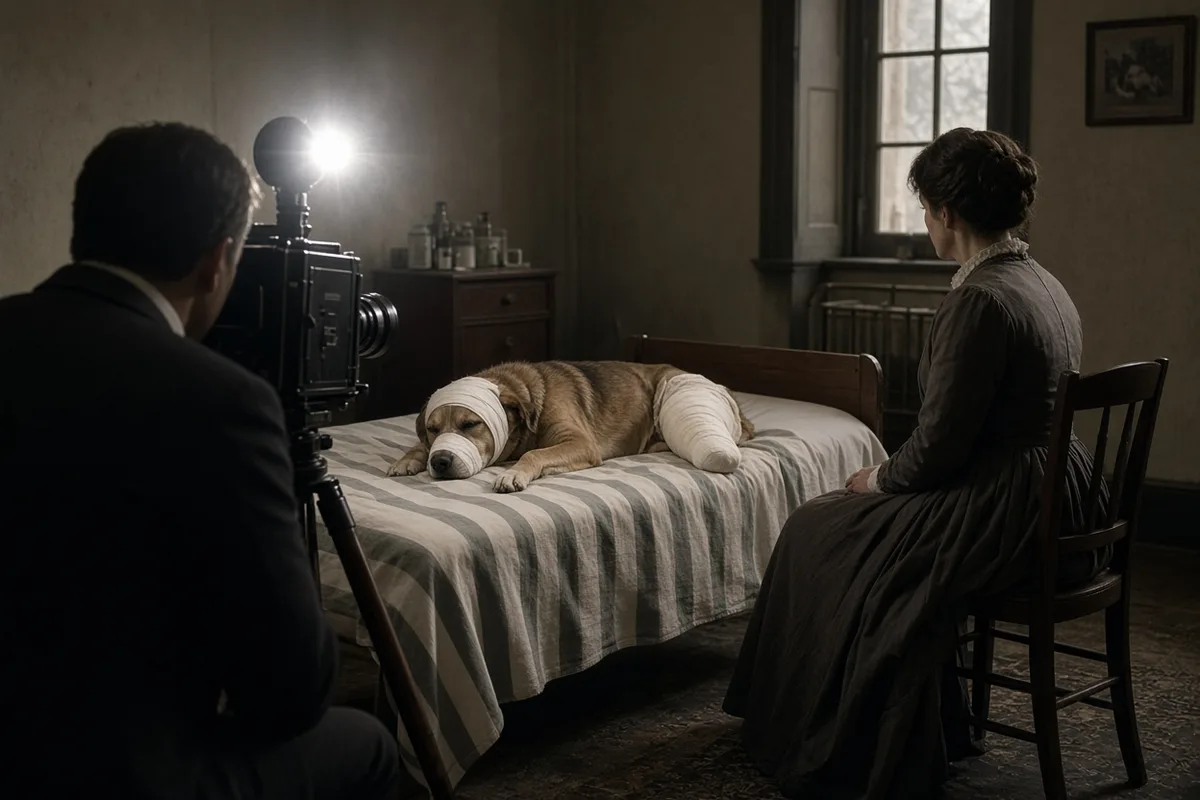
Lilly was moved from the emergency hospital in Acton to Angell Animal Medical Center in Boston, and it was there that the extent of what the train had done to her became fully clear. The de-gloving of her right front foot — every bit of muscle and skin stripped from the bone — was beyond saving. Her pelvis had fractured in several places. There were injuries deeper than that too, quieter ones, the kind that don't announce themselves on an X-ray until a surgeon goes looking. Doctors made the call to amputate the leg first, and to wait on the pelvis, reasoning that an eight-year-old body could only be asked to survive so much trauma at once.
She went into surgery that weekend. Steel plates went into her, holding together what the wheels had broken, bracing the leg that remained. When it was finished there was a long scar where a front leg used to be, and a dog underneath it all trying, days later, to stand up the moment David Lanteigne walked into the room, her hind legs not yet strong enough to hold her but trying anyway, because he'd come to see her and that seemed, to her, reason enough to try standing.
Meg Whalen, one of the veterinarians treating her, said afterward that Lilly had a character and a spirit that sometimes did more for a recovery than anything medicine could offer, and that if any dog had what it took to fight her way back to herself, it was this one. Rob Halpin, speaking for the hospital, told people the doctors believed she'd walk again, three-legged, a senior dog learning a body she hadn't had the week before, and that the road there would not be easy, but that it was there.
I think about the phrase they used — captured the hearts of the staff — and I don't find it sentimental so much as accurate. People who spend their working lives around animal suffering don't get moved by nothing. They get moved by something that has already proven itself.
Lanteigne began readying the apartment for her homecoming before she'd even left the surgical ward, scrubbing floors, gathering the toys she liked best, doing the small domestic work of making a place ready for a body that would come home changed. He said the accident had hit his mother hard, harder than words could easily carry, but that helping prepare for Lilly's return gave her something to do with her hands and her guilt and her grief, all three tangled together the way they get after a night like that one.
I never met Christine Spain. I know her only as a shape on the rail bed lit gold by my headlight, unconscious, saved. I know David Lanteigne only through what he told the reporters who came looking for the story once it broke — how he'd hoped, three years earlier, that a shelter dog might steady his mother's life, and how instead she'd thrown herself, quite literally, between that life and a freight train's wheels. He said he hoped the story would travel far enough to change what people thought when they heard the words pit bull, hoped it might put a few more of that breed into a few more homes on the strength of what one of them had done in the dark outside Shirley.
As for me, I kept the account I gave that night to whoever asked for it — the hospital, later a few reporters — because it felt like the least owed thing. I had been the one behind the wheel of the thing that nearly killed them both. I had also been the one who saw, before anyone else in the world saw it, a dog deciding, with no one to tell her to, that she would rather lose a leg than lose the woman lying still beside her.
Lilly's hind legs wouldn't bear her weight for weeks after that first attempt to stand. I heard that detail and thought of the tail anyway, moving against the table in that hospital parking lot in Acton, moving before the legs underneath it were ready to move, moving simply because the person she loved had walked into the room. I have run trains through that crossing a hundred nights since. The signal blinks the same as it always did. But I look now, every time, a half second longer than I used to, at the dark stretch of gravel just past the light's edge, the way you check twice on a doorstep where something once changed everything.