


The Doolittle Raider Who Went Back in Love
The smell of raw potato skins clings to fingers no matter how many times you wash them, and that is what I remember most about the morning the world changed — not the words on the radio, but the smell on my hands as I stood next to Jake DeShazer at the long steel sink, both of us on kitchen duty, both of us twenty-some years old and certain the worst thing that would happen to us that day was another hour of KP.
Then the voice on the radio said Pearl Harbor, said attack, said Japanese planes, and the peeling knife in Jake’s hand stopped moving. He didn’t say much at first. Then he picked up a potato, whole, unpeeled, and threw it against the wall so hard it burst apart at the seam. “Japan is going to pay for this,” he said, and it wasn’t a shout so much as a vow spoken low, the kind men make to themselves more than to anyone listening.

I believed him. Half the mess hall believed him, because half the mess hall was saying some version of the same thing that morning, fists closing around spoons and ladles like they wished they were something else. Jake had grown up in an Oregon farm family that raised him on scripture and hard work, but by the time I knew him the churchgoing had thinned out of him the way it does for a lot of young men who go looking for the world instead. What Pearl Harbor gave him back, at least at first, wasn’t faith. It was purpose, sharpened into something that looked a great deal like hatred.
He had wanted to fly since before any of us knew him, wanted it enough to enlist at Fort McDowell nearly two years before the war reached us, but the Army took one look at his age and told him twenty-seven was too old to start pilot training. So they made him a mechanic instead, and he learned the guts of the B-25 Mitchell bomber from the inside out at McChord Field in Washington, hands black with grease, before word came down that they needed men to sit in the nose and drop the bombs. Bombardier school took him in. It gave him, finally, a seat in the sky.
By the winter after Pearl Harbor we were all together at Pendleton Field in eastern Oregon, flying B-25s with the 34th Bomb Squadron of the 17th Bombardment Group, doing ordinary training in a war that had stopped feeling ordinary the day it started. Nobody told us anything about what came next until the morning the commanding officer stood us up in a line and asked, plain as that, for volunteers for an extremely dangerous mission. Most of you won’t come back, he told us. That was the whole pitch. No embellishment, no promise of glory, just the arithmetic of the thing laid bare in front of men who had families and girls and unfinished lives.

I watched the line. Every man in it stepped forward at once, like the ground had tilted and we’d all slid the same direction. Jake told me later he’d thought about staying still, just for a second, thought about letting the wonderful opportunity pass him by and let somebody braver take it. Then he looked left and right and saw that stepping back would have meant standing alone in a room where everyone else had already said yes, and there are things a man will do out of pride that he might never do out of courage alone. So he stepped forward too, and that was that.
They put him on Crew 16, in a B-25 they’d painted with the name Bat Out of Hell, serial number 40-2268, and somewhere in the naming of it I think all of us understood exactly what kind of prayer that name was.
We didn’t know yet whose command we were under until the man himself came to brief us — Lieutenant Colonel Jimmy Doolittle, already a name in aviation before the war made him a legend in it, a man who looked at the impossible idea of launching heavy bombers off a carrier deck and treated it like a scheduling problem rather than a physical one. Sixteen B-25s, stripped down and modified, were going to fly off the deck of the USS Hornet, hit targets inside Japan itself, and then keep flying west into China, because there was no fuel in the world that would get them back to a carrier that couldn’t risk waiting for them.

We loaded those bombers aboard the Hornet in the middle of April 1942, lashed to the deck like something borrowed that didn’t belong there, and the ship turned her nose toward the Pacific and toward a shoreline none of us had ever seen except in photographs. The plan called for launching close enough to Japan to give the crews a fighting chance at the fuel math on the far side. The Japanese Navy had other ideas. Their patrol boats spotted the task force earlier than anyone wanted, and word came down through the ship that surprise was already half gone, that we would be launching hours before plan and hundreds of miles farther out than any of the fuel tables liked.
There is a particular kind of quiet that settles over men in the last hour before something like that, and I remember it settling over Jake in the mess line that morning before launch, no potatoes in his hands this time, just a fork he wasn’t using. Then the engines started turning over on deck, one after another, and the quiet broke into something closer to motion, sixteen bombers lumbering down a deck built for planes half their size, lifting off one by one into gray morning air over water that didn’t care what any of us were about to do.
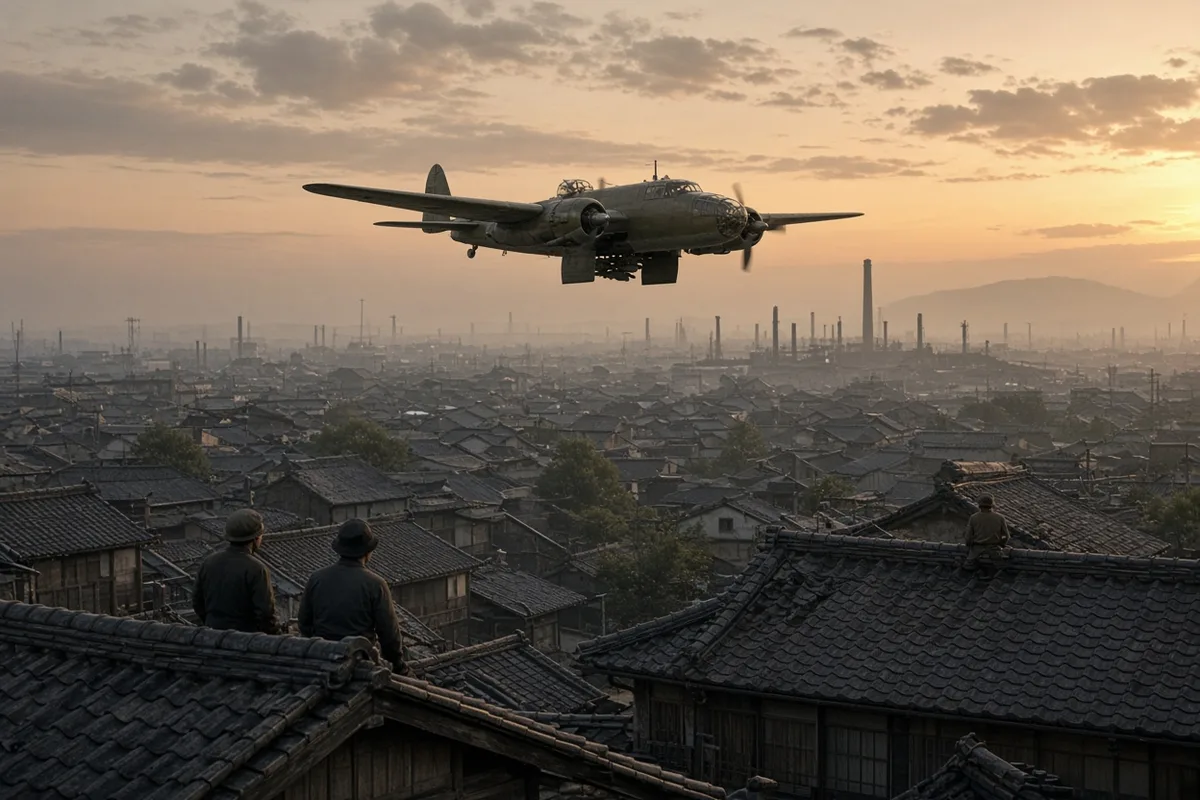
April 18, 1942. Jake sat in the nose of Bat Out of Hell with his eye to the bombsight while the coastline of Japan came up beneath them, and somewhere below, cities that had never imagined American bombers overhead got exactly that. The raid itself, from a purely military accounting, did modest damage. It was never really about damage. It was about proving that Japan’s home islands were not untouchable, and that lesson landed exactly where it was aimed, in the nerves of an enemy command that had believed otherwise.
Then came the harder half of the mission, the flight nobody wanted to think too hard about — west and south, out over the water, toward China, fuel gauges dropping toward numbers that made the navigator go quiet. Bat Out of Hell didn’t have enough gas to find a proper field. Somewhere over Japanese-occupied China, the crew had to choose between riding the plane down or leaving it, and Jake went out into the dark not knowing what waited beneath him, only that staying aboard was no longer a choice that made sense.
He came down alive. Almost all of the eighty men who flew that raid came down alive, scattered across China in the dark, most of them helped along by Chinese villagers and guerrillas who risked their own necks doing it. But Jake’s crew, and a few others, came down inside territory the Japanese army already controlled, and within days he was a prisoner, one of eight Doolittle men taken captive, and the war that had started with a thrown potato in a mess hall had circled back around to put him exactly where his rage had first pointed.
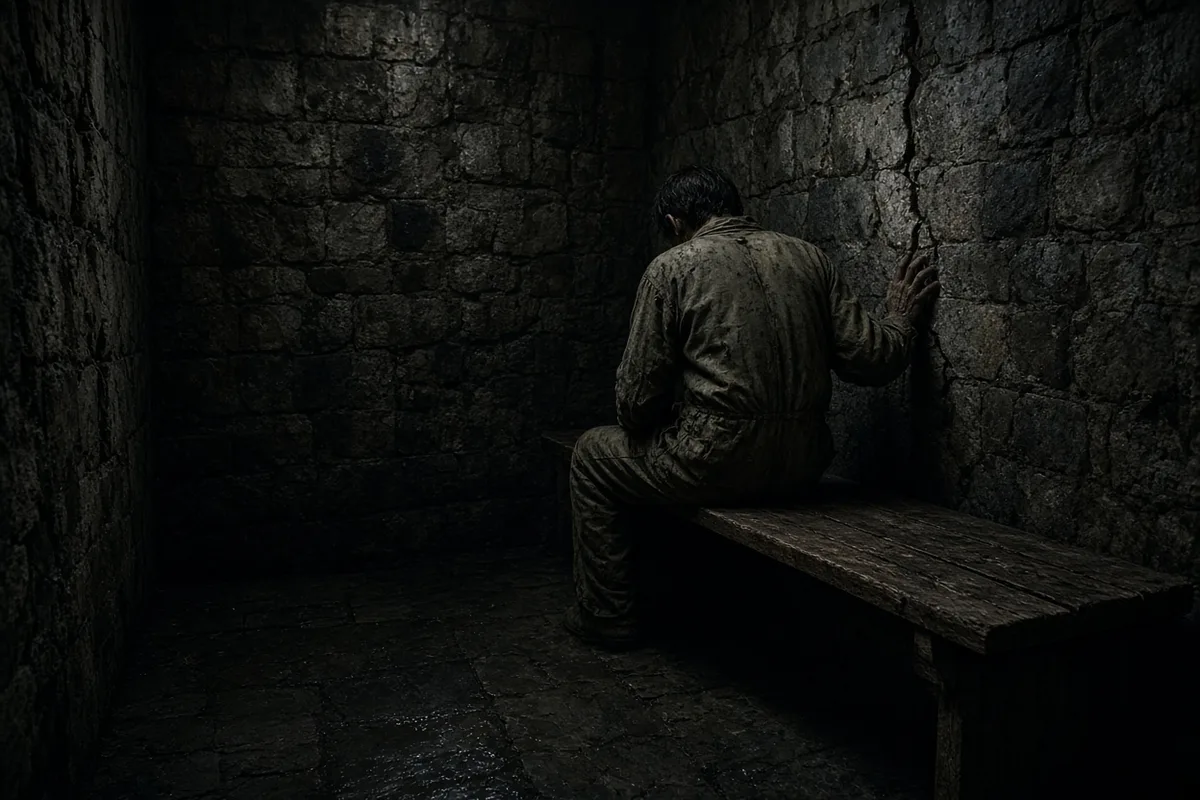
I will not pretend I watched every hour of what came next, because captivity scatters men into separate cells and separate silences, but I was near enough, held under the same guard, moved along some of the same roads, to know the shape of what he went through even where I couldn’t see the particulars. Interrogation. Isolation. A cell built for less space than a man needs to lie down straight in. Word reached us, in the low murmuring way that word travels between prisoners who aren’t supposed to be talking at all, that some of the captured crews had already been executed, and after that every day alive felt like a fact you weren't sure you were allowed to trust.
Forty months. That is how long the Japanese held him, most of it in solitary, starvation weight, the kind of cold and dark that stops being a condition and starts being simply what the world is now. I heard him some nights through the wall, not weeping, just breathing in that ragged, deliberate way men breathe when they are trying to convince their own bodies to keep going one more hour. The hatred he’d carried out of that Oregon mess hall should have had every reason to grow in a place like that. Instead, somewhere in the depth of it, it began, very slowly, to run out of fuel of its own.
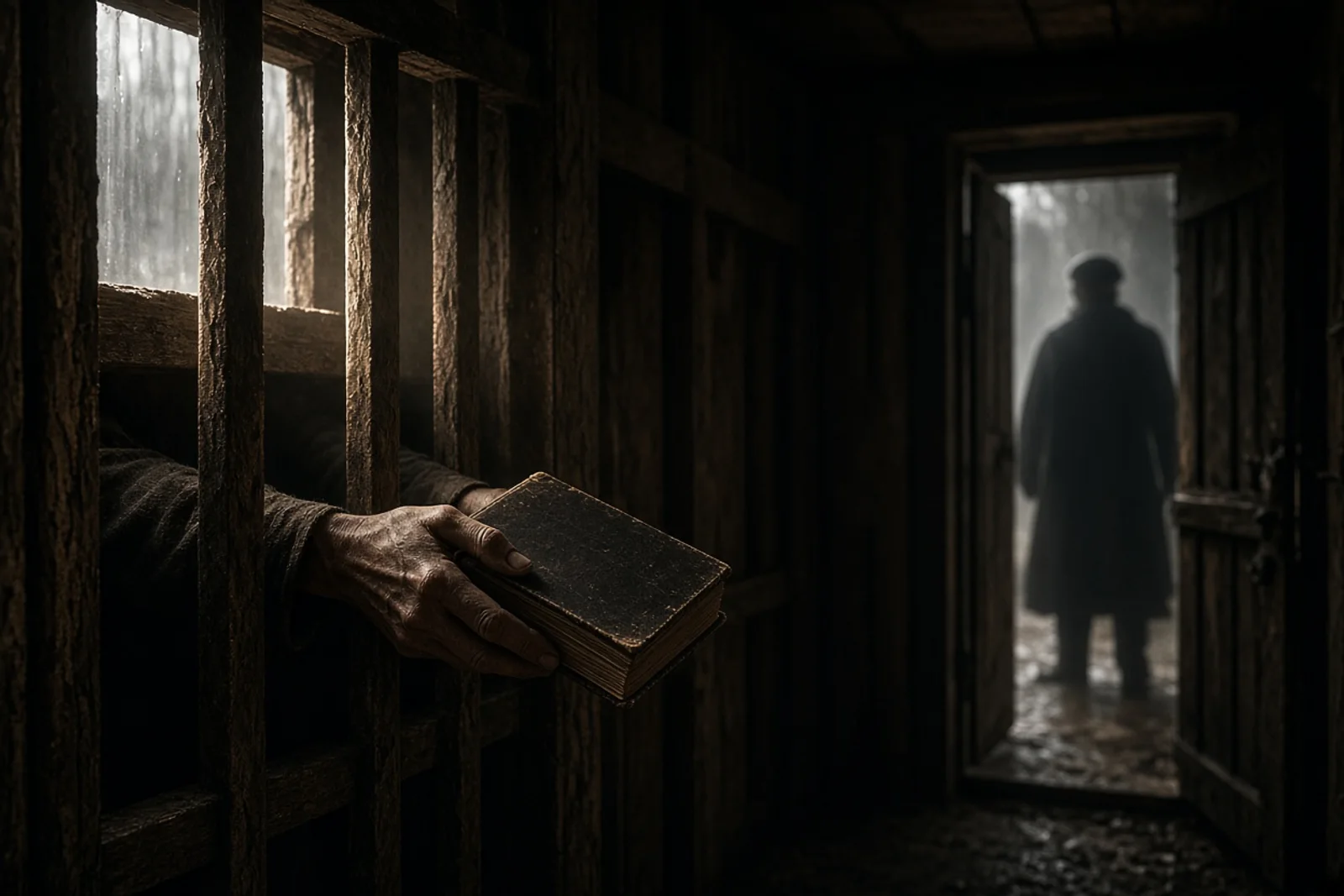
It was in the middle of that long dark that a guard, for reasons none of us ever fully understood, allowed him a Bible. Three weeks. That was the whole of it, three weeks with a book he’d grown up around and long since set aside, and he read it in that cell the way a starving man eats, cover to cover and back again, until the words stopped being paper and ink and became something closer to air. Whatever happened to him in that stretch of time, he came out of it a different man occupying the same battered body, a man who had somehow found, inside the very nation he’d sworn revenge against, a reason to forgive it.
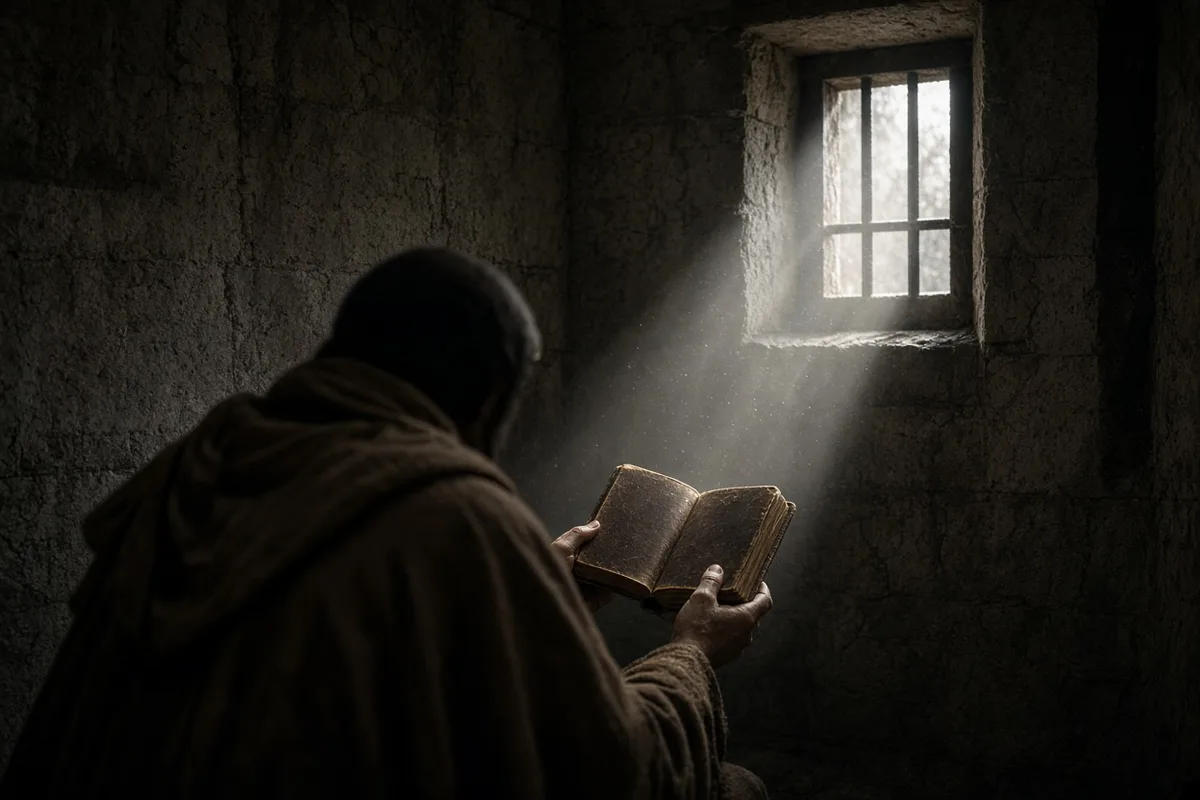
He didn’t announce it loudly. There wasn’t much room in a solitary cell for grand declarations. But something in how he carried the remaining months of captivity changed, a steadiness that hadn’t been there before, as if the forty months of torture had two separate stories running through them and the second one had just quietly taken over from the first.
The war ended before the guards ever finished with him, and when American forces finally reached the camps and the doors came open, Jake DeShazer walked out into daylight forty months older than the young man who had thrown that potato, and lighter, somehow, in a way that had nothing to do with the weight he’d lost.
He went home to Oregon carrying two things nobody expected him to carry together — a body that bore the marks of what the empire had done to him, and an intention to go back to the very people who had done it, not with a bombsight this time, but with the book that had rebuilt him in the dark. He enrolled to study, to prepare, to make sure that when he returned it would be as something more than a survivor with a grudge he’d decided to set down. And in time he did return, crossing the same ocean he had once flown over with sixteen tons of bombs beneath him, this time carrying nothing heavier than scripture and the plain intention to preach it.
I think of Doug Radney sometimes in the same breath, another man from that same raid who’d slipped a line of poetry into a letter so his girl back home would understand, without the censors understanding, that he was about to disappear over an ocean toward something he might not survive. Different men, different fates, the same sixteen planes carrying all of it westward that morning off the Hornet — some of them coming home to marry the girl who’d gotten the ring smuggled out under secrecy, some of them coming home from years in a cell with nothing but a borrowed Bible and a changed heart. The raid split into as many endings as there were men who flew it.
Jake spent years afterward preaching across Japan, the same soil he had once been ordered to burn, and by every account I ever heard, he did it without flinching from the fact of where he stood. He never denied what he had done as a bombardier, never pretended the war away. He simply insisted that the last word did not have to belong to what had happened in that solitary cell, or to the vow he’d made over a broken potato in a mess hall four years earlier.
I don’t know how you measure the distance a man travels between throwing something in fury and returning, decades later, with open hands to the very people he once wanted to punish. It isn’t a distance you can put on a map, the way you could plot the Hornet’s course, or the flight path of a B-25 named for hell. But I stood close enough to him, in the years before the transformation and in the after of it, to know the distance was real, and that he covered every mile of it on foot, in the dark, carrying nothing at first but hatred, and coming out the other side of forty locked months carrying a Bible instead.