



Hari traces drug war origins to Anslinger's fear of bureau irrelevance
In 60 seconds
- Hari traces the modern drug war to Harry Anslinger, who launched it in the 1930s to keep his bureau alive by targeting stigmatized groups with racialized fear rather than evidence.
- Selective enforcement, illustrated by Billie Holiday’s persecution, sorted people into patients or criminals by race, class, and visibility instead of by the substance.
- Rat Park and Vietnam-veteran evidence lead Hari to argue addiction is driven more by isolation and unmet need than by a simple chemical hook.
- He contends prohibition does not erase demand; it hands markets to violent cartels and strips users of housing, work, and connection that aid recovery.
- Portugal’s decriminalization plus Swiss and Vancouver supervised programs, he reports, cut deaths and disease by treating use as a health and social issue.
- Hari proposes regulated legal markets paired with housing, treatment, and community investment as the path that reduces harm better than a century of enforcement.
The big idea
Hari argues the war on drugs was a political invention built on racialized fear and a false chemical-hook theory of addiction. He contends the opposite of addiction is connection, not forced abstinence, and that decriminalization and harm reduction already tested abroad save lives prohibition destroys.
The book in brief
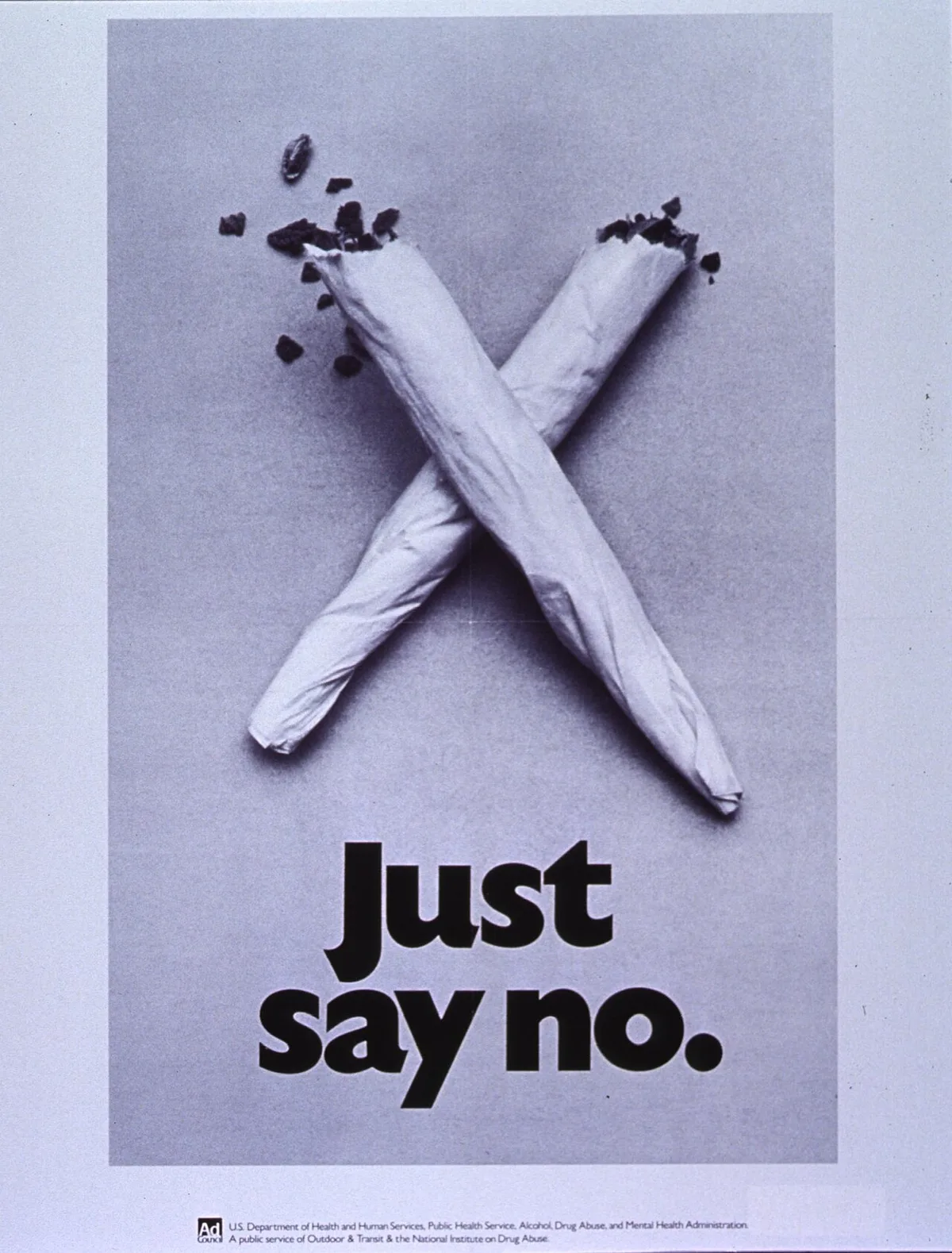
Hari opens by locating the drug war’s birth in bureaucratic self-preservation. After alcohol Prohibition ended in 1933, Harry Anslinger needed a new mission for the Federal Bureau of Narcotics. He built that mission around marijuana, opium, and cocaine by stoking fear of Mexican immigrants, Chinese communities, and Black jazz musicians, then pushed the Marihuana Tax Act of 1937 on claims his own research contradicted. The founding template, Hari contends, was control of stigmatized people, not pharmacology; UN treaties later exported the invention as global common sense.
He then shows how that template operated on a human scale through Billie Holiday. Federal agents entrapped her, hounded her for years, and, as she lay dying in 1959, handcuffed her to a hospital bed and removed methadone that might have eased her final days. White, wealthy addicts of the same era quietly received treatment and discretion. The asymmetry reveals the war’s real sorting mechanism: race, class, and visibility decided who counted as patient and who counted as criminal.
The middle of the book attacks the chemical-hook theory itself. Bruce Alexander’s Rat Park gave rats space, toys, and company; they largely ignored morphine water that isolated caged rats chose compulsively, and even previously dependent rats weaned off once moved into the social setting. Lee Robins’s work on Vietnam veterans showed roughly nine in ten heavy users stopped without formal treatment once back among family, work, and purpose. Hari extends the logic: hospital patients given large painkiller doses rarely develop lasting addiction when relationships and stability await them outside, while people whose trauma or isolation preceded use find in drugs relief from an underlying wound. Punishment that strips jobs, housing, and standing therefore manufactures the very conditions that deepen addiction.
He next maps the market-level damage. Criminalizing supply does not kill demand; it transfers the market to whoever will use force. Hari reports from Ciudad Juárez during years of thousands of drug-related homicides and draws the parallel to 1920s alcohol bootlegging. Aggressive enforcement that disrupts one route simply sparks violent contests over the vacuum. On the individual level, mandatory minimums and three-strikes laws permanently bar people from housing, employment, and aid, closing off the protective connections Rat Park and the veterans pointed toward. Sentencing disparities between crack and powder cocaine fell hardest on Black communities despite similar underlying use rates across groups, creating a self-reinforcing trap of record, isolation, deeper use, and re-arrest.
The book then turns to working alternatives. In 2001 Portugal decriminalized personal possession of all drugs, replacing criminal courts with dissuasion panels of social workers and health professionals and redirecting enforcement money into treatment, housing, and jobs. Hari reports sharp drops in drug-linked HIV and drug-related deaths without the predicted surge in casual use. Switzerland’s 1990s heroin-assisted clinics gave long-term users pharmaceutical heroin under supervision, cutting crime and improving housing and work once the chaos of street sourcing ended. Vancouver’s Insite, opened in 2003 after activism that included Bud Osborn, let people inject under staff ready to reverse overdoses; the book links it to fewer overdose deaths and more treatment referrals without rising local use.
Hari closes by gathering the evidence into a prescription: legal, regulated markets—modeled partly on Uruguay’s 2013 cannabis law and U.S. state reforms beginning in 2012—paired with sustained investment in housing, treatment, and community. Different drugs would need different controls, from pharmacy-style sales to licensed clubs, but the common move is shifting state resources from policing to the social determinants that actually shape destructive habits. Readers are asked to judge policy against these measured outcomes rather than against the fear Anslinger built in the 1930s.
Context
Johann Hari spent three years traveling to nine countries to follow the drug war from its 1930s origins to its present human costs. The book arrived as narrative journalism that challenged prohibition orthodoxy by pairing origin stories with harm-reduction case studies already running in real cities and countries. The summary notes that Hari’s earlier credibility problems invite extra scrutiny of his selective evidence, and that the book predates the post-2015 fentanyl crisis that later reshaped overdose debates.
The key ideas

1
A bureaucrat needed power
Hari holds that the modern drug war began when Harry Anslinger needed a new enemy after alcohol Prohibition ended, not from public-health science.
- 1933Alcohol Prohibition ends; Anslinger needs a new mission
- 1937Marihuana Tax Act passes on fear-based testimony
- 1960s–70sUN treaties export the U.S. model worldwide
When alcohol Prohibition ended in 1933, Anslinger’s newly formed Federal Bureau of Narcotics faced irrelevance. Hari traces how he seized on marijuana, opium, and cocaine and wrapped them in racial panic: Mexican immigrants and marijuana, Chinese immigrants and opium dens, Black jazz musicians and heroin. Drug use was cast as a threat to racial and moral order rather than a medical problem.
Anslinger promoted claims that marijuana caused violent insanity even when his own commissioned research contradicted them. He pushed the Marihuana Tax Act of 1937 largely on fabricated testimony. The bureau’s survival, Hari argues, depended on an ever-expanding enemy list and escalating rhetoric of danger.
This origin matters because it sets the book’s central claim: the architecture was political from the first brick. Later UN treaties in the 1960s and 1970s exported one country’s bureaucratic invention as universal common sense. A policy built on manufactured fear cannot be judged only by whether drugs are dangerous; it must be judged by whether the response was ever designed to reduce that danger.
In practice: Anslinger secured the Marihuana Tax Act of 1937 on testimony about violent insanity that his own research had already undercut.
2
Enforcement sorted by status
Hari shows that selective, personally vindictive enforcement—not consistent law—has been the drug war’s actual operating method from the start.
Targeted addict
Entrapment, years of hounding, handcuffs on a deathbed, methadone removed
Protected addict
Quiet treatment and discretion for white, wealthy users of the same era
Billie Holiday was addicted to heroin and sang “Strange Fruit,” a song about lynching. Anslinger’s agents treated her as both an addict and a symbol worth punishing. They arranged drug buys to entrap her and hounded her for years.
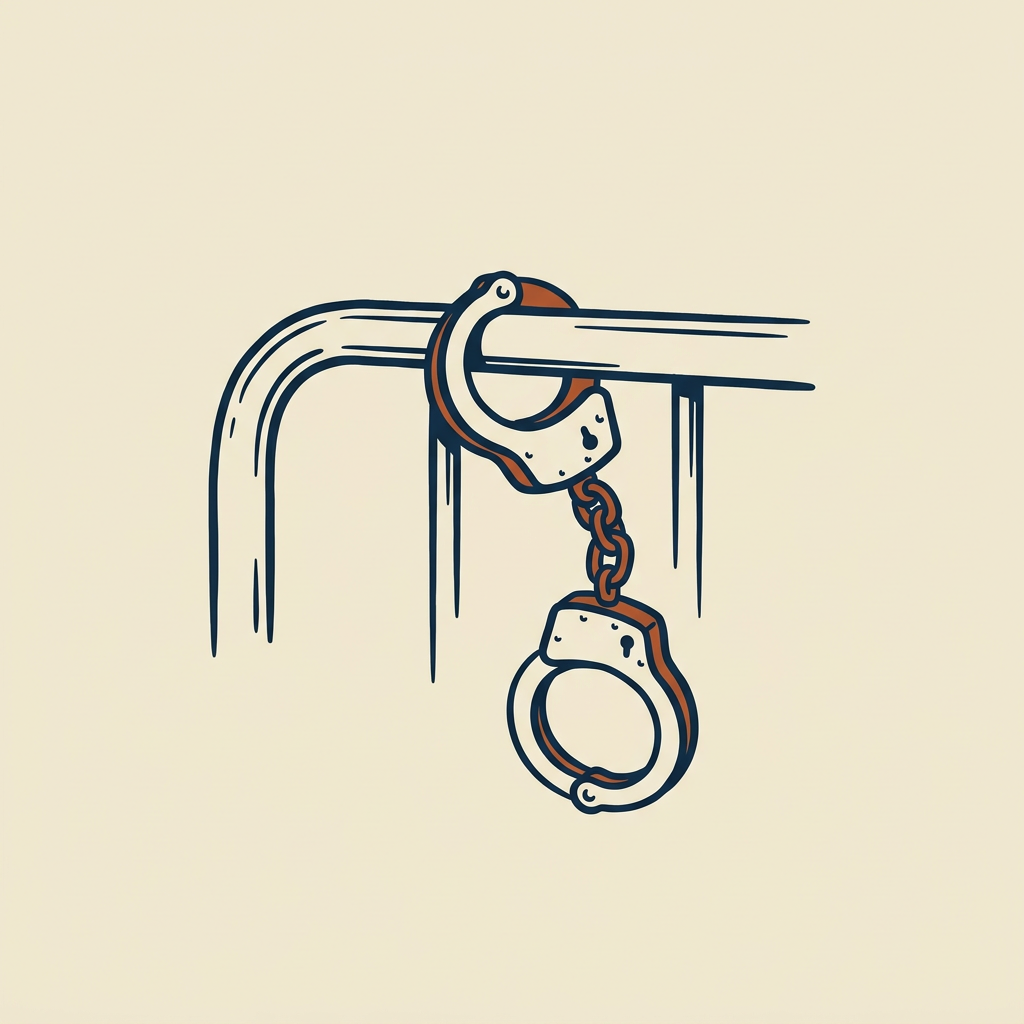
In 1959, as she lay dying of liver disease in a New York hospital, agents handcuffed her to the bed and removed the methadone that might have eased her final days, on the ground that addicts did not deserve medical comfort. Hari contrasts this with white, wealthy addicts of the same era who quietly received treatment and discretion rather than raids.
The asymmetry, he argues, reveals that the war has never been primarily about the chemical. It has been a mechanism for deciding which populations count as patients and which count as criminals, sorted by race, class, and visibility. Treating addiction as a crime of character rather than a health condition is the operating logic the rest of the book keeps testing.
In practice: As Holiday died in 1959, agents handcuffed her to the hospital bed and took away her methadone.

3
The cage decides, not the dose
Hari presents addiction as driven less by a drug’s chemical grip than by the isolation and deprivation of the environment a user lives in.
Bare cage
Alone, no toys, morphine water chosen compulsively
Rat Park
Space, companions, toys; morphine largely ignored and prior dependency fades
Earlier rat studies kept animals alone in bare cages with a choice between plain water and morphine water; they chose the drug compulsively, and the result was treated for decades as proof of a simple chemical trap. Bruce Alexander built Rat Park: space, other rats, toys, room to roam. Those rats largely ignored the morphine water. Even rats previously forced into dependency in isolation weaned themselves off once moved into the social enclosure.
Hari pairs this with Lee Robins’s research on American soldiers returning from Vietnam, where heroin use had been widespread—some studies suggesting as many as one in five used heavily. Contrary to predictions of a wave of hopeless addicts, roughly nine in ten stopped without formal treatment once they were back among family, work, and purpose.
The drug war, Hari contends, never asked the right question. Not “why do chemicals addict people,” but “why do people in some circumstances turn to compulsive use while others with similar exposure do not.” Environment, not molecule, becomes the variable that matters most.
In practice: Rats in Rat Park ignored morphine water that isolated caged rats chose compulsively; nine in ten heavily using Vietnam soldiers stopped once home.

4
Connection is the real opposite
Hari contends the opposite of addiction is not abstinence but genuine social connection and a sense of purpose.
He extends Rat Park into human cases. People who became dependent on painkillers after surgery often received doses far larger than any street user, yet rarely developed lasting addiction when their lives outside the hospital remained intact with relationships and stability to return to. He contrasts them with people whose isolation, poverty, or trauma preceded drug use; for them the drug offered relief from an underlying wound rather than a standalone chemical seduction.
If the drug itself were the whole story, exposure alone would predict addiction. It consistently does not. Punishment that strips jobs, housing, family trust, and community standing therefore does the opposite of what recovery requires.
Hari treats this as both moral and empirical foundation for later policy chapters. A system built to isolate and shame is actively manufacturing the conditions that deepen compulsive use. The claim deemphasizes genetic vulnerability and neurochemical adaptation that other researchers weight more heavily, yet it supplies the book’s testable core.
In practice: Hospital patients given large post-surgery painkiller doses rarely stay addicted when stable relationships and purpose await them outside.

5
Prohibition hands markets to force
Hari argues criminalizing a drug market does not eliminate demand; it simply transfers control to whoever is willing to use violence to run it.
He draws an explicit parallel between 1920s alcohol Prohibition, which produced Al Capone and violent bootlegging, and the modern drug war, which produced cartels that control territory through massacre. From Ciudad Juárez he reports periods of thousands of drug-related homicides a year, interviewing victims’ families and former cartel-linked figures.
The economic logic is simple. When a product stays in demand but legal supply is shut off, someone will supply it. Without contracts, courts, or police protection, disputes get settled by force. The more aggressively enforcement disrupts one cartel or route, the more violently rivals fight over the vacuum—a dynamic Hari traces through waves of Mexican and Colombian violence tied to shifts in U.S. priorities.
Here the harm is not only addiction itself but the war fought to suppress it, absorbing resources and lives on a scale that dwarfs the direct toll of use. Removing the criminal premium by legalizing or regulating the market, he holds, removes much of the incentive for that violence—the same pattern seen when alcohol-related gang violence fell sharply after Prohibition’s 1933 repeal.
In practice: Hari links cartel massacres in Juárez to the same vacuum dynamic that produced bootlegging violence, which fell after alcohol Prohibition ended in 1933.

6
Records close every exit
Hari maintains that punitive drug laws inflict more lasting damage on users, families, and communities than the drugs they claim to suppress.
After the 1980s expansion of mandatory minimums and three-strikes laws in the United States, a low-level drug conviction can permanently bar someone from stable housing, employment, and financial aid. Those are exactly the stabilizing connections Rat Park and the veteran evidence identified as protective against addiction.
Hari highlights disproportionate impact on Black and Latino communities, pointing to sentencing disparities between crack and powder cocaine that produced far harsher penalties for offenses more common among Black defendants despite similar underlying use rates across racial groups. Interviews with people cycling through jail for possession—not the trafficking the laws were sold as targeting—show a system that criminalizes poverty and addiction more than it disrupts supply chains.
The result is a self-reinforcing trap: criminal records deepen isolation, isolation deepens addiction, deepened addiction produces more arrests. Stigma itself becomes a barrier to help, because admitting a problem risks arrest rather than treatment. The harshest costs fall on people already most vulnerable to the disconnection that drives compulsive use.
In practice: Crack-versus-powder sentencing gaps produced far harsher penalties for offenses more common among Black defendants despite similar use rates across groups.

7
Portugal stopped punishing possession
Hari reports that removing criminal penalties for personal possession and redirecting resources to treatment and support reduces overdose deaths and problematic use more effectively than punishment.
In 2001 Portugal faced one of Europe’s worst heroin crises and rising HIV among injecting users. It decriminalized possession of small quantities of all drugs for personal use. People caught with drugs go to local dissuasion panels of social workers and health professionals who assess whether treatment is needed. Money once spent on enforcement moved toward addiction treatment, housing support, and job placement.
Hari reports sharp declines in HIV infection rates linked to drug use and a fall in drug-related deaths relative to the crisis years before the change, without the surge in casual use critics predicted. Officials and former addicts describe a system where seeking help no longer risks a criminal record.
That matters directly because earlier chapters established that isolation and stigma deepen addiction while stability and connection ease it. Portugal does not fully legalize or erase the illegal market, but it treats use as a health and social issue handled outside criminal court, shifting the state’s role from punisher to safety net. It is the book’s first national-scale proof of concept.
In practice: After 2001, Portugal saw sharp drops in drug-linked HIV and drug-related deaths without the predicted rise in casual use.
8
Supervise the dose, stabilize the life
Hari shows that medically supervised pharmaceutical-grade drugs and safe consumption spaces stabilize the most severely dependent users and cut death and disease without requiring abstinence first.
- Immediate survivalSupervised use with overdose reversal ready
- Remove street chaosPharmaceutical supply replaces contaminated market
- Stabilize daily lifeHousing and employment become possible again
- Open path to treatmentReferrals rise once trust and safety exist
Switzerland launched heroin-assisted treatment in the 1990s after cities like Zurich faced open drug scenes and rising overdoses. Long-term users who could not stop through other treatment receive pharmaceutical heroin under medical supervision at clinics. That removes them from the criminal market’s contaminated, unpredictable supply. Hari reports declines in criminal activity and improved housing and employment stability once the daily chaos of sourcing illegal drugs no longer consumed their time.
He pairs this with Vancouver’s Insite, North America’s first legally sanctioned supervised injection site, opened in the Downtown Eastside in 2003 after sustained advocacy that included poet and organizer Bud Osborn, who had watched neighbors die from preventable overdoses. Users inject pre-obtained drugs under staff equipped to reverse overdoses immediately. Studies cited in the book link the site to reduced overdose deaths and increased treatment referrals without an increase in local drug use.
Both models extend Portugal’s logic: they do not only remove criminal penalties; they meet users where they are. Survival and stability become the immediate goal rather than making abstinence a precondition for any help. Concrete infrastructure, not just changed law, is what turns the connection theory into saved lives.
In practice: Swiss heroin clinics improved housing and work among participants; Insite, opened 2003, linked to fewer overdose deaths and more treatment referrals.
9
Regulate supply, fund connection
Hari proposes that legal regulated markets paired with sustained investment in housing, treatment, and community would reduce drug-related harm more than continued enforcement.
He gathers three earlier claims: prohibition manufactures violence by ceding markets to armed traffickers; criminalization deepens the isolation that drives compulsive use; connection-based interventions already show measurable success without collapsing into mass casual use. The closing prescription is legal, regulated markets for currently prohibited drugs, modeled partly on Uruguay’s 2013 cannabis legalization and the U.S. state-level wave that began with Colorado and Washington in 2012.
Regulation is not one fixed policy. Hari suggests different models by risk—pharmacy-style sales for some drugs, licensed clubs for others—but insists the common thread is shifting state resources from policing to social infrastructure. Housing, employment, and mental health are treated as the actual determinants of who develops destructive habits.
This is the book’s most speculative chapter, extrapolating from partial and geographically limited pilots to a broader recommendation. It asks readers to judge current policy against the measured outcomes of alternatives already running, not against the fear Anslinger built in the 1930s.
In practice: Hari points to Uruguay’s 2013 cannabis law and U.S. state reforms starting in 2012 as partial models for moving resources from policing to social supports.
Key terms
- Rat Park Alexander’s spacious, social rat enclosure where animals largely ignored morphine water that isolated caged rats chose compulsively
- Chemical-hook theory The view that exposure to a drug alone hooks the brain regardless of environment; Hari treats this as the false foundation of punitive policy
- Dissuasion panels Portuguese teams of social workers and health professionals who see people caught with personal-use amounts instead of sending them to criminal court
- Heroin-assisted treatment Swiss clinic model giving long-term users pharmaceutical heroin under medical supervision so they leave the street market
- Supervised injection site A legally sanctioned space, like Vancouver’s Insite, where people inject under staff ready to reverse overdoses immediately
- Connection as antidote Hari’s core claim that genuine social ties and purpose, not enforced abstinence, reverse compulsive use
- Criminal premium The extra profit and violence that appear when a demanded product can only be supplied illegally
What to do
- Question any drug-policy debate that offers only punishment versus treatment; ask instead whether the proposal raises or lowers a user’s stability, housing, and social connection.
- Look up your area’s existing harm-reduction resources—needle exchanges or supervised-consumption pilots—and support their funding rather than assuming they enable use.
- If someone you know is struggling, keep them linked to work, family, or purpose even imperfectly instead of making immediate abstinence the price of continued contact.
- When you hear a policy framed only as toughness on drugs, ask whose isolation, record, or housing it will worsen.
- Share one concrete finding from Portugal, Switzerland, or Vancouver the next time someone claims decriminalization has never been tried.
Questions to think with
- If environment shapes addiction more than the molecule, what would change first in your city’s housing and employment policy?
- Whose addiction has been treated as a medical problem and whose as a crime in the stories you know, and what decided the difference?
- What risk would you still worry about under regulated legal markets that Hari’s case studies do not fully answer?
- How would you redesign a single local program so that seeking help never risks a criminal record?
- Where does the book’s connection thesis under-weight biology or genetics that still matter in individual cases?
The other side
The book is narrative journalism, not a peer-reviewed synthesis, and its persuasive force sometimes outruns its evidence. Rat Park rests on a small set of late-1970s and early-1980s studies that have never been robustly replicated at scale; some later attempts found weaker or inconsistent results. Most addiction researchers hold a layered view in which genes, dose, route, and neuroadaptation interact with environment rather than being replaced by it; the book gives little space to tolerance, withdrawal, or twin differences that a purely social account struggles to explain. Claims about Portugal and Switzerland rely heavily on case narrative and site visits rather than broad quantitative comparison; other researchers reading Portugal’s data have offered more mixed assessments that track regional trends in countries that did not decriminalize. Hari’s earlier record of lifted quotes and covert Wikipedia edits invites closer scrutiny of selective evidence here. The book also predates the fentanyl-driven overdose crisis after 2015, so its heroin-era harm-reduction cases do not directly address a far more lethal synthetic supply. Readers wanting full neurobiology or a weighed account of legalization downsides such as commercialization and youth access will find a starting point, not a complete map.
Who it's for
Readers who want the political origin story of current drug laws, plus policymakers, social workers, and journalists working on addiction or harm reduction, will get the most from the full book. So will anyone with a friend or family member in addiction who needs a frame beyond willpower and blame.