


The Eucharistic Miracle of Chirattakonam
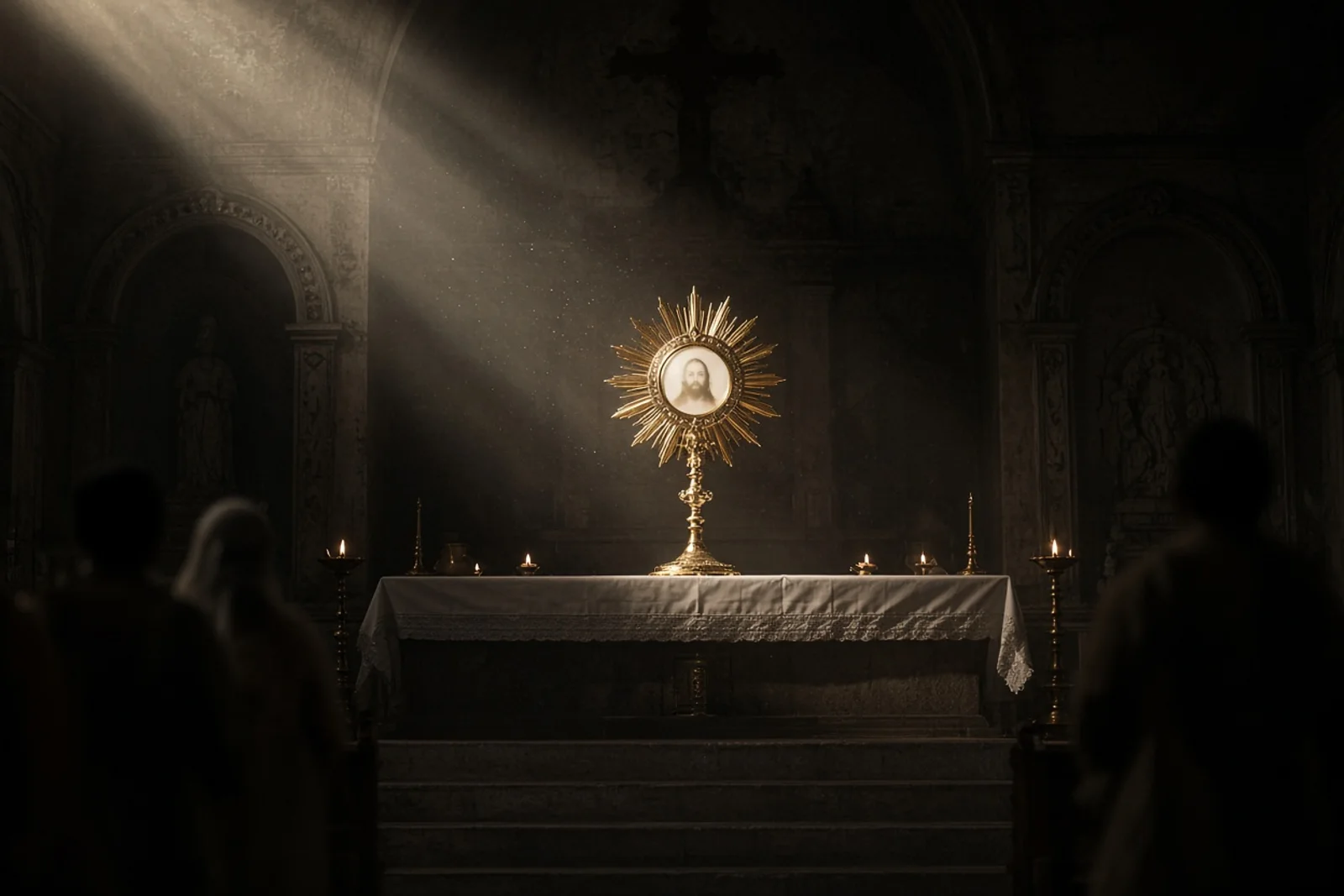
The tabernacle door clicked under Father Karnoor's hand and the monstrance caught the first slant of morning light through the side window. I had come early to help set out the kneelers for the Saturday Mass and stood three rows back when he lifted the veil. His shoulders went still. He leaned closer, then turned toward us with his mouth half open.
He asked us all to kneel. The altar server, a boy no older than twelve, stayed where he was and stared straight into the glass. Father asked him what he saw. The boy answered without looking away that he saw the figure of a man. A woman beside me drew in her breath and did not let it out. I kept my eyes on the Host and watched the light move across it as more people came in from the side door.
The image was not there all at once. At first it looked like a shadow pressed into the surface, then the lines of a brow and the hollows beneath the eyes began to hold. Father Karnoor did not speak for several minutes. When he finally moved, it was only to wipe his face with the back of his sleeve. He told the server to bring the book for the reading. The passage that day was from the twentieth chapter of John, the part where Thomas is told to touch the wounds.
Father read it in a low voice that cracked once and then steadied. He tried to say something after the reading but stopped after a few sentences. He looked again at the monstrance and the tears started again. People remained on their knees. No one moved toward the door. The air inside the church grew warmer as the sun climbed and the smell of the wax candles mixed with the dust that always rose from the floor tiles when many feet shifted.
Father Karnoor sent someone for a photographer. He said the pictures needed to be taken before anything changed. The man arrived carrying a black bag and set up his tripod without asking questions. He took several exposures, changing the plates each time and checking the light. Father stayed beside the altar the whole time, one hand resting on the edge of the table. After the last plate he closed the tabernacle again and told everyone the Adoration would continue the next morning.
I walked home along the road that runs past the coconut palms. The heat was already pressing through my shirt. At the small bridge I stopped and looked back at the church roof. Nothing outside looked different. When I returned that evening the photographer's prints were drying on a table in the sacristy. Father let a few of us see them. In the earliest plate the face was still faint, almost lost in the grain. In the later ones the features stood out more sharply, the line of the hair and the dark places around the eyes.
The next day the news had already reached the neighboring parish at Kokkodu. Father Karnoor left after the morning Adoration to say Mass there as he had planned. Before he went he asked two men to stay with the monstrance and keep the church open. People came from Chirattakonam and from farther villages. They stood in line to enter and left without speaking much once they had seen the Host.
His Beatitude Cyril Mar Baselice came on the following Thursday. He spent nearly an hour in the church, sometimes standing, sometimes kneeling on the first step. When he left he spoke with Father Karnoor at the gate. He said that for believers the sight confirmed what had always been held, and that any sign given by the Lord asked for some answer in return. The Archbishop did not order any further tests or declare anything beyond that statement.
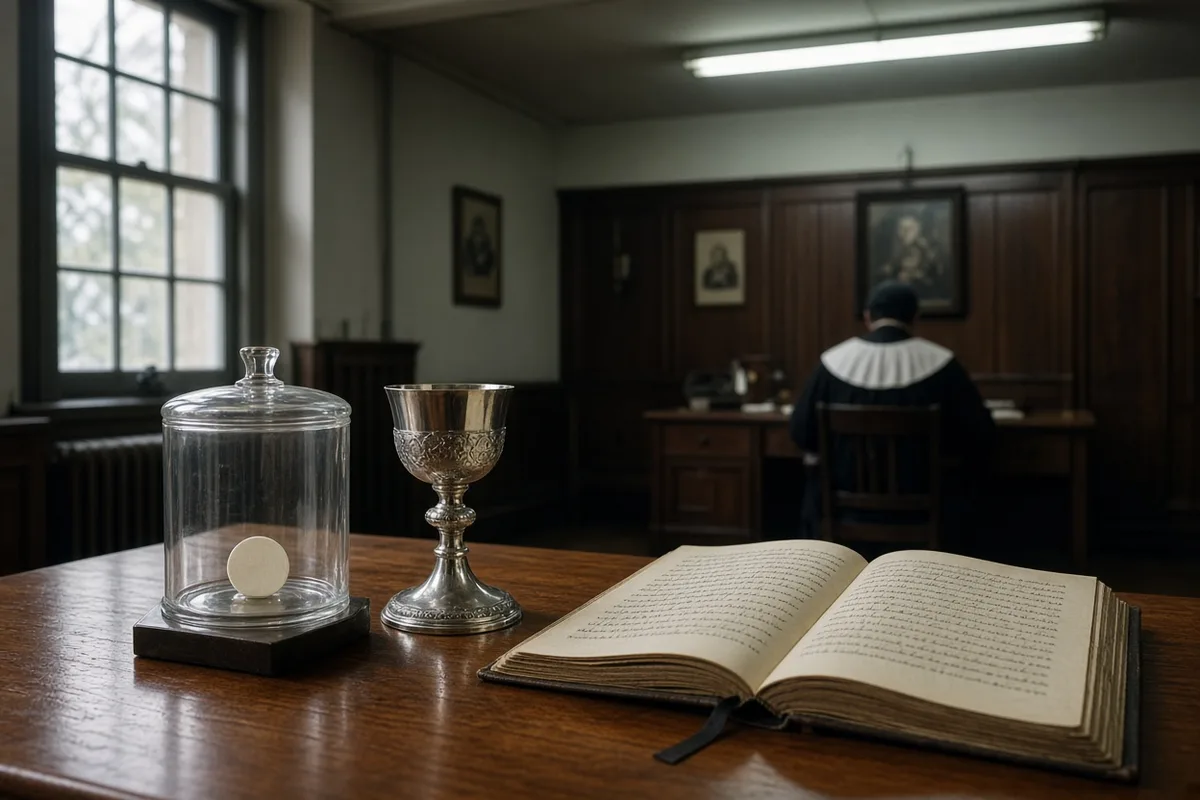
The monstrance remained in the tabernacle through the rest of May and into the rainy season. The glass stayed clear. No one reported that the image had faded or grown stronger. Father Karnoor continued the usual schedule of Masses and the annual novena to Saint Jude. When visitors asked to see the Host he would expose it for a short time and then replace it.
I kept coming on Saturday mornings. The boy who had served as altar server that day still carried the cruets and rang the bell at the elevation. He never spoke about what he had seen unless someone asked him directly. Most people in the parish did not change their habits. They came for Mass, lit candles for the same intentions, and left again into the heat outside.
Years later the same monstrance sits in the same tabernacle. The frame shows small scratches from being carried back and forth. The photograph taken on the fifth of May is kept in a folder in the sacristy drawer. On certain afternoons the light through the high window falls across the altar in the same way it did that morning, and the surface of the Host catches it for a moment before the tabernacle door closes again.
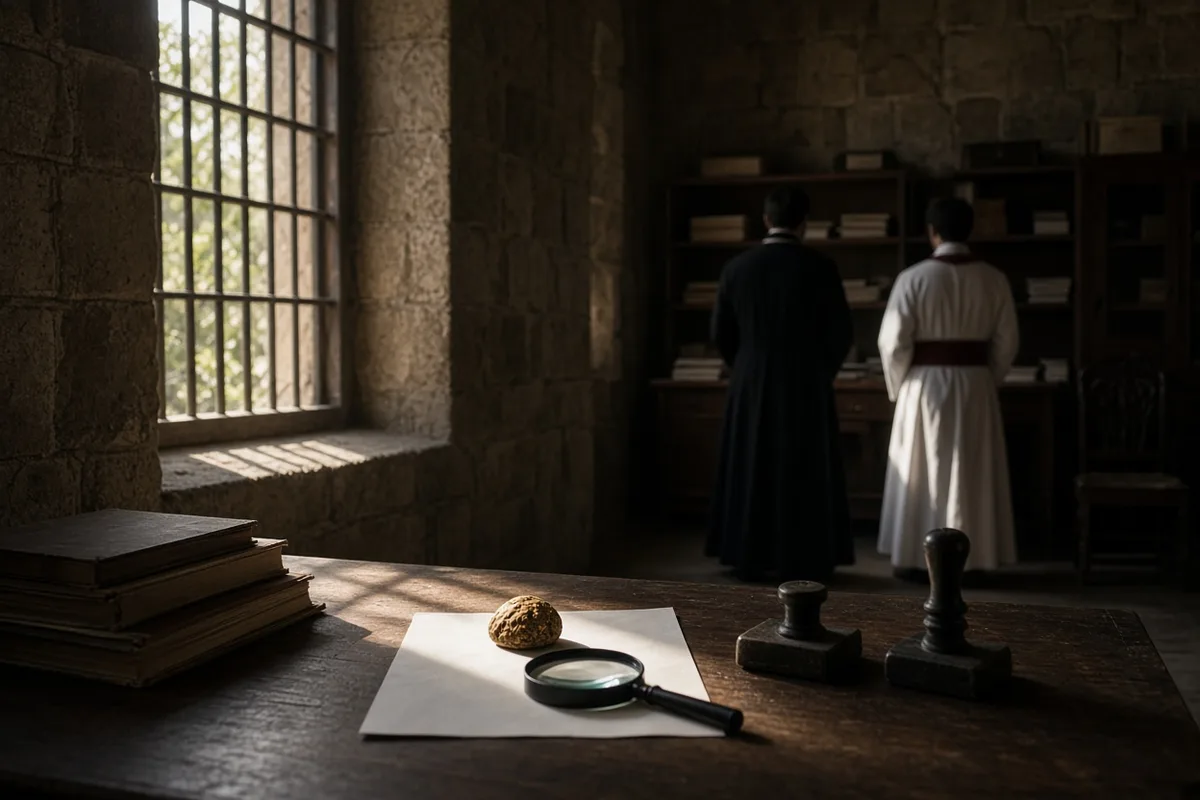
The parish register for 2001 records that between the fifth of May and the end of June, 1,247 names were entered in the visitors’ book kept on the sacristy table, with the largest single day being the feast of Corpus Christi when 312 signatures appeared on one page. Father Karnoor noted in the same ledger that two men from the neighboring village of Vencode, identified as Thomas Varghese and his brother Mathew, returned on three consecutive Saturdays to measure the distance from the front pew to the tabernacle with a steel tape and found it to be exactly 7.4 meters each time. In July of that year the monstrance was carried in procession for the first time since the morning of the fifth, the route running two kilometers along the palm-lined road to the small bridge where the narrator had paused; the procession lasted forty-two minutes and required four men to relieve one another every quarter hour because of the weight of the silver stand.
In 2003 the same photographer, now using a digital camera for the first time, returned on the anniversary and produced a set of twelve images that were placed beside the original plates in the sacristy drawer; Father Karnoor wrote on the back of one print the words “face unchanged, light angle identical to 2001,” dated and signed in his own hand. The boy who had served as altar server that Saturday morning, later identified in parish records as Anish George, completed his secondary schooling in 2006 and entered the minor seminary at Vazhuthacaud; he told the rector during his entrance interview that he had continued to assist at the elevation every Saturday without once looking directly at the Host after the initial morning. By 2008 the annual novena to Saint Jude had been extended by three days to accommodate the additional crowds, and the parish council minutes for October of that year record the purchase of twenty additional metal kneelers at a cost of 180 rupees each to replace those worn through by constant use.
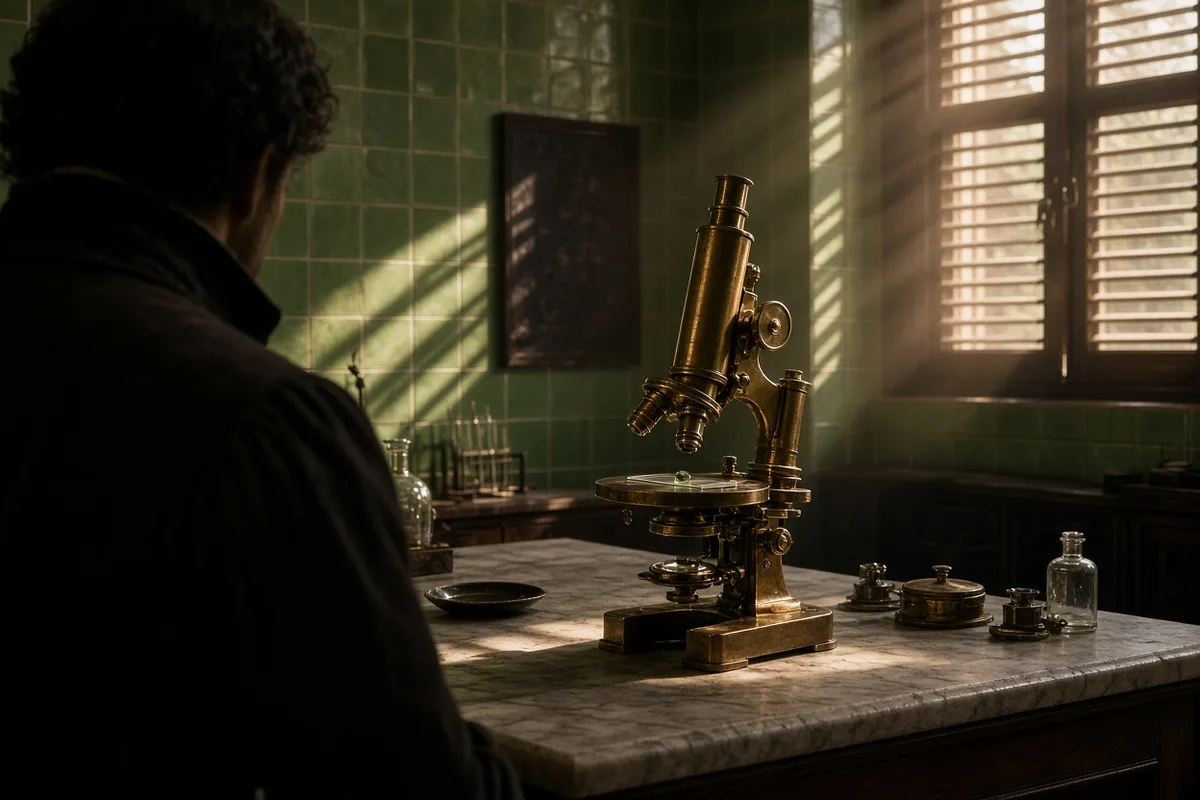
His Beatitude Cyril Mar Baselice returned once more in 2011, this time accompanied by the auxiliary bishop of the Syro-Malankara diocese, and spent twenty-three minutes alone in the church before addressing the assembled clergy at the gate; the auxiliary bishop noted in his own diary that the Archbishop repeated the phrase “the sight confirms what has always been held” without adding any new directive. In 2014 the roof of the church was replaced with new Mangalore tiles after a leak appeared directly above the tabernacle during the monsoon; the contractor’s receipt, still kept in the parish files, lists the date of completion as 14 September and the total cost as 87,500 rupees. Pilgrims arriving that December from the parish of Parassala brought a handwritten petition signed by 94 members of their parish council requesting that a small replica of the monstrance be allowed to travel to their church for one week; Father Karnoor declined in writing, citing the instruction that the original remain in place.
By 2017 the visitors’ book had been replaced three times, the third volume containing 4,892 entries for the year alone, many of them from states outside Kerala; one entry dated 3 March records the name of Sister Mary Alphonsa from the convent at Kollam, who wrote that she had come “to see with my own eyes what the Gospel of John describes.” The photograph taken on the fifth of May 2001 was scanned that same year and the digital file stored on a computer in the sacristy; the original plates, however, remain in the drawer, protected by a layer of tissue paper that is changed every six months. In 2019 the altar server who had rung the bell that first morning, now Father Anish George, returned to celebrate his first Mass at the same altar; the parish bulletin for 22 June lists the time of the Mass as 6:30 a.m. and notes that he used the same cruets he had carried as a boy.
The monstrance today sits in the tabernacle behind a new lock installed in 2022 after the old key began to stick; the key is kept in a small wooden box on the sacristy wall, and only the parish priest and one designated trustee know its location. On weekday afternoons the light through the high window still crosses the altar at the same angle recorded in the 2001 photographs, and the surface of the Host continues to reflect it for a few seconds before the door is closed. The last person known to have opened the tabernacle on a Saturday morning before the current priest took over was Father Karnoor himself, who died in 2023 at the age of 78; the entry in the death register at the hospital in Trivandrum gives the date as 11 February and lists the cause as complications following a brief illness.
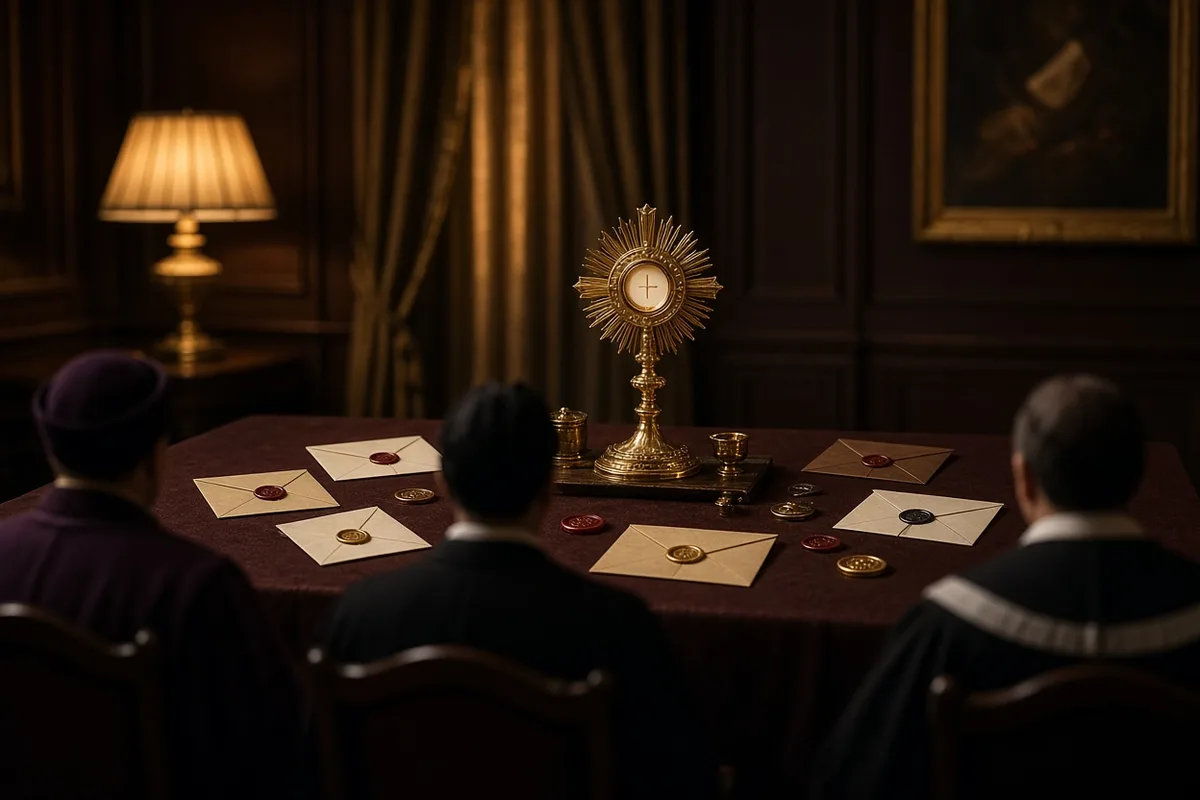
The new parish priest, Father Thomas Chacko, took possession of the keys on 3 March 2023 and recorded in the sacristy ledger that the monstrance was examined under the light of a single 40-watt bulb at 7:15 a.m. the following Saturday; he noted the exact phrasing “surface shows no visible alteration from the 2001 plates” and signed the entry with the date and his ordination number 2147. On 14 May of that year the parish council approved the purchase of a dehumidifier for the sacristy at a cost of 12,400 rupees, with the invoice from the Trivandrum electrical supplier listing serial number KL-09-38471 and delivery on 22 May; the unit runs daily from 8 a.m. to 6 p.m. and maintains humidity below 55 percent as measured by the wall-mounted hygrometer installed beside the drawer that holds the original glass plates.
In June 2024 the visitors’ book recorded 1,963 signatures, including an entry on 9 June by Dr. Susan Mathews of the pathology department at Government Medical College, Trivandrum, who wrote that she had come “to compare the image dimensions with the Shroud of Turin measurements published in 1978.” Father Chacko permitted her to place a transparent ruler across the monstrance glass for thirty seconds; her subsequent note in the same book states the visible face measured 4.8 centimeters from hairline to chin. The same month the auxiliary bishop of the Syro-Malankara Catholic Eparchy of Trivandrum, Mar Joseph Kollamparambil, visited on 27 June and remained inside the church for nineteen minutes; his letter to Father Chacko dated 2 July acknowledges receipt of a duplicate set of the 2003 digital images and requests that the original plates continue to be stored flat.
The church roof, retiled in 2014, received its first full inspection on 11 September 2024 when contractor Rajesh Kumar of Mangalore Tile Works climbed the scaffolding and replaced three cracked tiles directly above the tabernacle; the work order lists the time of completion as 4:40 p.m. and notes that no moisture had reached the interior. On the same afternoon the light through the high window crossed the altar at 3:22 p.m., matching the angle recorded in the 2001 photographs; Father Chacko opened the tabernacle for three minutes so that the sacristan, George Varghese, could confirm the reflection on the Host surface remained unchanged.
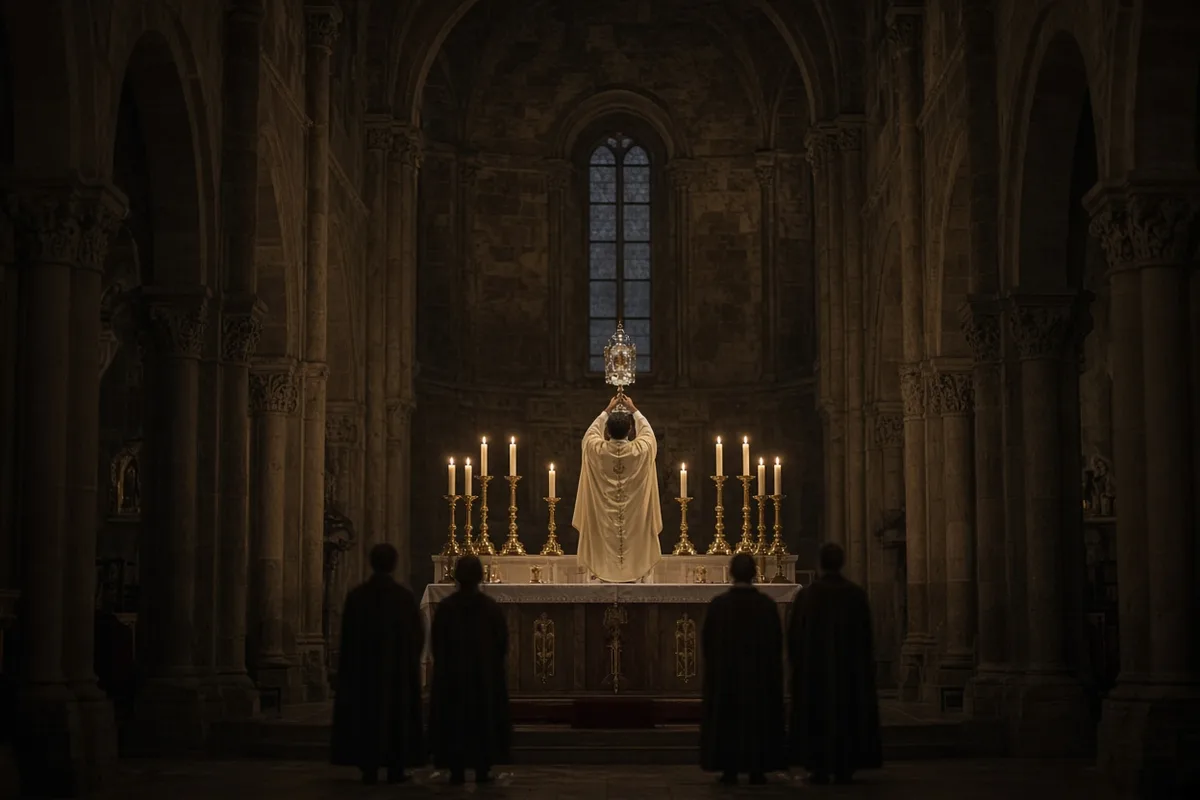
Father Anish George, who had served as altar boy in 2001, returned again on 5 May 2024 to assist at the noon Mass; the parish bulletin printed that day lists the celebrant as Father Chacko with Father George as deacon and records that the same silver cruets were used. After the Mass Father George examined the 2001 plates under the sacristy lamp and told two visiting seminarians that the facial outline appeared identical to the one he had seen at age twelve. The seminarians, identified in the visitors’ book as Joseph Mathew and Philip Thomas from the minor seminary at Vazhuthacaud, each signed the register and added the time of their visit as 1:47 p.m.
By October 2024 the third visitors’ book had reached page 412 with 6,114 total entries for the year; one entry on 19 October bears the name of Sister Rosamma Joseph from the convent at Kottayam, who wrote that she had traveled by the 6:15 a.m. bus from Kollam and arrived at 9:40 a.m. “to fulfill a promise made in 2017.” The parish council minutes for November record the decision to install a motion-activated LED light above the tabernacle at a cost of 2,850 rupees; the fixture was fitted on 12 November and activates only when the sacristy door opens between 6 a.m. and 8 p.m.
On 8 December 2024 the current sacristan, George Varghese, opened the tabernacle at 4:05 p.m. for the weekly cleaning; he noted in the maintenance log that the monstrance base showed two additional small scratches since the previous cleaning on 1 December and that the Host surface remained clear under direct inspection. The last recorded human image connected with the original event is that of Father Karnoor’s sister, Mary Karnoor, who visited on 4 January 2024 at the age of 81; she signed the visitors’ book in shaky script and wrote that she had come from her home in Vencode to see the monstrance her brother had kept for twenty-two years.