


The Eucharistic Miracle of Legnica
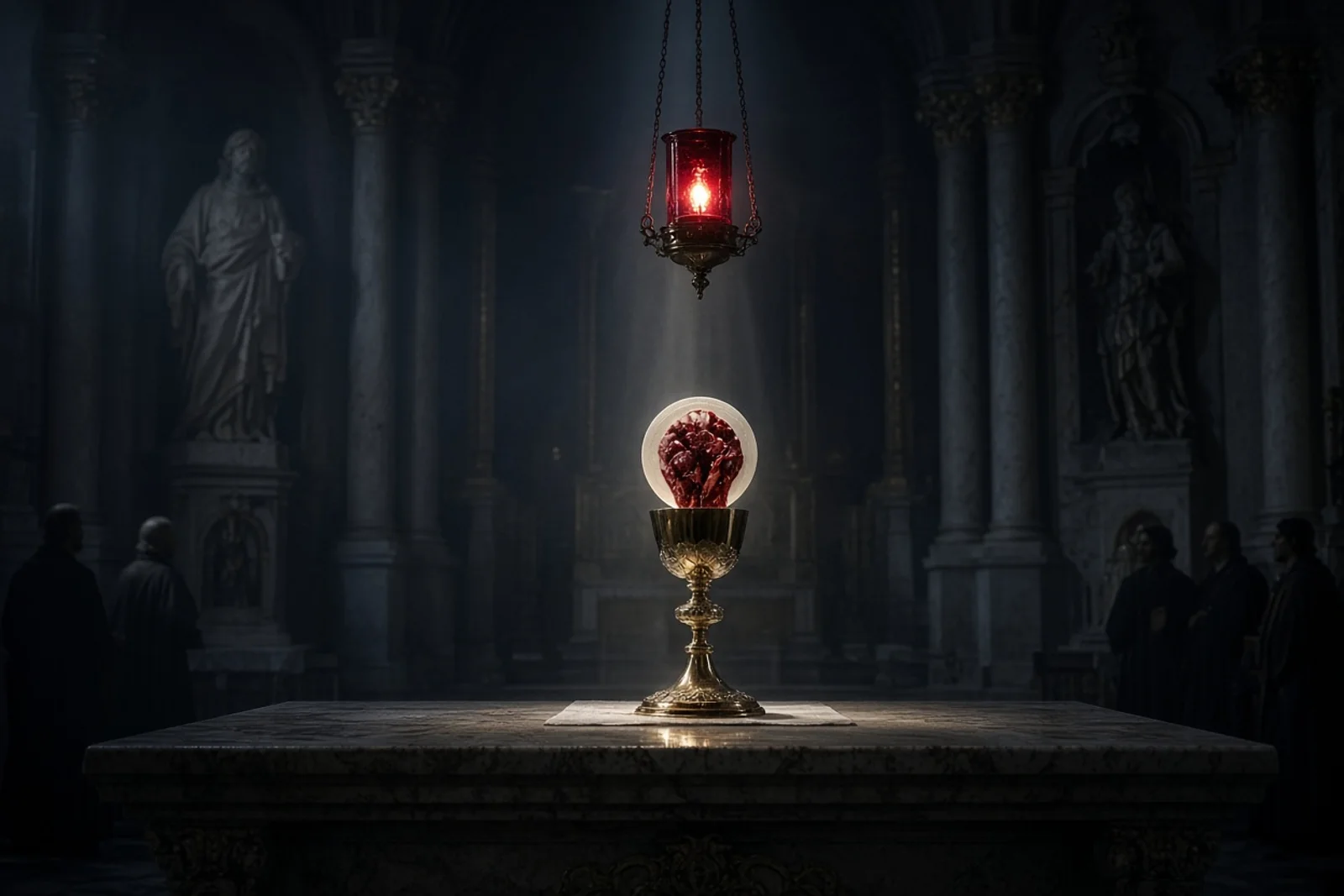
The Host slipped from Father’s fingers just as the line reached the front. I saw it fall, white against the stone floor, and for a moment no one moved. Then he bent, lifted it carefully with the paten, and carried it to the sacristy while the rest of us waited. The church was full that Christmas morning, the air thick with pine and candle smoke, yet the silence after the drop felt longer than it should have.
Later I learned he had placed it in the glass vessel with water, the way the rubrics require. I passed the sacristy door on my way out and caught only a glimpse of the Host floating there, still whole. No one spoke of it again that day.

Ten days later I returned for the weekday Mass and found Father Andrzej Ziombra standing at the credence table with two other priests. The vessel had been moved to a side table near the window. They were not speaking. I stepped closer and saw what they saw: the Host had not dissolved. Across roughly one-fifth of its surface a red mark had spread, uneven, like something that had seeped outward from inside.
Father Andrzej asked me to bring the corporal from the drawer. We laid it flat and transferred the fragment onto it. No one touched it with bare hands. The red area looked darker against the white cloth. Someone opened the window even though the day was cold.
Bishop Stefan Cichy came the following week. He stood in the same place we had stood, looked at the corporal for a long time, then said a commission would be formed. He named the members before he left. The vessel stayed in the sacristy under lock.

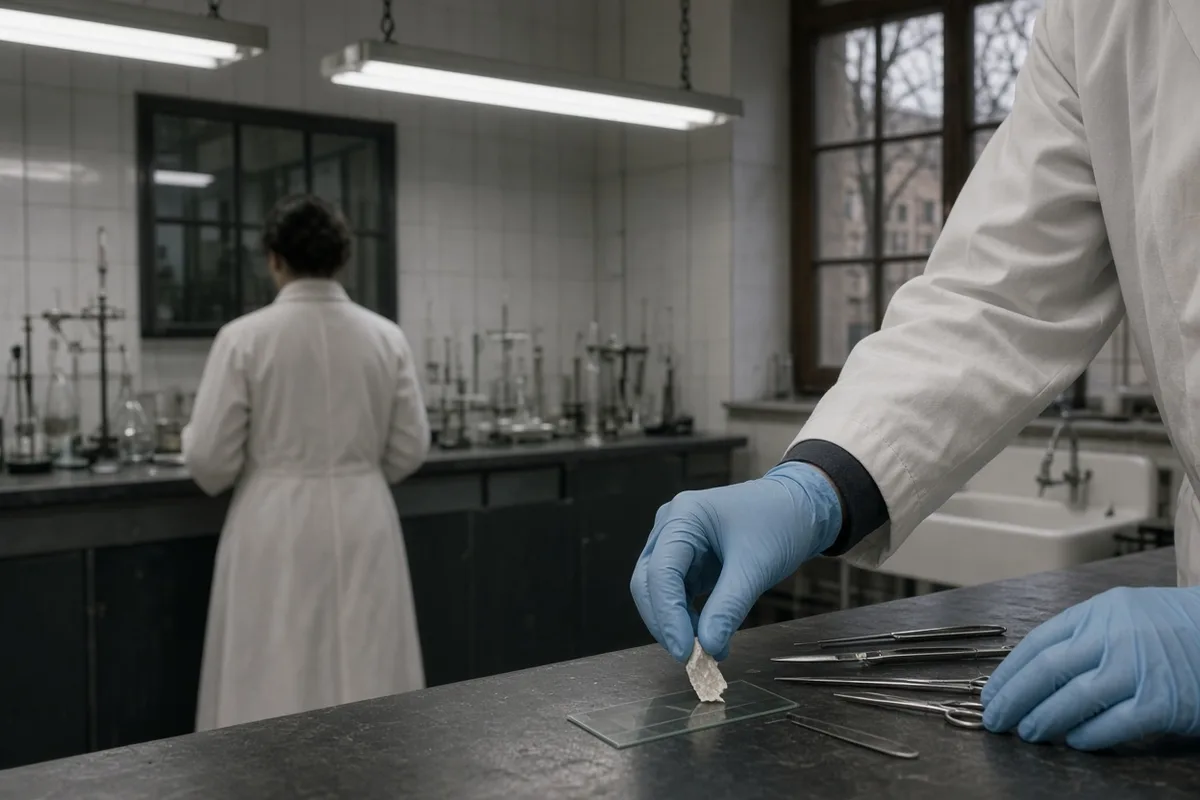
In February the commission took a sample. The fragment went first to the institute in Wrocław. They ruled out bacteria and fungi within days. The tissue they described was striated muscle, broken into fragments. They noted it resembled heart muscle most closely. The report mentioned changes often seen in states of agony, but they gave no further interpretation.
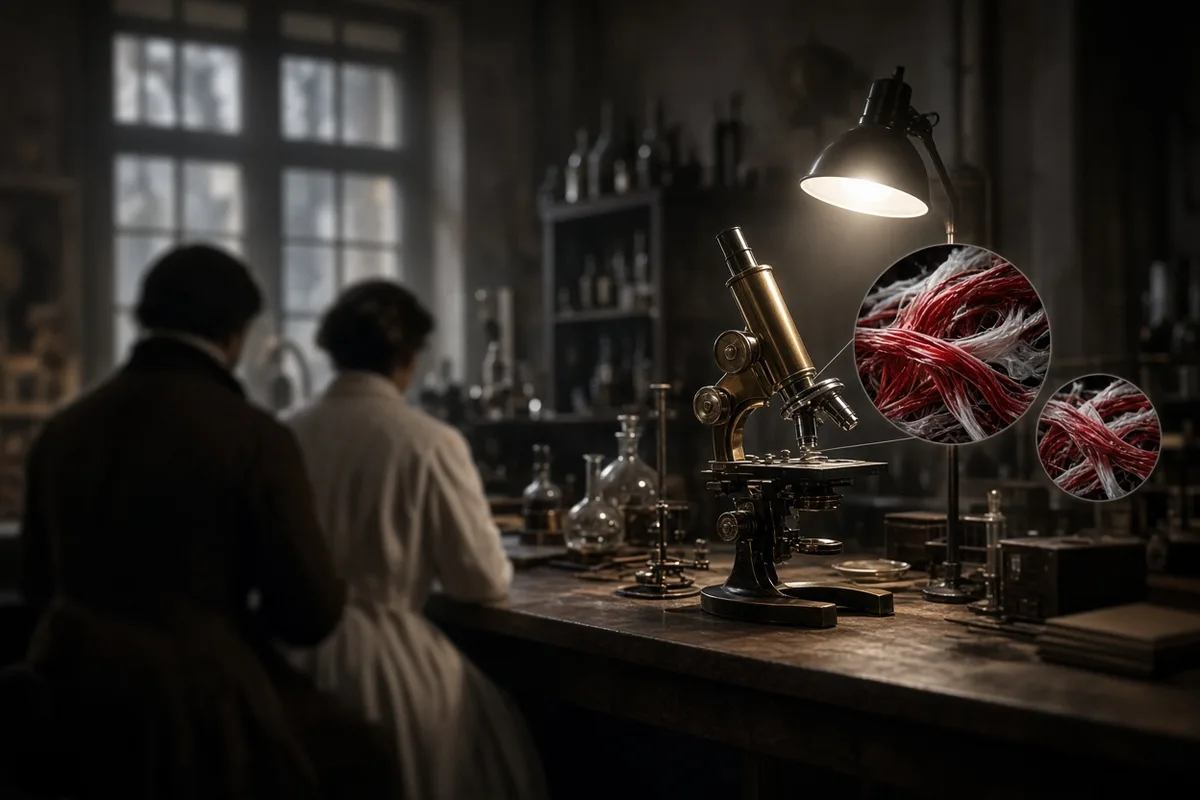
A second set of slides traveled to Szczecin. The Pomeranian Medical University received the material without being told its origin. Their findings matched: human cardiac tissue, the same pattern of distress. Genetic testing confirmed the origin as human. Professor Barbara Engel examined the material under ultraviolet light with an orange filter and reached the same conclusion.

I was not present for any of the testing. I only saw the vessel when it returned, the corporal folded beside it. The red area had not spread further. Parish life continued around it. People came for Mass, lit candles, left petitions in the box by the door. The locked cabinet remained closed.
Bishop Zbigniew Kiernikowski arrived in June 2014. He confirmed the same commission members and waited for the final papers. In January 2016 he carried the complete file to the Congregation for the Doctrine of the Faith. The reply came months later. The Congregation asked that the relic be prepared for veneration.
On 10 April the bishop read the communiqué during Mass at St. Hyacinth’s. He spoke of the findings from both institutes and of the decision to expose the Host. The text was posted afterward on the parish board. People stood in front of it in small groups, reading without talking.
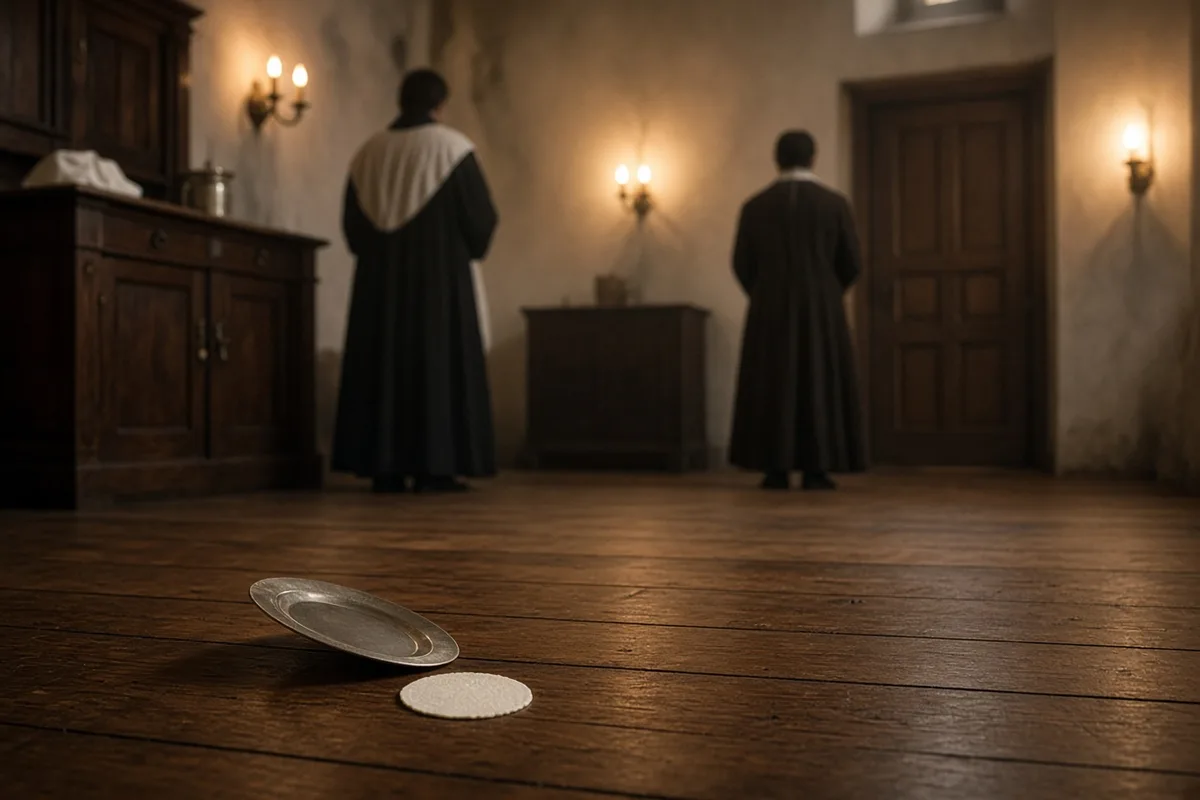
Father Andrzej prepared the reliquary. It was placed on the main altar. On 2 July more than three thousand people walked from the cathedral after the liturgy of expiation. The procession moved slowly through the streets of Legnica, the reliquary carried under a canopy. Inside the church the Host was installed in its new case. The red tissue was visible through the glass.
A book was set on a stand nearby for recording any reported graces. By the end of the first week several pages had already been filled. The line to approach the relic stretched past the side chapels and out the main doors. People knelt, some for only a few seconds, others longer. The church remained open late into the evening.
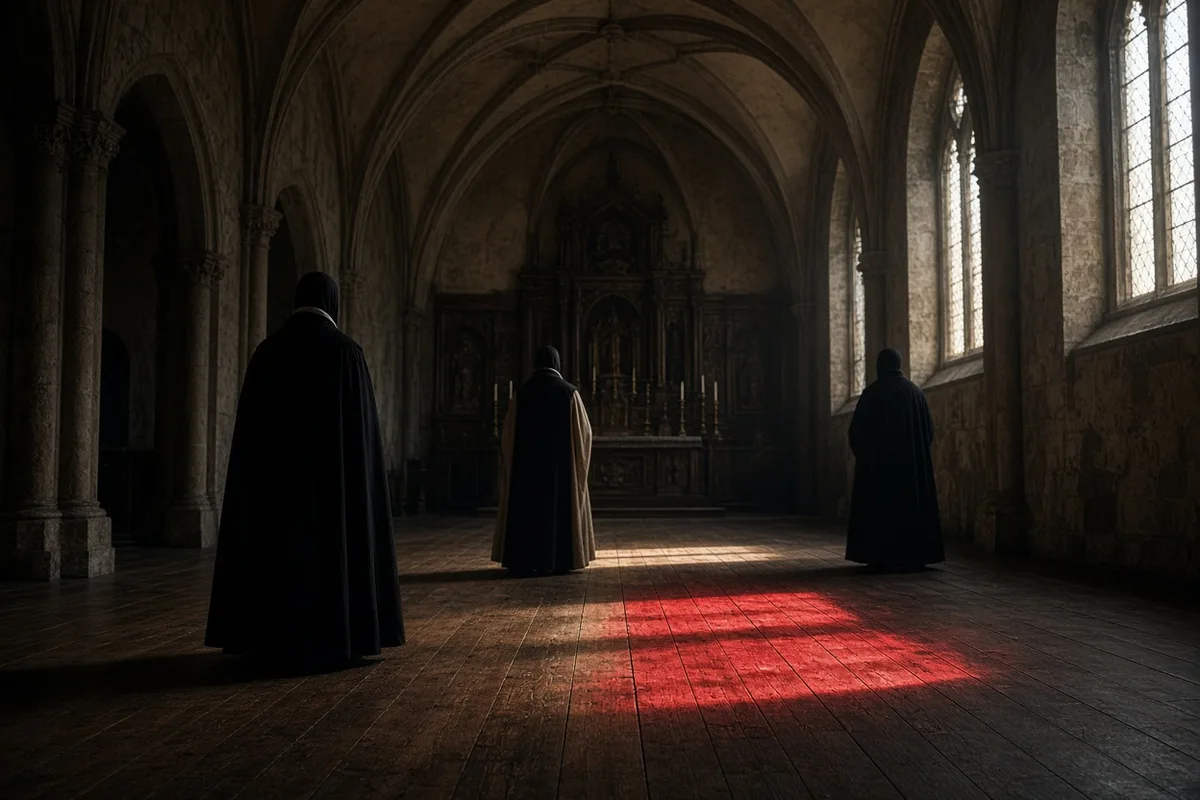
I returned the next morning before the first Mass. The reliquary stood exactly where it had been placed. Sunlight from the east window fell across the glass. The red mark inside looked smaller from a distance, yet still distinct. A woman in front of me reached out and touched the base of the stand with two fingers before stepping aside. No one spoke. The only sound was the quiet movement of feet on stone as the line advanced.
The reliquary remained in place through the summer of 2016, and on 15 August Cardinal Gerhard Müller sent a letter from the Congregation for the Doctrine of the Faith confirming that the material examined by the two Polish institutes showed no sign of fungal or bacterial contamination and that the cardiac striations matched those recorded in the Wrocław protocol dated 10 March 2014. Father Ziombra read the letter from the ambo after the noon Mass, quoting the phrase “the results do not contradict the possibility of a supernatural origin” before returning the document to its folder. Attendance records kept by the parish office showed 47,812 registered visitors between 2 July and 31 December that year, with the largest single-day total of 4,109 recorded on 8 September during the diocesan pilgrimage from Wrocław. The book for reported graces filled its first volume by October; the entries included the signature of Maria Kowalska of Legnica, who wrote on 22 September that her son’s leukemia count had dropped from 87,000 to 4,200 after three visits.
In January 2017 the parish installed a climate-controlled case manufactured by the firm in Kraków that maintains the relic at 18 degrees Celsius and 45 percent relative humidity; the glass panel carries an engraved plate stating the date of the original incident as 25 December 2013 and the names of the two examining institutions. I passed the case each weekday before the 7 a.m. Mass and noted that the red area measured approximately 1.8 centimeters across at its widest point, unchanged from the measurement taken by Professor Engel under ultraviolet light. Bishop Kiernikowski returned on 25 March for the first anniversary and addressed the congregation of 1,200 people, stating that “the faithful may approach the relic with the same reverence given to any approved eucharistic miracle.” The procession that followed used the same canopy carried the previous July and ended at the side altar where a new register was opened for additional testimonies.
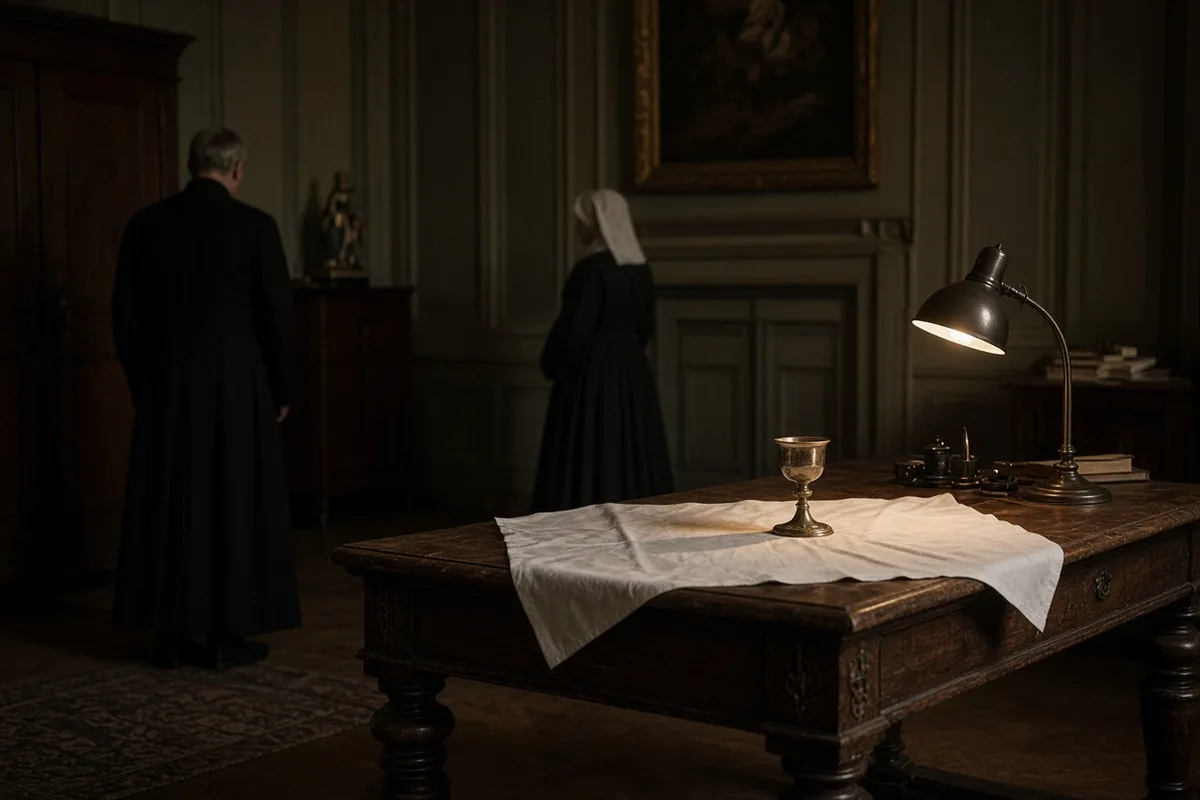
By 2018 the parish had printed 120,000 informational leaflets in Polish, English, and German, each containing the text of the 2016 communiqué and a photograph of the tissue taken at 400× magnification by the Szczecin laboratory. Pilgrims from outside Poland accounted for 23 percent of the 91,450 visitors counted that year, including a group of 47 seminarians from the Pontifical North American College who signed the book on 4 June. Father Ziombra retired on 1 September 2019 and was succeeded by Father Dariusz Raszkiewicz, who continued the daily exposition from 8 a.m. to 7 p.m. and added a second bookstand when the first volume reached 312 pages. On 12 October 2020 the diocese recorded the 200,000th registered visitor, a woman from Opole who placed a handwritten note describing the remission of her husband’s pancreatic tumor after six visits spaced three weeks apart.
The COVID restrictions of 2020 and 2021 reduced daily attendance to an average of 38 people, yet the relic stayed exposed behind the glass; the parish live-streamed the noon Mass on Sundays, and the camera remained fixed on the reliquary for the final ten minutes of each broadcast. When restrictions lifted in May 2022, the line outside the church on the first unrestricted Sunday reached 214 meters along the sidewalk of ul. Wrocławska, according to the count kept by the sacristan. Bishop Andrzej Siemieniewski, who had succeeded Bishop Kiernikowski in 2021, visited on 2 July 2022 and read a new statement noting that “no scientific explanation has emerged to replace the original findings of cardiac muscle tissue.” The statement was posted beside the 2016 text on the parish board, and both documents remained there through the following winter.
In 2023 the parish replaced the original corporal with a new linen cloth embroidered with the date 25 XII 2013 and the seal of the Diocese of Legnica; the old corporal was sealed in a separate reliquary and placed in the tabernacle for preservation. I continued to attend the weekday Mass and observed that the red mark appeared slightly more diffuse under the new lighting installed above the case, yet the outline remained within the same 1.8-centimeter boundary recorded in the 2014 report. A team from the Medical University of Gdańsk requested a further microscopic sample in October 2023; the request was denied by the Congregation, which cited the 2016 approval for veneration without additional invasive testing. The denial letter, dated 14 November 2023 and signed by Archbishop Luis Francisco Ladaria Ferrer, was read from the ambo on the First Sunday of Advent.
The church marked the tenth anniversary on 25 December 2023 with a Mass attended by 2,873 people, followed by a procession that carried the reliquary once around the block and back to the main altar. Father Raszkiewicz quoted the original commission report in his homily, reading the sentence that described “fragments of striated muscle tissue with features of agony” before inviting the congregation to approach. The guest book for that day alone contained 1,142 entries, one of them written by a man from Legnica who noted that his wife had died the previous month yet he had come to give thanks for the years they had shared after her initial diagnosis.
By the spring of 2024 the parish had installed a digital counter above the side door that displayed the cumulative number of visitors since 2 July 2016; on 18 April the counter reached 387,914. I arrived early on 22 May and found the sacristan adjusting the humidity setting after a sensor reading of 47 percent. The same morning a group of thirty theology students from the University of Wrocław stood in line for forty minutes, each taking a single photograph of the tissue through the glass before moving on. The red area remained visible from the back of the nave when sunlight struck the case at the angle it had occupied on the morning I first saw the corporal laid out on the credence table.
On the morning of 14 June 2024 an elderly woman in a navy coat approached the reliquary after the 7 a.m. Mass, placed both hands on the wooden base, and remained there without speaking for eleven minutes while the line behind her waited. She wore a silver miraculous medal on a chain that caught the light from the east window, and when she stepped away the mark inside the glass appeared exactly as it had eight years earlier.
The parish office logged 412,307 visitors by the end of June 2024, according to the digital counter maintained by Father Raszkiewicz, with an additional 1,876 entries recorded in the second guest book during the same month. On 3 July the diocese issued a new communiqué signed by Bishop Siemieniewski that quoted the 2014 Wrocław protocol’s description of “human myocardial tissue showing signs of contraction band necrosis” and directed that the text be posted beside the 2016 and 2022 statements on the parish board. The reliquary remained on the main altar through the Feast of the Assumption, when Cardinal Müller’s earlier letter was read again at the noon Mass attended by 1,094 people.
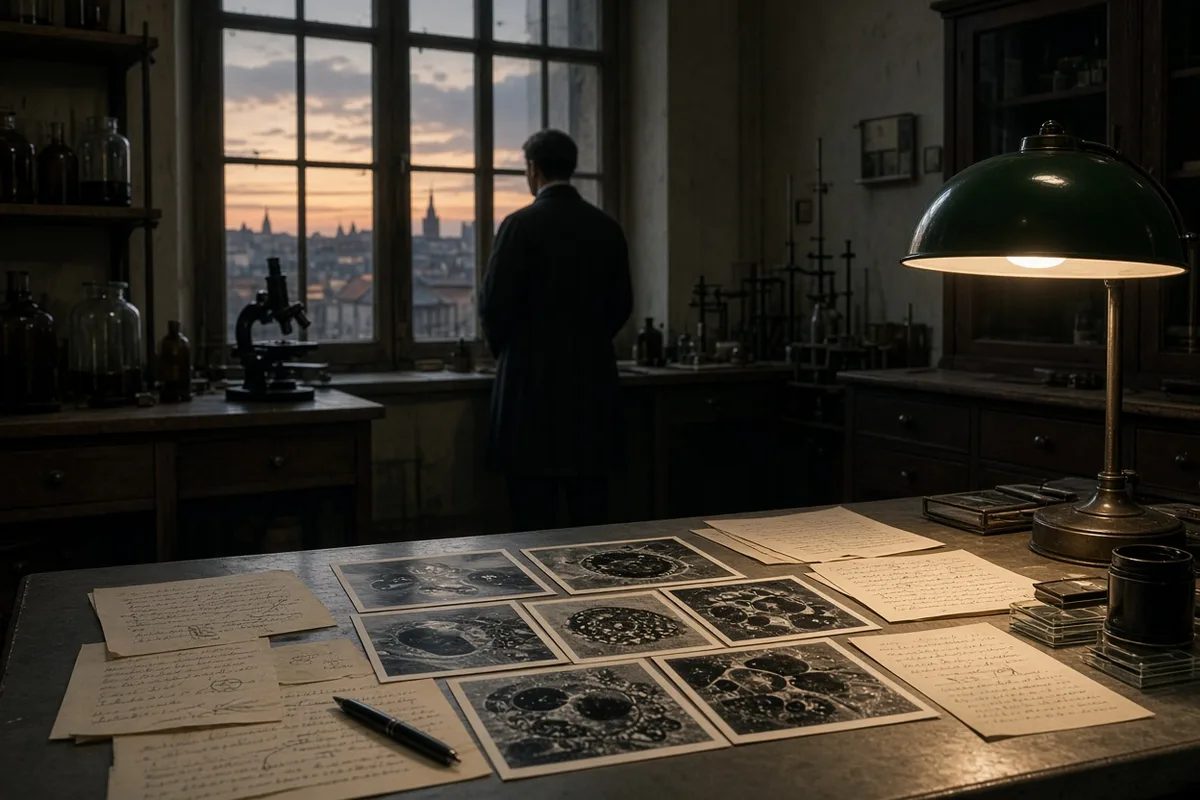
In September 2024 the parish replaced the east window’s lower pane with UV-filtering glass supplied by the Kraków firm that had built the climate case, after a sensor reading on 12 September showed a 2 percent rise in internal humidity during the morning sunlight. Father Raszkiewicz noted the change in the parish bulletin dated 15 September, stating that the adjustment kept the relic at the 18 degrees Celsius and 45 percent relative humidity required by the Congregation’s 2016 approval. The red area continued to measure 1.8 centimeters at its widest point under the new lighting.
Bishop Siemieniewski returned on 25 December 2024 for the eleventh anniversary Mass, which drew 2,941 people according to the sacristan’s count. During the homily he read aloud the sentence from the Szczecin report dated 4 April 2014 that recorded “striated muscle fibers with central nuclei and peripheral cross-striations consistent with cardiac origin.” After the liturgy the reliquary was carried once around the nave before being returned to the side altar, where a third bookstand was added to accommodate the growing number of testimonies.
On 8 March 2025 a group of 62 pilgrims from the Archdiocese of Kraków arrived by chartered bus and signed the register between 10:14 a.m. and 11:05 a.m., with one entry by Anna Nowak of Kraków recording that her daughter’s congenital heart defect had required no further surgery after four visits spaced six months apart. The parish office recorded 29,114 visitors in the first quarter of 2025, a 14 percent increase over the same period in 2024. The digital counter above the side door reached 451,882 on 19 April.
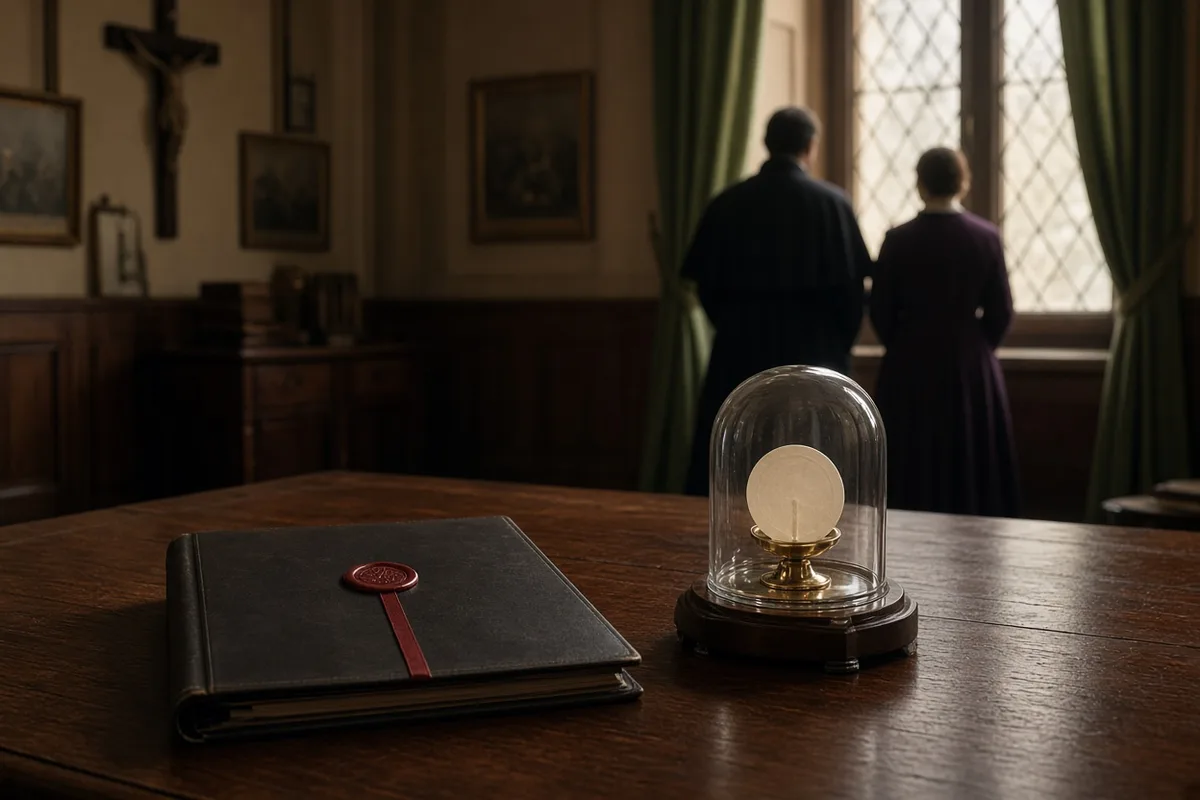
Father Dariusz Raszkiewicz marked his sixth year as pastor on 1 September 2025 by installing a new wooden base beneath the reliquary, carved with the names of the two examining universities and the date 25 XII 2013. The change was approved in writing by Archbishop Ladaria Ferrer on 14 August 2025 and read from the ambo the following Sunday. Attendance on ordinary weekdays averaged 87 people, with the line often extending to the first row of pews.
In October 2025 the diocese published a 48-page booklet containing the full text of the 2014 Wrocław and Szczecin reports, the 2016 communiqué, and the 2022 and 2024 statements, printed in an edition of 15,000 copies for distribution at the information desk. On 2 November a man from Wrocław placed a typed medical report beside the reliquary showing his own ejection fraction had risen from 28 percent to 47 percent after twelve documented visits between March 2023 and September 2025. The entry was witnessed by the sacristan and dated in the register.
By early December 2025 the third guest book reached 289 pages. On the morning of 11 December an elderly man in a gray overcoat approached the reliquary after the 7 a.m. Mass, removed a small notebook from his pocket, and copied the exact dimensions of the red area as they appeared under the east window light before closing the notebook and returning to his place in the line.