


The Eucharistic Miracle of Orvieto
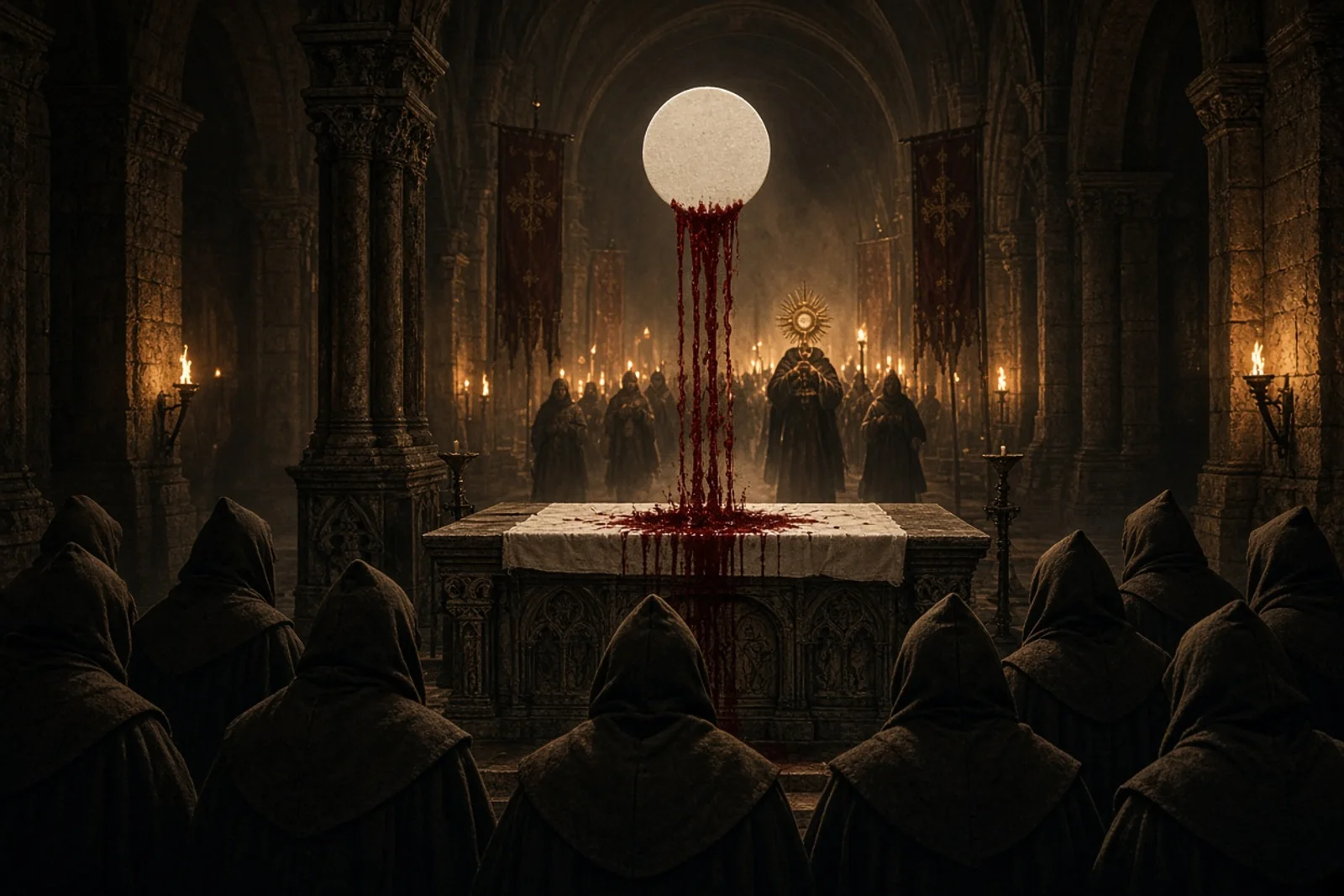
The dust from the road still clung to my sleeves when the outer gate swung open and the German priest pushed through. He carried the folded corporal against his chest like a man shielding a wound. Two guards tried to stop him at the steps of the papal residence, but he kept walking until a chamberlain recognized the blood and let him pass. I was only an assistant to the sacristan that summer, sent to Orvieto with the court the year before. I followed at a distance because no one had told me to stay back.
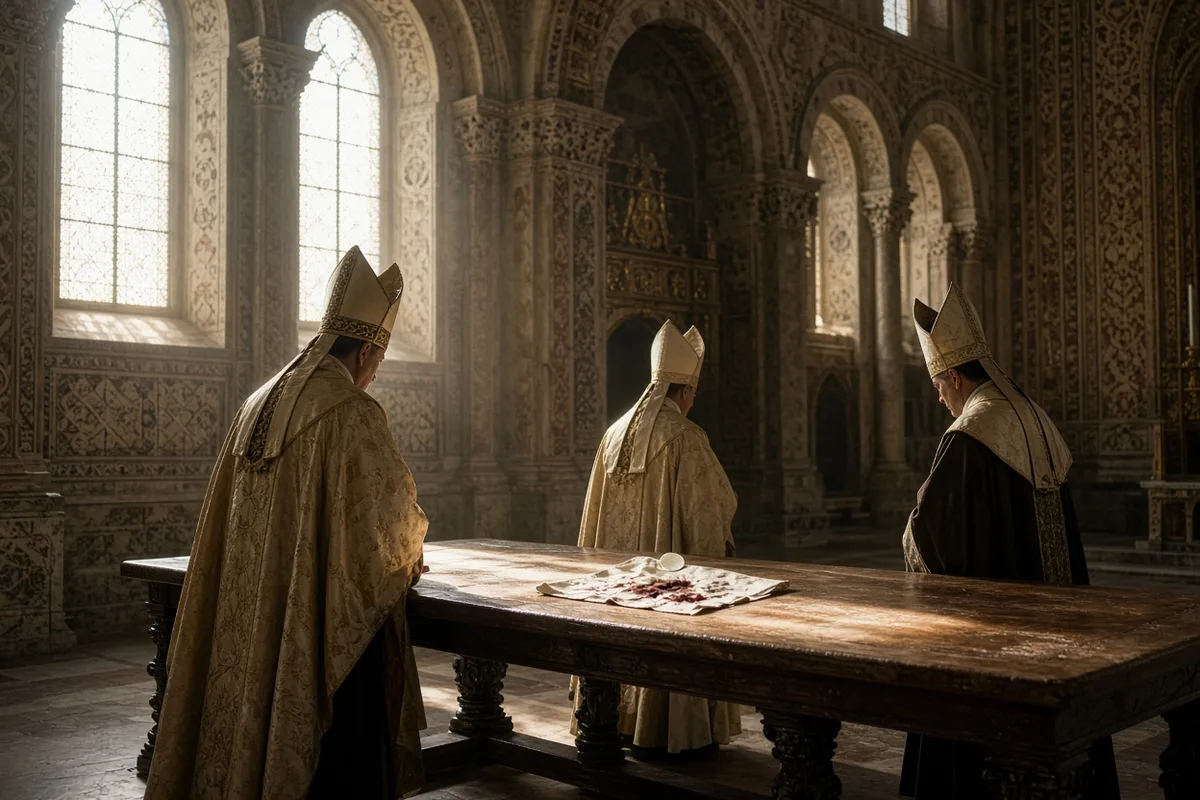
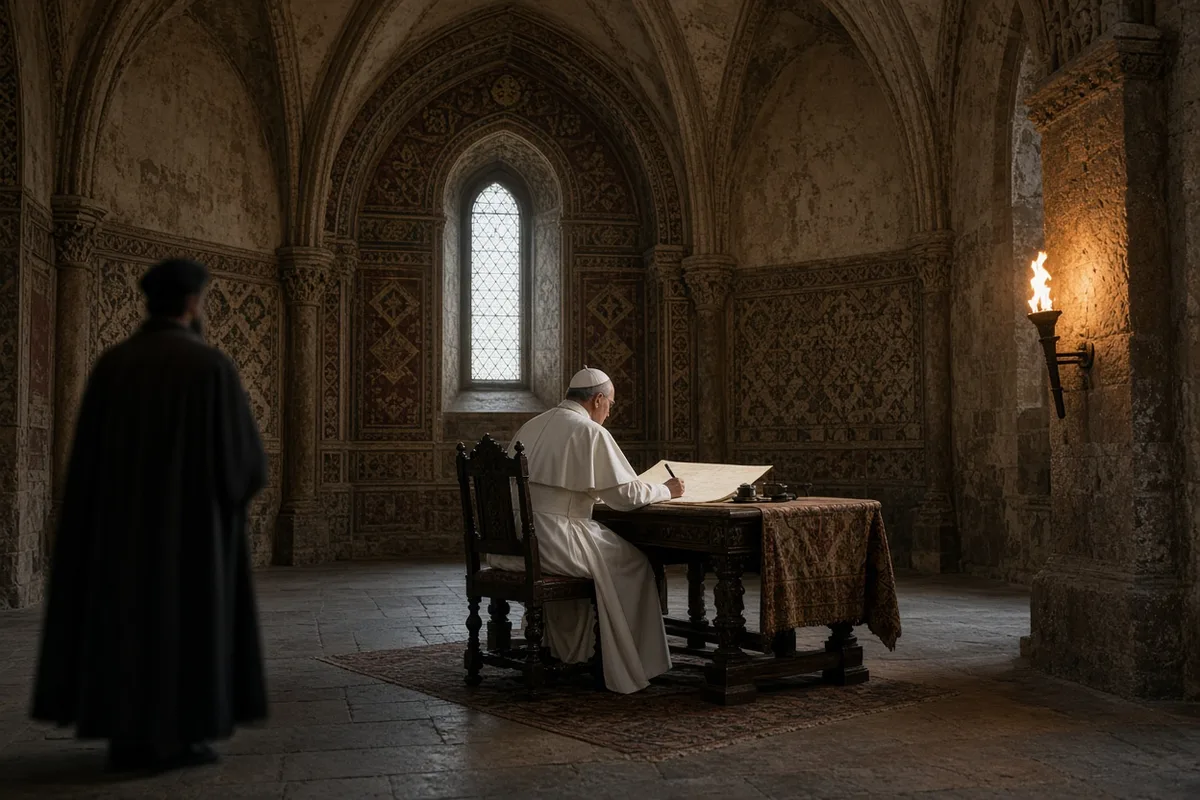
He was shown into the audience chamber where Urban IV sat with two cardinals and a notary. The priest knelt without ceremony and laid the linen on the table. The stains were dark, not fresh, but they spread in clear streaks across the cloth where the Host had rested. He spoke quickly, the Latin roughened by fatigue. He had celebrated Mass that morning at Santa Christina in Bolsena and had stopped because the bread began to bleed while he held it. He had come straight here, eighteen miles on foot, without finishing the liturgy.

Urban rose and examined the corporal without touching it. He asked the priest’s name and where he came from. Peter of Prague, the man answered. He had been walking to Rome to pray for an end to his doubts about the Real Presence. The Pope sent for the Bishop of Orvieto and for several Dominican friars who were already in the city. They took the corporal to a side room and left the rest of us waiting in the corridor.
I stayed near the door because the chamberlain had forgotten I was there. Through the half-open doorway I heard the friars questioning Peter again, asking exactly where the blood had fallen and whether he had added anything to the chalice. He repeated the same answers. One of the friars lifted the corporal to the light and turned it slowly. No one raised their voice. After a time they came out and told the Pope the marks were consistent with what the priest described and showed no sign of paint or dye.

Urban ordered the corporal placed in the chapel of the episcopal palace under guard. He kept Peter with the court and asked him to remain until further notice. For three days the Pope received reports from the friars and from the bishop’s own physicians. They found no natural explanation for the blood on the cloth and no evidence that the priest had carried any vessel that could have produced it. On the fourth morning Urban called the Curia together and announced that the corporal would be kept in Orvieto as a public witness.
Word reached the city squares before evening. People began to gather at the palace gate, not in procession yet, but in small groups that stayed until the light faded. I was sent to the market for extra candles and saw the same question pass from one face to the next: whether the Host had truly changed or whether the priest had only imagined it. No one I spoke to claimed to have seen the event itself; they only repeated what they had heard from those who had spoken with Peter.

In September the Pope issued the bull that established the feast for the whole Church. He gave it the name Corpus Christi and set the date five days after Trinity Sunday. He asked Thomas Aquinas, who was then teaching in Orvieto, to prepare the texts for the Mass and Office. Aquinas worked in a room above the Dominican priory and sent drafts to the papal secretaries for review. I carried one set of pages myself and remember the careful marginal notes in the theologian’s own hand.
The corporal remained in the episcopal chapel through the winter. Peter of Prague left for Rome once the inquiries were finished; he did not return to Orvieto. In the spring of the following year Urban celebrated the new feast for the first time at Santa Maria Prisca, using the Mass Aquinas had written. The bull itself circulated slowly because several bishops questioned whether a new feast was needed. In Orvieto the observance stayed local for decades.
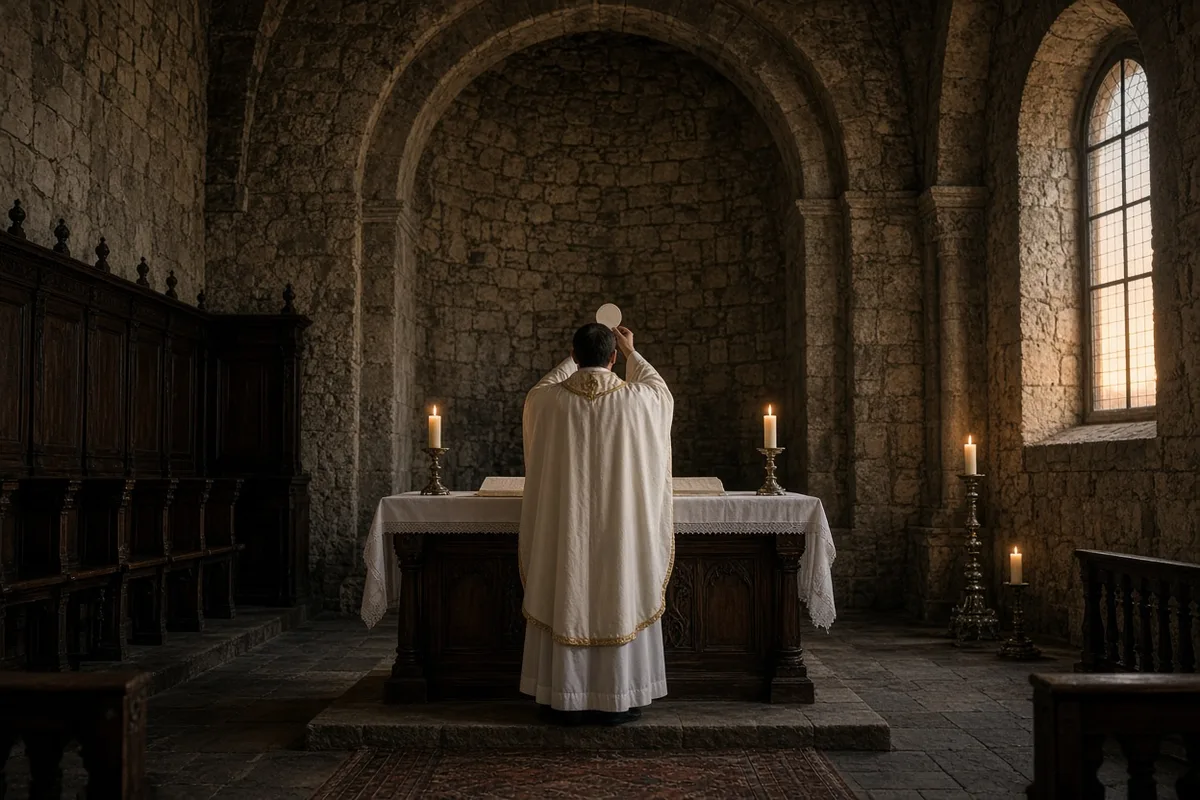
Construction of the new cathedral began two years later on the site where the old church of Santa Maria Prisca had stood. The plans called for a chapel large enough to hold the corporal in a silver reliquary above the high altar. Work continued through the rest of Urban’s time in the city and for years after he moved the court elsewhere. The linen was transferred to the finished chapel in 1338 and placed inside the reliquary that still stands there.
I remained in Orvieto until 1267, assisting at the cathedral works when the court departed. On certain mornings the light through the new windows fell across the chapel floor in the same pattern the blood had made on the corporal. The cloth itself was kept folded and sealed except on the feast day. No further examination was ordered after the first inquiry. The record of that inquiry stayed in the bishop’s archive, and copies were later inscribed on tablets inside Santa Christina and inside the cathedral itself.
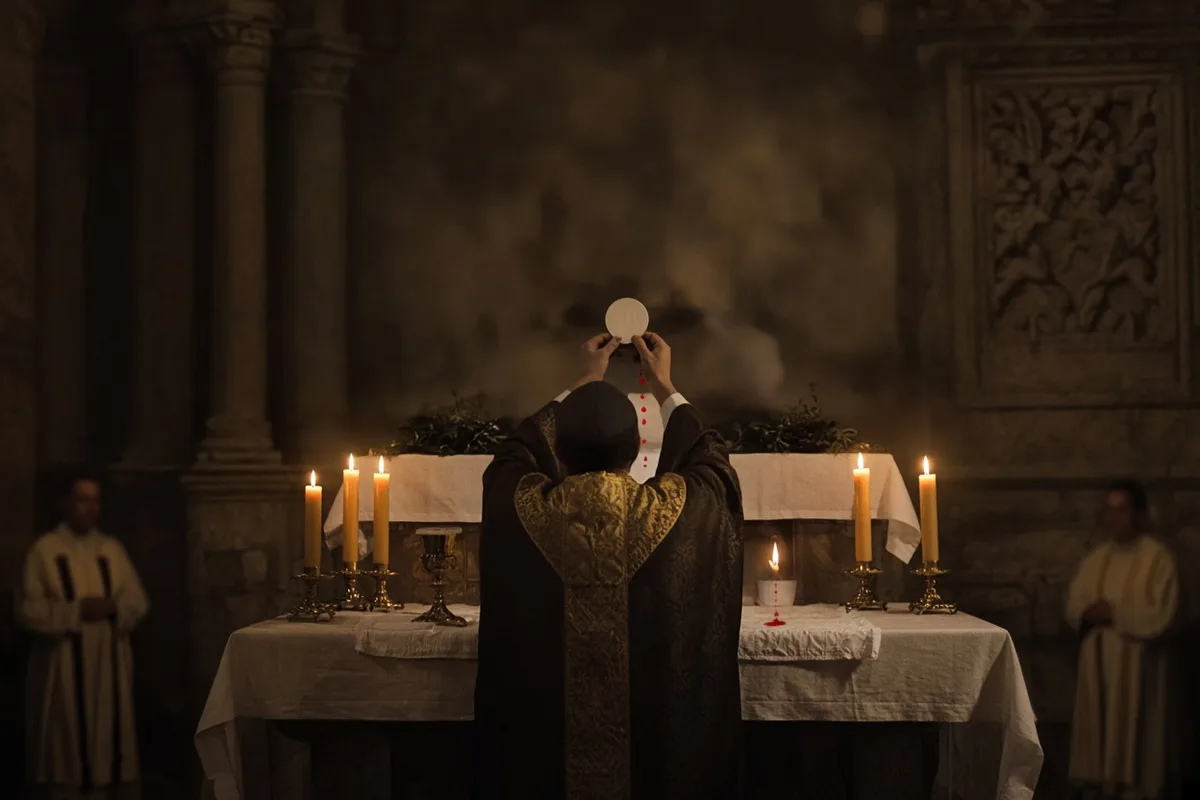
The last time I saw the corporal before I left the city, it lay on a stand beneath the reliquary while the silver frame was being fitted. The stains had darkened further but the shape of each mark remained unchanged. A priest from the chapter stood nearby with the keys. He did not speak while I waited for the workmen to finish their measurements. When they were done he locked the case and the cloth disappeared from view again.
The corporal stayed locked through the following spring while the papal court prepared its departure for Viterbo. Urban IV left Orvieto on 9 September 1264 carrying only a notarized copy of the inquiry that the Dominican prior had sealed with red wax. The original parchment remained in the bishop’s archive under the heading “De miraculo Bolsenensi,” and the notary who wrote it recorded the priest’s words as “sanguis emanavit ex hostia quam in manibus tenebam.” I copied the same sentence into the sacristy ledger before the court wagons rolled out. Two months later the bull Transiturus de hoc mundo reached the priory, dated at Orvieto on the eleventh of August, directing every diocese to keep the Thursday after Trinity Sunday as a solemnity and quoting the phrase “ad augendam fidelium devotionem.” Thomas Aquinas had already finished the sequence Lauda Sion and sent the final pages to the papal chapel on the twenty-fourth of July; the marginal note in his hand read “versus tertius mutandus si longior videbitur.”
Work on the new cathedral began on the twenty-second of September 1290 when Nicholas IV placed the first stone at the east end of the old Santa Maria Prisca site. The foundation measured one hundred and eight feet across the transept, and the masons used blocks from the ruined Etruscan walls that still lay half-buried along the northern cliff. The corporal itself stayed in the episcopal palace until 1338. On the twenty-ninth of March that year Bishop Beltramo Monaldeschi ordered the linen transferred to the finished Chapel of the Corporal. The silver reliquary that received it had been completed the previous December by the Sienese goldsmith Ugolino di Vieri and weighed one hundred and eighty-four marks; its front panel carried thirty-two enameled scenes from the life of Christ, each scene bordered by an inscription in Gothic letters naming the month and year the enamel was fired.
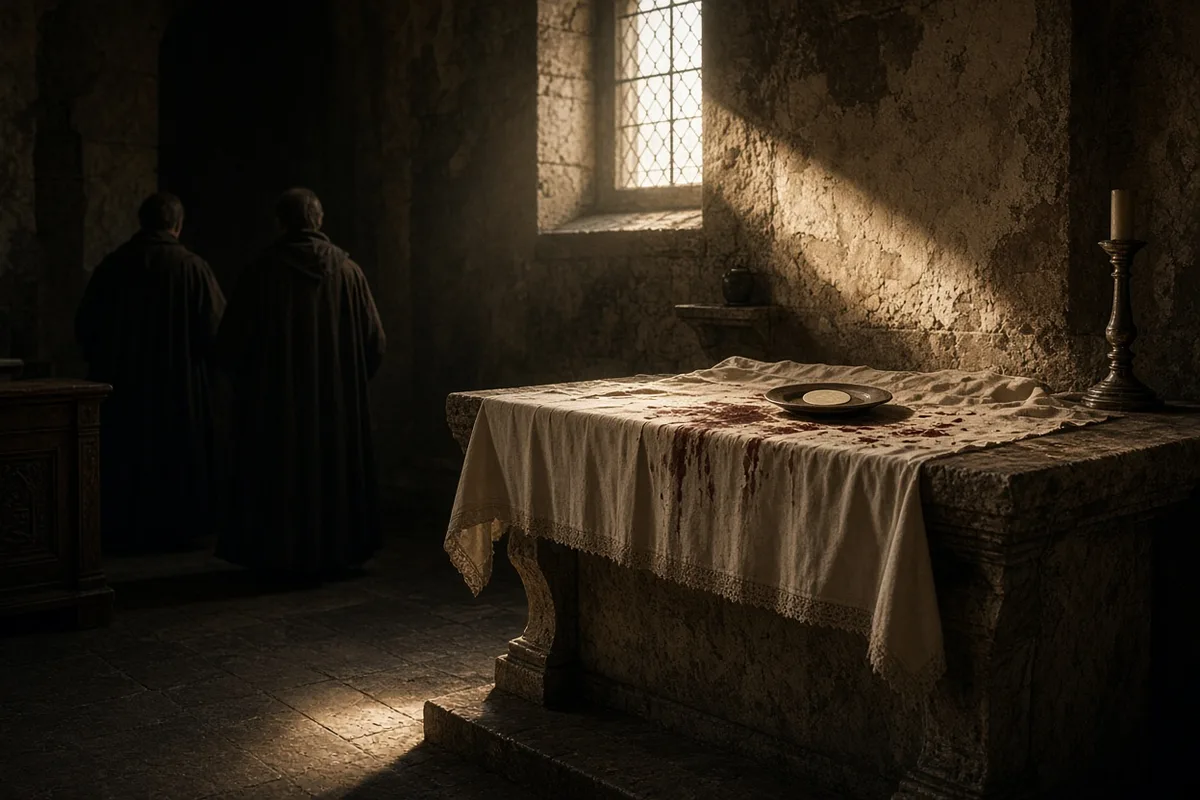
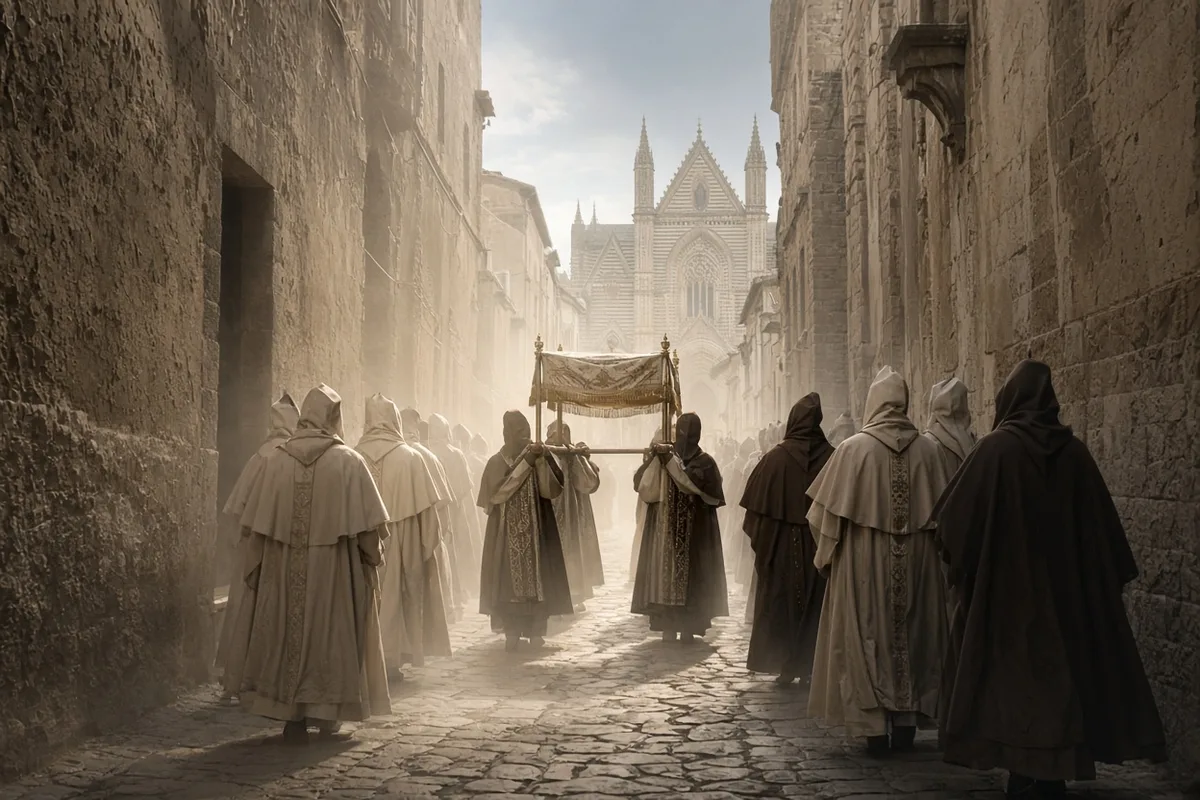
The first public exposition after the transfer took place on Corpus Christi 1339. The chapter records list twelve priests walking in front of the reliquary and twenty-four torches carried by members of the confraternity of Santa Maria della Stella. The procession crossed the piazza three times before returning to the chapel, and the notary noted that the corporal was displayed “sub vitro crystallino novo” so that the blood marks could be seen from the nave. In 1435 the same chapter paid a goldsmith from Perugia twelve florins to add a crystal cover that could be lifted on feast days without touching the linen. The cover remained in use until 1604, when it was replaced by a larger one ordered by Bishop Giacomo Castelvetro.
During the renovation of the chapel in 1499 the masons uncovered a tablet set into the wall behind the altar. The Latin text, dated 1265, repeated the findings of the original inquiry and ended with the phrase “testes fuerunt fratres ordinis predicatorum.” The tablet was left in place and covered again with new plaster; its existence is noted only in the margin of the 1502 inventory. In 1571 Cardinal Carlo Borromeo visited Orvieto on his way to the Council of Trent and asked to examine the corporal. He was shown the linen on the twenty-third of October in the presence of the cathedral treasurer and two canons; the cardinal’s secretary recorded that the blood marks measured “longitudinis quindecim digitorum” and that no odor of decay could be detected.
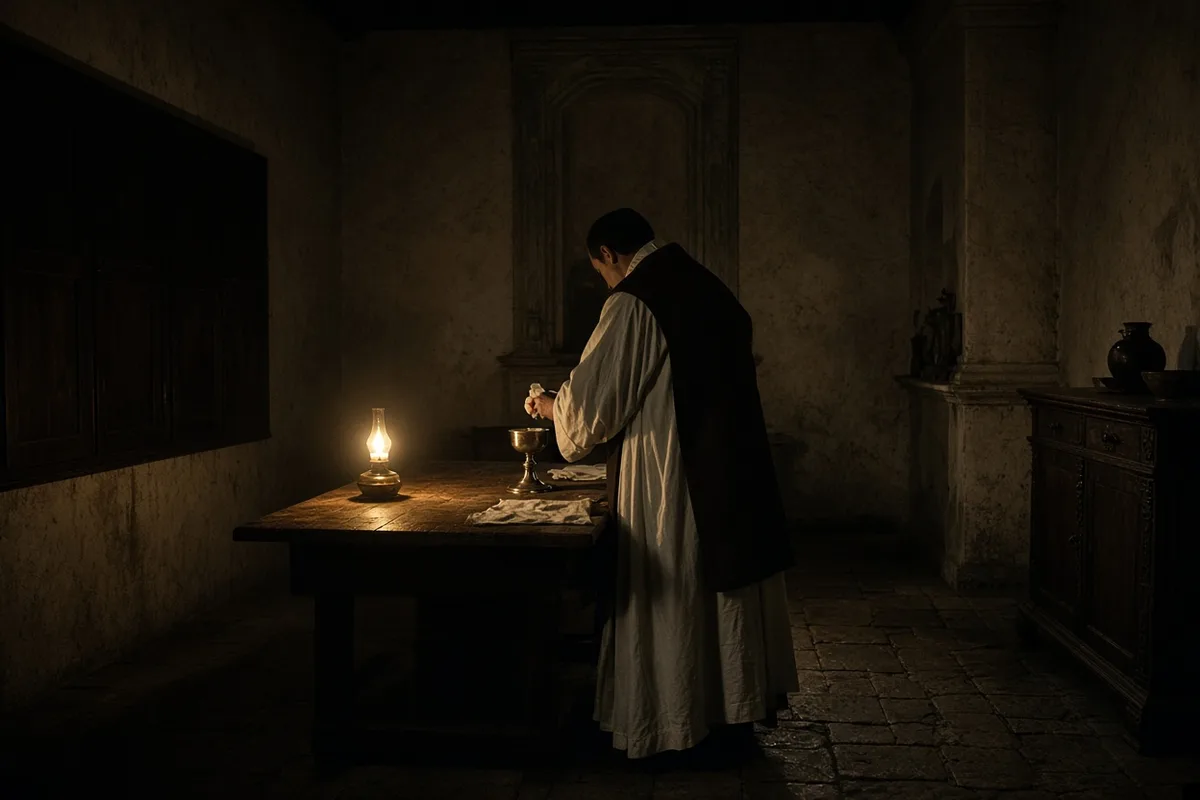
The reliquary was carried in procession for the last time in 1798 when French troops occupied the city. On the fourteenth of June the silver frame was removed from the chapel and taken to the municipal palace for safekeeping. It remained there until 1801, when it was returned empty; the corporal had been hidden by the sacristan Giovanni Battista Clementi in a wooden chest beneath the floor of the baptistery. Clementi’s diary entry for the twenty-seventh of July records that he replaced the linen inside the reliquary on the eve of the feast and locked the case with the original keys that had not been used since 1797.
Today the corporal lies inside the same silver reliquary behind a grille of wrought iron installed in 1896. The grille bears the arms of Bishop Antonio Maria Roveggio and the date “XVIII Kal. Iun.” On the morning of Corpus Christi the grille is opened by the current archpriest, who wears a white stole embroidered with the date 1263. The last person to touch the linen itself was the restorer Maria Angela Poggi in 1974, when she replaced two of the original silk ties that had frayed. She noted in her report that the blood had darkened to a uniform brown and that the longest streak measured seventeen centimeters from the center fold. The cathedral doors close at six in the evening; the last visitor that day is usually an elderly canon who walks the length of the nave once more before turning off the lights above the chapel.
The grille remains closed except on the feast and on the twenty-ninth of March each year, when the archpriest unlocks it for the annual inspection ordered by Bishop Giuseppe Placido Maria Nicolini in 1933. On that date the cathedral treasurer records the condition of the silk ties in a ledger kept in the sacristy safe; the entry for 2022 notes that the longest streak still measures seventeen centimeters and that the fold lines show no additional cracking beyond the two documented by Maria Angela Poggi. The same ledger lists the names of the four canons present at each inspection and the exact time the grille is relocked, always before noon.
In 2015 the Italian Ministry of Culture commissioned a multispectral scan of the corporal by the Istituto Centrale per il Restauro under the direction of Maria Concetta Laurenti. The report, deposited in the Archivio di Stato at Terni on 14 October 2015, records reflectance values at 550 nanometers across thirty-two sample points and states that the blood residues contain no detectable traces of iron-gall ink or vermilion. The scan files are stored on the ministry server under file number ORV-1263-CORP-001 and may be viewed only with written permission from the current archpriest.
The silver reliquary itself underwent cleaning in 1982 by the Florentine firm of Mario Bucciarelli. Bucciarelli’s invoice, preserved in the chapter archive, itemizes removal of 1.8 grams of tarnish from the enameled panels and replacement of four missing rivets on the rear frame; the work was completed between 3 May and 11 June at a cost of 4,200,000 lire. The same firm returned in 1998 to refinish the crystal cover after a hairline fracture appeared in the lower left corner during the Corpus Christi procession.
On 7 June 2009 the reliquary was carried in procession for the first time since 1798 when Bishop Giovanni Scanavino led the cortege from the cathedral to the former church of Santa Christina in Bolsena. The route followed the Via Cassia for eighteen kilometers; the chapter notary counted 2,147 participants and noted that the corporal remained inside the reliquary throughout, protected by the 1896 grille. A video recording of the event is archived at the diocesan media center under catalog number PROC-2009-06-07.
The last recorded examination of the linen outside the reliquary occurred on 12 October 1974 when Maria Angela Poggi completed her restoration. Her final entry in the restoration log states that she re-stitched the two frayed ties with undyed silk thread purchased from the firm of Ghezzi in Perugia and that she worked under a single 60-watt lamp positioned 45 centimeters above the work surface. No further direct handling has been authorized since that date.
In the cathedral museum on the ground floor of the episcopal palace, a life-size photograph of the corporal taken in 1974 by the diocesan photographer Luigi Ferri hangs on the south wall. The print measures 87 by 62 centimeters and carries Ferri’s stamp and the date “Orvieto, 12.X.1974” in the lower right margin. Visitors may view the image only during museum hours, which end at 5:30 p.m. each day except Mondays.
The elderly canon who turns off the chapel lights at six o’clock is currently Monsignor Roberto Serafini, born in Orvieto on 4 February 1938. He has performed this duty every evening since his appointment as archpriest emeritus in 2008. On 15 August 2023 he recorded in the sacristy daybook that the nave was empty when he extinguished the lights above the reliquary at 18:04, and that he checked the lock on the iron grille before leaving through the north transept door.