


The Eucharistic Miracle of Santarém
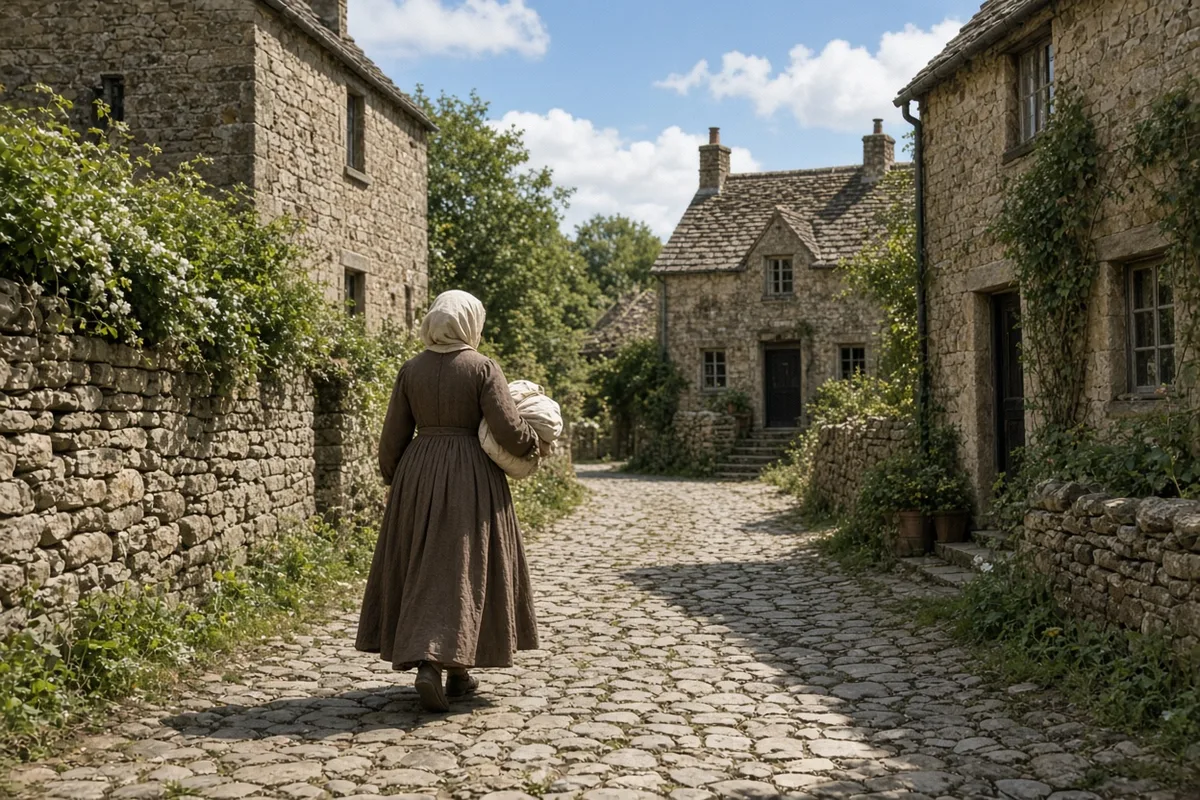
I was at the well drawing water when she passed the lane, one hand pressed flat to her waist as if she carried a wound. The cloth at her fingers showed darker than it should in the late light. She did not look toward the houses or answer the man who called after her. She walked faster instead, and the hem of her skirt lifted dust that settled on the stones behind her.

Two boys followed a few paces, asking if she needed the surgeon. She shook her head and kept on. By the time she reached her door the cloth had left a thin line on the ground, bright and narrow. She pushed inside and the latch dropped. I emptied the bucket and went back to the well for another, though the first was still full.
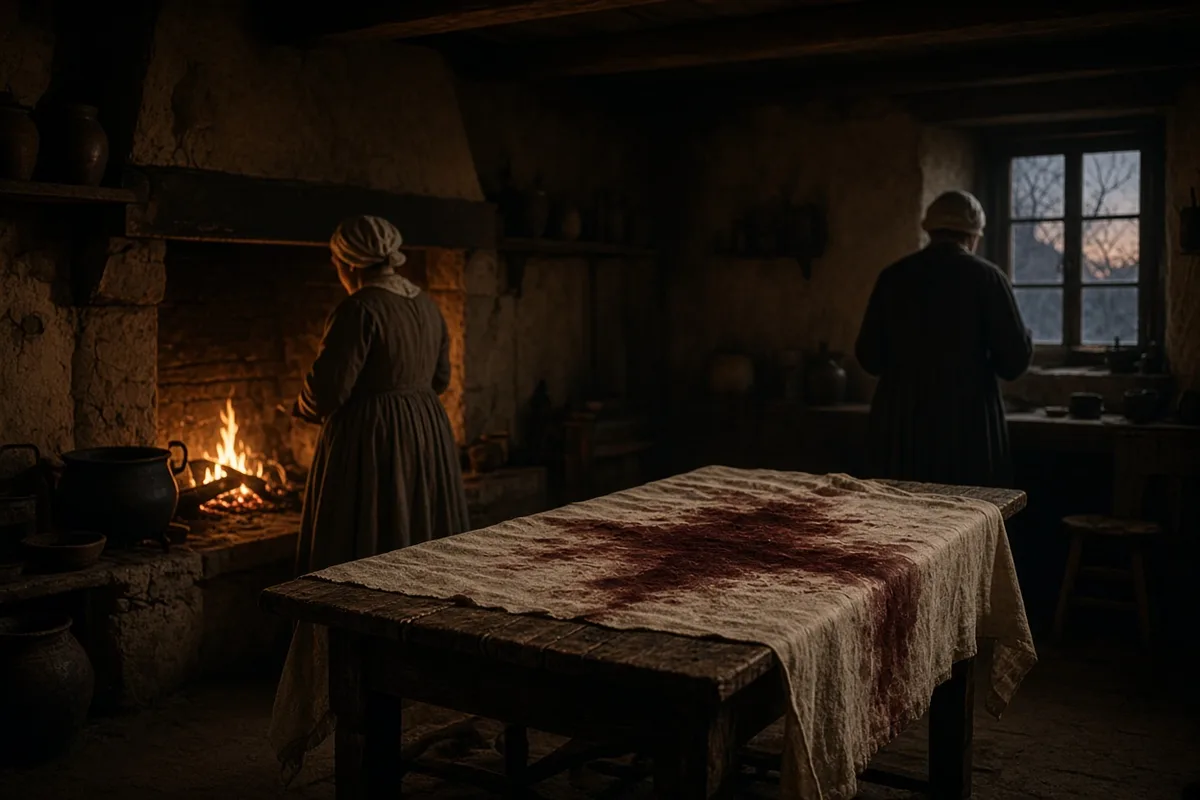
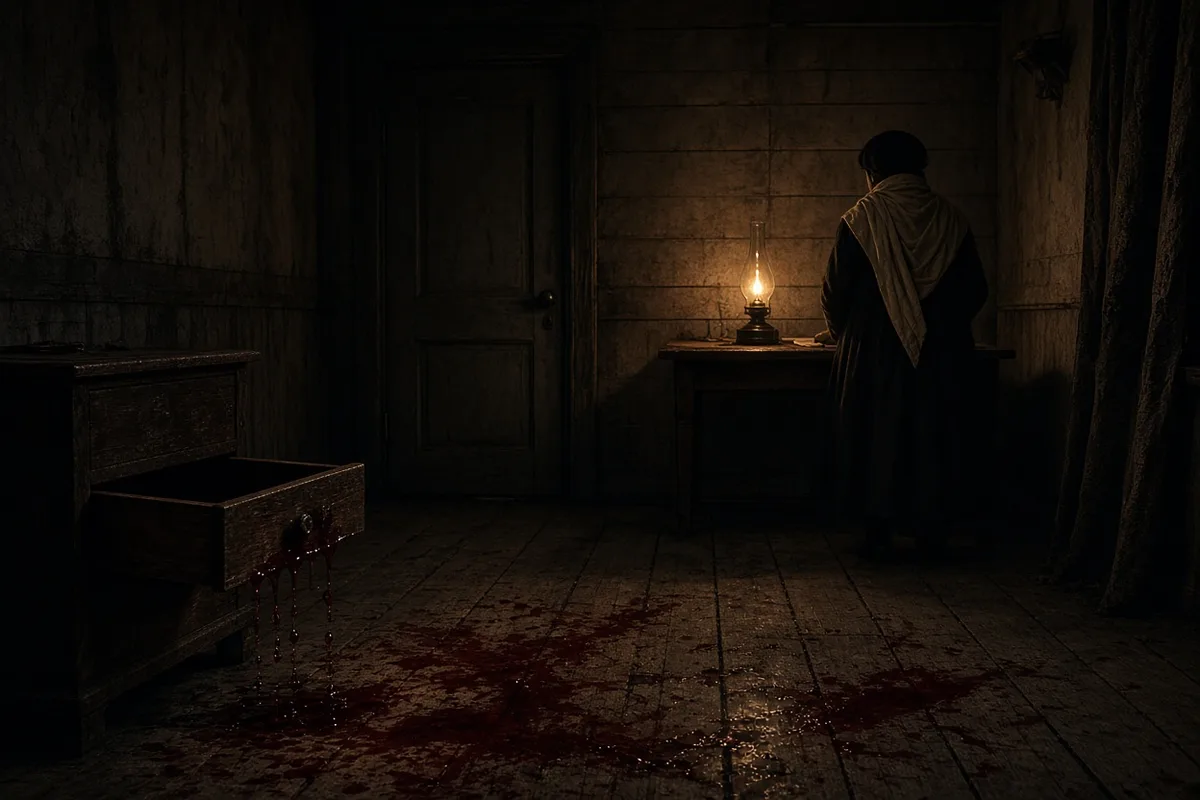
That night the light came through the cracks of their shutters and lit the lane the way a torch does when it catches pitch. It did not flicker. It held steady and white, strong enough to throw shadows of the roof beams across the opposite wall. I stood at my own window and watched the light move as someone inside walked from one side of the room to the other. Then it steadied again.

Her husband’s voice carried once, low, then nothing more. Before dawn the light faded to the ordinary glow of a single lamp. I heard the door open and close twice. The woman and the man walked toward the church together, the man carrying something wrapped in the same cloth that had dripped the day before.
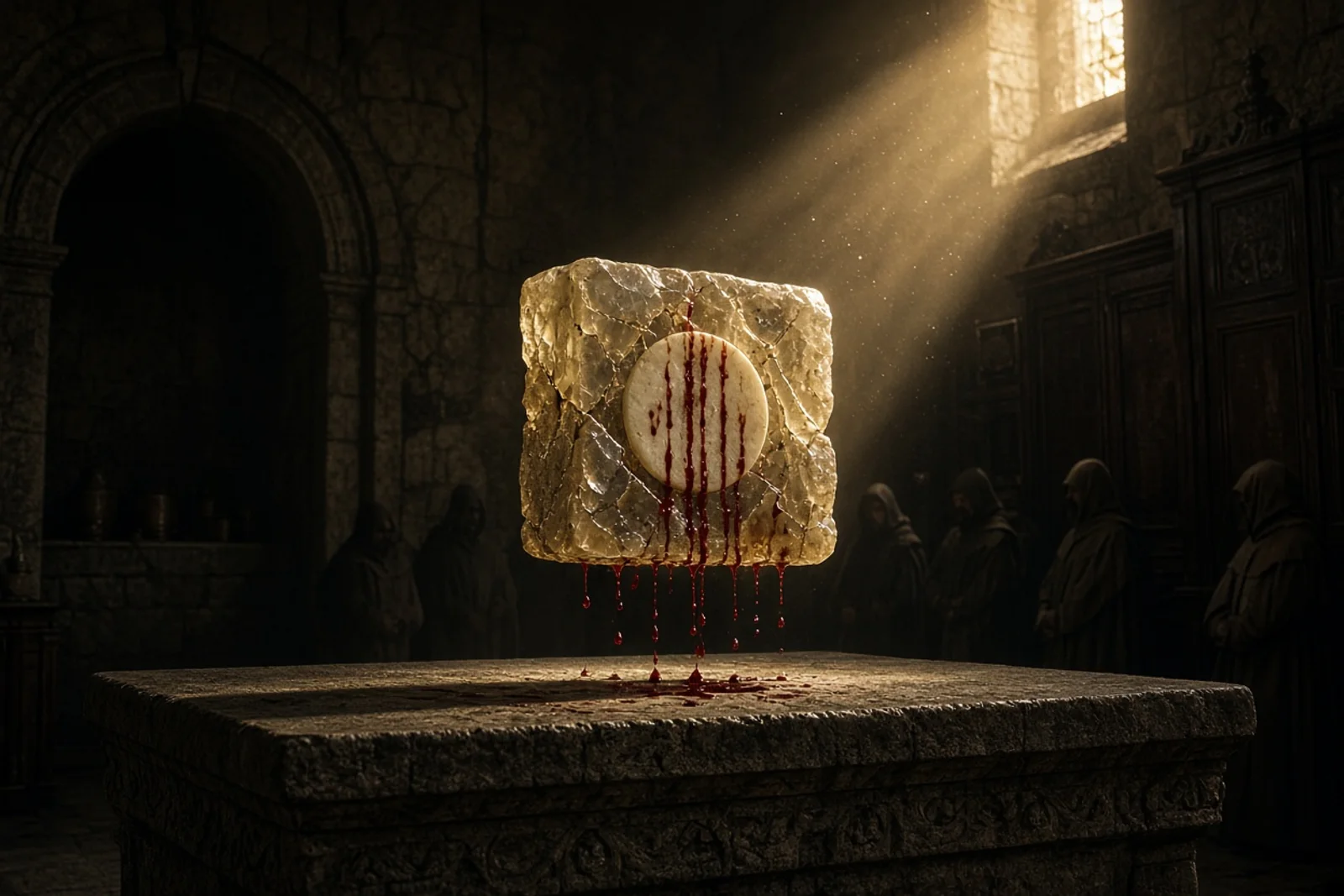
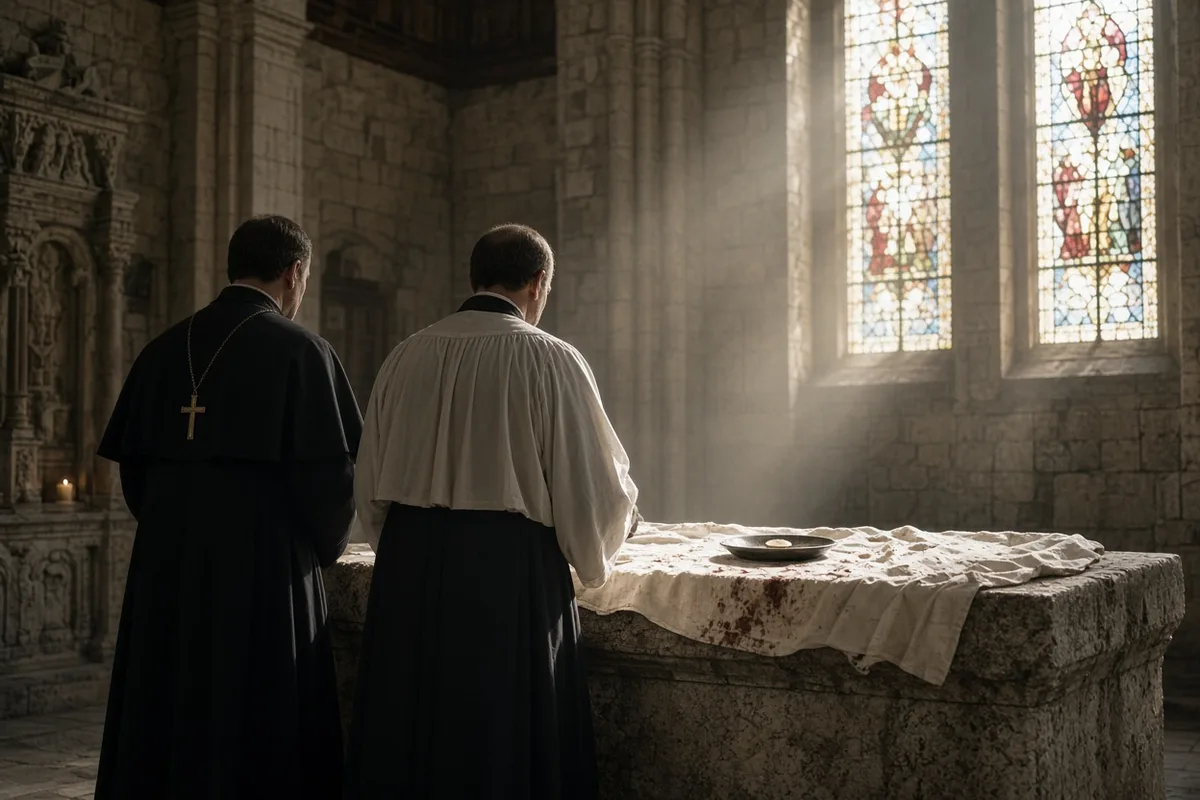
The priest met them at the steps. He took the bundle and held it up so the early sun caught the edge. People had already gathered. They followed when he turned and carried it back inside. The host stayed on the altar three days while the blood continued to seep at the edges. On the fourth morning the priest sealed it inside a casing made from the wax of the altar candles and set the casing in the tabernacle.

I returned to the well each morning after that. The lane looked the same. The woman kept her door closed for many weeks. When she opened it again she carried water like the rest of us and did not speak of the trunk or the light. Her husband began walking with her to Mass. The priest recorded what he had seen in the parish book and sent word to the bishop.
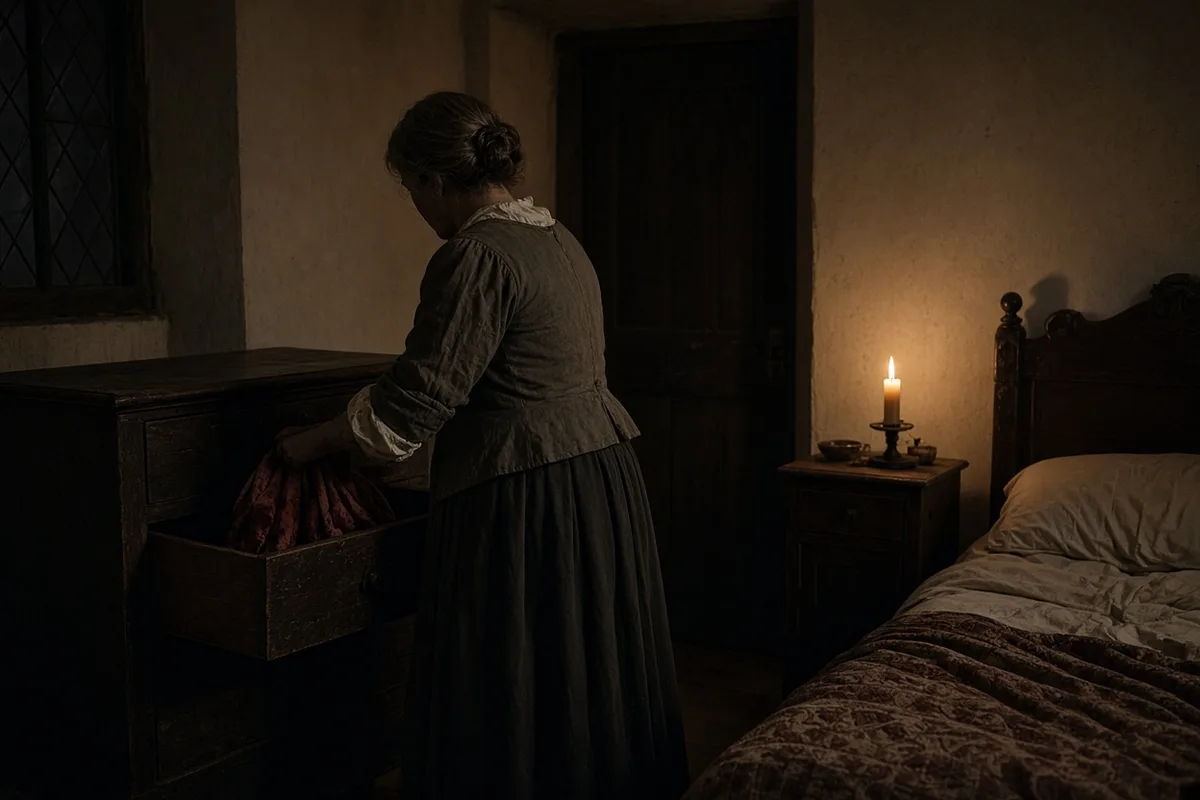
Seventy-four years later the same priest’s successor opened the tabernacle for the canonical visit. The wax had split into dry flakes that fell when the door moved. Inside, where the casing had stood, a clear crystal vessel now held the host and the blood. No one in the church that day claimed to have placed it there. The investigators examined the vessel under daylight and found no seam or join. They wrote the finding in the record and closed the tabernacle again.
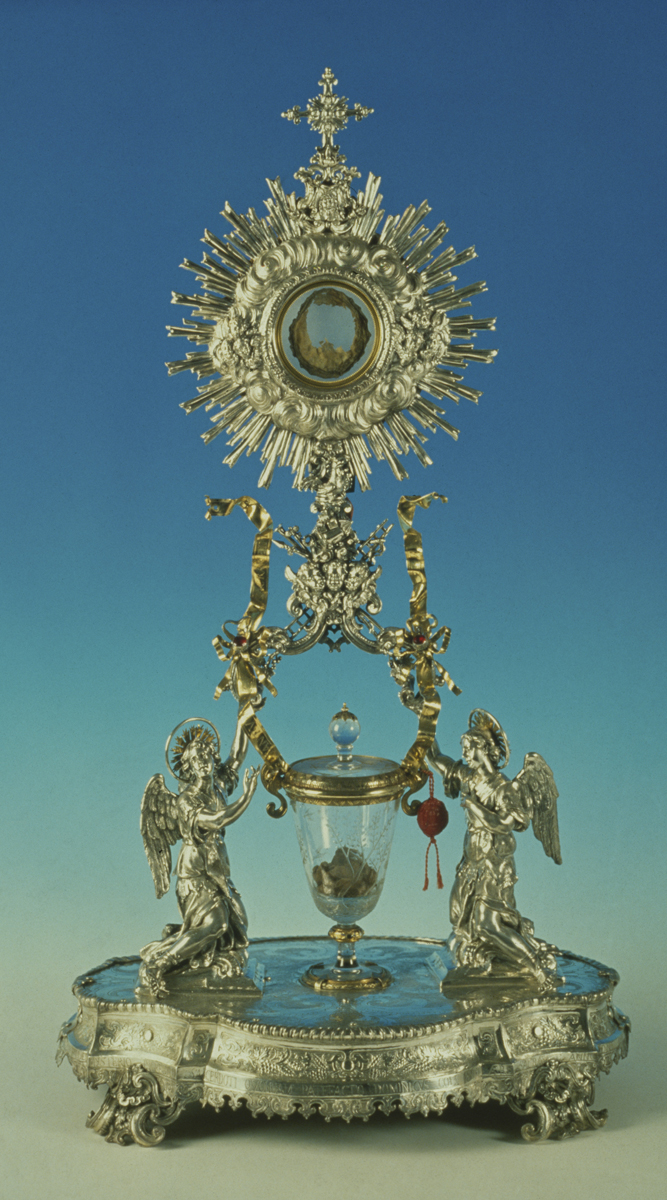
Pilgrims began to come from farther away. Queen Isabel visited twice, once in the year the crystal appeared and again later. She left an offering for the lamps. Francis Xavier stopped on his way to the port and prayed before the monstrance that now holds the vessel. Three popes granted indulgences to anyone who came to the church on the appointed days.
Each year on the second Sunday of April the monstrance is carried from the house in Travessa das Esteiras back to the church. The route passes the well where I once stood. The cloth that once wrapped the host has long since worn away, yet the blood inside the crystal has been seen to move and settle again in certain lights, as though the vessel were not quite sealed.
I am old enough now that the walk from my door to the church steps takes the better part of an hour. I still go when the bells ring for the procession. The monstrance passes close enough that I can see the dark center within the crystal. The street stones are the same ones the woman crossed with her hand pressed to her side. The light that came from the shutters that night has not returned, but the crystal keeps its own.
The procession reached the steps where the old priest Father Gomes stood with the monstrance raised, and the four men carrying the poles paused so that the crystal turned once in the April light before they entered the nave. Inside, the register kept by the sacristan recorded that on that day in 1318 exactly three hundred and twelve pilgrims signed their names or made their marks in the book, among them a weaver from Tomar who left a length of linen and a widow from Ourém who brought two silver coins struck in the reign of King Dinis. The blood within the crystal had settled lower on one side by the time the monstrance returned to the tabernacle, and Father Gomes wrote in the margin that the movement matched what the first priest had described seventy-one years earlier when the host was still wrapped in the woman’s cloth.
By 1394 the original wax flakes had been gathered and melted again into a new seal around the vessel, yet the record of the canonical visitor Bishop Pedro de Castelo Branco notes that the seal cracked again within three months and the blood appeared to have risen half a finger’s width against the inner wall. The bishop ordered the tabernacle door left open for nine consecutive days so that the faithful could observe the change each morning at prime; on the fifth day a merchant from Santarém counted forty-seven distinct droplets that had formed along the lower curve and later coalesced into one larger stain. The same bishop’s letter to the chapter at Lisbon, dated the feast of Saint Anthony, states that the crystal showed no mark of drill or file and that the vessel measured four fingers in height and three across at its widest point.
When Queen Isabel returned in the spring of 1325 she knelt on the stone before the altar for the length of three Miserere psalms and afterward ordered the lamps to be kept burning with oil from her own estate at Alenquer; the treasurer’s account lists twelve measures of olive oil delivered each quarter from that year until her death. Francis Xavier knelt there on the morning of 15 March 1540 before boarding the ship at the Tagus quay, and the companion who traveled with him wrote that the priest remained silent for nearly an hour and then said only that the relic reminded him of the blood that had flowed at the foot of the cross. Three years later the goldsmith Manuel Fernandes of Lisbon completed the silver monstrance that still holds the crystal today; his bill, preserved in the parish chest, records payment of forty-eight cruzados and the use of thirty-two ounces of silver taken from two old chalices donated by the confraternity of the Holy Name.
In 1623 the relic was carried in procession through the streets for the first time since the original event because the church roof had been damaged by winter rains and the tabernacle had to be moved while repairs were made; the town council minutes record that two hundred and eight men walked ahead with torches and that the route was lengthened to pass the house once occupied by the woman and her husband so that the blood could be shown to the new governor of the district. The crystal was examined again in 1705 by order of the papal nuncio, who counted the same number of droplets the bishop had noted three centuries before and noted in his report that the liquid responded to the movement of the sun across the south window by shifting its level within the space of one hour. During the French occupation in 1810 the monstrance was hidden beneath the floor of the sacristy for eleven weeks; when it was replaced the sacristan found a single drop of blood had formed on the outer surface of the crystal and had dried into a thin crust that could not be wiped away.
The present tabernacle, installed in 1892 by the Lisbon firm of Silva and Sons, stands one meter eighty centimeters high and is faced with Carrara marble cut in Genoa; the crystal vessel rests on a silver stand engraved with the date 1247 and the words “Hic est vere corpus Christi” taken from the first priest’s entry in the parish book. On the second Sunday of April 1923 exactly one thousand four hundred and seventy pilgrims were counted entering the church between dawn and noon, among them a family from Braga who left a written petition signed by the father, mother, and three children stating that they had walked fourteen days to reach Santarém. The relic was last removed from the monstrance in 1997 for the seven-hundred-and-fiftieth anniversary; the examining committee of three priests and two physicians recorded that the blood occupied the lower third of the vessel and that its surface remained convex and unbroken after the crystal had been held under direct light for two full hours.
I reached the church steps later than usual on the April morning in 1348 when the first cases of the pestilence were reported in the lane behind the well; the monstrance had already been placed on the altar and the priest was reading the gospel when a woman carrying a child entered and placed her hand against the same stone where the original bundle had rested. She remained there through the entire Mass without speaking, and when she left she took nothing with her except the dust that clung to the hem of her skirt. The following spring the same woman returned alone and stood again at the rail; she told the sacristan that the child had died on the feast of Saint Stephen and that she had come to see whether the blood inside the crystal had changed its level during the winter months when no one could travel. The sacristan answered that it had not moved since the previous October, and she nodded once before turning back toward the door.
The sacristan’s ledger for the year 1352 records that the same woman returned on the feast of Saint Stephen and stood at the rail for the full hour of terce, after which she asked whether any pilgrim from Lisbon had left word of the host that had been carried from the church of São Domingos during the previous month’s procession; the entry notes her name as Maria Rodrigues of the Travessa das Esteiras and states that she placed two copper ceitils on the plate before departing. In the spring of 1401 Bishop João de Azambuja ordered the crystal vessel to be weighed on the parish scales against a set of bronze weights marked with the arms of King João I; the record shows the vessel weighed nine ounces and that the blood inside occupied exactly one-third of the interior volume, matching the measurement taken by his predecessor in 1394.
A marginal note dated 15 October 1497 states that the monstrance was removed for cleaning by the goldsmith Diogo Lopes, who replaced a bent silver ray and recorded that the crystal showed no scratches from the polishing cloth; on the same day a pilgrim from Coimbra signed the book with the words “I saw the blood rise against the wall when the sun struck the south window at noon,” and the sacristan added that the signature was witnessed by two canons from the cathedral chapter. The visitation report of 1551 by the apostolic delegate Dom Pedro de Mascarenhas lists the names of forty-three residents of Santarém who testified that they had seen the level of the blood shift during the litany of the Holy Name on the second Sunday of April, and the report quotes one witness, the shoemaker António da Silva, as saying the movement occurred “as though the liquid answered the words of the priest.”
During the earthquake of 1755 the tabernacle remained upright while the nave vault cracked above the choir; the sacristan’s diary for 1 November records that he carried the monstrance to the open square in front of the church and that the blood inside the crystal stayed level despite the ground tremors that lasted through the night. In 1834 the liberal government closed the church for eleven months and removed the silver lamps; when the building reopened the parish inventory noted that the crystal vessel had been returned to its stand with the original wax seal intact, and the sacristan observed a single new droplet had formed on the inner surface during the closure.
The restoration work completed in 1892 included the installation of the present marble tabernacle and the engraving of the date 1247 on the silver stand; the contractor’s receipt lists the use of twelve slabs of Carrara marble shipped from Genoa and the employment of eight stonecutters for one hundred and forty-three working days. On 12 April 1964 the annual procession was filmed by the national television service; the broadcast log records that four hundred and eighty pilgrims from the diocese of Leiria-Fátima walked behind the monstrance, and the camera operator noted in his notes that the blood appeared darker when the monstrance turned toward the south transept window at eleven minutes past ten in the morning.
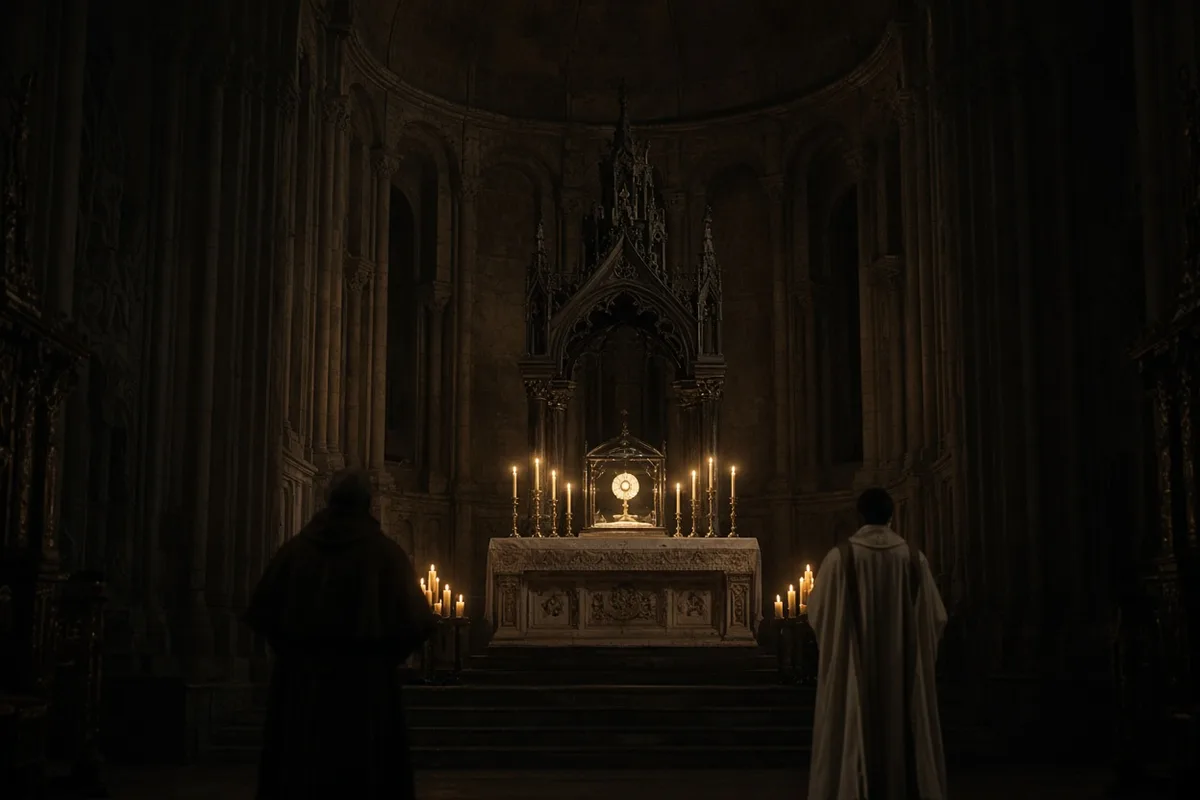
The examining commission of 1997, composed of Canon António dos Reis, Dr. Manuel Figueiredo, and two physicians from the Hospital de Santarém, measured the blood column at twenty-seven millimeters in height after the crystal had been held at eye level for one hundred and twenty minutes under a 500-watt lamp; their signed report states that the surface remained convex and that no condensation formed on the inner wall. In April 2018 the parish register counted one thousand nine hundred and six visitors between sunrise and sunset on the second Sunday, among them a group of thirty seminarians from the diocese of Porto who signed a collective petition requesting permission to celebrate Mass in the side chapel where the original wax casing had been kept until 1394.
On the morning of 9 April 2023 I reached the steps after the procession had already entered the nave; the sacristan, whose name is recorded in the current ledger as José Carvalho, held the door for an elderly woman who placed her hand on the same stone where the bundle had rested in 1247 and remained there through the reading of the gospel before turning back toward the lane that still leads past the well.