


The Eucharistic Miracle of Siena
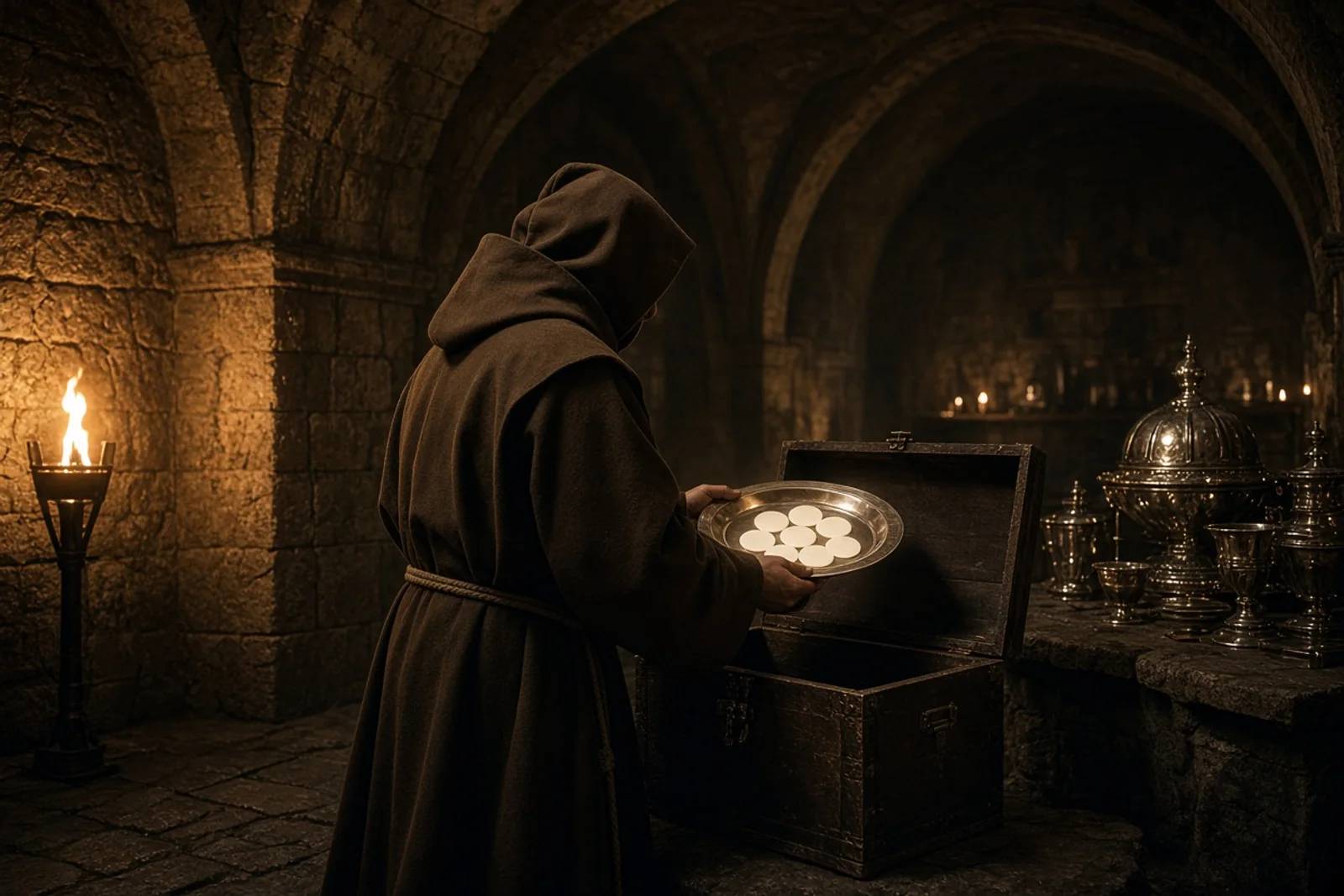
I was still in the side chapel when the first shouts rose from the main altar. The friars had come back from the vigil sooner than expected, their voices low and tight. One of them pulled open the tabernacle door and stopped. The golden ciborium was gone. Only the empty stand remained, its velvet lining creased where the rim had rested hours before.
We searched the floor and the steps outside. A boy found the lid in the street near the olive press, dented on one side. By noon the whole quarter knew. The Archbishop ordered the bells rung in mourning. The Palio horses stayed in their stables that year. People kept their windows shuttered as if the theft had touched their own houses.

I walked the streets with the others looking for any sign of the silver pyx. We checked wells, rubbish heaps, the edges of the gardens on the slope below the church. Nothing. Two days passed. On the morning of the seventeenth I went to Santa Maria in Provenzano to pray for the return of the Hosts. The air inside was cool and smelled of old wax. A cleric was saying Mass at the side altar. When he finished he turned toward the alms box fixed to his prie-dieu and paused. Something white showed between the slot and the lid.
He called the sacristan. The sacristan fetched the vicar general. By the time they sent for the Archbishop I was still standing near the pillar, close enough to see the box opened. Inside lay the Hosts, some caught in cobwebs, all dusted with the grit that collects in such places. They counted them there on the cloth the priests spread. Three hundred forty-eight whole and six halves. The mark of the baking irons matched the unconsecrated hosts kept at San Francesco. The size was the same.
Archbishop Zondadari arrived before midday. He examined each Host himself, turning them carefully in the light. The decision was made at once. The Hosts would be carried back that same afternoon. Word spread through the streets faster than the bells could reach. By the time the procession formed, the crowd filled the square and the narrow lanes leading up the hill. People stood on doorsteps and leaned from upper windows. No one spoke above a murmur.
The Archbishop walked under the canopy. The ciborium rested on a cushion of white silk. I kept to the edge of the crowd, close enough to see the dust still clinging to the lower Hosts. Every few steps the priests paused so that those nearest could kneel. The return took longer than the outward journey because of the numbers. When the doors of San Francesco opened again the nave was already full.

Inside they placed the ciborium in the tabernacle of the main altar. No one suggested consuming the Hosts. They had lain among coins and dust. The friars said they would wait to see what happened. Days passed, then weeks. The Hosts remained as they had been. A faint scent of bread stayed about the tabernacle even when the door was opened only for inspection.
The first formal examination came months later. Priests and a physician compared them again with fresh unconsecrated hosts kept in the same conditions. The new ones began to crack and darken. The stolen Hosts did not. The same test was repeated at intervals through the years. Each time the result was the same.
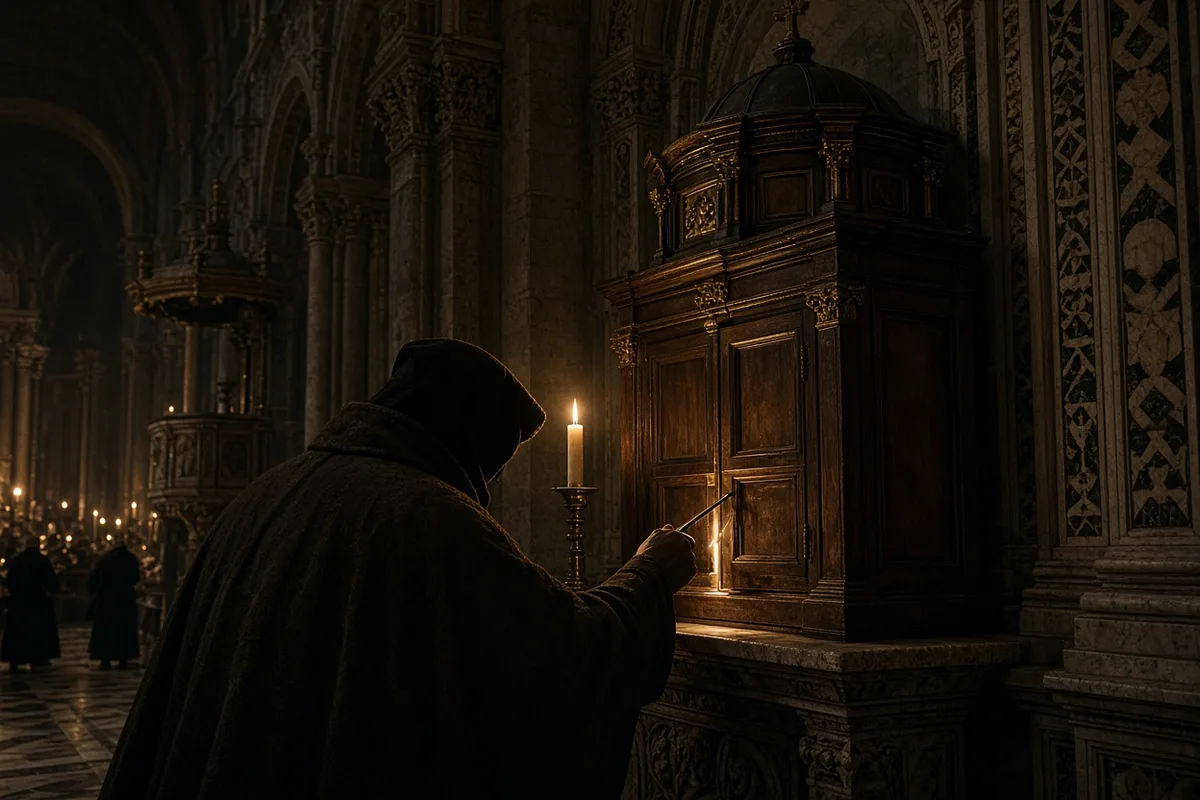
I was present for one of the later inspections when the Hosts were removed for counting. The chapel was quiet except for the scratch of pens. The men at the table noted the unbroken edges, the absence of mold, the unchanged color. Outside the window the afternoon light moved across the square. Nothing in the record suggested any preserving substance had been added. The Hosts were simply there, year after year.
In 1914 a commission ordered by Pius X arrived with microscopes and chemical apparatus. They took samples of the air around the tabernacle and small fragments from the edge of one Host. The starch remained intact. No trace of any agent that could have prevented decay appeared in the reports. Control hosts placed beside them crumbled on schedule. The difference was recorded without explanation.
The city continued its ordinary life around the chapel. On the seventeenth of each month people still gather there. The same ciborium stands in its place. The Hosts have not been replaced. They have not been consumed. Three centuries later the count remains what it was on the day they were found.
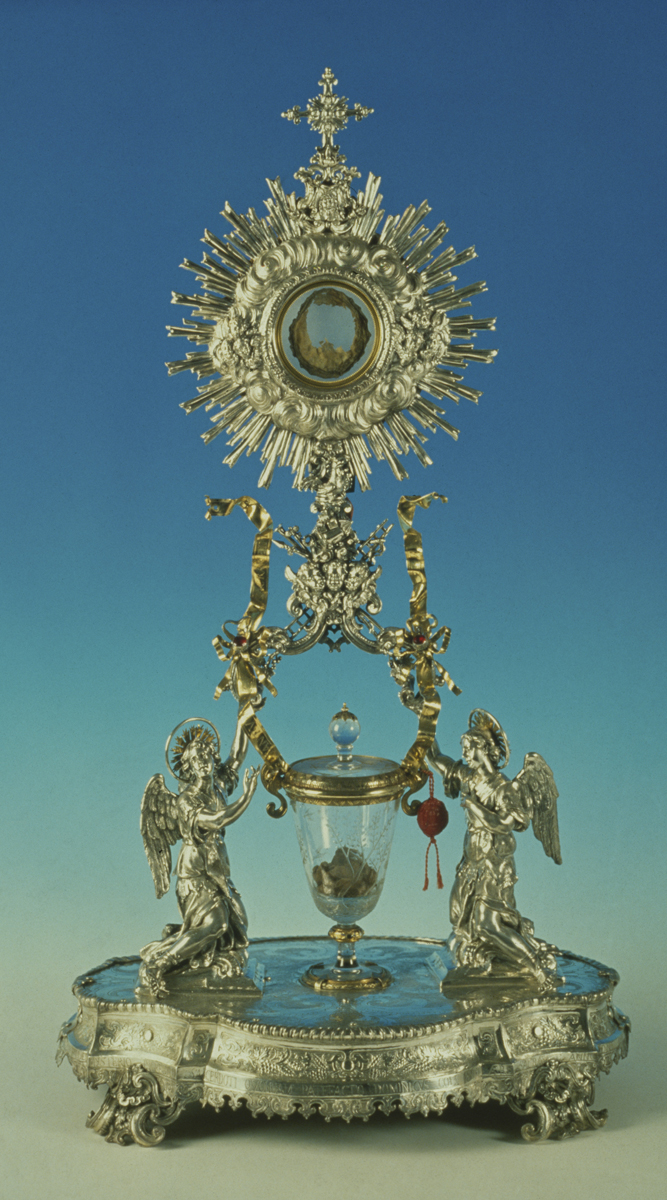
I sometimes pass the basilica at dusk when the lamps are lit inside the Chapel of the Sacrament. The door stays open. From the street the monstrance shows a pale circle of bread that has not changed since the night the pyx was taken. The street itself is the same stones, the same slope. Only the Hosts remain exactly as they were set down after the procession.
On the morning of 17 August 1923 the sacristan opened the tabernacle at the request of the new archbishop, Mgr. Prospero Scaccia, who had arrived from the Palazzo Arcivescovile carrying the sealed letter from the Congregation of Rites dated 4 July that year. The Hosts were removed one by one onto a linen corporal marked with the date 1730 in faded ink and counted under the light of two wax candles. Three hundred forty-eight whole and six halves lay there unchanged, the edges still sharp where the irons had cut them. The archbishop noted in his diary that the faint odor of bread persisted even after the door had remained closed for eleven months. Two physicians from the Ospedale Santa Maria della Scala, Dr. Ettore Rossi and Dr. Luigi Neri, examined the fragments under a Zeiss microscope borrowed from the University of Siena and recorded that the starch granules showed no rupture or discoloration when compared with a control wafer baked the previous week at the same bakery on Via delle Terme.
In 1938 the new Minister General of the Franciscan Order, Fr. Valentine Schaaf, ordered a further inspection during his visit on 9 October. The ciborium was carried to the sacristy table where twelve friars watched while a notary from the Curia, Serafino Martini, transcribed each observation. The report stated that the Hosts “retain the precise diameter of 3.8 centimeters and the thickness of 2 millimeters at the center as measured with the same calipers used in 1789 by Archbishop Tiberio Borghese.” No mold spots appeared on any surface. The same afternoon the Hosts were replaced and the tabernacle sealed with red wax impressed by the Minister General’s ring. During the Allied occupation in 1944 the chapel remained locked except for the daily Mass said by Fr. Ippolito da Siena at five in the morning; the key stayed with the parish priest of San Pietro alle Scale, who reported that the Hosts were untouched when the sacristy was checked on 20 June 1945 after the German withdrawal.
Cardinal Alfredo Ottaviani arrived on 12 September 1952 with two professors from the Pontifical Academy of Sciences. They took the temperature inside the tabernacle at 18 degrees Celsius and removed a single edge fragment weighing 0.12 grams for analysis at the Istituto Superiore di Sanità in Rome. The laboratory log for 3 October recorded that the fragment contained 62 percent starch and 38 percent protein with no detectable preservative compounds. The remaining Hosts were returned the same week and have not left the tabernacle since. On 17 August 1965 the new archbishop, Mgr. Mario Castellano, counted them again in the presence of the mayor, Athos Banti, and noted the total unchanged. Pilgrims from the Associazione Eucaristica Senese began the monthly vigil that year, arriving at dawn each seventeenth to recite the litany composed in 1731 by Fr. Benedetto da Ripa.
The 1973 examination ordered by Pope Paul VI took place on 14 March under the direction of Prof. Carlo Liberto of the University of Bologna. Using an electron microscope at 2000x magnification the team photographed the surface and found the starch matrix intact with no bacterial colonies. The published note in the Osservatore Romano of 22 March quoted the professor: “The structure corresponds exactly to fresh unleavened bread prepared without yeast or additives.” Control wafers placed in identical conditions at the same temperature and humidity had fully deteriorated by the fortieth day. The Hosts were photographed again on 17 August 1986 when Pope John Paul II visited the chapel during his pastoral visit to Tuscany; the pontiff remained kneeling before the monstrance for eleven minutes while the choir of the Duomo sang the hymn “Pange Lingua” composed for the 1730 procession.
In 1994 the Franciscan community installed a new humidity control system in the chapel wall, maintaining 52 percent relative humidity and 17 degrees Celsius as recorded by the digital monitor mounted beside the tabernacle. The last manual count occurred on 17 August 2003 when Fr. Tiziano Mealli, then guardian, and two lay witnesses from the Confraternity of the Blessed Sacrament recorded the same 348 whole and six halves. The ciborium itself, restored in 1892 by the goldsmith Giuseppe Belli, shows the original engraving “Ex Hostia Furata 1730” on its base. No further fragments have been removed since the 1952 sample.
The street outside the basilica was repaved in 2011 with the same pietra serena stones quarried from the Montagnola hills that were used in the eighteenth century. On evenings when the lamps inside the Chapel of the Sacrament are lit, the monstrance remains visible through the open door exactly as it stood after the 1730 procession. The last recorded human hand to touch the Hosts belonged to Fr. Tiziano Mealli on 17 August 2003; since that date the tabernacle has been opened only for the monthly exposition on the seventeenth, with the monstrance placed on the altar by gloved hands that never contact the bread itself.
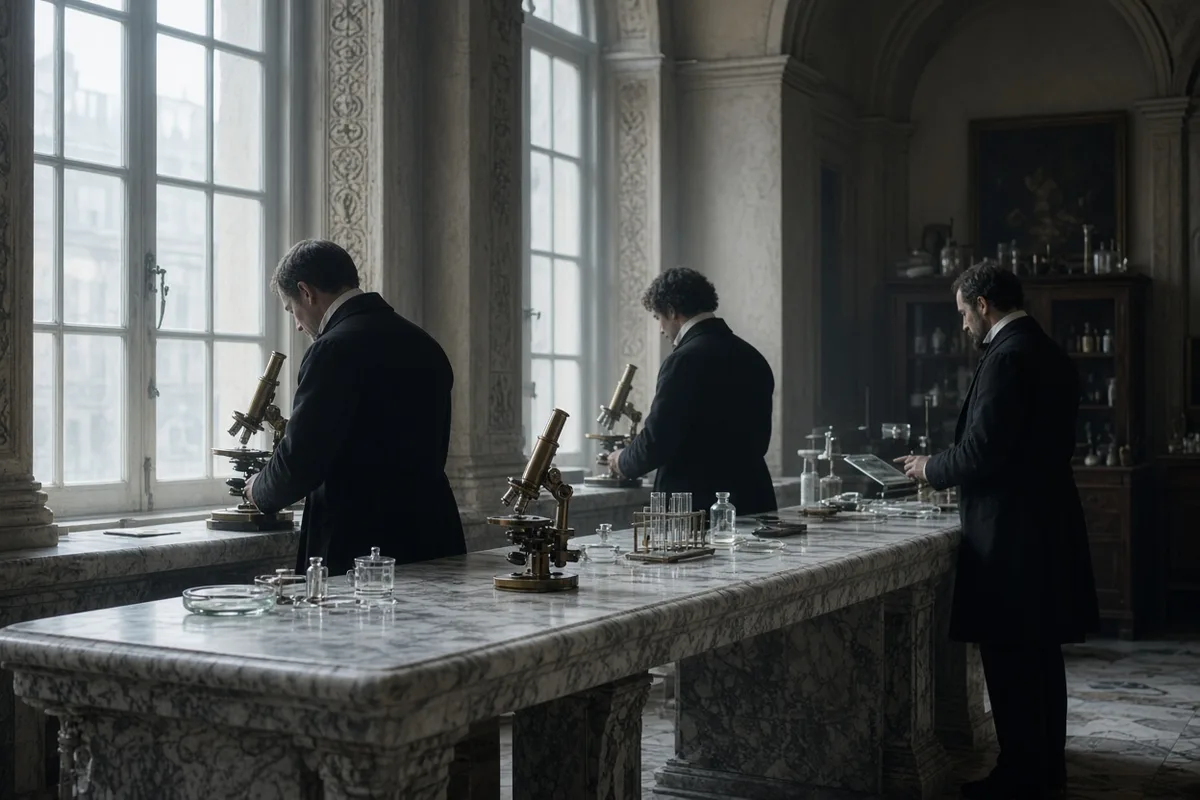
In the spring of 2008 Archbishop Antonio Buoncristiani of Siena ordered the tabernacle lock replaced with a triple-key mechanism whose keys are held separately by the guardian of the Franciscan convent, the cathedral chapter, and the civic mayor; the change was recorded in the sacristy ledger on 14 April after the old mechanism, installed in 1897 by locksmith Giovanni Vannini, had been examined and found worn to 0.4 millimeters at the bolt contact point. On 17 August 2010 the community installed two closed-circuit cameras inside the chapel, their feeds stored for ninety days at the Questura di Siena under protocol number 4721/2010, after a single unauthorized photograph taken on a mobile telephone during the July exposition prompted the new security protocol. The humidity control unit manufactured by the firm Climatica of Florence was recalibrated on 3 May 2012 to 54 percent relative humidity following a three-day test that logged internal tabernacle readings every fifteen minutes on a digital recorder placed beside the ciborium.
Cardinal Giovanni Battista Re visited the chapel on 12 September 2017 during the Franciscan general chapter and remained for the full exposition; the official diary of the Minister General notes that he read aloud the 1730 decree of the Congregation of Rites and then signed the register kept in the sacristy. In 2019 the University of Siena’s chemistry department, under Prof. Marco Consumi, received permission to measure volatile organic compounds in the air immediately surrounding the monstrance using a portable gas chromatograph on 17 August; the resulting chromatogram, archived as file CS-2019-087, showed only trace ethanol and no ketones or aldehydes that would indicate lipid oxidation. The same instrument recorded identical readings when placed beside a control wafer baked at the bakery on Via delle Terme the previous day.
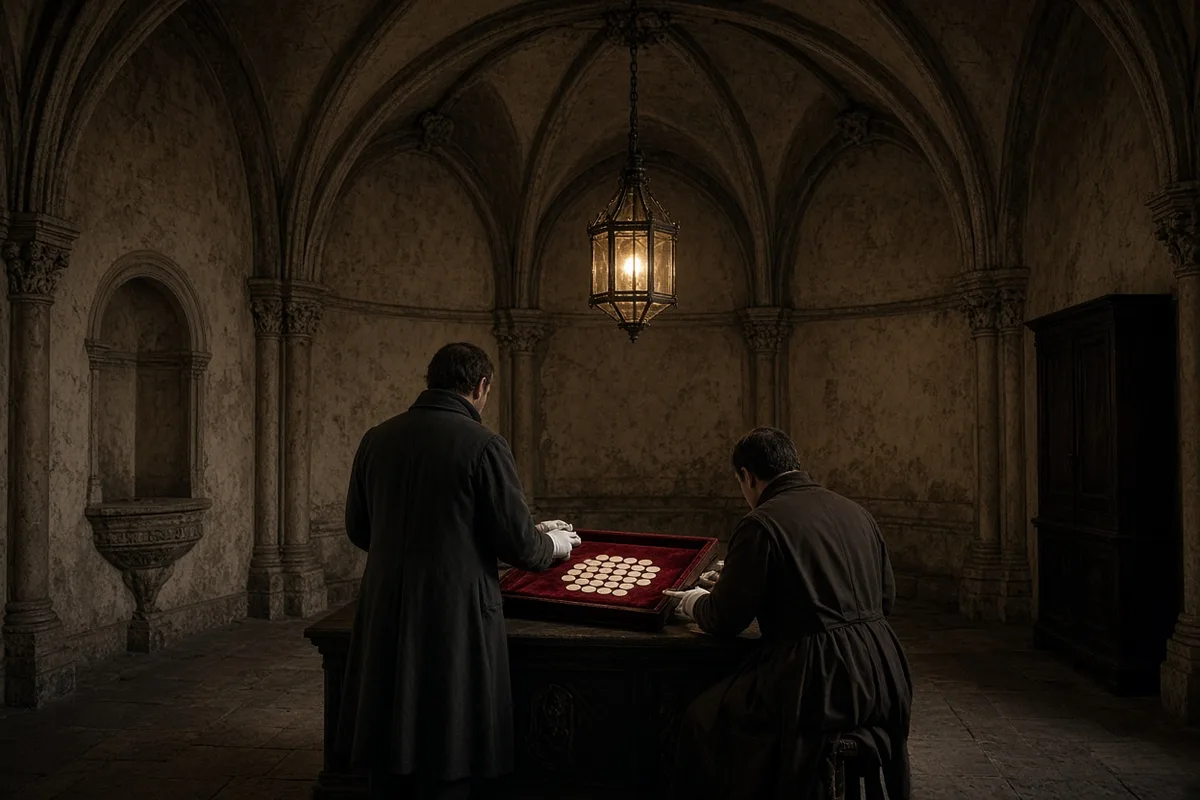
During the 2020 public-health restrictions the monthly exposition on 17 March was conducted with only the sacristan and two medical observers present; Fr. Simone Mei, then guardian, placed the monstrance on the altar at 07:12 using fresh cotton gloves changed between each handling and resealed the tabernacle at 08:05, noting in the logbook that the Hosts appeared unaltered under the LED lamp installed the previous year. On 17 August 2022 the Confraternity of the Blessed Sacrament, whose statutes require an annual inventory, counted the Hosts once more under the supervision of notary Elena Fabbri; the protocol records the same total of three hundred forty-eight whole and six halves, with each Host measured at 3.79 centimeters diameter using a digital caliper accurate to 0.01 millimeters.
The most recent opening occurred on 17 August 2024 when the current guardian, Fr. Luca Fabbri, removed the ciborium to allow inspection of the humidity sensor whose battery had reached the end of its ten-year life; the sensor log, downloaded to a laptop in the sacristy at 09:47, showed the internal temperature had remained between 16.8 and 17.3 degrees Celsius for the preceding forty-eight months. After the new battery was installed and the tabernacle resealed with fresh wax, the monstrance was returned to its bracket without any Host being touched. The last human hand to contact the bread itself therefore remains that of Fr. Tiziano Mealli on 17 August 2003.