


The Genome Mapper Who Found God
The machines never slept, so neither did I. Four sequencers running through the night on the third floor at Bethesda, their fans humming a pitch you learned to feel in your teeth, spitting out strings of A's and T's and G's and C's onto strip after strip of printout. I fed gels. I logged runs. I waited for the sound of his motorcycle in the lot before dawn, because that sound meant the director was in, and if the director was in, something in the building would move faster.
He rode a Honda Nighthawk 750, black helmet, six foot four folded onto it like a grasshopper on a matchstick, and half the postdocs in the building had learned to recognize the engine note before they recognized his face. Francis Collins came to work that way for years. It became a kind of clock for us. If the Nighthawk was in its spot by seven, it was going to be a long day, and it usually was.

I knew the outline of him the way you know the outline of somebody you've watched more than talked to. A farm in Virginia, ninety-five acres, no indoor plumbing, a father who taught drama and a mother who wrote plays, and somewhere in that house a seven-year-old boy who wrote and directed his own little production of The Wizard of Oz before he ever touched a test tube. He went to Yale for physical chemistry, finished the doctorate at twenty-three, and then, restless with equations that never touched a human face, walked into a medical school at the University of North Carolina and found genetics waiting for him like something he'd forgotten he'd lost.
By the time I started at the institute he already had names attached to his name — the gene behind cystic fibrosis, the gene behind neurofibromatosis, the gene behind Huntington's disease, each one a needle he and his collaborators had found in a haystack the size of a human chromosome. Those were the credentials that meant something to the rest of us bent over our gels at two in the morning. Before we ever heard him use the word God in public, we knew him as the man who found genes nobody else could find.
It was 1992 when the position opened up, and it opened up loudly. James Watson, who had helped work out the double helix itself decades before, quit as head of the public genome effort in a public argument with the people above him. Everyone expected the next person through that door to make an entrance to match. Instead Francis Collins came in quietly, the way he seemed to come into every room that had just had a controversial man walked out of it, and picked up the project like it was a patient he'd been called in to stabilize.
The project itself was almost too large to hold in your head while you were living inside it. Three billion letters. Twenty-three pairs of chromosomes. An instruction book, he called it once, and the word stuck to the whole enterprise the way good words do — not a map exactly, not a blueprint exactly, but a book written in a language none of us could yet read past a few scattered, half-understood pages. We were transcribing something whose sense we didn't have. That was the strange discipline of it. You could spend a decade copying a sentence you couldn't translate.
For years the work had the plodding rhythm of any long labor — gels, sequencers, more gels — and then, in the middle of the nineties, a man named Craig Venter changed the tempo. He left the government side, started a company called Celera Genomics, and announced he intended to beat the public project to the finish line, sequence by sequence, and in some places claim ownership of what he found along the way. Collins objected to that last part hardest. Genetic information sold off in patented pieces was, to him, a betrayal of what the book was supposed to be for. The two men circled each other through newspapers and conference podiums for the better part of two years before anyone in the corridors I worked in believed they'd ever sit at the same table.

They did sit at the same table, eventually, and something like a truce got written. I remember the relief in the building more than I remember the details of the agreement — the sense that a race that could have ended in two incompatible books had instead ended, or was ending, in one.
What I did not know, not for a long while, was the other race that had already finished inside him, years before any of us clocked in — the one that had nothing to do with Celera or sequencers.
He told it, when he told it, without much decoration, which somehow made it land harder. He'd come up as an atheist, the kind of young doctor who assumed the questions that couldn't be measured weren't worth much asking. Then a patient of his, dying, without any of the medical answers he could offer her, turned the question back on him — asked him plainly what he himself believed, and he found, standing at her bedside with all his training arranged neatly behind him, that he had nothing to give her. Not even a shape for the question. That silence followed him out of the room.

He went looking for one, the way a scientist looks for anything — reading, arguing with himself, refusing to accept a conclusion until he'd tested it against something. A minister put a slim book by C.S. Lewis into his hands, and in that book he found an argument he could not simply file away and forget, the way he'd filed away every other attempt someone had made to convince him. He wrestled with it the way he wrestled with a stubborn piece of data, unwilling to let it go until it either broke or held. It held. He became, in his own later words, a serious Christian — someone who believed, without embarrassment, in the death and resurrection of Christ, and who tried to carry that belief through every day of the week and not just the one morning it's supposed to live in.
I didn't hear that story from him across a lab bench. I heard the shape of it the way most of us did eventually, in interviews, in the quiet way it started to surface once the genome work made him famous enough that people wanted to know what was inside the man doing it. But once I knew it, I understood something about the building differently. The man riding the Nighthawk into the lot at dawn was not separating his faith from his microscope. He talked, later, about God as the greatest scientist there is, about the strange excitement of being the first human being to see something God had already known, and about how that excitement was, for him, indistinguishable from worship. He said science answers how the natural world works. He said faith is where you go for the rest of it. He did not seem to feel the tension the rest of the culture kept insisting he ought to feel.
That didn't mean the ethics of the work went untroubled in his hands. He used to say knowledge itself carries no morality, that a sequence of letters is neither good nor evil until somebody decides what to do with it, but that the decisions coming were enormous — who gets tested, who gets insured, who gets discriminated against for a gene they didn't choose and can't change. From near the beginning of the project a slice of the funding, one dollar in twenty, went to nothing but those questions — lawyers, ethicists, theologians, sociologists, brought in not as an afterthought but as part of the design. I sat in on some of those sessions. They argued as hard as any sequencing dispute I ever watched, maybe harder, because there was no gel to run that would settle who was right.
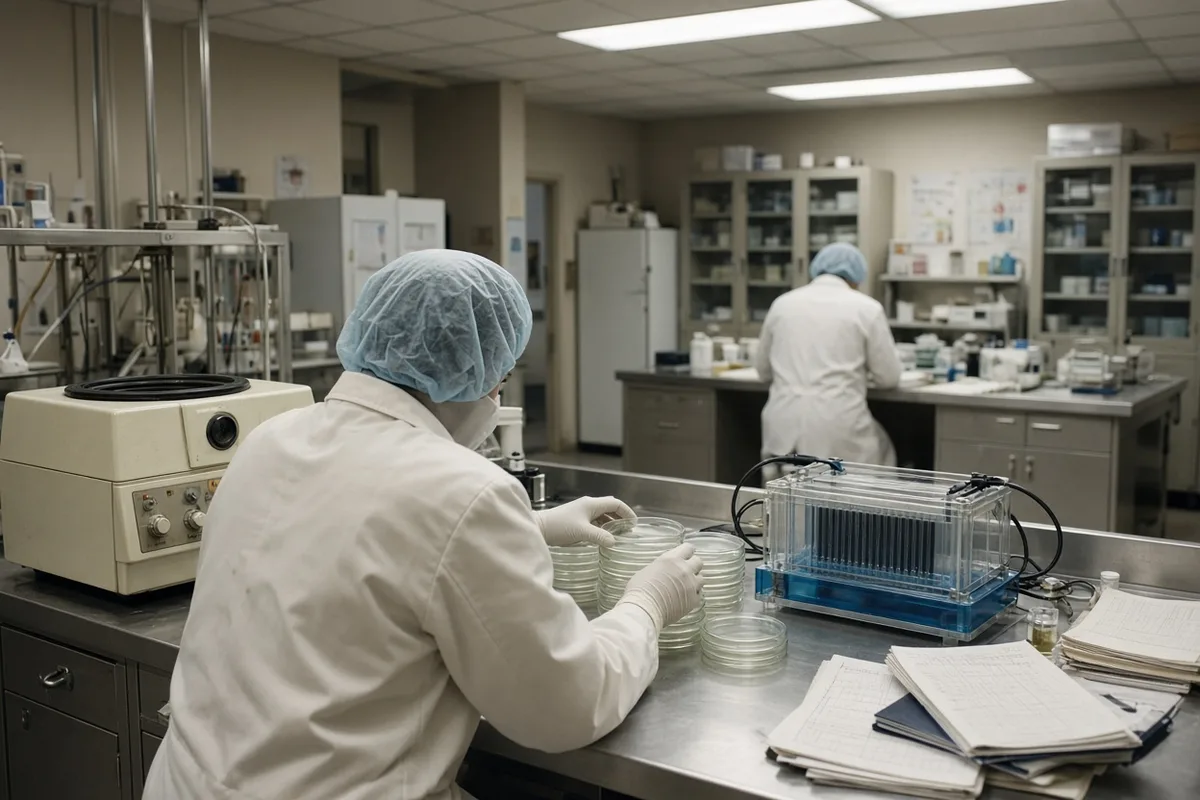
By the spring of 2000 the corridors had a different pressure to them, the pressure of an ending finally visible. The public project and Celera were closing in on the same target from two directions, and the talk in the halls had shifted from whether we'd finish to when, and under what banner. I remember the last weeks less as science and more as choreography — phone calls, drafts of statements, a sense that history had started walking toward a particular room and we were all being fitted for the moment it arrived.
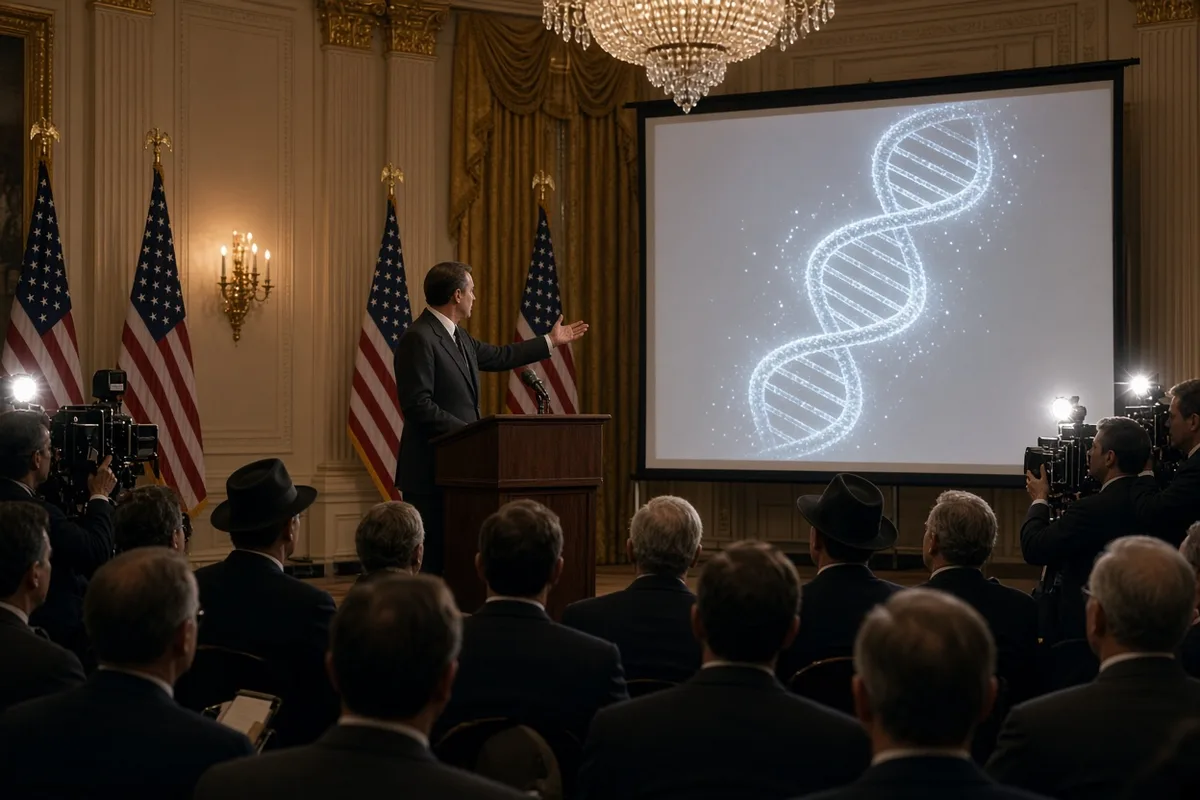
The room, when it arrived, was the East Room of the White House. A Monday. President Clinton stood at the podium to say that the code long stored inside every one of us had, at last, been read into a working draft, and that it was already beginning to produce medicine nobody could have written a decade before. Francis Collins walked in behind him, the same quiet entrance he'd made behind Watson eight years earlier, behind Venter's threats a few years after that — never the loudest man in the story, always somehow the one left standing at the center of it when the noise settled.
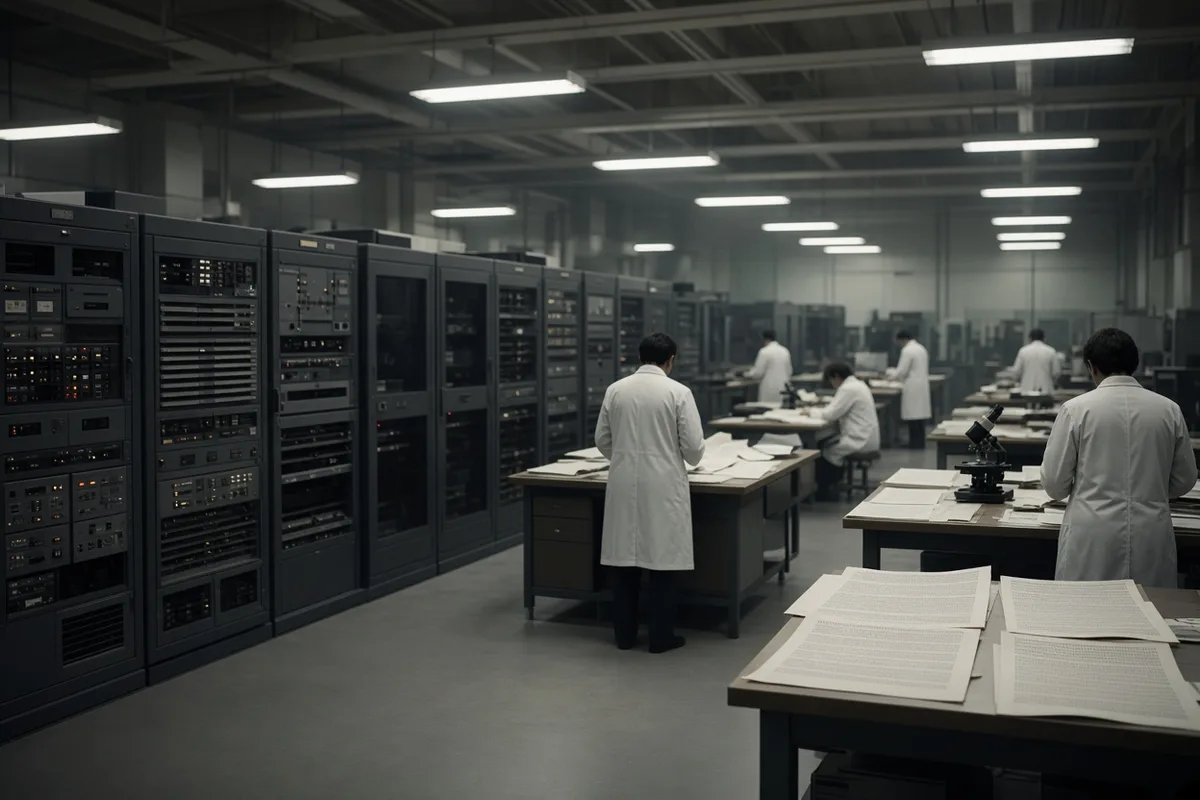
Some of us watched it on a monitor wheeled into the break room, coffee cups going cold, because not everyone who ran a gel for eight years got a seat in the East Room. It didn't matter where you stood. Three billion letters, first draft, done, or done enough to say so out loud in front of the President of the United States. Somebody in the break room started to clap and then felt foolish and stopped, and then somebody else kept going, and then all of us were.
A few days after that, a reporter named Bob Abernethy sat him down for television and asked him, plainly, what kind of Christian he was — mainline, evangelical, something else. He answered that he'd call himself simply a serious Christian, someone who believed in the reality of Christ's death and resurrection and tried to build a whole life around it rather than a Sunday morning. Asked what the genome project promised, he didn't reach for anything grander than the truth: that medicine before this moment and medicine after it would be two different disciplines, that within five to seven years the genetic roots of cancer and diabetes and heart disease and the major mental illnesses would likely be identified, and that in ten or fifteen years treatments built to match those roots, rather than guess around them, would start reaching patients.
Asked if he'd want to live to a hundred and fifty, if the science ever made that possible, he said no, not really — that there seemed to him something fitting about a life having its limits, that he only hoped whatever years he was given would be spent well rather than spent sick. It struck me, hearing it repeated around the building afterward, that a man who had just helped hand the species a longer, healthier road wasn't in any hurry to walk it forever.
He said his greatest hope was smaller than any of the numbers — that he'd spent too much of his career as a doctor standing beside patients he couldn't diagnose and couldn't treat, and that this project, the whole exhausting decade of it, existed to change that math for the doctors coming after him. Not immortality. Just fewer bedside silences like the one that started him on all this in the first place.
I left the institute a few years after the White House ceremony, the way most of us eventually left, carried off into other labs and other lives, but I still think about that lot in the mornings — the Nighthawk parked at an angle, the helmet under one arm, the six-foot-four frame heading for an elevator with a coffee in the other hand, no visible seam between the man who had once had no answer for a dying woman's question and the man who would spend the next decade insisting that knowledge and belief could sit at the same bench without one having to apologize to the other.
The letters are still being read. Cancer, diabetes, heart disease, the diseases on that long list he named in June of 2000 — some of them cured, most of them still only better understood, which in medicine can look almost the same from a distance and feel entirely different up close. The instruction book got copied. Nobody has finished translating it. Somewhere in that gap between the copying and the understanding, I picture him still, not at a podium, not on a motorcycle, but at the edge of a bed, this time with an answer ready.