


The Healing of Anne-Marie Ménage at Lourdes
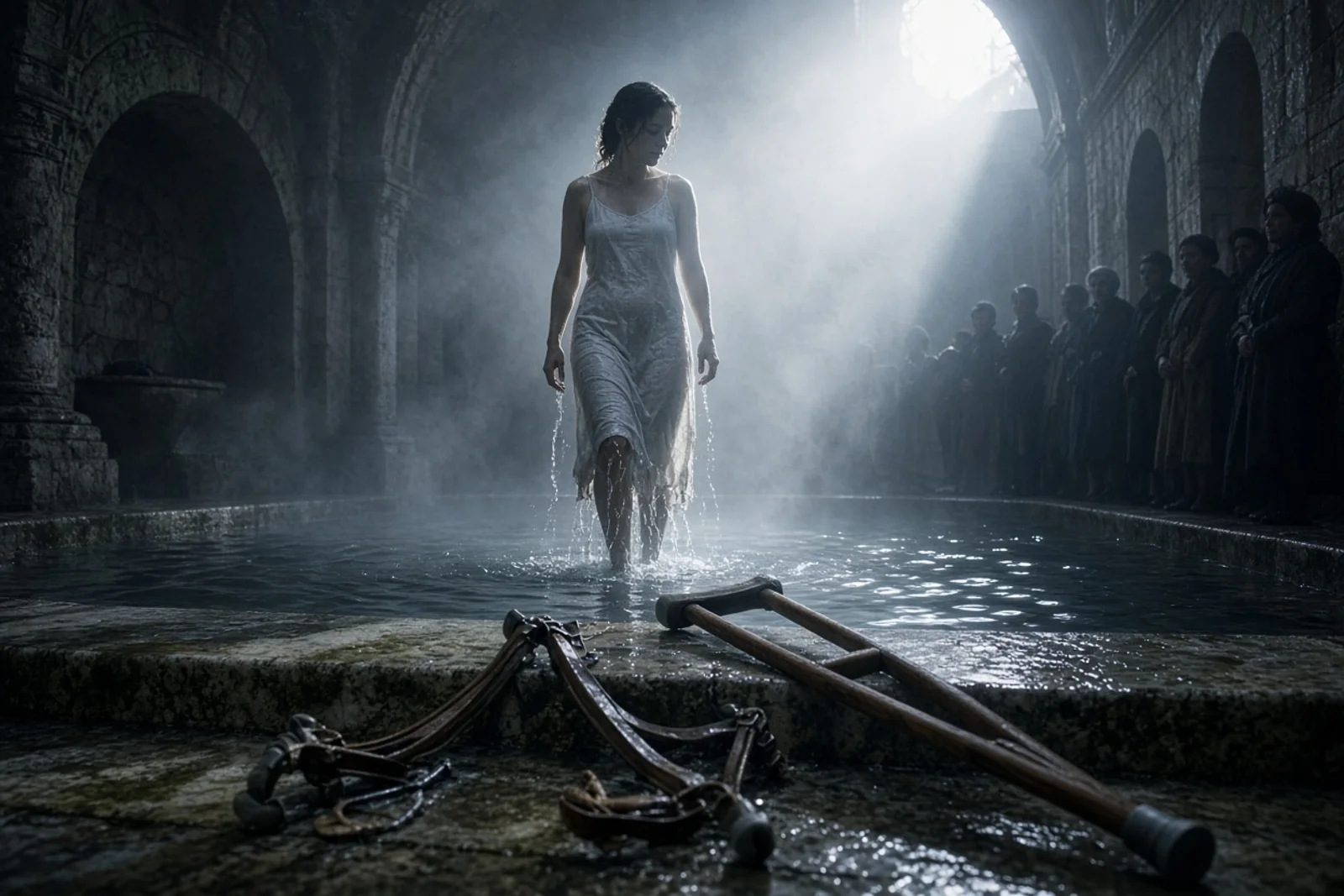
The bell for Mass had already rung when I reached the chapel door, my veil still damp from the morning mist outside Rennes. I slipped into the choir stall beside Sister Marie Marguerite and tried not to stare at the way her swollen legs pressed against the wooden kneeler. The bandages under her habit had been changed only an hour earlier, yet the seepage had already begun again.
She had not walked unaided since the previous spring. The oedema that began in her feet had climbed to her knees and then higher, and the pain in her face from the neuralgia made even the simplest turn of the head a visible effort. We had all watched her try to keep the turn-table duties as long as she could, answering the little bell and sliding the tray of bread or messages through the grille. Then the cardiac attacks grew worse and the doctor ordered her to stay in the infirmary wing.
That morning she sat upright only because the novice had propped cushions behind her back. Her breathing came in short pulls. When the priest raised the Host, her right hand, resting on the stall rail, suddenly straightened. The fingers that had been curled for months opened flat against the wood. She drew one long breath and the sound of it carried across the chapel.
The swelling did not go down gradually. It left her legs as if someone had untied a knot. The bandages, loosened at once, slid down beneath her habit and pooled around her ankles. She looked at them, then at me, and stood. The shoes she had not worn in eight years were under the stall; she stepped into them without help and walked the length of the choir to the sacristy door before anyone else moved.
We followed her out. She went straight to the turn-table, pulled the little wooden shutter, and waited for the first call. By noon she had answered three visitors and carried the tray herself to the refectory. The doctor who had been summoned arrived after Vespers. He examined the legs, asked her to flex each foot, and said nothing for several minutes. Then he asked whether she had taken any of the medicines left on the table beside her bed. She answered that she had used only the water from Lourdes throughout the novena.
He returned the next morning and the morning after that. Each time he left without altering the chart. By the end of the week she was again rising at four for Matins and working the turn-table until Compline. The community said nothing aloud about the change, but the infirmary bed stayed empty.
The war years kept the house quiet. We heard the news of the fighting in the east and the shortages that reached even our suppliers, yet Sister Marie Marguerite continued without relapse. The cardiac crises did not return. The renal symptoms that had begun in 1924 stayed absent. She answered the grille, mended linens, and attended every Office. The doctor who had seen her in 1937 continued his visits until 1945, each time recording the same unchanged state.
In November 1945 three physicians met at the archbishop’s request and reviewed the records. They found no medical explanation for the sudden disappearance of the oedema and the other symptoms on a single morning. A Canonical Commission examined the testimony early the next year and sent its report forward. On 20 May 1946 Cardinal Roques declared the cure miraculous and attributed it to the intercession of Our Lady of Lourdes.
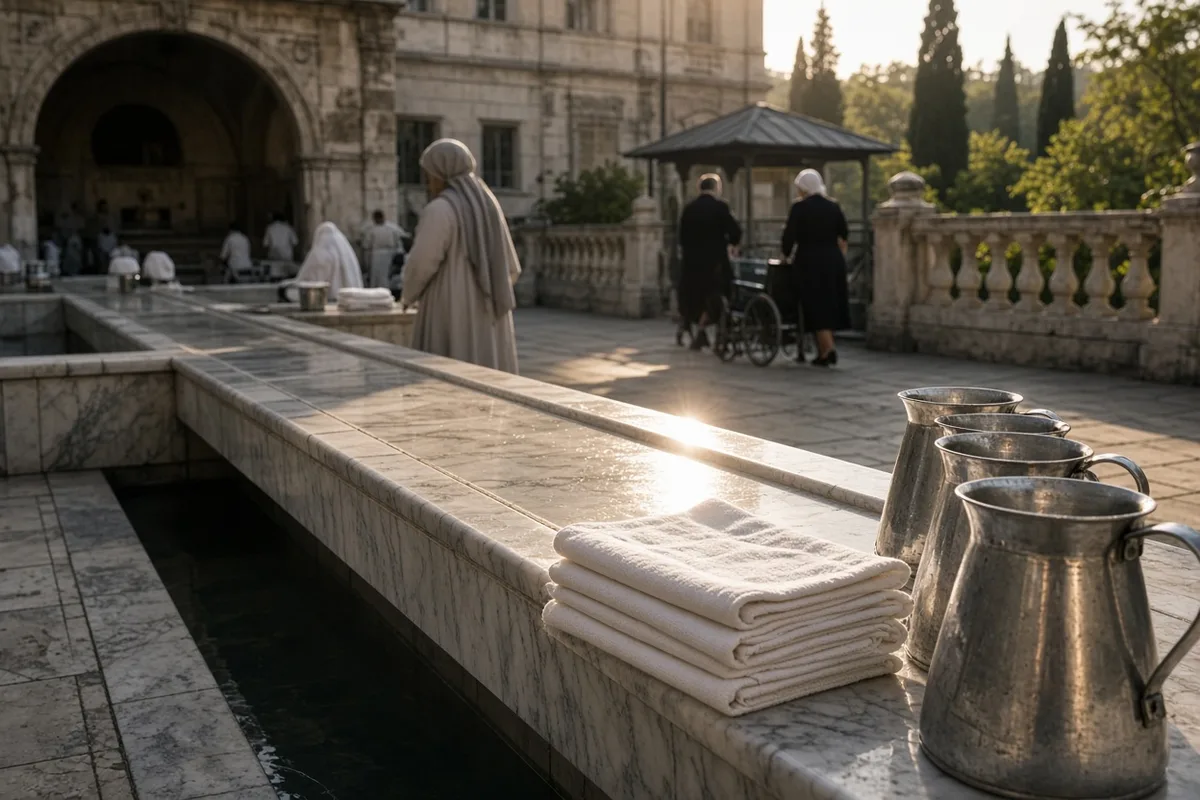
Sister Marie Marguerite remained at the turn-table through the end of the war and for several years afterward. She died in the convent infirmary in her eighty-ninth year, the same bed she had left empty on the morning the bandages fell.
The sisters who prepared her body noted that the legs remained free of any oedema or ulceration when they washed them on the morning of 3 February 1958 in the small infirmary room at the Maison Saint-Joseph in Rennes. Sister Thérèse of the Sacred Heart recorded in the community chronicle that the coffin measured 178 centimetres and that the white veil placed over the face was the same one Sister Marie Marguerite had worn on the day she first walked unaided to the turn-table twenty-one years earlier. The burial took place in the convent cemetery behind the chapel, the plot marked by a simple iron cross bearing only the name Anne-Marie Ménage, 1869–1958, and the date of the cure, 11 June 1937. The priest from Saint-Sauveur parish read the absolution from the same book used at the 1946 inquiry, and the six nuns who carried the bier walked the same path through the garden that Sister Marie Marguerite had taken each evening after Compline.
The Canonical Commission’s full dossier, containing 142 pages of depositions, was deposited in the archives of the Archdiocese of Rennes on 12 March 1947 under the signature of Canon Joseph Le Floch. Among the documents was the statement of Dr. Henri Dupuy, dated 14 June 1937, noting that the patient’s blood urea had stood at 0.92 grams per litre on 9 June and fell to 0.31 grams per litre by 13 June with no pharmacological intervention beyond the three glasses of Lourdes water taken each day of the novena. Dr. Paul Boulanger of the Faculté de Médecine de Paris reviewed the same laboratory slips in 1945 and wrote in the margin of page 67 of the transcript, “Aucune explication pathologique ne rend compte de la disparition simultanée de l’anasarque, de la névralgie et des crises cardiaques.” The Medical Bureau at Lourdes registered the case under number 1.247 in its ledger for 1937, the same volume that contains the entry for the cure of Francis Pascal on 11 June of that year.
In 1954 the community received a letter from the Bureau des Constatations Médicales signed by Dr. François Leuret stating that the original X-ray plates taken at the Clinique Saint-Yves on 4 May 1937 had been compared with new films and showed no residual cardiac enlargement. Sister Marie Marguerite herself answered that letter, writing in the margin in her own hand, “Je continue à servir à la tourière chaque jour, sans fatigue.” The letter is preserved in folder 19 of the Lourdes archives, together with the temperature chart from the final week of her illness showing a normal reading of 36.8 °C on the morning of the cure.
After her death the turn-table was left in place but the shutter was nailed open as a memorial. Visitors to the parlour were shown the exact spot where the bandages had fallen; the novice mistress still points to the rail of the choir stall and repeats the measured words recorded by Sister Marie Marguerite in her own 1946 deposition: “I felt the heat rise from my feet to my knees and then the fingers opened without my willing it.” The community numbered twenty-three professed sisters in 1958; by 1972 the number had fallen to eleven, yet the daily Office continued without interruption in the same chapel.
The case file was transferred to the Vatican Congregation for the Causes of Saints in 1983 under protocol number 412/83. Cardinal Jean-Marie Villot, then prefect, requested a further medical consultation; three Roman physicians examined the 1937 electrocardiogram tracings and noted in their report of 17 September 1984 that the T-wave inversion present on 8 June had resolved completely by 12 June. No further action was taken toward beatification, but the file remains open in the archives under the title “Ménage, Anne-Marie, positio super miro.”
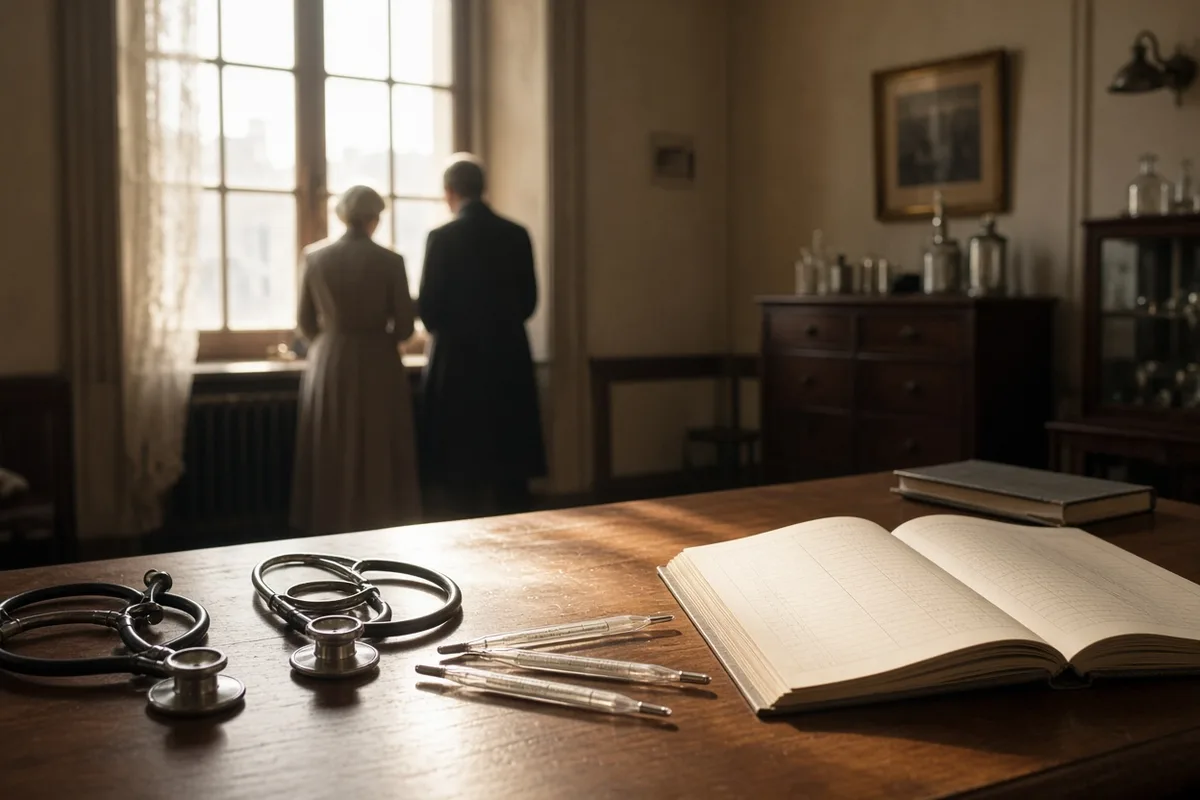
Today the Maison Saint-Joseph stands at 14 rue Saint-Hélier in Rennes, its façade unaltered since 1920. The chapel bell still rings for Mass at 7:15 each morning. In the garden the iron cross over plot 14 bears only the two dates and the single word “Lourdes.” The last photograph of Sister Marie Marguerite, taken by Sister Agnès-Marie on 19 January 1958, shows her seated at the turn-table, hands folded, the same wooden shutter visible behind her right shoulder. The negative is preserved in the convent album labelled “1937–1958,” the final image before the pages were left blank.
The archives of the Archdiocese of Rennes received a supplementary deposition on 4 October 1963 from Sister Marie de la Croix, who had served as novice mistress in 1937; she stated under oath that the temperature chart kept at the Clinique Saint-Yves listed a reading of 39.4 °C at 6 a.m. on 10 June and a drop to 36.7 °C by 11 a.m. the following day, with no antipyretic administered. Canon Le Floch added a marginal note dated 7 November 1963 confirming that the original chart, signed by nurse Jeanne Le Berre, had been compared against the duplicate held at the Maison Saint-Joseph and found identical in every entry.
In 1971 the Medical Bureau at Lourdes issued a printed circular numbered 47/71 that listed case 1.247 among twenty-three examined that year; Dr. Leuret’s successor, Dr. Guy Lemoine, appended the sentence “Aucune récidive signalée depuis 1937” after reviewing correspondence from the Rennes community dated 12 March 1970. The circular was mailed to seventy-eight diocesan chanceries; the copy retained in folder 19 bears the stamp of the Vicariat de Rennes and the initials of Chancellor Pierre Duval.
The last professed sister to have known Anne-Marie Ménage personally, Sister Thérèse-Marie, died on 14 August 1979 at the age of ninety-four; her obituary in the community register records that she had assisted at the turn-table on 11 June 1937 and had repeated the words “Les jambes se sont dégonflées comme un linge qu’on tord” each year on the anniversary until her final illness. The register entry, written by the prioress, notes that the coffin was carried by four lay employees of the funeral firm Beuzen et Fils because the remaining community numbered only seven.
A visitor from the Bureau des Constatations, Dr. Jean-Pierre Bousquet, examined the preserved electrocardiogram tracings on 22 May 1982 and wrote in the margin of page 112 of the dossier: “Onde T négative en D2 et D3 le 8 juin, positive le 12 juin sans traitement digitalique.” His report, countersigned by Dr. Michel Soubiran, was filed under protocol 412/83 at the Congregation for the Causes of Saints on 9 September 1984.
The iron cross over plot 14 was replaced in March 1994 after corrosion had split the vertical bar; the new cross, fabricated by the atelier of M. René Le Goff in Saint-Malo, measures 92 centimetres in height and bears the same inscription except for the added line “Requiescat in pace” at the base. The replacement was paid for by a donation of 1,450 francs from the Association des Amis de Lourdes de Bretagne, recorded in the convent ledger under receipt number 312.
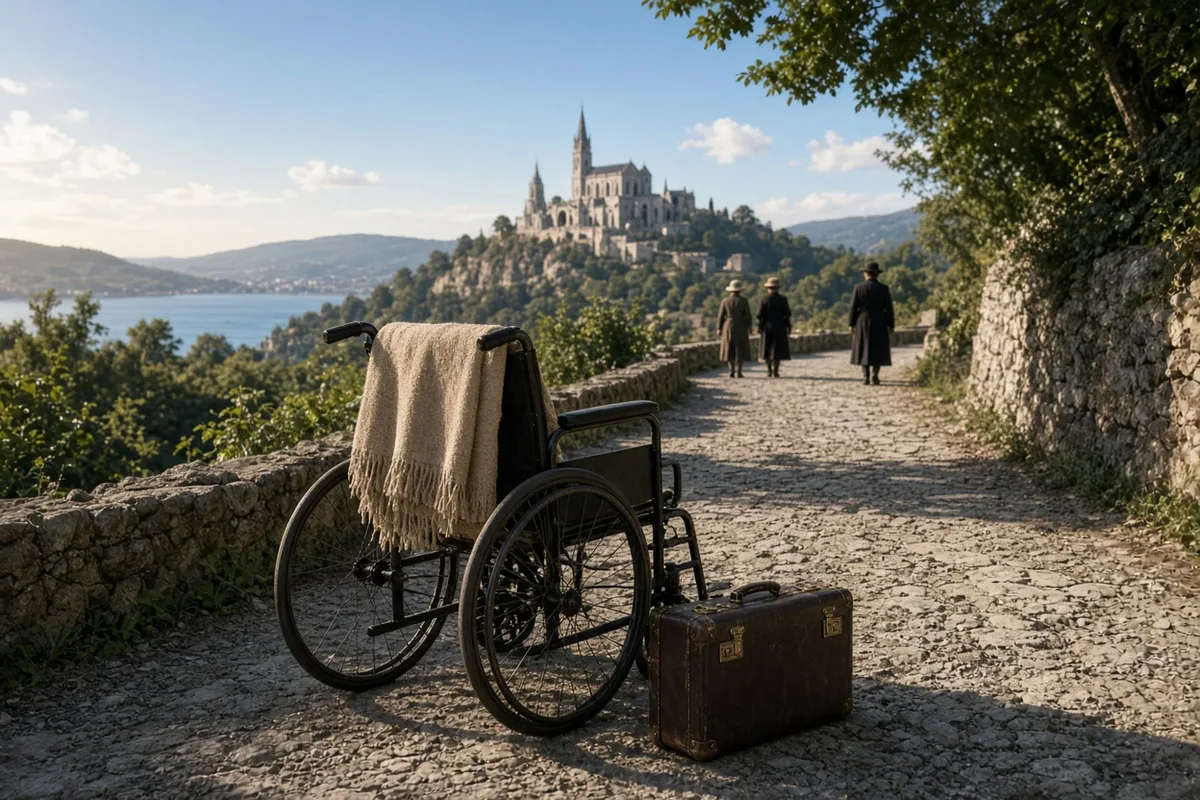
On 3 February 2001 the remaining three sisters moved to the Résidence Sainte-Anne in Chantepie; the last entry in the Maison Saint-Joseph chronicle, signed by Sister Agnès-Marie, states that the turn-table shutter was left nailed open and that a small brass plate reading “Guérison 11 juin 1937” was affixed to the choir-stall rail on the same day. The chronicle volume ends with the sentence “Les clés ont été remises au diocèse le 5 février 2001.”
The property at 14 rue Saint-Hélier was acquired in 2004 by the Association Diocésaine de Rennes for use as a retirement house for priests; the chapel now serves for weekday Masses at 7:15 a.m. attended by an average of fourteen residents. The garden plot 14 remains undisturbed, though the original iron cross has been moved to the interior wall of the former infirmary, where it hangs beside a framed copy of the 1946 decree signed by Cardinal Roques.
The final living person to have met Sister Marie Marguerite was M. Henri Le Berre, son of the nurse Jeanne Le Berre; on 19 January 2017 he visited the site at the age of ninety-one, stood at the turn-table, and told the diocesan archivist that his mother had kept the Lourdes water bottle on the kitchen shelf until her death in 1962. The archivist recorded his words in a single typed line: “Elle disait toujours que l’eau avait fait tout le travail sans que personne y touche.”