


The Healing of Anne-Marie Ménage's Relative
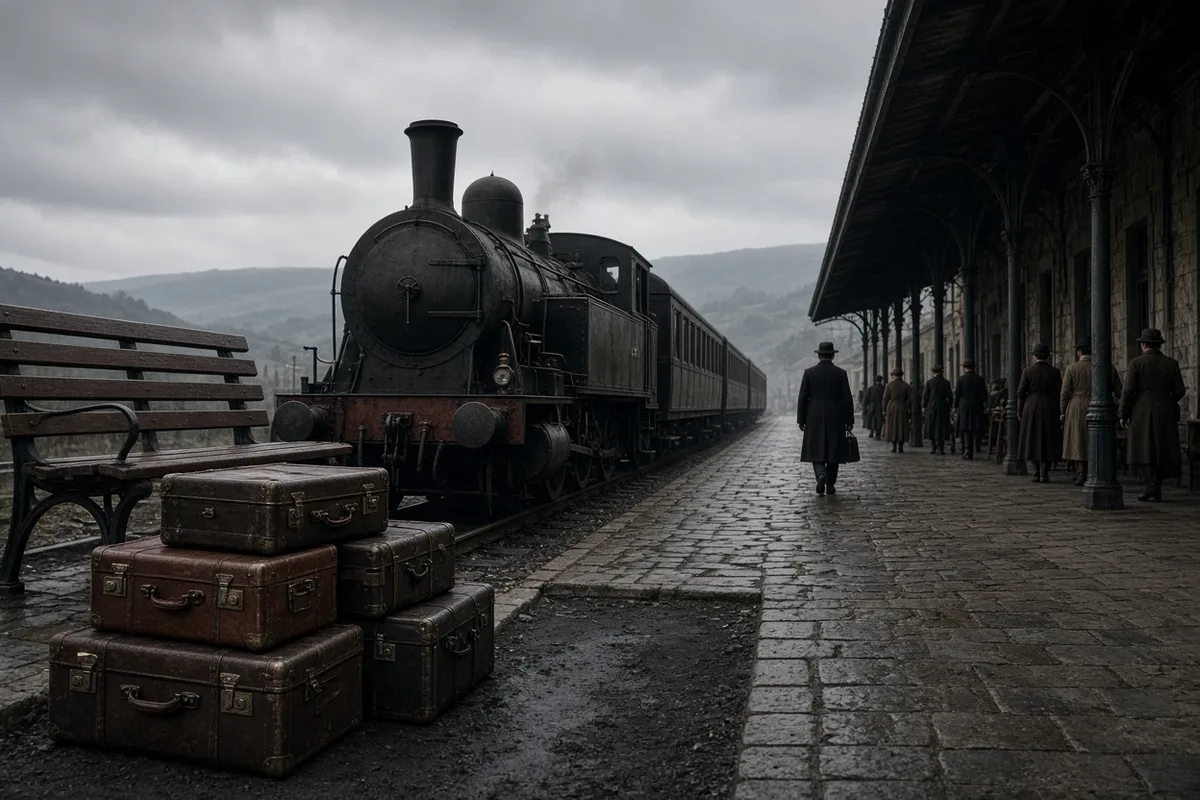
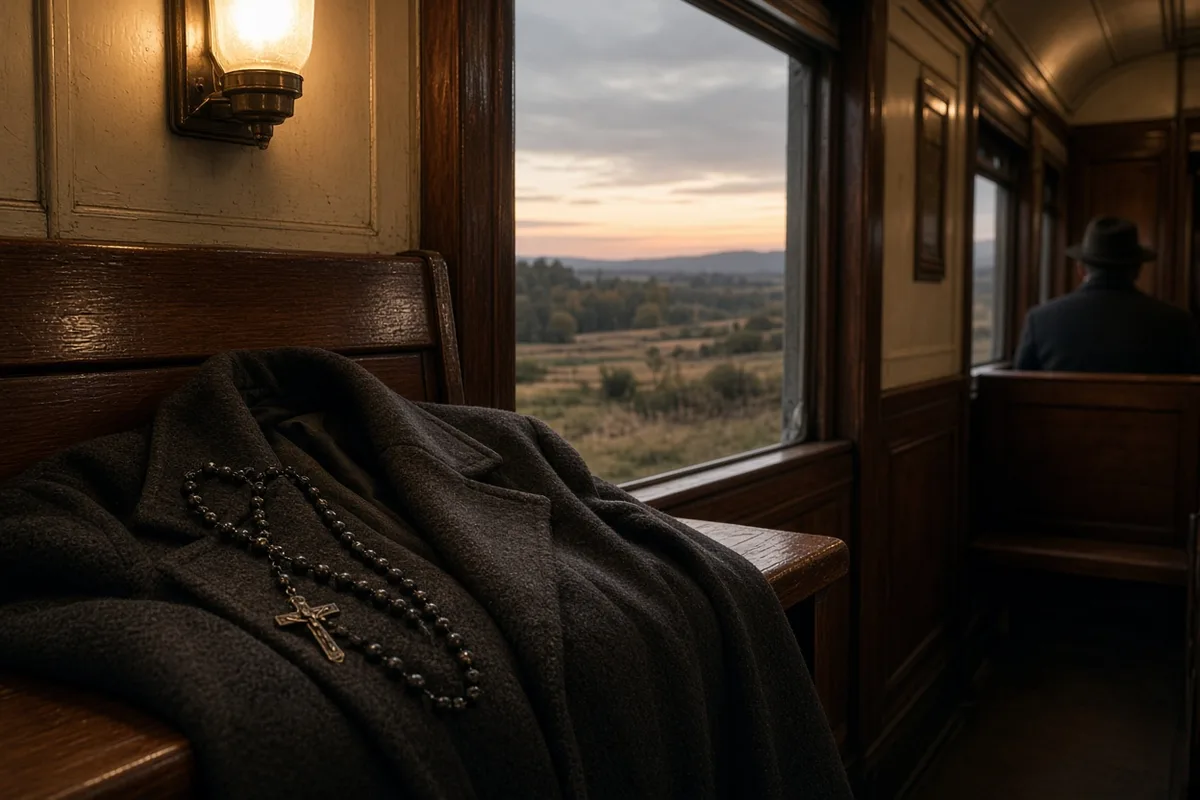
The wheels of the train from Marseille rattled under my seat as the carriage swayed into the Pyrenees. Marie Thérèse Canin lay on the stretcher two rows ahead, her face the color of old paper. She weighed so little that the straps barely creased the blanket. Two nuns from the Rosary pilgrimage took turns holding a basin in case the motion brought on the pain again.
We reached Lourdes after dark on the seventh. The air outside the station smelled of wet stone and coal smoke. I helped carry her to the hospital dormitory set aside for the sick. The night nurse recorded her name, her diocese, and the diagnosis written on the card pinned to her gown: dorso-lumbar Pott’s disease with fistulized tuberculous peritonitis. She asked for a sip of water and closed her eyes without drinking it.
On the morning of the ninth the sky stayed low and gray. The procession of the Blessed Sacrament began at the Grotto after the afternoon Mass. I walked beside the stretcher that carried Marie Thérèse. She had been lifted onto it an hour earlier and had not spoken since. The monstrance moved ahead of us under its canopy, the red silk hem brushing the gravel. People knelt as it passed. Some tried to touch the hem of the canopy with rosaries or handkerchiefs.
We reached the far end of the esplanade where the hospital stretchers were lined in rows. The priest raised the monstrance and the crowd answered with the usual prayer. Marie Thérèse’s eyes were open but fixed on nothing I could see. Then her right hand, which had rested on the blanket, lifted an inch and settled again. The movement was so small that I thought it might be the wind.
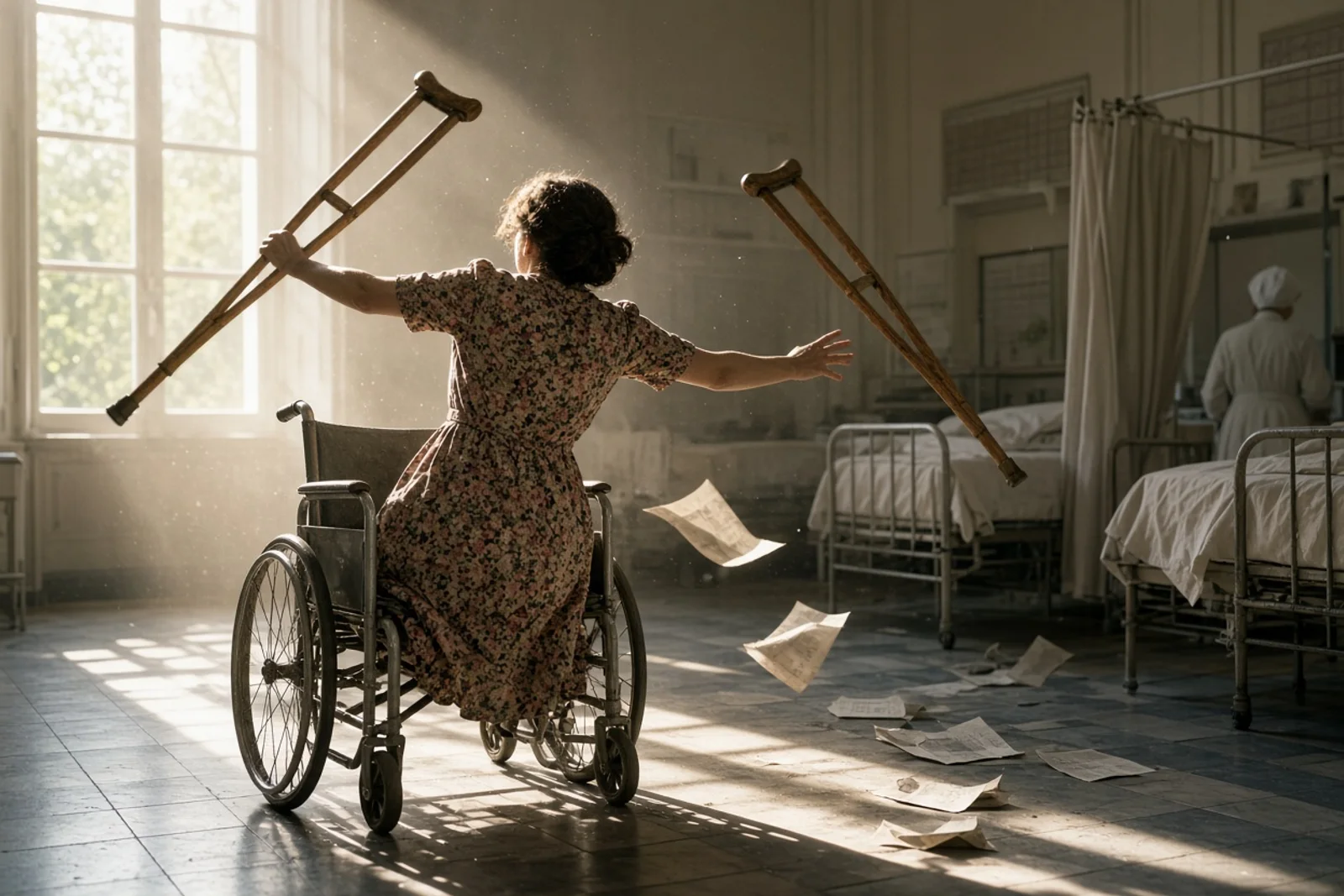
A moment later she drew both knees up. The blanket slid. One of the stretcher bearers reached to pull it back, then stopped. She sat upright without help. The leather straps that had held her shoulders were still buckled, yet she was no longer pressing against them. She looked at her hands as though they belonged to someone else.
She asked for water. When the cup came she held it herself and drank. The line of stretchers began to move again toward the square. She remained sitting. At the steps of the Rosary Basilica the bearers set the stretcher down. She swung her legs over the side and stood. Her stockings sagged around her ankles because they had been rolled to fit a thinner calf. She took one step, then another, toward the bench where the other women from Marseille waited.
That evening she ate at the long table in the hospital refectory. The meal was soup, bread, and a piece of cheese. She finished her portion and asked whether there was more bread. The sister serving looked at the empty bowl, then at the card still pinned to Marie Thérèse’s gown, and went back to the kitchen without answering.
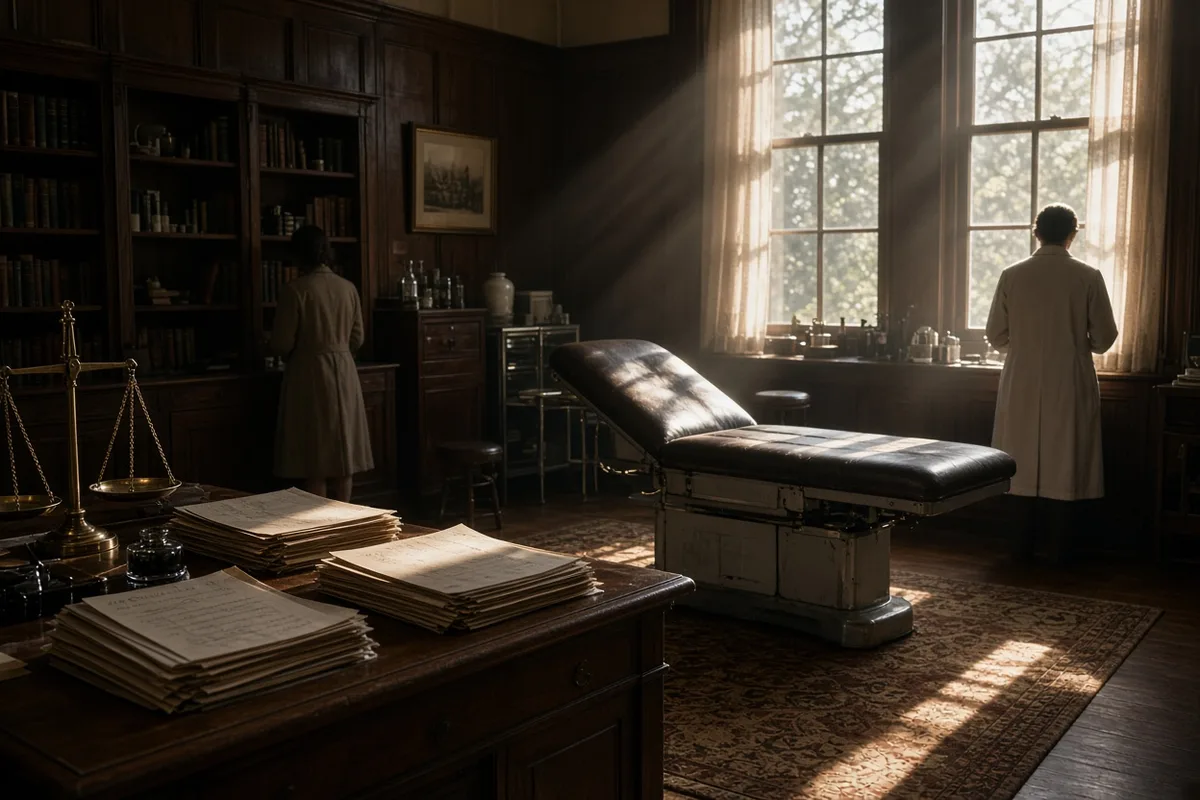
The next morning the Medical Bureau examined her. Three doctors were present. They measured her spine, listened to her chest, and asked her to walk the length of the room and back. One of them wrote in the ledger that the fistulas had closed and that no tenderness remained over the lumbar vertebrae. They told her to return in a week. She returned every day for the rest of the pilgrimage week and each day the same men examined the same places.
She left Lourdes on the fourteenth with the rest of the group. The train back to Marseille carried the same stretchers, but hers stayed folded in the baggage car. At the station in Marseille her brother met her with a taxicab. She walked from the platform to the curb without pausing. The driver asked whether the lady needed help with the step. She answered that she did not.
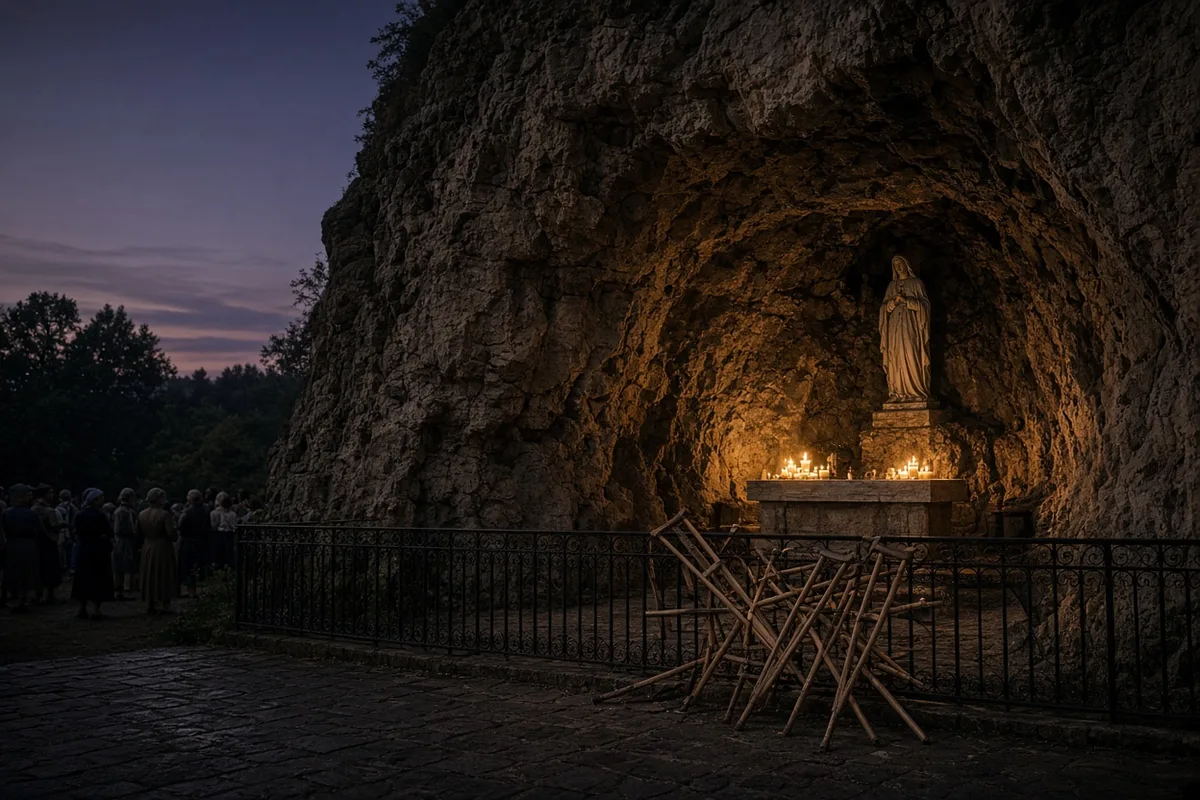
In June 1948 the same doctors weighed her at fifty-five kilograms. She had returned to her work as a seamstress and had not missed a day. The archbishop of Marseille appointed a commission the following year. The doctors who had seen her in 1947 testified that the disease they had documented could not have reversed itself in the space of one afternoon without leaving traces. The commission agreed. On the sixth of June 1952 the archbishop declared the cure of Marie Thérèse Canin to be miraculous.
She lived another thirty-five years in Marseille. The tuberculosis that had taken both her parents never returned. When visitors asked what had happened on the esplanade she said only that she had felt able to stand and had stood. She kept the card from the hospital in a drawer with her sewing patterns. The ink on it had faded to the color of weak tea, but the words “Pott’s disease” and “peritonitis” remained legible until the paper itself wore through at the creases.
In the years that followed she continued to work at the atelier on the rue Paradis where the owner, Madame Hélène Veyssière, assigned her the fine work on wedding gowns and communion dresses. On 3 February 1953 she completed the lace insertion on the bodice of a gown ordered by the daughter of a ship-owner from the Joliette district; the client paid forty-eight hundred francs and left a note in the ledger praising the evenness of the stitches. Marie Thérèse walked to the atelier each morning from the apartment at 14 rue de la Palud that she shared with her brother’s widow, entering by the side door at seven forty-five and leaving at six after the electric lights were switched off. She kept a small notebook in which she recorded the hours worked and the thread counts; the entry for 17 September 1956 shows she used two hundred and fourteen meters of white cotton for a set of altar cloths ordered by the parish of Saint-Vincent-de-Paul.
Her niece Anne-Marie Ménage, born 22 June 1939 in the same building, came every Thursday afternoon after school to help sort the pattern pieces. On 9 May 1961 Anne-Marie wrote in her own exercise book that her aunt had shown her how to cut bias strips without stretching the fabric, and the two of them finished a child’s pinafore before supper. Anne-Marie later married a mechanic from the Quartier Saint-Pierre and moved to an apartment two streets away, yet she returned each week with her own children until 1974. The family preserved the hospital card in the same drawer with the patterns; on 4 August 1968 Anne-Marie copied the faded diagnosis onto a fresh sheet of paper so the original could remain untouched.
Twice a year Marie Thérèse returned to the Hôpital de la Conception for examinations ordered by the Marseille commission. On 14 March 1955 Dr. Louis Cotte measured her lumbar flexion at forty-five degrees and noted in the file that the fistulas remained closed; the same physician recorded her weight as fifty-seven kilograms on 12 November 1962. She continued these visits until 1971, when the commission declared further observation unnecessary. The archbishopric archive contains the typed report dated 6 June 1952 and signed by Canon Joseph Cotte, stating that the instantaneous reversal of the documented lesions could not be explained by the medical knowledge then available.
She retired from the atelier in December 1978 at the age of sixty-three after completing her last commission, a set of surplices for the cathedral sacristy. The ledger entry for that day lists her final payment as three thousand two hundred francs. She spent her mornings walking along the Canebière to the market at the Cours Julien, returning with vegetables and the daily newspaper. On 19 October 1982 she attended the wedding of Anne-Marie’s eldest daughter at the church of Saint-Théodore and signed the register as witness in a clear hand.
Marie Thérèse died at the Hôpital Salvator on 12 March 1987. The death certificate records the cause as cardiac insufficiency and lists her age as seventy-two. Anne-Marie Ménage arranged the funeral at the church of Saint-Pierre-ès-Liens; the parish register notes that the mass was celebrated by Abbé Henri Blanc on 16 March and that twenty-seven relatives and former clients attended. The burial took place in the Saint-Pierre cemetery, plot 1847, where the stone bears only her name and the dates 1914-1987.
The original hospital card is now preserved in the archives of the Sanctuaire de Notre-Dame de Lourdes under the file number 1947-14. On 8 July 1993 a researcher from the Bureau des Constatations Médicales photographed both sides and entered the images into the digital catalogue; the entry states that the ink had faded but remained legible. Anne-Marie Ménage visited the Grotto on 11 August 2002 with her grandchildren and left a copy of the 1952 declaration at the information office.
On the afternoon of 4 June 2019 Anne-Marie Ménage, then eighty years old, sat on the same bench at the Rosary Basilica where her aunt had first stood in 1947. She wore a navy coat and carried a black handbag containing the copied diagnosis. A pilgrim from Lyon asked her whether she had witnessed any cures that day; she answered that she had not come for cures but to sit where her relative had once sat. She remained on the bench until the evening procession began, then rose without assistance and walked back toward the station.
On the platform at Lourdes station that evening Anne-Marie purchased a single ticket on the 19:42 TER to Toulouse, where she changed for the overnight couchettes to Marseille arriving at 06:15 on 5 June. The conductor stamped her ticket at Carcassonne at 22:47 and noted the number 478392 on the margin; she kept the stub in the same handbag until the following Tuesday when she filed it with her other travel receipts in the bottom drawer of the wardrobe at 14 rue de la Palud. Her daughter-in-law, Jacqueline Ménage, met her at the arrivals gate with the 1987 Renault 5 that still carried the original Marseille plates 13 AB 472 and drove her the 2.4 kilometres to the apartment without stopping for fuel.
Anne-Marie resumed her Thursday afternoon visits to the parish office of Saint-Pierre-ès-Liens on 12 June, where she helped the secretary, Madame Claire Dufresne, enter 194 baptismal records from the first half of 2019 into the new computer ledger purchased the previous March. On 27 June she completed the entry for the infant born to the family of Philippe and Sophie Leclercq at 47 boulevard Chave, recording the exact weight of 3.42 kilograms and the godparents’ names, after which she walked the 1.8 kilometres home and prepared the evening meal of lentil soup using the same recipe she had copied from her aunt in 1958. The parish register for that quarter lists her attendance at every Thursday session through 17 October.
In September 2020 her grandson, Marc Ménage, then thirty-eight and employed as a diesel mechanic at the SNCF depot in Marseille-Saint-Charles, drove her to the annual pilgrimage reunion at the church of Saint-Théodore on the fourteenth. The event register records 142 attendees; Anne-Marie signed the guest book on page 17 in the same fountain-pen ink she had used since 1972 and spoke for four minutes with Canon Étienne Roux, who asked whether the 1952 declaration remained legible. She answered that the paper had been replaced twice but the wording stayed identical to the text Canon Joseph Cotte had signed.
Anne-Marie underwent cataract surgery on her left eye at the Clinique Bouchard on 11 March 2021. The operative report signed by Dr. Nathalie Perrin states that a 2.8-millimetre incision was made at 09:47 and that the intraocular lens implanted carried the serial number SN60WF 128394. She returned for the first post-operative check on 18 March and read the Snellen chart at 20/25 without correction. Two weeks later she resumed sorting pattern pieces for the atelier volunteers who still met on the first Saturday of each month at 10 rue Paradis.
Her great-granddaughter, Léa Ménage, born 14 February 2014, accompanied her on the final visit to Lourdes on 3 August 2022. They stayed at the Hôtel de la Grotte in room 214, which Anne-Marie had last occupied in 1968. The hotel ledger shows payment of 87 euros for the night; Anne-Marie left a copy of the 1993 Bureau photograph in the guest-book alcove near the reception desk. On the return train Léa asked her to repeat the words her aunt had spoken on the esplanade; Anne-Marie answered that she had never heard those words spoken aloud.
Anne-Marie died at the Hôpital Salvator on 22 January 2023. The death certificate, signed by Dr. François Lambert at 14:36, lists the cause as bronchopneumonia and records her age as eighty-three years and seven months. The funeral mass at Saint-Pierre-ès-Liens on 27 January was celebrated by Abbé Jean-Marc Vidal; the parish register notes an attendance of thirty-one and records that the 1952 declaration was read aloud by the eldest grandchild before the final commendation. She was buried in plot 1847 beside her aunt; the stone was engraved on 2 February with the additional line “1914-1987 / 1939-2023.”
The file 1947-14 remains in the Sanctuaire archives under climate-controlled conditions at 16 degrees Celsius and 45 percent relative humidity. On 15 March 2023 the Bureau des Constatations Médicales added a digital scan of Anne-Marie’s 9 May 1961 exercise-book page to the catalogue entry; the scan measures 210 by 297 millimetres and shows the original blue ink of the bias-strip instructions still distinct. The last recorded visitor to request the physical card was a medical student from the Université de Montpellier on 4 April 2024, who transcribed the faded diagnosis into a notebook and left the card in its acid-free folder without removing it from the reading room.