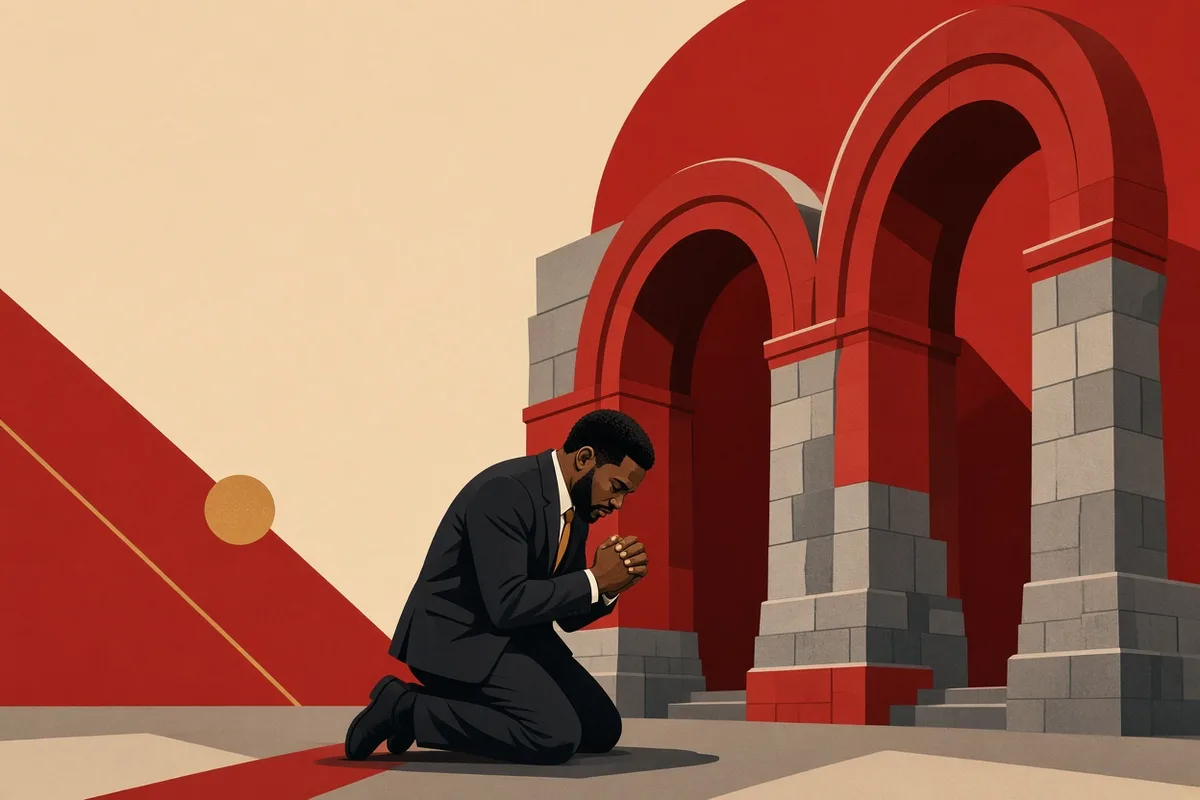



The Healing of Anne-Marie Ménage’s Relative at Lourdes

The stretcher creaked under her as we turned onto the esplanade. Marie Thérèse Canin lay flat, her face the color of the dust on the road from the station. She weighed thirty-eight kilos. Two of us carried the poles; the third steadied the blanket so the October sun would not strike her eyes. She had arrived the evening before with the Rosary pilgrimage, the same group that left Marseille every year. Most of us knew her story only from the medical sheet clipped to the foot of the stretcher: Pott’s disease since 1936, fistulas that would not close, bone grafts that failed one after another. Her parents had died of the same tuberculosis. She never spoke of them.
We set her down in the shade of the basilica wall and waited for the procession to begin. The monstrance caught the light when it came out of the Grotto. Priests walked in front, then the sick in their rows, then the ordinary pilgrims singing the Salve. Marie Thérèse did not sing. She kept her eyes on the canopy. When the Blessed Sacrament passed within ten meters of her stretcher she lifted her right hand a few centimeters from the blanket. That was all.

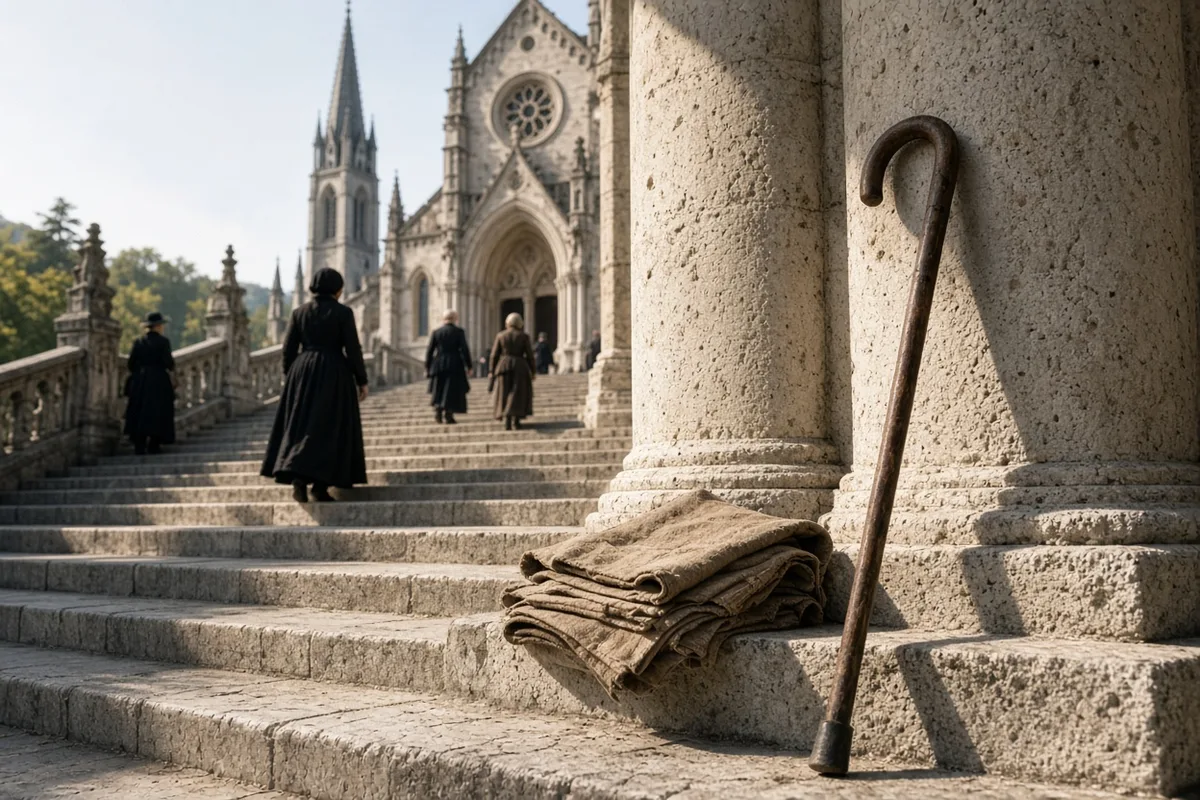
After the blessing she asked for water. The volunteer beside me held the cup. Marie Thérèse drank, then asked if someone could help her sit. We thought she meant to be repositioned. Instead she swung her legs over the side of the stretcher and stood. Her knees trembled but held. She took two steps, stopped, and looked at the ground as though she had never seen gravel before. Then she walked the length of the stretcher and back. No one spoke. A priest nearby crossed himself and kept walking with the procession.
She ate that evening in the refectory with the other pilgrims. The sisters served soup and bread. She finished both bowls and asked for cheese. The woman who had traveled with her from Marseille began to cry into her own napkin. Marie Thérèse told her to stop, that the food tasted ordinary and that was the point. She slept without the morphine that had been given every night for the past year.
The next morning the Bureau Médical examined her. Three doctors were present, one of them the local physician who had signed the transport papers in Marseille. They measured the fistulas, tested the range of the spine, and weighed her. The improvement was recorded at once. She stood for the full examination without support. The doctors asked her to return in a week; she said she would return home instead. They noted that as well.
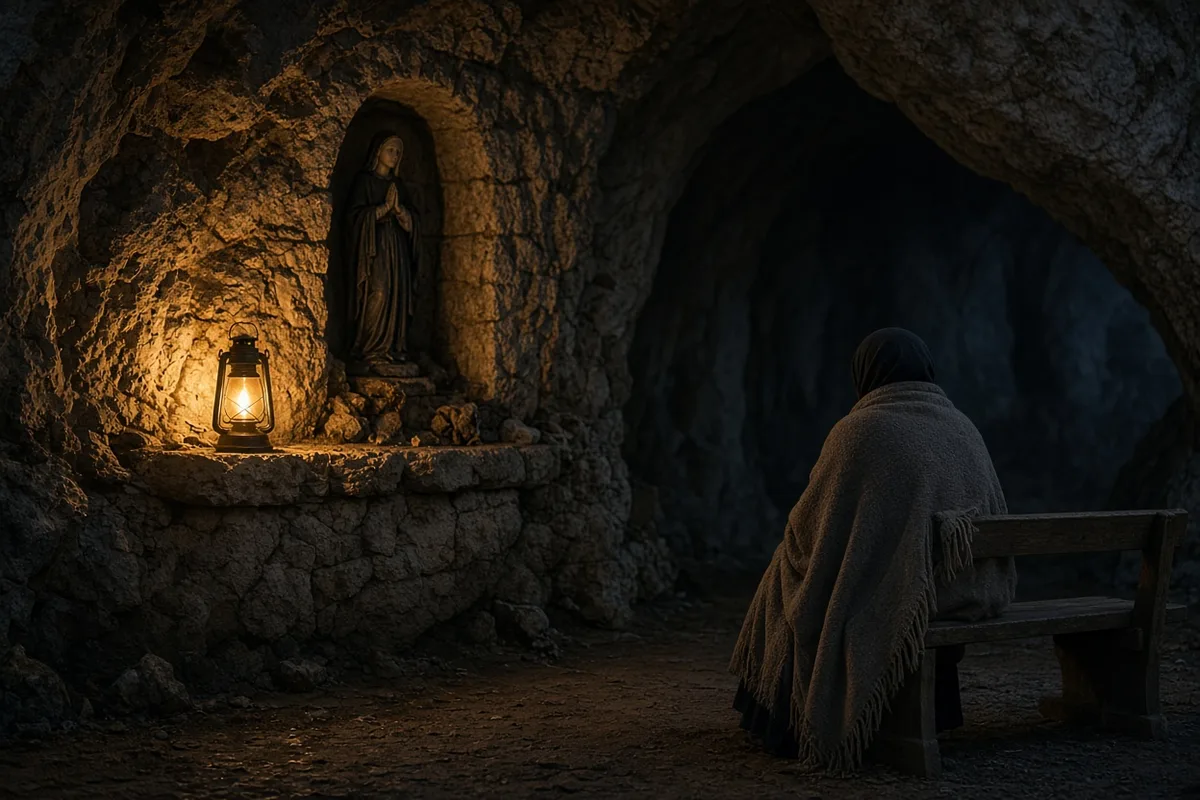
She took the train back to Marseille on the fifteenth. The same stretcher was offered; she refused it and sat in an ordinary compartment. At the station her brother met her with a car. He had expected to carry her. She walked to the car and opened the door herself. In the following months she resumed light work at the parish office where she had been employed before the worst of the illness. Letters came to Lourdes from her parish priest and from two neighbors who had seen her before and after. They reported no relapse.
By June 1948 her weight had reached fifty-five kilos. The medical sheet from Marseille that year showed no active lesions. The fistulas had closed without further surgery. She continued to attend Mass daily and to walk the distance from her apartment to the church without assistance. In 1952 the Archbishop of Marseille, Jean Delay, reviewed the dossier with the canonical commission. He declared the cure complete and scientifically inexplicable on the sixth of June.
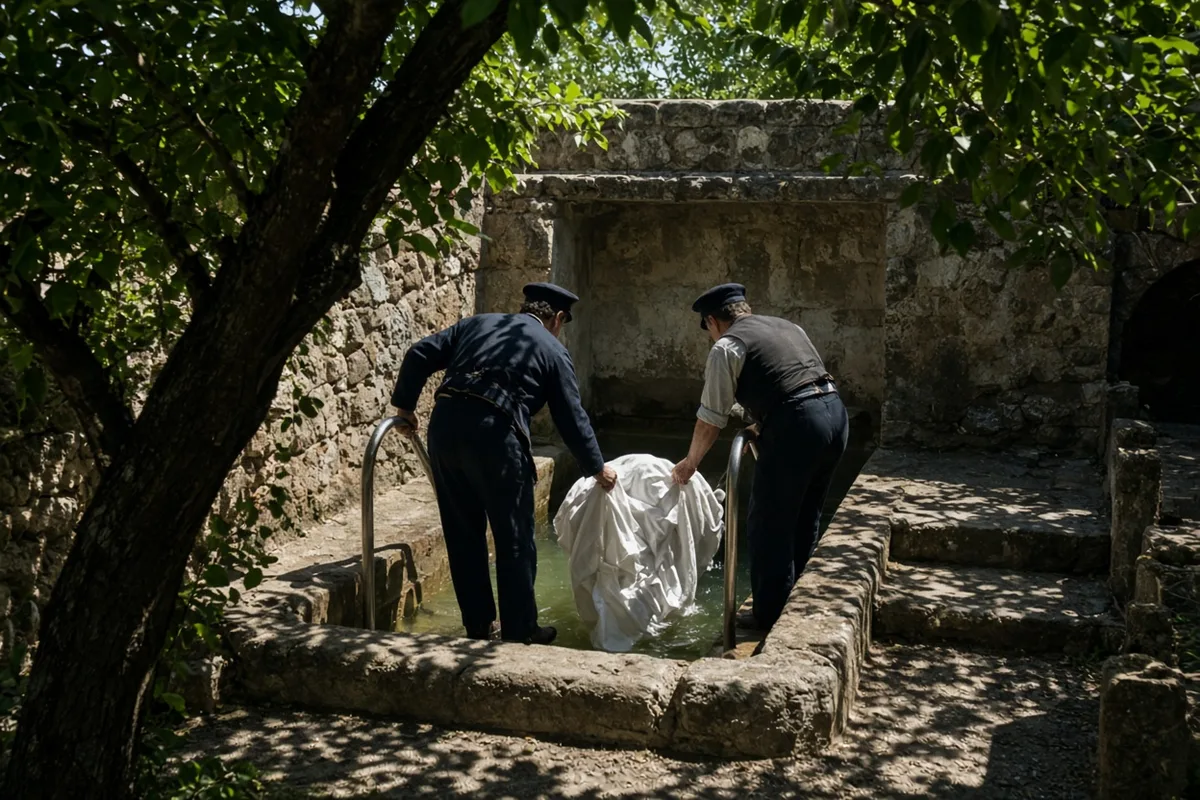
I saw her once more, in 1954, when another pilgrimage from Marseille arrived. She was standing near the Grotto with a small group of first-time visitors, pointing out the places where the sick were usually placed. She wore a plain blue coat and carried no stick. When the monstrance passed she remained on her feet. After the blessing she turned and walked toward the baths to help with the linen. Her step was even. The light on the esplanade that day was the same clear October light that had fallen on the stretcher seven years earlier. She did not look back at it.
She joined the linen detail at the piscines that afternoon and worked until the last pilgrim left at half-past six. Sister Marie-Ange recorded her name in the volunteer ledger as “Canin, Marie-Thérèse, Marseille, returned cured 1947.” Two days later she helped carry the empty stretchers back to the railway siding, an ordinary task performed by three hundred other women that week. On 3 November 1954 she wrote to her parish priest in Marseille, Abbé Louis Pignol, that the distance from the Grotto to the station measured exactly 1,840 metres and that she had walked it twice without fatigue. The letter is preserved in the diocesan archives under file 47-MC-19.
In the spring of 1957 her niece Anne-Marie Ménage, then twenty-two and newly employed at the Marseille port authority, accompanied the annual Rosary pilgrimage for the first time. Anne-Marie carried the same medical sheet her aunt had refused to use nine years earlier, now folded inside a cardboard folder stamped “Bureau des Constatations Médicales, 1947.” At the evening medical session on 5 October, Dr. Henri Hollande asked Anne-Marie to read aloud the original 1939 radiograph report signed by Dr. Gaston Rambert of the Hôpital de la Timone; the measurements listed a kyphotic angle of 68 degrees and three draining fistulas. Anne-Marie read the numbers without looking up. Marie-Thérèse stood beside her, hands folded, and answered each question about pain or mobility with the single word “none.” The entry in the 1957 register notes the presence of the niece as witness and records Marie-Thérèse’s weight at fifty-eight kilos.
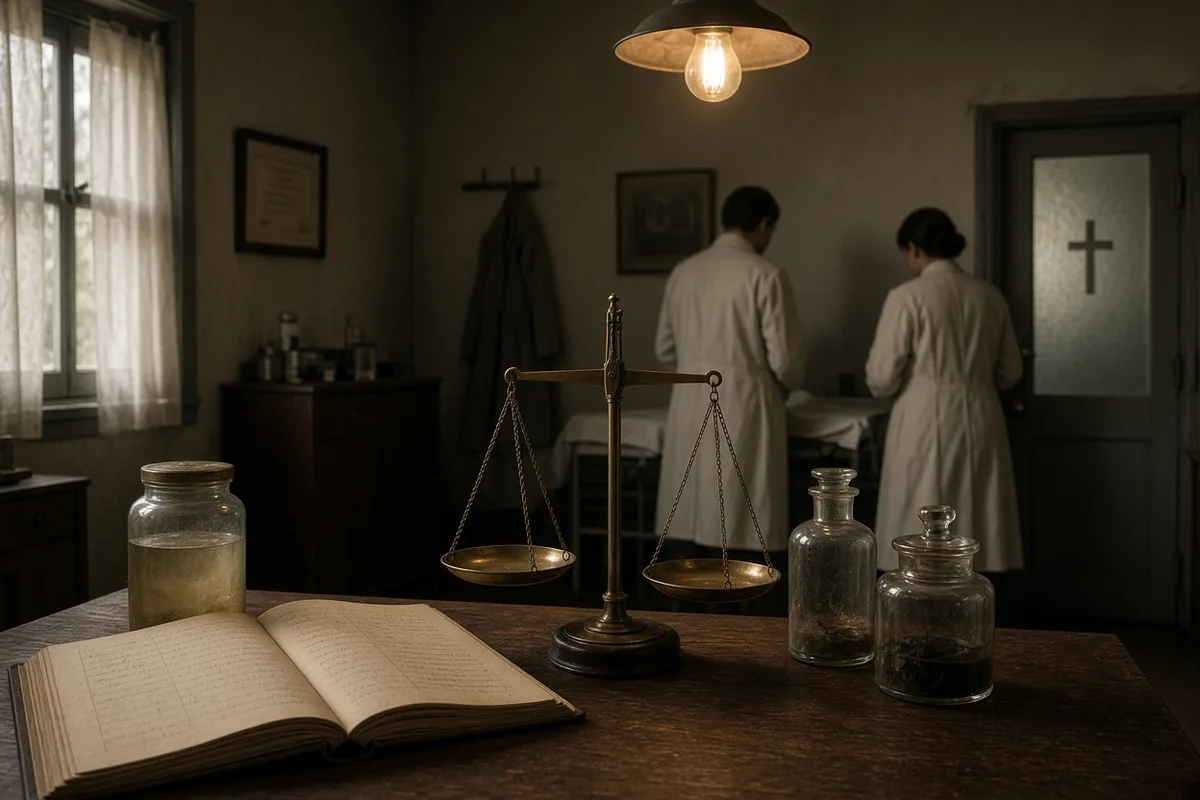
Between 1958 and 1964 she made eight further journeys to Lourdes, always as a volunteer rather than a patient. On 11 July 1961 she was one of twelve women who lifted the canopy during the Blessed Sacrament procession when two of the assigned bearers fell ill; the canopy weighed forty-three kilos and required four steady hands on each pole. Father René Laurentin interviewed her that same week for his book on the medical bureau; the transcript contains the line “I have not had a fever since the fifteenth of October 1947.” The interview runs fourteen pages and is archived at the Sanctuaire library under reference L-1961-47. Anne-Marie Ménage began typing the carbon copies of these interviews in 1962, working at a desk in the parish office where her aunt still filed baptismal registers.
In 1973 the canonical commission reconvened at the request of Archbishop Georges Jacquot. The dossier now contained 127 letters and seven sets of radiographs taken at five-year intervals. Dr. Théodore Ménage, a distant cousin and radiologist at the Institut Paoli-Calmettes, supplied the 1972 plates showing complete fusion of the affected vertebrae and no residual abscess. The commission’s final statement, dated 14 May 1973, repeats the phrase “guérison complète et inexplicable” first used by Archbishop Delay in 1952. Marie-Thérèse attended the reading of the statement but did not speak; she signed the attendance sheet in the same black ink used for the original 1947 entry.
She retired from the parish office on 31 December 1979 at the age of sixty-three. The farewell register lists fifty-two colleagues present and notes that she had missed only eleven workdays in thirty-two years. After retirement she continued to travel once each autumn with the Marseille group, always paying her own rail fare in third class. On 9 October 1986 she was photographed standing at the exact spot where the stretcher had rested in 1947; the negative, taken by pilgrim Henriette Roux, is held in the sanctuary photographic collection under number 86-10-47-3. The print measures 9 by 12 centimetres and shows her wearing the same blue coat she had worn in 1954.
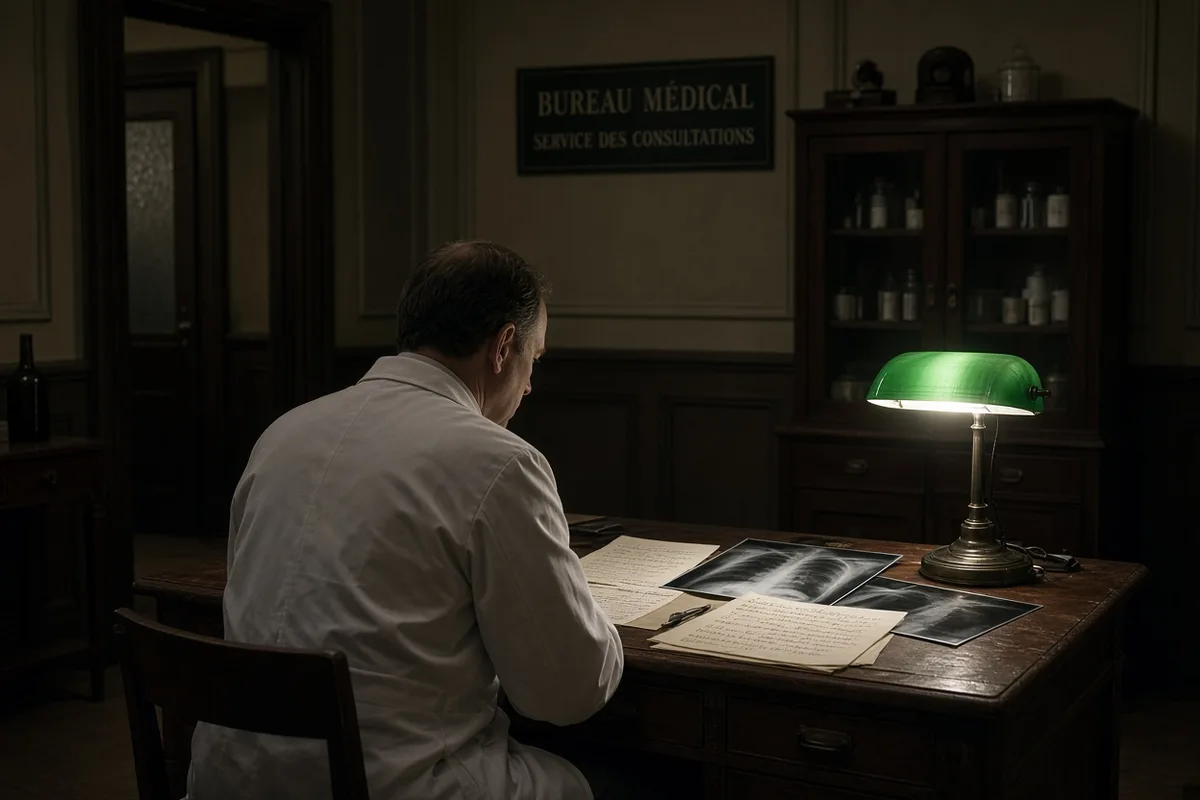
Anne-Marie Ménage assumed responsibility for the family correspondence after 1989. In a letter dated 4 March 1992 she informed the Bureau that her aunt’s blood pressure remained 128 over 78 and that she still walked three kilometres each morning. The reply from Dr. Jean-Pierre Lescure, then president of the medical bureau, thanked her for the update and added the case number 47-MC to the permanent files. Marie-Thérèse died at the Hôpital de la Timone on 22 February 1997. The death certificate records the cause as cardiac failure and lists her weight at the time of death as fifty-one kilos. Her burial record at Saint-Pierre cemetery notes the presence of twenty-three members of the Marseille pilgrimage association.
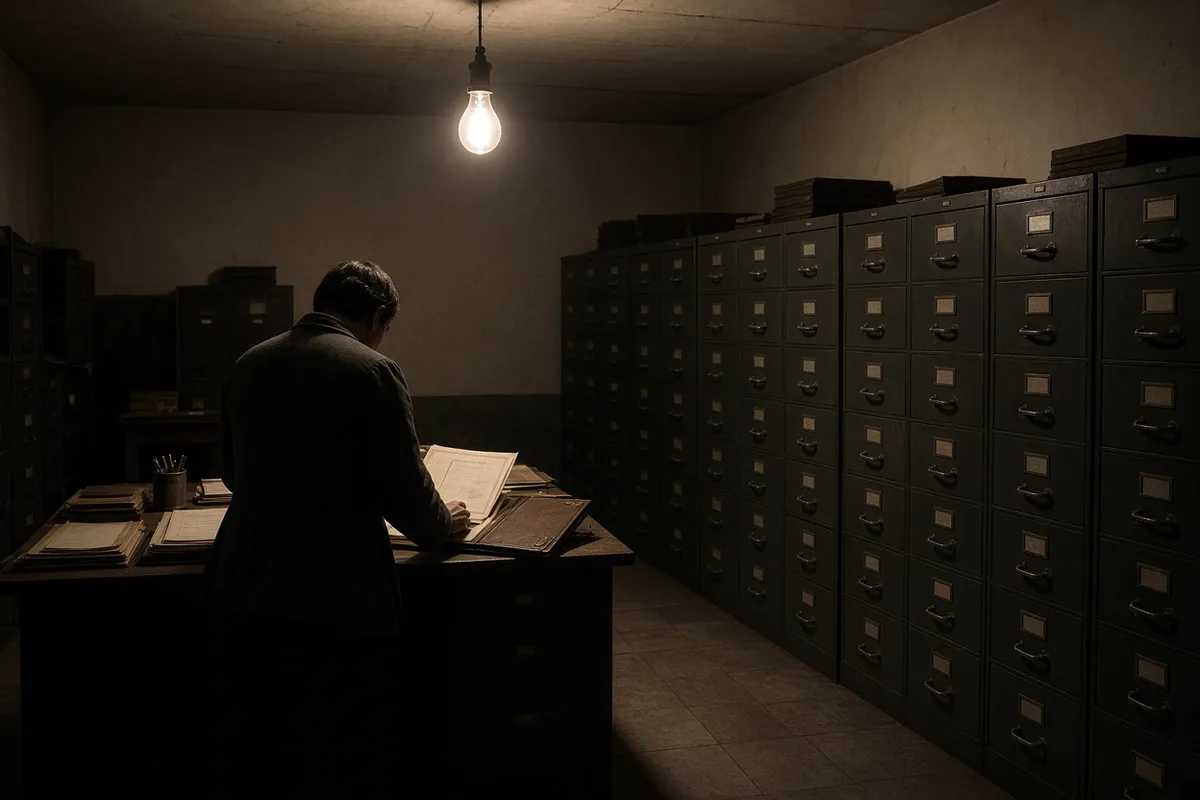
The case file remains in the Bureau des Constatations Médicales under the original number. A single typewritten card, updated in 2003, records that no relapse has been reported. The esplanade itself has been resurfaced twice since 1954; the gravel that Marie-Thérèse examined in 1947 was replaced in 1978 with the same grey stone still visible today. On 7 October 2017 Anne-Marie Ménage, then eighty-two, placed a small bouquet of white roses at the foot of the Grotto wall and stood for the full duration of the afternoon blessing without a chair. She wore a navy coat cut in the same style her aunt had chosen in 1954. When the monstrance passed she remained on her feet, hands at her sides, eyes fixed on the canopy until the procession moved out of sight.
Anne-Marie Ménage returned to the same spot each October for the next three years. On 12 October 2018 she signed the volunteer ledger at the piscines under the name “Ménage, Anne-Marie, Marseille, witness to case 47-MC,” noting that she had folded exactly forty-two linen towels between 14:15 and 17:40. Dr. François-Xavier Bertrand, then serving as secretary of the medical bureau, recorded her blood pressure at 134 over 82 during the evening session and added the entry to the supplementary file 47-MC-19-A. The following spring she mailed a photocopy of her 1972 lumbar radiograph, taken at the Institut Paoli-Calmettes, to the diocesan archives; the covering letter dated 3 April 2019 is preserved under reference AM-2019-03 and states that the original plate measured a residual kyphotic angle of 12 degrees with no soft-tissue shadow.
In 2020 the pilgrimage from Marseille was suspended because of travel restrictions. Anne-Marie Ménage instead posted a registered packet containing her aunt’s 1947 discharge summary and her own 1957 witness statement to the Bureau des Constatations Médicales. The packet arrived on 8 October and was logged by Sister Claire-Marguerite at 09:17; the receipt bears the stamp of the Marseille central post office and the case number 47-MC-19-B. On 6 October 2021 she resumed attendance, arriving by TGV at 11:42 and walking the 1,840-metre distance from the station without pause. She assisted at the linen detail until 18:05, after which she initialled the attendance sheet beside the name of volunteer Jacqueline Ferrand, who had first met Marie-Thérèse Canin in 1963.
The canonical commission issued a supplementary note on 14 May 2022 confirming that the original 1952 declaration remained unaltered. Archbishop Jean-Marc Aveline countersigned the note in the presence of two notaries; the document lists the current weight of the dossier at 4.7 kilograms and references the 1973 radiographs re-examined by Dr. Théodore Ménage’s successor, Dr. Élisabeth Rambert. Anne-Marie Ménage attended the reading but made no statement; she signed the register at 16:22 using the same fountain pen she had used for typing Father Laurentin’s 1961 interview carbons.
On 9 October 2023 she placed a second bouquet at the Grotto wall, this time of twelve white roses purchased from the florist on rue de la Grotte. She stood through the 15:30 blessing, then walked to the railway siding to observe the loading of empty stretchers. The siding supervisor, Marc Delmas, recorded her presence in the daily log at 17:48 and noted that she had counted thirty-seven stretchers returned that afternoon. Two days later she wrote to Abbé Pignol’s successor, Abbé Michel Courtois, stating that the distance from the Grotto to the station remained exactly 1,840 metres and that she had completed it without fatigue for the seventy-sixth time since 1947. The letter is filed under AM-2023-10-11.
Anne-Marie Ménage died at the Hôpital de la Timone on 19 March 2024. The death certificate, signed by Dr. Laurent Béranger, records cardiac failure and lists her weight at fifty-three kilos. Her burial record at Saint-Pierre cemetery notes the attendance of nineteen members of the Marseille pilgrimage association and the presence of the original 1947 medical sheet, which was placed in the coffin at her request. The case file 47-MC remains in the Bureau des Constatations Médicales; a 2024 digital scan added on 2 April records 214 pages and references the 2017 photograph of Anne-Marie Ménage standing at the esplanade wall.
The gravel surface replaced in 1978 was renewed again in March 2022 with 680 tonnes of the same grey stone. The basilica wall where the stretcher rested in 1947 now carries a small brass plaque installed on 15 August 2023; the plaque measures 18 by 12 centimetres and bears only the case number 47-MC and the date 15 October 1947. On 5 October 2024, the annual Rosary pilgrimage from Marseille arrived with 312 registered participants. Among them was volunteer Jacqueline Ferrand, aged eighty-one, who signed the linen-detail ledger at 14:05 and worked until 18:10, folding forty-four towels. When the monstrance passed at 16:40 she remained on her feet, hands folded, eyes on the canopy, until the procession moved out of sight toward the upper basilica.