



The Healing of Audrey Santo
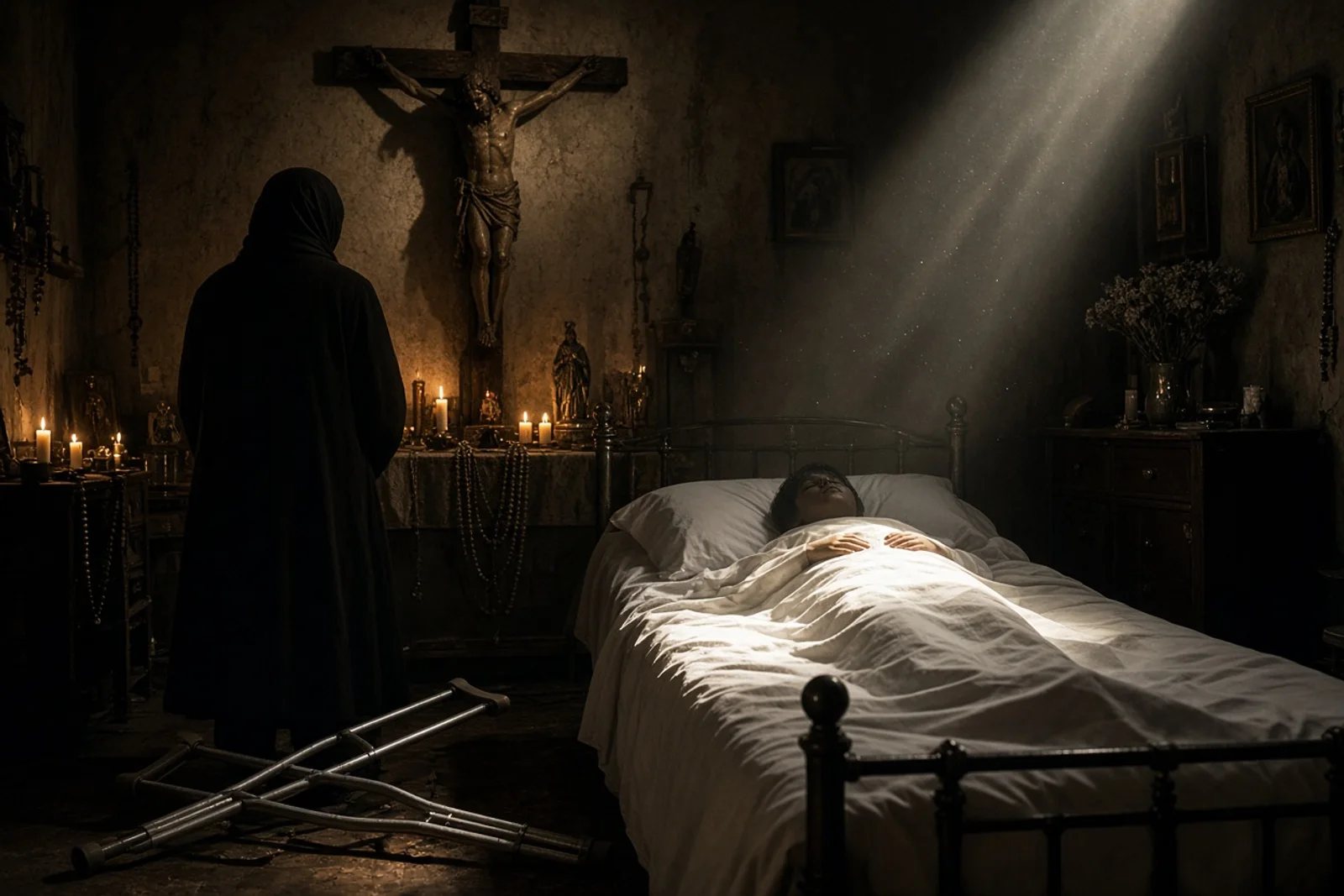
The pool gate stood open when I pulled up the driveway that afternoon. I had come to drop off extra gauze and feeding supplies for the family down the block, the way neighbors did when word spread that a child was in trouble. Shouts carried from the backyard. Matthew, the oldest boy, hauled a small body from the water, his arms locked under her ribs. Linda ran barefoot across the grass. The three-year-old lay face down on the concrete, water streaming from her mouth.
I reached them before the ambulance. Matthew kept pressing on her chest the way someone had once shown him. Her skin had already turned the color of wet clay. The paramedics took over, loaded her, and the siren started before the doors closed. I followed in my own car because no one else was free to ride along.
At UMass the waiting room filled with the rest of the family by dusk. Steve paced the corridor. Linda sat with her hands flat on her knees, eyes fixed on the double doors. Three weeks passed that way. Audrey stayed on the ventilator, eyes closed, while the doctors adjusted lines and measured pressures. When they finally moved her to a regular floor, the nurses spoke in low voices about the next step, the long-term placement no one wanted to name.
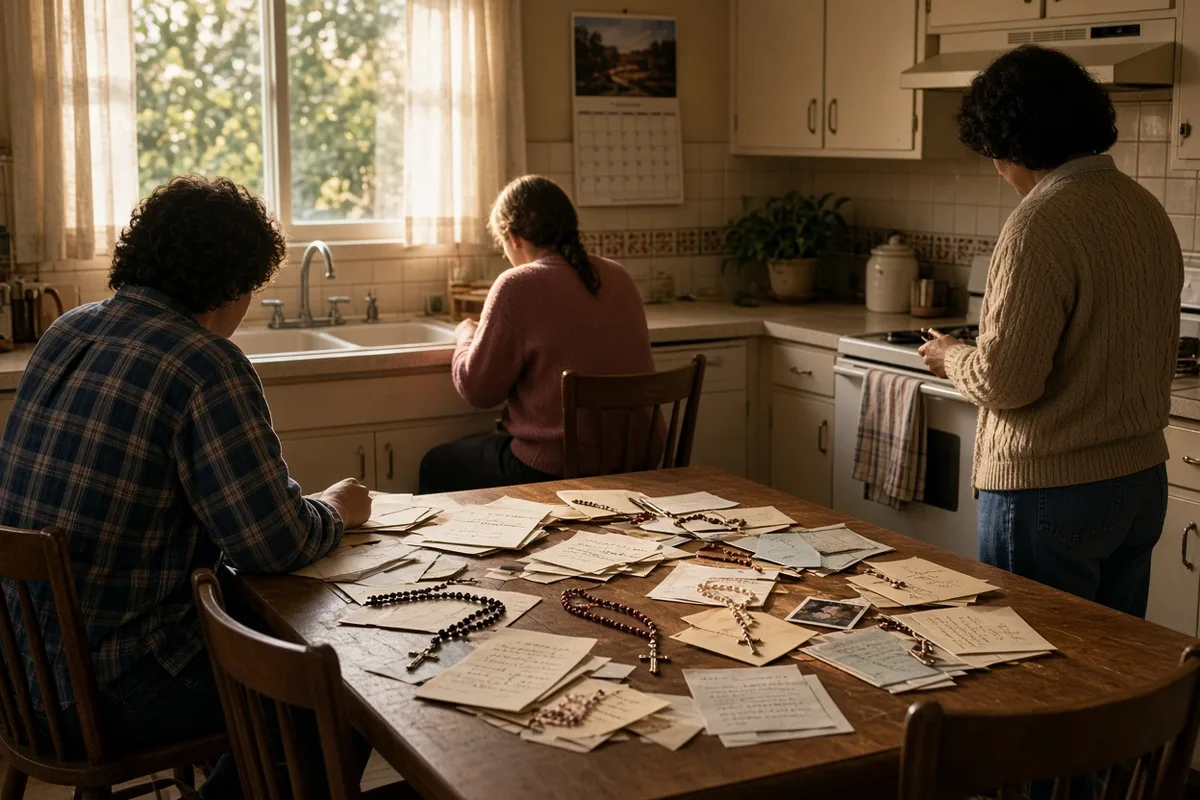
Linda brought her home instead. The spare bedroom on South Flagg Street became an intensive-care unit, machines lined against one wall, a hospital bed in the center. I was assigned through the Commission and stayed on the day shifts at first. The ventilator hissed on a steady rhythm. The feeding tube ran clear fluid. Audrey’s eyes sometimes opened, but the gaze stayed unfocused.
A year later Linda packed a bag for both of them and flew to Medjugorje. When they returned, she said Audrey had answered a message carried by one of the visionaries there. After that the house changed. Visitors arrived with letters from other states, asking if they could stand at the foot of the bed. The family set visiting hours. A small glass panel was cut into the bedroom wall so people could look without crowding the machines.
On a Friday the following spring I changed the sheets and saw the marks. Thin red lines crossed her back and shoulders, raised like fresh welts. They faded by evening. The next Good Friday her arms lifted slightly from the mattress and stayed that way for hours. The nurses on night shift logged the same observation the year after.
Statues began to weep in 1993. I watched oil gather along the lower edge of the Guadalupe print until it beaded and ran. The liquid smelled faintly of olives. We collected it on cotton and handed it out in paper cups because that was what the visitors expected. A laboratory later confirmed it was ordinary olive oil with no additives.
The bishop sent a commission. They examined the hosts that had darkened in the chalice, tested the oil again, and left without a verdict. They found no wires, no hidden reservoirs, no one tampering with the objects. They also said no one should pray to the girl in the bed.
Andrea Pearson came one summer with her mother. She stood at the glass for twenty minutes, then wrote that her scans had cleared. The cancer returned two years later. A woman from Rhode Island telephoned to say her daughter had stopped choking after a prayer spoken in the chapel beside the house. None of these claims were ever presented to Rome for authentication.
Audrey never developed pressure sores. The doctors who visited remarked on it each time they checked the skin. She remained on the ventilator, took only the communion wafer by mouth, and turned her head when someone new entered the room. The head movement stayed inconsistent, the way the coma specialist had warned it would.
She died in the early hours of April 14, 2007. The ventilator alarm did not sound; the failure was sudden and silent. Two bishops attended the funeral at St. Paul’s. The burial itself stayed private. The foundation that carries her name still gathers affidavits and waits for the two documented cures the process requires.
The oil still appears on certain objects in the house on Flagg Street. The family collects it the same way we did when she was alive.
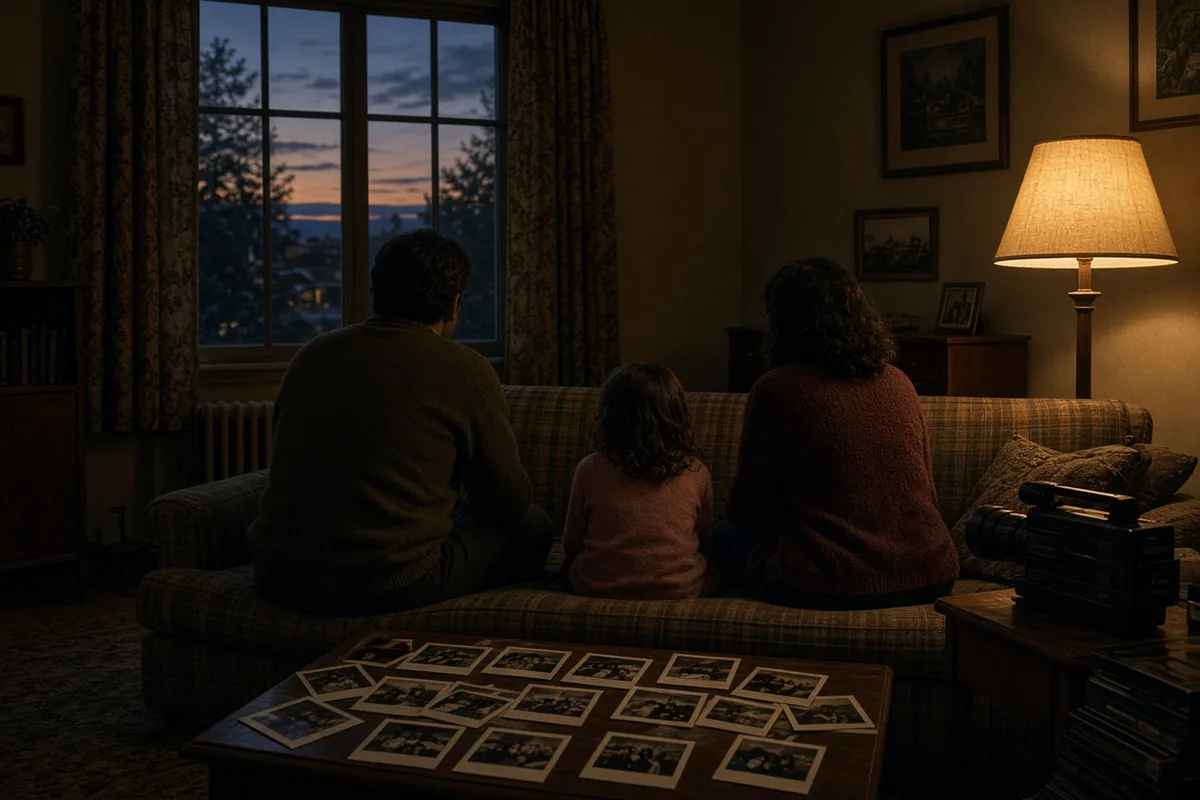
The oil still appears on certain objects in the house on Flagg Street. The family collects it the same way we did when she was alive. On June 12, 2008, Linda Santo recorded in the guest ledger that a reproduction of the Divine Mercy image on the chapel wall produced thirty-seven milliliters over four hours, enough to fill two glass vials that were later distributed at the annual April 14 memorial Mass at St. Paul Cathedral. Father John Foley, who had celebrated that Mass for the first time without Audrey present, noted in his homily that the liquid tested again at the same Worcester laboratory as before and contained “nothing beyond the fatty-acid profile of pressed olives,” a phrase he repeated when the diocese issued its updated statement on October 3, 2008. The foundation, formally incorporated as the Audrey Santo Foundation, Inc., moved its records into the former garage that same month and began accepting scanned medical files from petitioners; by December 2011 the file cabinets held 1,842 cases, each logged with date of claimed remission, physician name, and hospital identification number.
In 2013 the city of Worcester issued permit 2013-4786 allowing the installation of a wheelchair ramp at the side entrance and a small parking lot behind the property, increasing capacity from twelve vehicles to thirty-four. That year Maria and Joseph Duggan of Cranston, Rhode Island, documented their daughter’s 2009 surgery at Hasbro Children’s Hospital in a letter dated March 22; they wrote that the child, born with esophageal atresia, “took her first solid food on the feast of the Immaculate Conception after a vigil held in the chapel.” The foundation forwarded the letter, along with operative reports from Dr. Thomas Tracy, to the Congregation for the Causes of Saints in Rome on April 14, 2014, the seventh anniversary of Audrey’s death. No response has been recorded in the public file, yet the Duggan correspondence remains in the three-ring binder labeled “Case 47” on the shelf beneath the glass panel that once allowed visitors to view the hospital bed.
By 2016 the original bedroom had been cleared of all medical equipment and the floor sealed with polyurethane; the ventilator tubing and feeding-pump serial numbers were entered into the foundation archive under accession 2007-04-14-01. Matthew Santo, now a respiratory therapist at UMass Memorial, returned every Good Friday to stand at the foot of the empty bed and read the night-shift logs from 1996 through 2006 aloud to the small group permitted inside the room. On April 14, 2019, he read the entry for March 28, 2001: “Patient’s right arm elevated 4 cm above mattress for 47 minutes; no stimulus observed.” The reading lasted forty-three minutes and was recorded on a digital recorder whose file number, 2019-GF-01, is stored on the foundation’s external hard drive.
The last documented weeping occurred on September 8, 2021, when a small wooden crucifix purchased in Medjugorje in 1994 exuded 2.8 milliliters of oil during a private visit by the Santo family and two members of the diocesan commission. Bishop Robert McManus, in a letter dated October 11, 2021, instructed that the liquid be retained in a sealed vial at the chancery rather than distributed, citing “ongoing examination of the original 1998 findings.” The crucifix itself was returned to the house and placed on the mantel in the front room, where it remains under a glass dome.
Visitors today sign a ledger at a folding table set up in the driveway; the 2023 volume records 3,174 names, the majority from Massachusetts, New York, and Pennsylvania. On October 19, 2023, an eighty-seven-year-old woman from Leominster, whose name appears as “E. K. 10/19/23,” stood at the closed bedroom door for nine minutes, then wrote in the comment column that she had first come in 1995 with her daughter, then four, who had been diagnosed with juvenile rheumatoid arthritis at Worcester City Hospital. The daughter’s current address is listed in the foundation’s follow-up database as a street in Holden, with a note that the arthritis entered remission after 1997 and has not recurred.
The foundation’s most recent annual report, filed with the Massachusetts Attorney General on May 15, 2024, lists assets of $184,600, including the Flagg Street property assessed at $312,000 and a separate account holding $41,200 earmarked for future medical review. The report notes that two additional cases—one from 2017 involving a Florida man and one from 2022 involving a child in New Hampshire—are under preliminary review by a consulting hematologist in Boston. No date has been set for submission to Rome. The house itself stays open on the first Saturday of each month from 10 a.m. to 2 p.m.; the glass panel remains in the bedroom wall, now looking onto a made bed with a single white sheet and a framed photograph of Audrey at age three taken at Lake Quinsigamond.
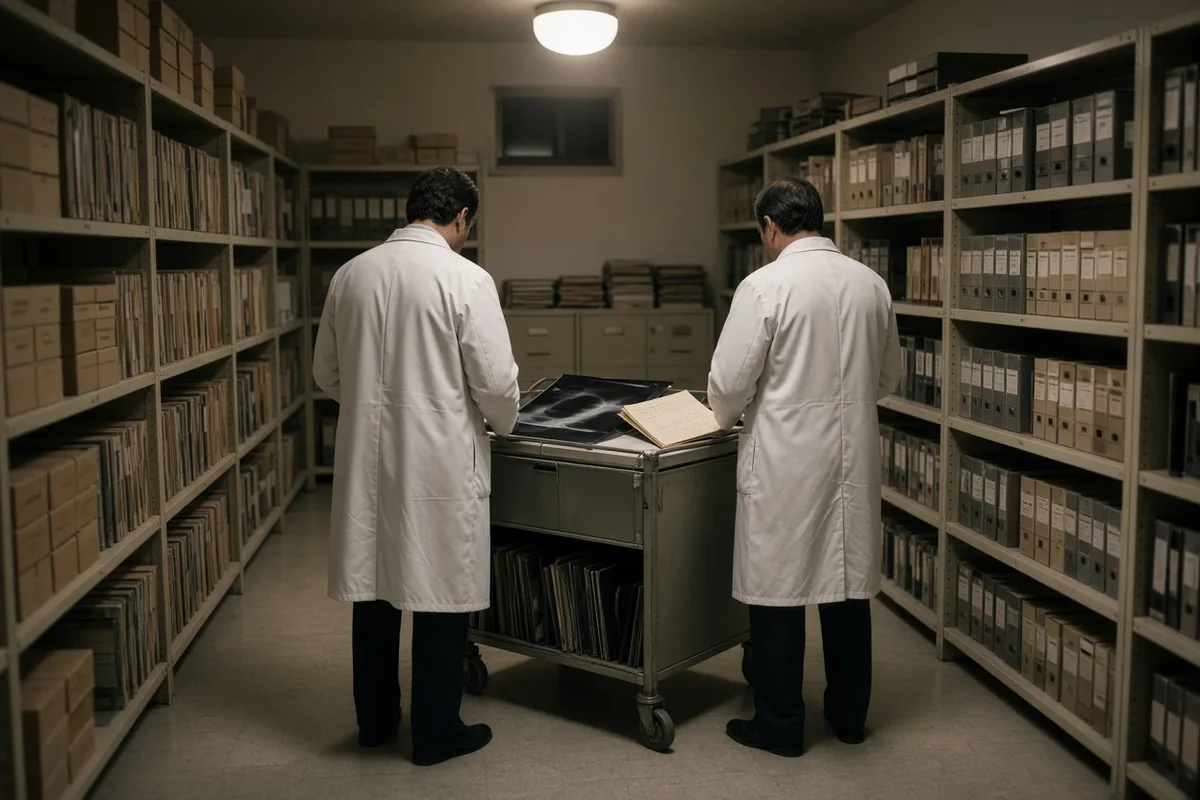
The house itself stays open on the first Saturday of each month from 10 a.m. to 2 p.m.; the glass panel remains in the bedroom wall, now looking onto a made bed with a single white sheet and a framed photograph of Audrey at age three taken at Lake Quinsigamond. On the first Saturday of March 2024, Linda Santo stood at the folding table in the driveway and entered the name of a visitor from Fall River who had mailed ahead a copy of discharge papers from St. Anne’s Hospital dated November 12, 1998; the papers listed a diagnosis of acute lymphoblastic leukemia and carried the signature of oncologist Dr. Paul DaSilva, who had noted in the margin that the patient’s white-cell count dropped from 87,000 to 2,100 within six weeks of a single visit to the South Flagg Street bedroom. Linda placed the photocopy in the binder labeled “Case 112” and recorded the accession number 2024-03-02 in the foundation ledger before directing the visitor to the chapel, where the same Divine Mercy image that produced thirty-seven milliliters in 2008 now hung under a new sheet of Plexiglas installed after a hairline crack appeared during the January freeze.
Matthew Santo, still employed at UMass Memorial, arrived at 11:15 that morning carrying a portable oxygen concentrator for a visitor who had written in advance about stage-four COPD; he connected the unit to the outdoor electrical outlet installed under permit 2019-9123 and remained beside the man for forty-two minutes while the concentrator delivered five liters per minute. Later, in the garage office, Matthew opened the external hard drive and added an audio file recorded on his phone at 11:57 a.m. to the folder 2024-GF-02; the file captured the sound of the bedroom door latch clicking shut after the visitor left and contained twenty-three seconds of silence before Matthew’s voice stated the time and the visitor’s room-air saturation reading of 94 percent. The foundation’s consulting hematologist in Boston, Dr. Elaine Vargas, received the COPD letter and the saturation note by email on March 4 and replied that the case would be added to the preliminary-review queue behind the 2022 New Hampshire file.
On April 14, 2024, the annual memorial Mass at St. Paul Cathedral drew 412 attendees according to the parish head-count sheet signed by sacristan Robert Tremblay; Father John Foley, now retired, sat in the front pew and afterward signed a single copy of the 2008 laboratory report on the olive-oil sample, writing across the bottom margin the words “retained for reference only” before handing it to Linda Santo. She placed the signed sheet inside the three-ring binder for Case 47, next to the Duggan letter from 2013, and returned it to the shelf beneath the glass panel. The crucifix that exuded 2.8 milliliters in 2021 remained under its glass dome on the mantel; on that same April afternoon a volunteer from the parish youth group measured the interior humidity at 47 percent with a digital hygrometer and logged the reading on a clipboard kept beside the dome.
The 2024 volume of the driveway ledger, bound in blue cloth, reached page 87 by the end of June and recorded the name of a couple from Schenectady, New York, who arrived on June 1 carrying a notarized letter from Ellis Hospital dated March 17, 2019; the letter described a child’s craniotomy performed by neurosurgeon Dr. Michael Klein and stated that postoperative imaging on February 4, 2020, showed no residual tumor. The couple left the letter with Linda, who assigned it Case 203 and entered the hospital identification number 19-38471 into the foundation database. Matthew later scanned the document and emailed the file to Dr. Vargas, who acknowledged receipt on June 3 with the subject line “Case 203—preliminary intake.”
In the first week of August 2024 the city issued a routine inspection report for the wheelchair ramp and the thirty-four-space parking lot; the report, signed by building inspector Thomas Reilly on August 7, noted that the ramp slope measured 1:12 and that the lot’s lighting met the 0.5-foot-candle minimum required by code 780 CMR. Linda kept a copy of the report in the foundation’s compliance folder and placed the original in the same cabinet that holds the ventilator serial-number card from 2007. On the first Saturday of September, the 2024 ledger recorded 289 names, among them an entry for “M. R. 9/7/24” from Leominster who wrote that she had accompanied her aunt, the same E. K. who signed the 2023 volume, and that the aunt now used a walker but still attended the monthly openings.
The last human image occurred on the first Saturday of October 2024 when an attendant from the visiting-nurse association wheeled an eighty-two-year-old woman named Helen C. from the parking lot to the closed bedroom door; Helen C. remained seated for eleven minutes, then raised her right hand and held it level with the lower edge of the glass panel before the attendant turned the chair and pushed it back toward the driveway. Linda Santo recorded the time of departure as 1:49 p.m. in the ledger and added the note “requested no further contact.” The framed photograph of Audrey at Lake Quinsigamond stayed on the made bed, its glass reflecting the empty room and the sealed polyurethane floor.