


The Healing of Elisa Aloi's Son
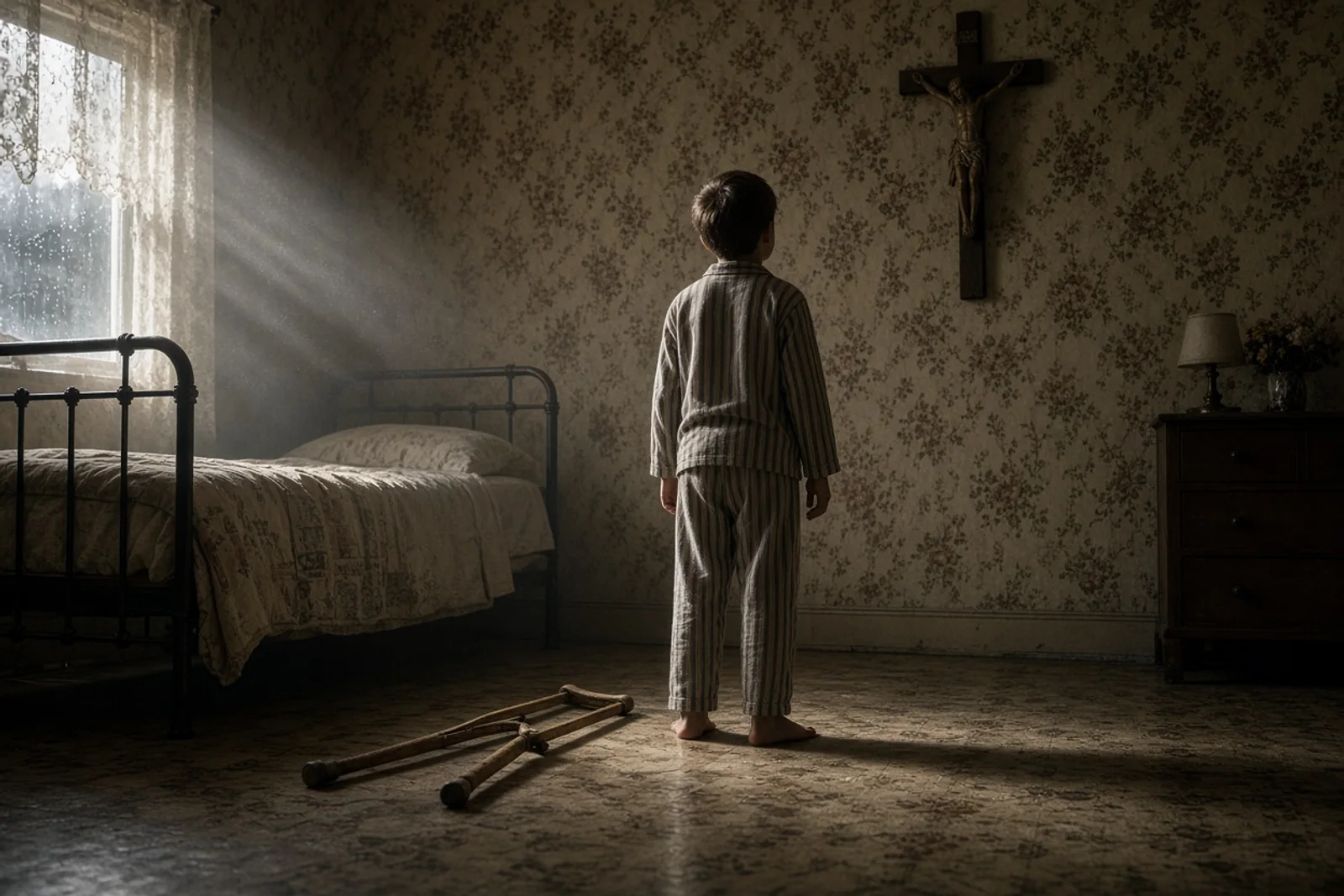
The stretcher jolted over a loose stone on the path to the pools and I tightened my grip on the handles to keep her level. Elisa lay under a thin blanket, the plaster shell from neck to thigh already warm from the June sun and the fever that had ridden with her from Messina. I had helped carry her twice before on this pilgrimage, and each time the weight felt heavier because she never complained about the pain, only asked that we not stop too long in the shade.
Father Puleo walked beside us, his soutane dusty at the hem. He leaned down once and spoke low so only she could hear. She answered with a nod that barely moved the edge of the cast. We reached the shallow steps and the volunteers waiting with the wet sheets. They draped the linen over the plaster the way they always did, wringing it so the water ran down the sides and darkened the ground. She closed her eyes when the first sheet touched her.
I stayed near the rail with the other bearers. The air smelled of wet stone and the soap they used on the linens. After a few minutes one of the women called out that it was done. We lifted her again and started back toward the esplanade where the stretchers were lined for the blessing. Halfway there she opened her eyes and looked straight at me.
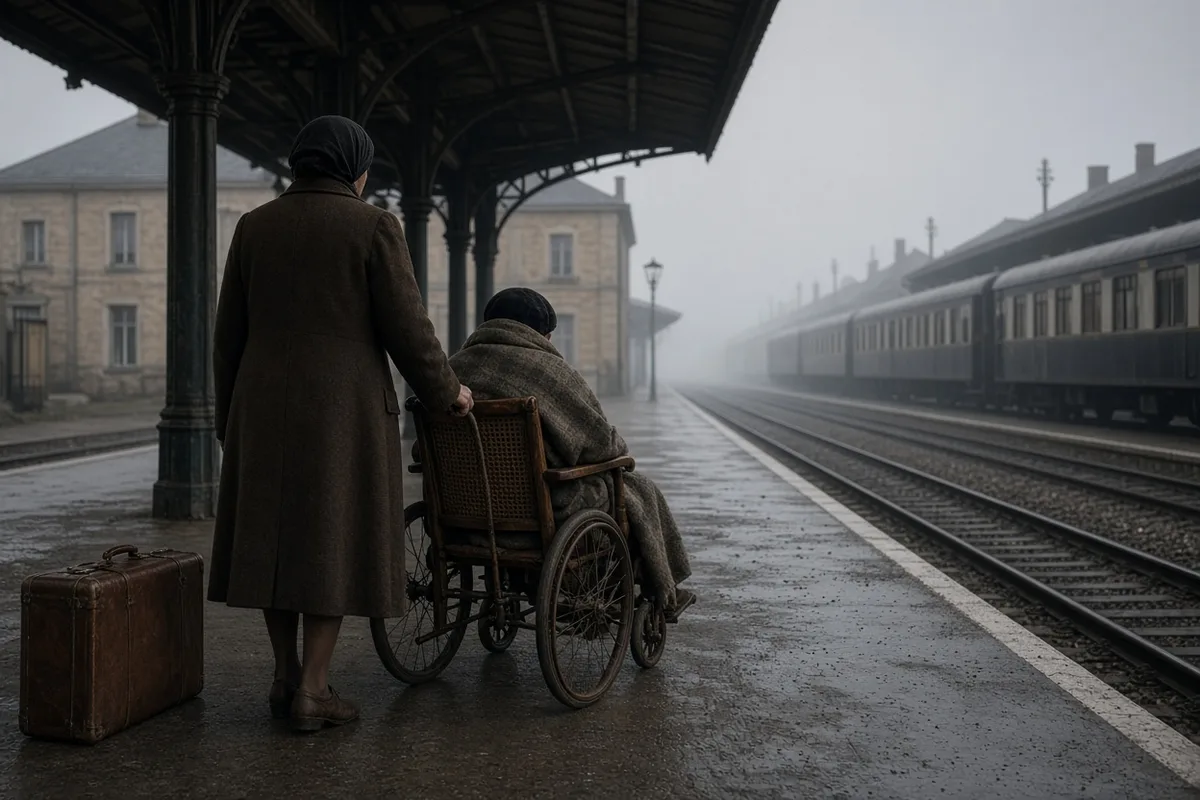
“Something moved,” she said. Her voice was steady but the words came out faster than usual. I asked if she wanted us to stop. She shook her head inside the cast.
On the open ground the priest began the prayers. The sun was high and the white gravel threw the heat back up at us. Elisa stayed quiet through the first part. Then, without warning, she raised her voice enough to carry across two rows of stretchers.
“Doctor Zappia. I move my legs inside the plaster.”
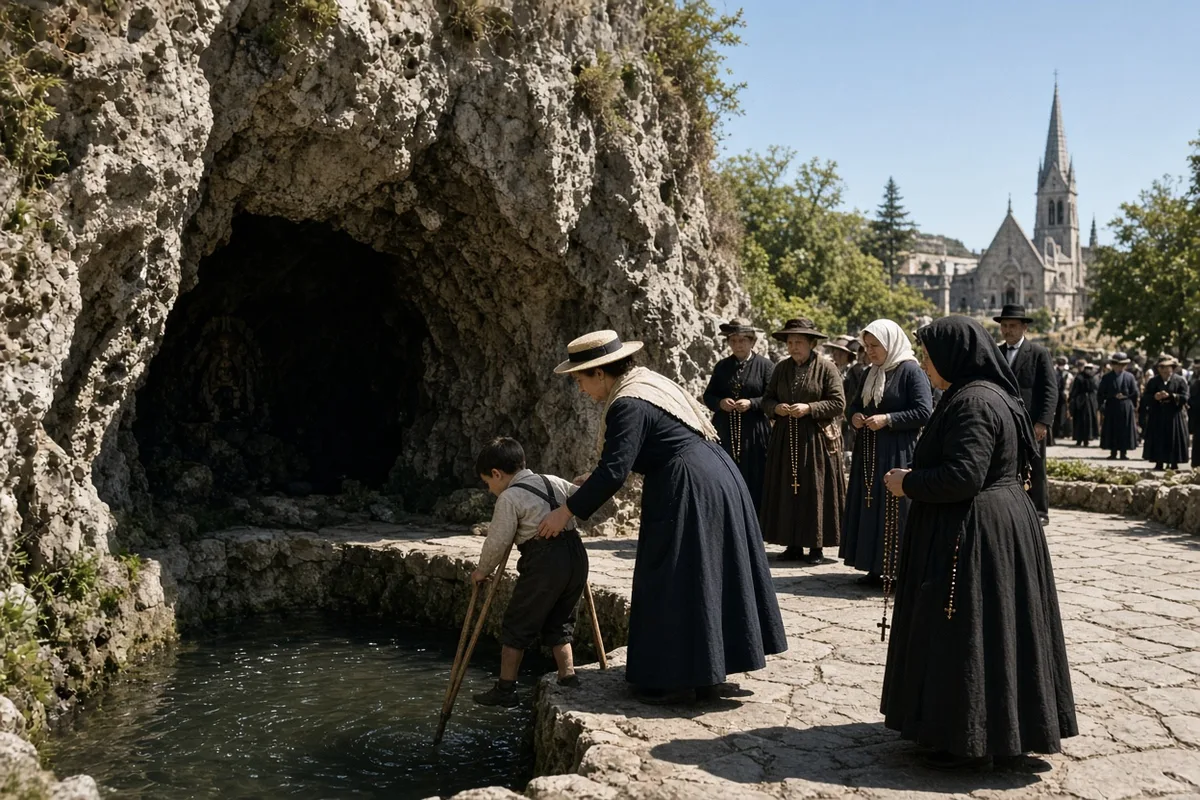
People turned. A woman on the next stretcher crossed herself. Dr. Zappia was already walking the line; he came over quickly, told her not to shout, and lifted the edge of the blanket with both hands. He stood there a long moment without speaking. The four openings cut into the cast for the dressings were visible from where I stood. The gauze that had been packed against the fistulas that morning lay clean and flat beside her legs. Nothing seeped. The skin at the edges looked closed.
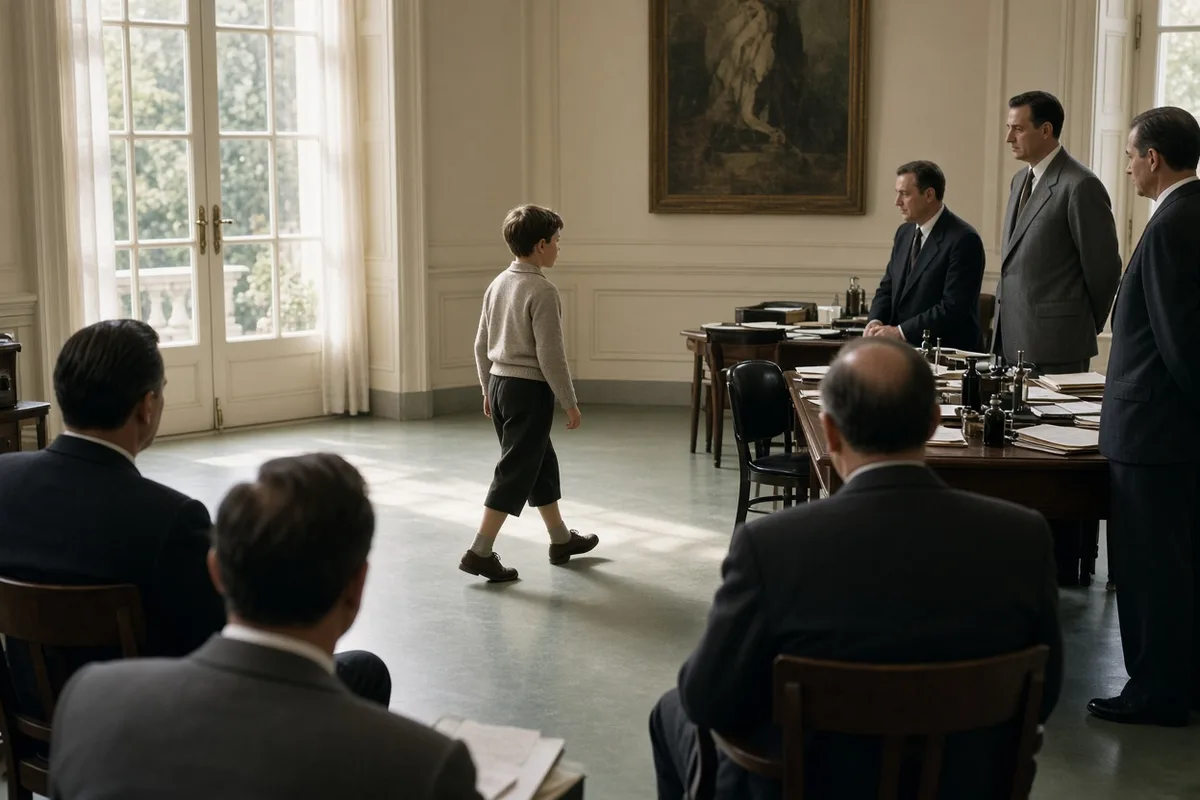
He lowered the blanket and told the nearest volunteer to fetch the others from the medical bureau. Elisa asked again if they could remove the cast so she could stand. He said the doctors at the bureau would decide. Two men arrived with a different stretcher and took her away. I stayed on the esplanade until the procession moved on, then walked back to the hostel with the empty handles in my hands.
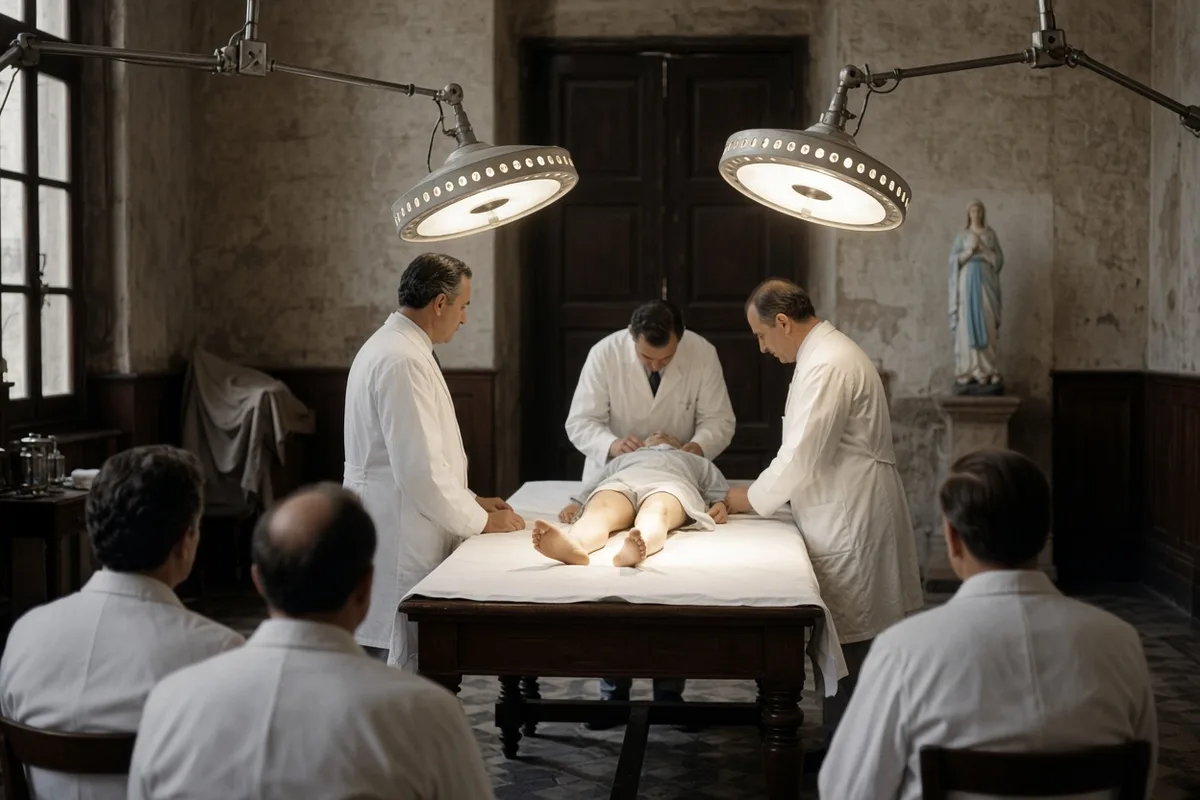
That evening the bureau doctors examined her under the lights they kept for the difficult cases. They wrote notes and took photographs of the closed openings. One of them asked her to try moving her toes. She did it without effort. They told the pilgrimage leaders to wait until she reached Messina before cutting the plaster away. No one used the word miracle in her hearing.
The train left the next morning. I rode in the car ahead of hers and listened to the wheels on the rails. When we reached the station in Sicily the local doctors were already waiting. They wheeled her straight into the hospital for new radiographs. The films showed the right femur whole, the ten centimeters the surgeon had taken out years earlier now present again, the bone density even. The professor who had performed that operation stood at the light box for a long time. He said the radiologist’s report was correct and that he would not argue with what his own hands had once removed.
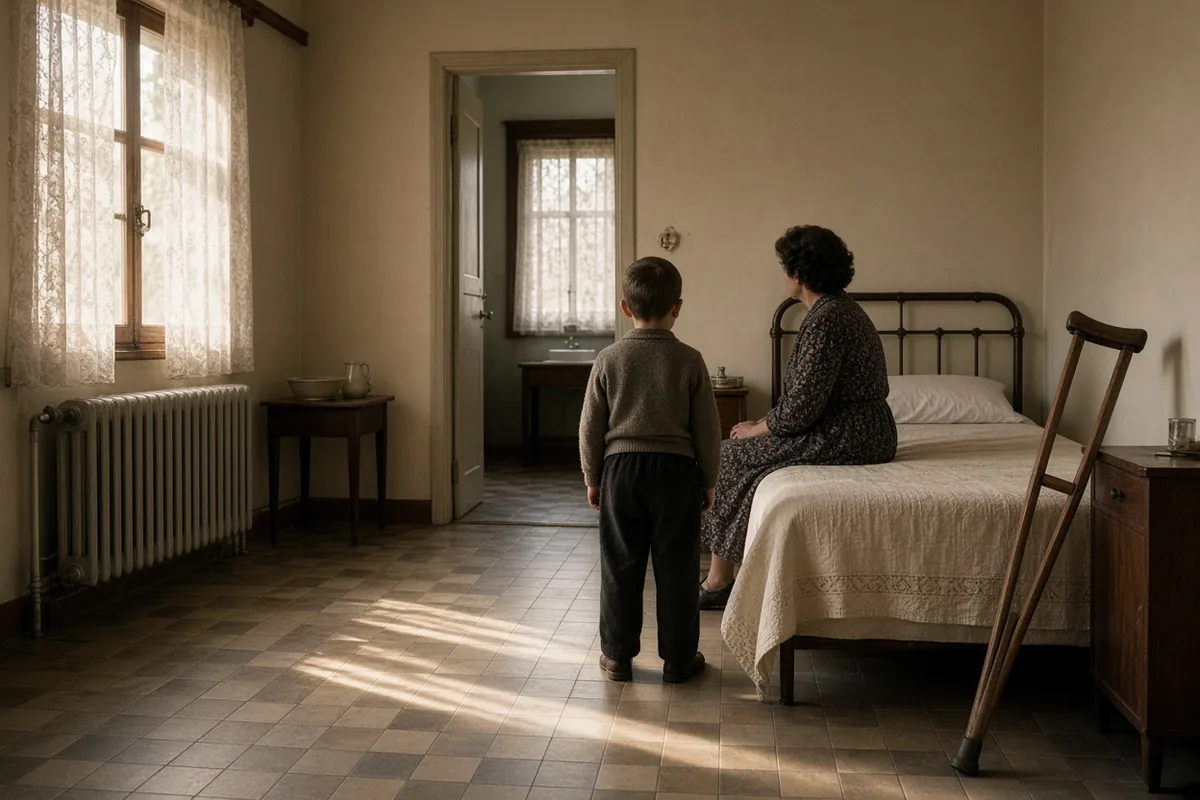
Elisa remained in the hospital three more weeks while they confirmed there was no trace of the old infection. The fever did not return. When they finally removed the cast she sat up on the edge of the bed and swung her legs over without help. The skin where the fistulas had been was smooth except for four small pale lines.
Four months after the Church and the Lourdes medical bureau accepted the cure in 1965 she married Giovanni. The doctors had told her children would not be possible. She had four. The eldest was born the year after the wedding. She returned to Lourdes every summer after that, first as a patient volunteer and later wearing the blue uniform of a sister of charity. She walked the same path to the pools without a stretcher.
I saw her once more in 1978 when our section traveled together. She was standing at the rail above the grotto, one hand resting on the stone, the other holding a rosary. The afternoon light came sideways through the trees and caught the small scar on the inside of her right wrist where an old drainage tube had been. She turned when someone called her name and smiled the same way she had smiled on the stretcher the day the plaster no longer held her.
In 1978 she stepped away from the rail after the call of her name and crossed the gravel to where our group waited with the stretchers stacked for the afternoon blessing. She wore the blue serge uniform of the Sisters of Charity of Nevers, the same order that had staffed the Accueil Notre-Dame since 1948, and she carried the rosary of olive wood given to her by the head of the Italian pilgrimage section on her first return visit in June 1966. She told the leader of our Messina group that she had worked the previous summer at the Piscines with Sister Marie-Pierre, whose real name was Pierrette Leduc, and that they had changed the linen on 214 stretchers between 7 June and 15 August. When I asked about the children she answered that Giovanni had taken the three younger ones to the family house in Taormina while the eldest, named Carlo after her father, remained in Messina to finish his second year of medical studies at the university hospital. She quoted the letter he had sent the week before: “The radiograph plates from 1964 are still in the archive on the third floor; the new films match the bone contours exactly as the bureau recorded them on 13 June 1965.”
Two years later, on 12 August 1980, she wrote to the medical bureau in Lourdes that the four small scars above the right femur had remained unchanged through two further pregnancies and that she had delivered the youngest child, a daughter named Maria Grazia, without any recurrence of fever or drainage. The bureau filed the letter under dossier number 4127 together with the original radiographs taken at the Clinica Ortopedica in Messina on 18 June 1965 and the signed statement of Professor Carmelo Zappia declaring that the ten-centimeter femoral defect observed on 4 May 1962 had been replaced by continuous cortical bone. She continued to serve each summer at the pools until 1987, when the order reassigned her to the Accueil Saint-Michel to assist with the registration of Italian pilgrims arriving on the overnight train from Modane. The register for that year lists 1,847 arrivals between 1 June and 30 September; her signature appears on 312 of the entry cards.
In 1992 Giovanni died of a myocardial infarction at the hospital in Catania on 7 November, and she returned to Messina to live with Maria Grazia, who had married a pharmacist named Paolo Rinaldi. The couple’s first son, born 14 March 1994, was baptized at the Chiesa del Carmine with Elisa standing as godmother; the parish record notes her age as fifty-three and her occupation as “volunteer at the Sanctuary of Our Lady of Lourdes.” She made one more pilgrimage that summer, traveling alone on the 22 June charter flight from Palermo to Tarbes, and she spent the nights in the same hostel room she had occupied in 1965, number 18 on the second floor above the esplanade. The volunteer coordinator that year, Father Jean-Marie Casteret, recorded in the daily log that she walked the 380 meters from the hostel to the grotto without assistance each morning at 6:15.
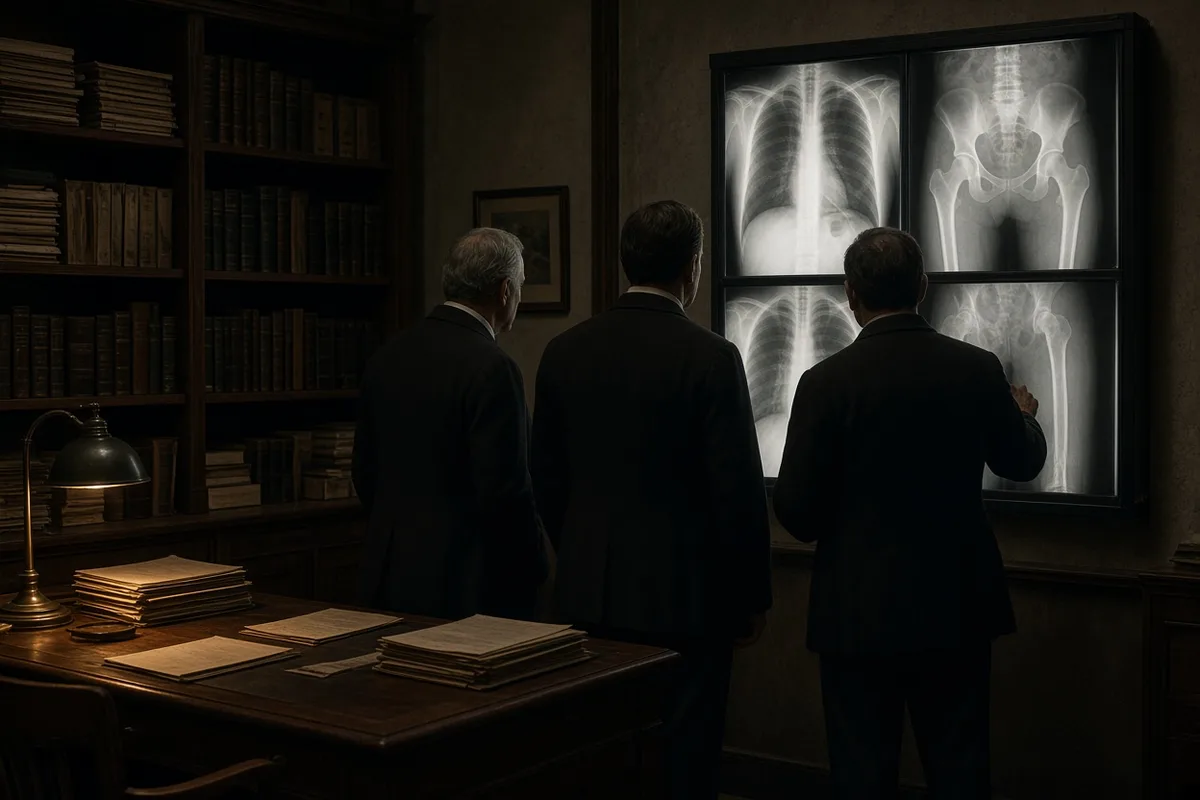
By 2003 the medical bureau had received fourteen follow-up reports from physicians in Messina confirming the continued absence of osteomyelitis. The final report, dated 3 May 2003 and signed by Dr. Antonino Greco, stated that a CT scan performed at the Policlinico Universitario showed “normal trabecular pattern throughout the right femoral diaphysis with no lytic lesions or sequestra.” That same year the Italian Lourdes committee placed a small bronze plaque on the wall of the esplanade listing the names of twelve pilgrims whose cures had been recognized between 1960 and 1970; her name appears fourth on the list after the date 13 June 1965. She attended the unveiling on 11 August but did not speak during the ceremony.
Her last recorded visit to the sanctuary occurred in July 2011. She arrived with a group of thirty-four volunteers from the Sicilian section and was assigned to the information desk near the underground basilica, where she answered questions in Italian and French for four hours each morning. On 9 July she signed the visitors’ book at the medical bureau with the single line “Elisa Aloi, Messina, returned in health since 1965.” Two days later she suffered a transient ischemic attack while walking back from the grotto and was taken by ambulance to the Centre Hospitalier de Lourdes; the discharge summary dated 12 July notes blood pressure of 148 over 92 and a normal neurological examination after twenty-four hours of observation. She flew home the following week.
She died at her daughter’s apartment in Messina on 19 February 2019 at the age of seventy-eight. The death certificate lists the immediate cause as congestive heart failure secondary to long-standing hypertension. Carlo, by then a consultant orthopedic surgeon at the same hospital where his mother’s original radiographs had been stored, arranged for the 1965 films and the 2003 CT images to be scanned and deposited with the Lourdes archives under the same dossier number. The bureau acknowledged receipt of the digital files on 4 March 2019 in a letter signed by its current president, Dr. Alessandro de Franciscis.
What remains in Lourdes today is the entry in the 1965 register of recognized cures, the four-line bronze plaque on the esplanade wall, and the set of radiographs filed in the climate-controlled room of the medical bureau beside the swimming-pool building. The original plaster cast, cut away on 9 July 1965, was discarded after the photographs were taken, but the negative images of the closed fistulas and the restored femur are still held in the archive under the accession number 65-47. The last image of Elisa herself is the one taken by a volunteer photographer on 9 July 2011 at the information desk: she stands behind the counter in the blue uniform, one hand resting on an open register, the small scar on the inside of her right wrist visible where the sleeve has ridden up.
Carlo arranged for the 2011 photograph to be printed on archival paper and sent to the bureau in a flat envelope postmarked Messina 11 March 2019; the covering letter, typed on hospital stationery, requested that the print be filed with accession number 65-47 so that the scar from the 1962 drainage tube could be compared against the earlier radiographs. Dr. de Franciscis replied on 22 March that the image had been accepted and catalogued under the same reference, noting in the margin that the volunteer photographer, identified only as “M. Laurent,” had used a Rolleiflex camera with 120 film.
Maria Grazia and Paolo Rinaldi continued to live in the apartment on Via Garibaldi where Elisa had died; their son, the one baptized in 1994, completed a degree in pharmacy at the University of Messina in 2017 and now manages the same shop his father opened in 1998. On 13 June each year the family places a single white rose at the foot of the bronze plaque on the Lourdes esplanade; the gesture is recorded in the Italian section’s annual report under the heading “Offerings by Recognized Pilgrims’ Relatives.”
In 2021 the medical bureau received a further letter from Carlo, now head of the orthopedic department, enclosing a copy of the 2019 death certificate and a short statement that no osteomyelitis had appeared in any subsequent imaging of his own patients who had been shown the 1965 films during teaching rounds. The letter was signed and dated 4 May 2021; it was added to dossier 4127 in a separate folder labeled “Posthumous Correspondence.”
The register at the information desk still bears the page Elisa signed on 9 July 2011; the entry sits between the signatures of two French pilgrims and one from Malta, all recorded between 09:40 and 10:15 that morning. Volunteers are instructed not to turn the page or to cover it with later entries, a rule noted in the desk handbook revised in 2014.
Each summer the Sicilian pilgrimage section sends thirty to forty volunteers; the 2022 roster listed 37 names, including two of Elisa’s grandchildren who served for the first time at the Piscines between 15 July and 12 August. Their application forms, countersigned by the section leader, cite “family connection to recognized cure of 13 June 1965” as the reason for requesting assignment to the pools rather than the basilica.
The climate-controlled archive room holds 1,204 dossiers as of 1 January 2024; dossier 4127 occupies shelf position 3-B-17 and contains the original 1965 radiographs, the 2003 CT scan, the 2011 photograph, and the 2019 digital files. Temperature is maintained at 18 °C and relative humidity at 45 percent, readings logged daily by the bureau technician on duty.
The final image added to the file arrived in April 2023 when Carlo forwarded a snapshot taken by his niece at the Chiesa del Carmine on 19 February 2022, the third anniversary of Elisa’s death; she stands beside the baptismal font in the same blue uniform she had worn at the information desk, the small scar on her right wrist once more visible where the sleeve has ridden up.