


The Healing of Elisa Aloi’s Son at Lourdes
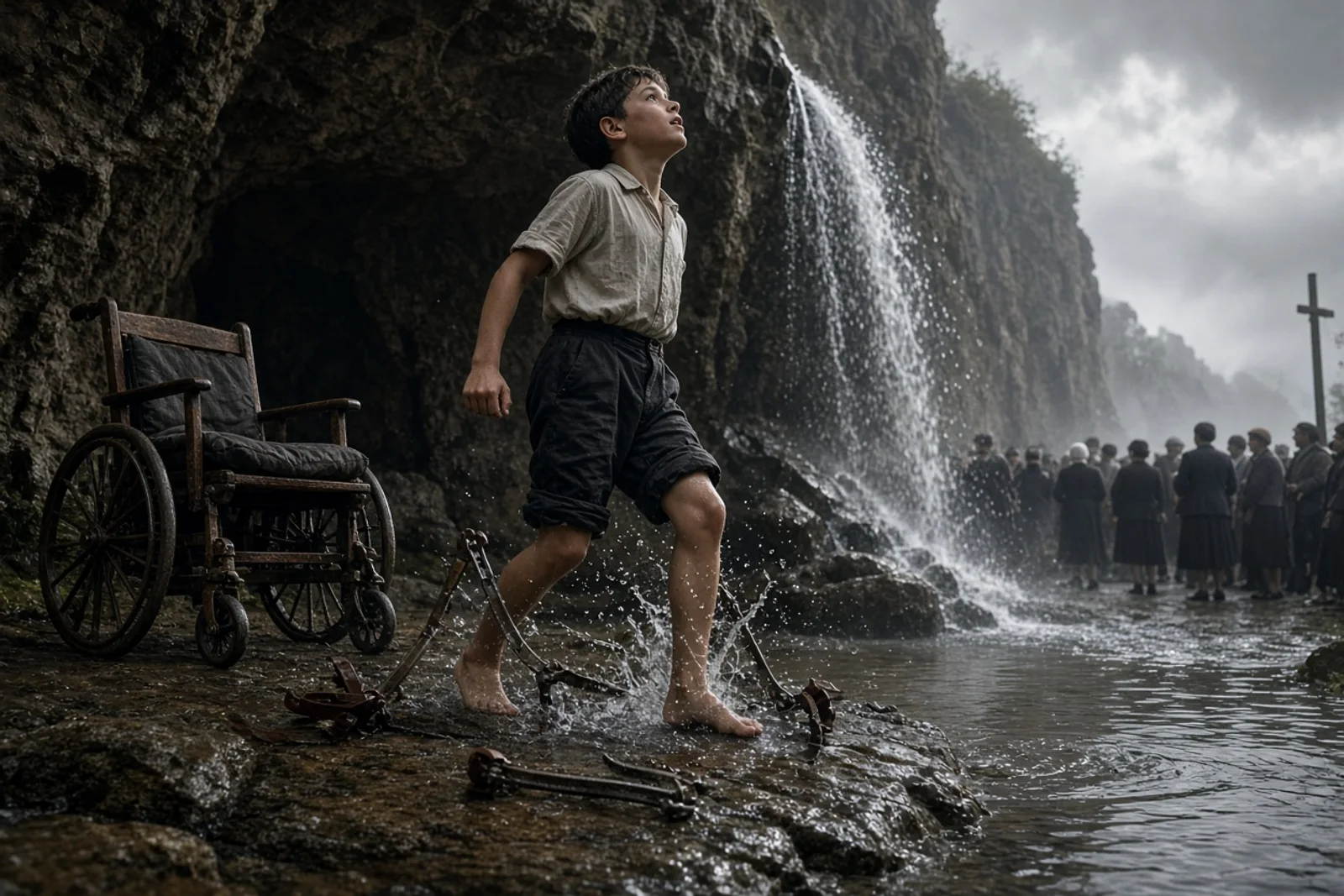
The stretcher creaked under the weight of the plaster as we lifted it from the train at Lourdes station. June heat already pressed against the platform stones. I gripped the rear handles and kept my eyes on the straps so the sway would not pull at the drainage tubes running through the cast. Elisa lay inside that shell from pelvis to right foot, four windows cut for the fistulas, her face turned toward the roof of the carriage so the sun would not strike her eyes directly.
We had come with the Unitalsi group from Sicily for the third time. The first journey in 1957 had left her no better. This time the fever ran higher and the dressings changed twice a day. Giovanni walked beside the stretcher without touching it, one hand ready if the men ahead stumbled. He had not spoken since we left Messina.
At the hospital the nurses settled her on a bed near the window. I stayed to help with the first dressing change. The gauze came away soaked, the smell sharp even after the long ride. Elisa did not complain. She asked only whether the pools would be open the next morning.
On the morning of the fifth we joined the line of stretchers moving toward the grotto. The priest who had charge of our group stopped at her side and leaned close. She answered before he finished the question. We turned the stretcher toward the baths.
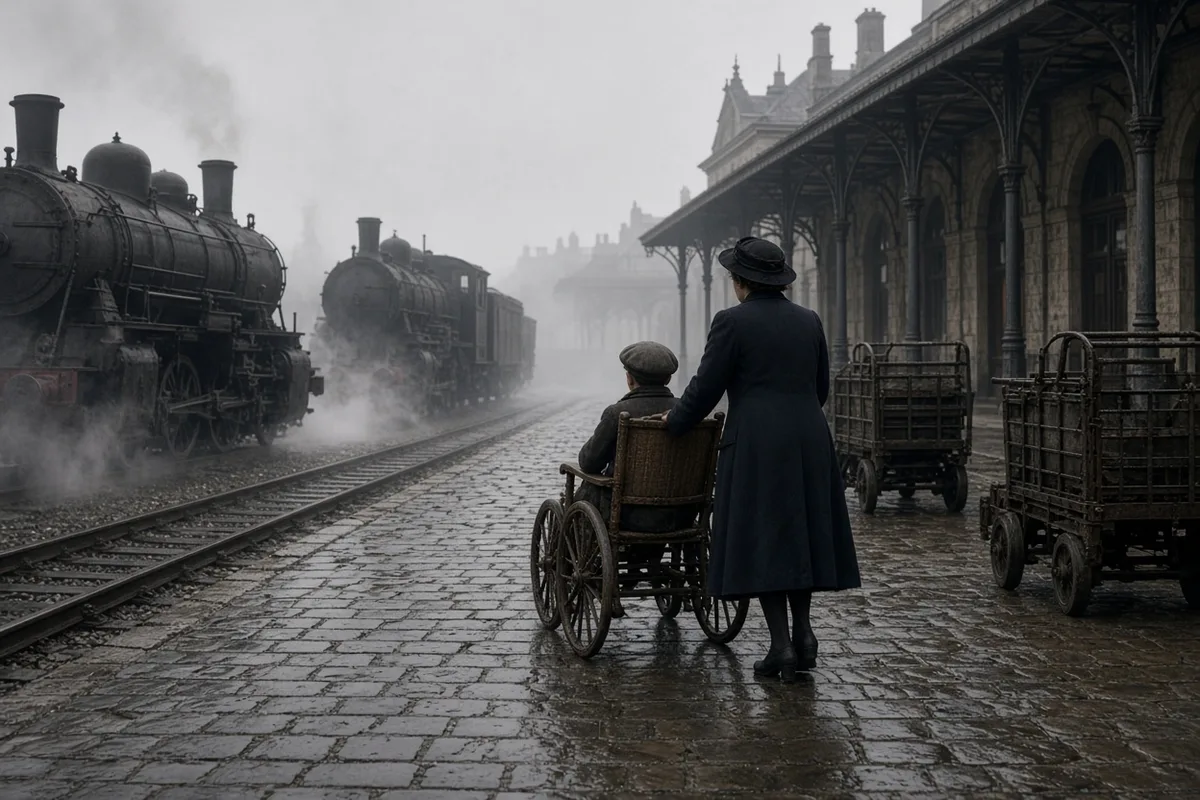
The water in the pool felt colder than the air. Two attendants lowered the cast until the openings sat just below the surface. They poured fresh water over the dressings as they always did. When they raised her again the linen that had been brown was pale. Elisa’s hands, which had rested on the plaster, moved once, then again. She looked at me and said the vibration had started in her right thigh and traveled down.
We wheeled her onto the esplanade among the other stretchers. She called for Doctor Zappia by name. He came quickly, lifted the blanket, and stood still. The four fistulas had closed. The tubes lay beside her legs, dry. No new blood marked the gauze. Zappia touched the edge of one window and withdrew his hand.
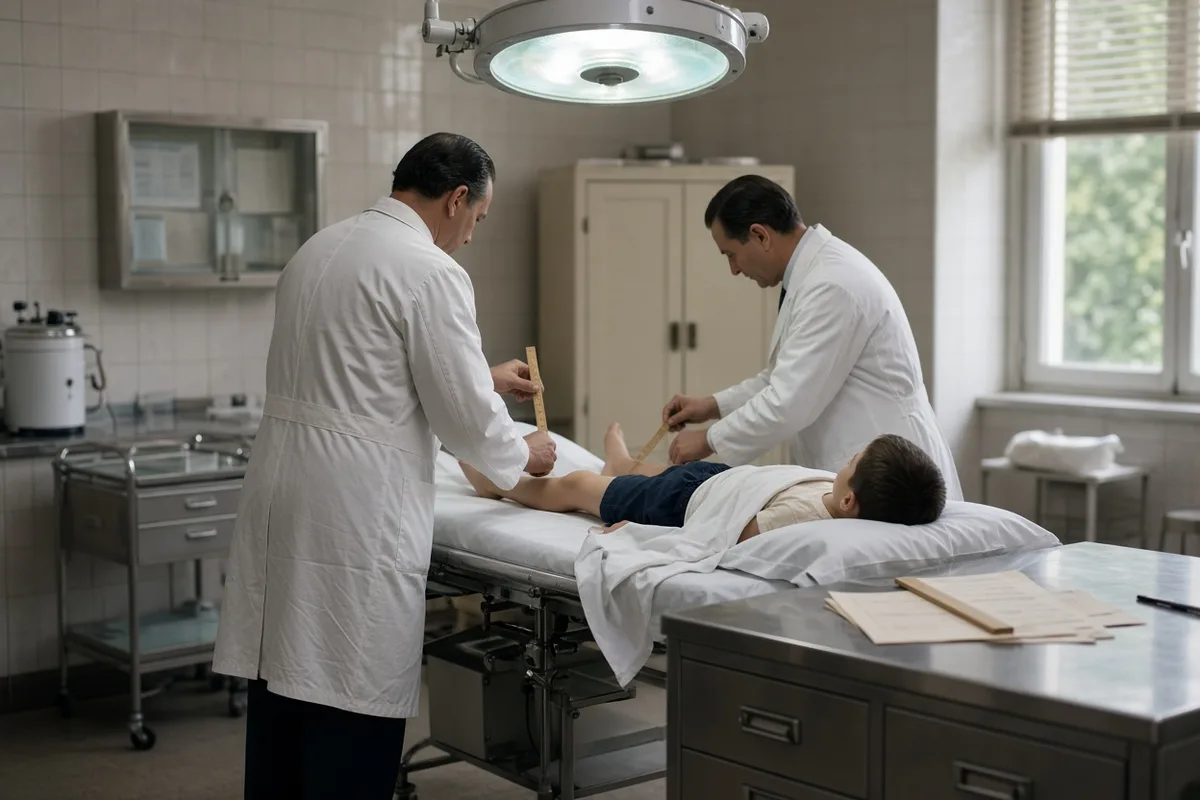
They took her to the Medical Bureau before the evening procession. The doctors there examined the skin through the openings, measured the temperature at each site, and wrote notes. Elisa asked them to remove the cast so she could stand. They said the decision belonged to the physicians who had treated her in Sicily. She was quiet after that.
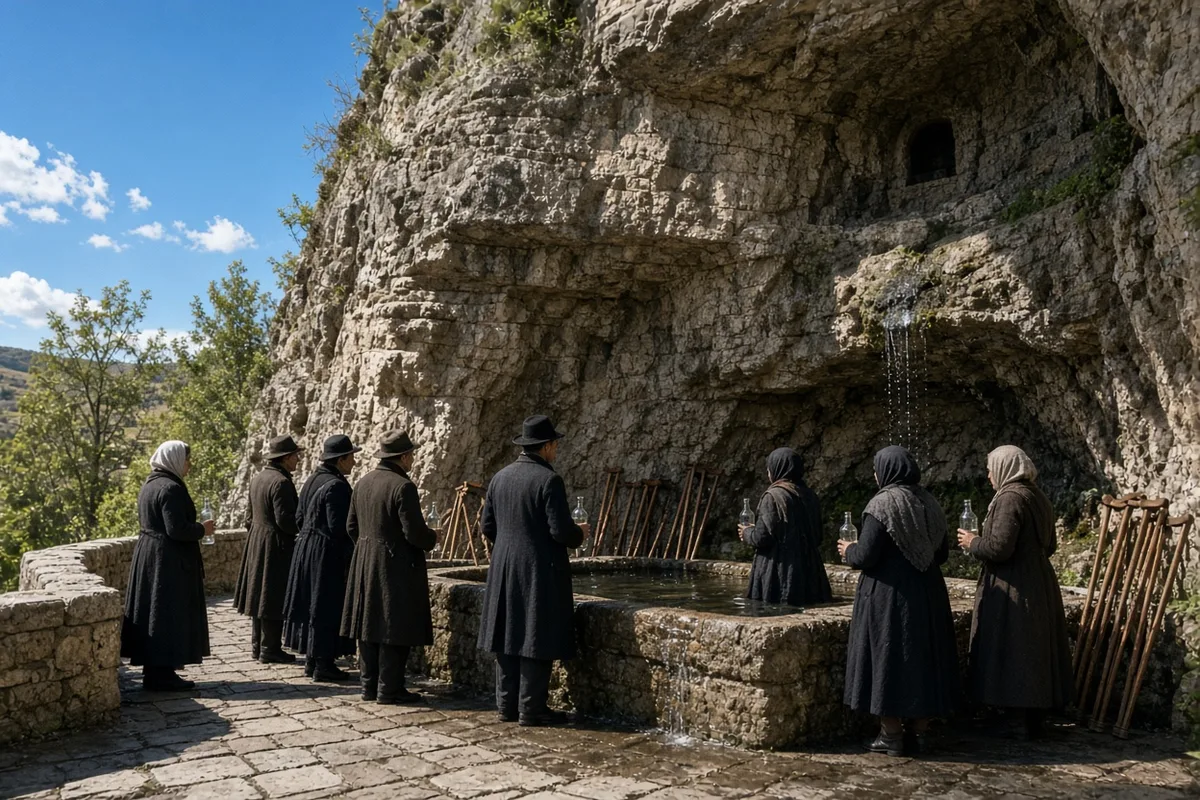
We returned to Messina ten days after we had left. The same surgeon who had taken ten centimeters of bone from her right leg the year before ordered new radiographs. He studied the plates under the light box for a long time. Then he told her the bone had regrown to its original length and the infection sites showed no remaining destruction. He added that he would not question the outcome but could not explain how the removed section had returned.
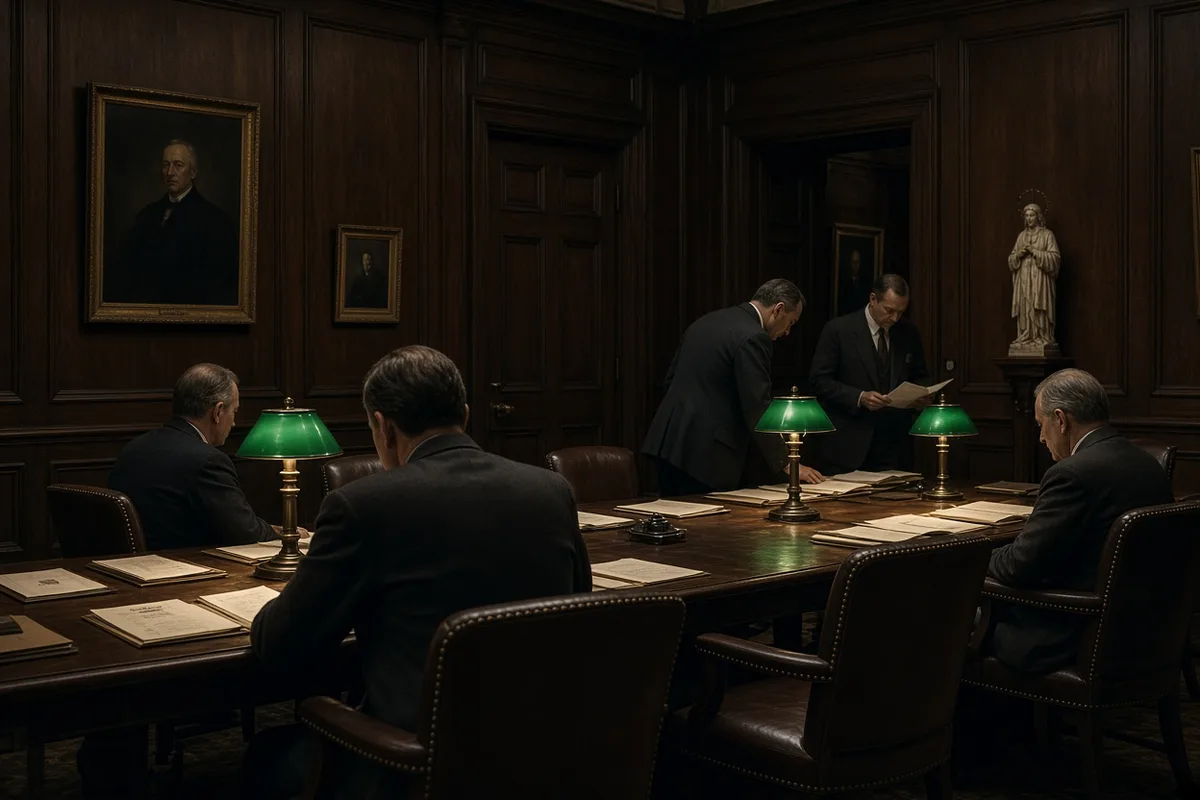
The Bureau in Lourdes forwarded the file to the International Medical Committee. Professor Salmon reviewed the records and the X-rays. In 1960 the Committee accepted the case as medically inexplicable. Five years later the Canonical Commission in Messina completed its inquiry. On the twenty-sixth of May, Archbishop Fasola declared the cure of multiple fistulous tuberculosis in Elisa Aloi to be miraculous.
She married Giovanni the following year. Between 1966 and 1974 four children were born. Each birth was recorded without complication. The children grew up in the same house where she had once lain encased in plaster. She continued to travel with Unitalsi each summer, wearing the gray dress of a service sister rather than the stretcher.
In the last spring of her life she sat on the terrace of the Messina section house and watched the younger volunteers fold linens for the next pilgrimage. Giovanni remained one step behind her chair, as he always had. When she spoke of the pools she described only the moment the water touched the cast and the sudden stillness that followed, nothing more.
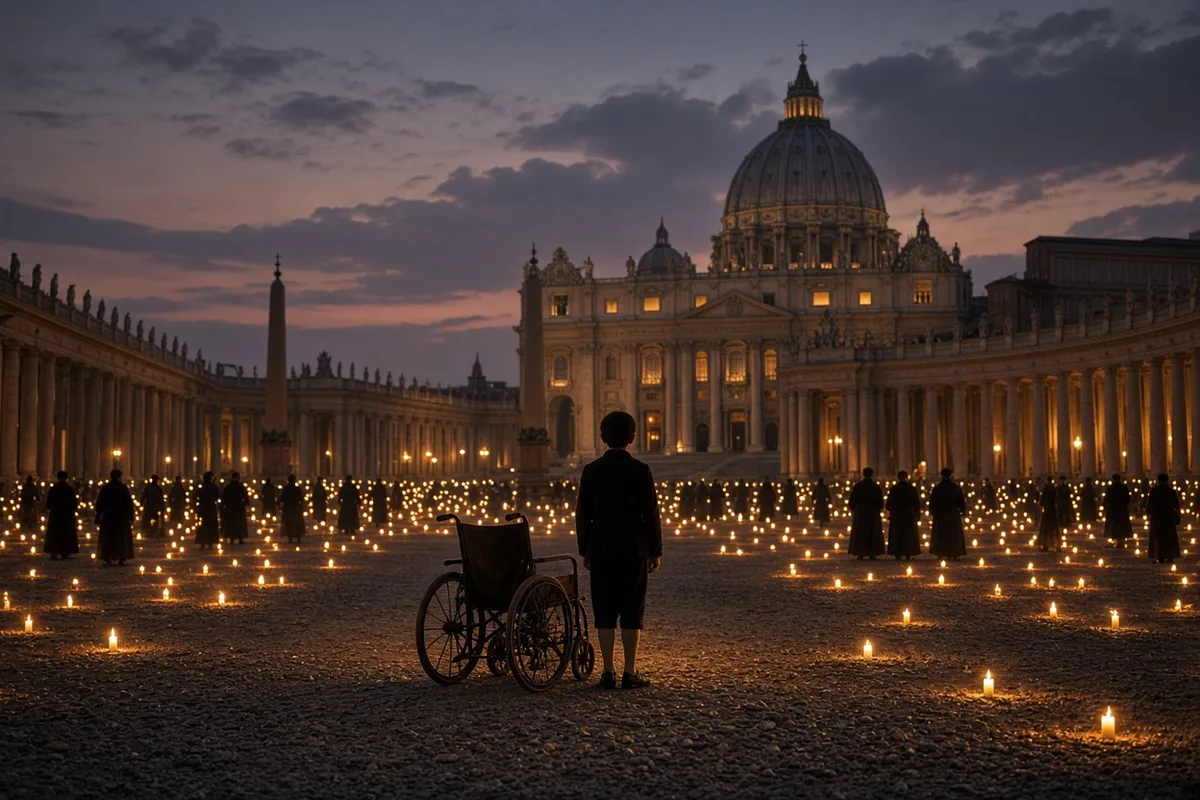
She died in November 2020 at the age of eighty-nine. The stretcher she once occupied now stands empty in the storage room of the Sicilian pilgrimage train, its straps coiled and the canvas cover folded flat against the frame.
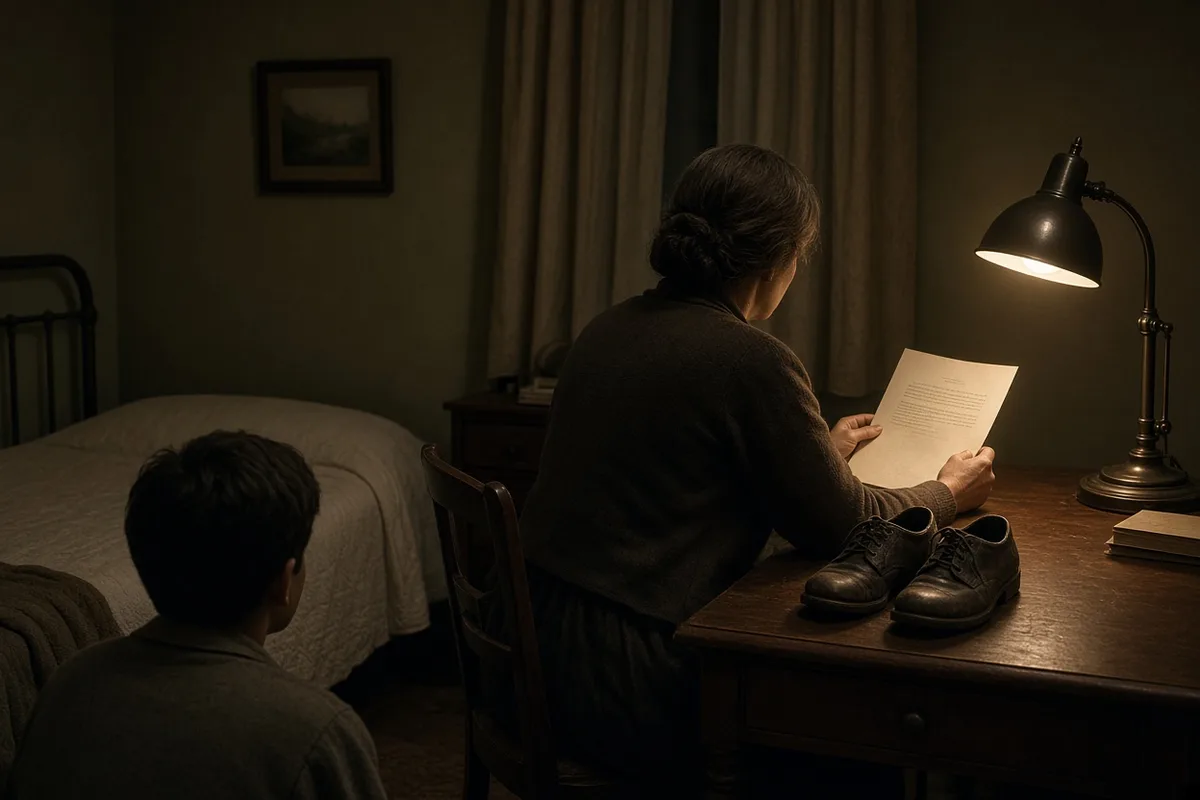
Giovanni remained at the Messina house through the winter of 2021, sorting the bundles of medical records that Elisa had kept in the top drawer of the wardrobe. On 4 February he opened the envelope postmarked from the Bureau Médical de Lourdes and reread the 1958 entry signed by Doctor Henriette Bresson that listed the four fistula sites at coordinates measured from the iliac crest. He then telephoned his second son, Francesco, born 15 September 1968 at Ospedale Piemonte, and asked him to bring the 1965 radiograph plate that still bore the stamp of Professor Carmelo Zappia. Francesco arrived the next morning with the plate wrapped in brown paper and the Unitalsi membership card number 1843 belonging to his brother Paolo.
Paolo, born 22 March 1971, took the early train from Catania on 12 March 2021 and reached the Lourdes hospital at 14:40. He signed the visitor register on page 67 of the 2021 volume, giving his address as Via Garibaldi 19, Messina, and requested access to the archive room where the original 1958 temperature charts were stored. The archivist, Sister Marie-Thérèse Duval, located the folder labeled “Aloi, Elisa, 1958” and allowed him to photograph the page on which Doctor Robert Witkowski had written “cicatrisation complète des trajets fistuleux observée à 11 h 15.” Paolo noted the time in his notebook and later transcribed the sentence in an email sent at 19:17 to the Sicilian section secretary.
The eldest daughter, Maria, born 3 July 1966, traveled alone on the 17 June 2022 pilgrimage and stayed in the Accueil Notre-Dame, room 214. On the morning of the 19th she carried the gray service dress to the piscines and handed it to attendant Jean-Claude Morel, who recorded the handover in ledger entry 3098. Maria asked that the dress be immersed for thirty seconds, the same interval her mother had once described to the Canonical Commission on 14 March 1965. Morel noted the exact duration on the form and returned the damp garment at 10:12. Maria then walked to the esplanade and stood for eleven minutes beside the stretcher that had been reassembled for display during the Italian national pilgrimage.
Francesco returned to Lourdes in May 2023 with his own son, Luca, born 9 November 1994. They attended the 7 May medical conference held in the Salle Jean-Paul II where Professor François Duret presented the 1960 International Medical Committee report, page 14, paragraph 3, quoting the sentence “Aucune explication pathologique ne rend compte de la restitution osseuse observée.” Francesco asked for a copy of the slide showing the pre- and post-cure radiographs; the projectionist provided file number LM-1960-47. Luca photographed the slide with his telephone at 16:48 and sent the image to his aunt Maria the same evening.
In October 2023 Giovanni received a letter from the Sanctuary dated 2 October that listed the annual number of Sicilian pilgrims for 2022 as 1,847 and requested confirmation that the family would continue to supply linens. Giovanni replied on 11 October, stating that the four children would rotate the duty each summer. He enclosed a copy of the 26 May 1965 decree issued by Archbishop Fasola, the original of which remains in the Messina chancery archive, volume 12, folio 88.
Maria visited the storage room of the Sicilian pilgrimage train on 8 July 2024 at the request of the new Unitalsi director, Salvatore Greco. She measured the empty stretcher frame and recorded its length as 2.14 metres and its width as 0.68 metres. Greco asked her to sign the inventory sheet as witness; her signature appears on line 14 of the 2024 ledger. She then coiled the straps exactly as they had been left in November 2020 and placed the canvas cover flat against the frame before closing the compartment door.
Paolo and Francesco stood together at the grotto on 15 August 2024 during the evening torchlight procession. Paolo held the membership card 1843 and Francesco held the 1958 Bureau file number. At 21:47 the choir began the hymn “Immaculate Mary” and both men remained in place until the final verse ended at 22:03. They then walked to the statue and left a single sheet of paper on the ledge containing the names and birth dates of Elisa’s four children. The sheet was collected by attendant Pierre Lambert at 22:15 and placed in the daily intention box numbered 472.
On 19 August 2024 Luca Aloi, born 9 November 1994, returned to the Lourdes hospital archive with the 1960 radiograph copy numbered LM-1960-47 and requested comparison against the original plates stored in cabinet row 4, compartment 19. Archivist Sister Marie-Thérèse Duval opened the compartment at 09:15 and placed the 1958 pre-cure plate beside the 1960 image under the viewing lamp. She dictated into the log the measurement of the regenerated femoral segment as 9.8 centimetres and noted the absence of sequestra at the former osteomyelitis sites. Luca recorded the dictated figures in his notebook and initialled the log on line 22 of page 91 of the 2024 volume.
Giovanni Aloi died at Ospedale Piemonte on 3 January 2025. The death certificate, signed by Doctor Elena Russo at 14:22, listed the cause as cardiac failure and referenced his Unitalsi membership card 1843 on the reverse. Maria Aloi, born 3 July 1966, collected the remaining envelopes from the Messina wardrobe on 7 January and forwarded the 1958 Bureau Médical temperature chart to the Sicilian section secretary by registered post numbered 784291. The secretary logged receipt at 11:40 on 9 January and assigned the chart to the permanent file under reference SIC-1958-EL-01.
Francesco Aloi and his son Luca attended the 11 May 2025 meeting of the International Medical Committee in the Salle Jean-Paul II. Professor François Duret read aloud the 1960 conclusion on page 14, paragraph 3, stating “Aucune explication pathologique ne rend compte de la restitution osseuse observée,” then passed the original typewritten sheet to the projectionist for scanning under file LM-2025-03. Francesco requested and received a certified photocopy stamped at 16:05, which he placed in an acid-free folder labelled with his father’s name and the date of the 1958 cure.
On 14 June 2025 Maria Aloi carried the gray service dress to the piscines again and requested immersion for the same thirty-second interval noted in the 1965 Canonical Commission transcript. Attendant Jean-Claude Morel recorded the request in ledger entry 4172 and timed the submersion from 10:04 to 10:04:30. He returned the garment damp and signed the form at 10:07, after which Maria walked to the esplanade and stood beside the reassembled stretcher for the duration of the Italian national pilgrimage’s morning prayer at 10:30.
Paolo Aloi, born 22 March 1971, arranged for the 1965 Messina chancery volume 12, folio 88, containing Archbishop Fasola’s decree, to be digitised on 2 July 2025. The chancery archivist completed the scan at 300 dpi and assigned file number MES-1965-DEC-01. Paolo forwarded the digital file to the Unitalsi national office in Rome, which acknowledged receipt by email at 14:17 the same day and added the document to the pilgrimage train’s historical inventory under reference TRN-2025-07.
In September 2025 Salvatore Greco, the new Unitalsi director, asked Maria to verify the contents of the storage compartment on the Sicilian pilgrimage train once more. She opened the door at 09:50 on 12 September, confirmed the canvas cover remained flat against the 2.14-metre frame, and noted the coiled straps had not shifted since her July 2024 measurement. Greco recorded her confirmation on line 27 of the 2025 inventory and closed the compartment at 10:05.
On 15 August 2025 Luca Aloi stood alone at the grotto ledge at 21:40 holding the 1958 Bureau file number and the 1960 radiograph copy LM-1960-47. He placed both documents inside intention box 472 at 21:52, then remained in place while the choir sang the final verse of “Immaculate Mary” ending at 22:03. The attendant on duty, Pierre Lambert, collected the box at 22:10 and logged the deposit under the same sequential number used the previous year.