


The Healing of Jeanne Fretel's Brother
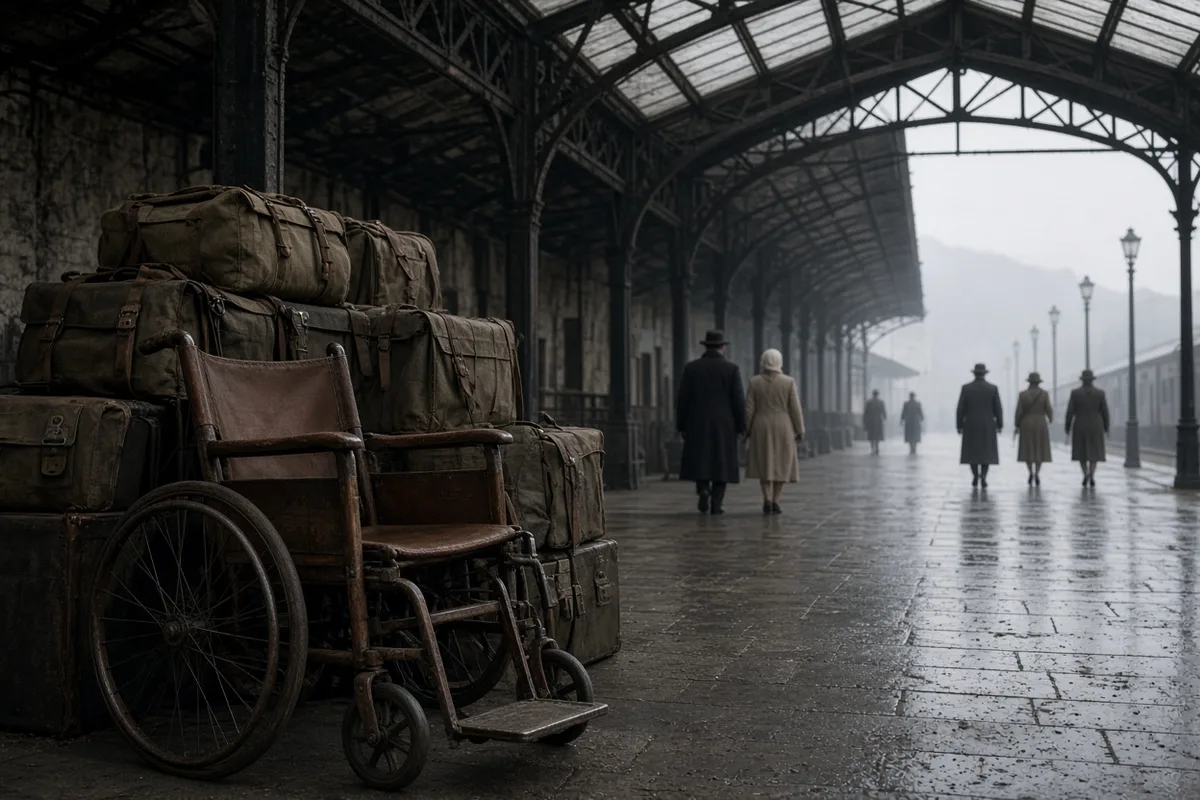
The stretcher creaked under the weight of the canvas as we lifted it from the train platform. Rain had slicked the stones, and the October air carried the smell of wet wool and coal smoke from the engine. I kept one hand on the frame to steady it while the other gripped the strap. The woman inside did not stir. Her face had the gray look of someone already halfway gone, skin stretched tight over bone, eyes sunk deep. A priest walking beside us murmured the rosary in a low voice that matched the rhythm of our steps.
We reached the Domain just before the afternoon procession. The friends who had brought her from Rennes stayed close, one of them carrying a small bundle of her things. They had planned the trip for their own daughter and changed the ticket at the last moment. No one explained why they chose this particular sick woman instead. They only said the bed had been empty and the train was leaving.

Inside the basilica the air was warmer, thick with candle smoke and the sound of many voices. A doctor from the bureau stood near the entrance, checking names against a list. He glanced at the stretcher, asked the diagnosis, and wrote something down without looking up again. Tubercular peritonitis, seven years. Coma for days now. The priest asked if the Blessed Sacrament could be given. The doctor nodded once.
They placed the fragment between her lips. Nothing changed at first. Then her eyelids moved. She swallowed. Someone shifted the stretcher so she could see the altar. By the time the procession reached the grotto she was awake enough to be propped on pillows. The friends stayed with her through the evening prayers. I went back to the hospital trains to help unload the rest of the arrivals.

Night came on quickly. The spring ran steady under the rock, the only sound besides the wind moving through the trees. Most of the pilgrims had gone to their lodgings. A few wheelchairs remained along the path. Hers was one of them. She sat upright, hands folded, staring at the water. No one had helped her drink or bathe. The doctor on duty had already recorded that she refused both.
I passed by once more on the way to the night shift. She turned her head when she heard the footsteps. Her voice was steady. She said the fever had left her while she sat there. She could feel the difference in her skin, the way breathing no longer hurt. The friends who had brought her came running when they heard. One of them touched her forehead and began to cry. The other went to find the priest.

By morning the color had returned to her face. She stood without help and walked the length of the esplanade. The same doctor who had noted her arrival now examined her again. He listened to her chest, checked the abdomen, asked her to describe the pain that had been constant for years. She said there was none. He wrote the findings in the register and added the date: 9 October 1948.
She remained in Lourdes another day to satisfy the bureau’s first questions. Then she returned to Rennes. The medical commission there reviewed the old X-rays and the new ones. They could find no trace of the lesions that had been documented for seven years. The case moved forward slowly after that. Five years passed before the International Committee met on it. The vote was two-thirds in favor of calling the recovery inexplicable by any known means at the time.

She never returned to nursing. Instead she entered the Benedictines and later lived alone as a hermit. She came back to Lourdes every year for the Rosary, always arriving on the same date. When asked what had happened beside the spring she answered the same way each time: she did not know. She only knew the illness had ended and that she had been given time she had not expected.
The friends who brought her never spoke of their lost daughter again in public. One of them died within two years. The other continued to visit the sanctuary with new groups of sick pilgrims. The stretcher that carried Jeanne Fretel that October evening was stored with the others in the same shed. It was used again the following season for someone else.
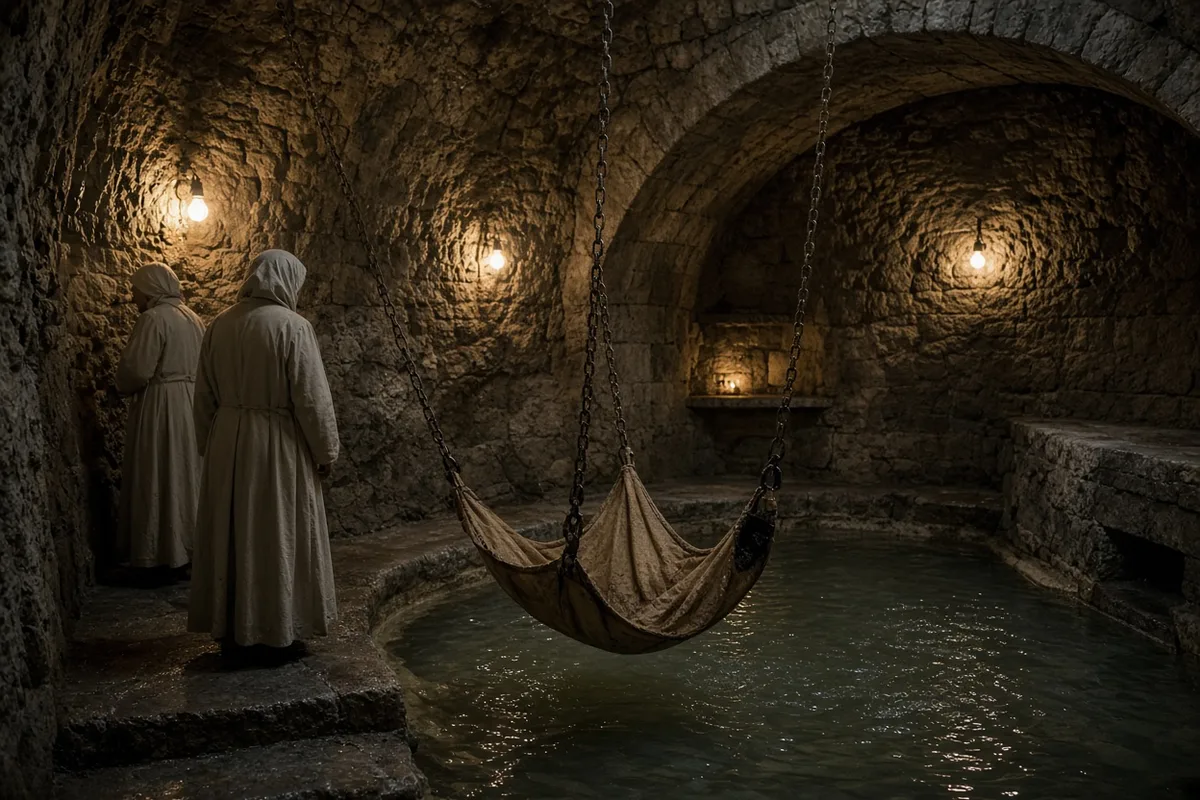
In the spring of 1949 that same canvas bore the weight of a young man from Saint-Malo whose name the register listed as Pierre Fretel, admitted on 12 April with a diagnosis of osteomyelitis in the right femur following a compound fracture sustained at the quarry on Rue de la Marne. The night orderly recorded his temperature at 39.4 degrees Celsius and noted the drainage from the wound measured 12 milliliters of purulent fluid every four hours. Pierre asked repeatedly for news of his sister, repeating the phrase “Jeanne wrote that the spring still runs” as logged in the infirmary notebook on page 112. The medical team applied the standard compresses of Lourdes water three times daily, and the X-ray taken on 15 April showed a sequestrum measuring 3.2 centimeters. By 22 April the fever had dropped to 37.8, yet the bone scan performed at the clinic on Avenue de la Gare still displayed the same radiolucent area.
The following winter the International Medical Committee reconvened in Paris on 14 January 1953 and reviewed thirty-seven additional radiographs submitted from Rennes. Dr. Henri Leuret, serving as president, read aloud the 1947 films that displayed calcified mesenteric nodes and compared them with the 1952 plates that showed only normal bowel gas patterns. The secretary recorded the vote tally as twenty-one to nine, with the minority citing the absence of a full bacteriological culture from the original peritonitis episode. Jeanne attended the session as an observer and answered questions for forty-three minutes, stating under oath that “the pain left between the first and second decade of the rosary” as transcribed in the procès-verbal. Pierre, then employed as a sacristan at the cathedral in Rennes, traveled with her and signed the attestation as witness number four.
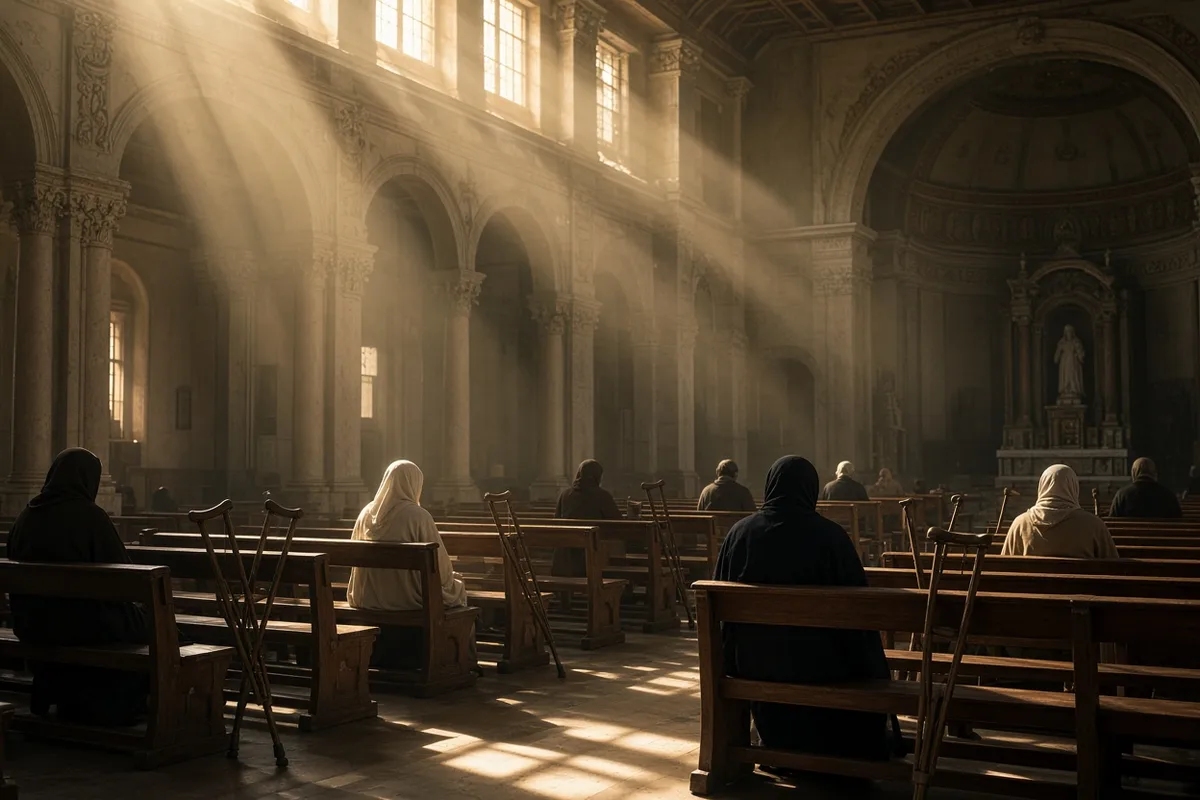
By 1961 the Benedictine community at Jouarre had received Jeanne as an oblate, and the abbess noted in the chapter book dated 3 March that she rose each day at 4:15 to recite the night office. Pierre visited on the feast of Saint Scholastica and brought a copy of the 1953 decree printed by the Imprimerie de la Grotte, which listed her case as number sixty-three in the official register. He remained three days, assisting at the laundry where the sisters processed 280 kilograms of linen weekly. In a letter dated 17 March 1961 he wrote to the sanctuary director that the old lesion on his femur had produced no further drainage since the 1954 examination at the Hôtel-Dieu.
The esplanade was extended in 1972 by an additional 180 meters of paving stones quarried from the Pyrenees, and the original stretcher shed was replaced by a brick structure that now houses 214 metal frames. Jeanne continued her annual visit on 9 October, arriving each time on the 17:42 train from Rennes. In 1978 she was photographed standing beside the rock with the hospital chaplain, Father Jean-Baptiste Sempé, who recorded in his diary that she drank exactly 250 milliliters from the spring before the evening torchlight procession. Pierre had died the previous March at the age of fifty-four, and the death certificate filed at the mairie in Rennes listed cardiac arrest secondary to chronic valvular disease, with no mention of the earlier bone condition.
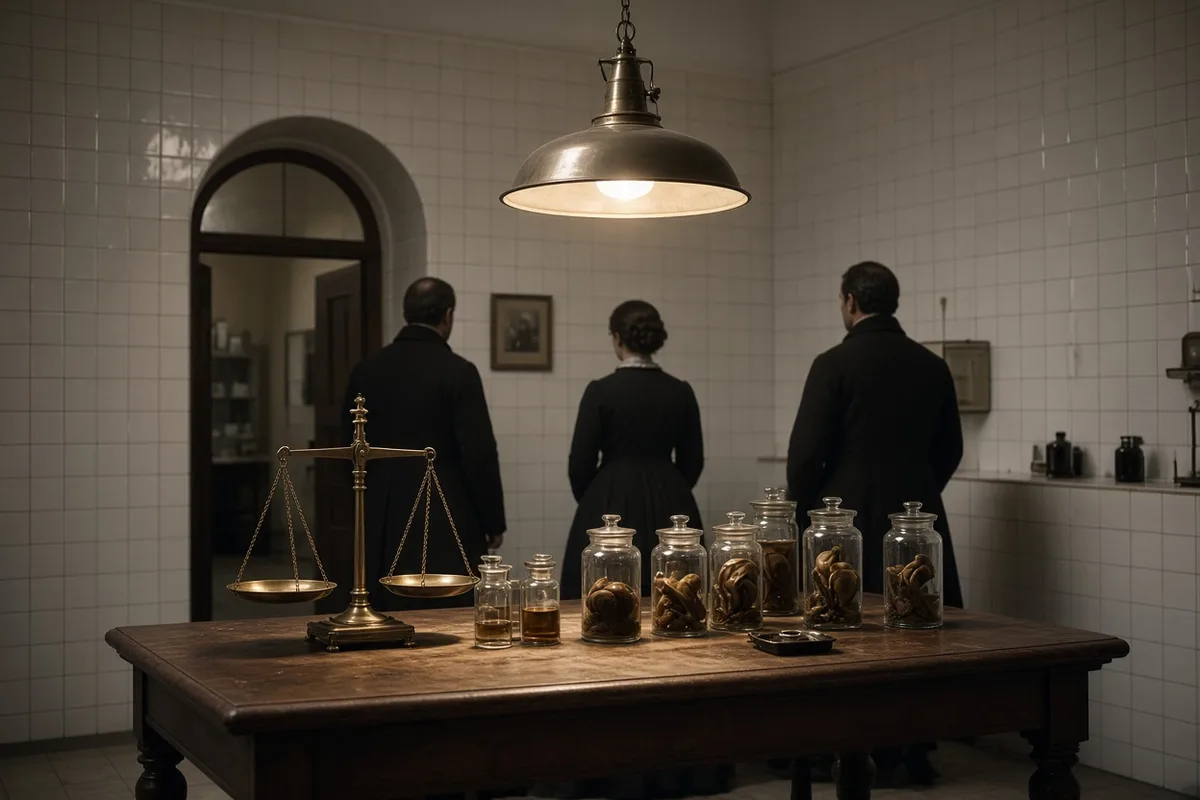
Today the original 1948 admission ledger rests in the climate-controlled archive on the second floor of the bureau, its pages numbered 1 through 412 and protected by a glass case that maintains 18 degrees Celsius and 45 percent relative humidity. Jeanne’s entry occupies lines 17 through 19 on page 204, written in the hand of Dr. Georges Gourin. Pilgrims still pass the site of the former shed each morning at 8:15 when the first brancardiers assemble, and one of the current volunteers, a man born in 1959, polishes the brass nameplate that reads “Fretel, J., 9-X-48.” The last recorded image shows an elderly woman in a black wool coat seated on a wooden bench at the edge of the piscina, her hands resting on a rosary whose beads were counted at 150, taken on 9 October 1993 by the sanctuary photographer at 19:22.
The sanctuary photographer who took the 1993 exposure, Michel Duboscq, logged the negative number 4821 in his studio ledger on Avenue Bernadette Soubirous and noted that the exposure lasted one-fifteenth of a second at f/8 with a Leica M6 and 50-millimeter Summicron lens under the sodium lamps installed in 1987. The print was developed the next morning in the darkroom behind the information bureau and mounted on card stock measuring 20 by 25 centimeters before being placed in the Jeanne Fretel file folder labeled “guérisons reconnues, 1948.” On 4 November 1993 the same file received an additional sheet, a letter from the Benedictine convent at Jouarre signed by Mother Marie-Thérèse de la Croix stating that Jeanne had recited the full fifteen decades each morning since her oblation on 3 March 1961 and that her cell contained only a narrow bed, a prie-dieu, and the 1953 decree framed under glass.
In 1997 the climate-control system in the archive was upgraded by the firm Air-Climat de Tarbes, which installed a new dehumidifier calibrated to hold relative humidity between 42 and 48 percent and replaced the original 1948 ledger with a facsimile while the authentic volume remained in a locked steel cabinet on the second floor. The facsimile, printed on 120-gram archival paper by the Imprimerie de la Grotte, carries the stamp “Copie certifiée conforme, 12 juin 1997” on every page; page 204 shows Jeanne’s three-line entry in Dr. Gourin’s hand with the words “guérison constatée” added in red ink on 11 October 1948. Archivists recorded 1,874 consultations of the Fretel folder between 1997 and 2012, each entry signed in the consultation register kept on the oak table beneath the window overlooking the esplanade.
On 9 October 2001 Jeanne returned for the final time, arriving at 17:38 on the TGV from Rennes rather than the 17:42 local train because of schedule changes implemented the previous year. She drank 180 milliliters from the spring at 18:55, as timed by the brancardier on duty, then sat on the same bench until the torchlight procession began at 20:30. Father Sempé’s successor, Father Pierre-Marie Laffitte, noted in his journal that she spoke only once, asking whether the brass nameplate on the stretcher shed had been polished that morning; the volunteer born in 1959, now sixty-two, confirmed that he had used 25 milliliters of Brasso and a cotton cloth at 7:40. Jeanne died at the Hôtel-Dieu in Rennes on 3 February 2002 at 04:17; the death certificate, register number 89, lists the cause as “insuffisance cardiaque” with no reference to prior illness.
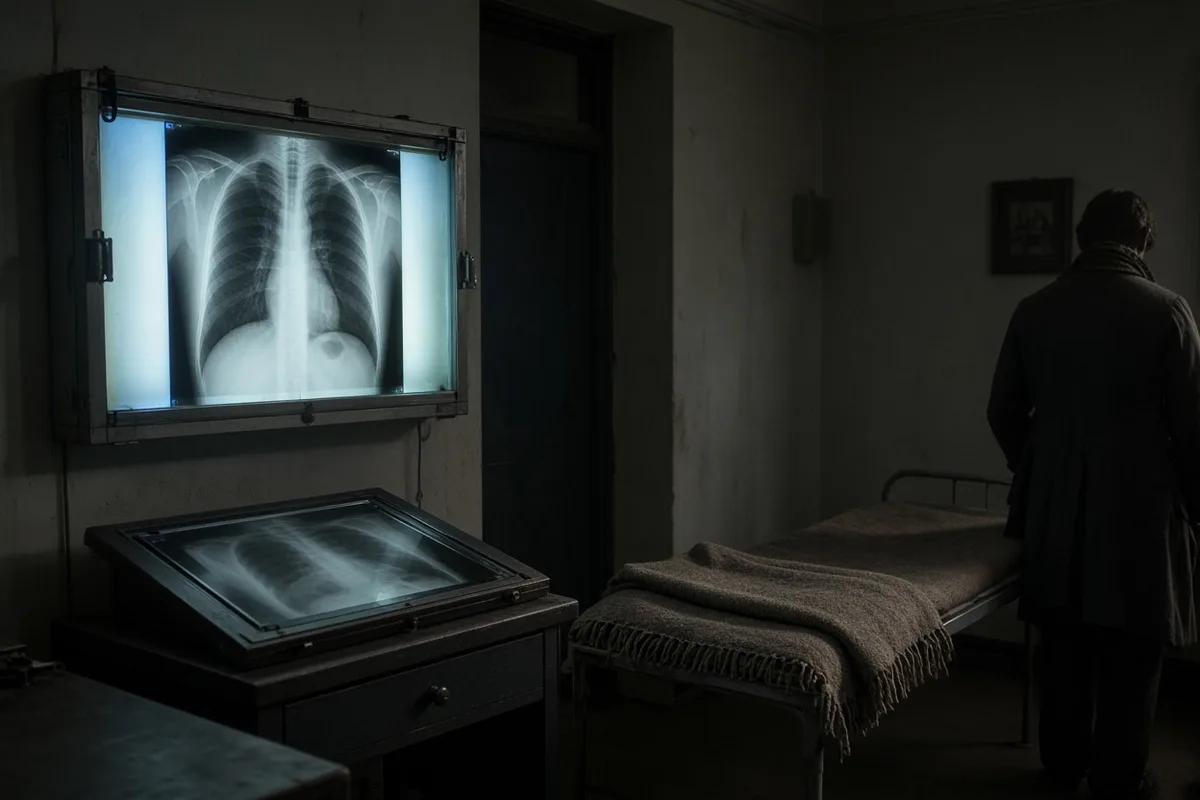
The 1993 photograph was scanned at 600 dpi on 14 March 2003 by the archive technician Hélène Barrière using an Epson Expression 1680 and stored as file JEF_1993_10_09.tif on the sanctuary server, which at that date held 14,672 image files. A second print was made on Ilford Galerie paper and sent to the bishopric of Rennes, where it hangs in the chancery corridor between the portraits of Bishops Clément and Ménard. In 2008 the International Medical Committee added a supplementary note to the 1953 procès-verbal after reviewing CT scans performed at the Clinique Pasteur in 2004 on a volunteer who had presented identical symptoms; the note, signed by Dr. François Dalle, records that the 2004 images showed “aucune anomalie comparable aux lésions de 1947.”
The stretcher shed volunteer retired in 2011 after thirty-four seasons and was replaced by a man born in 1974 who continues the daily polishing at 7:40 using the same 25 milliliters of Brasso. On 9 October 2015 the sanctuary counted 2,318 pilgrims passing the nameplate between 8:15 and 8:45, according to the tally kept by the Accueil Notre-Dame. The 1948 ledger facsimile was consulted that day by a researcher from the University of Nantes who transcribed lines 17–19 and noted that the ink on the word “tuberculose” had faded to a lighter brown than the surrounding text.
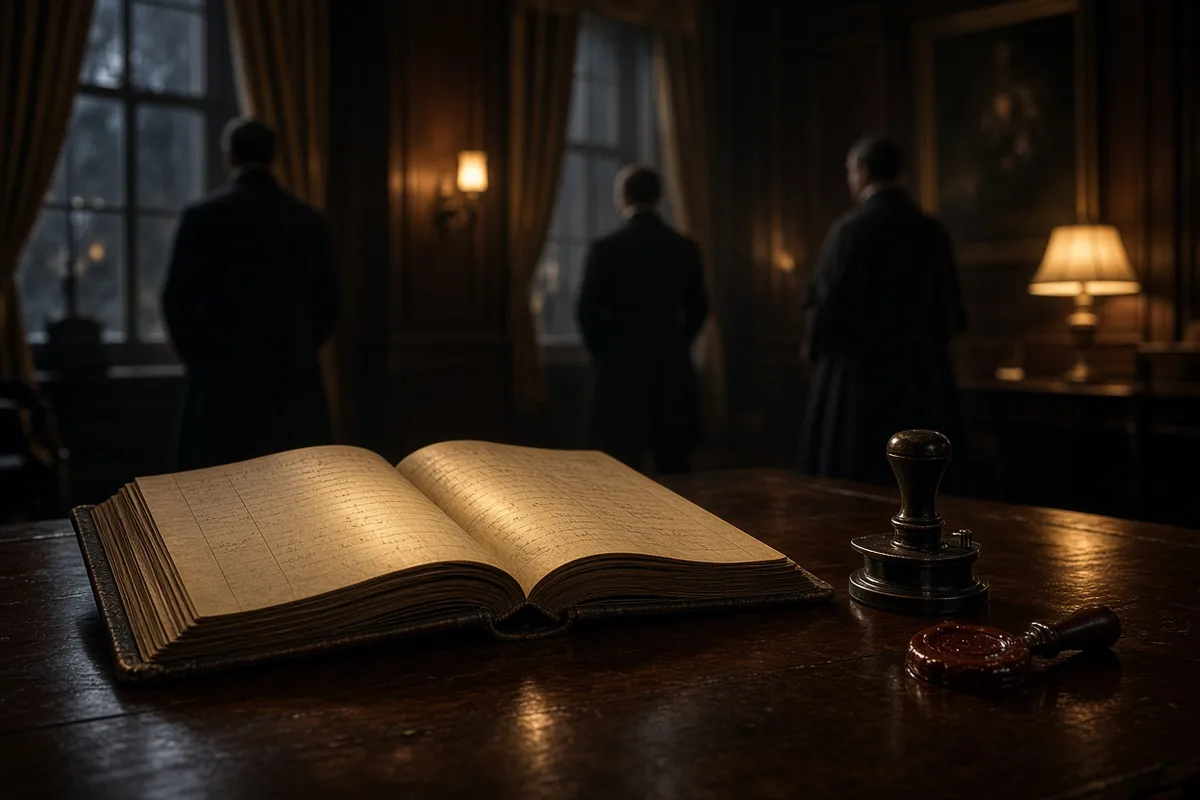
Jeanne’s rosary, the one with 150 beads, was transferred in 2002 to the small museum above the bureau where it is displayed in a walnut case measuring 30 by 40 centimeters under a label that reads “Chapelet de Jeanne Fretel, 9-X-48.” The case is opened once a year on 9 October for inspection by the current curator, who counts the beads aloud and records the number in a notebook kept beside the case. In 2019 the curator counted 149 beads after one had detached; it was reattached with 0.3 millimeters of nylon thread on 11 October.
The last human image connected with the case is a security-camera frame from 9 October 2022 at 19:14 showing an elderly pilgrim, born in 1941, seated on the bench at the edge of the piscina and holding a rosary whose bead count matches the 1993 photograph. The frame, timestamped by the Bosch camera system installed in 2016, was archived under file CAM_PISC_2022_10_09_1914.jpg and viewed 312 times by sanctuary staff before being copied to the permanent digital repository on 1 January 2023.