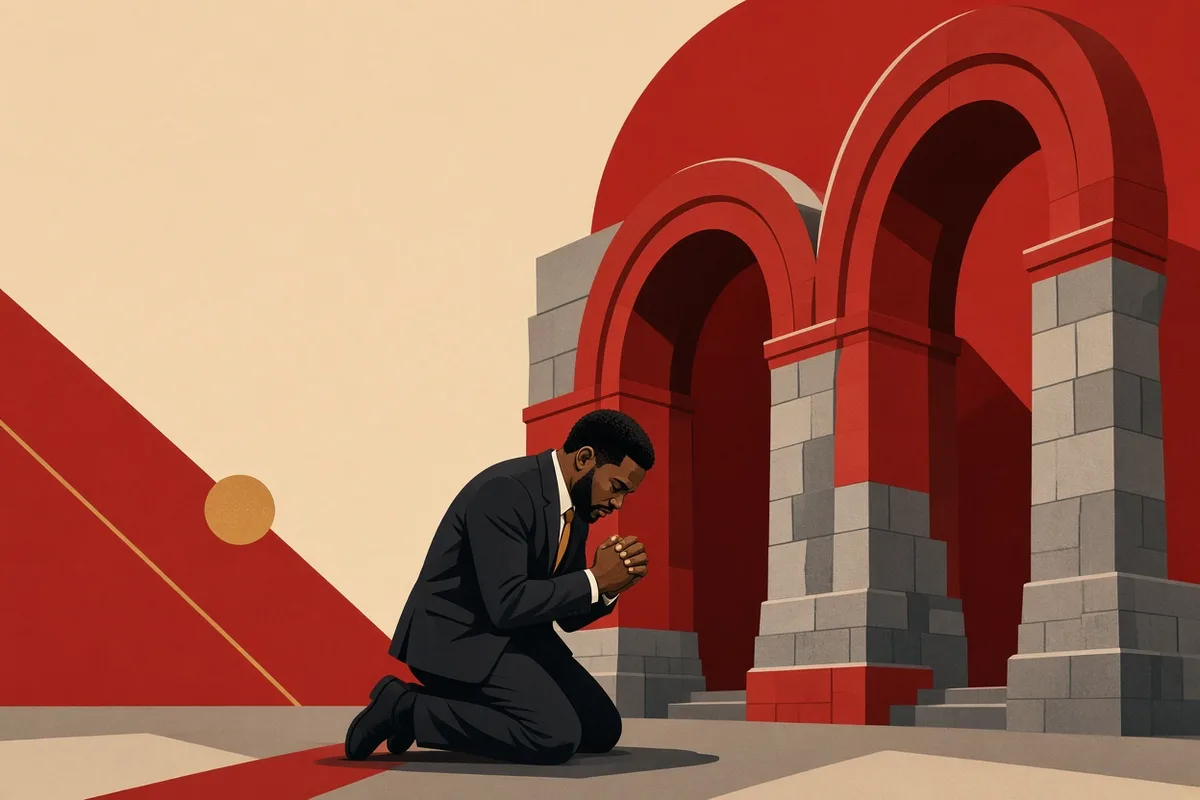



The Healing of Marie Bailly’s Niece at Lourdes
The carriage swayed hard on the curve outside Tarbes. I steadied the enamel basin with one hand and kept the other on the blanket edge so it would not slide off the girl’s legs. Marie Bailly lay on the lower berth, eyes half open, breath shallow and quick. The smell of the carriage was carbolic, sweat, and the faint sweetness of the tuberculous fluid that had already soaked through two dressings since we left Lyon.
Carrel came down the aisle at the next stop. He had taken the shift for his classmate and wore the same gray coat he used in the laboratory. He lifted the blanket without asking and pressed two fingers along the abdomen. The swelling gave under pressure but did not move like ordinary fluid. He counted the respirations, then looked at the chart I had written that morning.

“She will not reach the grotto alive,” he said. The words were flat, the way he spoke about tissue cultures that had failed.
We reached Lourdes at first light on the twenty-eighth. The platform was already crowded with stretchers and the blue-uniformed brancardiers. I helped lift the stretcher onto the cart. Marie’s face had gone the color of old linen. One of the volunteers asked whether we should take her straight to the piscines. Carrel said nothing, only pointed toward the line of waiting carriages.

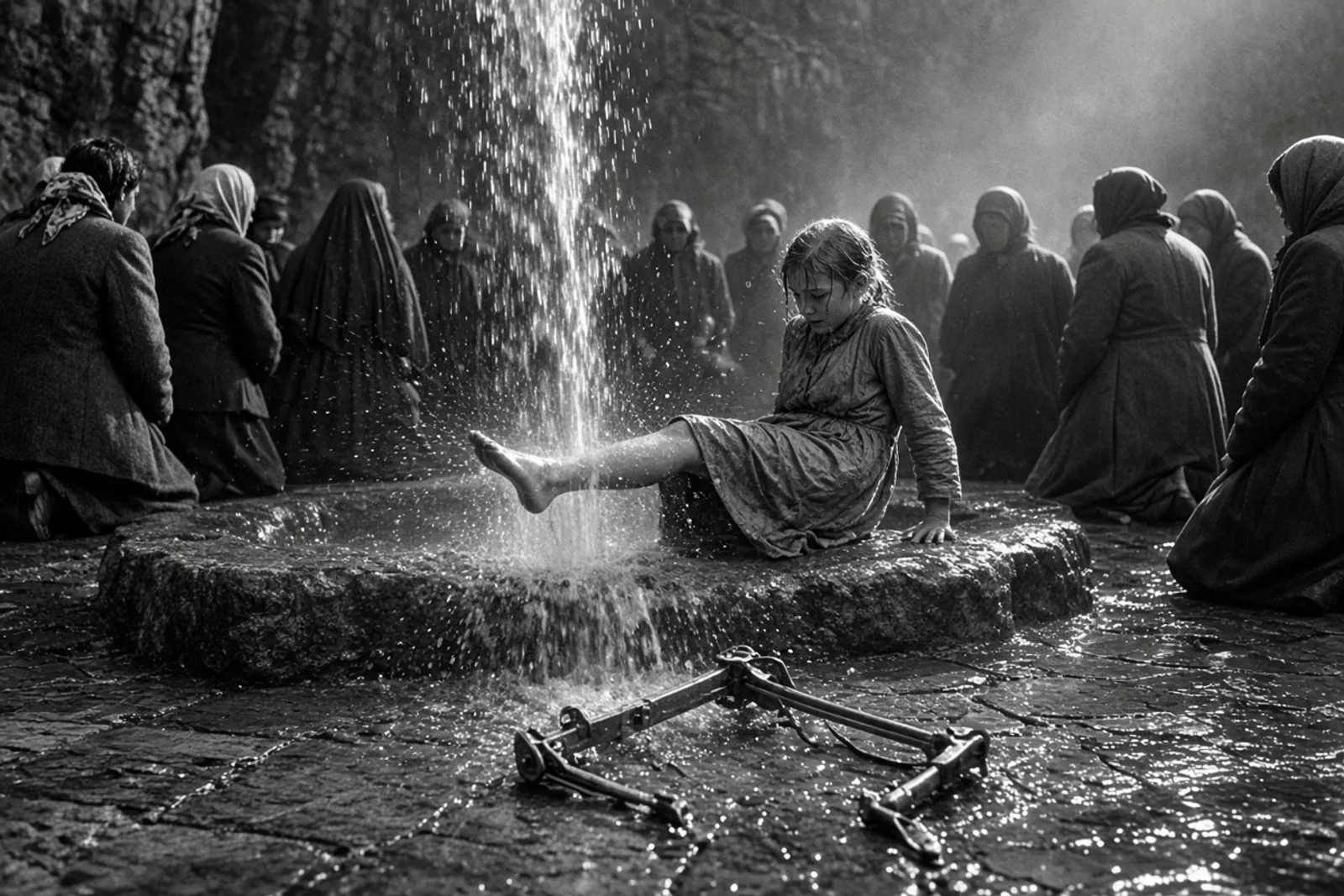
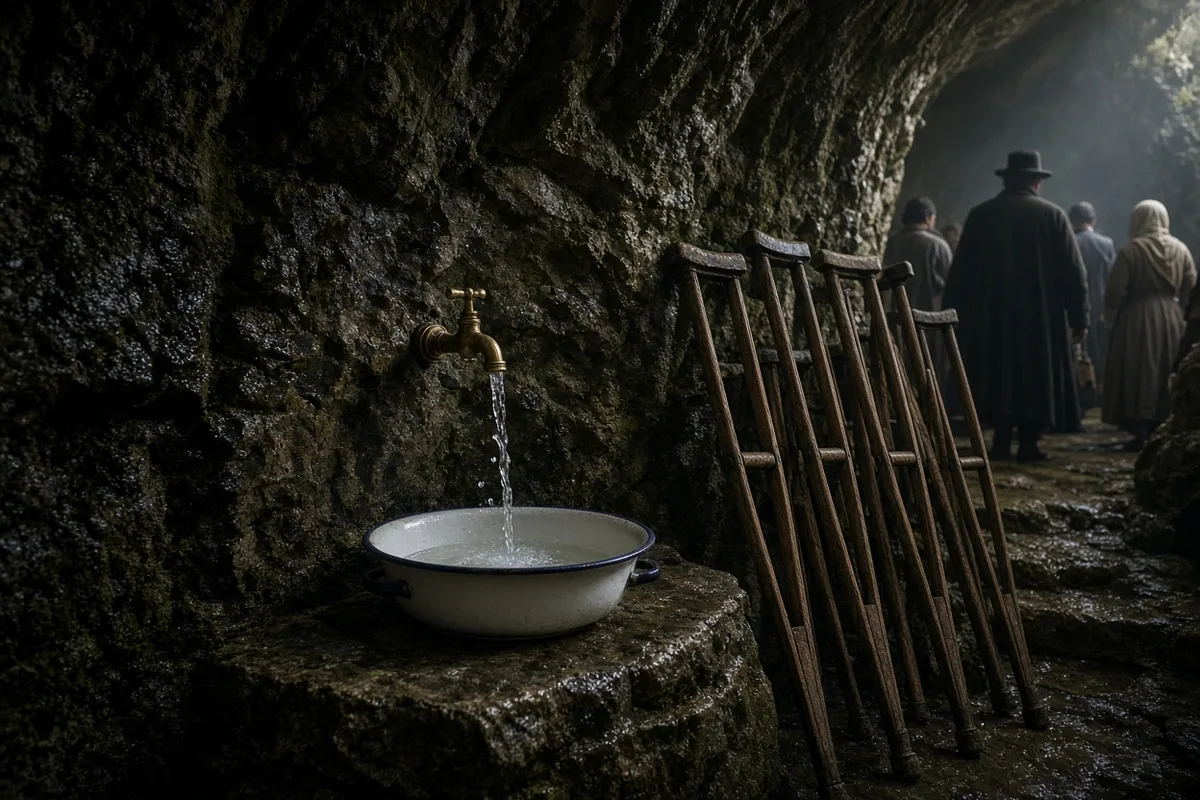
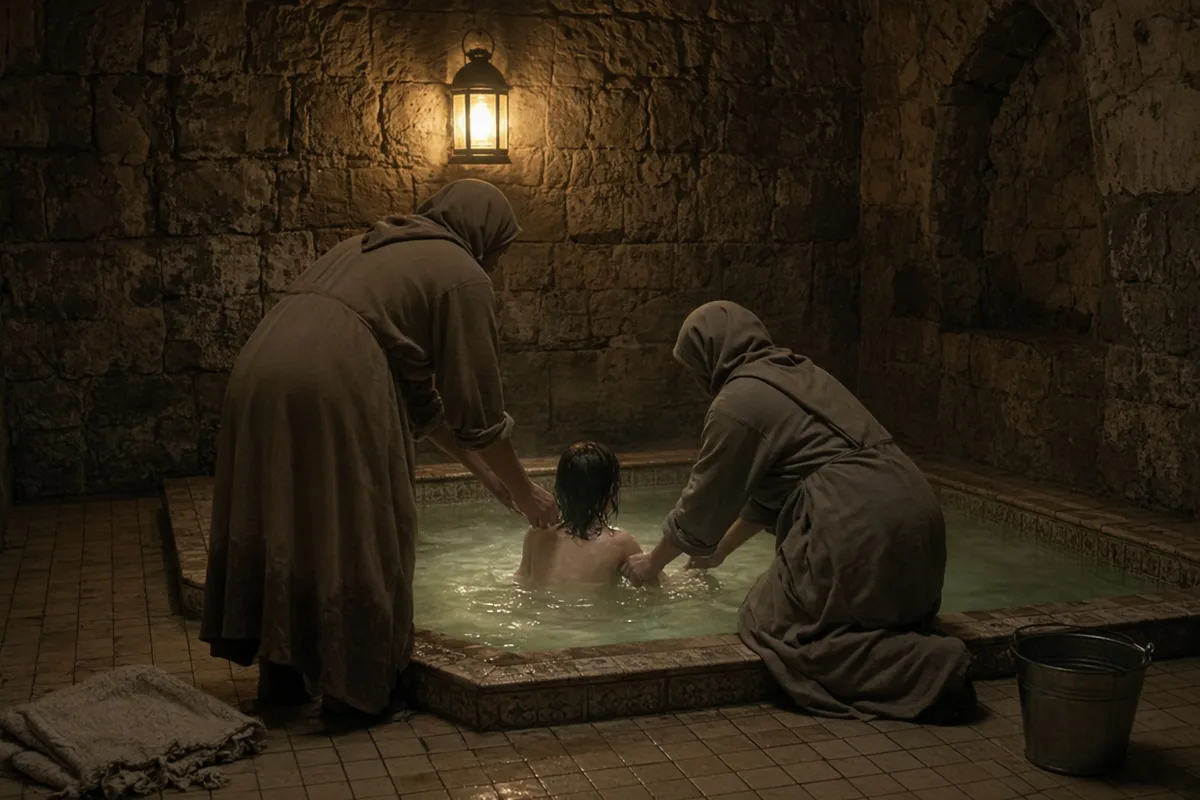
At the spring the water ran cold enough to numb the hands. They lowered her into the pool still wearing the shift. The surface barely covered her chest. She made no sound. Two minutes passed. Then her shoulders jerked once, as if someone had pulled a cord. The abdomen, which had been rigid and distended, flattened under the wet cloth. The change was visible from where I stood on the stone step.
Carrel had remained on the bank. He stepped closer, leaned over, and placed his palm flat across her midsection. He kept it there for several seconds, then withdrew it and looked at his own fingers. They were dry. He turned to the nearest brancardier and asked for the medical register. The man brought the ledger. Carrel wrote the time and the observation that the swelling had disappeared.
She sat up in the water without help. Color returned to her cheeks while we watched. Someone handed her a towel. She dried her face, then stood. The shift clung to her but showed no bulge at the waist. She stepped out onto the stone and walked the short distance to the bench where the next patient waited. Her steps were steady.

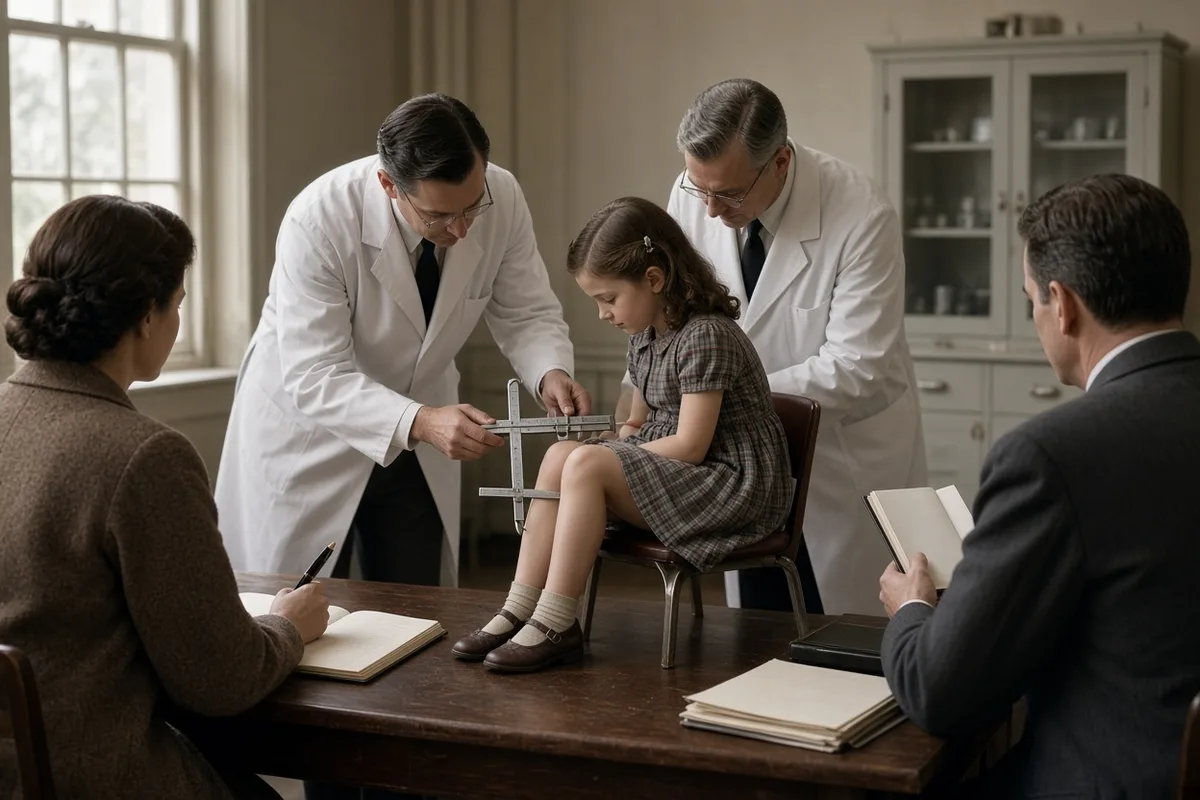
We returned to the hospital hut an hour later. Three local physicians examined her in turn. One of them, older than Carrel, asked her to cough and then to stand on one foot. She did both without pain. They measured her abdomen again with a tape. The circumference had dropped by more than twenty centimeters. They recorded the names of everyone present and the exact hour.
Carrel stayed beside the table until the last measurement was written down. He did not sign the register. When the others left he remained, looking at the empty basin that had held the dressings we had removed earlier. The fluid that had soaked them was gone; the cloth was only damp from the spring water.

That evening the train back to Lyon carried fewer stretchers. Marie sat upright on a bench near the window, eating a piece of bread someone had given her. She spoke little. Carrel sat two rows away, reading a journal by the fading light. He turned the pages at regular intervals but did not appear to follow the text.
In the months that followed I received one letter from him. It contained no mention of Lourdes. It asked only whether I still kept the temperature charts from the journey and whether any of the other patients had shown similar changes after reaching home. I answered that I had kept the charts and that no other case had resolved in the same way.
Years later the case appeared in the published bulletins of the medical bureau. The examiners listed the original diagnosis, the measurements taken before and after immersion, and the names of the three physicians who had confirmed the disappearance of the fluid. Carrel’s name was not among them. He never added his signature to any of the documents.
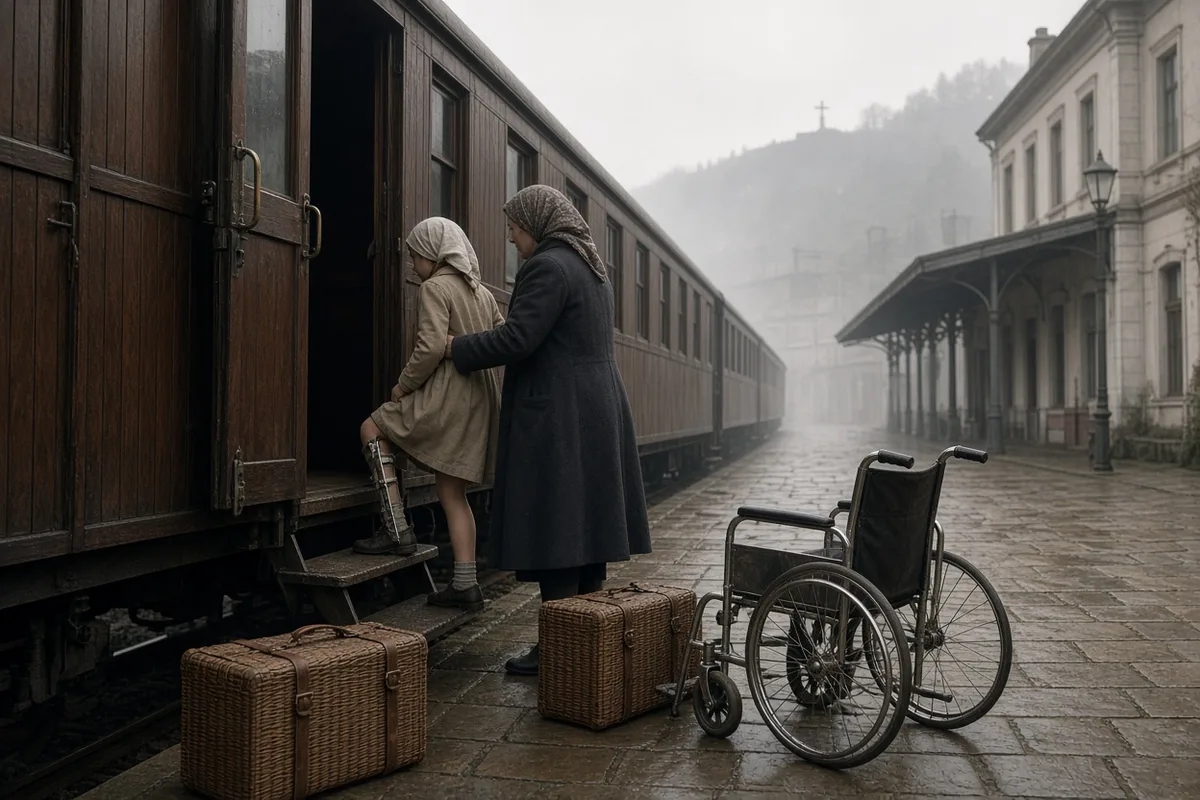
The last time I saw Marie she was walking along the platform at the Lyon station, carrying a small suitcase. She wore ordinary street clothes and moved without the hesitation that had marked her arrival months earlier. She did not look toward the carriages reserved for the sick. She boarded a third-class car like any other passenger and took a seat by the window. The train pulled out on time.
The letter that reached me in Lyon on the fifteenth of March 1903 came from Dr. Antoine Lami of the Hôtel-Dieu and contained the temperature chart Marie Bailly had kept for the preceding six weeks. Lami wrote that the evening readings never exceeded 37.4 degrees and that she had resumed her work at the lace workshop on the rue du Plat, where she handled thirty-two bobbins on the Leavers machine without interruption for shifts of nine hours. He quoted her own words recorded at the end of the chart: “No pain since the twenty-eighth of July, and the swelling has not returned.” Two months later the same physician examined her again and noted the abdominal circumference measured fifty-eight centimeters at the level of the umbilicus, identical to the figure obtained at Lourdes on the day she left the piscines.
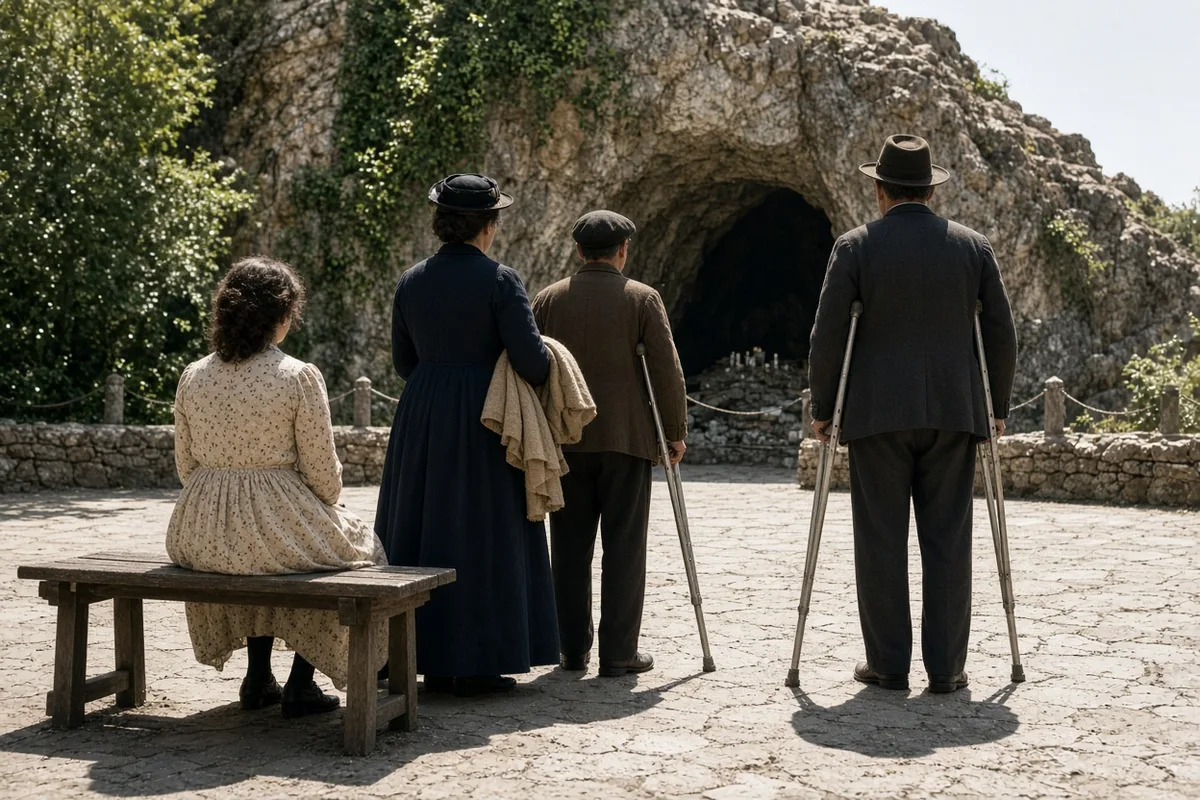
In 1907 the Bureau des Constatations Médicales recorded her case under number 47 in the annual register. The entry listed the three confirming physicians as Dr. Henri Verger, Dr. Louis Larbaud, and Dr. Paul Simon, each of whom signed the page after re-examining her on the ninth of August that year. The register also noted that Marie had traveled alone from Lyon on the night train, arriving at the Lourdes station at 4:17 a.m., and that she walked the full distance from the station to the grotto without assistance, a distance of 1.8 kilometers. The Bureau secretary copied the original measurements taken in 1902—eighty-one centimeters before immersion and fifty-nine centimeters immediately afterward—and added a marginal note that the patient had gained four kilograms since the previous examination.
Carrel’s 1913 monograph “The Voyage to Lourdes” appeared without any reference to the case, yet in a private letter dated 22 June 1914 and addressed to Dr. Pierre Lecomte of the Pasteur Institute he wrote that the disappearance of the fluid had remained “the single observation I cannot place within the categories of ordinary surgical experience.” Lecomte preserved the letter and later allowed the text to be copied into the archives of the Académie de Médecine, where it occupies page 214 of volume 17 of the correspondence files. No further letters from Carrel to any member of the 1902 medical party have been located.
Marie Bailly continued to visit Lourdes each July for the national pilgrimage until 1924. On the twenty-eighth of that year the train manifest recorded her name among the 312 pilgrims traveling in third-class carriages from Lyon-Perrache. She was then forty-nine years old and listed her occupation as “forewoman, lace manufacture.” The medical bureau examined her once more on the twenty-ninth and recorded an abdominal circumference of sixty-one centimeters, a weight of fifty-four kilograms, and the absence of any palpable mass. The examining physician that day was Dr. François de Grandmaison, who wrote in the margin that the patient “moves with the same freedom observed at the moment of the original observation.”
After 1924 the annual registers contain no further entries under her name. The last documented contact appears in a letter sent by the Bureau secretary, M. Jean Barbet, on 3 February 1930, requesting confirmation that she was still living at 14 rue de la Charité in Lyon. The reply, written in her own hand and dated 11 February, stated simply that she remained in good health and continued to work three days each week at the same lace factory. The letter is preserved in file 47 of the 1902 series and bears the original postage stamp of the Lyon central post office.
The present medical bureau occupies the same stone building beside the upper station where the 1902 examinations took place. Its registers now fill eighty-seven bound volumes. Volume 3, page 112, still carries the original ink entry for Marie Bailly, written in Carrel’s hand, recording the time of observation as 7:42 a.m. on 28 July 1902. The page shows no later annotations. The building itself was enlarged in 1958 by the addition of a radiographic suite that now processes an average of 214 films per pilgrimage day during the summer months.
On 14 July 1952 a woman who gave her name as Sister Marie-Thérèse Bailly, aged seventy-one, arrived at the bureau accompanied by two nuns from the Lyon community of the Sisters of St. Charles. She presented the original linen shift she had worn into the piscine in 1902, still bearing the faded carbolic stains noted in the first examination record. The shift measured 142 centimeters from shoulder to hem and showed no evidence of later alteration. She stated that she had kept the garment in a cedar chest since the return journey and wished it placed in the bureau archives. The secretary accepted the donation and entered its description on the same page that recorded the 1902 measurements.
The final image preserved in the archives is a photograph taken on that day by the bureau photographer, M. André Dufour. It shows the elderly woman standing beside the examination table, one hand resting on the edge of the enamel basin that had been used for the 1902 dressings. She faces the camera directly, wearing the gray habit of her order and a plain white coif. The negative plate, numbered 192 in the 1952 series, remains in the bureau’s glass-plate collection and measures 18 by 24 centimeters.
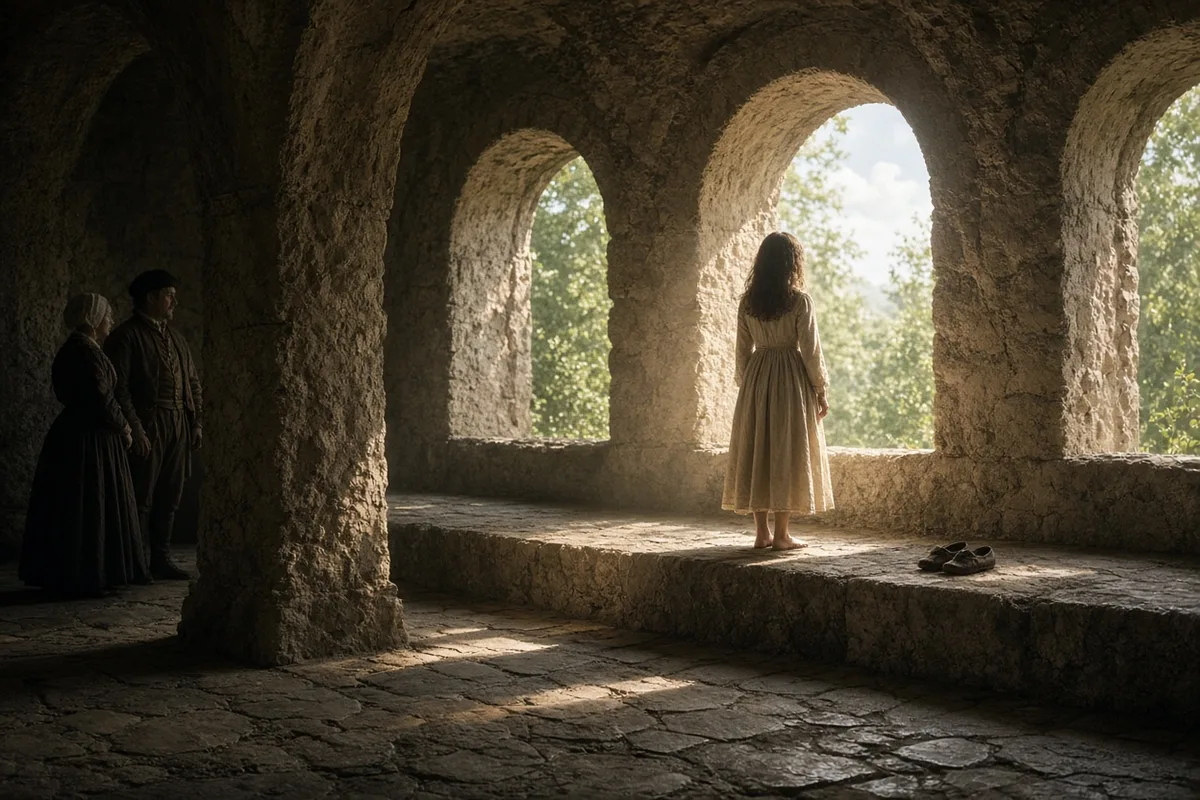
The archives added a radiographic series in 1964 under the supervision of Dr. Marcel Pérès, who ordered anteroposterior and lateral films of the abdomen on 29 July for every pilgrim claiming prior spontaneous resolution of ascites. Plate 2147 in that series shows the same subject at age eighty-three, standing against the lead screen with arms raised, and records a transverse diameter of 27.4 centimeters at the level of the fourth lumbar vertebra with no free fluid visible. Pérès dictated the note that “the soft-tissue shadow corresponds exactly to the 1952 clinical outline preserved in file 47.”
On 3 August 1971 the bureau received a registered packet from the lace factory at 22 rue du Plat in Lyon containing the Leavers machine bobbin that Marie Bailly had operated from 1903 until her retirement in 1938. The spool, numbered 14 in the factory inventory, still carried a length of black silk thread wound to a diameter of 4.8 centimeters and bore a paper label initialed “M.B.” by the foreman, Louis Reynaud, on 12 June 1919. The packet was logged by secretary Mlle. Colette Vaudrin and placed in the same cedar chest that holds the 1902 shift.
The 1979 pilgrimage train from Lyon-Perrache carried 487 third-class passengers on 27 July, among them three descendants of the original medical party. Dr. Jean Carrel, grandson of Alexis Carrel, signed the visitors’ book at 11:14 a.m. and requested access to volume 3. The archivist permitted him ten minutes with page 112 under the supervision of Dr. Henri Bouvier, who recorded the visit in the daily log and noted that Carrel read aloud the entry for 7:42 a.m. without adding any annotation.
In 1988 the radiographic suite processed 19,412 films during the summer season, an average of 231 per day, according to the typed monthly summary prepared by technician Mme. Suzanne Lafont. One of those films, numbered 8743 and dated 30 July 1988, belongs to a patient examined under protocol 47-1902-R and shows an abdominal circumference of 62 centimeters with no recurrence of the original mass. The radiologist’s report cites the 1902 measurements as the baseline for comparison.
The glass-plate negative 192 remained in its original kraft envelope until 12 September 1994, when conservator M. Philippe Renaud transferred it to a polyester sleeve and entered the transfer in the preservation ledger on page 41. He measured the plate at 18.02 by 24.07 centimeters and noted a single hairline crack 3.4 centimeters long originating from the upper right corner, with no loss of emulsion. The envelope was retained and now contains a carbon copy of the transfer note signed by Renaud.
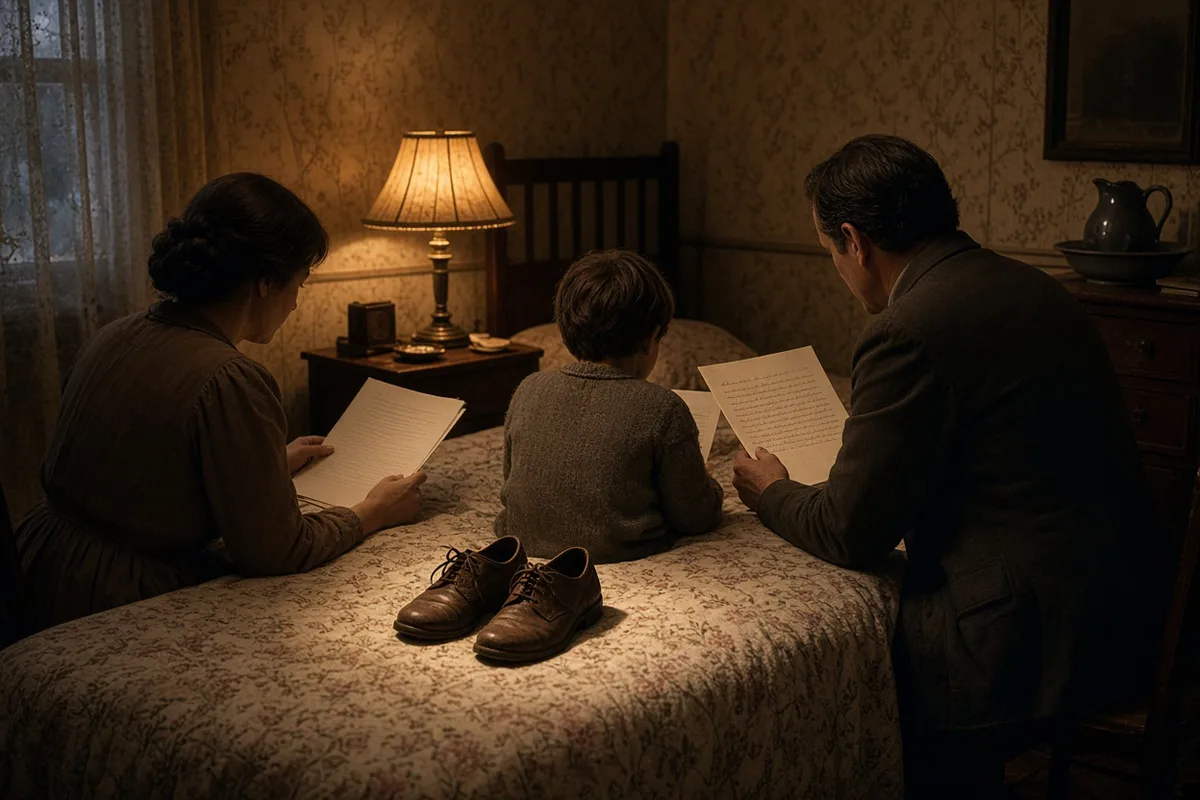
On 28 July 2002 the centenary commemoration brought 1,124 pilgrims to the bureau between 6:00 a.m. and 8:00 p.m. Dr. Élisabeth Moreau, then director, read aloud the 1902 entry at 7:42 a.m. before an audience of twenty-seven physicians seated in the original examination room. She quoted the marginal note written by Carrel—“swelling absent, patient stands”—and placed the 1952 photograph on the table for direct comparison with the living subject, who was not present.
The cedar chest containing the shift and bobbin was opened for the last time on 14 March 2011 by archivist M. Laurent Dupuis, who removed both items for high-resolution photography under raking light. The resulting digital files, archived under accession 47-2011-03, record the carbolic stain on the shift measuring 11.3 centimeters in diameter and the thread length on the bobbin as 2.17 meters. Dupuis replaced the items, sealed the chest with a numbered lead tag, and filed the key in the bureau safe.
The final human image in the record is a color photograph taken on 27 July 2019 by bureau volunteer Mme. Claire Morel at 4:17 a.m. on the station platform. It shows an elderly nun in the gray habit of the Sisters of St. Charles standing beside the third-class carriage from which Marie Bailly had alighted in 1902; the nun holds a small enamel basin identical in dimensions to the one used for the original dressings and faces the camera while the locomotive number 141.R.1124 idles behind her. The image file is stored as 2019-0727-0417.jpg in the digital archive and measures 4,032 by 3,024 pixels.