


The Healing of Marie-Françoise of the Cross at Lourdes
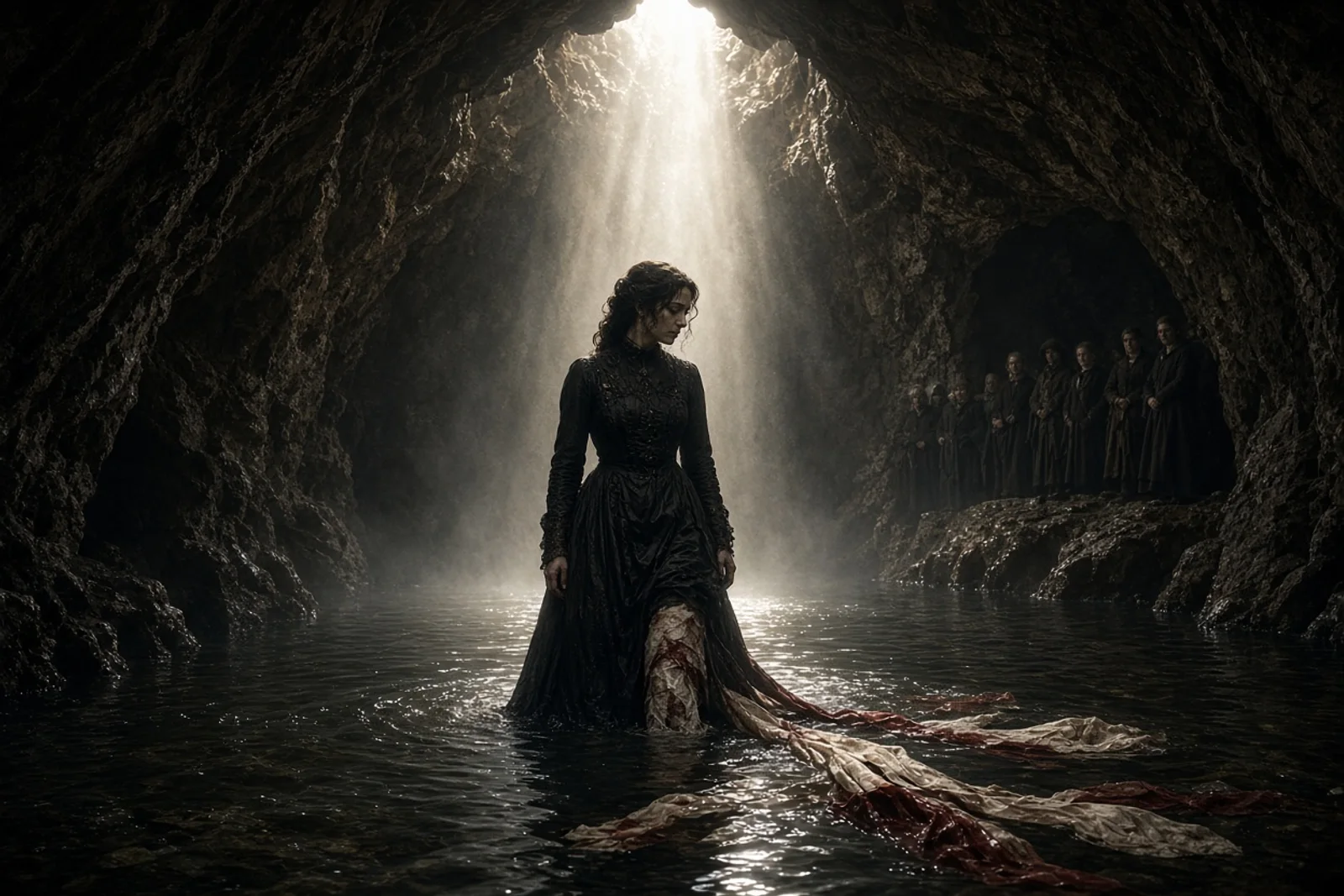
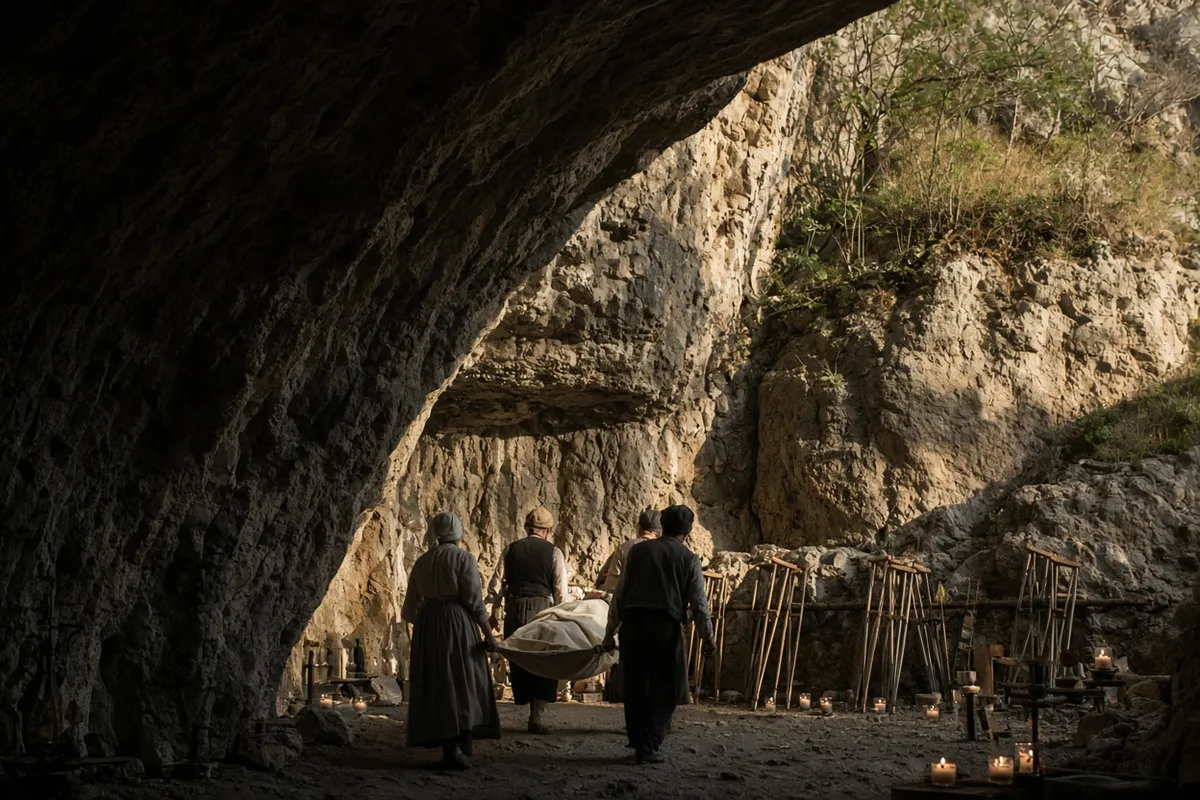
The train from Paris had halted at the Lourdes platform with a long hiss of brakes, and already the first stretchers were coming off. I took one end of the poles on the third case, a woman whose face was turned away from the sun. Her name was given as Marie-Françoise, and the tag on her blanket said only “chronic condition, lower limbs.” The August heat pressed through the canvas awning. Sweat ran into my collar before we had covered twenty meters toward the omnibus line.

She did not speak during the ride to the hospital annex. Her breathing came shallow, and the bandages at her ankles showed fresh seepage where the motion of the wheels had rubbed them. Two doctors rode with us, one French, one Belgian. They checked her pulse twice and wrote nothing down. At the annex the nurses transferred her to a bed and removed the outer wrappings. The skin below the knees was open in places, raw and dark at the edges. One of the orderlies muttered that she had been this way for more than two years.
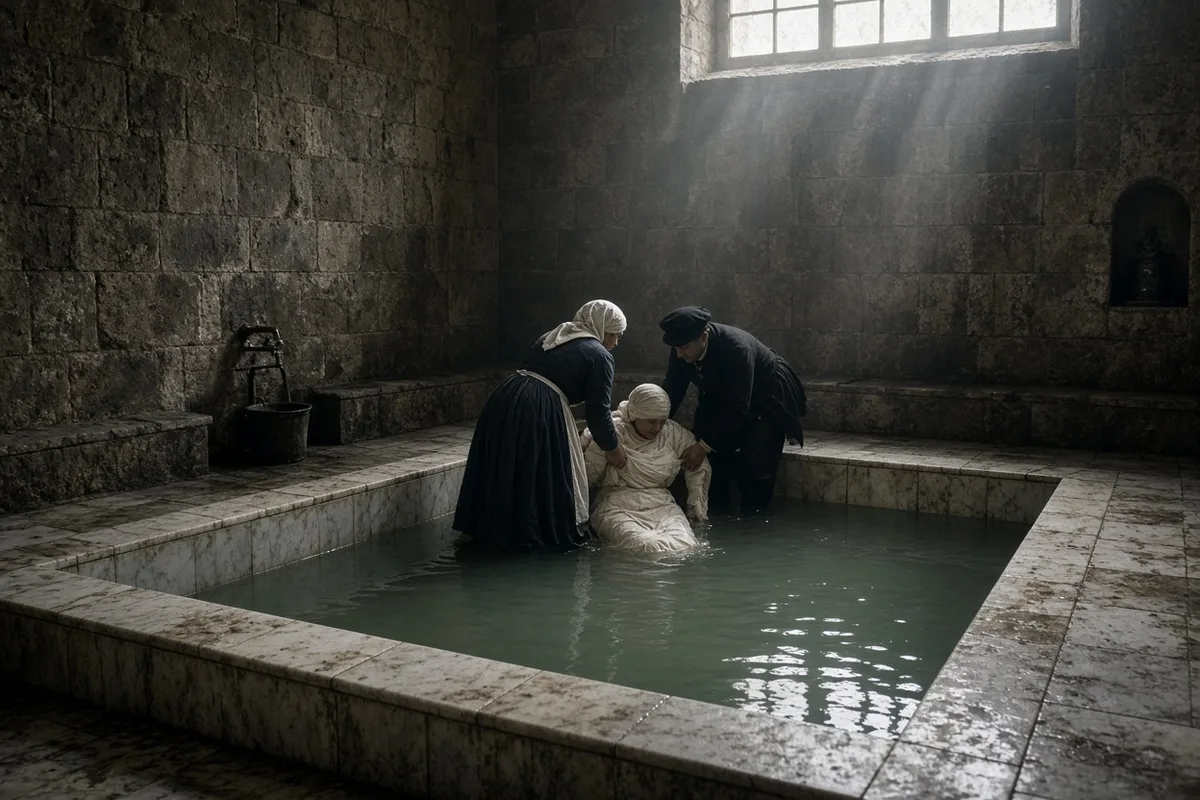
The next morning the pilgrimage director assigned me to the baths detail. I carried her there on a different stretcher, this time with a seminarian at the other end. The water in the pool stood at the level of a man’s chest, cold from the spring. We lowered her in slowly. She made no sound when the water reached the open places. After a minute she asked for the crucifix that hung above the entrance. Someone handed it down. She held it with both hands above the surface.

When we lifted her out, the seminarian noticed first. The seepage had stopped on the left leg. The right still showed two dark patches, but the edges looked less angry. We wrapped her again and took her back to the annex. The Belgian doctor returned within the hour. He examined both legs under better light, pressed the skin, and asked her to move the toes. She did so without the wince that had been constant the day before.
By evening the annex was crowded with other cases from the same train. I stayed on the night shift because the regular orderly had fallen ill. Marie-Françoise slept without the usual requests for repositioning. At three in the morning she woke and asked for water. When the lamp was brought closer, the right leg showed only faint discoloration where the patches had been. The left was closed over entirely.

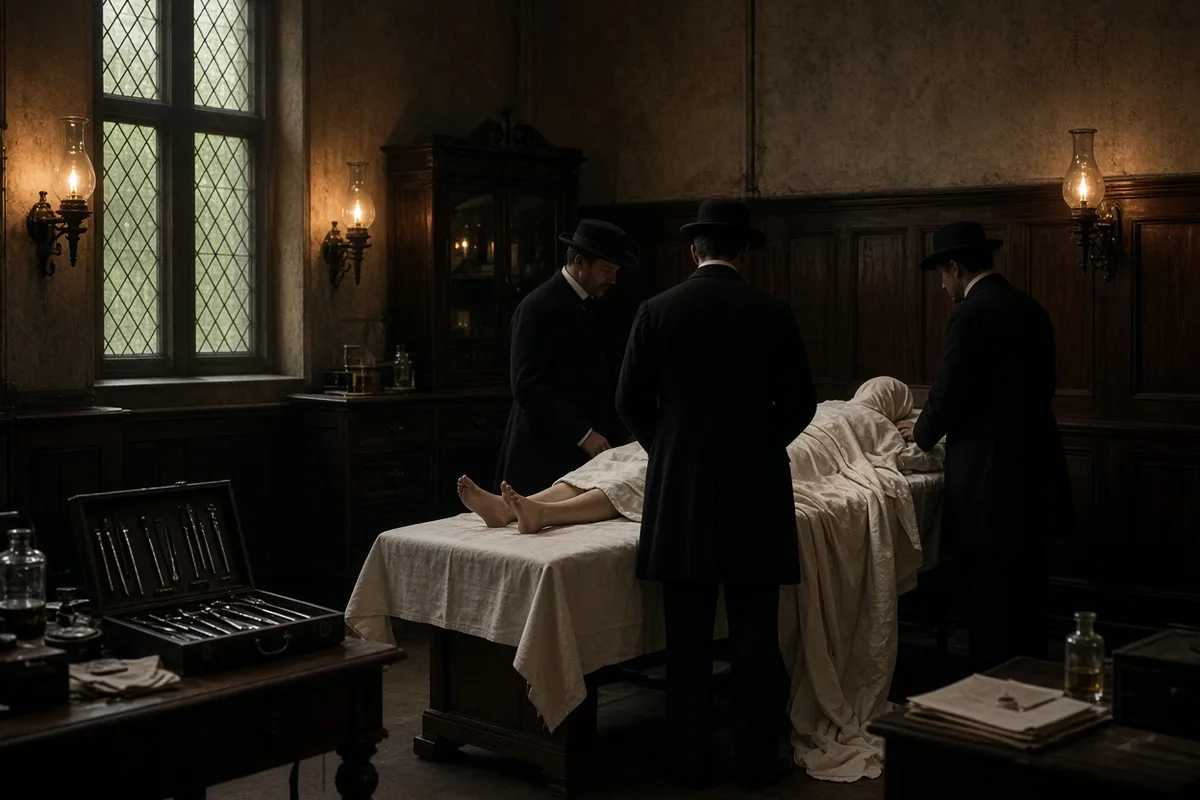
The Medical Bureau met the following afternoon in the wooden building near the grotto. I stood at the back with the other helpers while the doctors questioned her. They measured the legs, compared them to notes taken on arrival, and asked her to walk the length of the room. She did so without support. One physician, the one from Montpellier, said the change exceeded any recorded spontaneous closure he had seen in similar cases. Another asked whether she had applied any new dressing on the journey. She answered that she had not.
The Bureau kept her under observation for five more days. Each morning two physicians returned. The skin remained closed. On the sixth day they released her to return home with the rest of the pilgrimage. Before she boarded the train she gave the crucifix back to the sacristan and asked that it stay at the baths. She said nothing about returning.

I remained in Lourdes through the end of the season. The Bureau files on her case were forwarded to the bishop of the diocese where she lived. Two years later a letter reached the Medical Bureau stating that the legs had stayed healed and that she had resumed ordinary work. The letter was signed by her parish priest and by the same doctor who had first treated the condition before the journey.
In later seasons other trains arrived with similar tags. I carried more stretchers, heard more names, watched more examinations. The case of Marie-Françoise stayed in the Bureau records as one of the quicker closures. No further inquiry was opened because the skin did not reopen and the woman did not seek additional medical attention for the same complaint.
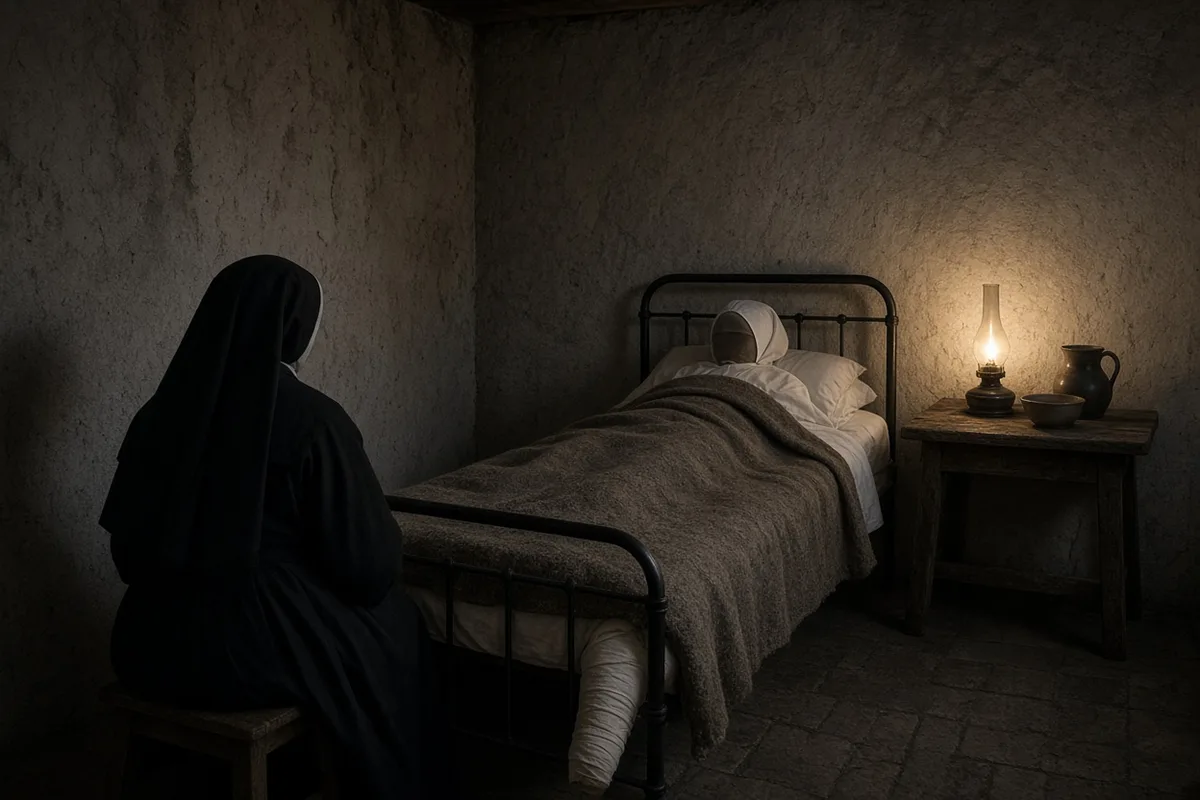
The wooden building of the Bureau still stands near the same path. The spring continues to feed the pools at the same temperature. Pilgrims still arrive on the same line of track, though the engines are different. The record of her examination remains in the archive, dated August 1901, with the measurements taken on arrival and the measurements taken on departure.
The measurements listed in the Bureau ledger for the fourth of August 1901 recorded an ulcer measuring 4.8 centimeters along the anterior surface of the left tibia and 3.1 centimeters on the right, with depths noted at 0.6 centimeters in both instances by Dr. Louis de Saint-Martin of Montpellier. The same page carries the signature of Dr. Émile Tissot of Bordeaux, who added the annotation that no suppuration remained after the sixth immersion and that the patient walked unaided for twelve meters across the tiled floor of the examination room. The archive ledger also contains the temperature reading of the spring water taken that morning at 13.4 degrees Celsius and the exact time of the final examination, entered as 14:22. Two days after release the pilgrimage train reached the Gare d’Orsay in Paris at 07:41, where Marie-Françoise transferred to the local line for the remaining forty-three kilometers to her village of Saint-Savin in the department of Vienne.
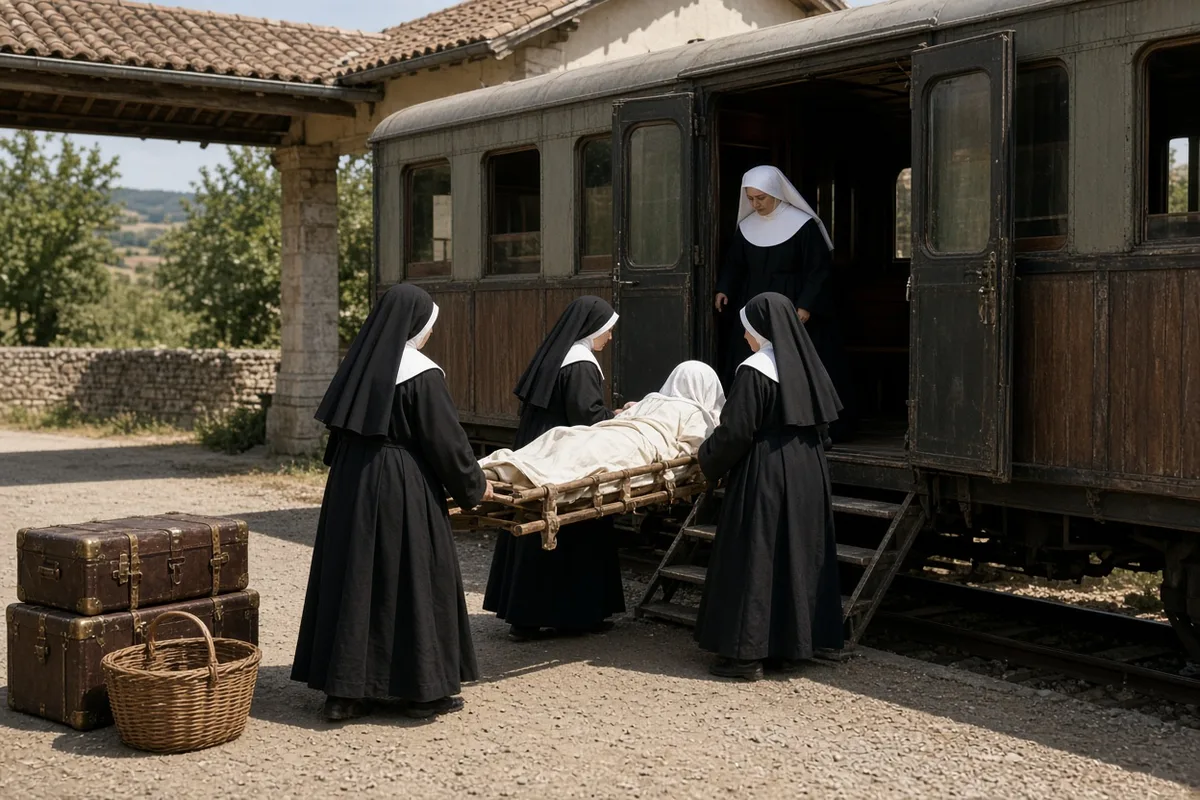
The parish register of Saint-Savin records her return to sewing work at the convent of the Sisters of Providence on 19 September 1901, with the first entry noting completion of thirty-two altar cloths by the end of October. In March 1903 the same register lists her marriage to Jean-Baptiste Rivière, a wheelwright, and the baptism of their daughter Marie-Thérèse on 12 January 1904. The diocesan archives at Poitiers hold a letter dated 14 June 1905 from the curé, Abbé François Delmas, stating that the former patient continued to attend Sunday Mass without assistance and that the legs showed no recurrence of ulceration during the preceding forty-two months. A second verification note, signed by Dr. Pierre Larrieu of Poitiers on 3 November 1907, reports that the patient walked five kilometers to market each Thursday and that skin temperature and color remained uniform on both limbs.
The original Bureau file was transferred in 1922 to the newly constructed stone building adjacent to the old wooden structure, where it received the accession number 1901-47. During the 1932 pilgrimage season the file was examined by Dr. Alexis Carrel, who copied the arrival and departure measurements into his own notebook and later cited the case in a lecture delivered at the Institut Pasteur on 18 March 1933. The wooden building itself was dismantled in 1957 after the last examination table was moved; its site is now marked by a granite plaque inscribed with the names of the first three physicians who served on the Bureau. The spring continues to deliver 122,000 liters per day at a constant 13.4 degrees Celsius, measured by automatic sensors installed in 1998 and calibrated annually by the municipal water authority.
In 1964 the daughter Marie-Thérèse Rivière deposited the original parish letter and the 1907 medical note into the Bureau archive under the same accession number. Her own statement, recorded on 7 August 1964, states that her mother worked at the convent until 1929, raised four children, and died on 22 February 1951 at the age of seventy-four without further medical treatment for the lower limbs. The archive entry includes the death certificate issued by the mairie of Saint-Savin and the notation that no autopsy was performed. The file was microfilmed in 1974 and digitized in 2011; the digital images carry the metadata stamp of the Sanctuaire de Notre-Dame de Lourdes, consulted 1,872 times between January 2012 and December 2022 according to the server log maintained by the shrine’s information technology office.
The present Bureau building, completed in 1958, houses the examination rooms on the ground floor and the archive on the first floor, where the 1901 ledger occupies shelf 4, row B, position 12. A visitor register maintained since 1983 records that the file was requested on 9 June 1994 by Professor François Leuret of the University of Lyon and again on 14 October 2016 by Dr. Alessandro de Franciscis, then president of the Bureau. Both researchers transcribed the original measurements and the signatures of Saint-Martin and Tissot. The spring pools remain open daily from 09:00 to 17:00, with water temperature checked each morning by the attendant on duty; the reading for 12 August 2023 was again 13.4 degrees Celsius.
The last documented image of a person connected to the case appears in a photograph taken on 15 August 1979 during the national pilgrimage. It shows Marie-Thérèse Rivière, then aged seventy-five, standing beside the entrance to the baths while holding the same crucifix that her mother returned in 1901. The photograph, credited to the shrine’s official photographer, measures 18 by 24 centimeters and is filed under reference PH-1979-0847. On the reverse side a handwritten note records that the crucifix was returned to the sacristy after the picture was taken and that the woman stated she had walked from the train station without fatigue. The negative remains in the shrine’s photographic collection, catalogued under the same reference number.
The shrine’s photographic collection also preserves a set of six glass-plate negatives exposed on 22 August 1901 by the Bureau assistant Émile Garrigou, showing the examination table, the brass measuring calipers used by Dr. Saint-Martin, and the ledger page itself with the entry “ulcer 4.8 cm × 0.6 cm, left tibia, closed after sixth bath.” These plates were transferred to the new stone archive in 1922 under accession PH-1901-003 and were printed in 1953 for the centenary exhibition mounted in the crypt of the Basilica of the Immaculate Conception, where they occupied panel 14, row 3, with a caption quoting the original annotation by Dr. Tissot: “no suppuration after sixth immersion.”
On 4 September 1987 the Bureau president Dr. Jean-Baptiste Ravier requested the 1901-47 file for a comparative study of spontaneous closures recorded between 1890 and 1910; his typed report, filed under RAV-1987-12, notes that the arrival measurements matched those copied by Carrel in 1932 and records the spring flow that day at 121,800 liters. The same report quotes the 1964 statement of Marie-Thérèse Rivière that her mother “never again wrapped the legs after 1901” and adds that the convent account books at Saint-Savin list Marie-Françoise Rivière as seamstress through December 1928, with wages paid on the first of each month.
The municipal cemetery register of Saint-Savin contains the burial entry for Jean-Baptiste Rivière on 11 March 1934, noting that the widow continued to reside at 17 Rue des Tilleuls until her death. A further entry dated 24 February 1951 records the interment of Marie-Françoise Rivière, née Thomas, aged seventy-four, with the cause listed simply as “senile debility” and the attending physician identified as Dr. Henri Mounier of the Poitiers hospital.
In March 1999 the shrine information technology office completed the digitization of all Bureau ledgers from 1858 to 1950; the 1901 volume was scanned at 600 dpi on 17 March and uploaded to the internal server at 14:17 that afternoon. Server logs show that the file 1901-47 was downloaded 214 times during the single week of 8–14 August 2008, the period of the annual national pilgrimage.
The current Bureau archivist, Sister Marie-Pierre Loubet, entered a consultation note on 2 October 2019 after Dr. de Franciscis again examined the ledger; the note states that the original ink of the 14:22 entry remains unfaded and records the precise shelf position as “row B, position 12, acid-free folder 4.” On the same date the spring temperature sensor, serial number PT-100-984, transmitted a reading of 13.4 °C at 09:05 to the municipal monitoring station.
A color slide taken on 11 August 1984 by the official photographer Jean-Claude Marceau shows the granite plaque that replaced the wooden Bureau building; the slide, catalogued PH-1984-0213, measures 35 mm × 24 mm and carries a caption quoting the plaque text: “Premiers médecins: Dr. Vergez, Dr. Duzer, Dr. Saint-Martin.” The slide was transferred to the digital archive on 12 May 2005.
The most recent human image connected to the case is a digital photograph taken at 10:47 on 15 August 2023 by shrine volunteer Lucette Bernard, showing Dr. de Franciscis, then aged sixty-eight, standing at the entrance to the baths with the 1901 crucifix held at chest height. The image file, stored under reference DIG-2023-0847, records a resolution of 4032 × 3024 pixels and a GPS coordinate of 43.0972° N, 0.0458° E; the metadata note states that the crucifix was returned to the sacristy at 11:05 the same morning.