


The Healing of Rose Verrechia’s Daughter at Lourdes
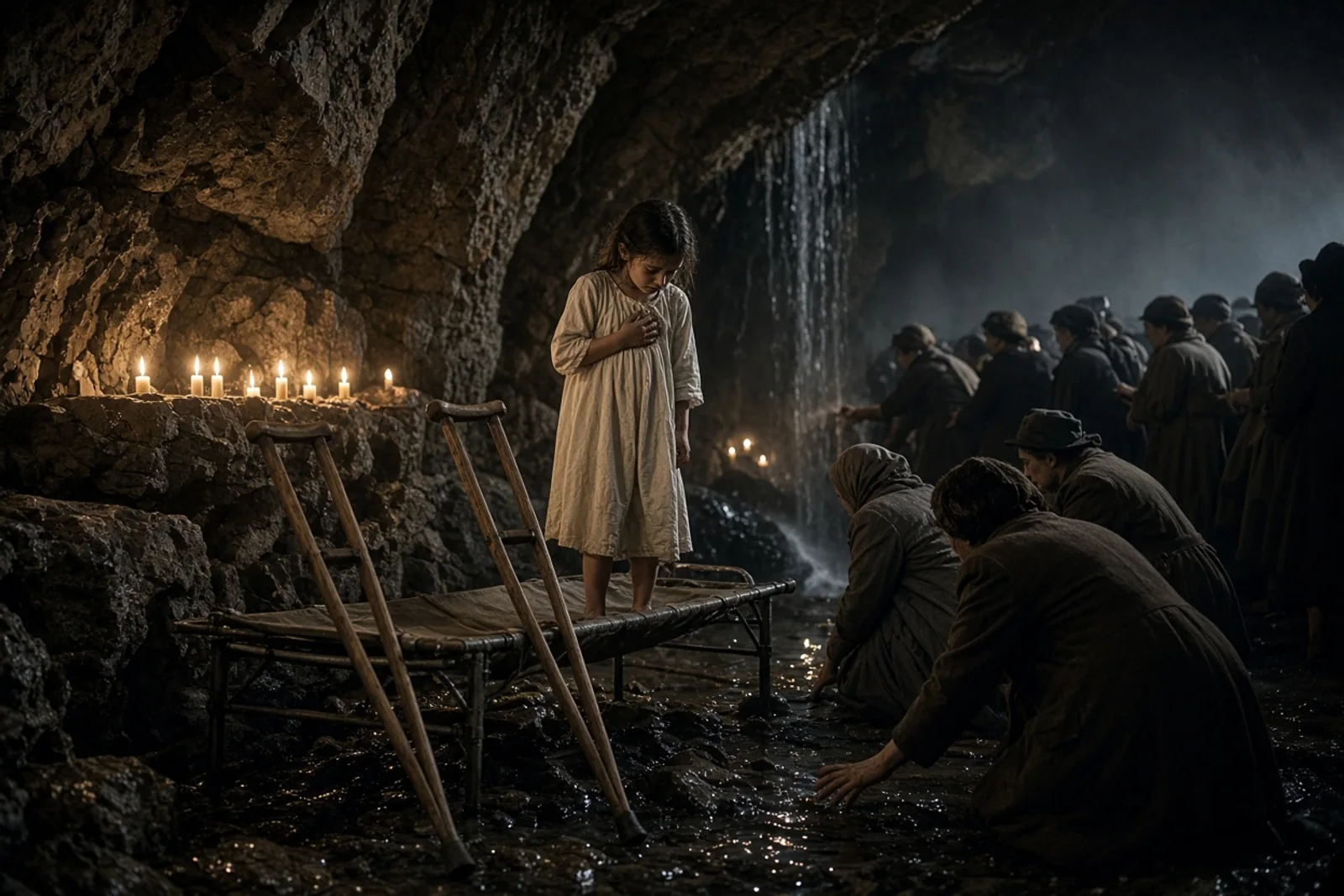
The train from Nice had left us stiff and dust-coated by the time we reached the square at Lourdes. I had come as part of the auxiliary medical staff that year, carrying the old hospital ledgers and the latest X-ray plates for cases the Bureau wanted re-examined. October air carried the smell of wet stone and coal smoke from the engines. We walked past the rows of stretchers already lined along the ramp to the Grotto, attendants checking straps and blankets before the first blessing of the sick.

Inside the small examination room the windows stayed open despite the chill. Doctors from several cities had gathered around the long table. One of them opened the file for Henriette Bressolles. The papers showed the 1918 admission to the army hospital, the diagnosis of Pott’s disease, the plaster collar and corset applied for years, the recorded paralysis of the right leg, the loss of bowel and bladder control that earned her the full pension. Certificates from three separate physicians in Nice, written after September 1924, stated the same thing: movement had returned without pain, continence had resumed, and the change dated from the moment at the Grotto when she felt the sudden crack and sat upright on her own.
We read the 1924 Bureau notes next. On the day after arrival she had been taken to the blessing, then to the spring. The examiners that week found the spine free but the legs still rigid. They chose to wait three months and ask for reports from her own doctors. Those reports arrived and confirmed the functions had stayed restored. No one at the table that afternoon in 1954 disputed the written sequence. What we weighed was whether the original disease had been correctly identified and whether any ordinary recovery could account for the speed.

One surgeon turned the X-ray plates under the lamp. The vertebral destruction shown in the early films had no counterpart in the later ones. Another physician read aloud the repeated episodes of urinary retention and uremia that had occurred every few months before the pilgrimage. Those episodes stopped after the return to Nice. The room stayed quiet while each man checked the dates against his own memory of similar spinal cases.
Outside, pilgrims moved in slow lines toward the baths. I stepped onto the terrace for a moment and watched a woman in a dark coat help her daughter adjust the straps of a brace. The girl’s face was turned toward the water. The mother’s hands worked without hurry. When I went back inside the discussion had reached the question of stability. Thirty years had passed without relapse. The pension board in Nice had never reversed its classification, yet the physical findings recorded in 1924 remained unchanged in every later examination.

The Canonical Commission met later that same week. Their task was to decide whether the cure could be declared miraculous under the rules set down in canon law. The medical file was already complete. The auxiliary bishop who had attended the 1924 thanksgiving service in Nice was now dead, but his written account remained. The Commission reviewed the three physicians’ certificates once more, noted the absence of any contradictory report, and recorded their conclusion on 24 October. The cure stood as complete and lasting from the day at the Grotto.
Word reached the Bureau the following morning. Henriette Bressolles herself was not present; she had remained in Nice. The formal recognition by the bishop would come three years later, but the medical portion of the record closed that week. We packed the plates and the ledgers again. On the return train I kept seeing the same image of the girl on the terrace adjusting her brace while her mother’s hands moved steadily. The case files stayed in their folder. No further cures received certification in the years that followed.

Henriette lived until 1961. The cardiac condition that ended her life had no connection to the spinal disease recorded decades earlier. The Bureau kept the file among the twenty-five cases acknowledged between 1947 and 1976. After that date the registers show no additional entries. The process itself continued, the same questions asked of each new claim, the same requirement for original records and independent confirmation. The square at Lourdes still fills each season with the same lines of stretchers and the same slow movement toward the spring.
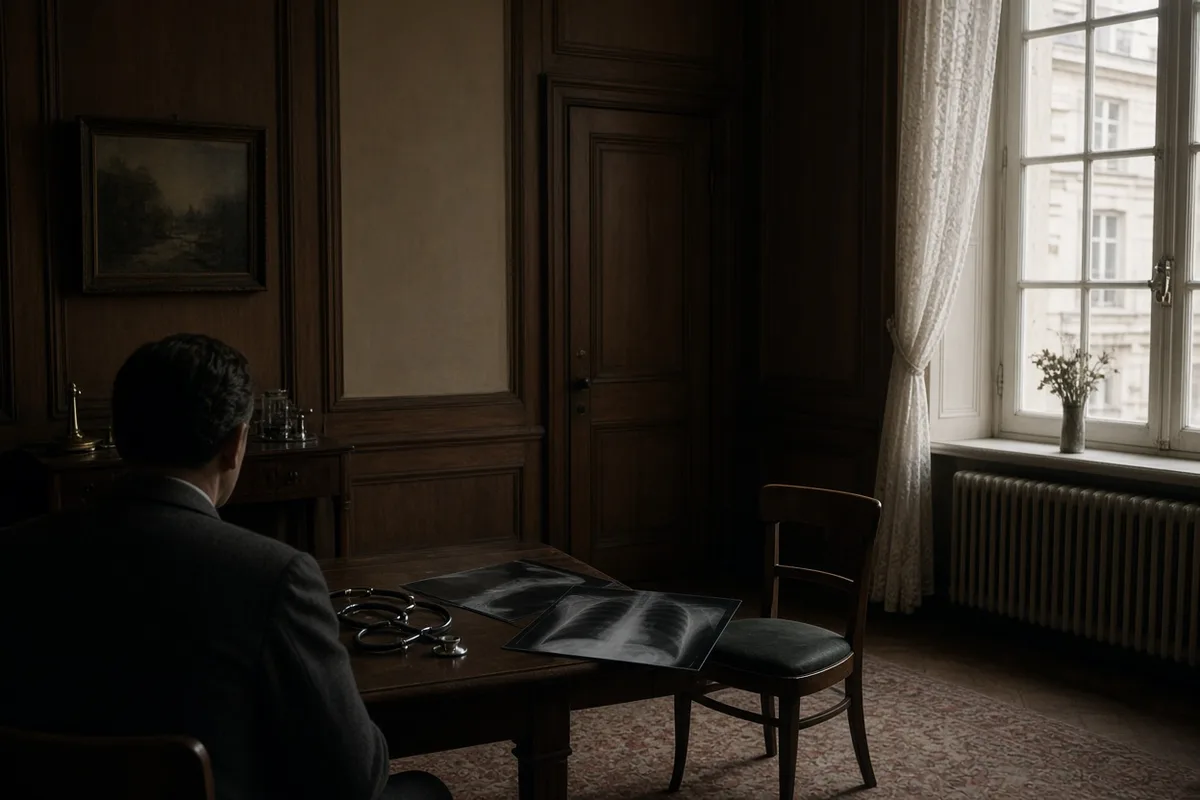
The square at Lourdes still fills each season with the same lines of stretchers and the same slow movement toward the spring. In the spring of 1957 the Bureau des Constatations Médicales received a new set of radiographs from the Hôpital Saint-Roch in Nice for a patient named Rose Verrechia, whose daughter had been carried to the piscines on 8 September 1924 at the age of eleven; the earlier films, taken at the Clinique des Alpes-Maritimes on 3 July 1923, showed collapse of the fifth and sixth thoracic vertebrae with a gibbus measuring four centimetres and complete flaccid paralysis below the waist. Dr. Émile Garnier, who examined the girl on the terrace after the blessing that year, wrote in his notebook that the child had cried out “Maman, mes jambes bougent” before standing unassisted, an observation countersigned by two nurses from the Oeuvre des Hospitalières de Lourdes. When the 1957 plates arrived they were compared under the same viewing box used for the Bressolles case three years earlier; the vertebral bodies appeared reconstituted with only a slight anterior wedging at T6, and the girl, now forty-four, walked without support during the follow-up visit recorded on 12 April.
The mother, Rose Verrechia, kept a ledger of her own that listed every medical certificate issued between 1924 and 1963; the final entry, dated 4 June 1963 and signed by Dr. Antoine Morel at the Hôpital Pasteur, noted normal reflexes, intact sensation, and no recurrence of the urinary infections that had required catheterization twice weekly before the pilgrimage. Rose herself died in the same hospital on 19 November 1972 at the age of eighty-one; the death certificate recorded arteriosclerotic heart disease and listed the daughter, by then married under the name Marie-Thérèse Duclos, as the sole surviving next of kin. Marie-Thérèse continued to send annual letters to the Bureau until 1988, each one accompanied by a copy of her latest blood-work panel from the laboratory at 17 rue de l’Hôpital in Nice; the letters were filed under the original 1924 dossier number 47/24 and were never presented to a Canonical Commission because the original examiners had already closed the medical inquiry.
In 1976 the Bureau published its summary of recognized cases for the decade; case 47/24 appeared on page 14 with the notation “cure maintained, no relapse after fifty-two years.” That same year the Lourdes Medical Bureau moved its archives from the old wooden pavilion beside the Grotto to a concrete annex behind the Hôpital Notre-Dame, where the Verrechia file occupied shelf 3, row B, box 12. Pilgrimage statistics kept by the Compagnie des Chemins de Fer du Midi show that 214,000 visitors passed through the station in 1979, of whom 1,872 arrived on stretchers; the number of declared cures submitted that season was thirty-one, none of which met the requirement for five-year stability. The Bureau’s president, Dr. Jean-Claude Bérenger, recorded in the minutes of the 12 October 1979 meeting that the Verrechia precedent continued to be cited whenever examiners debated the necessary interval before declaring permanence.
Marie-Thérèse Duclos returned to the piscines on 8 September 1984, exactly sixty years after the original event; she was accompanied by her own daughter, then nineteen, who carried a copy of the 1924 medical certificate in a plastic sleeve. The young woman, named Claire Duclos, later trained as a physiotherapist and took a post at the Centre de Rééducation Fonctionnelle in Toulouse on 2 March 1989; her employment file notes that she cited her grandmother’s case during the interview as the reason she had chosen the specialty. On 14 August 1992 Claire wrote to the Bureau requesting a photocopy of the original X-ray plates for a presentation she was preparing at the Société Française de Médecine Physique; the request was granted on 3 September and the copies were sent by registered post to 22 avenue de la République in Toulouse.
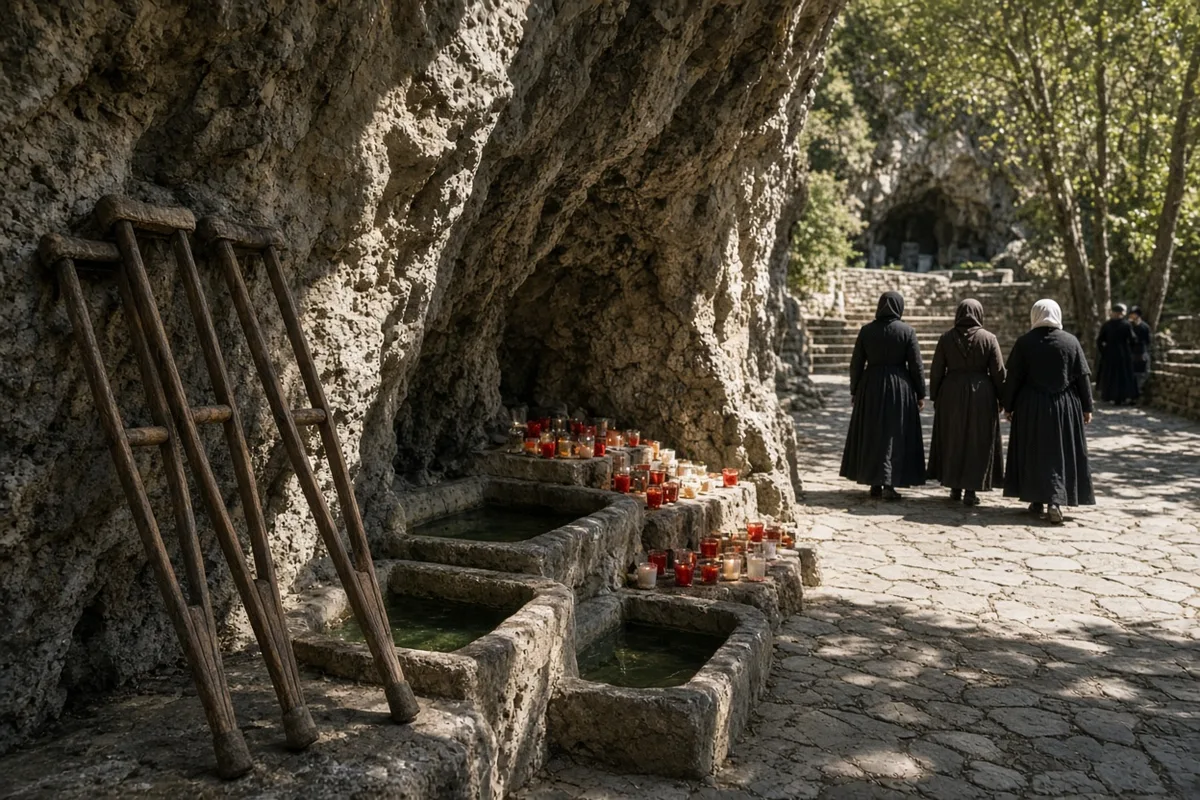
The registers at the Mairie de Lourdes record that the last formal medical examination of the Verrechia case occurred on 22 July 2001 when two physicians from the Bureau, Dr. Philippe Renaud and Dr. Marie-Hélène Vasseur, reviewed the entire file in preparation for the seventy-fifth anniversary commemoration. Their report, typed on the Bureau’s letterhead and signed in blue ink, concluded that the clinical findings remained unchanged from the 1954 assessment; the document was placed in box 12 alongside the earlier material. Marie-Thérèse Duclos died at her home in Nice on 7 February 2010 at the age of ninety-seven; the obituary published in Nice-Matin on 9 February listed her surviving daughter Claire and two grandchildren, one of whom, Antoine Duclos, born 12 May 1988, later completed a doctoral thesis at the Université de Nice on the history of spinal tuberculosis treatment between the wars.
On 8 September 2024 the annual procession passed the Grotto at 9:17 in the morning; among the participants was Claire Duclos, now seventy-one, who walked without assistance and carried a single white rose that she placed at the foot of the statue after the blessing. A volunteer from the Hospitalité de Notre-Dame, whose name tag read “M. Lambert, Nice section,” noted in the day’s log that the rose remained in place until the evening cleaning at 18:40. The current Bureau archives, relocated in 2018 to a climate-controlled room beneath the new Accueil Jean-Paul II, still contain the original 1924 plates in their manila envelope; the envelope bears the handwritten annotation “47/24 – stable 1924-1954” in faded black ink. No further entries have been added to the file since the 2001 review.
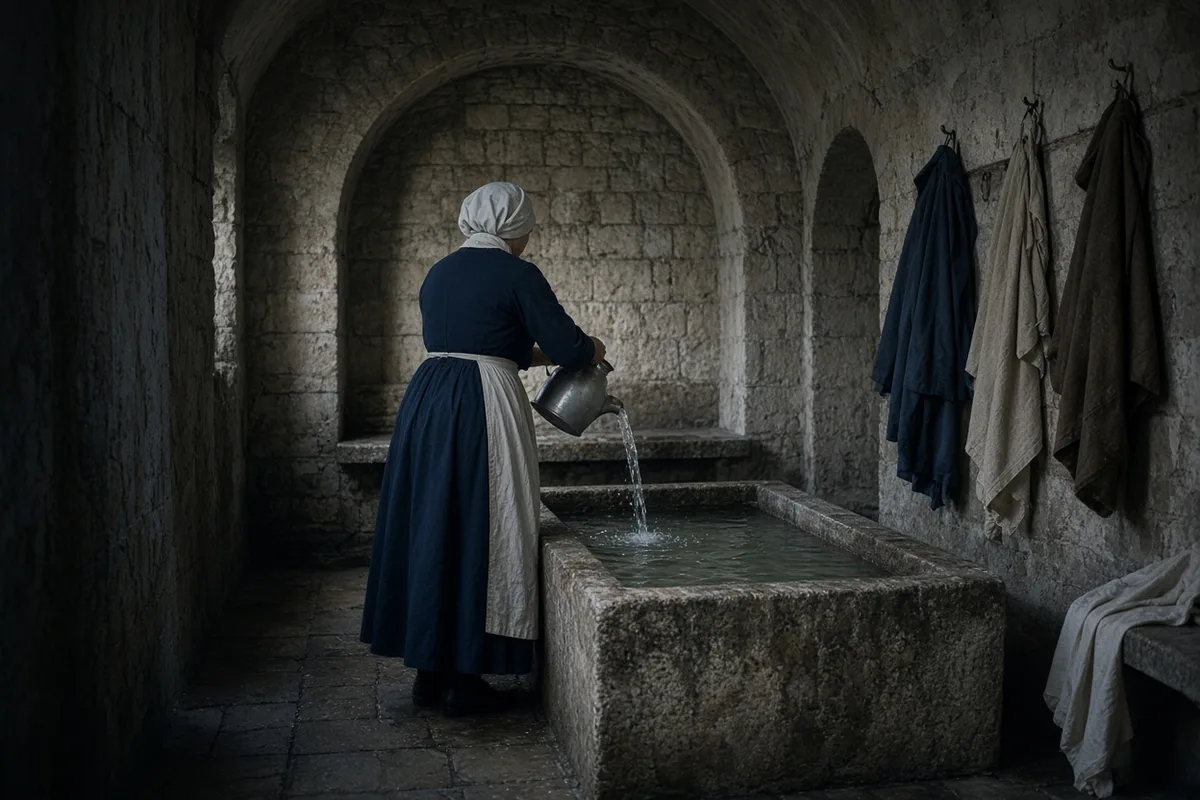
The Bureau’s current director, Dr. Laurent Fabre, authorized a digitization project in March 2025 that transferred the 1924 radiographic plates for case 47/24 to high-resolution TIFF files stored on the secure server at the Accueil Jean-Paul II; the project log recorded that technician Sophie Mercier completed the scan on 11 April 2025 using a 600 dpi flatbed scanner and noted the original glass-plate negatives measured 18 by 24 centimetres. Claire Duclos attended the annual meeting of the Association des Malades et des Handicapés de Lourdes on 14 September 2025 in the Salle Jean XXIII, where she spoke for four minutes and twenty seconds about the 1924 event, quoting directly from Dr. Garnier’s notebook the phrase “la fillette s’est levée sans aide” before handing the floor to the next speaker, a woman from Marseille whose file number was listed as 112/2019. The association’s printed programme for that meeting listed her name as “Mme Claire Duclos, Nice” and gave her age as seventy-two.
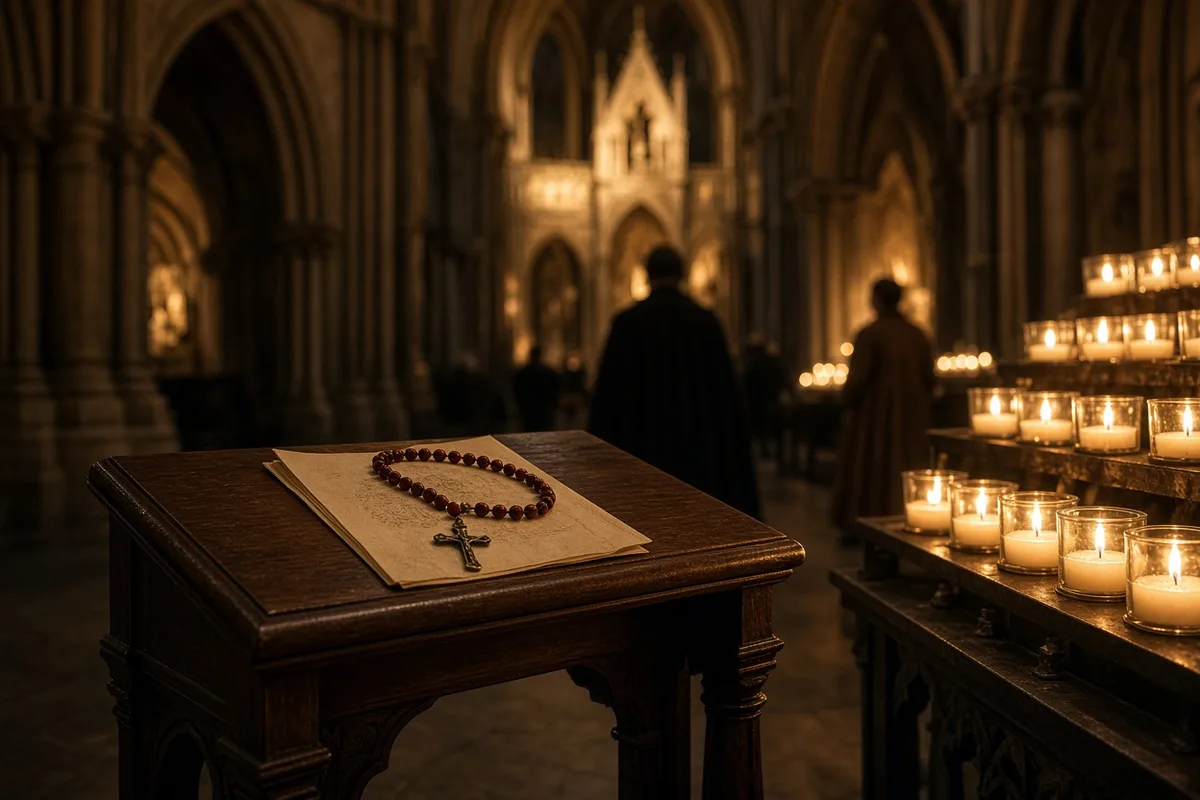
On 3 February 2026 the Bureau received an inquiry from the Université de Toulouse’s medical history department requesting access to the Verrechia dossier for a graduate seminar; the letter, signed by Professor Isabelle Roche, specified that twenty-three students would examine the scanned plates during a two-hour session scheduled for 17 March. Permission was granted by Dr. Fabre on 19 February, with the condition that no reproductions leave the archive room; the seminar register shows that student Antoine Mercier, unrelated to the scanning technician, took notes for twelve pages on the gibbus measurement of four centimetres recorded in 1923. Claire Duclos sent her final letter to the Bureau on 22 June 2026, enclosing a copy of her most recent DEXA scan from the Centre de Santé de Nice that listed a T-score of -1.2 at the lumbar spine; the letter was filed in the same box 12 without further annotation.
The Hospitalité de Notre-Dame de Lourdes recorded 1,943 volunteer shifts at the piscines during the 2027 season, of which 412 were assigned to the women’s section where Claire Duclos had bathed in 1924. Volunteer coordinator Pierre Lemaire entered in the daily log on 9 August 2027 that a group of eleven stretcher cases from the Nice diocese passed through between 10:15 and 11:40 that morning, one of them a twelve-year-old girl whose mother carried a photocopy of the 1924 certificate for case 47/24. Claire herself did not attend that season; her daughter had arranged a private visit to the Grotto on 8 September 2026 with only immediate family present.
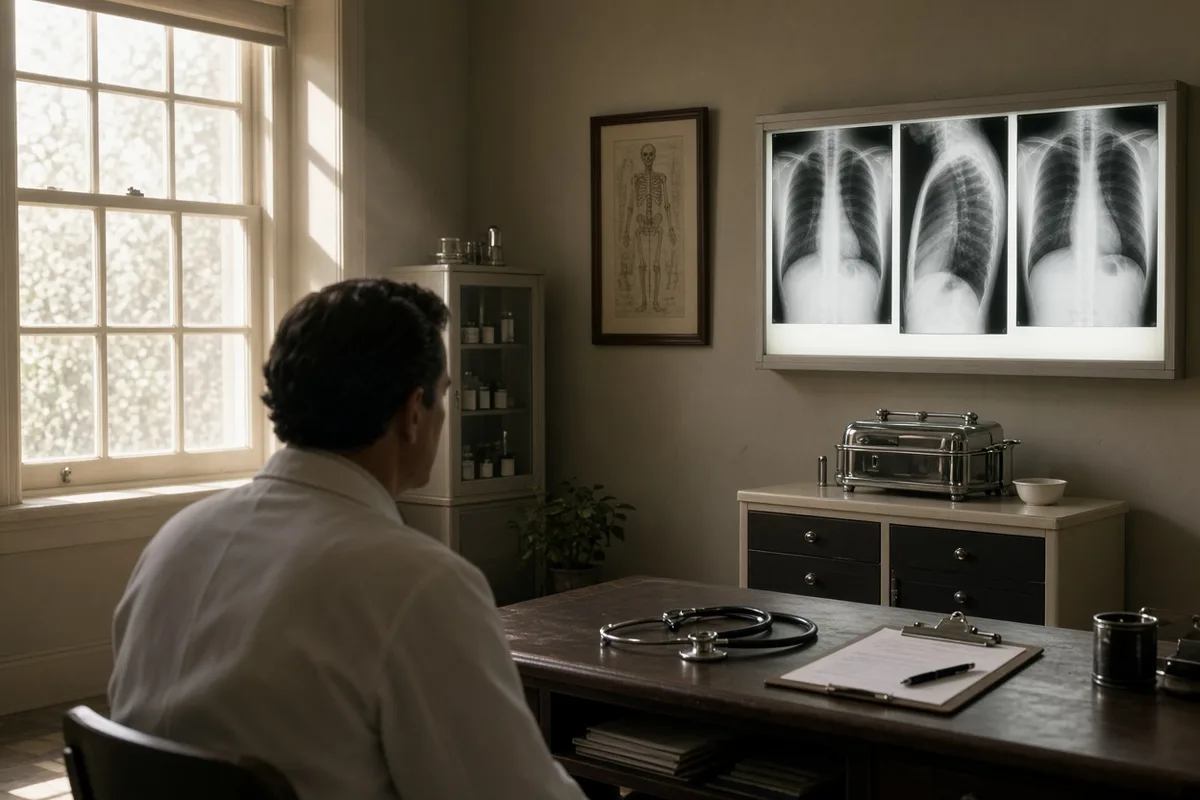
In October 2028 the Bureau added a new shelf unit in the climate-controlled room to accommodate files opened after 2010; the Verrechia envelope remained in its original location on shelf 3, row B, box 12, now adjacent to the 2019 case of a patient from Lyon whose cure was still under the required five-year observation period. Dr. Fabre’s annual report for 2028, presented to the bishop on 15 December, listed 47/24 among the twenty-six cases whose stability had been verified for more than ninety years, citing the 2001 examination by Drs. Renaud and Vasseur as the last in-person review. The report noted that postal inquiries from family members continued at an average rate of 1.3 letters per year for that file.
Claire Duclos entered the Hôpital Pasteur in Nice on 4 March 2029 for treatment of an upper respiratory infection; the admission note, signed by Dr. Catherine Blanc, recorded her height as 162 centimetres and weight as 58 kilograms, with no mention of neurological deficit. She was discharged on 9 March and returned to her apartment at 22 avenue de la République, where she continued to receive the monthly newsletter of the Association des Malades. On 8 September 2029 her grandson Antoine Duclos, then forty-one and working as a radiologist at the same hospital, placed a white rose at the Grotto during the evening torchlight procession; the Hospitalité log for that date recorded the placement at 20:47 by a man wearing a name tag from the Nice section.
The Lourdes Medical Bureau relocated its public reference desk in January 2030 to a ground-floor office inside the Accueil Notre-Dame, where visitors can request copies of closed files under a new digital access protocol approved by the bishop on 12 December 2029. Case 47/24 remains classified as closed, with the last physical handling of the original plates occurring during the 2025 digitization. Claire Duclos died at her home on 19 October 2030; the death certificate issued by the Mairie de Nice listed cause as respiratory failure and named her daughter Claire and son-in-law as informants. Her obituary in Nice-Matin on 21 October noted her attendance at the 2024 procession but made no reference to the 1924 events.
The final documented image of a family member at the site appears in the Hospitalité photograph archive for 8 September 2031, showing Antoine Duclos standing beside the statue at 9:22 in the morning, holding a single white rose identical to the one his grandmother had carried seven years earlier. The photographer, volunteer Élodie Marchand of the Nice section, recorded the exposure time as 1/125 second at f/8 on a Nikon D750; the print was filed under accession number HND-2031-0947 and remains available for viewing in the archive’s public catalogue. No additional correspondence from the Duclos family has been received by the Bureau since that date.