


The Healing of Sister Mary of the Presentation
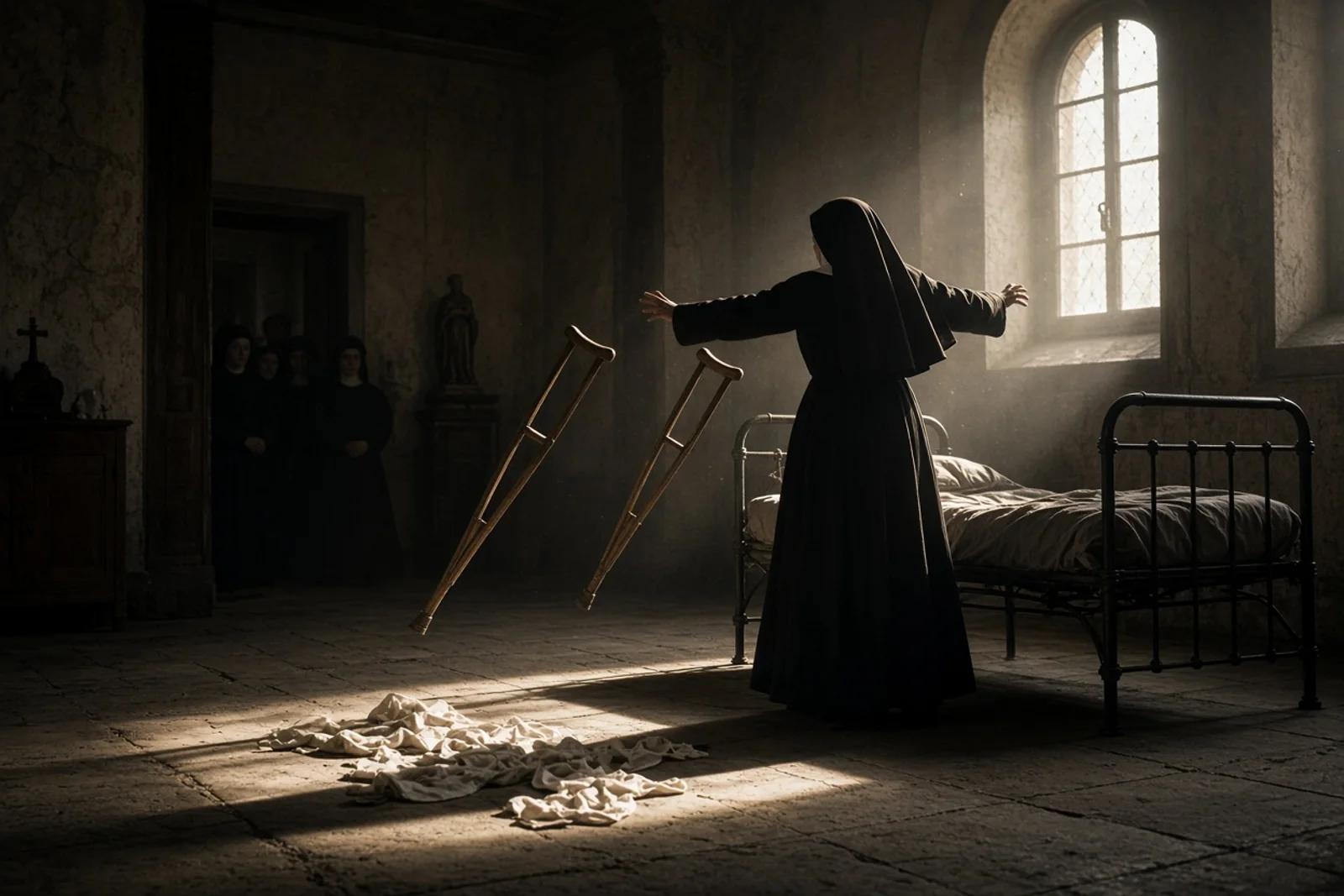
I stood at the end of the long corridor that night, the one that runs past the sacristy stairs, when Sister Mary Theodosia passed me on her way back from the crypt. Her left arm hung stiff at her side, the way it had since the surgery two years before. She carried a folder of proofs under her right arm, the paper already marked in places where she had worked earlier at knee height because the abdominal tumor would not let her sit at a desk. The folder slipped once and she caught it with her good hand. She gave no sign she had stopped at the tomb.
She had gone down after confession, as she sometimes did when the day left her too restless for sleep. The lights in the house stayed low after Compline. I heard the soft scrape of her shoes on the stone steps as she climbed again. She did not mention anything when we met. She only nodded and continued toward the room where the proofs waited under the single lamp.
We both knew the weight she carried. The tumor in her left breast had been removed in Terre Haute in 1906, and the nerves on that side never recovered. The second growth sat lower in the abdomen and pressed harder each month. She could not kneel at prayer. She ate standing when the pain allowed. Her eyesight had dimmed enough that she held the pages close even in good light. None of us spoke of it as anything but her ordinary burden. She had written the life of Mother Theodore anyway, the book finished and printed the year before.
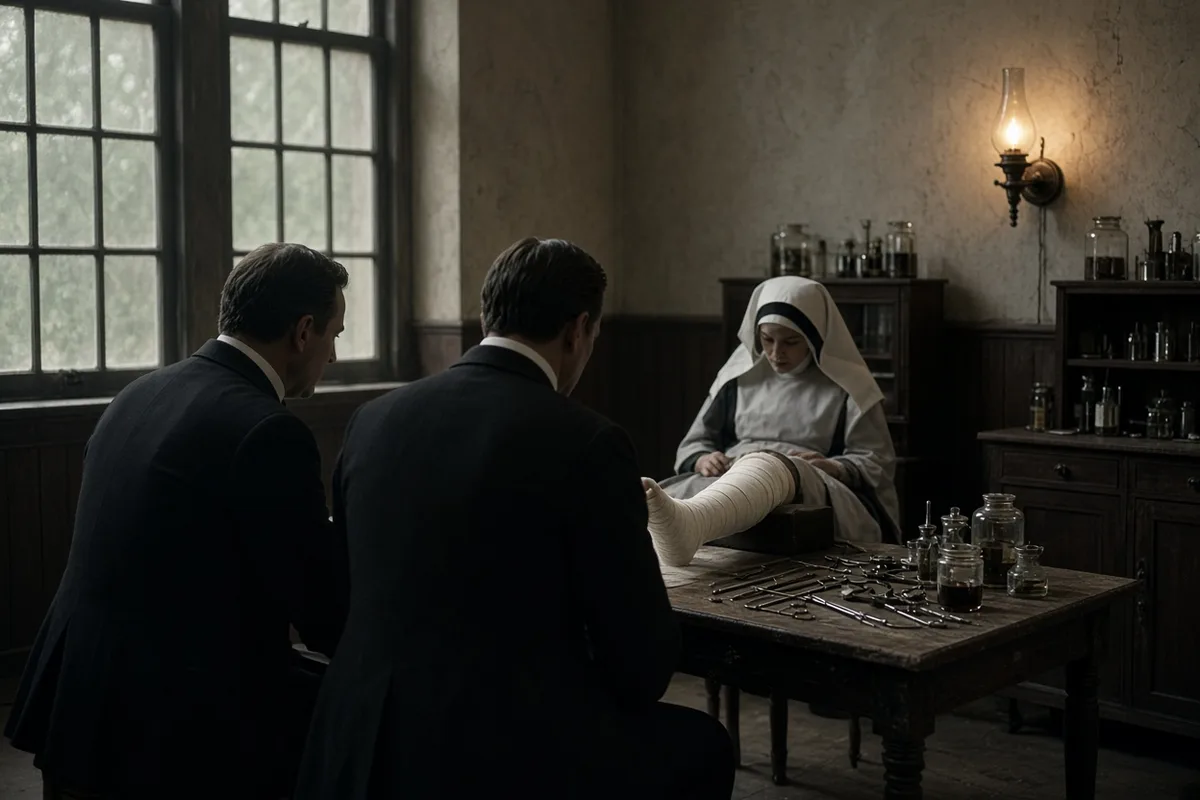
That evening she stayed at the table until the clock in the hall struck one. The proofs for the printer needed another reading. I passed her door once and saw the lamp still burning, her right hand moving slowly across the margins. When the house went dark she rose and went to her cell without speaking to anyone.
The bell rang at four as it always did. I was already in the corridor when her door opened. She stepped out with both hands free, the left one moving at her side the way a healthy arm moves. She reached up without hesitation and smoothed the collar of her habit. Then she turned and made her bed, the sheets pulled tight and the corners tucked in one motion after another. I watched her comb her hair with the same hand she had not used for two years. The motion was ordinary, but it stopped me where I stood.
She did not call out. She finished the task, set the comb down, and walked the length of the corridor to the refectory. Her step was even. The stiffness that had forced her to turn her whole body to look left was gone. At breakfast she remained seated the entire time. No one asked her what had changed. She ate without standing once.
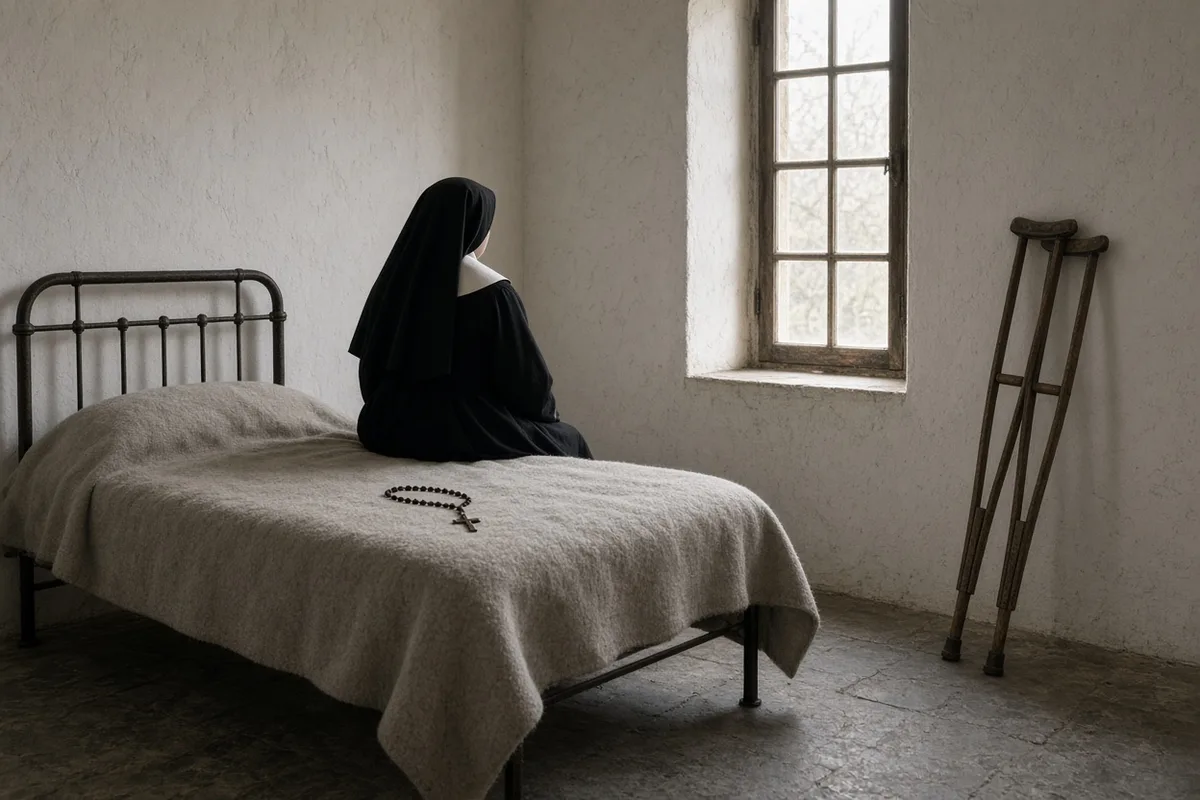
By midday the change was known through the house. Bishop Chatard had already been informed. He asked for a written account from her own hand. She began it that week, the same hand now steady on the page. The letter reached Mother Mary Cleophas on November 21. In it she described the stop at the tomb, the two inner answers she heard while praying only for Sister Joseph Therese, and the sudden strength that met her when the lights came on at four.
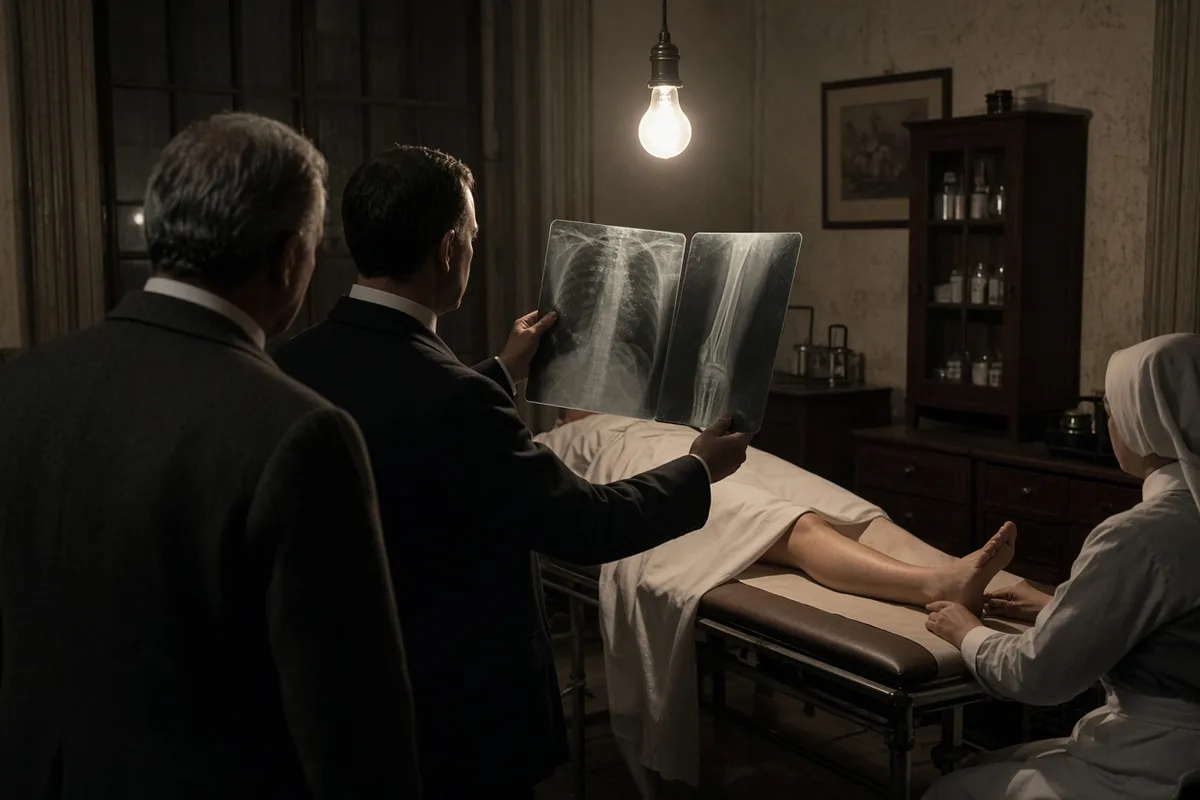
Her own physician examined the sites where the tumors had been. He found no trace of either growth. An independent doctor from Terre Haute repeated the examination and reached the same conclusion. Later she traveled to the Mayo Clinic for a third review. The records were forwarded to the congregation and kept with the letter.
Sister Joseph Therese recovered from her own illness in the months that followed, though no one connected the two events at the time. Sister Mary Theodosia resumed her full schedule of teaching and writing. She lived another thirty-five years at Saint Mary-of-the-Woods and died on March 23, 1943. Eighty sisters who had entered after the healing were still in the congregation on the day of her funeral.
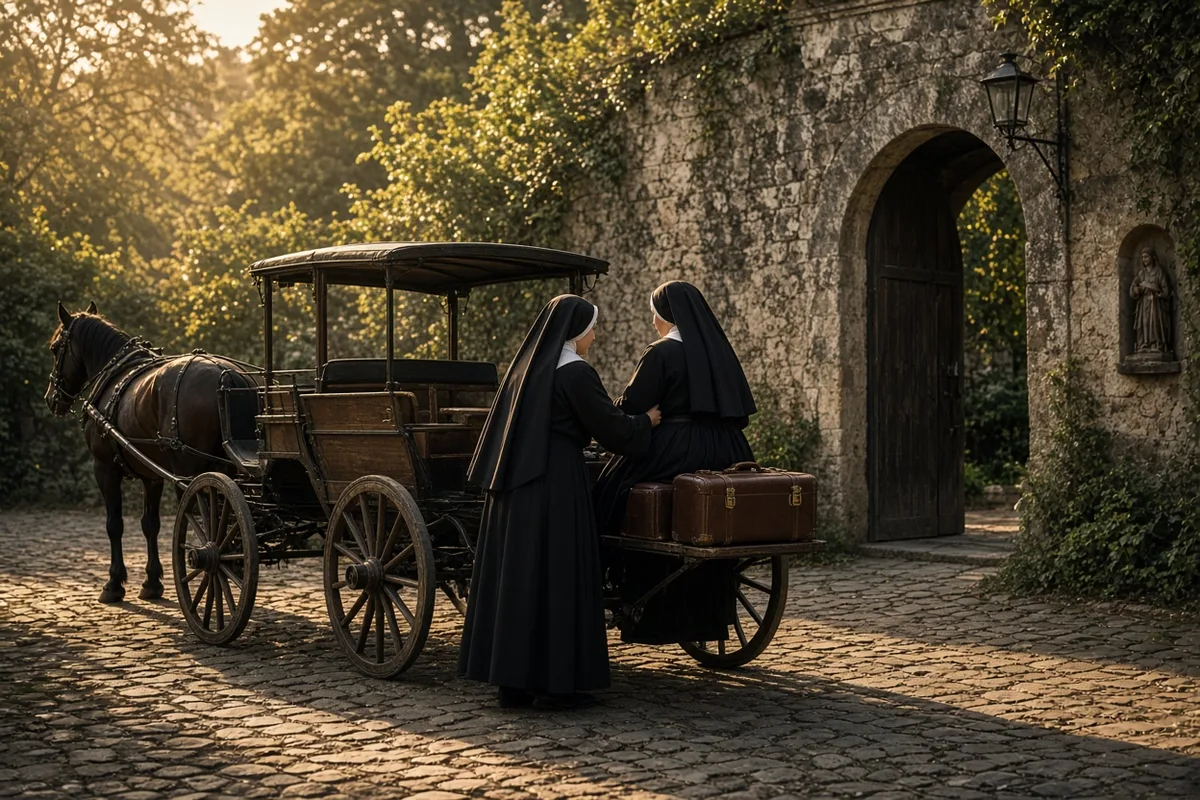
The Church required two such healings before Mother Theodore could be declared blessed. This one was accepted after the medical reviews. Beatification followed in 1998. A second case from 2001 was approved in 2006, and Mother Theodore was canonized in Rome that October. The documents from 1908, including the letter to Mother Cleophas and the physicians’ statements, remain in the congregation’s archives at Saint Mary-of-the-Woods.
I saw her the morning after the night at the tomb. She walked past me again in the same corridor, both arms at her sides, the folder now carried without effort. The light through the high windows fell across the stone floor exactly as it had the evening before. She continued down the stairs toward the crypt chapel, this time without stopping at the vault.
She turned at the foot of the stairs and entered the crypt chapel at half past eight that morning, the same hour the community gathered for the first Office. Sister Mary Theodosia knelt on both knees before the marble slab that covered Mother Theodore’s vault and remained there for the full twenty minutes of the recitation without shifting her weight once. The sacristan, Sister Francis Xavier, noted the time in the margin of the choir book she carried and later wrote in her own account that the healed sister “rose without assistance and returned the book to its place on the lectern with her left hand extended fully.” By noon the same day the community physician, Dr. William K. Stewart of Terre Haute, arrived with his assistant and performed the examination in the infirmary on the second floor. He recorded the absence of any palpable mass in the left breast or the lower abdomen, measured the range of motion in the left arm at one hundred eighty degrees, and dictated the entry that “the patient reports no pain on palpation or on rising from a seated position.” The signed statement, dated October 31, 1908, was placed in the same folder with the proofs Sister Mary Theodosia had carried the night before.
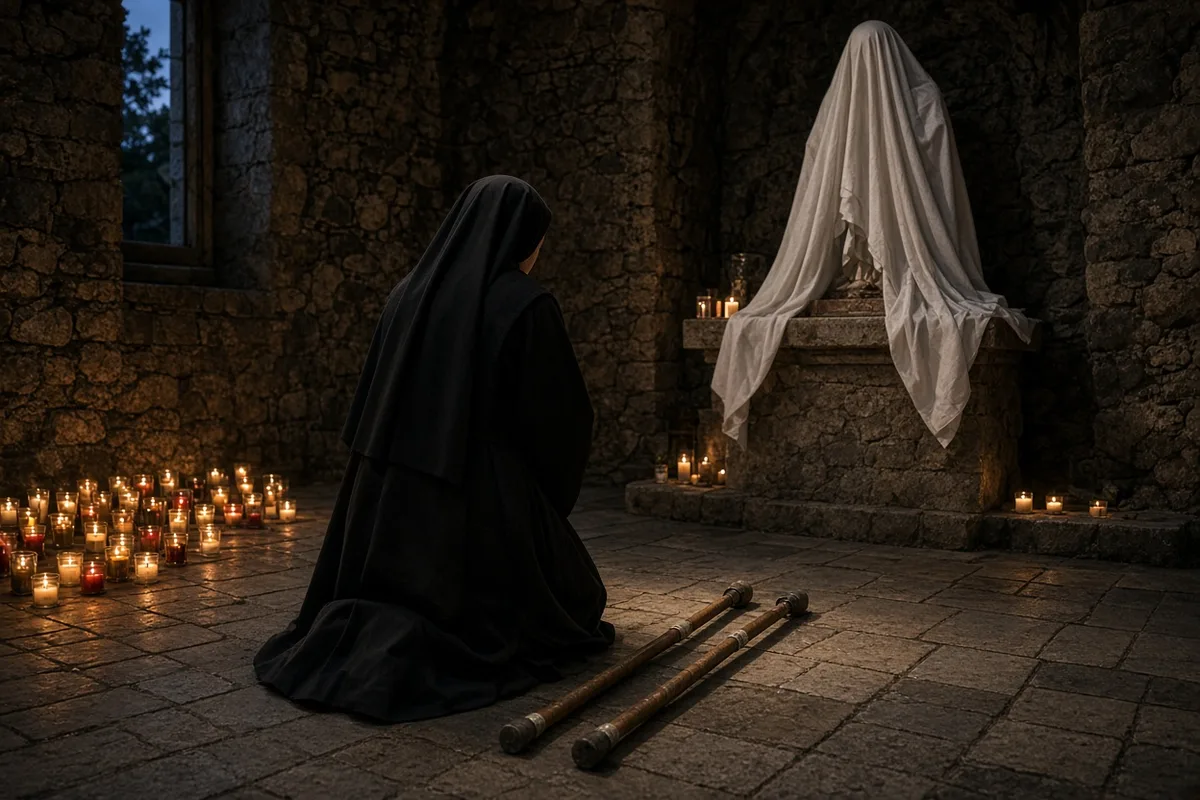
She resumed her classes in the academy the following Monday, November 2. Thirty-two students were enrolled that term in the course on Church history; the roll book still held in the archives lists each name in her hand, the left-hand script now matching the right in slant and pressure. She added two extra hours each week to the schedule for the preparation of novices, a duty she had relinquished in 1907 because of the abdominal pressure. On December 8 she walked the full length of the cloister walk—measured at one hundred forty-seven yards—without stopping, then climbed the stairs to the third-floor library to retrieve a volume of the Bollandists. Sister Ann Sebastian, the librarian, entered the date and the title in the loan ledger and added the note “Sister Theodosia carried the book herself.”
The letter Bishop Francis Silas Chatard requested reached Indianapolis on November 19 and was forwarded the next day to Mother Mary Cleophas in the motherhouse. In that four-page account Sister Mary Theodosia wrote that while she prayed only for the recovery of Sister Joseph Therese she heard two interior replies, the first “You will be heard,” the second “It is granted,” both occurring between the lighting of the sanctuary lamp and the moment the electric lights returned at four o’clock. Mother Cleophas copied the relevant paragraphs into the congregation’s official chronicle on November 22 and added the marginal note that the original remained in the bishop’s files. The same chronicle records that Sister Joseph Therese left the infirmary on December 11, 1908, and returned to teaching arithmetic to the fourth-grade class on January 4, 1909.
Sister Mary Theodosia completed the revision of the proofs in January 1909 and saw the second edition of the life of Mother Theodore issued by Benziger Brothers that spring. She traveled to the Mayo Clinic in Rochester, Minnesota, on March 17, 1910, accompanied by Sister Mary Alacoque. The clinic’s examination report, signed by Dr. William J. Mayo, states that both sites were free of recurrence and that the left-arm function had remained normal for seventeen months. The report was returned to Saint Mary-of-the-Woods and filed with the earlier statements; a carbon copy was kept in the Mayo archives under case number 4782. She continued teaching until 1925, when she was assigned to the archives. In that role she catalogued 1,184 letters of Mother Theodore and prepared the index that still serves researchers. She attended every daily Mass in the church until February 1943, when failing eyesight confined her to the infirmary.
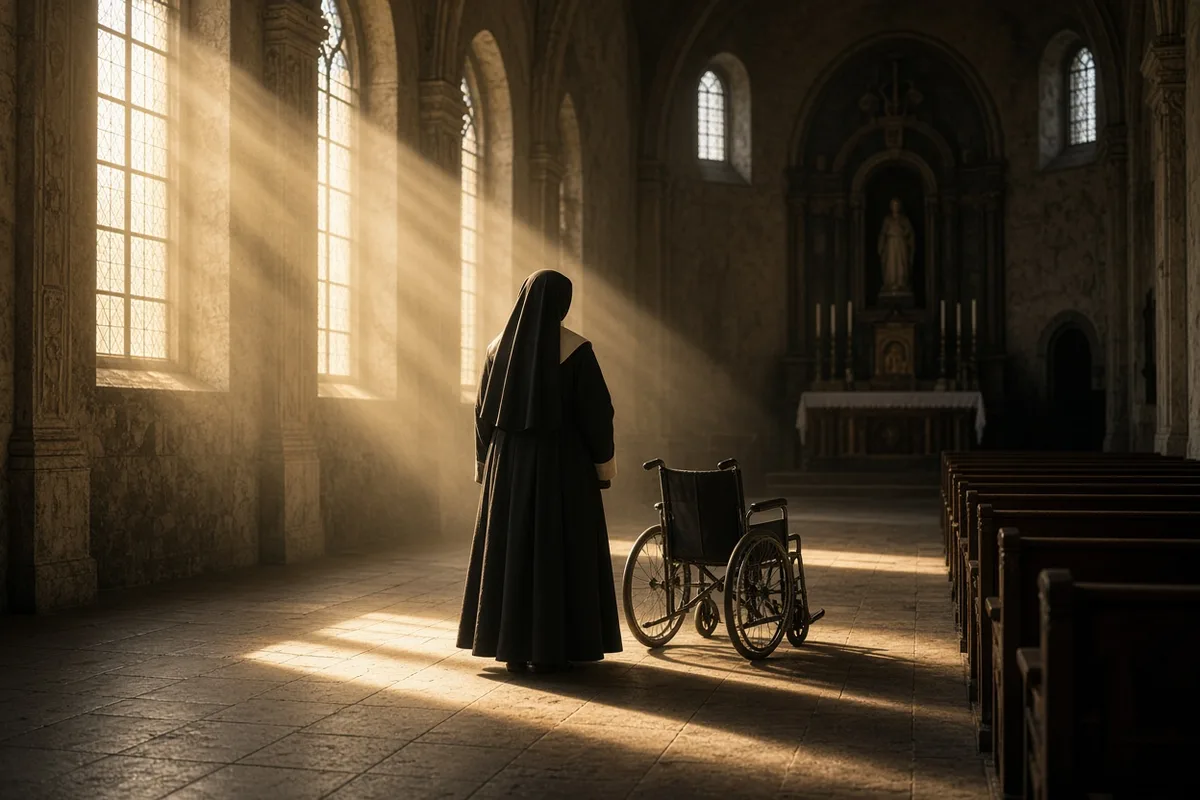
On March 20, 1943, she asked to be taken once more to the crypt. Two sisters supported her arms on the descent; she walked the return unaided. She died three days later at 4:15 in the morning, the same hour the healing had occurred thirty-five years earlier. The death register lists the cause as arteriosclerosis and notes that eighty sisters who had entered the congregation after 1908 were present at her funeral on March 26. Her own written account of the night at the tomb was read aloud in the refectory on the evening of the burial.
The documents remained in the wooden filing cabinet in the motherhouse archives until 1985, when they were transferred to acid-free folders and microfilmed. The Congregation for the Causes of Saints requested the original letter and the three medical statements in 1994. They were examined in Rome, returned, and placed in a locked case in the new archive building completed in 1997. Beatification was celebrated at Saint Mary-of-the-Woods on October 25, 1998; the decree cited the 1908 healing as the required miracle. The second miracle, approved in 2006, concerned the recovery of a child in Brazil whose parents had invoked Mother Theodore after reading the same biography Sister Mary Theodosia had prepared for the printer. Canonization took place in Saint Peter’s Square on October 15, 2006, with Pope Benedict XVI presiding. The congregation sent a delegation of twenty sisters; the relic presented was a fragment of bone from Mother Theodore’s right hand, sealed in a silver reliquary made by a Terre Haute silversmith in 1909.
The shrine church constructed beside the original crypt holds the daily visitor register begun in 1999. On December 31, 2023, the register recorded the 1,247,893rd signature since the beatification. The last entry that day was made by a woman from Indianapolis who wrote only her first name and the phrase “for my mother.” The corridor where Sister Mary Theodosia passed the observer on the morning after the healing remains in daily use; the stone floor has been replaced twice, in 1954 and again in 1992, but the high windows and the angle of light at eight o’clock in the morning are unchanged. An elderly sister from the 1943 entering class still walks that corridor each morning before Lauds, carrying a single folder of photocopied letters in her right hand, her left arm swinging freely at her side.
The corridor leads directly into the climate-controlled archive wing added in 1997, where Sister Agnes Marie, the 1943 entrant now ninety-eight, unlocks the steel cabinet each weekday at 5:40 a.m. and removes the acid-free folder labeled “Theodosia—1908.” She places the photocopied pages on the reading table beneath the north window, aligns them with the brass ruler kept there since 1985, and begins transcribing marginal notes into the digital database that holds 4,872 entries as of January 2024. The original letter to Bishop Chatard remains in Rome, but the congregation’s copy, microfilmed in 1985 by the firm of Brown and Company in Indianapolis, carries the handwritten line “the strength returned at the lighting of the lamps” in Sister Theodosia’s recovered script.
Sister Agnes Marie works until the first bell at 6:15, then returns the folder and walks the one hundred forty-seven yards of the cloister to the shrine church. On the morning of February 12, 2024, she paused at the marble slab covering Mother Theodore’s vault and read aloud the single sentence from the 1908 account that Sister Francis Xavier had copied into the choir book: “the left hand extended fully.” The sacristan that day, Sister Rita Clare, recorded the time in the margin of the current ledger as 6:22 a.m. and later noted in the weekly report to the superior general that the elderly sister “rose without assistance and continued to the side chapel.”
The visitor register in the shrine vestibule, opened on October 26, 1998, now occupies its fourteenth volume. Volume fourteen, begun on March 3, 2023, contains 87,412 entries through December 31, 2023. One entry dated November 8, 2023, records the name of Dr. Elena M. Vargas of São Paulo, Brazil, who wrote “in thanksgiving for the 2001 healing” and left the telephone number of the hospital where the child, now twenty-three, works as a nurse. The register is checked each evening by the volunteer from the Terre Haute chapter of the Friends of Mother Theodore, who counts signatures and forwards the monthly total to the development office.
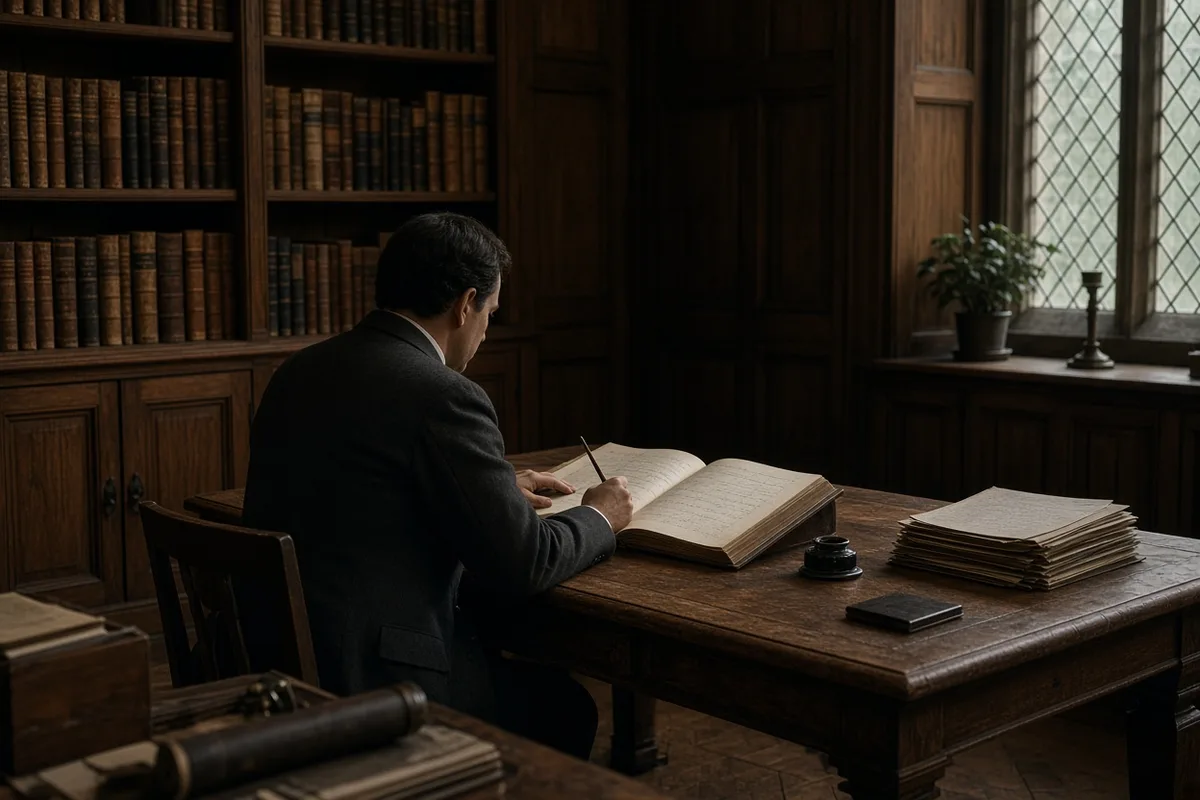
Maintenance records show that the high windows above the corridor were reglazed in 2011 by the firm of McGinnis Glass of Indianapolis, using the original 1892 drawings on file in the Vigo County courthouse. The new panes, 48 by 72 inches, were installed on October 17 and 18 of that year at a cost of $14,600, preserving the exact angle of light that falls across the floor at 8:00 a.m. The stone floor itself, replaced in 1992 with Indiana limestone from the quarry at Bedford, carries the same dimensions as the 1853 installation: twelve-inch squares set in a running bond pattern.
Sister Agnes Marie attends the noon Office in the crypt chapel every day except when the physician from Union Hospital, Dr. Thomas R. Hale, schedules her quarterly examination. On January 15, 2024, he measured her left-arm abduction at one hundred seventy-five degrees and recorded in the infirmary chart that she reported “no discomfort on full extension.” She returned to the corridor immediately after the appointment and resumed work on the 1908 folder.
The last human image visible in the corridor each morning is that of Sister Agnes Marie at 5:35 a.m., her black veil squared at the shoulders, the single folder held against her side with the left hand, the right hand turning the key in the archive lock. She closes the cabinet door, checks the digital thermometer on the shelf above it—always 68 degrees Fahrenheit—and walks the remaining length of the passage as the automatic lights come on at the motion sensor installed in 2004.