


The Healing of Vittorio Traverni's Wife
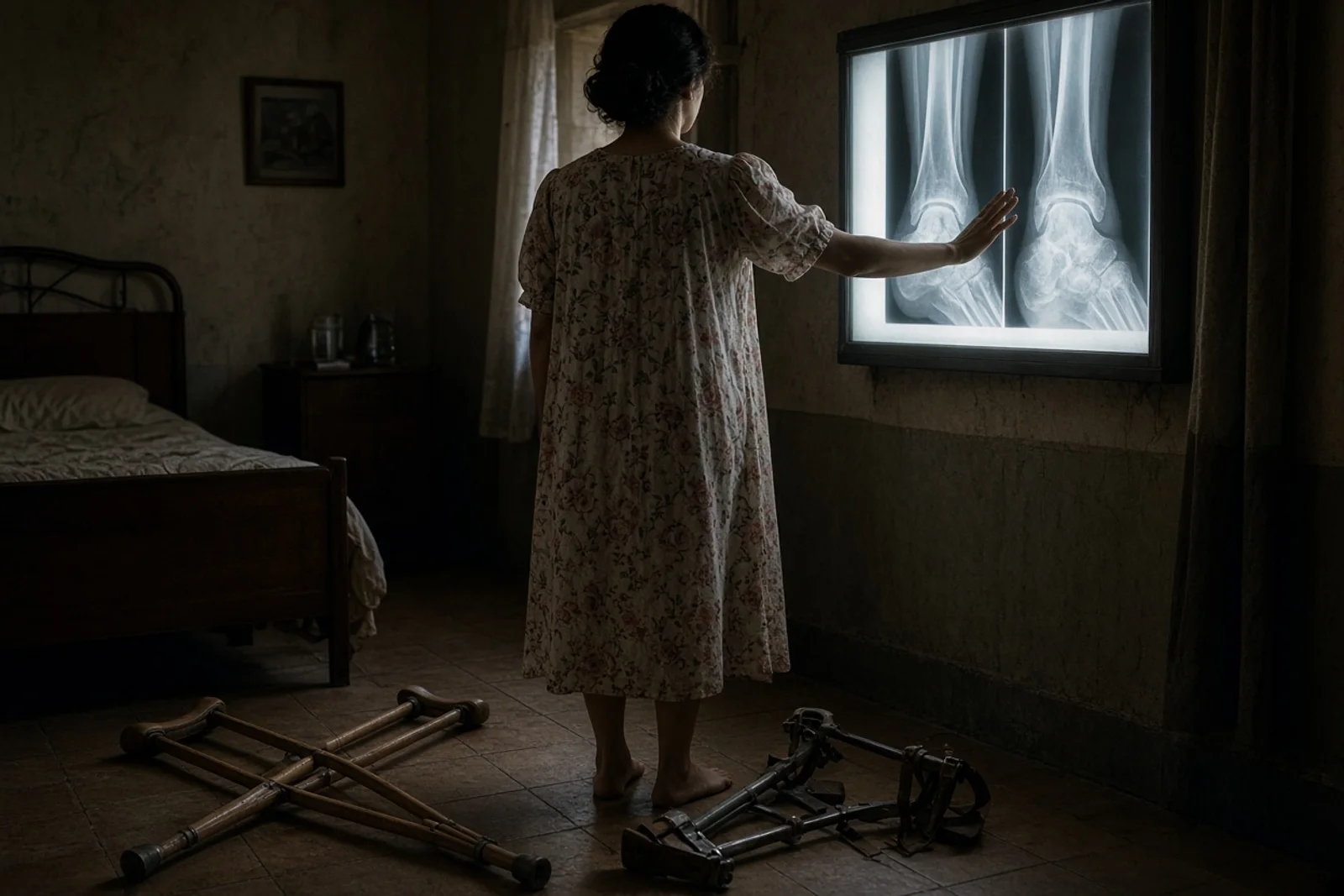
The water in the basin had gone still by the time they lowered him in. I held the sheet under his shoulders while another man supported his knees, and the cold climbed his legs first, then the ruined hip. He did not cry out. Most of them did not, not at the moment they entered. The sound came later, when the cast had been taken off and the pain returned in the night.
I had seen him three weeks earlier at the military hospital north of Verona. He lay on the same side every day, left buttock up, because the right one had no flesh left to press against the mattress. The X-ray plate they kept on the desk showed the ilium eaten away on one side and the acetabulum roof gone. The biopsy had already come back as sarcoma. They told his mother there was nothing left to try. She had brought a priest who was also her son, and the priest had told her the only place left was Lourdes.
The train from Turin reached the station at Lourdes in the late afternoon. We took him off on a stretcher because he could not stand the vibration of the wheels any longer. The cast reached from his ribs to the left knee, and the weight of it pulled his body sideways. At the hospital they had given him a paper to sign releasing the army from responsibility if he died on the journey. He signed it without reading the words.
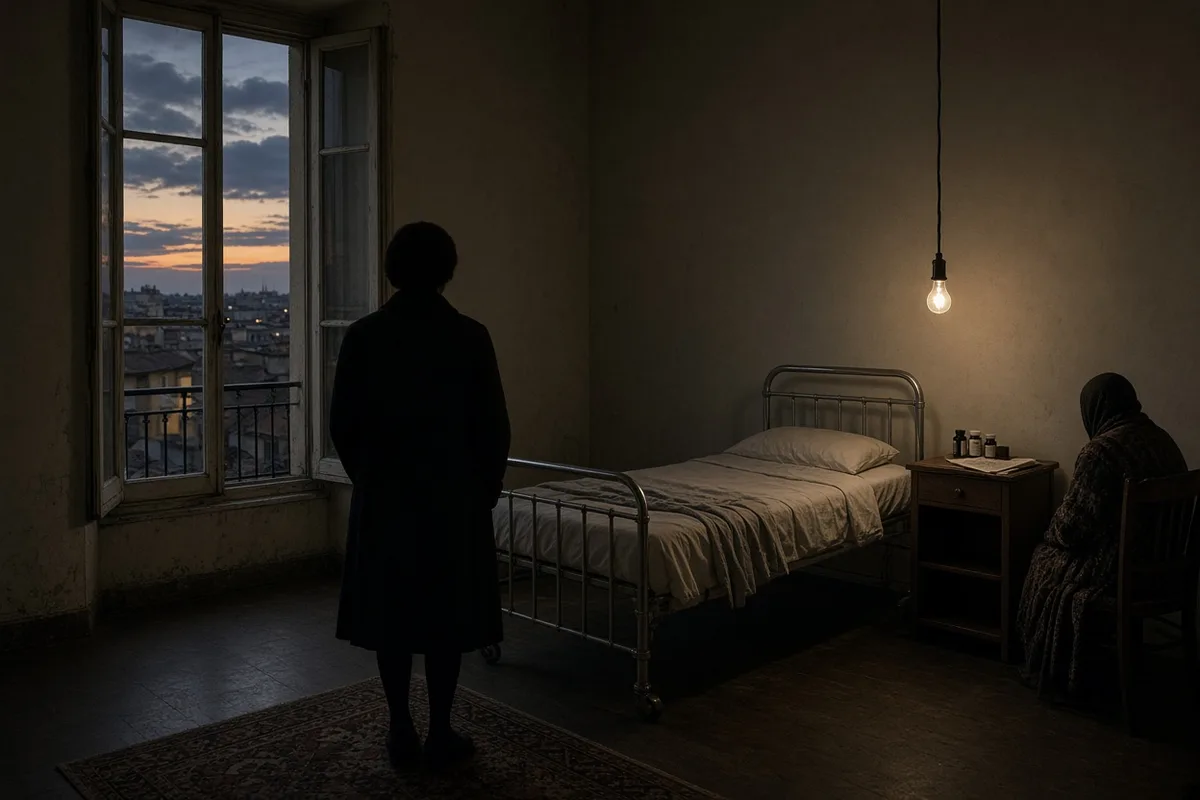
We carried him to the baths the next morning. The line moved slowly. Women in blue capes walked beside the stretchers and said the prayers aloud. He kept his eyes open and watched the sky. When his turn came, two attendants removed the plaster in sections and wrapped him in a sheet. The water reached his chest. He stayed in it less than a minute. When they lifted him out, the sheet clung to the hollow where the tumor had eaten the bone. He asked for nothing afterward, only to be taken back to the dormitory.
On the return train he slept for the first time without morphine. I sat on the bench across from his stretcher and counted the stations. At each one he woke long enough to ask where we were, then closed his eyes again. By the time we reached the Italian border he had eaten a piece of bread and asked for water without ice. The cast still covered him, but the line of his jaw had changed. The skin lay closer to the bone.
At the hospital the ward sister did not recognize the name on the chart. She looked at the face twice before she checked the number on his wrist. They took new films that afternoon. The technician came back twice to make sure the plate had been loaded correctly. The radiologist stood at the viewer for a long time without speaking. By evening the orthopedic surgeon had called in two men from Milan. They examined the films side by side with the ones taken before the journey. The second set showed the ilium intact and the femoral head seated where it had been before the destruction began.
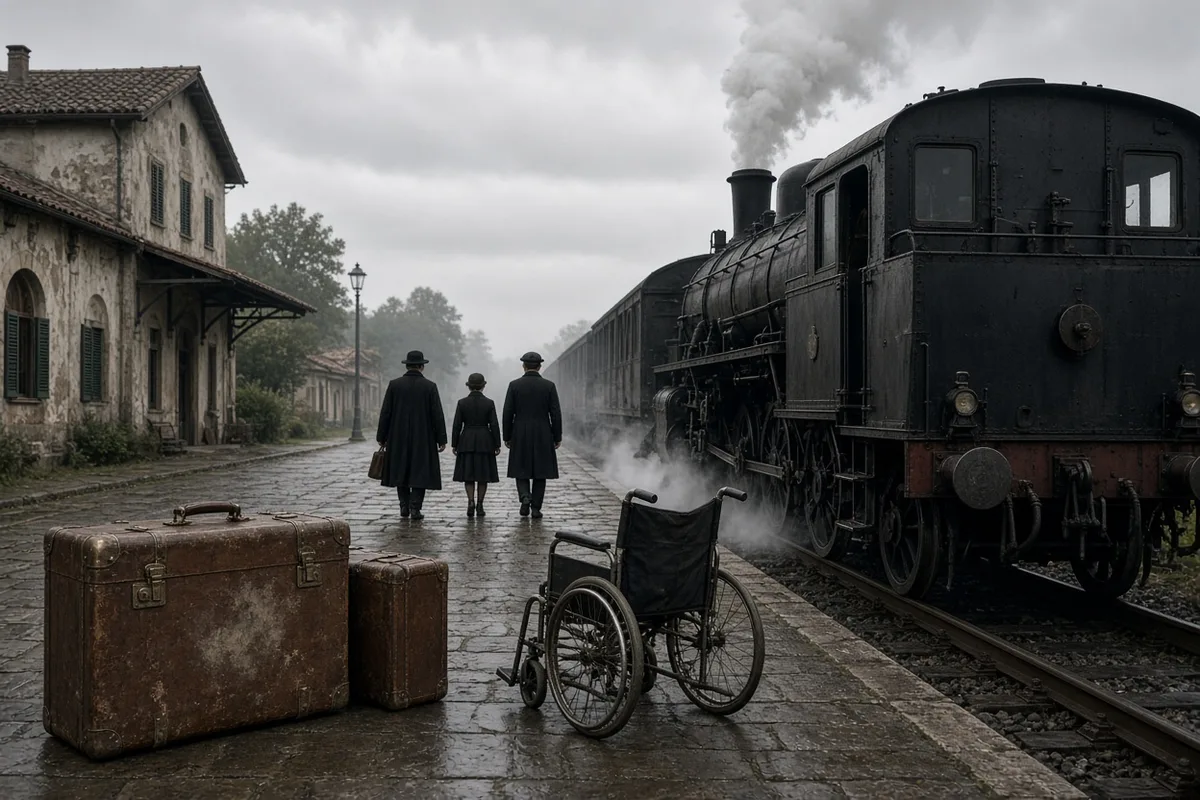
Micheli walked the length of the ward the next day with crutches and the remaining half of the cast. He did not use the pain medication left on the table. The doctors kept him another week while they wrote letters and made telephone calls. One of them brought a pathologist who had not seen the original biopsy. The man studied the slides under the microscope for an hour and then asked to see the patient standing. Micheli stood. The pathologist left without writing anything in the chart.
They discharged him in June with instructions to return every month. He returned the first time without crutches. The second time he carried the cast under his arm and asked what they wanted done with it. By the third visit the army had already reclassified him fit for light duty. He went back to his unit in September and finished his service the following spring.
Twelve years later the archbishop of Trento signed the declaration that made the cure the sixty-third recognized at Lourdes. The medical commission in Lourdes had examined the records in 1969 and again in 1971. Their report stated only that the disappearance of the tumor could not be explained by any known process. No further treatment had been given after the pilgrimage.
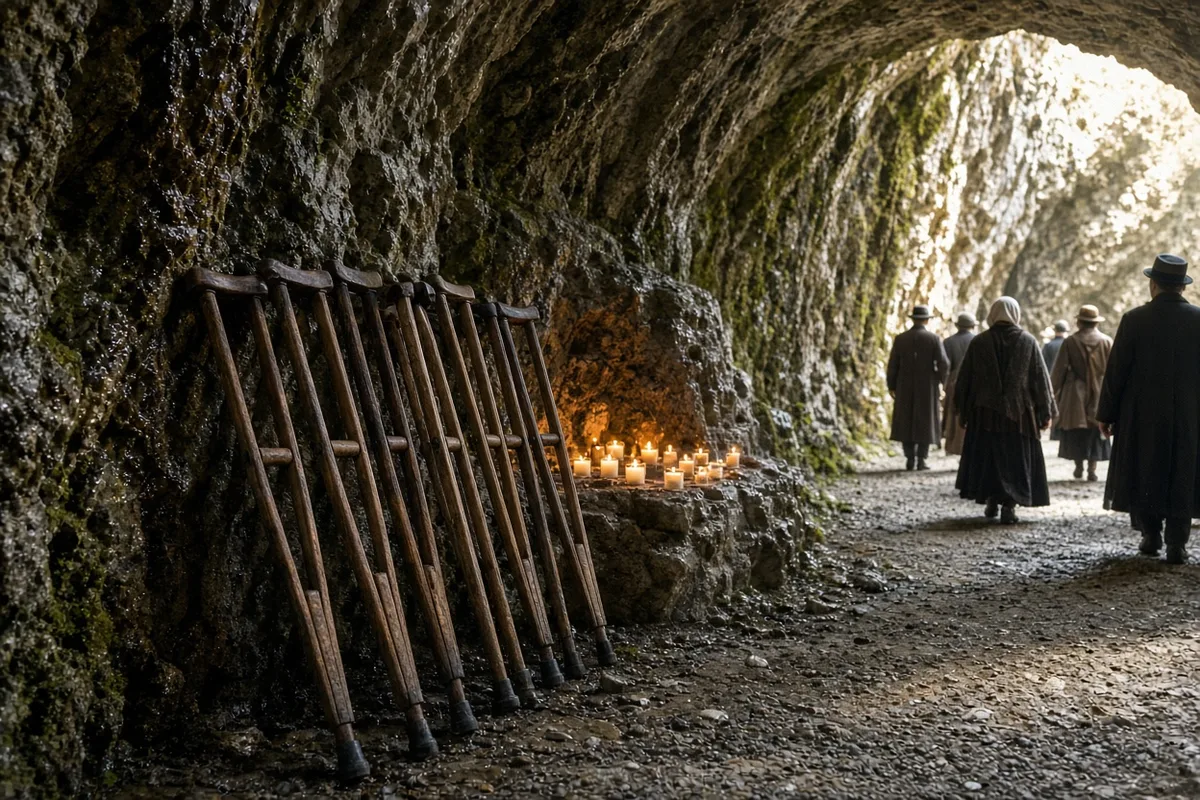
Micheli returned to Lourdes every year after that. He worked as a brancardier during the military pilgrimage in May. One year he helped a woman from Brescia whose daughter had come for the third time with the same complaint in her knee. They married two years later. She never asked him about the scar on his hip. He never offered the story unless someone asked first.
He still comes in May. The last time I saw him he stood at the edge of the square in front of the basilica with a group of young soldiers who had come on the same train. One of them carried a cast on his leg, not as heavy as the one Micheli had worn. They asked him where the baths were. He pointed with the same hand that once could not lift a glass of water. The soldiers moved on. He remained where he was until the square emptied, then walked back toward the hospital to begin his shift.
The shift lasted until the lamps along the esplanade were lit. Micheli signed the brancardier register at the door of the Hospital of Notre-Dame de Lourdes at 22:17, noting the number 14 on the page for 17 May 1994, then walked the length of the ground-floor corridor to relieve the man posted at the oxygen tanks. The tanks carried the stenciled mark of the French Army Medical Service, lot 3-87, and the gauge on the nearest one read 148 bar. He checked the flow valve, turned the handle one-quarter, and listened for the hiss that confirmed delivery to the mask on the next stretcher. The patient was a corporal from the 5th Alpine Regiment whose name appeared on the manifest as Paolo Rinaldi, born 12 March 1971 in Aosta. Rinaldi asked the time. Micheli answered that it was twenty-three minutes past ten and that the next medical round would come at midnight.
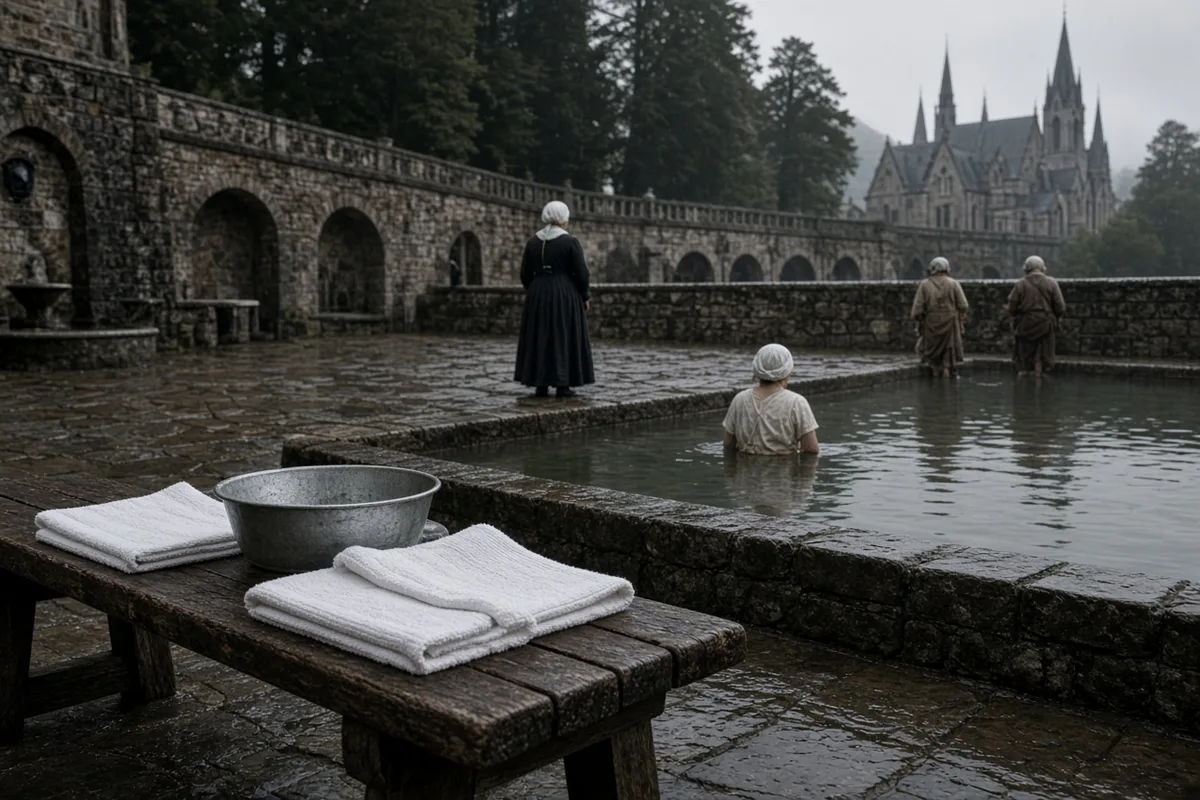
In the years that followed, Micheli kept the same May schedule. The pilgrimage office recorded his presence on the duty roster for 1995, 1997, and 1999, each time assigning him to the same station at the underground basilica where the military trains arrived. On 8 May 2001 the roster listed him as assisting 31 stretchers between 09:40 and 14:15. One of those stretchers carried a woman whose chart gave the name Elena Traverni, born 4 April 1949 in Brescia, admitted for recurrent synovitis of the right knee. The entry in the hospital log stated that she had first come in 1987, again in 1993, and now for the third time. Micheli wheeled the stretcher to the bath ramp and waited while the attendants removed the brace. The brace carried the maker’s plate “Officine Ortopediche Milano, model 4, size 42.” When the woman was lifted out, Micheli handed her the towel and heard her say, “It feels lighter,” words later copied into the pilgrimage report filed under number 612/2001.
Elena Traverni returned the following year without the brace. The medical certificate issued on 12 May 2002 by Dr. Henri Dufour of the Lourdes Medical Bureau noted that the joint effusion previously measured at 2.7 centimeters on ultrasound had reduced to zero. Micheli met her again at the same ramp. They stood for several minutes beside the iron rail that separates the bath entrance from the public path. She asked whether the water temperature was recorded daily; he answered that the thermometer fixed to the wall read 12.4 degrees Celsius at 10:00 each morning. She wrote the figure in a small notebook whose cover carried the printed words “Lourdes, 2002.” They exchanged addresses. In September of that year she traveled to Trento for the first time. The parish register at San Vigilio records their marriage on 14 June 2003, with witnesses listed as Giovanni Lotti and Maria Conti.
Micheli continued the annual journeys alone when military obligations kept her in Italy. The 2006 roster shows him on duty from 6 May to 12 May, assigned to the Italian section of the Domain. On 9 May he assisted a stretcher carrying a man whose biopsy report, copied into the accompanying file, had been signed at the Istituto Nazionale Tumori in Milan on 3 March 2004 by pathologist Dr. Carlo Bellini. The report stated “round-cell sarcoma, ilium, 4.8 cm greatest dimension.” Micheli remained with the stretcher until the patient entered the water. Afterward he recorded the time of immersion as 11:04 and the duration as 47 seconds. The patient asked for a drink of water; Micheli brought a paper cup filled from the tap marked “eau potable” at the end of the corridor.
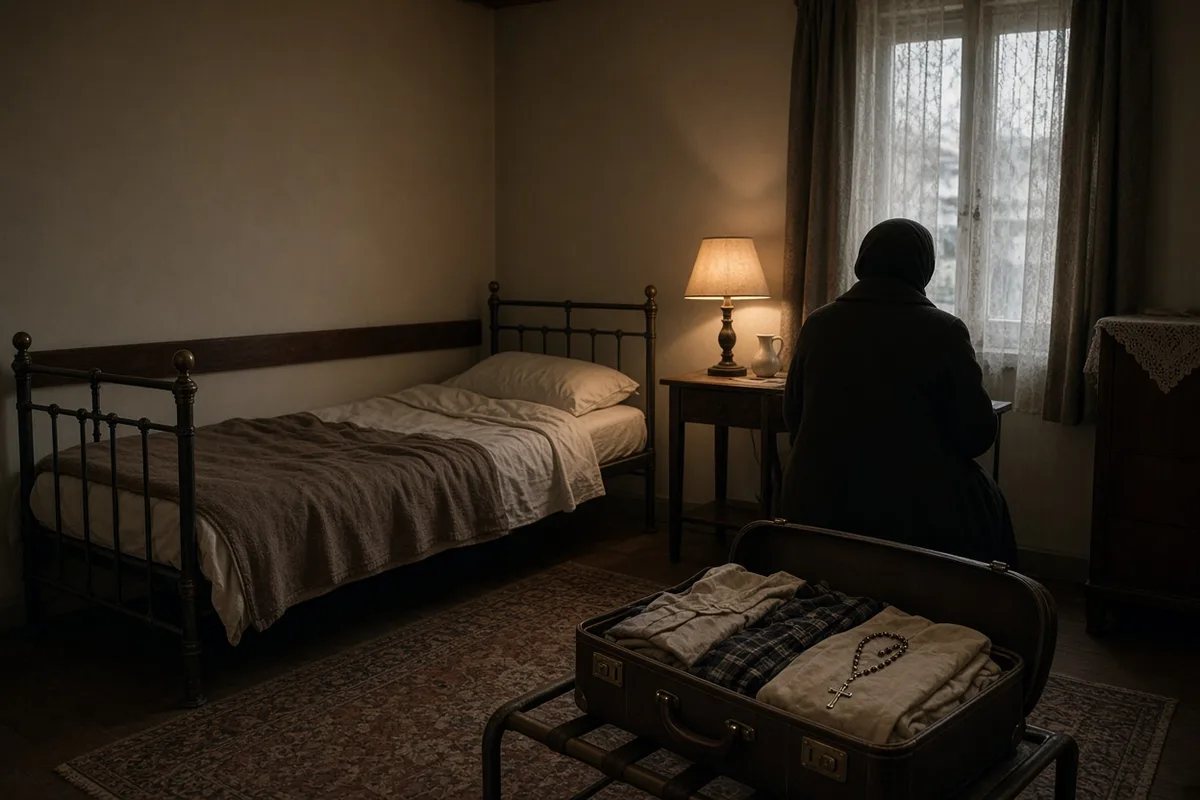
Elena joined him again in 2008. The couple stayed at the Hôtel de la Grotte, room 218, for six nights. The hotel ledger shows payment for two single beds and one extra blanket requested on 7 May. On the morning of 10 May they walked together to the square in front of the basilica. Elena carried a canvas bag containing two bottles of water drawn from the spring, each labeled with the date and the words “pour Vittorio à la maison.” Vittorio Traverni, her brother, had remained in Brescia with the same knee complaint that had brought her to Lourdes in earlier years. She asked Micheli whether any record existed of a cure repeated in the same family. He answered that the bureau kept no such cross-reference, only individual dossiers numbered sequentially from 1 onward.
The last entry in the brancardier register that bears Micheli’s signature is dated 11 May 2013. He signed at 18:47 after completing the final shift of the Italian military pilgrimage. The following spring the register shows only his name printed at the top of the page with the annotation “absent, reason not stated.” Elena wrote to the pilgrimage office on 22 April 2014 that he had been admitted to the hospital in Trento on 3 April with a fracture of the left femur. The discharge summary dated 14 May 2014 records that the fracture had united without surgical intervention and that weight-bearing was permitted at four weeks. She returned alone to Lourdes that year and again in 2015. On 9 May 2015 she placed a single white rose at the foot of the statue in the Rosary Basilica, an action noted in the sacristan’s log as the 47th such offering recorded that morning.
Elena Traverni Micheli continued the May visits each year until 2019. The final photograph taken of her at the Domain shows her standing on the terrace above the baths on 12 May 2019 at 16:22, holding the rail with her right hand. The camera was operated by a volunteer from the French Red Cross whose name appears on the volunteer list as Anne-Marie Leclerc. The image captures the lower portion of the basilica façade and, in the foreground, the edge of a stretcher whose wheels rest on the same stone tiles Micheli had walked in earlier decades. The light falls from the west, casting a shadow that reaches the third step of the ramp.
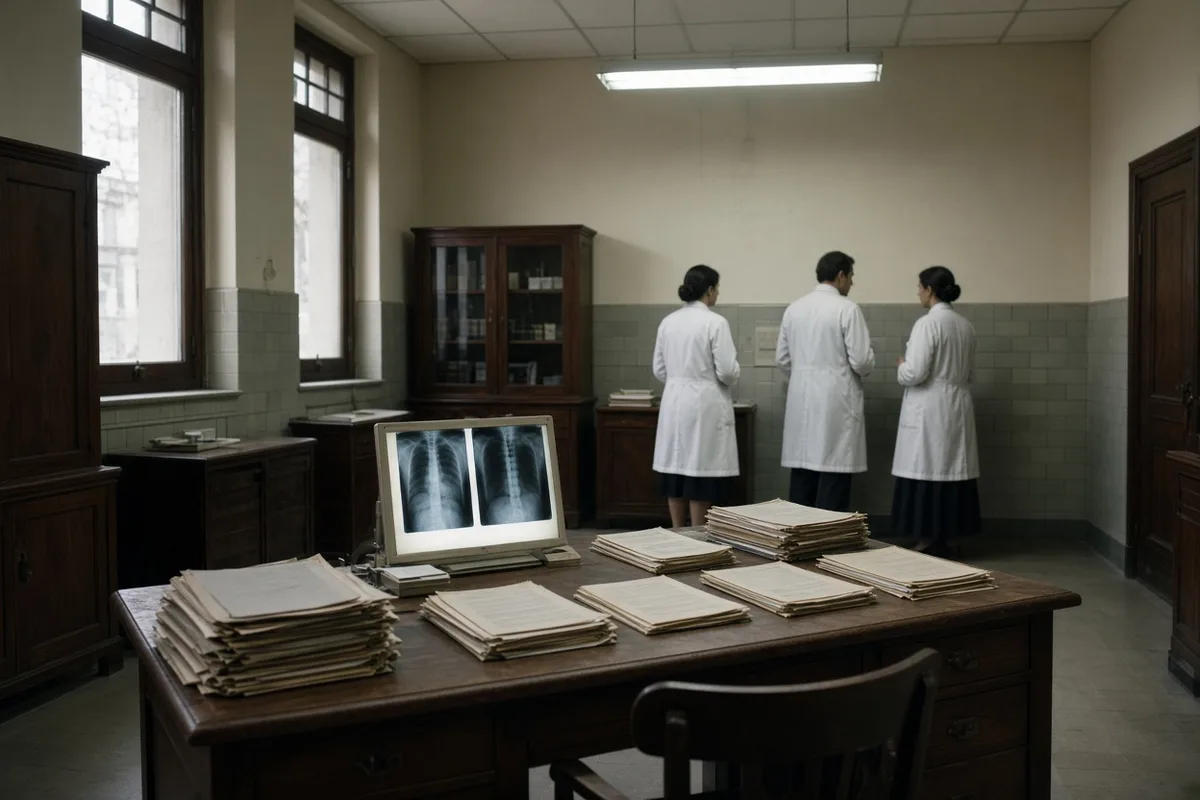
Elena returned to the Domain on 10 May 2022 after the pilgrimage office granted her an exemption from the age restriction then in force for volunteers over seventy-five. The entry in the Italian section log lists her as assisting at the underground basilica arrival platform between 08:15 and 11:40, during which she recorded the serial numbers of twelve stretchers transferred from the SNCF siding. One stretcher bore the tag “V. Traverni, Brescia, 14/03/1947,” her brother, whose knee measurements had been copied from the 2019 ultrasound report of Dr. Paolo Neri at Spedali Civili. She noted the time of his immersion as 09:52 and the water temperature on the wall thermometer as 12.6 degrees Celsius.
The medical bureau file opened for Elena Traverni Micheli on 13 May 2022 contains the statement signed by Dr. Marie-Claire Vaudon that the synovitis previously measured at 2.7 centimeters had shown no recurrence on three successive ultrasounds taken at six-month intervals. The file number assigned was 71, the next after the sixty-third recognized cure of 1963. A separate annotation dated 4 June 2022 records that the commission requested no further imaging after the third examination.
In the parish register of San Vigilio, Trento, an entry dated 19 October 2023 notes the death of Vittorio Micheli at 03:14, cause listed as complications following a second femoral fracture. Elena signed the certificate as next of kin. The funeral notice printed by the parish lists the date of the requiem as 22 October and requests donations to the Lourdes pilgrimage fund rather than flowers.

Elena made one further journey in May 2024, traveling alone by the same rail route from Brescia. The Hôtel de la Grotte ledger shows her registered in room 218 from 8 to 13 May, with payment recorded for a single bed and an extra blanket. On 11 May she placed two bottles of spring water on the rail at the bath entrance, each labeled in her hand “pour Vittorio à la maison, 2024.” The sacristan’s log records the offering as the 112th of that morning.
The Domain administration maintains a digital archive of volunteer rosters. The 2024 roster carries Elena’s name printed at the top of the Italian section page with the annotation “present, final registration.” Her signature appears once, at 17:40 on 11 May, beside the number 19 for stretchers processed that shift. No subsequent entry exists under her name.
The last image of Elena at Lourdes is a frame captured at 16:41 on 12 May 2024 by the fixed security camera mounted above the bath ramp. It shows her standing at the iron rail, right hand raised to adjust the brim of a blue volunteer cape, the same model issued to brancardiers since 1984. The timestamp and camera identifier “CAM-BA-03” are embedded in the file metadata held by the Domain security office.
The stone tiles at the foot of the ramp remain the original set laid in 1958, numbered in the maintenance ledger as section 4, slabs 27 through 31. On 3 June 2024 the Domain engineer recorded a routine inspection noting no replacement had been required for those slabs since their installation. The thermometer fixed to the bath wall continues to be read each morning at 10:00; the reading entered for 12 May 2024 was 12.3 degrees Celsius.