




The Ice Bucket Challenge Freezes for a Cure
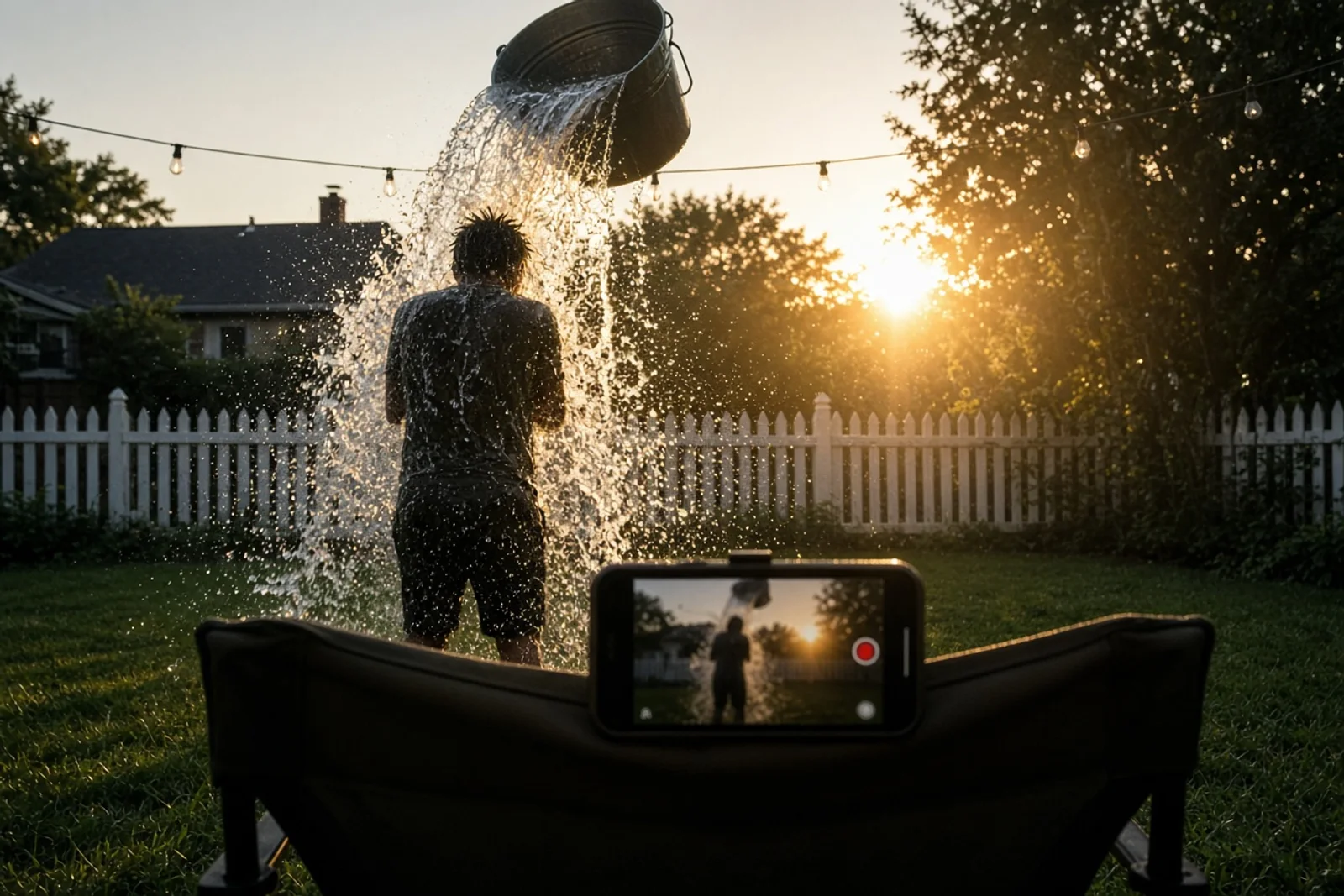
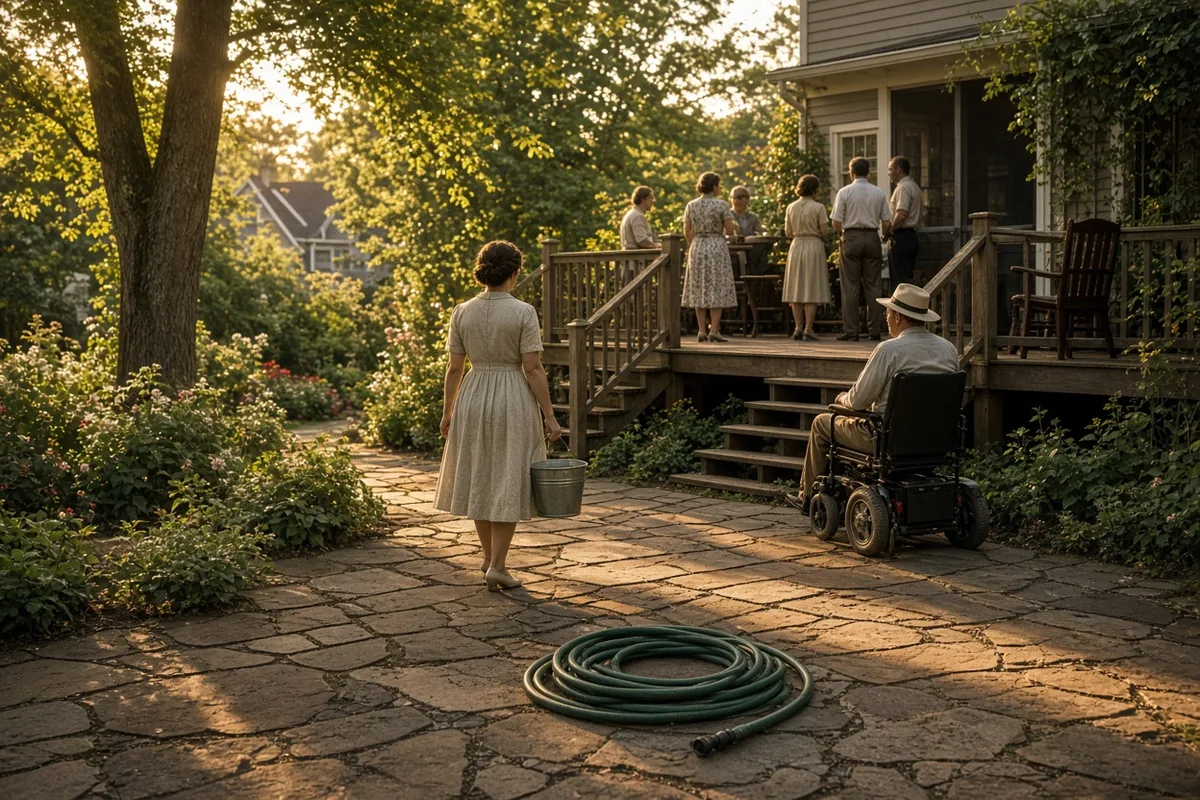
The garden hose is still coiled by the back steps when Jeanette comes out with the bucket, and I remember thinking it was too heavy for her to be carrying alone, ice sloshing over the rim, soaking the knees of her jeans before she even got to the spot on the lawn we'd marked out by eye. It was July, the kind of Westchester July where the air sits on your skin like a wet towel, and here she was about to make it worse on purpose.
I'd known Anthony since before any of this. Since before 2003, before the word ALS meant anything to any of us beyond something you half-remembered from a baseball movie. He was thirty-two when they told him, newly married, and Jeanette used to say there was nothing — no drug, no trial, no answer anyone could give her when she asked what he could take. That word, nothing, she said it more than once over the years, and it always came out flat, like she'd worn the feeling down to a stone.

So when her cousin Chris Kennedy, a golfer down in Sarasota, sent her a video daring her to dump ice water over her head — nominating her the way you'd nominate somebody as a joke, cousins busting each other's chops — she told me she almost just wrote a check instead. That would have been easier. Nobody has to watch you write a check.
But she didn't do the easy thing. She stood on that lawn on July 16th and tipped the bucket, and I watched the cold hit her like a slap she'd been expecting and still couldn't brace for, and she came up gasping and laughing at the same time, and she looked into her cousin's phone and said this was for Anthony, for ALS, and then she nominated three of her girlfriends before she'd even dried her hair.
The hashtags were clunky at first, the kind of thing that only makes sense if you already know the story — taking ice for Ant Senerchia Jr., Strike Out ALS, tied to a little tournament they'd started to keep his name alive in the town. Pelham is small. You can't sneeze in Pelham without three people asking if you're coming down with something. So it should not have surprised anybody, but it did, how fast those videos started showing up. High school friends nobody had heard from in a decade. Neighbors. The guy who ran the deli. Within days I couldn't keep a running count anymore, and neither could Jeanette.

I remember asking her if she understood yet what was happening, and she just shook her head, water still in her ear from that morning's dare, and said it was pretty unbelievable, watching it move through the town like that.
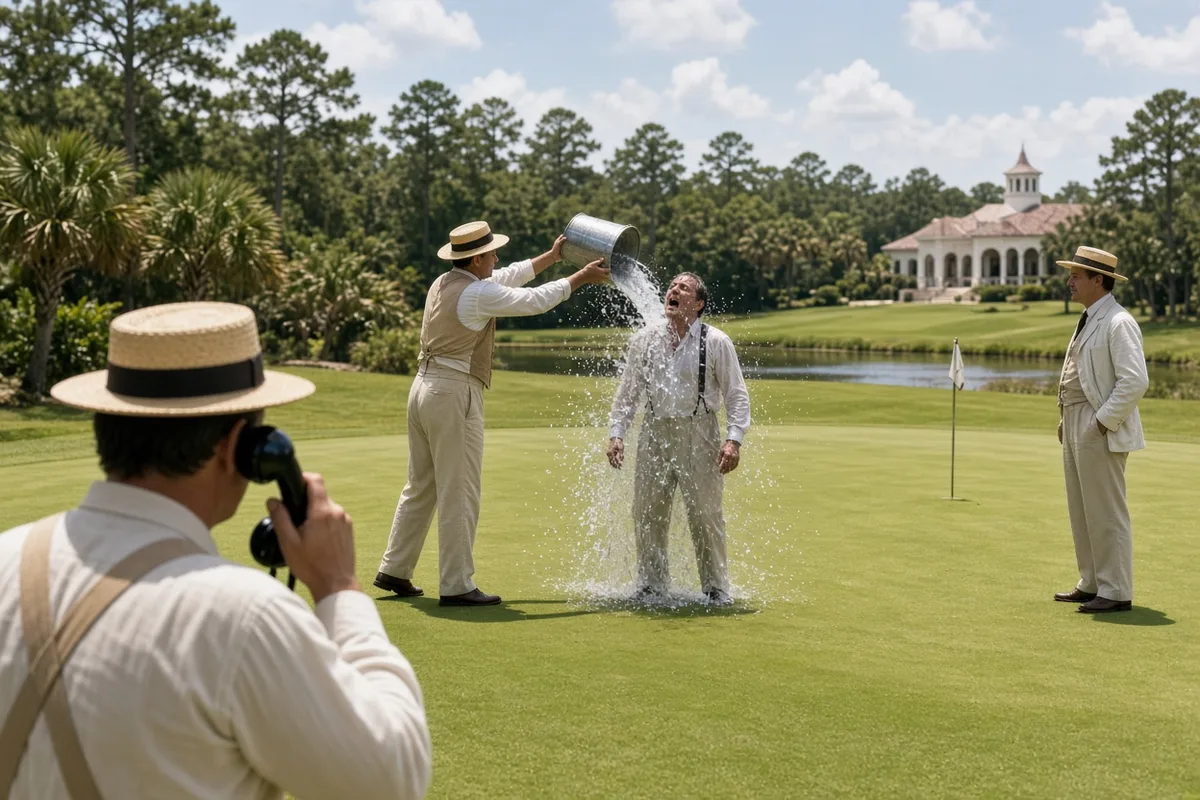
What none of us knew — what she couldn't have known, standing on her lawn with an empty bucket — was that the water was already finding other channels. There'd been golfers pouring it over themselves back in June, a dare bouncing around the pro circuit, no charity attached to it at all, just a game. There was a motocross rider up north who'd doused himself in an ice bath weeks earlier for his nephew's medical bills. There was a women's basketball coach out west whose players had been getting soaked for a cancer fund since the middle of June. The bucket, it turns out, had been looking for its cause. Pelham just happened to be where cold water and ALS finally landed in the same frame, on the same summer afternoon, and stuck.
From our town it crossed into Yonkers, just down the parkway, where a man named Pat Quinn had been living with his own diagnosis since March of the year before, one month past his thirtieth birthday. Quinn and Jeanette weren't close, not directly — it was more like their circles brushed against each other through a couple of shared friends on Facebook, one of those threads you don't notice until it pulls tight. He picked it up. He ran with it under a page he'd started, Quinn for the Win, and I watched from a distance as the videos multiplied again, faster now, the way something moves once it's found a second wind.

And then it reached Boston, and a name I didn't know yet but would soon know the way everybody eventually knew it: Pete Frates. A ballplayer, Boston College, diagnosed in 2011 at twenty-seven, three years chewed off the middle of his twenties by something that had no drug and no fix and no mercy about timing. Frates and Quinn had found each other online not long after Quinn's own diagnosis, two young men put in the same room by the worst kind of coincidence, trading whatever comfort two people in that position can trade. When the challenge reached Frates on the last day of July, his family didn't wait to see if it would take. They pushed. Jeanette told me later that his people were up all night, every night, liking, sharing, tagging anyone they could reach — his network, and it was a wide one, cracking open like a dam gate.
That was when it stopped being a town thing and started being a world thing, and I felt that shift almost physically, like a change in barometric pressure before a storm you can smell before you see.
Tom Brady got tagged. Matt Ryan. The footage started showing up on channels that had nothing to do with any of us — SportsCenter, then the morning shows, then everywhere at once, the way weather fronts don't ask permission before they move through a whole region overnight. I sat in my own kitchen one evening in August and watched Bill Gates on my television screen rig up an elaborate contraption to pour water over his own head, engineering the joke the way you'd expect him to, and I thought about Jeanette's garden hose and the plain white bucket from under her sink, and how strange it was that both of those things belonged to the same story now.

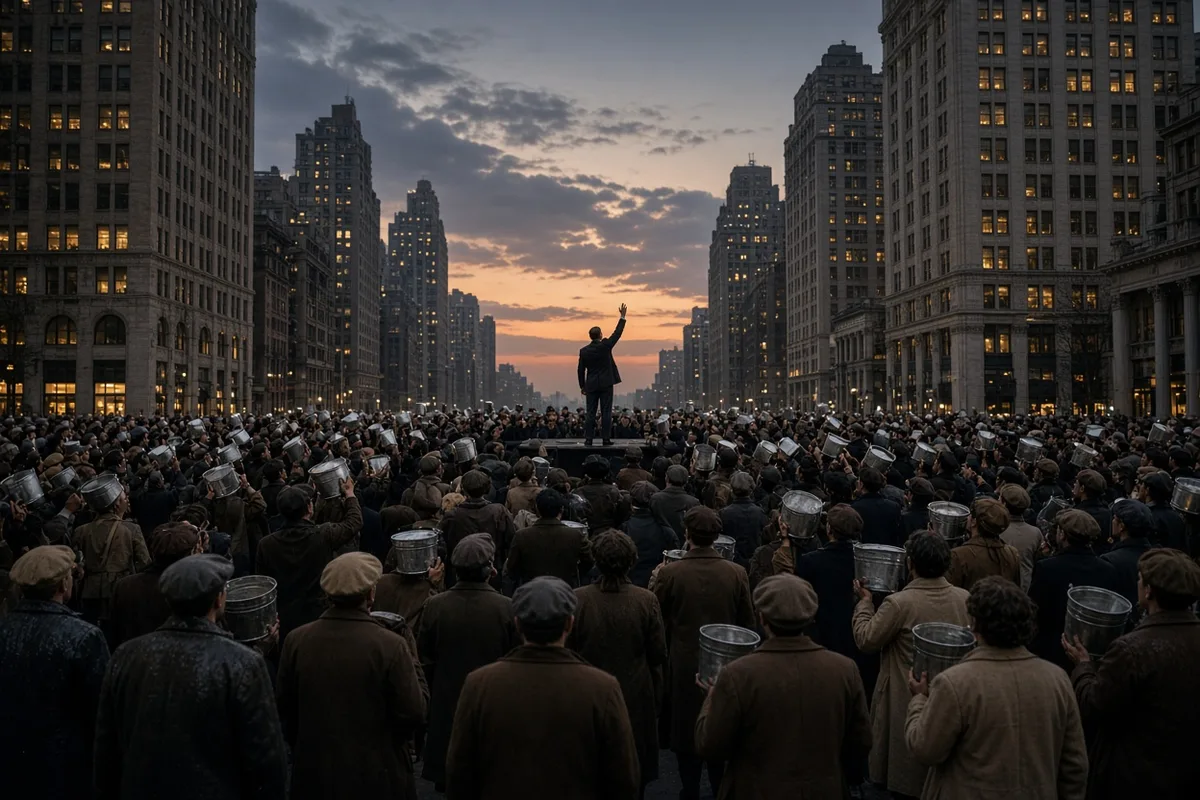
Oprah did it. LeBron James did it. Mark Zuckerberg. Taylor Swift. A former president stood in his own yard and let his wife pour ice water down his collar for cameras that weren't even supposed to be there. In Boston, on the seventh of August, a city councilman named Tito Jackson led something like two hundred people through the challenge at once in Copley Square, all of them screaming at the same instant the cold hit, a single sound rolling up off the pavement into the August sky. I watched a clip of it more than once. It looked like joy that had learned, somehow, to carry grief inside it without either one canceling the other out.
By the middle of August the ALS Association's number had already climbed past fifteen million dollars, a figure that felt made up when Jeanette first mentioned it to me, and then a week later that number looked small next to the next one, and I stopped trying to keep pace with the arithmetic of it. Somewhere out past fifty million the tally stopped feeling like money at all and started feeling like weather — something too large to hold in your hands, something you just watched pass overhead.
There were arguments, of course, the way there always are once something gets big enough to have opinions attached to it. People online started asking who deserved the credit, who had really started it, whether it belonged to the golfers or the motocross rider or the basketball coach or Quinn or Frates, whether it was even really about ALS or had curdled into something closer to a parlor trick, a way for people to avoid actually opening their wallets while feeling virtuous about a bucket. I heard all of that, and some of it stung on Jeanette's behalf, because I'd stood on that lawn with her in July before any of it was an argument, when it was just a woman trying to think of some way, any way, to be useful to a husband medicine couldn't touch.
But arguments don't stop water once it's already running downhill, and by the end of that summer the shape of the thing had gone past anyone's ability to claim it. Seventeen million videos, eventually, by the time somebody sat down to count. A hundred and fifty-nine countries. Ten billion views, a number so far past ordinary human experience that it might as well have been a distance in space instead of a count of anything watched. Two hundred and twenty million dollars, in the end, raised for an association that had spent decades scraping for attention nobody wanted to give a disease that mostly killed people quietly, a few years at a time, out of the public eye.
I think about what that money actually did more than I think about the videos now. Researchers went back into old samples with new eyes and new funding and found genes nobody had been able to isolate before, threads in the disease's machinery that had been invisible without the money to look closely enough. That part of the story doesn't have footage. Nobody screamed on camera when a gene got identified in a lab in whatever city, on whatever unglamorous Tuesday. But it happened because the summer before it, a whole world of people had stood in their own yards and let themselves get cold on purpose, for a stranger, or for a cousin, or for nobody in particular except the vague good feeling of being seen doing it.
Anthony Senerchia died in 2019, five years after his wife's bucket started rolling downhill through the rest of the world. I think about him less as the man whose name was in that first clumsy hashtag and more as the reason any of it existed at all — the fact underneath the fact, the person the whole enormous noise had been built to answer for, quietly, without asking to be famous for it.
Pete Frates died in December of 2019 too, that same terrible year taking both of the men whose names had ended up stitched into the challenge's own mythology, whether they'd asked for that or not. I remember him saying, near the height of it all, that the whole soaked, screaming, ridiculous summer had been the beginning of the end of the disease, and I want that to be true in the plain sense he meant it, not just as something comforting to repeat.
Pat Quinn is still here, still saying it, still tying his name to a fight that outlasted the ice and the hashtags and the celebrities who moved on to whatever came after. I saw him interviewed once, years past the fever of it, and he talked about the whole thing the way you'd talk about a fire that started from one match landing in exactly the right pile of dry leaves — one person linked to one network, and then another, and then a world.
Every so often, usually in some ordinary August when the heat gets thick enough to remind me, somebody somewhere pulls the challenge back out — a school, a sports team, a birthday party looking for a gimmick — and I watch the clip with a strange doubled feeling, half nostalgia and half something closer to vigilance, like checking on an old wound to see if it's still healing right.
Jeanette still lives in Pelham. The lawn is still there behind the house, ordinary grass, nothing marked on it, no plaque, nothing to tell a stranger walking by that a woman once stood on that patch of ground and tipped a bucket over her own head because her cousin dared her to and because there was, at the time, nothing else on this earth that she could do for the man she loved.
I think that's the part that stays with me longest, longer than the celebrities or the ten billion views or the number that kept climbing past anything reasonable. Not the fame of it. Just a bucket, a hose, a driveway in July, and a woman deciding that cold water was better than silence.