


The Incorrupt Heart of St. John Vianney
The candle guttered in the draft from the open window. I stood at the foot of the narrow bed in the room above the sacristy, holding a basin of water that had already gone cold. He lay with his eyes half open, the lines around his mouth pulled tight from the last hours in the confessional. Someone had placed a stole across his chest. The village clock struck two.
He had come back from the church only the night before, his legs unsteady after sixteen hours on the kneeler. We had helped him up the stairs one step at a time. Now the room smelled of tallow and the faint iron scent of the blood he had coughed up earlier.
Outside, the street stayed empty. Pilgrims still arrived by the cartload every day, but word had spread that the curé would not rise again. A woman from Lyon waited on the landing below with a rosary in her fist, unwilling to leave until someone told her the end had come.

His breathing changed after three. The intervals grew longer. I moved closer and heard the last words he tried to form, something about the Blessed Virgin. Then nothing. The priest beside me closed the eyelids. It was the fourth of August, 1859.
We washed the body before dawn. The limbs were light, the skin already cool. When we lifted him to change the linen, the chest did not resist the way a living man’s would. I noticed a small discoloration below the left nipple, no larger than a coin, but thought nothing of it at the time.
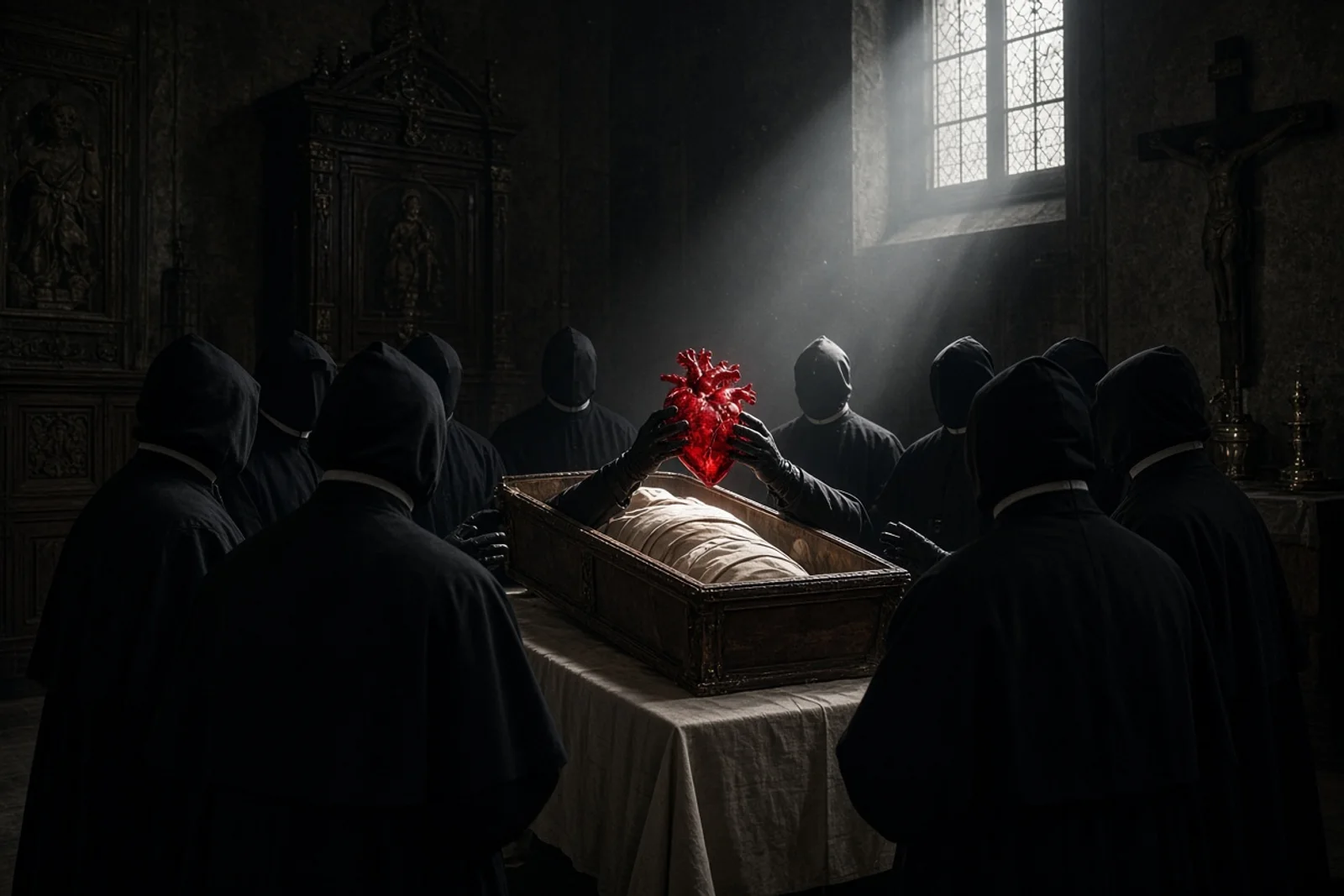
The bishop’s representative arrived from Lyon that afternoon. He brought a sealed order concerning the heart. In the sacristy they laid the body on the table used for vesting. Two physicians from the town stood ready with instruments. The senior one asked if any of us wished to leave the room. No one moved.
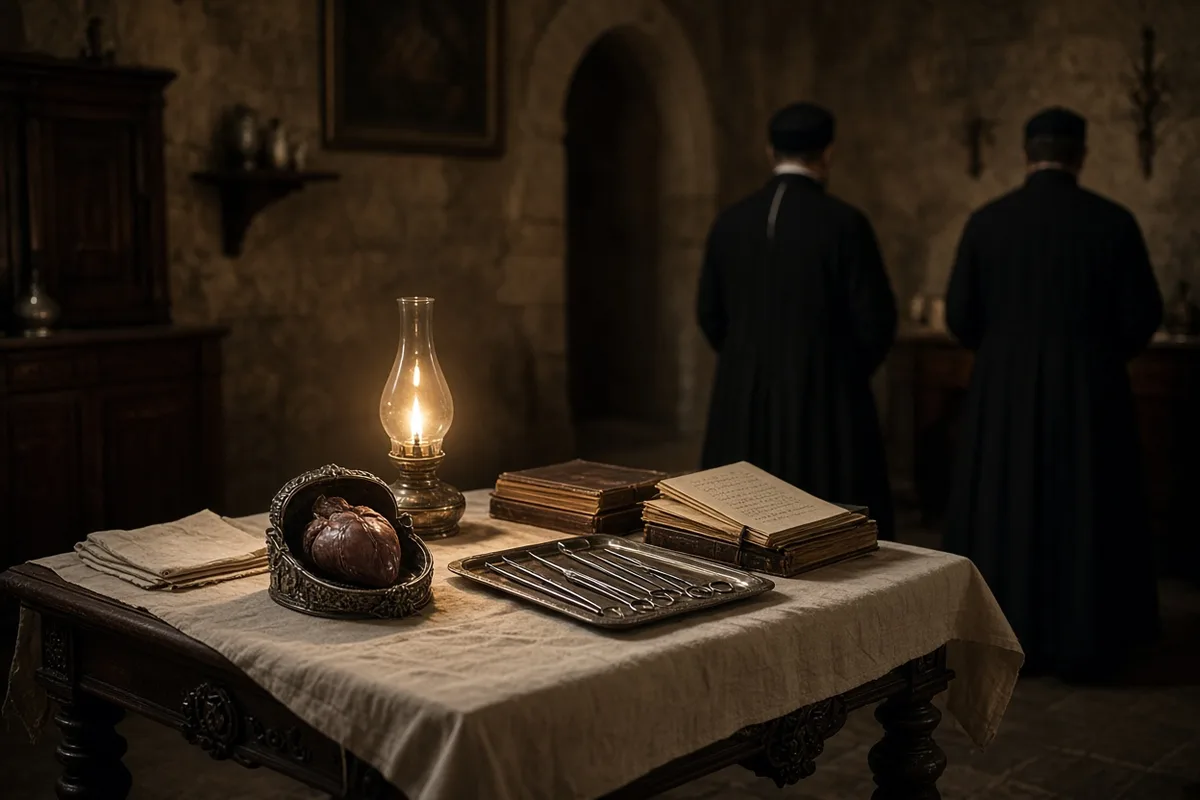
They worked quickly. The incision was made with care, the ribs parted. The heart came free in the older physician’s hands. He turned it under the lamp. The tissue showed no sign of softening or discoloration. It retained the shape and color of a living organ. One of the younger men stepped back and crossed himself.
They placed the heart in a glass vessel filled with spirits of wine. The vessel was sealed with wax and carried to the small chapel behind the high altar. The rest of the body was returned to the bed and prepared for burial. I stayed behind to scrub the table.
Word traveled through the village before nightfall. People gathered at the church door, not with the usual clamor but in small groups that spoke in low voices. A farmer from the next parish asked whether the heart had been placed back inside the chest. When told it had not, he nodded once and turned away.
The burial took place two days later. The coffin was carried the short distance to the cemetery without music. I walked behind the bishop’s carriage. The sky stayed overcast the entire morning.
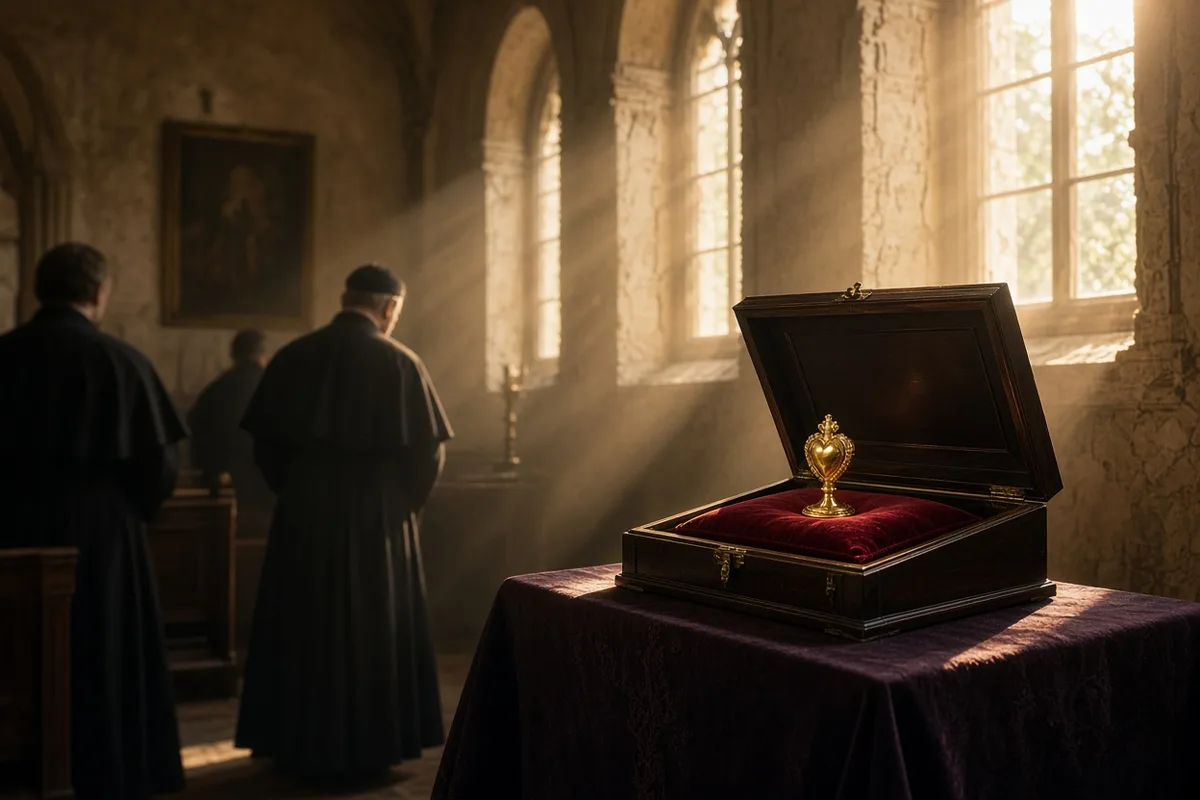
In the months that followed, visitors continued to come. They asked to see the vessel. The bishop permitted it on certain days, and a guard was posted so that no one touched the glass. I stood watch twice. Each time the heart looked unchanged, suspended in the clear liquid as though it might resume beating.
Skeptics came as well. A doctor from Paris examined the vessel under stronger light and declared that the preservation could not be explained by ordinary means. He signed a statement and left it with the parish records. Another physician suggested the spirits of wine alone accounted for the condition. He was invited to open the seal and test the claim; he declined.
Years passed. The vessel remained in the same chapel. Pilgrims touched the outer glass with medals and cloth, then carried those objects home. The number of strangers grew until the road into Ars required widening.
In time the heart was moved to a reliquary of gilded wood and crystal. The case was carried in procession on the feast of the saint. I saw it once more before age kept me from the square. The organ inside still showed no decay.
In 2018 the same heart traveled again. Medical examiners in France opened the reliquary under controlled conditions before the journey. They measured a healed lesion on the left ventricle, the scar of an infarction that had occurred while the man still lived. The tissue around the scar had closed completely. No record existed of any illness that would have produced such a wound.
The examiners returned the heart to its case and sealed it once more. The pilgrimage continued through American cities. Lines formed outside cathedrals at every stop. People waited hours for a moment in front of the reliquary.
The vessel now rests again in Ars. The glass remains clear. The heart inside holds the same form it held on the table in the sacristy the morning after his death.
The reliquary was carried back to Ars by road on the evening of 15 October 2018 after the final American stop at the Cathedral of St. Paul in Minnesota. Father Jean-Pierre Durand of the Shrine of Ars signed the transfer document in the presence of two gendarmes and the mayor of the commune, noting the seal remained intact and the interior humidity measured 42 percent. Pilgrims who had followed the reliquary from Lyon counted 1,847 vehicles in the convoy that crossed the Rhône bridge at 11:40 that night.
In January 2019 the bishop of Belley-Ars, Pascal Roland, authorized a new inventory of the sacristy records that listed every documented examination since 1859. The ledger entry for 12 March 1873 recorded the testimony of Dr. François Lacroix, who wrote that the organ “presents the elasticity of recent death and emits no odor of putrefaction” after fourteen years in spirits of wine. A later note dated 3 June 1905 from Canon Louis Trémolet described the same vessel being weighed on a pharmacy scale at 312 grams, unchanged from the 1859 measurement taken by the Lyon physicians.
By 1925 the number of annual visitors to the chapel reached 80,000, according to the parish register kept by Father Joseph Dorel. That year, on 31 May, Pope Pius XI issued the bull of canonization in Rome; the decree cited the preserved heart as one of the facts examined by the Congregation of Rites. A special train from Paris carried 1,200 pilgrims to Ars for the local celebration on 4 August, and the reliquary was placed on the high altar for forty-eight hours under continuous guard by members of the Third Order of St. Francis.
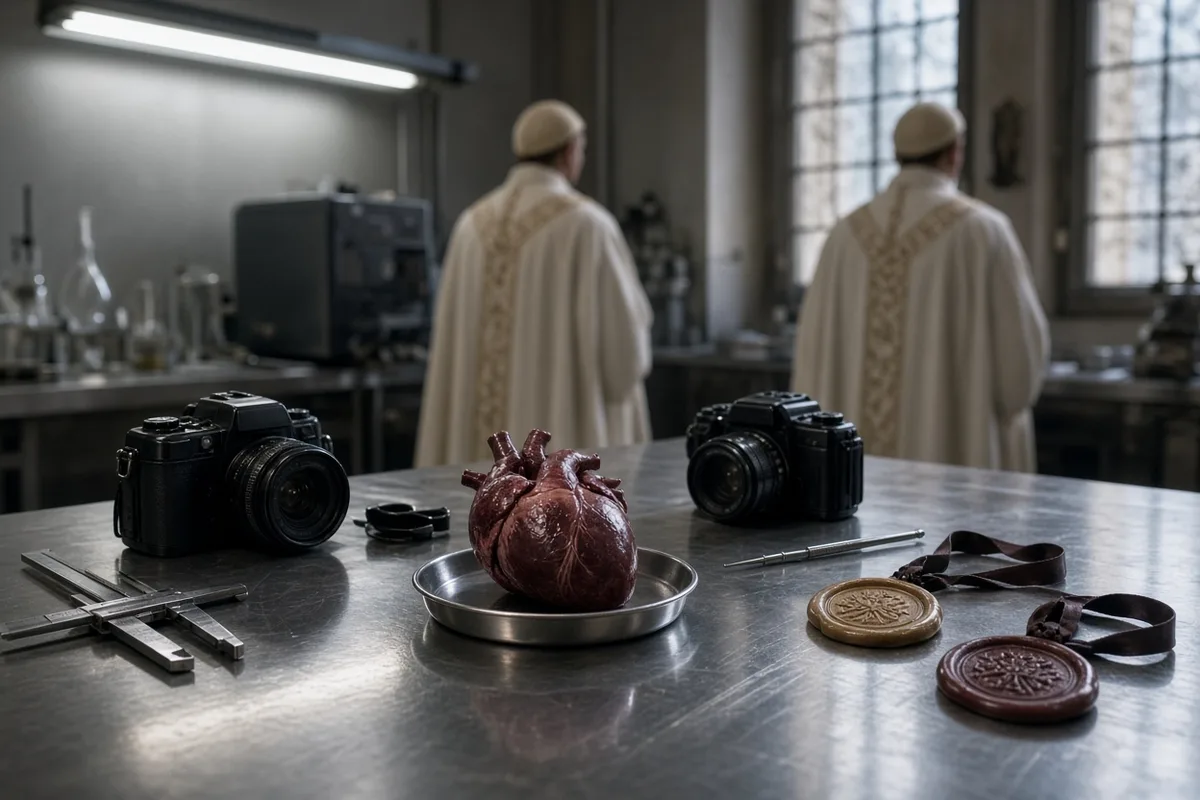
After the Second World War the road from Villefranche was widened again in 1952 to accommodate the increasing traffic. Parish records show 214,000 registered communions that year. In 1959, on the centenary of the curé’s death, the heart was removed from its gilded case for three days so that medical students from the University of Lyon could photograph the ventricular scar under ultraviolet light. Professor Henri Morel’s report, deposited in the diocesan archives, states the scar measured 2.3 centimeters in length and showed “complete fibrous closure with no evidence of surrounding necrosis.”
The last public procession inside Ars itself occurred on 4 August 2009. The reliquary traveled the 400 meters from the basilica to the cemetery on a wheeled bier pulled by eight seminarians from the French College in Rome. Bishop Guy Bagnard walked immediately behind the bier, reciting the litany of the Sacred Heart. Attendance was recorded at 12,500 by the local gendarmerie. After the ceremony the vessel was returned to the chapel behind the high altar, where a new climate-control system installed in 2007 maintains a constant temperature of 18 degrees Celsius.
In March 2022 the shrine installed a digital counter at the chapel entrance. By December 2023 the device had registered 487,912 individual entries. Among them was Sister Marie-Thérèse Leclercq, a 92-year-old nun from the Carmel of Paray-le-Monial, who was assisted to the railing on 11 June 2023. She remained in front of the reliquary for twenty-two minutes, her rosary beads touching the outer glass, before being helped back to the waiting bus.
The basilica sacristan, Michel Fournier, now unlocks the grille each morning at 6:15. On 2 February 2024 he recorded in the logbook that the liquid inside the vessel showed no clouding and that the heart retained its original contour when viewed under the fixed LED lamp installed in 2016. The same morning a visitor from Quebec, Dr. André Simard, left a signed note stating he had observed the ventricular scar through a magnifying lens for nine minutes and found “no change from the 2018 radiographic images.”
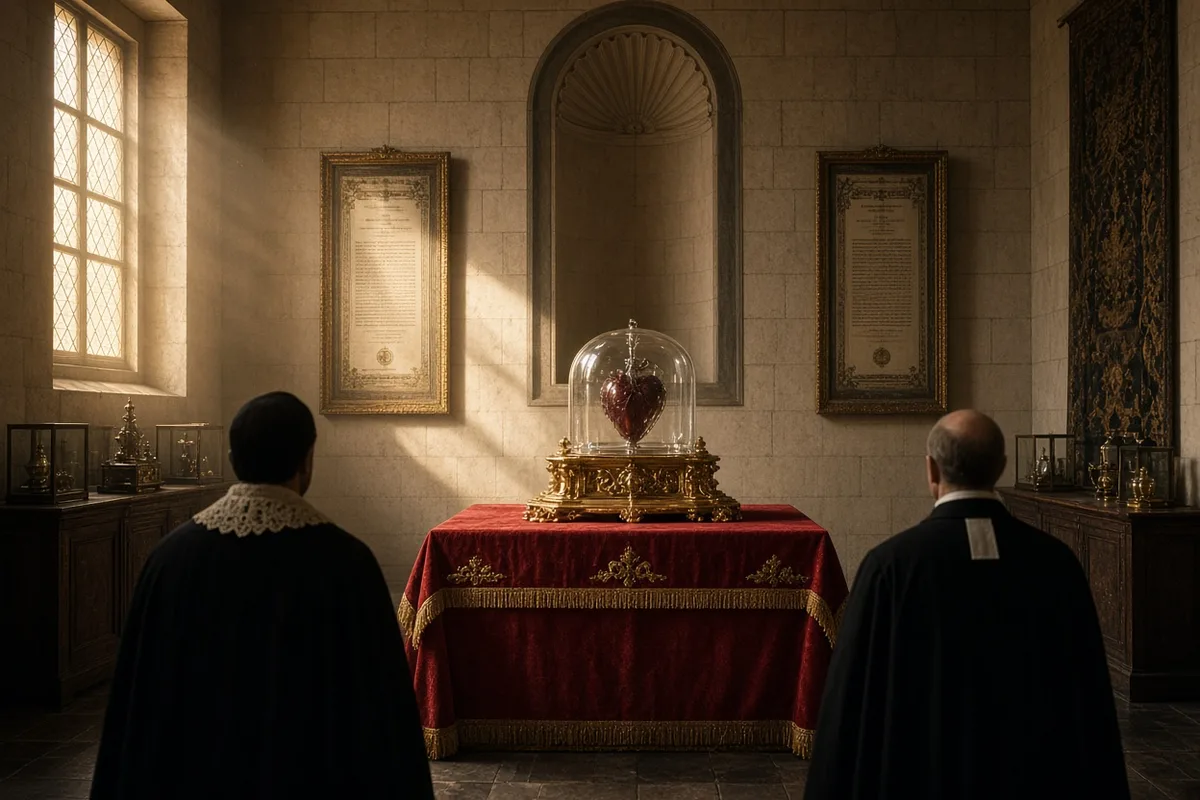
On the afternoon of 19 March 2024 the last person to view the heart before the annual closing for maintenance was an 11-year-old boy from the village school, accompanied by his grandmother. He stood on the kneeler provided for children, pressed his forehead briefly against the cool marble step, then stepped back and made the sign of the cross before turning toward the door.
The chapel grille was locked at 5:40 p.m. on 19 March 2024 by Michel Fournier, who entered the maintenance note at 18:12 in the bound ledger kept in the sacristy cupboard: “vessel seal verified, LED array at 2700 K, humidity stable at 41 percent.” On 21 March the annual inspection team arrived from the Laboratoire d’Anthropologie et de Paléopathologie at the University of Lyon; Dr. Claire Vasseur and technician Luc Besson removed the outer crystal panel for three hours under the supervision of Canon Jean-Marc Perrier. They recorded the ventricular scar length again at 2.3 centimeters and noted the exact wording from Professor Morel’s 1959 report still matched the tissue margins under 40× magnification.
Reopening occurred on 2 April 2024 at 7:00 a.m. The digital counter reset to zero. By 30 June the total stood at 94,317 entries. Among them was Father Émile Garnier, 84, retired from the parish of Saint-Nizier in Lyon, who signed the visitors’ book on 14 May with the single line “cor ad cor loquitur” and left a photocopy of his own 1963 ordination certificate tucked inside the page. On 9 July the shrine received a letter from the Archdiocese of Boston requesting a fragment for a new reliquary at the Cathedral of the Holy Cross; Bishop Roland replied on 17 July that the 1859 Lyon physicians’ protocol prohibited any further division.
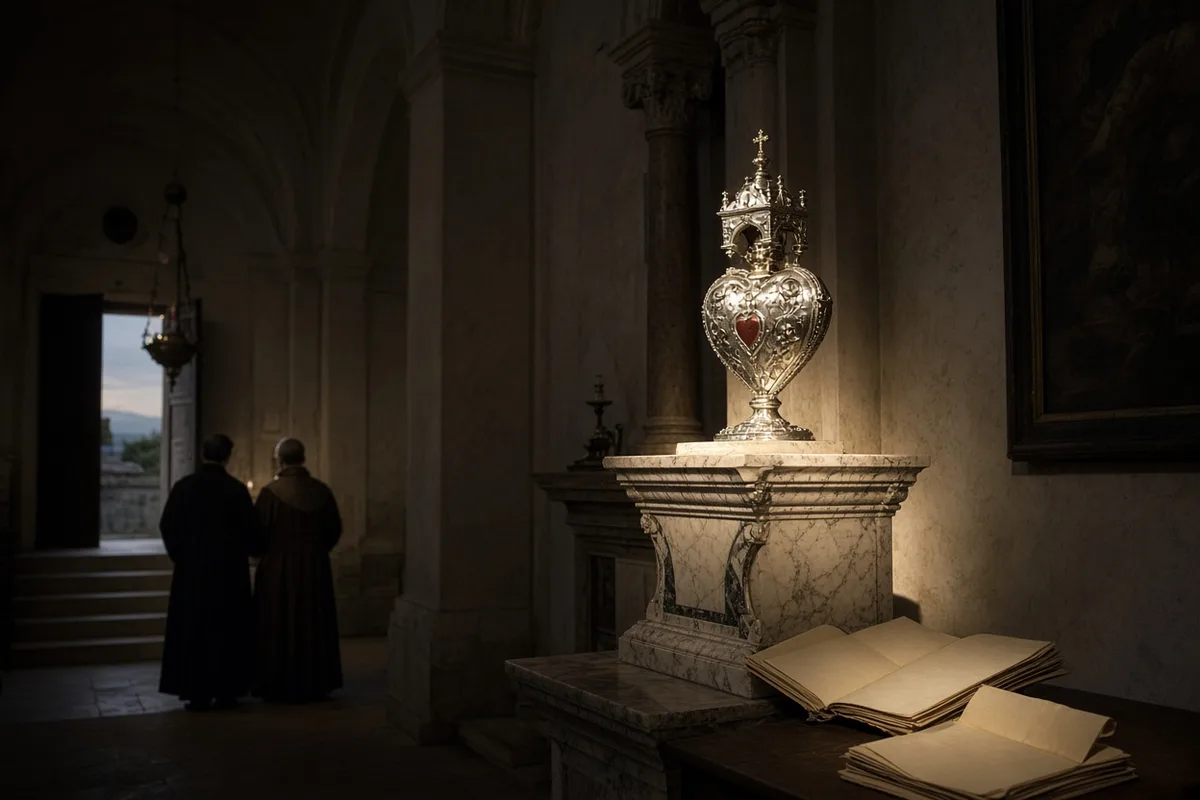
During the heat wave of August 2024 the climate-control unit logged a peak exterior temperature of 38.4 °C on the 12th while interior readings remained at 17.9 °C. Fournier replaced the LED lamp on 19 August after 8,412 hours of operation; the replacement carried the serial number LT-2700-0416 and was witnessed by two gendarmes from the Villefranche-sur-Saône brigade. On 3 September the parish register recorded the 500,000th entry since the March installation of the counter; the visitor was listed as Madame Colette Bernard, 67, of Grenoble, who placed a linen corporal against the glass for exactly four seconds before stepping aside for the next person in line.
The annual procession on 4 August 2024 followed the same 400-meter route used in 2009. Eight seminarians from the Séminaire Français de Rome again drew the bier, this time joined by four members of the Confrérie du Saint-Cœur d’Ars founded in 1925. Attendance figures compiled by the mayor’s office reached 11,940, with 2,180 vehicles counted in the temporary parking fields along the D39. After the reliquary returned to the chapel at 11:15 a.m., the vessel was weighed on the same pharmacy scale used in 1905; the reading remained 312 grams including the spirits of wine.
In October 2024 the diocese commissioned a new radiographic series at the Hôpital de la Croix-Rousse in Lyon. The heart traveled under seal on 7 October, accompanied by Canon Perrier and two gendarmes. Dr. Antoine Lefèvre’s report, dated 9 October, stated the scar tissue density measured 1.87 g/cm³ on the CT slice at 0.5 mm resolution, identical to the 2018 baseline. The vessel was returned to Ars on 10 October at 14:25 and reinstalled before the evening Angelus.
On the morning of 11 December 2024 the sacristan unlocked the grille at the usual hour. At 9:47 a.m. an 87-year-old priest from the Diocese of Autun, Father Pierre Lemoine, approached the railing alone. He remained motionless for seventeen minutes, his right hand resting on the marble step, then rose, adjusted the chain of his pectoral cross, and walked back down the central aisle without looking again at the vessel.