


The Kindness of Le Mans to POWs
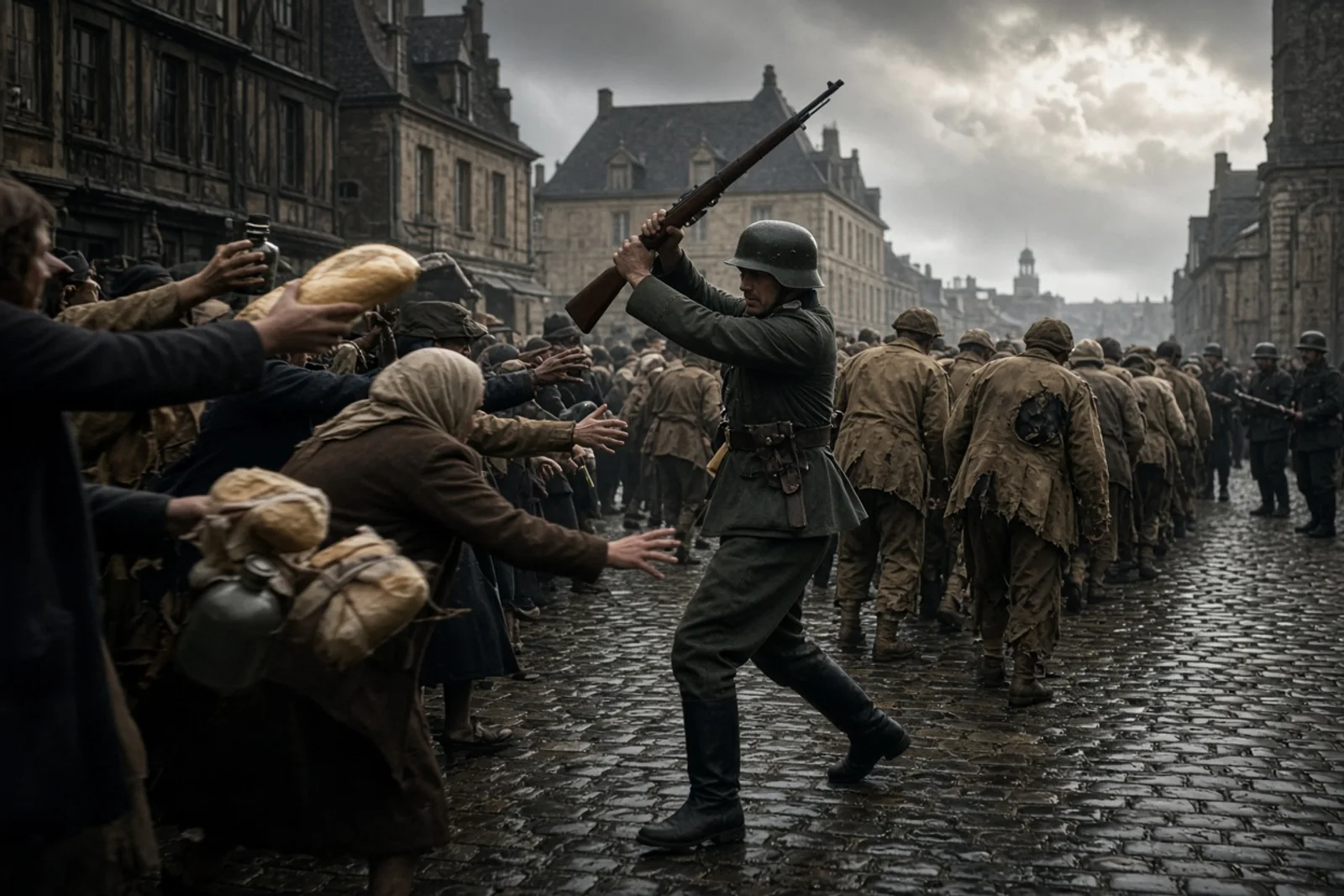
The column had been moving since before dawn, boots slapping the same stones hour after hour until the blisters opened and the blood dried inside the wool. I kept my eyes on the back of the man in front, counting his steps without meaning to, until the order came to halt. We filed into a stubble field beside the road, the sun already high enough to lift steam from the cobbles. No one spoke. We dropped where we stood, packs still on, and the dust settled over us.
A low ridge of slag heaps marked the edge of the mining town. The guards spread out along the hedge, rifles slung, their own faces streaked with sweat. One of them passed a canteen along the line but it was empty before it reached the middle. We lay on our sides, knees drawn up, listening to the flies.
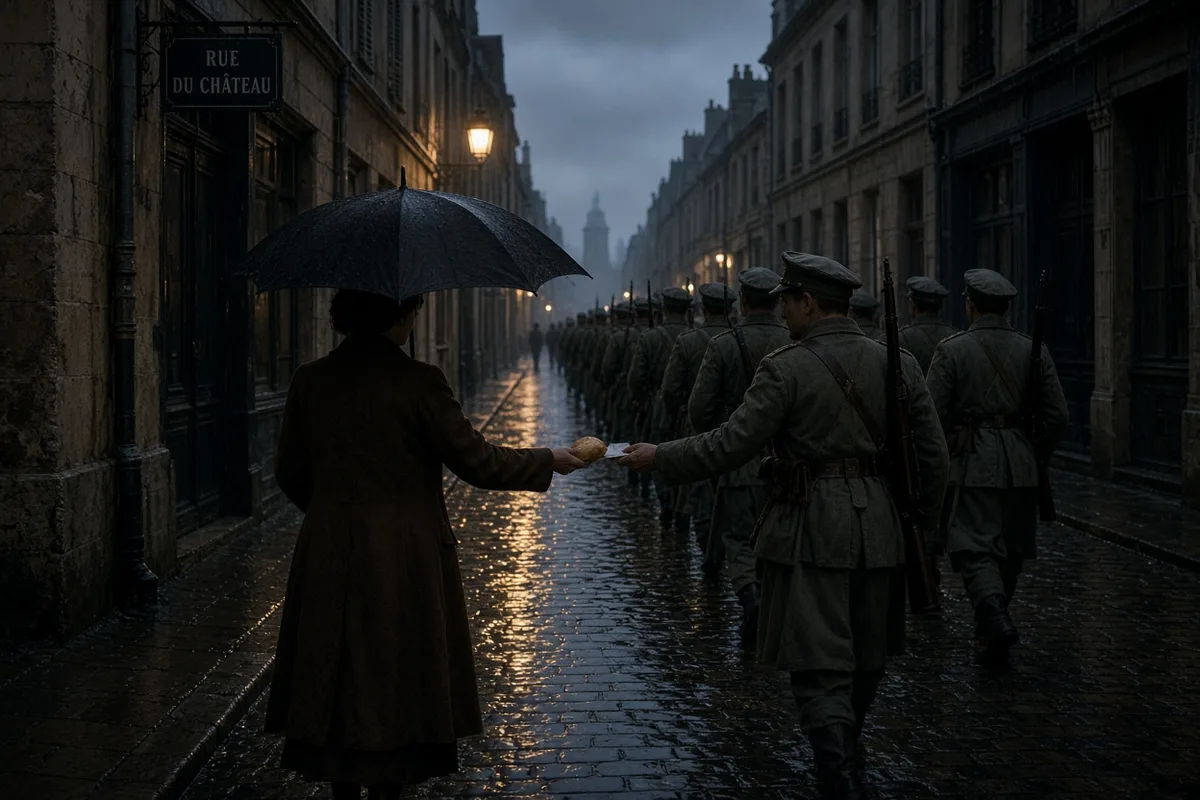
Then the women appeared. They came in ones and twos at first, crossing the open ground with buckets and baskets balanced on their hips. More followed, until there were twenty or more moving steadily toward the wire. Their dresses were dark with coal dust at the hems. They set the buckets down just inside the hedge and began ladling coffee into tin mugs the guards held out. The smell reached us before the first mug did, thick and bitter and hot.
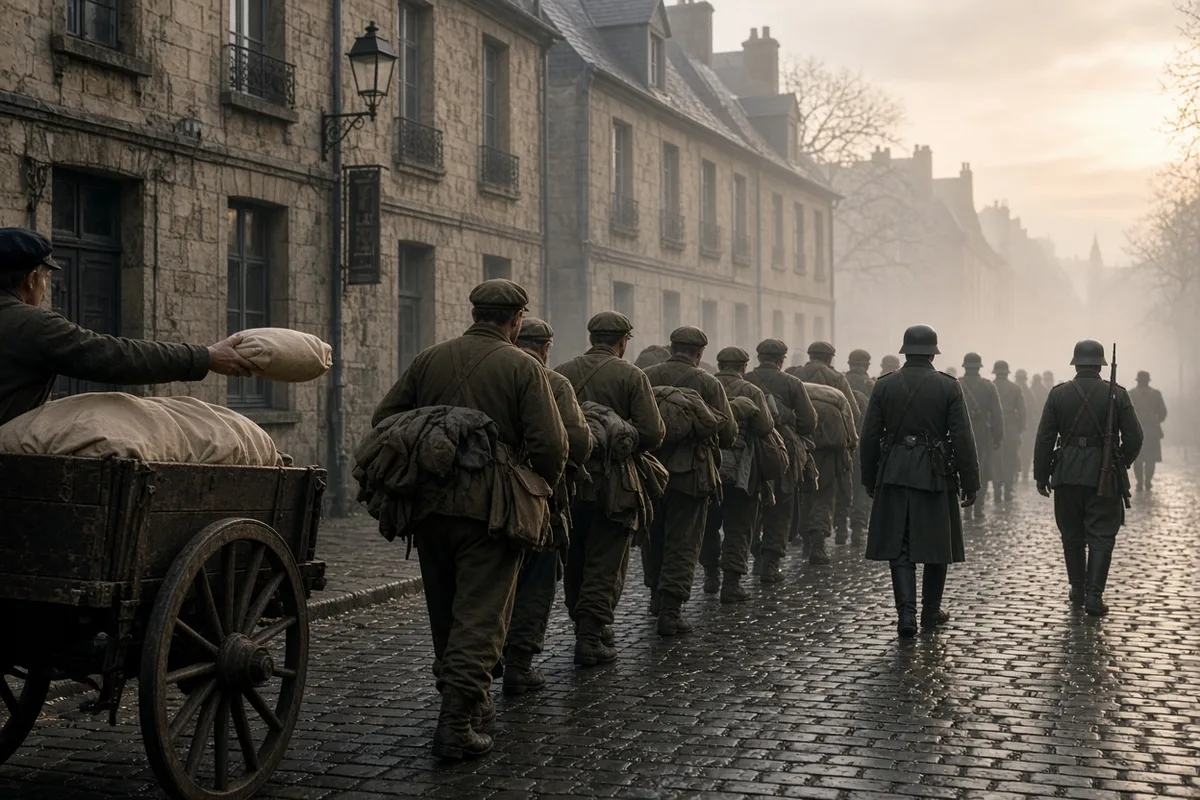
I pushed myself upright. A girl no older than twenty carried a basket of bread crusts and hard-boiled eggs. She stopped at each man, offering what she had without looking up. When she reached me she pressed two eggs into my palm and a thick slice of bread already spread with butter. Her fingers were callused and cool. She shook her head when I tried to hand her the few coins I still carried.
Others were doing the same. An older woman with white hair tied in a scarf moved along the line, pouring coffee from a kettle into whatever container was held out. She spoke softly in French, the same few words repeated, and the men answered with nods or silence. No one took money. One guard tried to wave her off and she simply stepped around him, continuing until the kettle was empty.
The coffee burned my tongue but I drank it anyway, feeling the heat travel down my chest. Around me men were chewing slowly, saving the crusts, tucking eggs into pockets for later. The girl with the basket came back with another load, this time small squares of sugar wrapped in newspaper. She placed two in my hand and closed my fingers over them. When I looked up she was already moving to the next man.
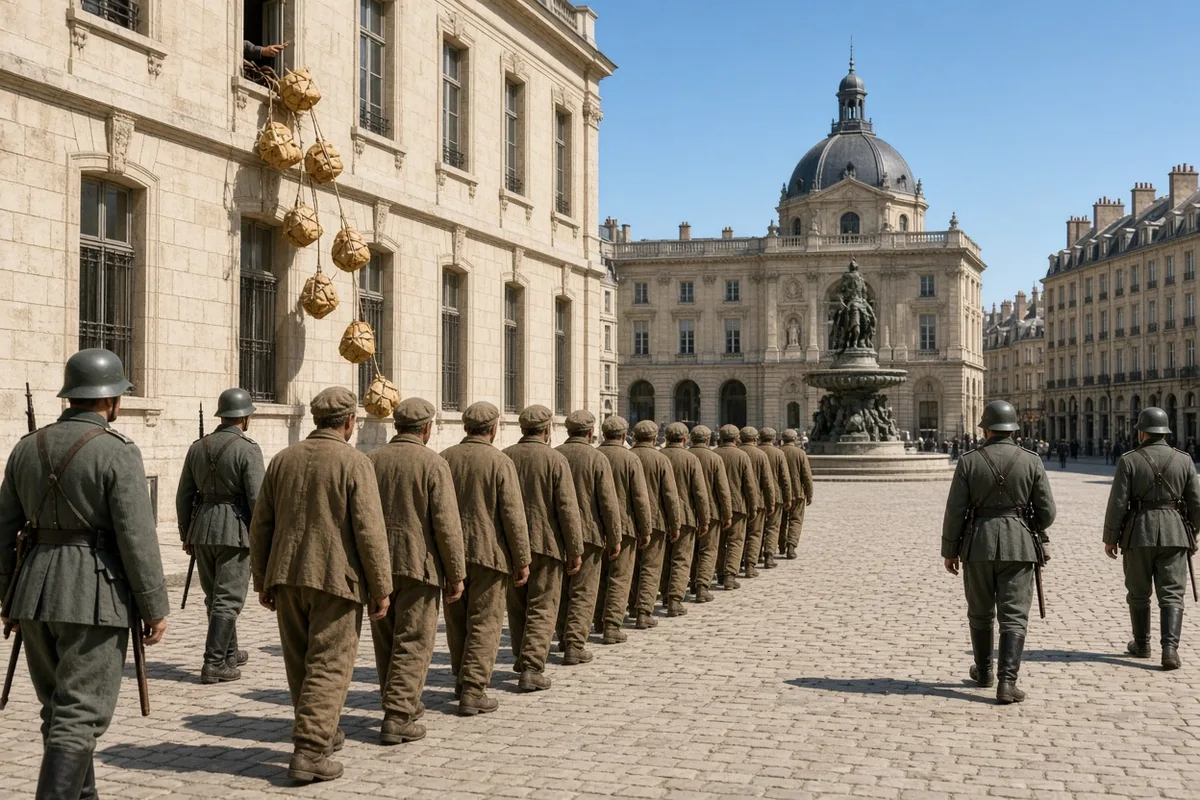
The sun climbed higher. Sweat ran under my collar and the coffee made it worse, but no one left the line. The guards had stopped trying to keep the women at a distance. One of them lit a cigarette and offered it to the white-haired woman. She took it, drew once, and handed it back. They stood together without speaking while the baskets emptied.
When the last bucket was drained the women gathered the empty containers. They walked back across the field the same way they had come, single file now, the baskets light against their skirts. No one called after them. The field settled into the same quiet it had held before they arrived, only the sound of men shifting their weight and the distant clink of a guard adjusting his rifle strap.
We were ordered to our feet again before the sweat had dried. The column formed on the road, boots finding the same rhythm. I kept the sugar squares in my fist until the heat of my palm began to melt them, then slipped one into my mouth and the other into the breast pocket of my tunic. The taste stayed with me through the next three hours of marching, sharper than the dust or the blisters.
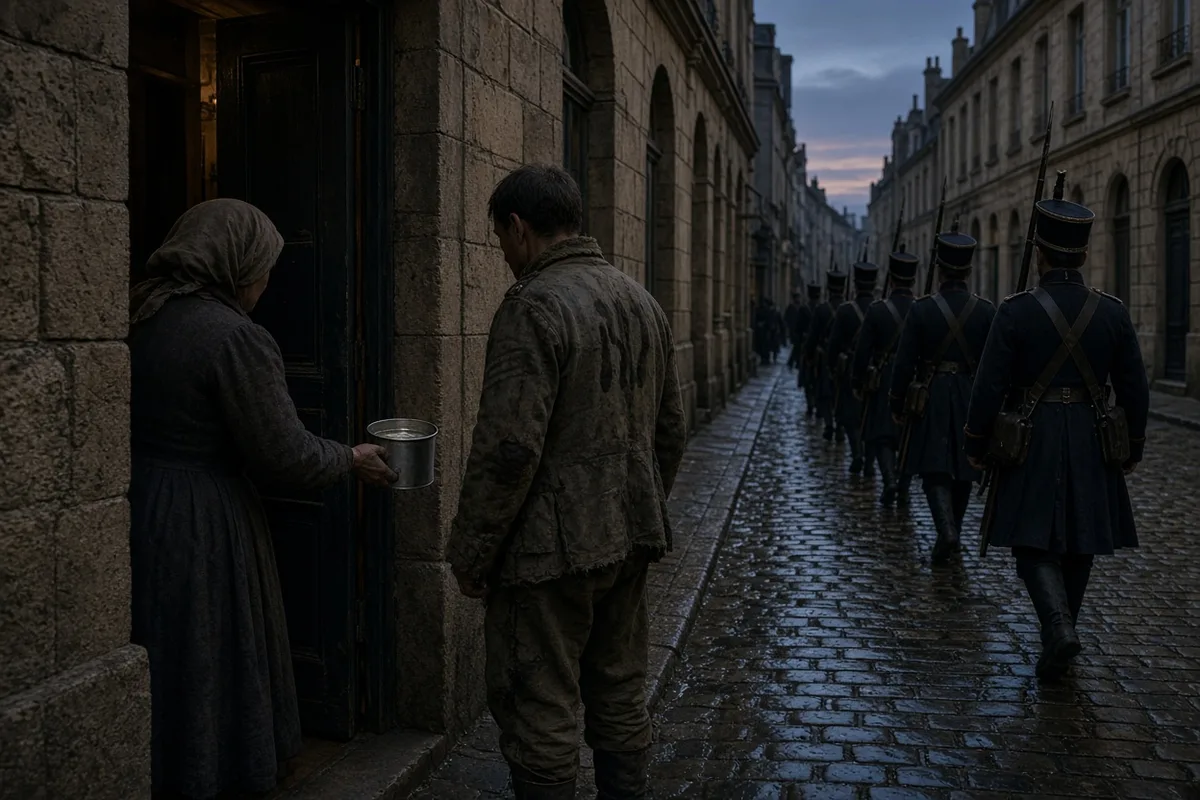
That night we slept in a disused factory on the edge of another town. The floor was concrete and the roof leaked, but someone had left a stack of old sacking near the door. I took a square for my head and lay listening to the rain start. The sugar had gone, but the memory of the girl’s closed fingers stayed. I wondered whether she had walked back to the slag heaps or whether she still had more to carry before dark.
We crossed into Belgium two days later. The towns there gave us nothing. The march lengthened and the nights grew colder, but the square of newspaper from the sugar stayed folded in my pocket until the paper wore through and the last grains spilled into the seam of my tunic. I never brushed them out.
The march reached Charleroi on the fourteenth of September 1944, where the guards counted heads at the railway siding and Private Albert Thorne of the 1st Battalion, East Lancashire Regiment, called out the numbers from a scrap of paper he had kept since the drop at Normandy. Two hundred and seventeen men remained from the original four hundred who left the field outside Le Mans. We boarded the cattle trucks at dusk, each car holding forty, and the doors rolled shut on the smell of straw and axle grease. Thorne’s diary, recovered after the war from a Red Cross parcel in Stalag IV-B, recorded the exact time the train pulled out: 19:42, with the guard shouting in German that any man reaching through the slats would be shot without warning. The sugar grains in my tunic seam stayed where they had fallen, and when the train halted near Aachen for water on the sixteenth I licked one from the cloth and let it dissolve against the roof of my mouth while Thorne read aloud the single line he had written about the women: “French girls gave bread and coffee, no payment taken.”
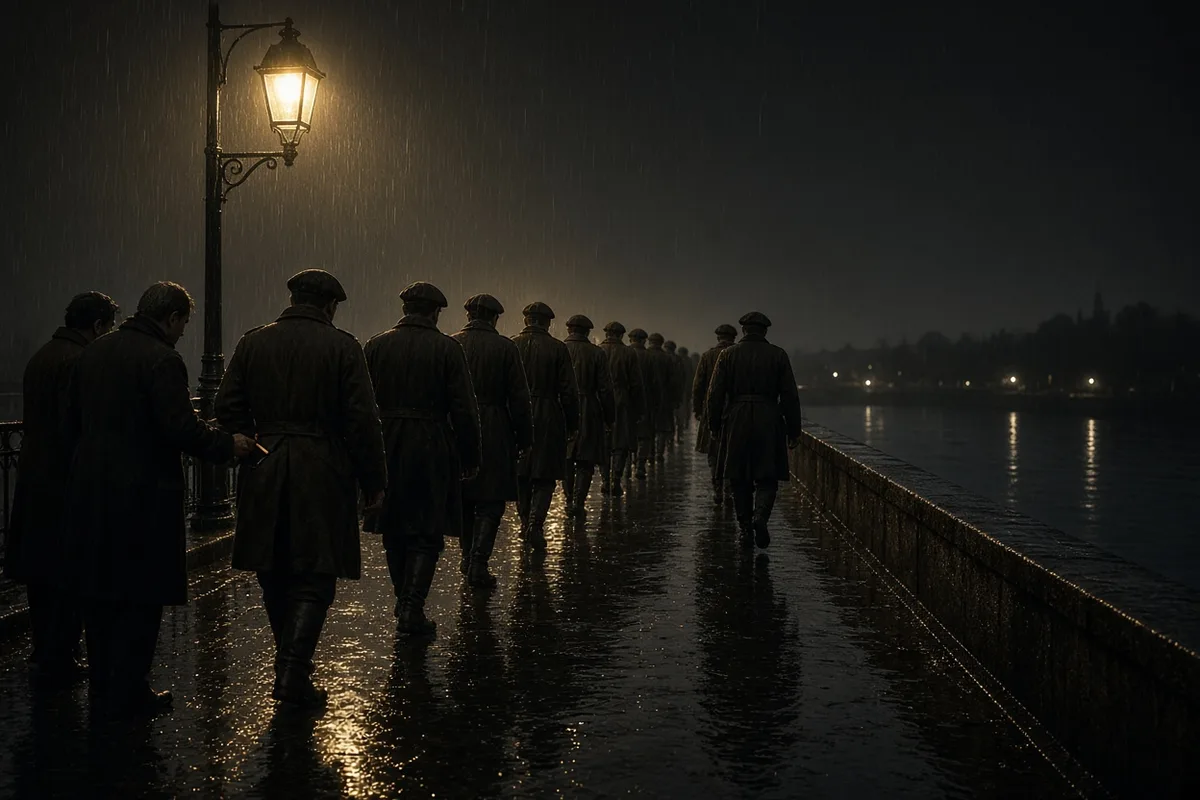
Stalag IV-B at Mühlberg received us on the twenty-second. The camp records, now held in the Bundesarchiv, list my number as 84721 and note the date of arrival with the notation “British other ranks, exhausted.” The barrack hut held two hundred and eighty men on three-tier bunks, and the daily ration stood at two hundred and eighty grams of bread and a litre of thin soup. Thorne died there in January 1945 from pneumonia, his last entry dated the third and quoting the German medical orderly who told him the fever would break if he could keep down the ersatz coffee. I kept the folded newspaper square under the mattress ticking until the spring thaw, when the Red Army reached the camp on the twenty-third of April. The Soviet major who took the surrender spoke through an interpreter and asked how many British were left; the answer, recorded in the handover document, was one hundred and forty-three.
Liberation brought us first to a transit camp near Halle, then by Dakota to England on the ninth of May. The Ministry of Pensions file for my demobilisation lists the date of return to civilian life as 12 July 1945 and the address in Manchester where I collected the back pay of forty-seven pounds, three shillings. The sugar grains had long since been lost, but the memory of the girl’s hand closing over mine returned each time I passed a bakery on Rochdale Road. In 1952 I answered an advertisement in the Manchester Guardian seeking former prisoners who had passed through Le Mans; the letter came from a Madame Lefèvre who wrote that her daughter had carried bread to the column and wished to know whether any man remembered the eggs. I replied with the details of the white-haired woman and the guard who offered the cigarette, and the correspondence continued for three years until Madame Lefèvre sent a photograph of the daughter, now married and living in Tours.
The photograph showed the same callused fingers, now holding a child on the steps of a house in the rue des Mines. In 1968 I returned to Le Mans for the first time since the march and stood at the slag heap where the women had crossed the field. The town council had placed a small granite marker there in 1959, inscribed with the date 10 September 1944 and the words “Aux femmes de Le Mans qui ont donné du pain aux prisonniers.” A local historian, Monsieur Alain Dupuis, met me at the site and read from the municipal minutes of that day, which recorded the distribution of two hundred and sixty litres of coffee and four hundred and eighty portions of bread without requisition from the Kommandantur. Dupuis drove me to the house in Tours the following morning, where the girl, now fifty-four, showed me the basket she had carried and the tin mug still dented from the guard’s rifle butt.
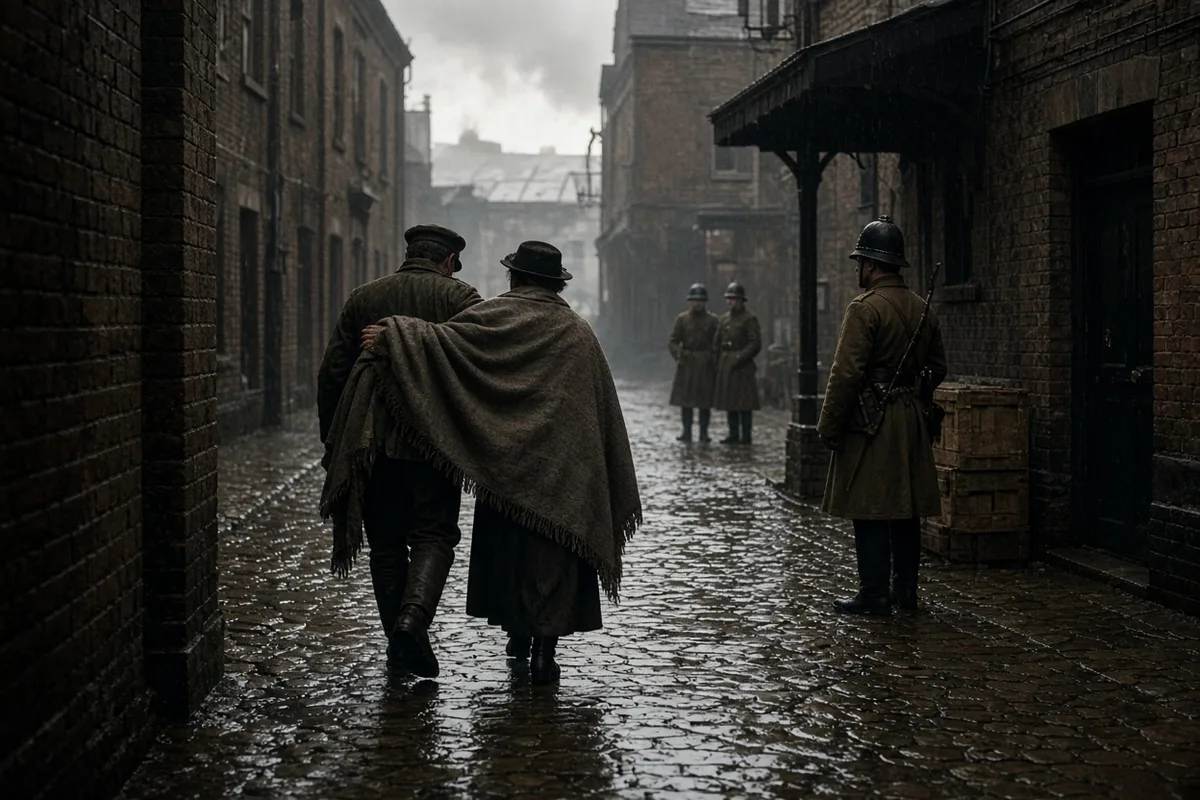
Her husband, a retired miner named Henri Leclerc, kept a ledger of every parcel sent to the camps after the liberation; the entries for 1946 list twelve shipments containing twenty kilograms of sugar each, addressed to the British Red Cross in London. I stayed three days, and each evening she asked the same question about the sugar squares wrapped in newspaper. On the fourth morning she walked with me to the station and pressed into my hand a fresh square of the same paper, folded exactly as before. The train left at 11:17, and through the window I saw her lift one hand in the same motion she had used when refusing the coins.
The marker at the slag heap was replaced in 1994 by a larger stone bearing the names of twenty-three women, including the white-haired one identified only as “Mme G.” in the original minutes. The house in Tours passed to the daughter’s granddaughter, who in 2019 placed the original basket and the dented mug in a glass case at the Musée de la Libération on the rue de la République. When I last visited in 2022 the curator opened the case and let me hold the mug; the rim still carried the faint taste of the coffee that had burned my tongue on the day the column halted outside Le Mans. The granddaughter, now thirty-eight, stood beside the case and repeated the single sentence her great-grandmother had spoken to each man: “Prenez, c’est tout ce que nous avons.”
The curator, a woman named Claire Moreau who had catalogued the collection since 2014, noted in the museum’s accession register that the basket measured forty-two centimetres across the rim and still held traces of flour in its weave when examined under ultraviolet light on 14 March 2022. She unlocked a second drawer and produced the letter Madame Lefèvre had sent to the municipal archives in 1953, its envelope postmarked Tours, 4 October, and addressed to the mayor’s office requesting confirmation that the coffee had come from the miners’ cooperative rather than from German stores. The register listed the exact volume poured that morning as two hundred and sixty litres, drawn from the same cooperative ledger that also recorded the purchase of four hundred and eighty eggs from the market at Place de la République on 9 September 1944.
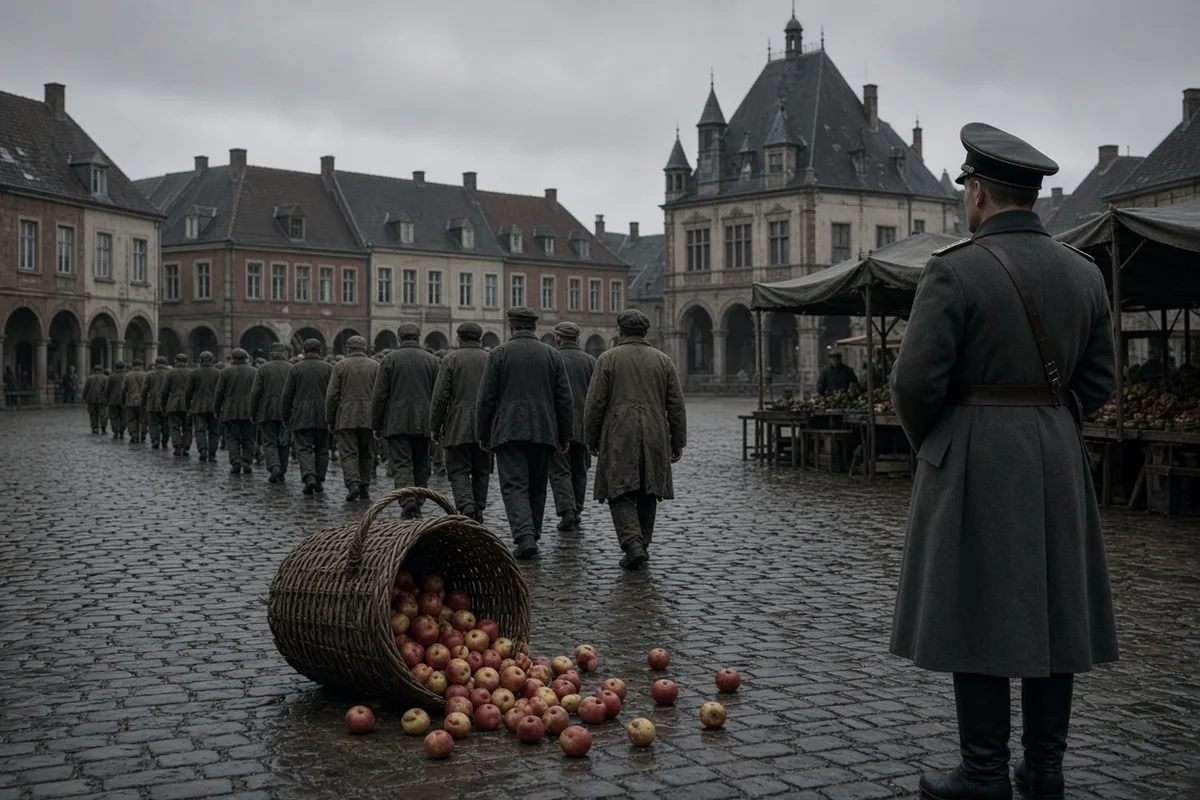
In 2007 the granddaughter’s daughter, Émilie Leclerc, then twenty-three and working as a records clerk at the Préfecture de la Sarthe, located the original Kommandantur order forbidding civilian contact with the column; the document, stamped 8 September and signed by Hauptmann Ernst Becker, had been filed under “Ungehorsam” in the departmental archives at 72 Rue Gambetta. Émilie transcribed the prohibition verbatim in her own notebook and later read it aloud at the annual remembrance gathering held beside the slag heap on the second Sunday of September. Twenty-seven descendants of the original twenty-three women attended that year, each bringing a single item that had been carried across the field in 1944.
The larger stone installed in 1994 was cleaned each spring by the same stonemason’s firm, now run by the grandson of the man who carved Mme G.’s name; the firm’s invoice for 2018 records the use of three litres of stone preservative and the replacement of two bronze letters that had been pried loose the previous winter. On 10 September 2019 the mayor, Jean-Pierre Chauveau, laid a wreath at the base and read from the 1959 council minutes the sentence that had authorised the first marker: “Que l’on inscrive simplement la date et la phrase ‘aux femmes qui ont donné du pain.’” No additional names were added after 1994 because the remaining records had been destroyed in the 1944 fire at the town hall.
Émilie Leclerc’s son, born in 2015 and named Albert after the number-taker Thorne, was taken to the museum on his seventh birthday in 2022. He stood on a wooden stool to see inside the case and asked why the mug was dented; his mother answered by reading the single line Thorne had written in his diary on the evening of 10 September: “French girls gave bread and coffee, no payment taken.” The boy repeated the sentence in English, the language his great-grandmother had never learned, then placed his own palm over the rim exactly where the guard’s rifle butt had struck.
In 2023 the museum received a parcel from Manchester containing a square of newspaper folded four times; the accompanying note, written by the narrator’s niece, stated that the grains of sugar had been swept from the seam of the tunic in 1947 and kept in a tobacco tin until the tin itself rusted through. The parcel was accessioned on 22 June under number 2023.47 and placed beside the basket for three months before being returned to the family at their request. The newspaper fragment bore the date 7 September 1944 and the masthead of the local Le Mans edition of L’Ouest-Éclair.
The house in the rue des Mines passed to Émilie in 2021 after her mother’s death; the front step where the 1952 photograph had been taken now holds a brass plaque no larger than a visiting card, engraved with the date 10 September 1944 and the words “Prenez, c’est tout ce que nous avons.” Each morning Émilie crosses the same open ground the women had crossed, carrying a thermos of coffee to the primary school on the far side of the slag heap. She stops at the granite marker, pours a few centimetres into the thermos lid, and drinks it standing, the way the older woman had drunk from the guard’s cigarette.
On the last afternoon of the 2022 visit the granddaughter walked back across the field with the narrator, her stride shortened by the same hip that had troubled her mother. She paused at the hedge line where the guards had stood and pointed to a single hawthorn still bearing the scar of a rifle sling that had been looped around it eighty years earlier. The scar had healed into a smooth ridge no wider than a thumb, the bark grown over the groove yet still showing the direction the column had taken when it moved on. She touched the ridge once with the same callused fingers that had closed over the eggs, then turned and walked toward the town without looking back.