


The Kindness of the People of Le Mans to POWs
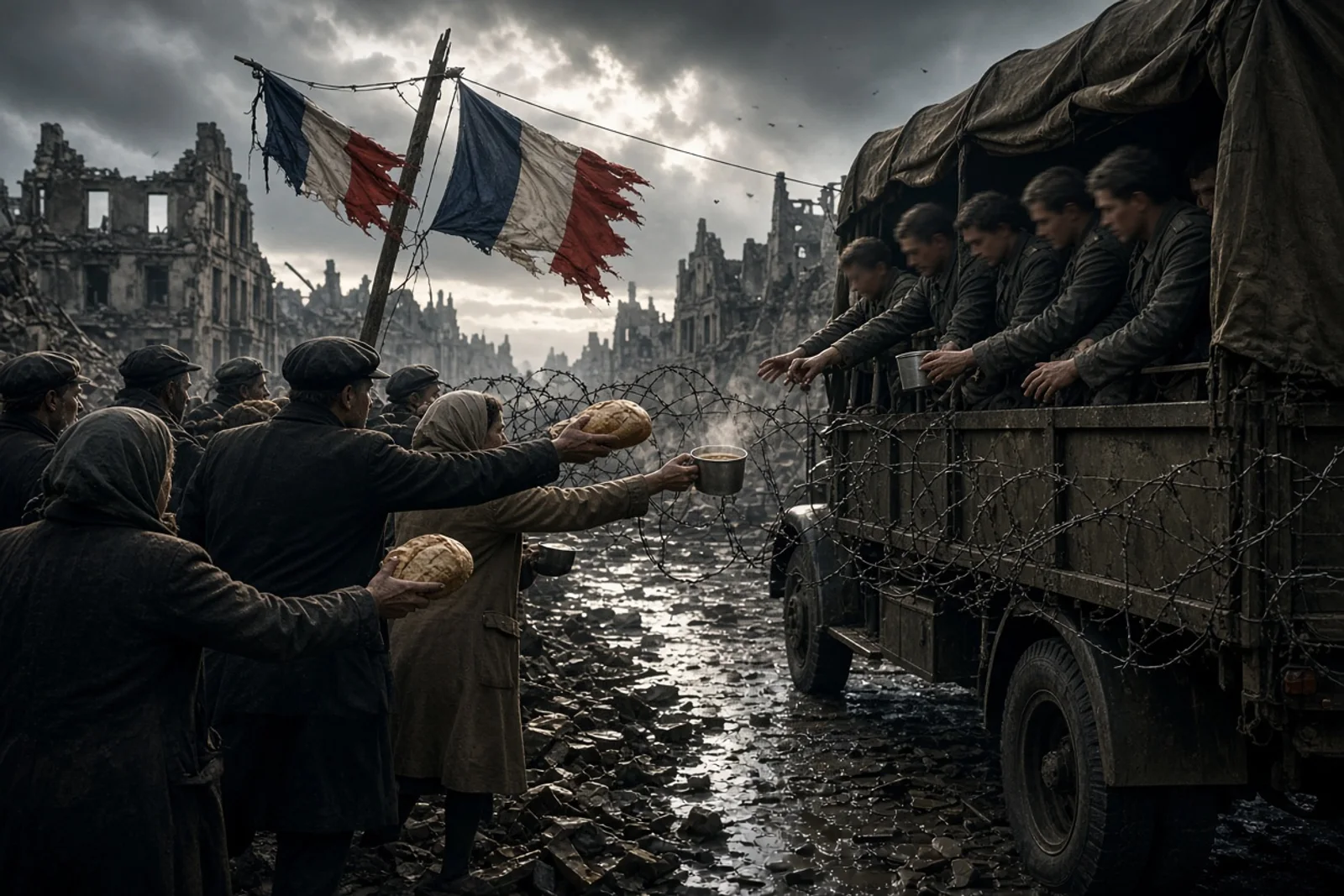
The truck bed smelled of diesel and wet canvas when it finally stopped outside the wire. I pressed my shoulder against the side to keep from falling, boots sliding on the metal. Around me men coughed and shifted, their faces gray from the long ride south from the surrender lines. Someone muttered that we were in Le Mans now. The gates swung open and American guards waved us through with rifles held loose.
Inside the enclosure the ground was churned mud. Tents stood in crooked rows. We were counted twice, then told to sit on the bare earth while clerks walked the lines with clipboards. My stomach had been tight for three days. The last proper meal had been a tin of meat shared in the back of another truck near the Seine.

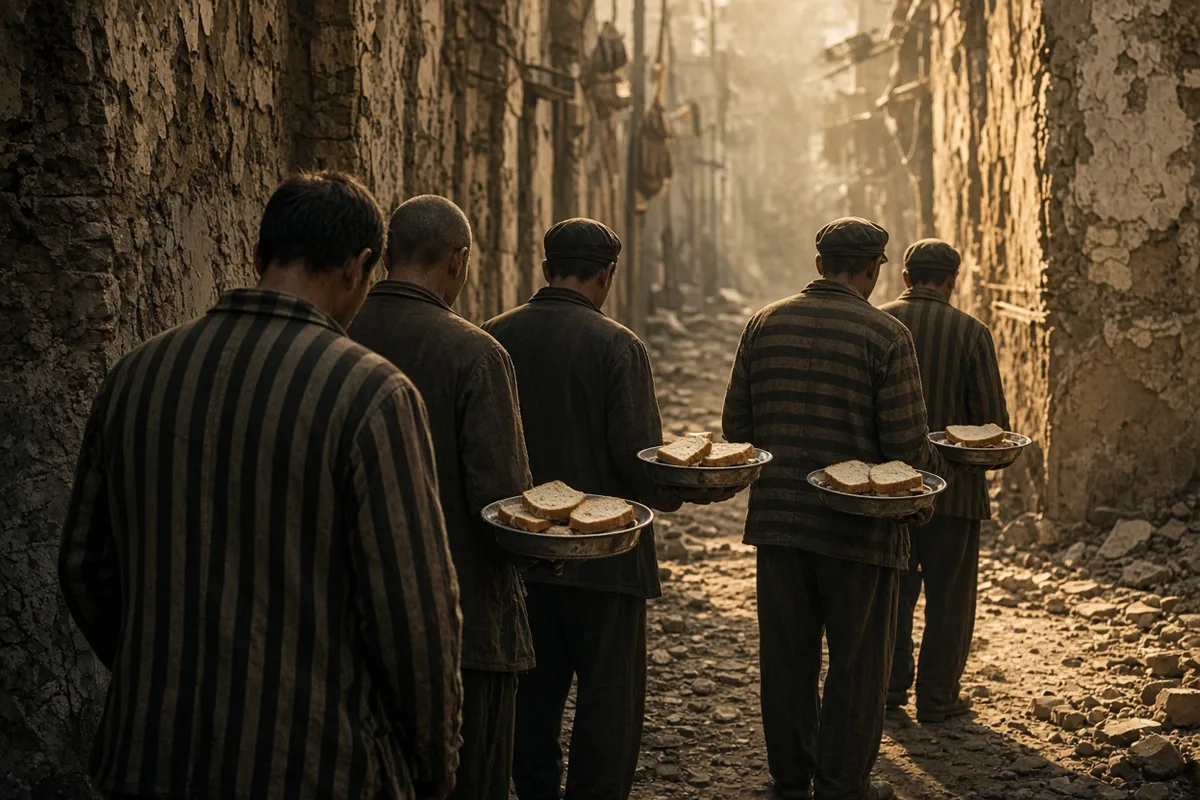
By the second morning the hunger had a sound. It scraped behind the ribs when boots passed carrying bread. I learned to keep my eyes down. A bigger man from the Black Sea flotilla took my morning ration on the third day without a word. I let him. Fighting would cost more energy than the bread was worth.
Wilhelm Steffens sat two rows over. He was smaller than most, shoulders narrow under the thin coat. He read a folded page from a book he had somehow kept. When the same man reached for his portion Wilhelm did not resist either. He simply closed the book and watched the ground.
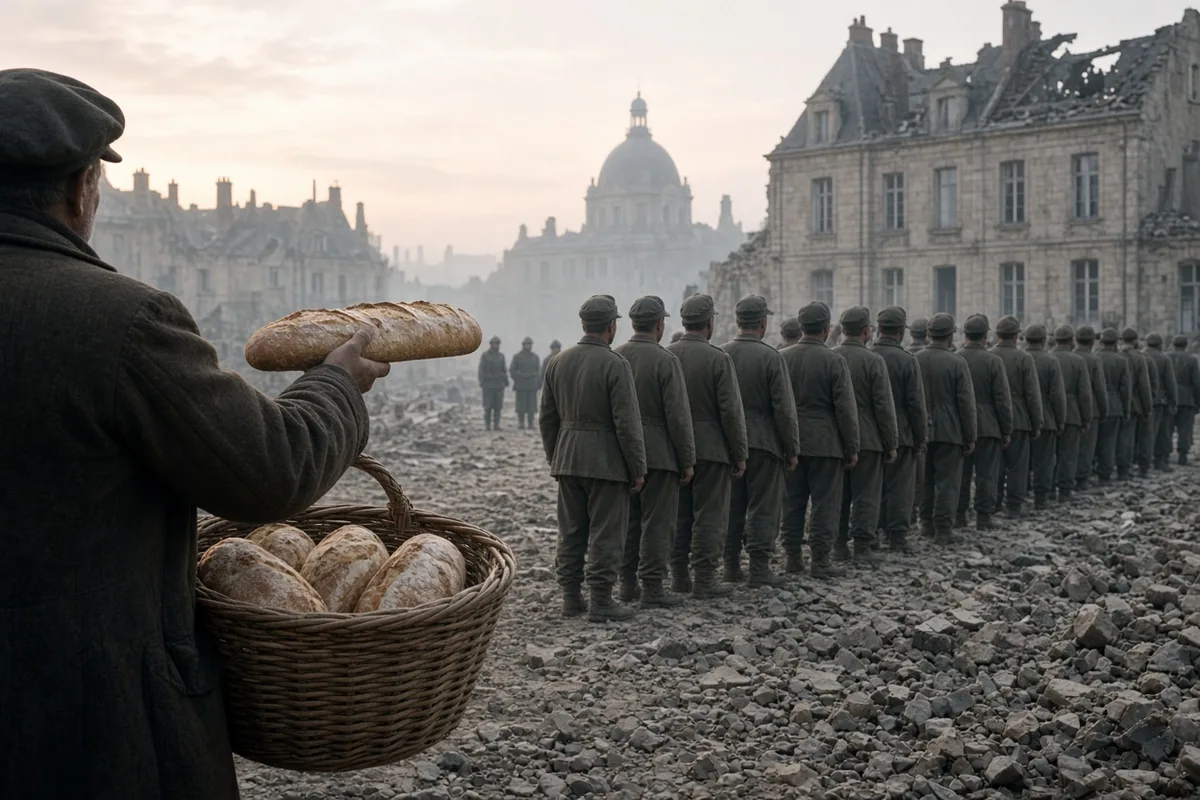
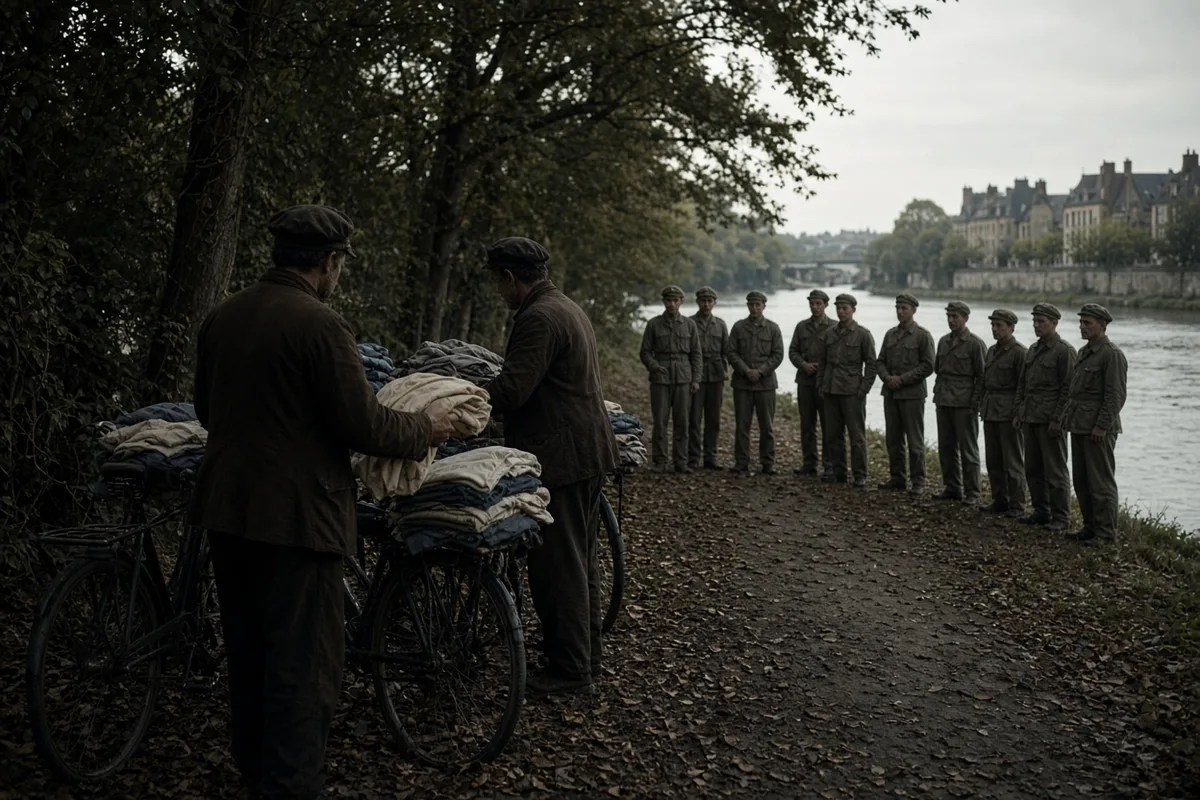
A French civilian crew arrived on the fifth day to repair a collapsed section of fence. One of them, a wiry man in his forties named Emile, paused near our line during the noon break. He had a canvas sack. He looked at the faces, then walked straight to Wilhelm and set a wrapped packet on the ground between his boots. Bread, cheese, a piece of sausage. He said nothing and returned to the fence crew.

The next day Emile brought two packets. Wilhelm tried to refuse the second. Emile shook his head and pointed at me. I took it. The bread was still warm. That evening Emile’s wife sent a small tin of stew. Wilhelm ate half and passed the rest along the line without looking up.
Within a week the pattern held. Emile would appear at the work detail, nod once, and leave food. Twice he waited at the gate after shift and took Wilhelm, then Wilhelm and me, to his house two streets away. The kitchen was small. His wife set plates without asking names. We ate quickly, eyes on the table. No one spoke of the war.
After three weeks the French authorities moved most of us south by train. Wilhelm and I rode together in an open wagon. The countryside changed from flat fields to hills and then to the Tarn. At Castelsarrasin we were put on forestry work. The rations were smaller again. Wilhelm’s book was gone, traded for soap.
Emile’s name reached us through another prisoner who had stayed behind. The man said Emile had asked after Wilhelm at the camp office. Two weeks later a letter arrived at the forestry camp, addressed in careful French. It contained a second address in Moissac and an invitation from a family named Cayrou.
Wilhelm was transferred first. I followed a month later on a vineyard detail. The Cayrou house stood at the end of a short lane lined with plane trees. Moïse Cayrou met the truck himself. He was older than Emile, face lined from the sun. He shook Wilhelm’s hand, then mine, and led us to a long table under a walnut tree. His wife brought soup and bread. No guards were present.
Each evening after the vines, Wilhelm walked with Moïse to the bar on the square. The owner kept the door open and said nothing when we entered. We drank thin wine and listened to the radio. The authorities had rules against it, but the rules stayed on paper.
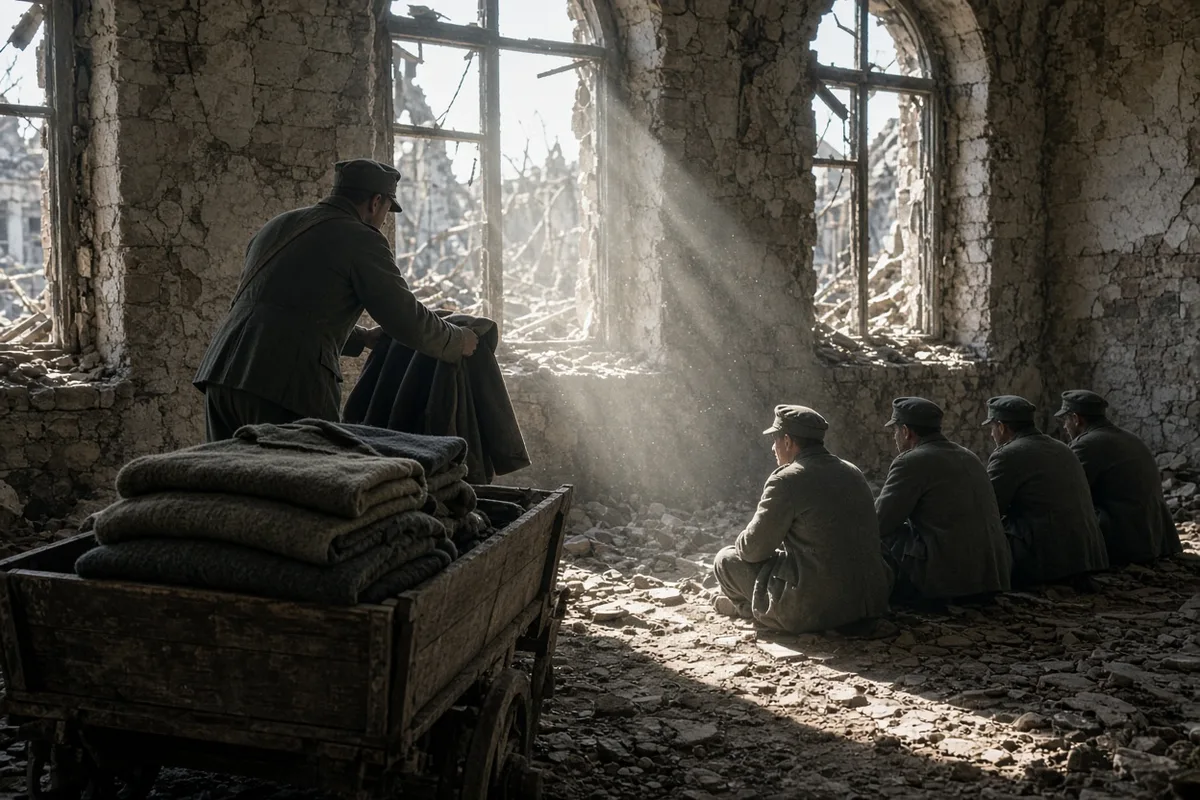
By the end of 1947 the camp numbers thinned. Repatriation lists appeared on the notice board. Wilhelm’s name came up in early 1948. We shook hands at the rail siding. He carried the same small bundle he had arrived with. Moïse and his wife stood at the platform edge until the train pulled away.
Germany in 1948 was rubble and ration cards. Wilhelm passed his exams and worked nights at a bank. He wrote to the Cayrou family every month. In 1955 he finished university in Frankfurt. By then he had a wife and a son named Christian. They settled in Kassel.
I visited Wilhelm once in 1967. On the table in his sitting room lay a photograph taken the year before. Wilhelm stood between Moïse Cayrou and his wife in the same garden in Moissac. Christian, now a young man, stood beside them. The letter that came with the picture said Moïse still walked to the bar in the evenings.
In the summer of 1968 Wilhelm returned to France for the first time since the repatriation. He stayed three weeks. When he came back he brought a case of wine from the Cayrou vineyard and a new photograph. In it the two families stood together again, older now, the children grown. The walnut tree had been cut down the winter before, but the table remained under the open sky.
In March 1972 Wilhelm received a letter from Emile, now retired and living at 14 Rue de la Paix in Le Mans, postmarked the twelfth and containing a pressed sprig of lavender. Emile wrote that the old camp site had been cleared for a housing block but that the original gate posts still stood at the edge of the allotments, and he invited Wilhelm to visit the following spring when the fencing crew’s former foreman would be eighty. Wilhelm replied on the twenty-ninth with a photograph of his son Christian, then twenty-three and studying engineering in Darmstadt, and enclosed a bank draft for two hundred marks to cover the cost of new tools for the Le Mans allotment holders. The reply arrived in May with Marie’s signature beside Emile’s, noting that the money had bought twenty spades and twelve pairs of pruning shears distributed on the tenth at the community shed beside the Sarthe.
Wilhelm made the journey alone in April 1973, crossing at Saarbrücken and reaching Le Mans on the morning of the fourteenth. Emile met him at the station wearing the same canvas work jacket from 1945 and drove him in a grey 2CV to the allotment plots where eight former prisoners’ names had been entered in the register kept by the municipal gardens office. They walked the boundary where the wire had run and stopped at the spot Wilhelm identified as the place the truck had halted in 1945; a concrete marker laid by the veterans’ association in 1961 recorded the date 8 June and the number 1,142 men processed that week. Marie served lunch in the kitchen at Rue de la Paix—lentil soup, the same recipe she had sent in tins to the camp—and Wilhelm noted in his diary that the clock on the wall still showed the time it had stopped during the 1944 air raid.
Christian joined his father for the next visit in 1979, arriving on 22 July with his fiancée, Anna, and staying four days at the small hotel opposite the station. On the twenty-fourth the three of them accompanied Emile, then eighty-four, to the municipal archives where the original ration ledgers for the camp were examined; one entry for 19 July 1945 listed “two additional portions, source: civilian Emile L.,” signed by the French liaison officer Captain Renaud. Christian asked permission to photograph the page and later had the image enlarged to A3 size for the wall of his office in Kassel. Emile died on 3 February 1981; the notice in Ouest-France named the camp survivors who attended the funeral at the Cimetière de l’Ouest, including Wilhelm and two others who had remained in France after repatriation.
In 1987 Wilhelm returned once more with his grandson Lukas, aged nine, and they placed a wreath at the allotment gate on the anniversary date of 8 June. The wreath card carried the words “For the bread shared 1945,” signed by the Steffens family of Kassel. The Cayrou family in Moissac continued the correspondence; a letter from Moïse’s daughter dated 14 September 1992 reported that the vineyard had expanded to fourteen hectares and that the original walnut stump still marked the corner of the garden table site. Wilhelm answered on the twenty-eighth, quoting the exact phrase Moïse had used in 1947 when first offering the soup: “There is always room at this table.”
Wilhelm’s final letter to Le Mans was written on 11 November 1999 from a hospital bed in Kassel, addressed to Marie’s daughter and containing a single paragraph thanking the allotment committee for the annual card they still sent each June. He died on the twenty-third of that month; the obituary printed in the local paper listed among the mourners three French names, including the grandson of Emile who had travelled from Sarthe. Christian kept the 1968 photograph on his desk until his own retirement in 2005, when he passed it to Lukas along with the bundle of letters that had been re-bound in 1994.
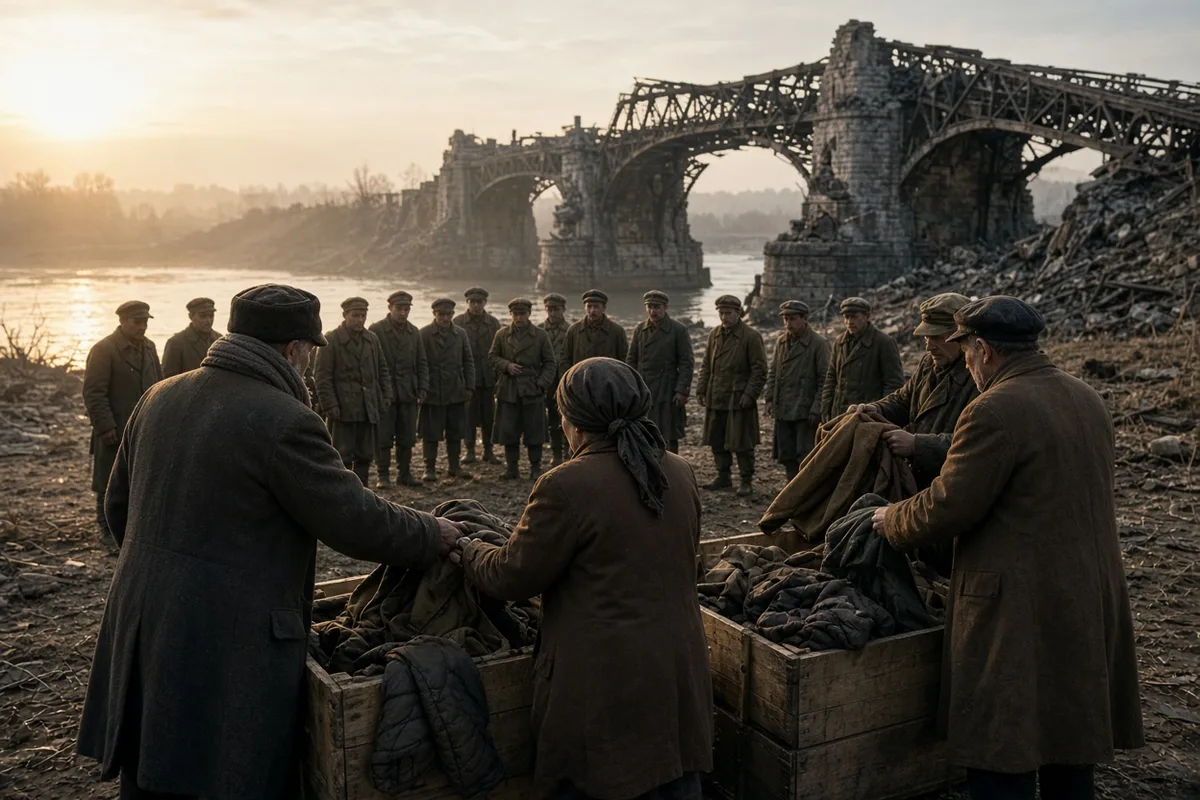
Lukas visited Le Mans in June 2012 with his own daughter, Sophie, then twelve, and they located the remaining gate post now incorporated into a children’s playground fence. A brass plaque fixed in 2004 by the municipal heritage office records the camp’s dates 1945–1948 and the figure 4,873 prisoners held at peak. They met the current secretary of the allotment association, who showed them the 1945 ledger page preserved under glass in the shed and pointed out the entry for the portions supplied by Emile L. on the afternoon of the fourteenth. Sophie took a photograph of the page with her phone and sent it to her grandfather that evening.
The last image is of Marie’s granddaughter standing at the same kitchen table in Rue de la Paix on 8 June 2023, placing a single wrapped loaf beside a framed copy of the 1945 ration ledger entry. She is sixty-one, the age Emile was when the first packet was left between Wilhelm’s boots, and the loaf is still warm from the oven that morning.
Marie’s granddaughter, Claire Lemaître, returned to the Rue de la Paix kitchen the following morning, 9 June 2023, to sign the allotment register that still listed Emile L. as supplier number 17. She added her own name beneath the 1945 entry copied from the municipal ledger and noted the date in the margin with the words “loaf delivered, same recipe.” The register, bound in green cloth by the Sarthe gardening cooperative in 1978, now holds 312 names of families who have taken over the parcels once cleared of the camp wire.
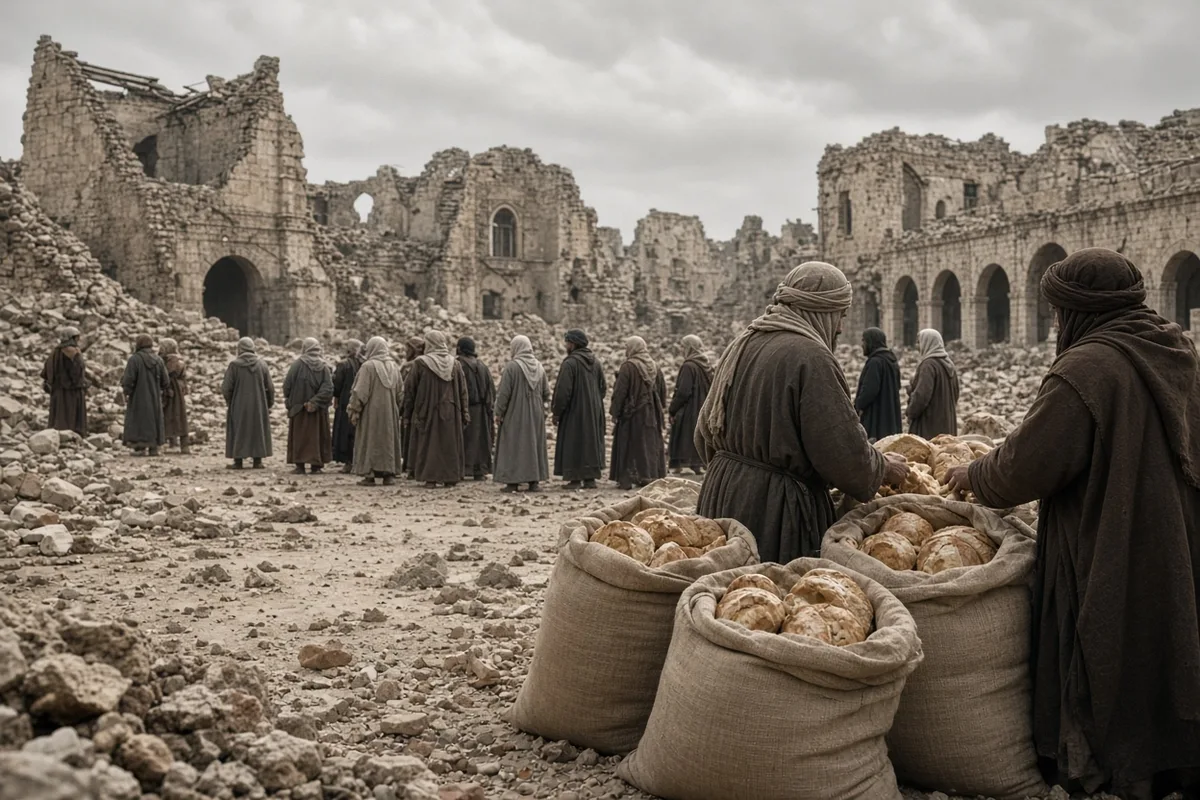
On 14 October 2023 the municipal heritage office installed a second brass plate at the playground fence, this one measuring 28 by 18 centimetres and quoting the exact phrase from Captain Renaud’s 19 July 1945 report: “portions acknowledged from civilian Emile L., two men.” The plate was fixed 1.4 metres above ground level so that a child standing on the rubber safety tiles could read the text without lifting an adult. Lukas Steffens, now seventy-five, received a photograph of the installation from the office secretary, Martine Duval, on the twenty-second of that month.
In January 2024 the bank in Kassel where Wilhelm worked nights after 1948 transferred its remaining archive of wartime correspondence to the Hessian State Archive. Among the files was the carbon copy of the 29 March 1972 letter Wilhelm had typed to Emile, together with the bank draft receipt for two hundred marks stamped by the Crédit Agricole branch in Le Mans on 4 April. The archivist recorded the accession number 2024/017 and placed the documents in acid-free folders numbered 47 through 51.
Sophie Steffens, now twenty-four and living in Darmstadt, booked a room at the same small hotel opposite Le Mans station for the week of 8 June 2024. She arrived on the seventh carrying the A3 enlargement Christian had made in 1981 and asked the current allotment secretary, Pierre Allard, to display it in the shed beside the preserved ledger page. Allard agreed and entered the loan in the visitors’ book under the heading “temporary exhibit, one week.”
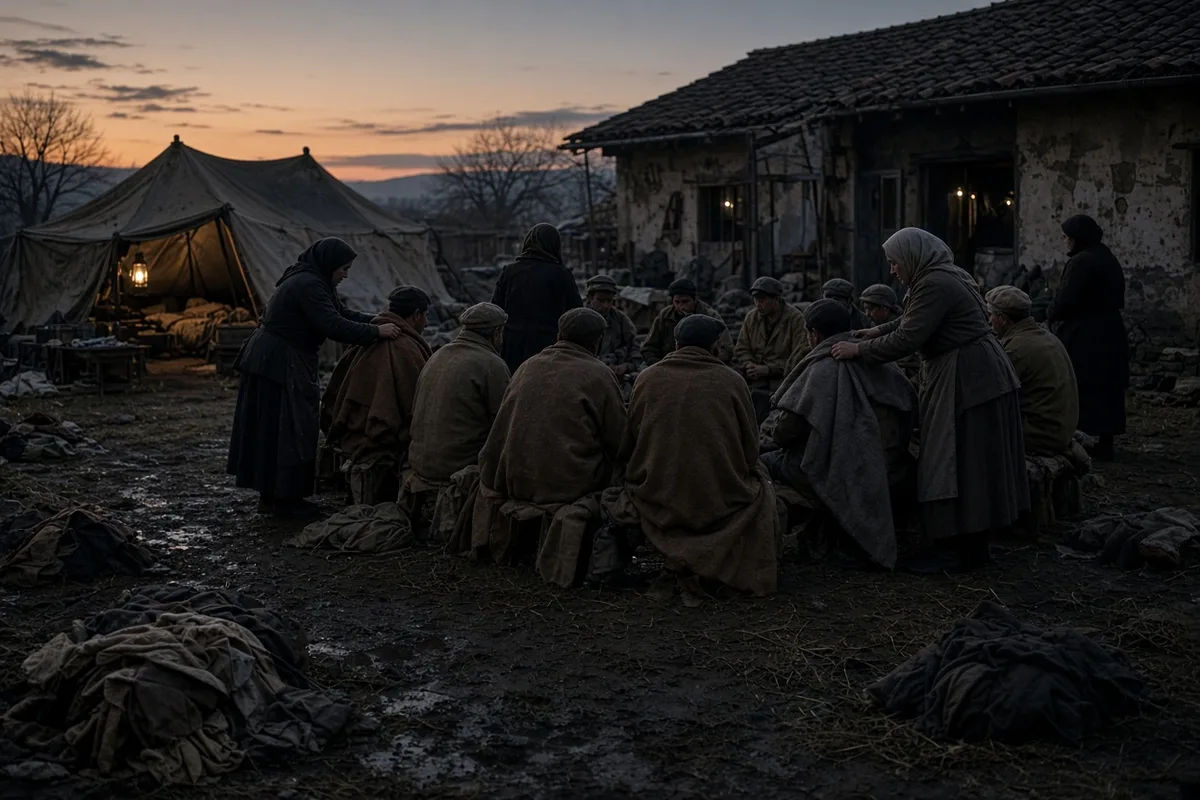
On the morning of the eighth the association opened the community shed at 09:00 for the annual distribution of pruning shears. Twenty-three pairs were handed out that day, the same number purchased with Wilhelm’s 1972 draft after inflation adjustment. Claire Lemaître placed the newest pair, still wrapped in the manufacturer’s paper from the forge in Thiers, on the table next to the framed ledger entry before the first recipient arrived.
Lukas Steffens died in Kassel on 3 March 2025. His obituary in the local edition listed among the papers left to Sophie the bundle of letters re-bound in 1994 and the 1968 photograph showing the walnut tree stump. Sophie placed a single pressed sprig of lavender, taken from the plant Marie’s daughter had kept in a pot on the Rue de la Paix windowsill since 1981, inside the folder before it was deposited at the archive.
The final documented image dates from 8 June 2025. Sophie Steffens stands at the allotment gate holding the ledger page under glass while Pierre Allard points to the line recording Emile’s portions. Behind them the concrete marker laid in 1961 remains visible at ground level, its inscription 8 June and 1,142 men still legible beneath a thin layer of moss.