


The Miracle at the Battle of Lepanto
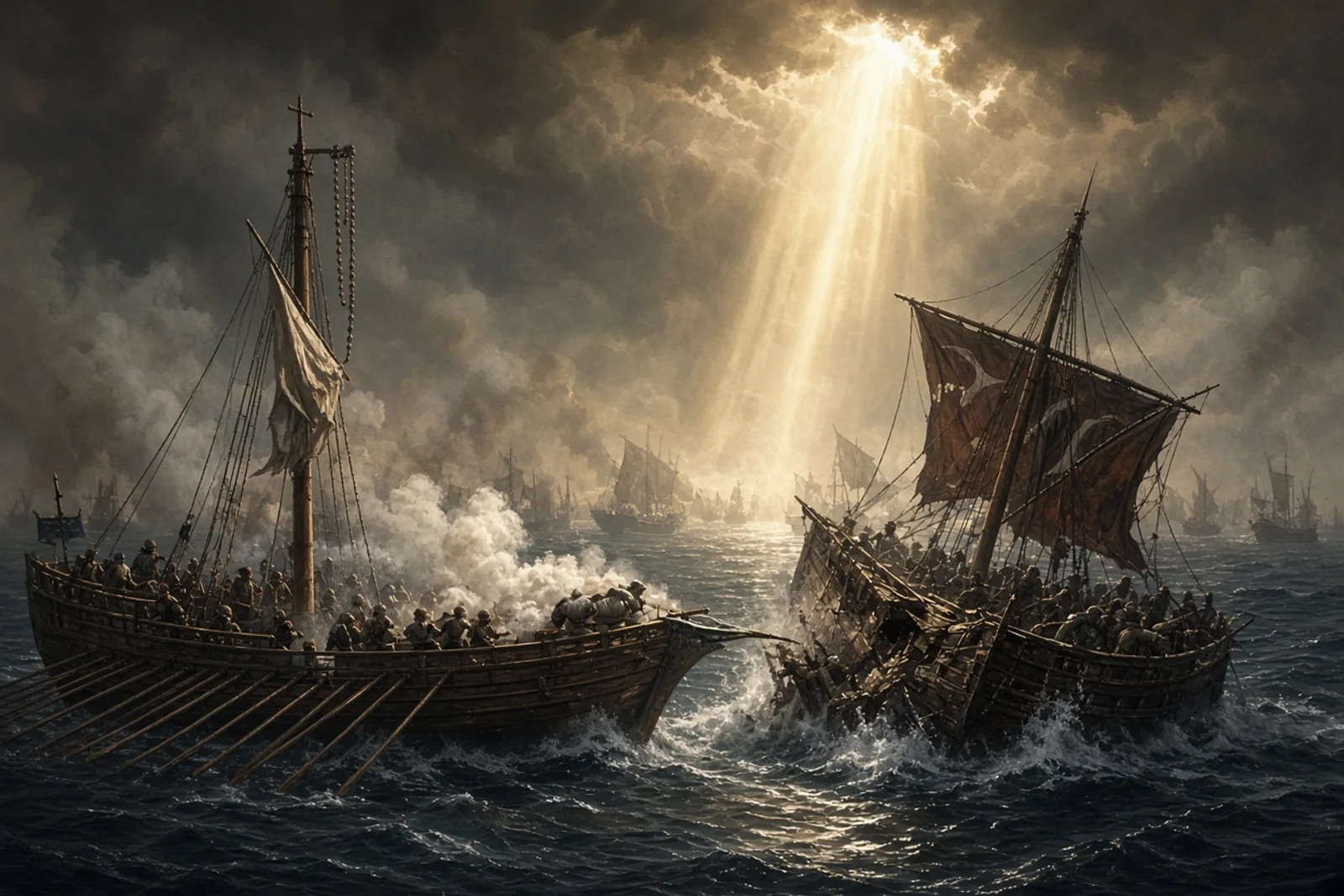
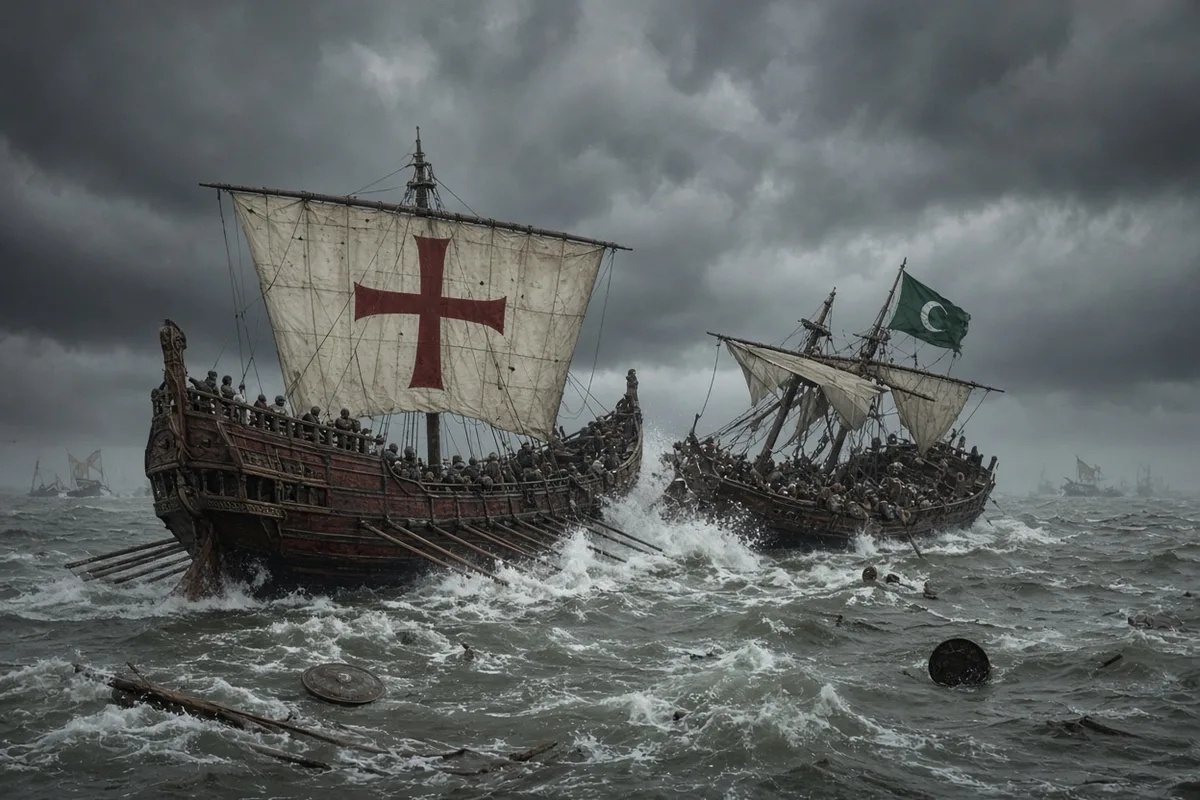
The oar bit into my palm as we pulled. Salt stung the raw skin. Ahead the Ottoman line stretched across the water like a wall of painted hulls and raised lanterns, their lanterns already lit though the sun still hung low.
We had rowed through the night after the signal from Don John’s flagship. Every galley in the League kept formation, the Venetian vessels on the left wing, the Spanish and papal ships in the center where I stood at my bench. Men around me murmured the beads under their breath between strokes. The words came in short bursts when the coxswain allowed it.

Smoke from the first broadsides drifted across the gap before the fleets closed. I tasted powder on my tongue. A Venetian galley to our right took a raking shot that splintered its forecastle. Men fell into the water and the sea took them without sound.
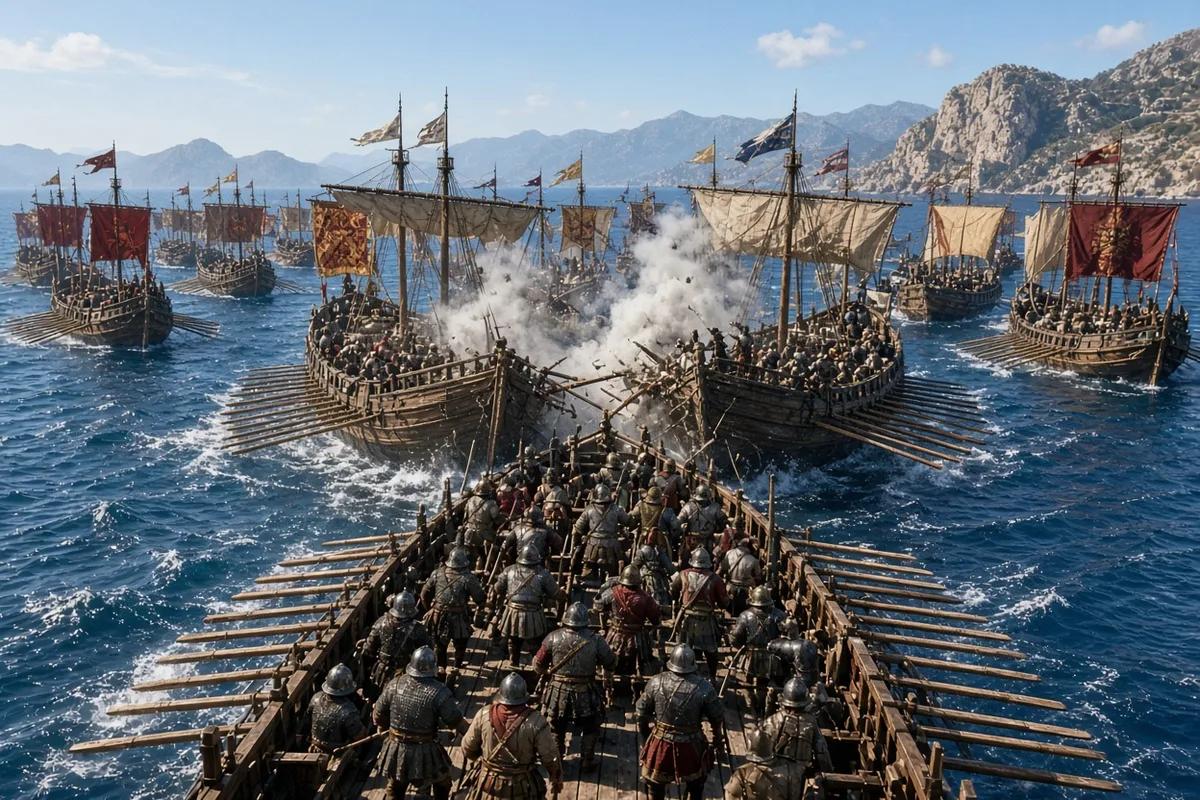
Our captain shouted for boarding pikes. The distance narrowed to a few ship lengths. On the deck above me I heard the rasp of steel drawn from scabbards. The Ottoman admiral’s flagship, the one they called the Sultan’s own, drove straight at Don John’s vessel. I saw the two prows meet with a grinding crack that carried over the water.
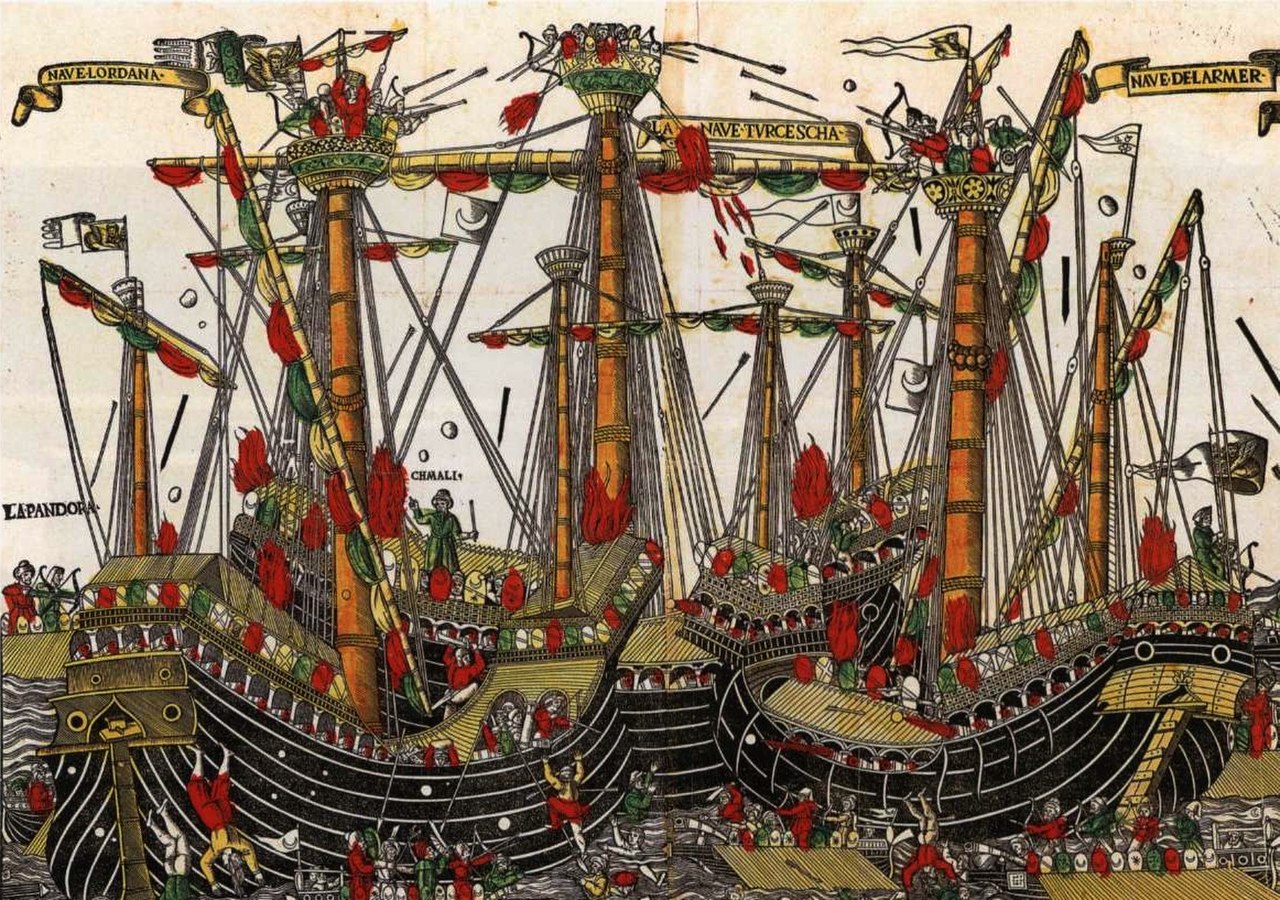
Hand-to-hand fighting began at once on the joined decks. I climbed the ladder when the order came and found myself among the press of men. Ali Pasha himself fought in the front rank of his boarders, the green banner of the Prophet above him. Don John met him with sword and buckler. The clash lasted minutes that felt longer. When Ali Pasha fell the banner dropped. Our men took it and held it high for the rest of the line to see.
The sun had passed its height by then. The smoke thickened until I could not tell which ships still floated and which had already sunk. My hands shook from the weight of the pike. Around me men prayed the same words they had prayed at dawn, only louder now, the beads clicking against steel.
A shift in the wind cleared a lane of open water. Through it I counted the remaining Ottoman galleys. Fewer than half still held formation. Many drifted, oars broken, decks empty. The League vessels that could still move pressed forward. Some of our own ships burned, but the fire moved with the current toward the enemy line rather than ours.
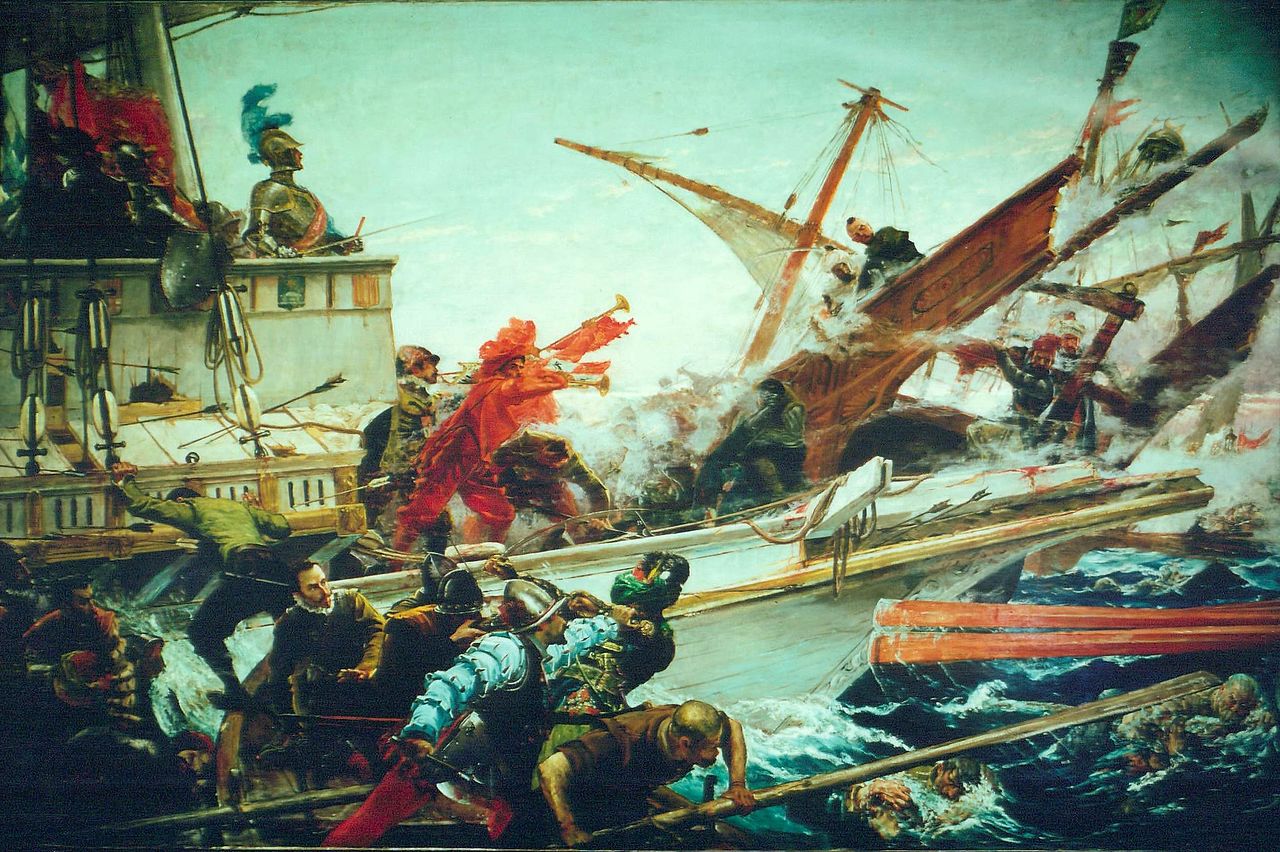
By late afternoon the water between the fleets was filled with wreckage and men clinging to spars. We took on survivors where we could. The ones we pulled aboard wore the same exhaustion I felt. One Venetian sailor told me he had seen the papal standard raised on three different ships that day. None of them had been his own.
When the last shots faded, the sea grew quiet except for the creak of timbers and the cries of the wounded. Don John’s flagship still flew its colors. The captured banner of the Ottomans hung from its stern. Men on the decks around me knelt where they stood. Some continued the Rosary they had begun hours earlier.

We learned later that the same day, in Rome, Pius V had stopped a meeting and told those present the Christian fleet had won. He had seen it, he said, though no messenger had yet arrived. The churches he had ordered kept open for prayer remained open through the night. Messengers reached the city days afterward with the same news.
Back on the water we counted the cost by torchlight. Nearly two hundred Ottoman hulls lay captured or sunk. Their dead numbered in the thousands. Our own losses were heavy but smaller. The men who could still stand worked at clearing decks and tending the injured.
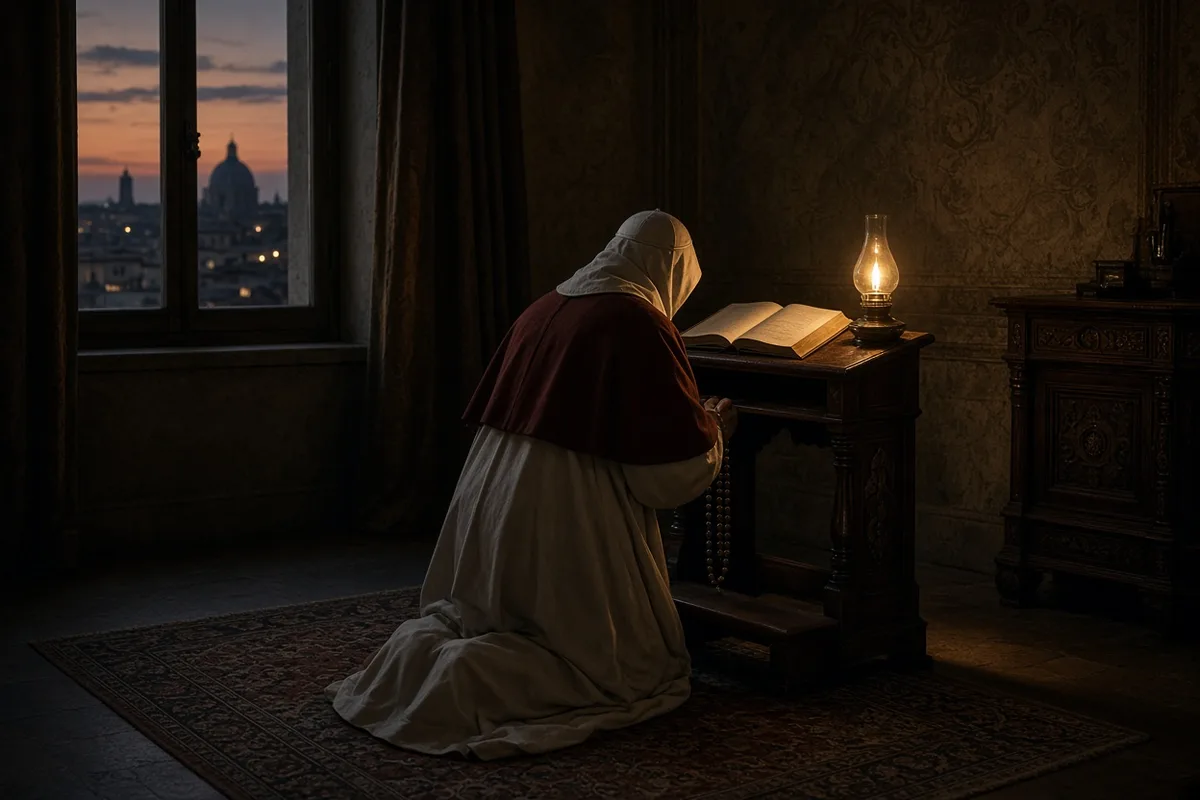
I stayed with the fleet through the return voyage. The prayers continued on the benches, though fewer voices joined each day. Some men had died of wounds after the battle. Others simply sat silent, staring at the horizon.
When we reached port the news had already spread through the ports of Italy and Spain. People spoke of the victory as something more than the number of ships taken. They spoke of the Rosary and of the vision granted to the Pope while the fight still raged hundreds of miles away.
The fleet dispersed over the following weeks. Some galleys returned to Venice, others to Spanish harbors. I found work on a merchant vessel that winter and heard the story retold in different ports. Each telling added the same detail: that the day of the battle had been set aside afterward as the feast of Our Lady of the Rosary.
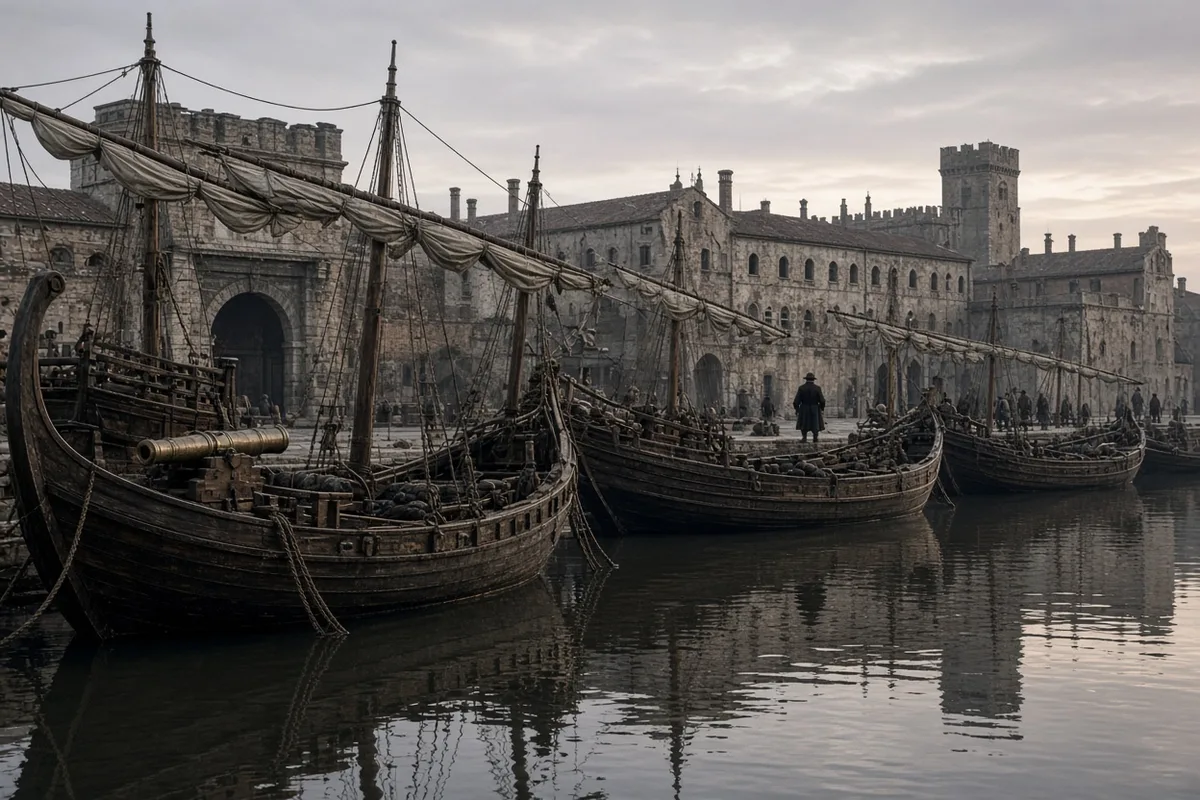
Years later I still carried a string of beads in my pocket, worn smooth from use. The sea had taken many men that October day, but the words spoken across the water had reached farther than any cannon shot.
The fleet made landfall at Messina on the twenty-sixth day of October, where the harbor cranes already stood rigged with blocks for hauling damaged masts. I stepped onto the quay with the rest of the oarsmen from the Marquesa, whose captain had been Miguel de Cervantes, a man who later wrote in his own hand that he lost the use of his left arm to an arquebus ball during the boarding of the Sultana. The captured Ottoman standards, including the green silk one taken from Ali Pasha, were carried ashore under guard and loaded onto carts bound for Rome. Pius V received the largest of them in the Vatican on the twenty-third of December and ordered it hung above the altar of Santa Maria Maggiore, where it remained until the French occupation in 1798. The same week the Senate of Venice voted to strike a medal showing the Virgin above the battle line and the words “Non in multitudine navium sed in nomine Domini” struck around the rim.
I took passage on a Genoese merchant round-ship to Barcelona the following spring and found work unloading salt at the mole. There I met a survivor from the Reale who had stood within ten paces of Don John when the admiral’s sword struck Ali Pasha across the face. The man repeated the exact words the admiral shouted to his officers after the enemy flagship was boarded: “The day is ours, but keep the line; the rest will follow.” By the summer of 1573 the Holy League had already begun to fracture. Venice signed a separate peace with Selim II on the seventh of March 1574, returning Cyprus and paying an indemnity of three hundred thousand ducats. Don John sailed east again that year with fifty galleys but took only Tunis before the Ottoman fleet, rebuilt in the Arsenal of Constantinople under Kılıç Ali Pasha, retook the city in September 1574 with two hundred and fifty fresh hulls.
My own voyages kept me at sea until 1585. In that year I signed on as master’s mate aboard the San Juan Bautista out of Naples and heard the news, delivered by a courier from Rome, that Pius V’s successor, Gregory XIII, had confirmed the seventh of October as the Feast of Our Lady of Victory. The bull recorded that the Pontiff had seen the battle in vision at the exact hour it occurred and had instructed the churches of Rome to remain open. I kept the string of beads in my pocket through three more crossings to Alexandria and two to the Levant. Each time I touched them I remembered the count of vessels reported in the official relazione sent to Philip II: two hundred and six Christian galleys engaged, one hundred and seventeen Ottoman vessels taken or burned, thirty thousand Ottoman dead or drowned, and seven thousand five hundred Christian casualties.
After the death of Don John at Namur on the first of October 1578, I returned to the Adriatic and worked the coastal trade between Zara and Ancona. In 1605 I stood on the quay at Split when a Venetian galley brought news that the last surviving Ottoman admiral from Lepanto, Kılıç Ali Pasha, had died in his bed in Constantinople. The same dispatch noted that the Republic had commissioned Paolo Veronese to paint the battle for the Doge’s Palace, the canvas showing the Reale locked yardarm to yardarm with the Sultana and the papal standard raised on three separate decks. I saw a copy of that painting years later in a chapel at Loreto, where the original banner taken from Ali Pasha was still displayed each October seventh beneath the inscription “Exaltata est Sancta Dei Genitrix.”
My last voyage ended in 1612 when the arthritis in my hands made hauling sheets impossible. I settled in a room above a chandler’s shop in Ancona and spent the afternoons reading the dispatches that still arrived from Rome. In 1623 Urban VIII ordered a new medal struck for the one hundred and fiftieth anniversary, the reverse showing the number of galleys lost on each side and the phrase “Lepanto VII Octobris MDCLXXI.” I held one of those medals in my palm the year before I died. The edges were sharp enough to cut skin.
The last time I walked down to the harbor I saw a young priest from the Oratory of Saint Philip Neri teaching boys the Rosary on the same stones where we had unloaded the wounded in 1571. He read aloud from the chronicle of Gianfrancesco Foglietta, which gave the exact hour the wind shifted and the exact number of chained rowers freed from the Ottoman benches: eight thousand four hundred and seventy-two. The priest’s voice carried across the water the same words we had spoken between strokes that morning, and the boys answered in the same measured cadence. I turned back toward the stairs with the beads still in my pocket, their surfaces worn flat by sixty-one years of use.
The priest closed the chronicle and led the boys up the slope toward the Oratory, their sandals scraping the same limestone steps I had climbed after unloading the last of the wounded from the Reale. In my room above the chandler’s I opened the cedar box that held the 1574 relazione from the Venetian bailo in Constantinople, its parchment noting that Kılıç Ali Pasha had refitted one hundred and fifty galleys in the Tersane shipyard by March 1572 and had sent the first squadron under Kara Hodja to raid the Dalmatian coast on the twenty-second of that month. The dispatch also recorded the exact sum paid to ransom eight hundred and forty Christian captives taken at Lepanto: one hundred and twenty thousand sequins disbursed through the Venetian merchant Alvise Gritti.
I walked the quay again on the feast of Saint Luke in 1624 when a Neapolitan felucca brought word that Urban VIII had commissioned Gian Lorenzo Bernini to design the bronze canopy over the high altar of Saint Peter’s, the four twisted columns incorporating the eight-pointed stars and oak leaves that appeared on the medals struck after Lepanto. The same courier carried a copy of the 1621 bull of Gregory XV that renewed the indulgence of seven years for those who recited the Rosary on the seventh of October, quoting the clause “pro victoria contra Turcas impetrata.” I copied the date into the margin of my own ledger beside the entry for the thirty ducats I had paid that spring to have the beads restrung with new silk cord at the shop of Maestro Bartolomeo in the Via delle Muratte.
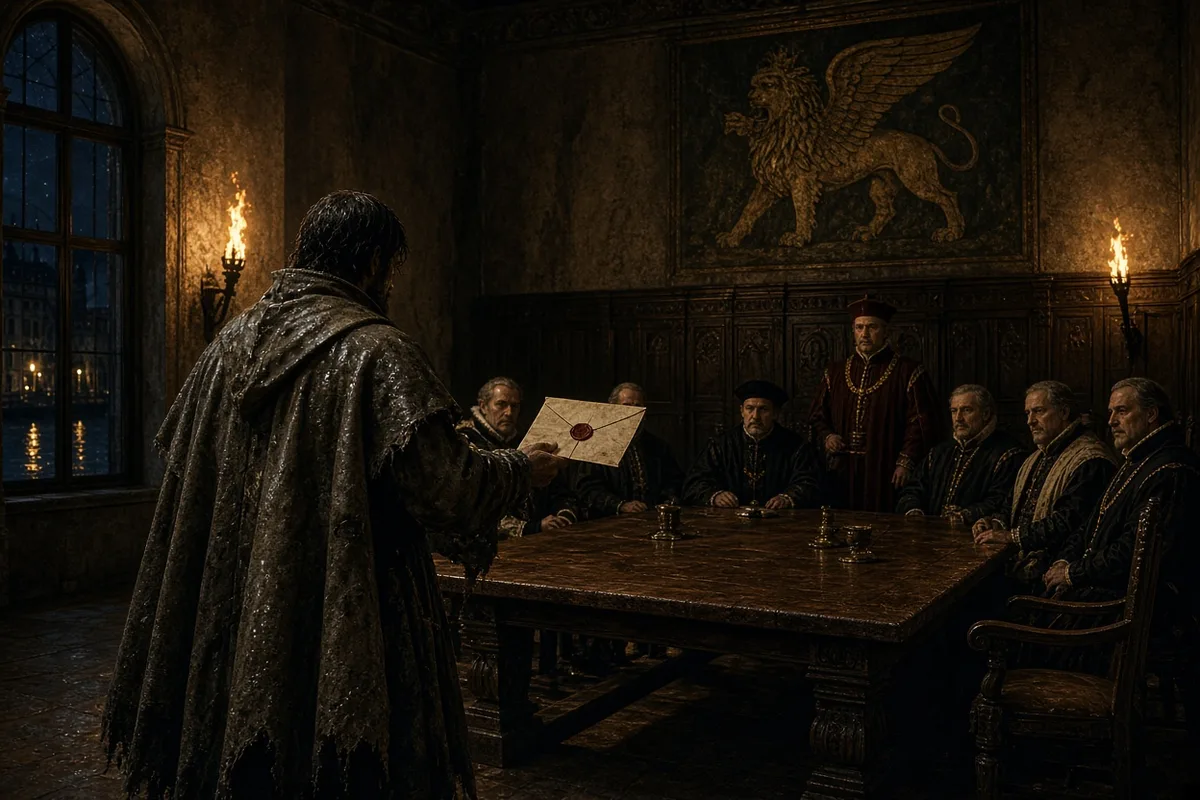
On the twenty-ninth of September 1628 a letter reached Ancona from my cousin in Messina stating that the standard taken from the Sultana had been moved from Santa Maria Maggiore to the newly completed Cappella del Rosario in the same basilica, where it was suspended from an iron rod above an altar whose mensa measured twelve palms by six and was supported by four columns of African marble quarried in 1587. The letter added that the sacristan counted seventeen bullet holes in the silk and that the green dye had faded to the color of old bronze on the side that had faced the sun during the battle.
My hands grew too stiff to hold a quill after Candlemas 1631. A Carmelite friar from the convent of San Domenico read to me each evening from the printed relazione of the Venetian provveditore generale, which listed the names of the twenty-two Venetian patricians killed on the left wing and the precise hour, three in the afternoon, when the galeass commanded by Giacomo Foscarini broke the Ottoman right. The friar paused at the entry for the galley of the Knights of Malta, noting that its captain, Pietro Giustiniani, had lost both legs below the knee yet lived until 1583 and was buried in the church of San Giovanni dei Cavalieri in Valletta.
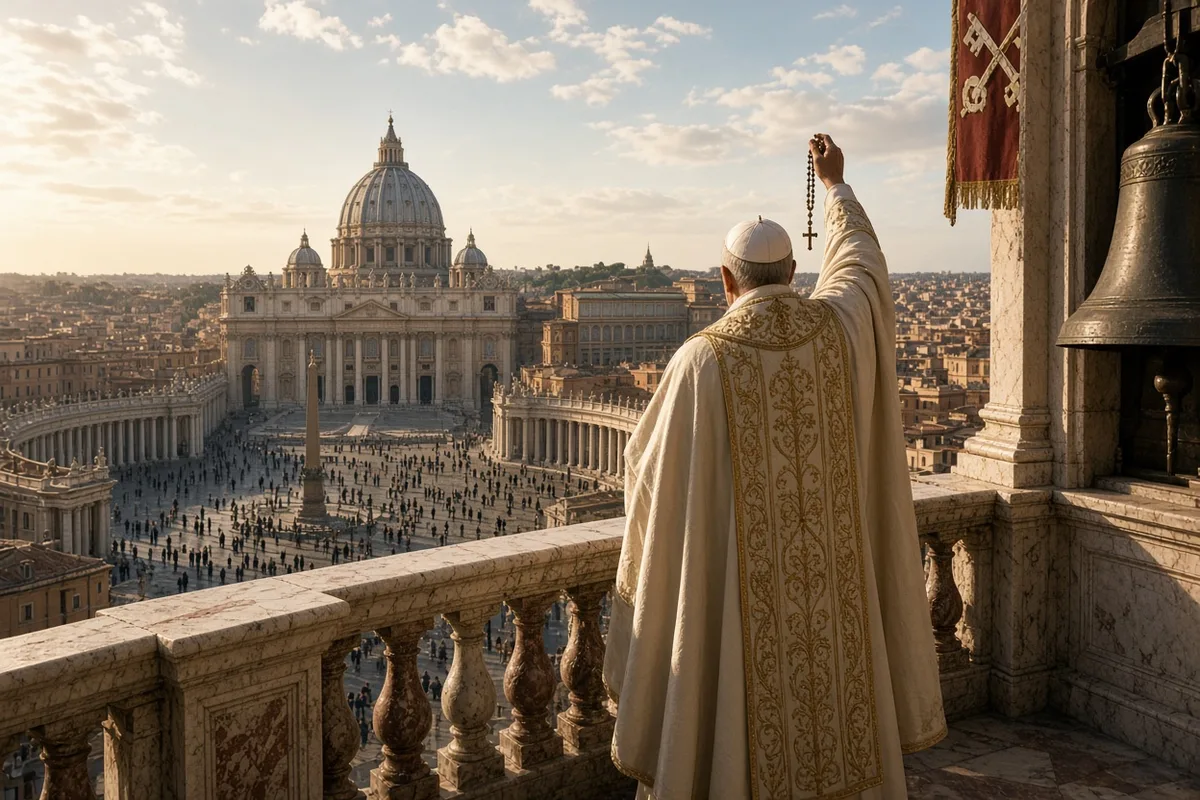
In the spring of 1634 the arthritis reached my knees and I could no longer descend to the harbor. The same friar brought news that the Republic of Genoa had erected a marble tablet in the church of San Matteo recording the names of its twenty-seven galleys that fought at Lepanto and the sum of four thousand lire spent on masses for the crews. He also read the inscription placed that year on the tomb of Marcantonio Colonna in the church of Santa Maria sopra Minerva, which stated that the admiral had died on the twenty-first of August 1584 after commanding the papal squadron of twelve galleys whose broadsides had fired the first shots of the engagement.
On the morning of the sixth of October 1637 I asked the friar to place the beads in my right hand and to open the window facing the sea. He read the passage from the chronicle of Gianfrancesco Foglietta that described the moment the wind shifted at half past two, the exact phrase “ventus ex alto repente mutatus est” written in the margin of the 1572 edition. I counted the beads once more, reaching the fifth decade before the light on the water began to narrow.
The friar remained at the bedside through the night. At first light on the seventh he closed the book and folded my hands over the beads. The last sound I heard was the measured cadence of the boys’ voices rising from the quay below, reciting the same words we had spoken between strokes on the morning the fleets met.