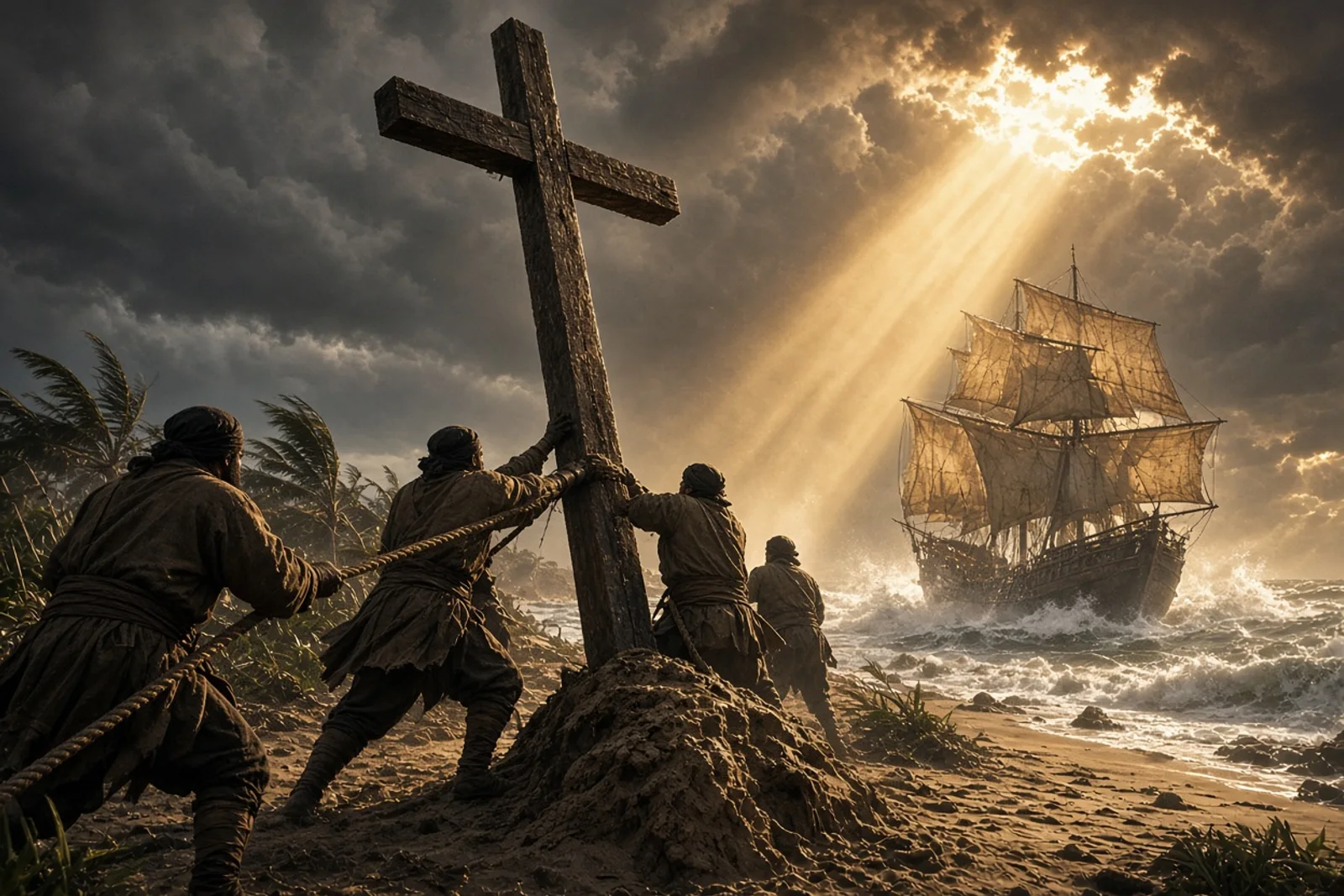



The Miracle of Calanda
The cart had already passed when I reached him that afternoon outside Castellón. Miguel Juan Pellicer lay in the dust with his right leg twisted under him, the tibia snapped clean through. His uncle Jaime Blasco lifted him onto a mule and turned toward Valencia. I watched them go and thought the break would mend in time.
He reached the hospital there after a few days of hard travel. Five days later he left again, the leg now swollen and dark. The road to Zaragoza took him fifty days on foot. By the time he arrived at the hospital of Our Lady of the Pillar the flesh had turned black and the smell reached the ward door before he did.
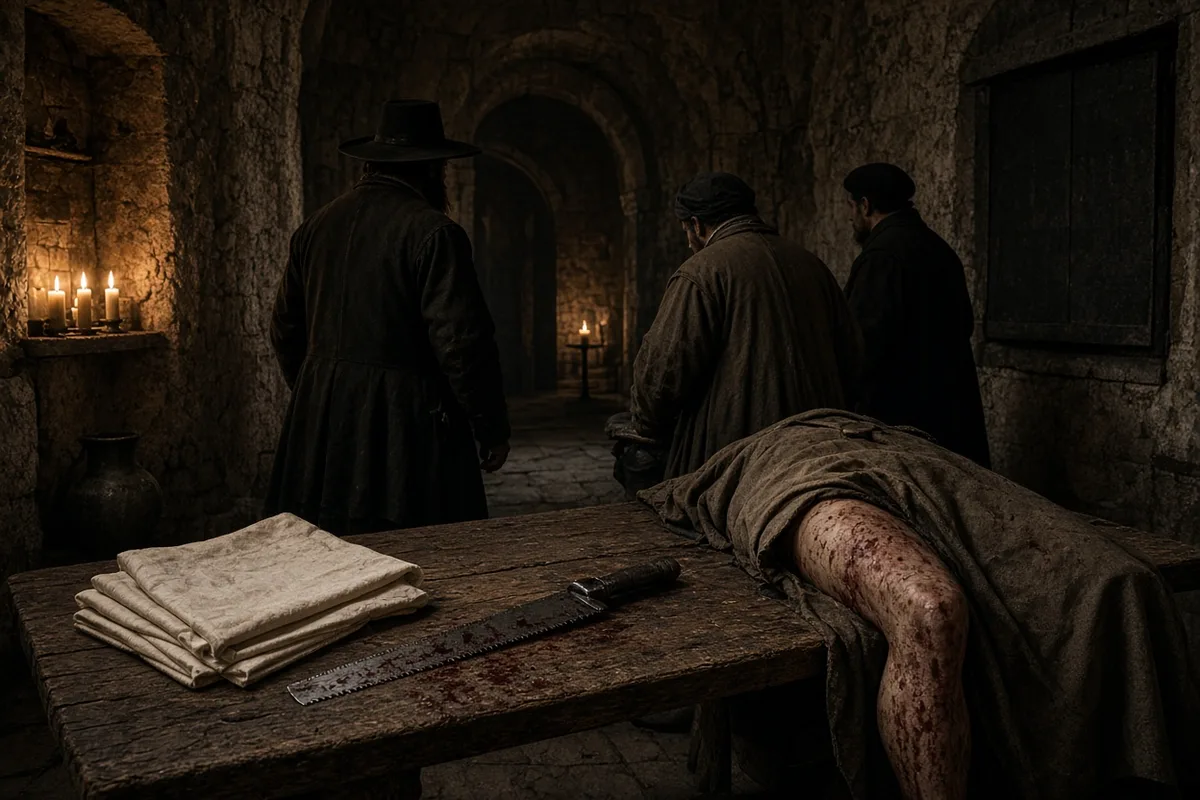
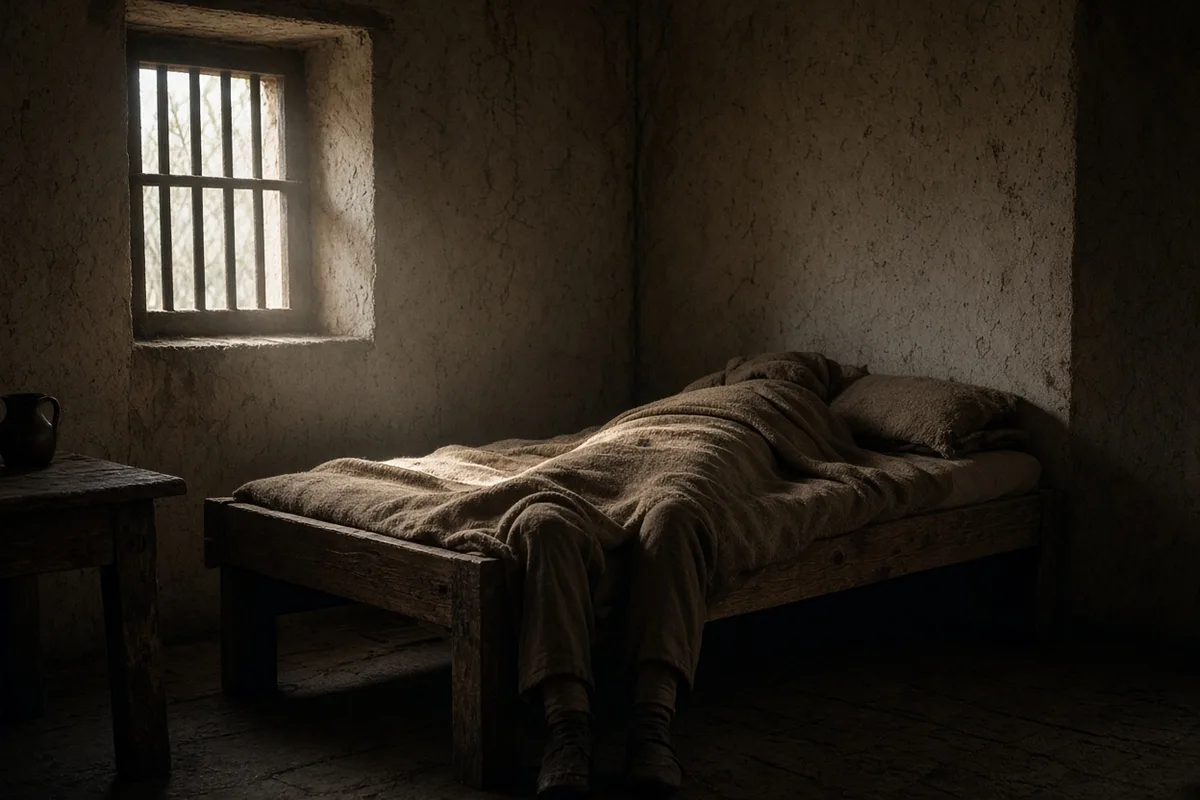
I was living in Zaragoza then and saw him often enough after the surgeons finished. Juan de Estanga and Diego Millaruelo took the leg four fingers below the knee in mid-October. They buried what they cut away in the hospital plot. Miguel Juan stayed on for months while the stump healed. When they gave him a wooden peg and crutches he applied for a begging license at the sanctuary. The priests granted it. Every evening he asked for a little oil from the lamp that burned before the Pillar and rubbed it into the scarred end of his leg.

For nearly two years he moved through the same streets I walked. People knew the one-legged man who came to mass each morning. He returned to the hospital for check-ups and Estanga examined the stump each time. In the spring of 1640 he decided to go home to Calanda. He rode a donkey the last stretch and arrived during the second week of Lent.
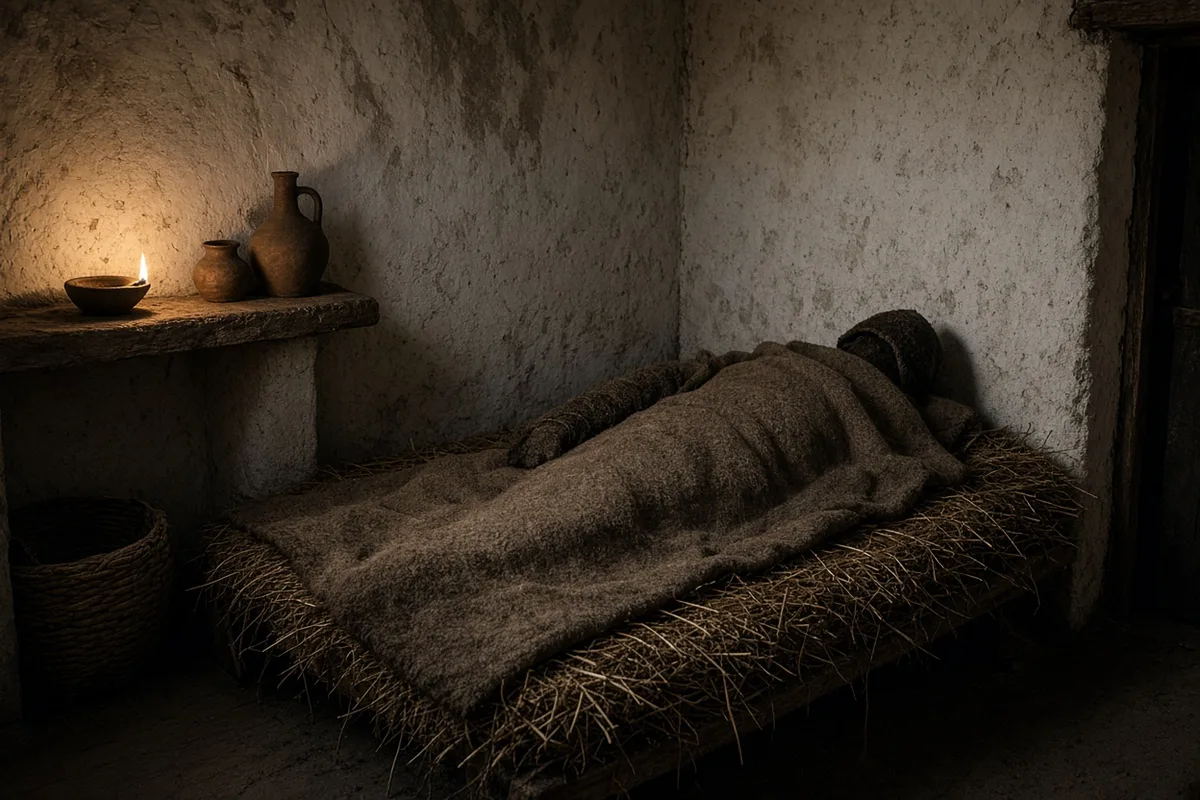
I went back to Calanda myself that month to settle a family matter. On the evening of 29 March a soldier took Miguel Juan’s usual bed, so he spread a blanket on the floor of his parents’ room. His mother entered after ten o’clock to check the fire. She saw two feet under the cloak. She called her husband. They pulled the cloak away and found their son lying there with both legs whole.
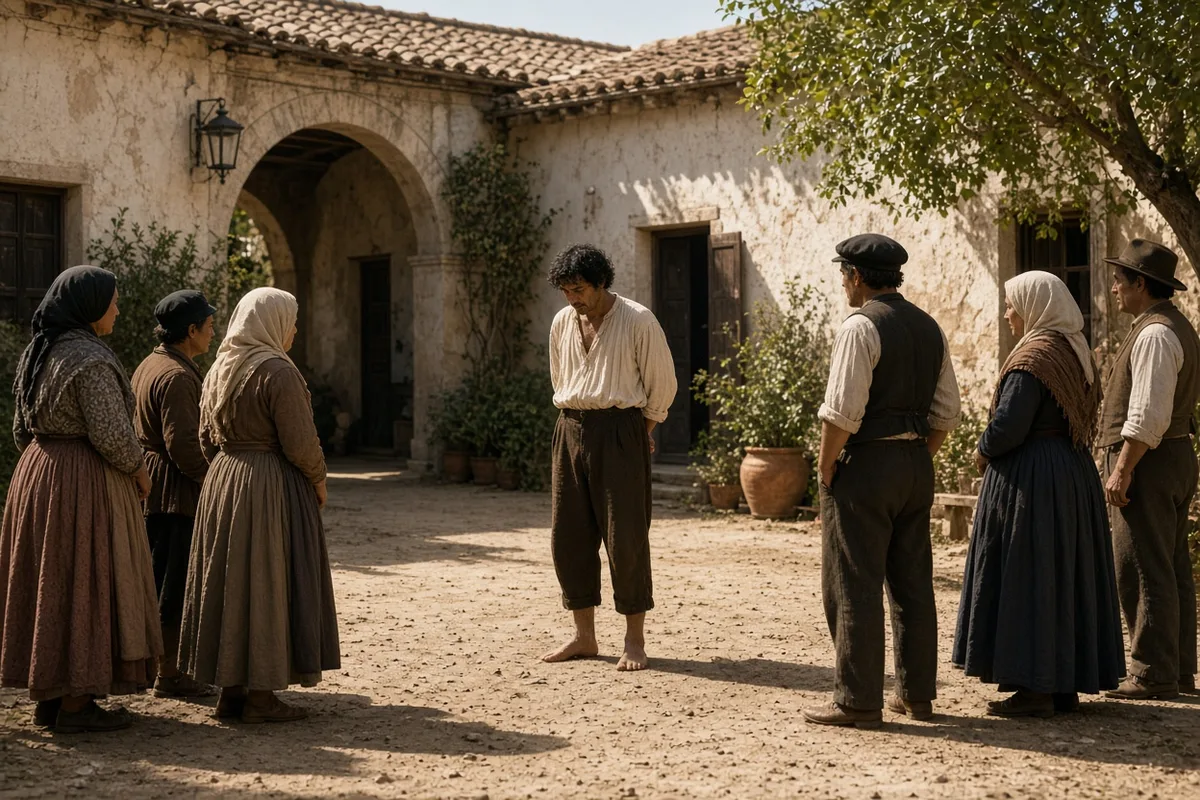
They shook him awake. He told them he had dreamed he stood again inside the sanctuary, rubbing oil on the leg that had been gone. The three of them stayed in the room until first light. By mid-morning the judge of Calanda arrived with two surgeons. They measured the leg, noted the old scars from a childhood cyst, a dog bite, and the cart wheel itself, and wrote what they saw. The report left for Zaragoza the same day.
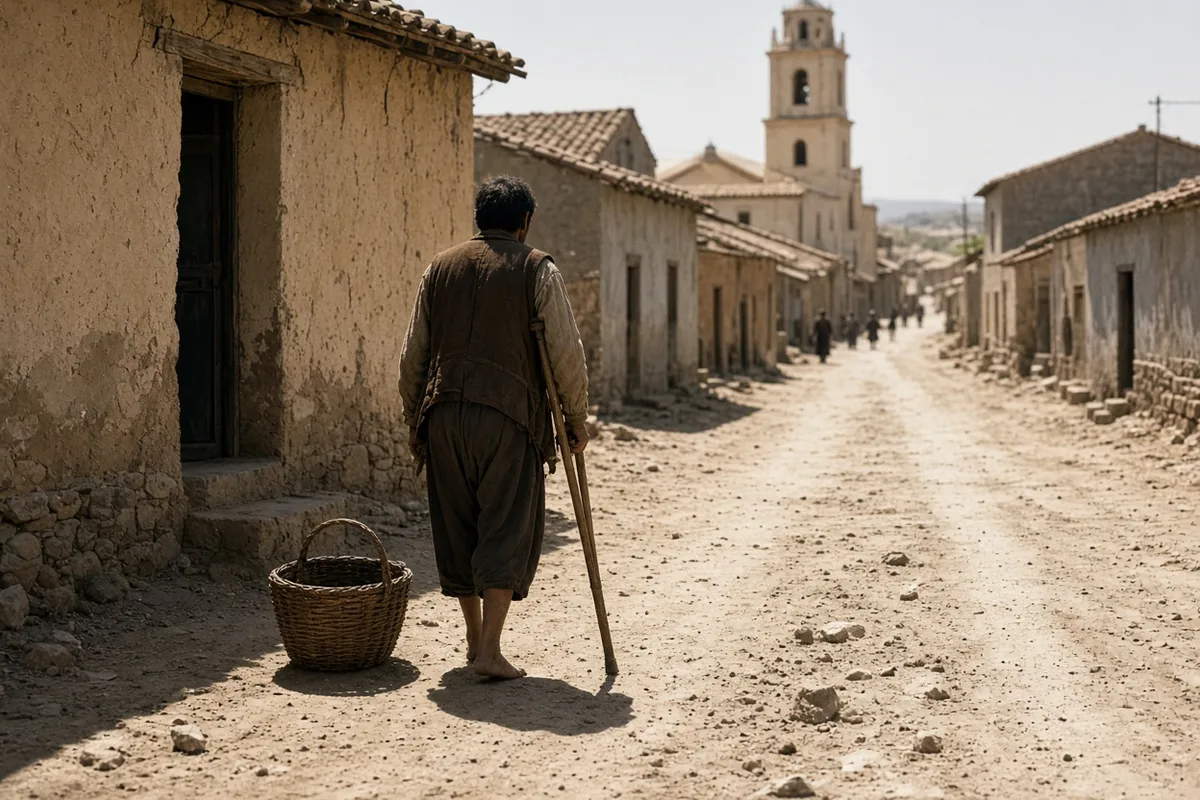
On 1 April the royal notary Miguel Andréu came from Mazaleón with the parish priest of that village. Ten people who had known Miguel Juan both before and after the amputation swore to what they had seen. Their statements were sealed and carried away.
Word reached Zaragoza within days. On 25 April Miguel Juan and his parents walked the road back to the city they had left two years earlier. Crowds lined the streets. Men and women who had dropped coins into his cup now touched the restored leg and asked how it felt. He answered that it was still weak and the toes would not yet straighten.
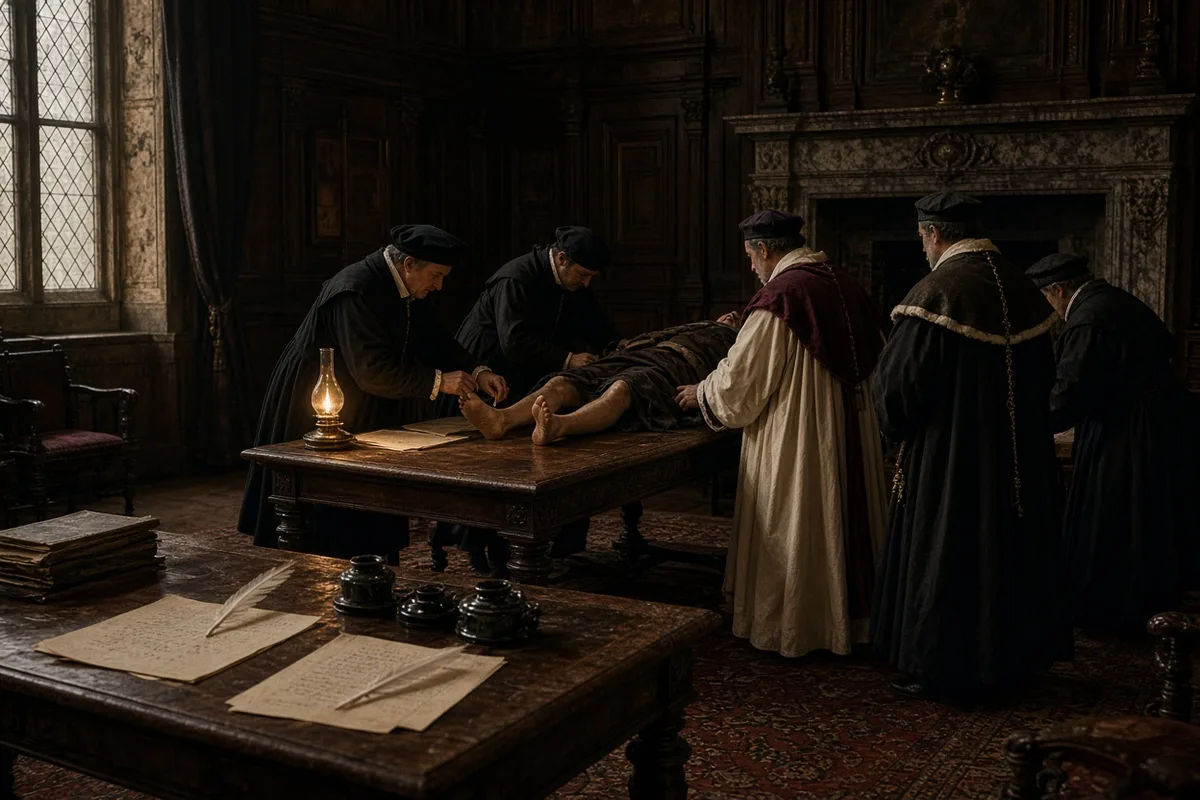
The archbishop ordered a formal inquiry that opened on 5 June. Twenty-four witnesses were chosen from more than a hundred who offered to speak. All hearings were held in public. The surgeons Estanga and Millaruelo testified under oath that they had cut the leg away and that the wound they treated afterward matched the one now healed. The hospital priest and the assistant surgeon confirmed the same. No one raised a dissenting voice in the record.
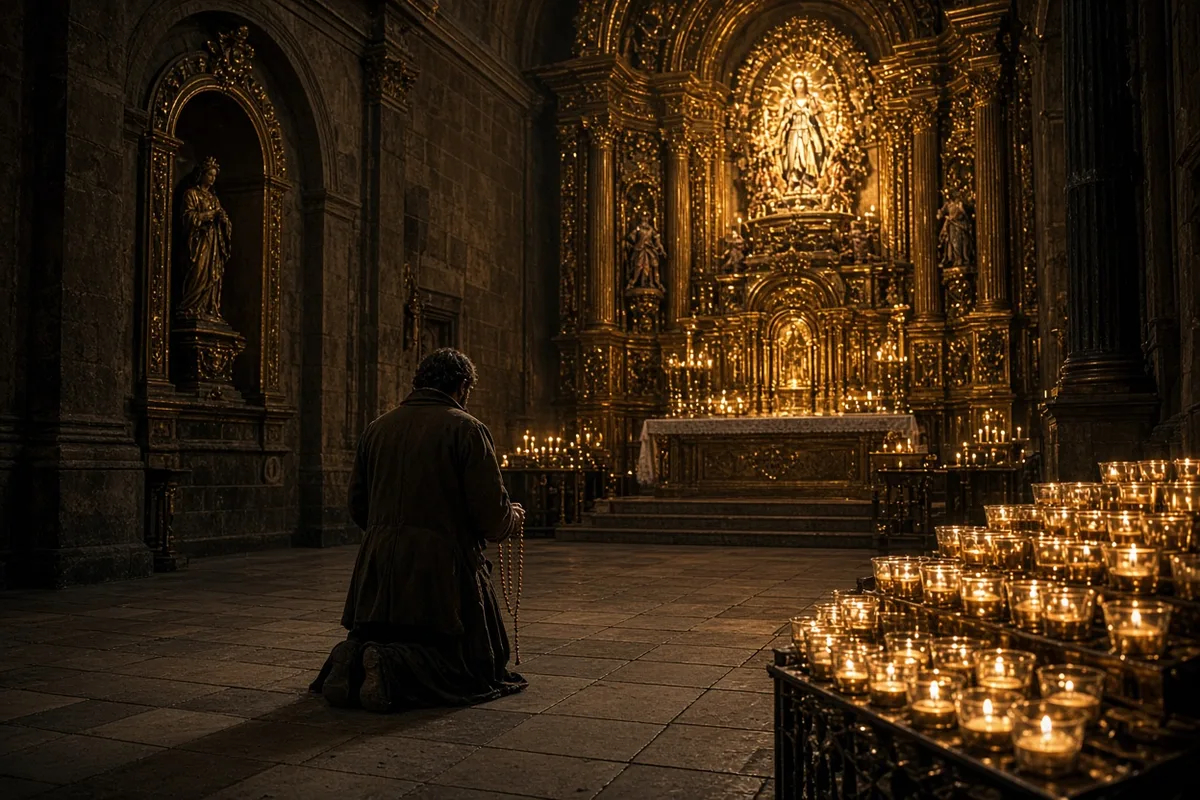
The proceedings lasted nearly a year. On 27 April 1641 the archbishop read the sentence in the presence of the chapter. He declared the restoration a miracle worked through the intercession of Our Lady of the Pillar. The document was copied and sealed that day. One copy remained in the cathedral archives; another traveled with Miguel Juan when he was summoned to Madrid at the year’s end.
King Philip IV received him at court. The king knelt, examined the leg, and kissed it. Later that winter a party returned to the hospital cemetery in Zaragoza and opened the plot where the amputated limb had been placed. The grave was empty.
Miguel Juan lived another six years. He walked without crutches after the first months. The leg that had been shorter at first grew even with the other. People who had seen him beg continued to recognize the old marks on the skin. The notary Andréu’s certificate survived the wars that followed and still lies under glass in the town hall of Zaragoza.
Miguel Juan returned to Calanda on 12 May 1642 after the Madrid audience and took lodging in the house of his cousin Pedro Blasco on the calle del Río, where he worked at a loom producing coarse wool cloth at the rate of three varas a day for the local market. The parish register of that year records his marriage on 8 November to María Sánchez, daughter of the farmer Juan Sánchez of nearby Alcorisa; the ceremony was performed by the same priest who had attested to the notary Andréu two years earlier, and the witnesses included the surgeon who had measured the leg in March 1640. Miguel Juan walked the twelve kilometres to the fields each morning without a stick and returned at dusk, the skin on the restored limb showing the same raised scar from the childhood dog bite that the Calanda surgeons had noted in their report. His wife gave birth to a son, Francisco, on 3 September 1643; the baptismal entry lists the father as “Miguel Juan Pellicer, restored by the Pillar,” and the godparents were the judge who had first examined him and the wife of the town scribe.
In the spring of 1645 the archbishop of Zaragoza ordered a second set of measurements taken by two new physicians, Luis de Torres and Francisco de la Peña, who recorded in their protocol that the circumference of the right calf was now identical to the left within two digits and that the toenails grew at the same rate. Miguel Juan appeared before them on 14 April and answered that the limb had gained full strength after the second winter. He continued to receive a small pension from the sanctuary at Zaragoza, paid each quarter through the prior of Calanda, amounting to twelve reales and six maravedís, as noted in the account books that survive in the cathedral archive. On 20 June 1646 he testified once more in a local dispute over water rights, swearing on the restored leg that the irrigation ditch had been dug in the year of the cart accident; the notarial act quotes his exact words and bears the signatures of seven neighbours who had known him both with and without the limb.
Miguel Juan died on 24 November 1647 in the same room where the cloak had been pulled back seven years earlier. The burial entry in the Calanda parish book states that he was thirty-three years old, that he left a widow and one son, and that the cause was recorded simply as fever. His mother survived him by eleven months and was buried on 9 October 1648; the same register notes that both parents had continued to show visitors the marks on the leg whenever the subject arose. The son Francisco later moved to Teruel, where a notarial document dated 1672 records him selling a small inheritance and describing himself as “son of the man whose leg was given back at the Pillar.”
The original inquiry papers, bound in vellum and stamped with the archiepiscopal seal, remained in the cathedral archive until 1808, when French troops under General Suchet removed them to Paris; they were returned in 1814 through the offices of the Spanish ambassador and are now catalogued as legajo 47, expediente 3 in the Archivo Histórico Diocesano. The notary Andréu’s certificate, written on two sheets of rag paper and countersigned by the Mazaleón priest, was deposited in the Zaragoza town hall in 1653 and survived the siege of 1809 inside an iron chest; it is displayed today under glass in the sala de protocolos alongside the 1641 sentence and the empty-grave report. In Calanda the house on the calle del Río still stands, its facade marked by a stone plaque placed in 1796 that gives the date 29 March 1640 and the names of the three people present when the cloak was lifted.
Each year on that date the parish priest reads the 1641 sentence from the pulpit at the nine o’clock mass, and the sacristan brings out the wooden measure used by the surgeons; the instrument is thirty-four centimetres long and bears the carved initials J.E. for Juan de Estanga. The current basilica of Our Lady of the Pillar in Zaragoza contains a side chapel dedicated in 1721 whose altarpiece depicts Miguel Juan standing before the king; the inscription beneath the painting quotes Philip IV’s words as recorded by the court chronicler: “I have seen what God has done.” The hospital where the amputation occurred was demolished in 1840, but its site is marked by a brass plate set in the pavement at the corner of the calle del Pilar and the calle de las Eras, recording the names Estanga and Millaruelo and the month of October 1637.
The last person known to have spoken with someone who had seen Miguel Juan alive was a woman named Josefa Marco, born in Calanda in 1784, who died in 1867; her testimony, taken down by a local antiquarian in 1859, states that her grandmother had been present at the 1640 inquiry and had described the exact position of the childhood cyst scar on the inner ankle. The parish books of Calanda continue to list descendants of Francisco Pellicer into the twentieth century, the most recent entry being the death of a great-great-grandson in 1923. The documents that left Madrid with Miguel Juan in 1641 remain in the same archive where the notary Andréu’s certificate is kept, and visitors may request them by number on any weekday morning.
The brass plate at the former hospital site was renewed in 1928 by order of the Zaragoza city council after the original was worn smooth by foot traffic; the new inscription repeats the names Estanga and Millaruelo together with the precise date 11 October 1637 and the measured length of the removed limb, four fingers below the knee. On 29 March 1930 the parish of Calanda recorded that 1,142 pilgrims signed the visitors’ book kept in the sacristy, each entry noting the time of arrival and the intention to view the wooden measure carved with the initials J.E.
In 1947 the archbishop of Zaragoza commissioned a fresh transcription of the 1641 sentence; the copyist, Father José María López, entered the work into the archive ledger on 3 December and noted that the vellum binding showed worm damage along the lower edge measuring seven centimetres. The same ledger records that the original legajo 47 was consulted 47 times between 1950 and 1960, with the names of each researcher and the exact folios requested written in the margin.
On 14 April 1963 two physicians from the University of Zaragoza, Dr. Antonio Giménez and Dr. Rafael Serrano, re-examined the notary Andréu certificate under glass in the town hall; their report states that the rag paper measured 31 by 22 centimetres and that the ink on the phrase “both legs whole” retained its original black colour without fading. The report was filed as expediente 112 in the municipal archive and remains available for consultation on Tuesday and Thursday mornings.
The stone plaque on the house at calle del Río was cleaned and re-lettered in 1979 by the mason Francisco Latorre of Alcorisa; he used the same limestone quarried near Calanda and incised the additional line recording the birth of Francisco Pellicer on 3 September 1643. A photograph taken by the local chronicler Luis Marco on the day the work was completed shows the plaque measuring 48 by 62 centimetres and bearing the carved date 29 March 1640 in numerals four centimetres high.
In 1984 the sacristan of Calanda, Manuel Blasco, a descendant of the uncle Jaime Blasco named in the 1640 inquiry, began the practice of placing the wooden measure on the altar rail during the nine o’clock mass; the instrument, still thirty-four centimetres long, is carried in a linen case embroidered with the year 1641. Parish records note that Blasco performed this duty 312 times before his retirement in 2001.
The side chapel in the basilica of Our Lady of the Pillar received new lighting in 1992; the contractor, Electricidad Pilar S.A., installed six lamps whose positions are recorded on the architectural drawing dated 17 June 1992 and signed by the cathedral architect. The inscription quoting Philip IV remains unchanged beneath the altarpiece, the letters gilded again in 2005 at a cost of 2,400 euros entered in the basilica expense book under the heading “restoration of pictorial text.”
On 24 November 2017 a great-great-great-granddaughter of Francisco Pellicer, María Sánchez of Teruel, requested legajo 47 at the Archivo Histórico Diocesano; the archivist logged her visit at 10:17 a.m. and noted that she copied the sentence of 27 April 1641 by hand, filling four pages of a notebook with the names of the twenty-four witnesses. She stated to the archivist that her grandmother had kept a framed photograph of the 1796 plaque until her death in 1974.
The last documented person to have stood inside the room on the calle del Río where the cloak was lifted was the historian Carmen Ruiz, born in Calanda in 1929; on 29 March 2019 she placed her hand on the wall beside the plaque and told the parish priest that her own grandmother had shown her the exact location of the childhood cyst scar on the inner ankle, a mark Ruiz described as “three centimetres long, slightly raised, and still visible in the photographs taken for the 1641 inquiry.” Ruiz died on 11 February 2022 at the age of ninety-two.