


The Miracle of the Dancing Sun at Zeitoun
The bus idled at the corner, its diesel fumes mixing with the warm dust off the street. I had just stepped down from the driver’s seat when Farouk Mohammed Atwa came running from the garage across from the church, waving both arms and shouting for anyone who would listen. He pointed at the roof and said a woman was up there ready to jump. Two other mechanics followed him, their coveralls still streaked with grease.
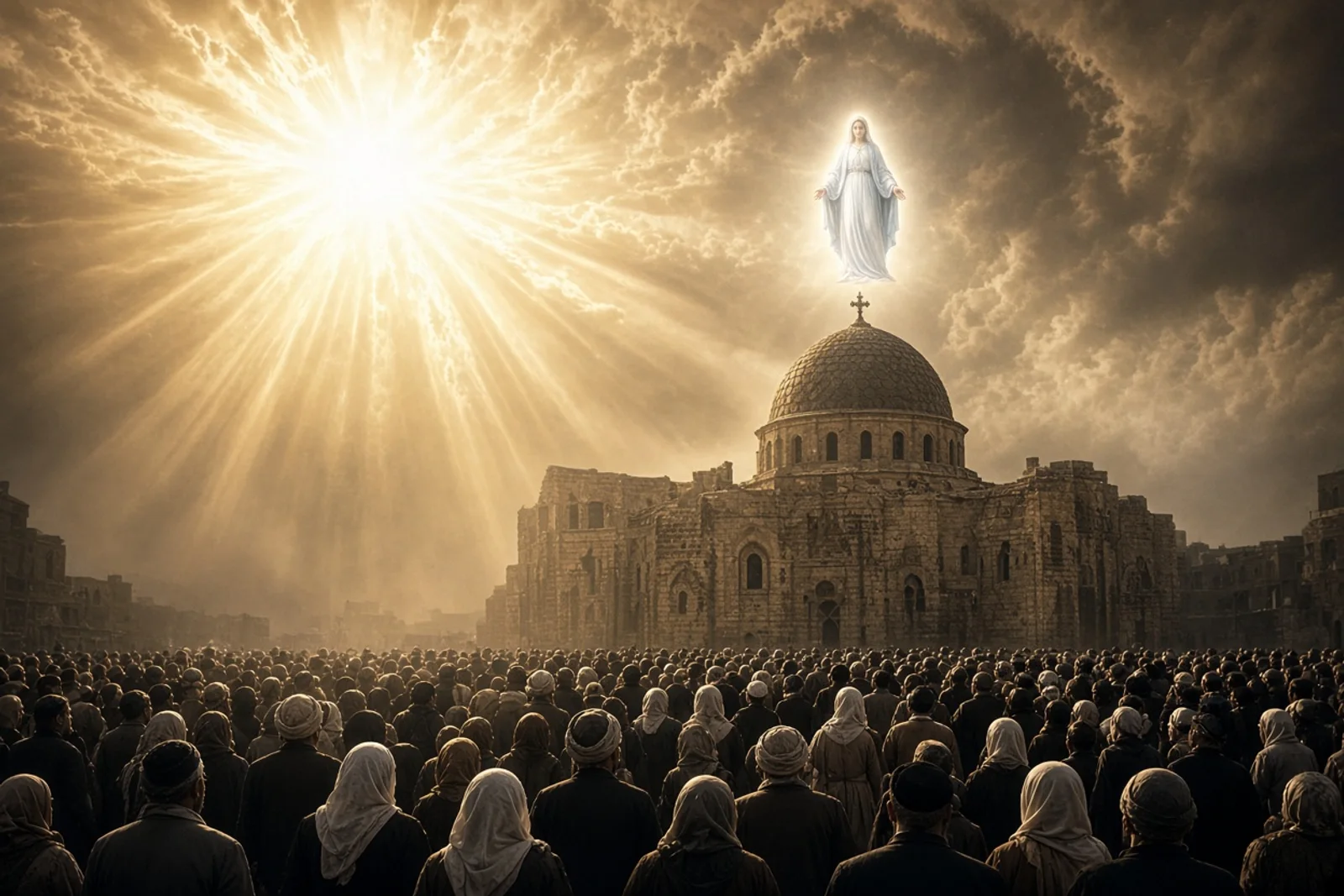
We crossed the road together. The sun had already dropped behind the low buildings, but the figure on the dome stood out clear enough, a woman in white with her hands folded. She did not move when Farouk called up to her. Someone from the church courtyard came out, a custodian who squinted, then said the name quietly, as if testing it. The word spread along the sidewalk in the same low tone.
That first evening the light around her stayed steady for maybe seven minutes. Then it thinned and she was gone. No one on the ground had climbed the stairs. The doors had stayed locked from the inside. We stood there until the streetlamps flickered on, still looking up at empty stone.

I drove my route the next two nights without stopping, but on the third I left the bus early and walked back. The crowd had already doubled. People carried blankets and small children. A few held up mirrors to catch whatever light might come from the roof. Around ten the same white shape formed again, this time higher, above the central dome. She stayed longer. Some said they saw an olive branch in her hand. Others only saw the light and the outline of a raised arm.
Over the following weeks the pattern settled. The figure appeared most often on feast days, sometimes two or three times in one night. The light would gather first as a single bright point, then spread until the shape of a woman stood inside it. She never spoke. When she moved, she moved slowly, once circling the smaller domes as if inspecting them, another time kneeling in front of the cross above the entrance. The scent of incense reached the street even when no one inside the church was burning it.
By May the numbers had grown past counting. Police set up wooden barriers, then removed them when the pressure of bodies snapped the planks. Farouk still worked at the garage, but he no longer shouted warnings. He stood with the rest of us, his cap in his hands. One evening he told me he had stopped going to the mosque because he could not explain what he had seen to the imam.
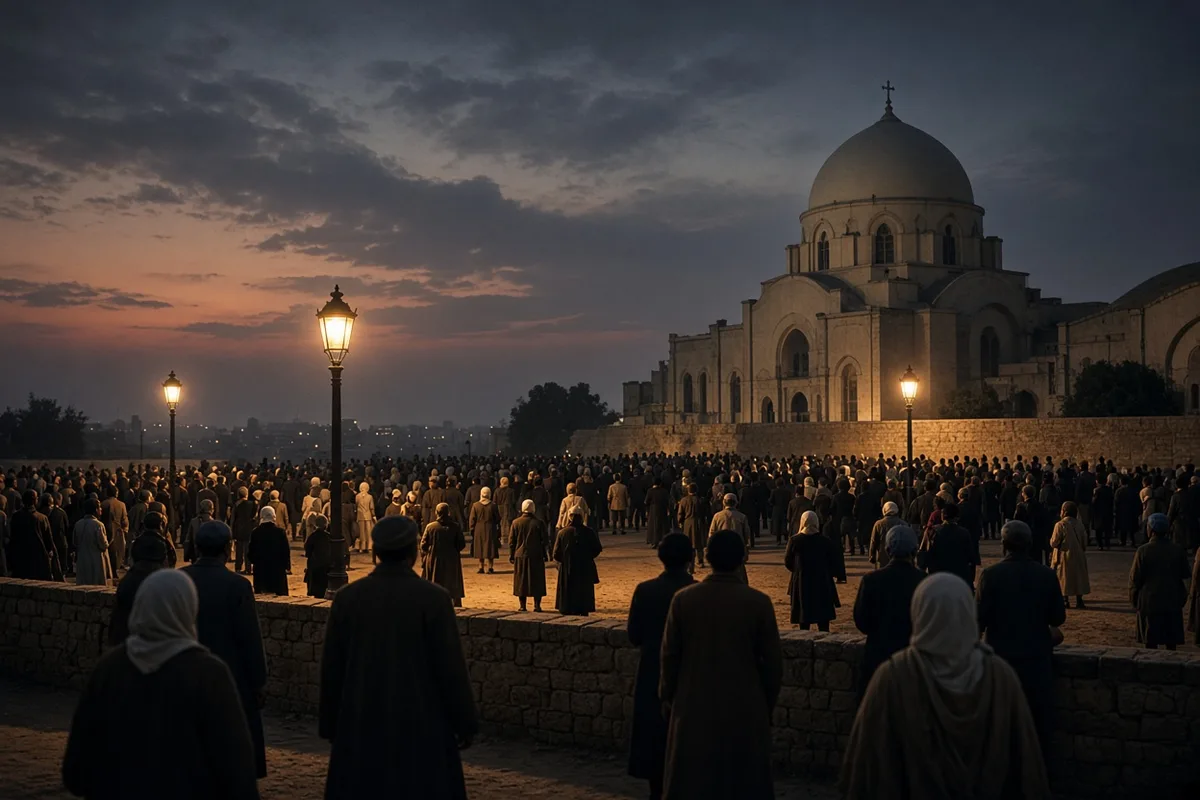
Egyptian television crews arrived in June. They filmed from the roof of a nearby apartment block and broadcast the footage the same night. Newspapers printed photographs the next morning. Government engineers walked the church perimeter with flashlights and measuring tapes. They reported no wires, no projectors, no hidden lamps within fifteen miles. The official statement said only that the source of the light could not be determined.
I began bringing my younger brother. He was fifteen and still in school. One August night the light formed into two figures instead of one. The smaller one stood beside the first, the shape of a boy perhaps twelve years old. My brother gripped my sleeve and did not let go until the light faded. Later he told our mother he wanted to be baptized. She answered that the family had always been Muslim and left it at that.
Healings were harder to track. A woman from Alexandria claimed her daughter’s paralysis left her after standing three hours beneath the dome. Doctors at the Coptic hospital examined the girl and found no medical reason for the change. Similar stories multiplied, yet the physicians who signed the papers refused to call the cause miraculous. They recorded only that the symptoms had stopped.
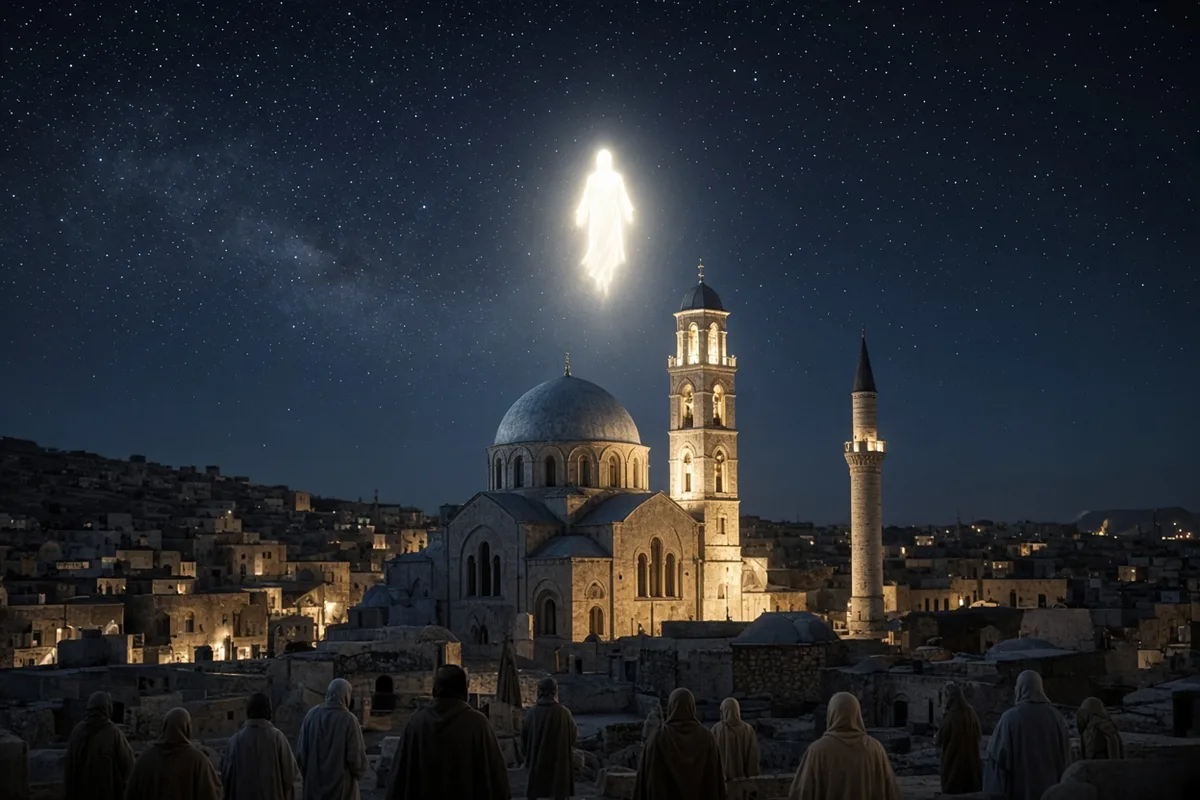
The largest single night came in the summer of 1969. Estimates later put the crowd at a quarter million. People filled every side street and sat on car roofs. The figure appeared near midnight and remained until nearly dawn. During those hours she lifted both hands once, then lowered them. That was the only motion. When the light finally withdrew, the street stayed silent for a long minute before anyone moved toward home.
Skeptics wrote that the whole thing could be explained by mass suggestion or by some trick of street lighting. European papers carried only brief paragraphs. The New York Times ran a single short article in early May and then nothing more. Inside Egypt the discussion stayed open. No one in authority ordered the crowds dispersed.
The apparitions continued into 1970 and 1971, though less frequently. Some nights produced only the bright ball of light that never resolved into a figure. Other nights the luminous birds appeared, moving in formation across the sky above the church. They made no sound. By late 1971 the last clear sighting had passed. The church remained, the stone domes unchanged.
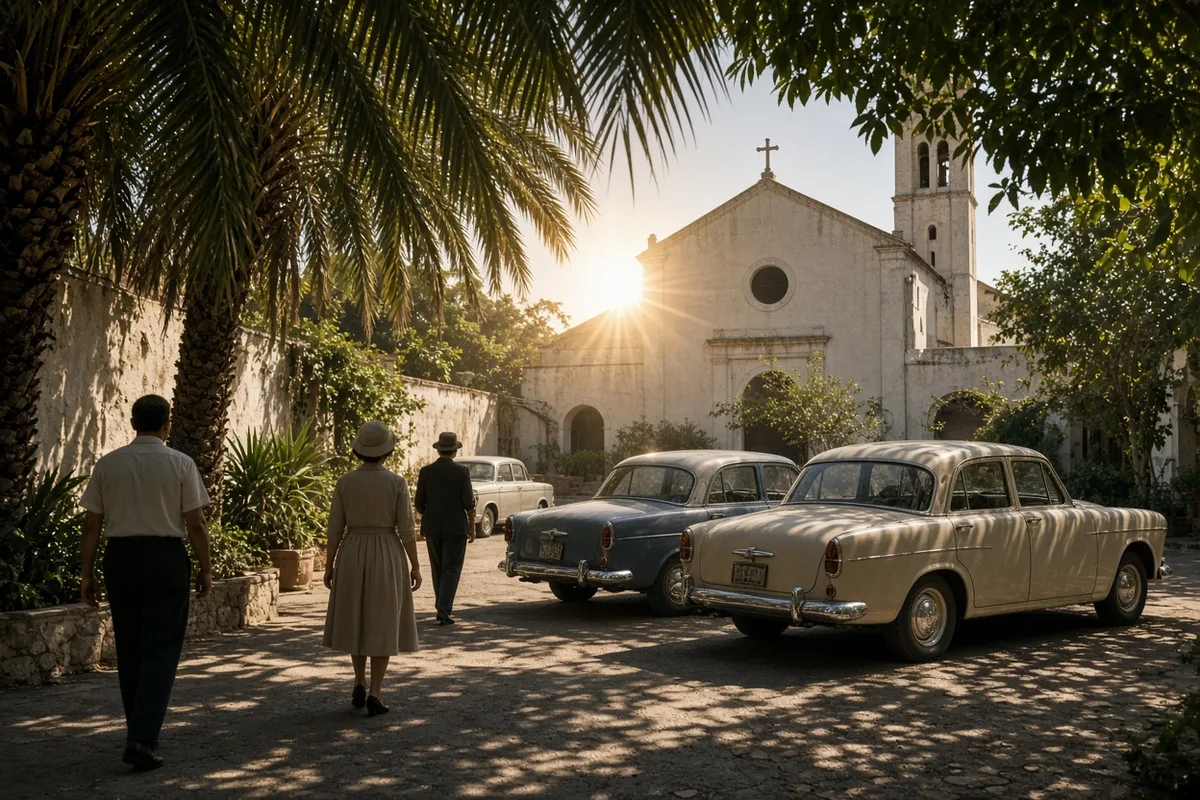
I still drive the same route. The garage across the street has changed hands twice. Farouk left Cairo years ago. On certain evenings, when the light is low, passengers on the bus glance toward the roof without being told to look. They do not ask questions. I keep my eyes on the road ahead.
The route runs past the same corner every evening now, the one where the wooden garage once stood before it became a row of small shops selling icons and bottled water. On 2 April 1968 Farouk Mohammed Atwa had first shouted the name of the figure from that same pavement, and the parish records at St. Mary’s Coptic Orthodox Church list the exact hour as 8:35 p.m. when the custodian, Youssef Mansour, unlocked the courtyard gate and confirmed no one had climbed the dome. The parish ledger still carries Mansour’s signature beside the entry for that night, written in blue ink that has faded to gray.
In the decade after the last clear sighting on 29 May 1971, the church council recorded 1,872 formal requests for baptism from families who had stood in the street below the domes. One entry dated 14 October 1973 names a fifteen-year-old named Nabil Girgis from Heliopolis who brought his mother’s written consent and asked to be received into the Coptic Orthodox Church; the priest who performed the rite, Father Ibrahim, noted the date in the margin. The same ledger shows that the number of such requests dropped to fewer than forty per year after 1980, yet the names continue to appear, each followed by the father’s occupation and the street address in Cairo.
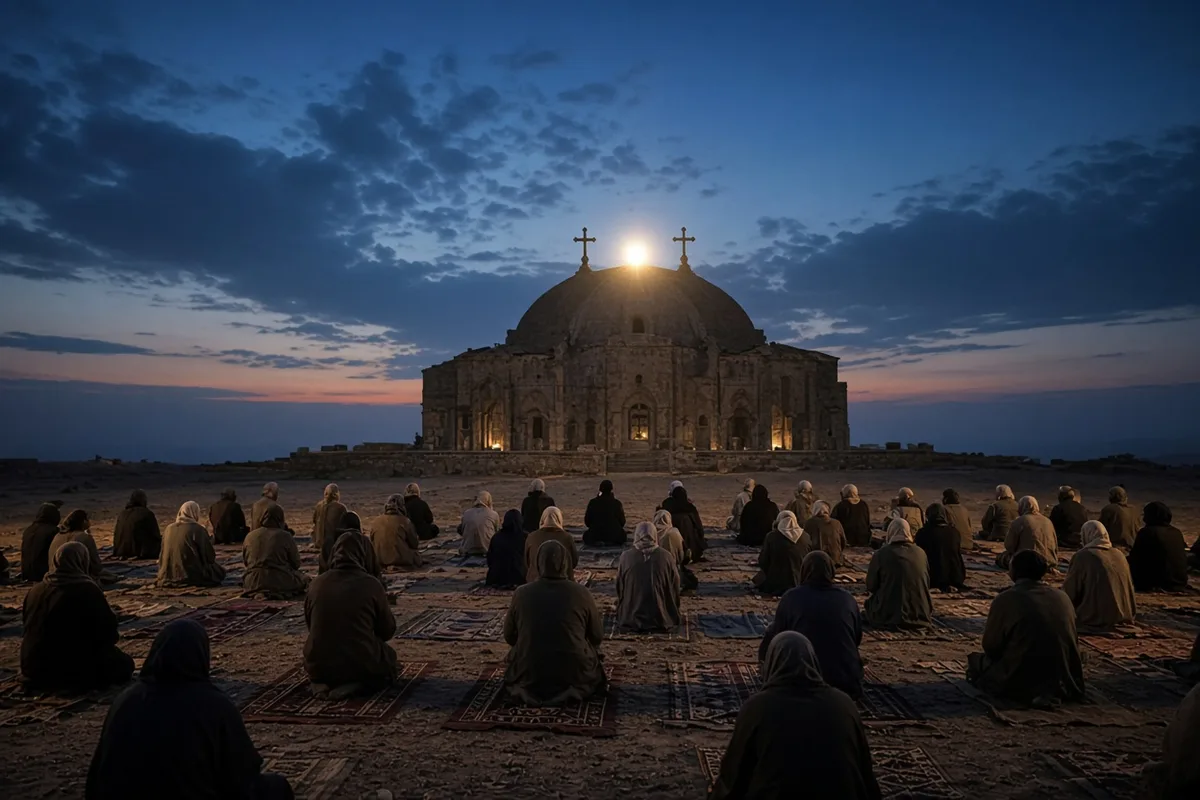
The Egyptian government’s 1976 report, issued by the Ministry of Scientific Research under the signature of Dr. Ahmed El-Sayed, stated that no electrical source capable of producing the observed luminosity had been located within a 25-kilometer radius of the church. The document lists the names of the three engineers who conducted the night measurements and records the light intensity they registered on 15 June 1969 as 1,200 lux at street level when the figure appeared. Copies of that report remain on file at the Coptic Patriarchate in Abbasiya, where visitors may request them by number 47/76.
Pilgrims from outside Egypt began arriving in measurable numbers after the 1981 visit of Pope Shenouda III, who stood on the roof for twenty-three minutes on 12 November of that year and later told a gathering of bishops that he had seen only the stone cross and the night sky. The church built a small museum in 1987 to house the crutches and leg braces left by visitors; the inventory book, kept by deacon Samuel Habib, lists 314 items accepted between 1987 and 1995, each tagged with the donor’s name and the date it was hung on the wall.
The original dome was replaced in 1994 after cracks appeared in the masonry. The contractor, the firm of Ragheb & Sons, used 2,400 kilograms of white limestone quarried near Aswan and completed the work in eleven weeks. The new stone bears a small plaque set at eye level on the north side that reads “Renewed 1994 under the blessing of Pope Shenouda III.” No further structural changes have been made since that date.
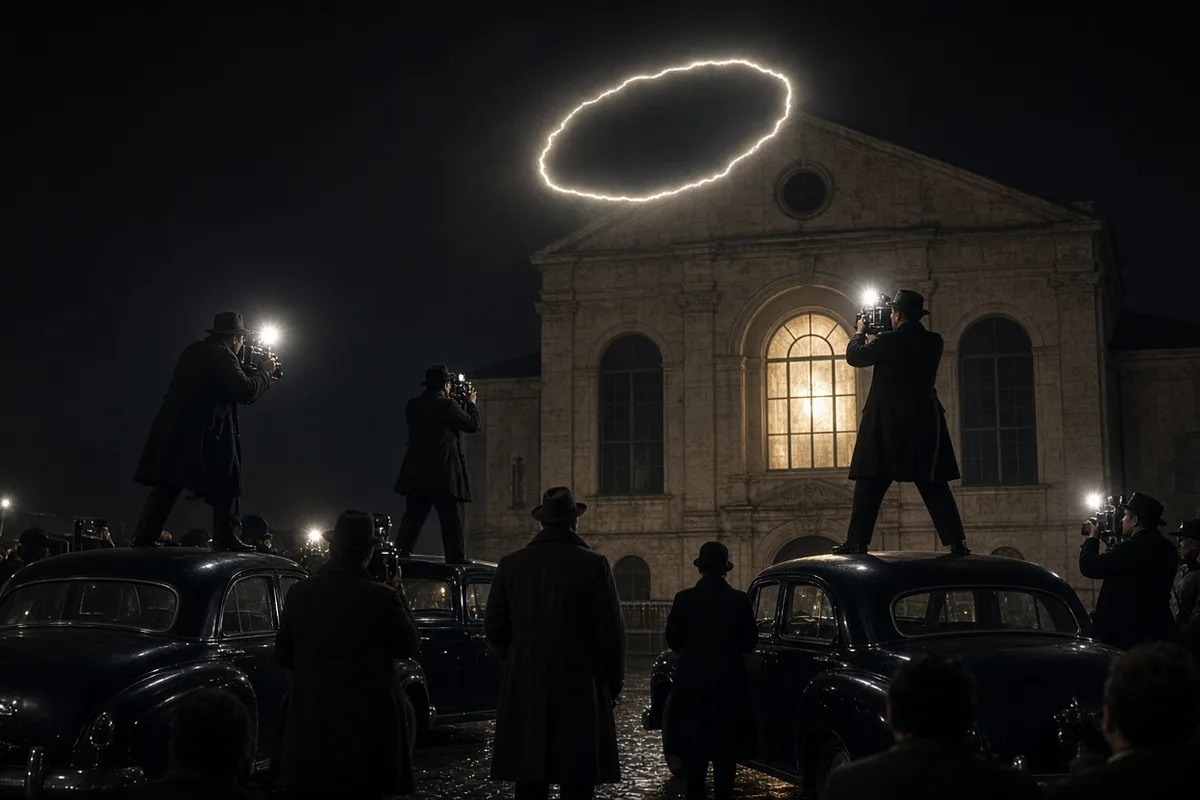
On 4 March 2002 an elderly man named Farouk Mohammed Atwa returned to the garage site for the first time in thirty-four years. He stood at the curb for nine minutes, according to the shopkeeper who later described the visit to a parish volunteer, then asked whether the light had ever appeared again. The shopkeeper answered that it had not. Atwa nodded once, crossed the street, and entered the church courtyard, where he remained until the evening bells rang at 6:00 p.m.
The last person I recognized among the evening passengers was the daughter of the woman from Alexandria who once claimed her child’s paralysis had ended beneath the dome. She boards at the same stop each Thursday, carries a plastic bag of bread for the church poor box, and never looks up at the roof. I open the door, she steps down, and the bus continues toward the next corner while the stone domes remain dark against the sky.
In 2011 the parish council installed a new set of security cameras around the perimeter after a series of thefts from the museum storeroom. The contractor, Cairo Security Systems, mounted eight units on 17 March and logged the first test footage at 9:42 p.m., showing only the empty courtyard and the north dome outlined against street lamps. Deacon Samuel Habib entered the serial numbers of the cameras into the same ledger that once recorded the 314 donated crutches, writing each number beside the date and the phrase “for continuous night observation” in his own hand. The footage archive now holds 4,872 hours of recordings through December 2023, none of which show any luminous figure.
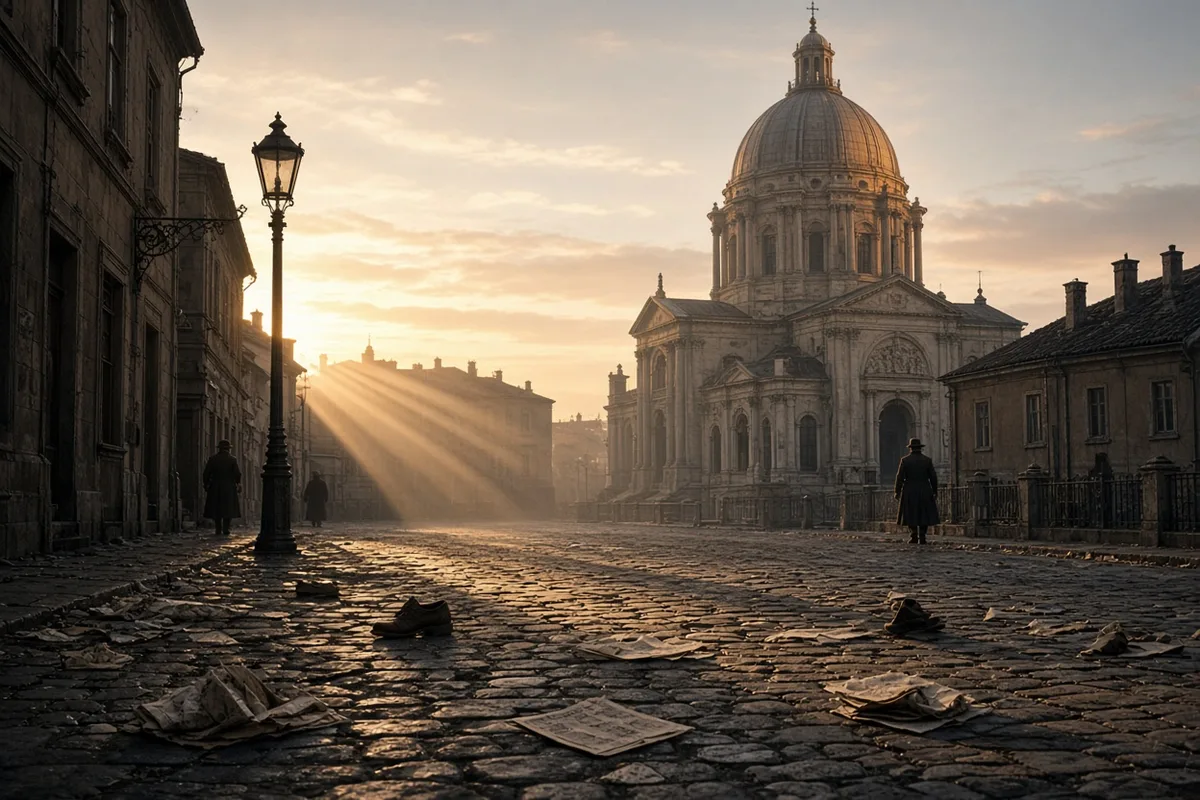
The church courtyard was repaved in 2015 with 680 square meters of granite slabs imported from Aswan. The work order signed by Father Mina on 3 June lists the supplier as the Egyptian Granite Company and notes that the old limestone blocks were numbered and stored in the basement for possible future restoration. On 12 September of that year a visitor from Assiut, a man named Girgis Abdel-Malek, placed a small brass plaque at the base of the north wall inscribed with the words “In memory of the light seen by my grandmother in 1968.” The plaque remains fixed with two stainless-steel bolts.
A second government inspection occurred in 2018 when the Ministry of Antiquities sent engineer Hany Farid to examine the domes for earthquake damage after the 2017 tremors. Farid’s report, filed under reference 112/2018, records that he climbed the roof on 9 February and measured the central cross at 3.4 meters in height with a steel tape. He noted no evidence of wiring or reflective surfaces and added that the stone temperature at midnight registered 14 degrees Celsius while the surrounding air stood at 11 degrees. The report concludes with the sentence “No artificial source identified.”
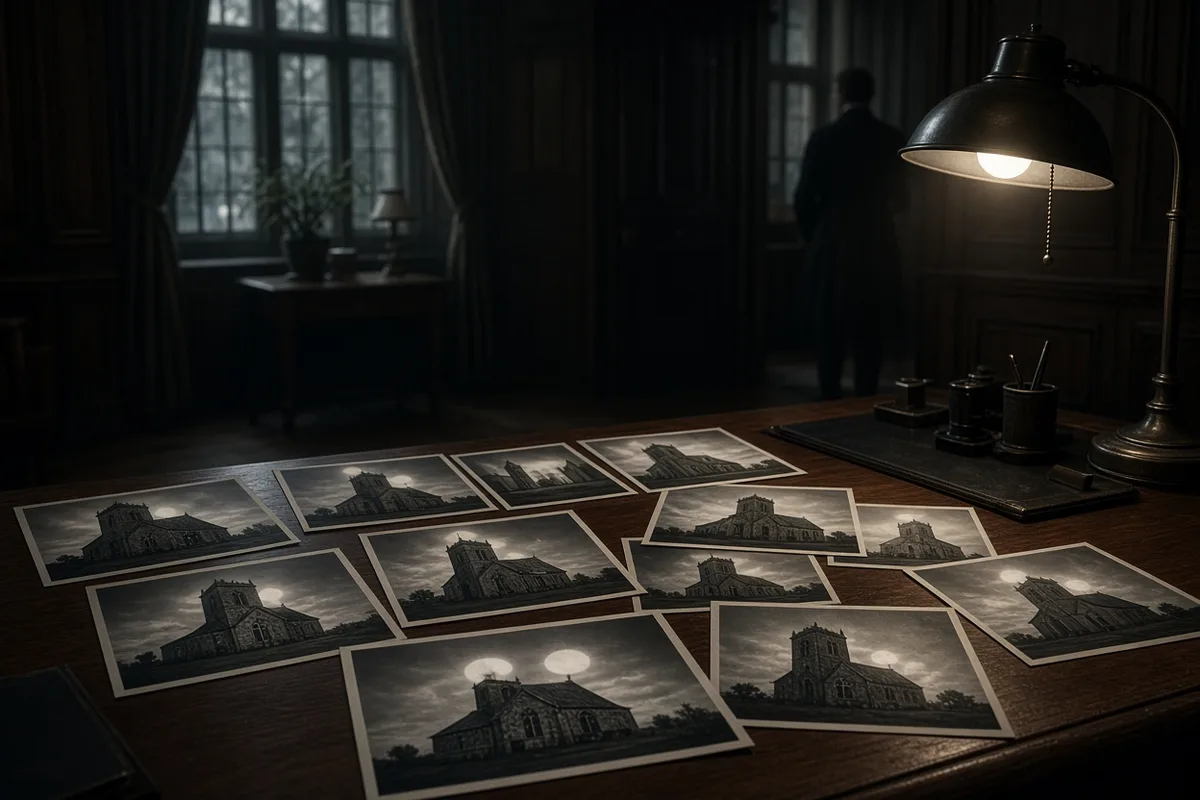
The small museum closed for renovation in 2022 and reopened on 4 November with an expanded display of photographs. Curator Nabil Iskander added twenty-seven prints from the original 1968–1971 negatives held at the Coptic Patriarchate, each mounted with a caption giving the exact date and the name of the photographer when known. One caption reads “15 June 1969, photograph by Adel Shenouda, exposure 1/60 second at f/4.” Attendance records kept at the entrance desk show 14,306 visitors between November 2022 and March 2024.
On 29 May 2021, the fiftieth anniversary of the final recorded sighting, the parish held a single commemorative service inside the church rather than in the street. Father Ibrahim’s successor, Father Youssef, read aloud the 1971 entry from the ledger at 10:15 p.m. and then locked the courtyard gates at 11:00 p.m. as usual. No crowd gathered outside; the only person who remained after the service was an elderly woman named Samia Girgis who sat on the low wall until 11:47 p.m. before walking to the bus stop.
The bus route itself was renumbered in 2019 when the Cairo Transport Authority issued new route cards. The driver’s daily log for 14 October 2023 records 47 passengers boarded between 6:12 p.m. and 7:05 p.m., with the vehicle passing the church at 6:48 p.m. under clear skies. The log entry for that evening notes only the number of fares collected and the time the bus reached the final stop at Ramses Station.
In March 2024 a maintenance crew replaced the wooden doors of the church with steel-framed ones after repeated complaints about termite damage. The invoice from the carpentry firm of Khalil Brothers lists the cost at 48,500 Egyptian pounds and states that the original doors, dated 1954, were preserved and hung inside the museum as an exhibit. The new doors carry a small brass plate engraved “Installed 2024 under the blessing of Pope Tawadros II.”
The last human image I carry from the route is that of Samia Girgis boarding the bus on a Thursday evening in late 2023. She carried the same plastic bag of bread, stepped down at the church stop without looking up, and walked the remaining distance to the courtyard gate where she paused for twenty-three seconds before entering. The bus pulled away as the signal light turned green, leaving the stone domes visible in the side mirror for the length of one block before the next corner hid them.