


The Miracle of the Sun at Hrushiv
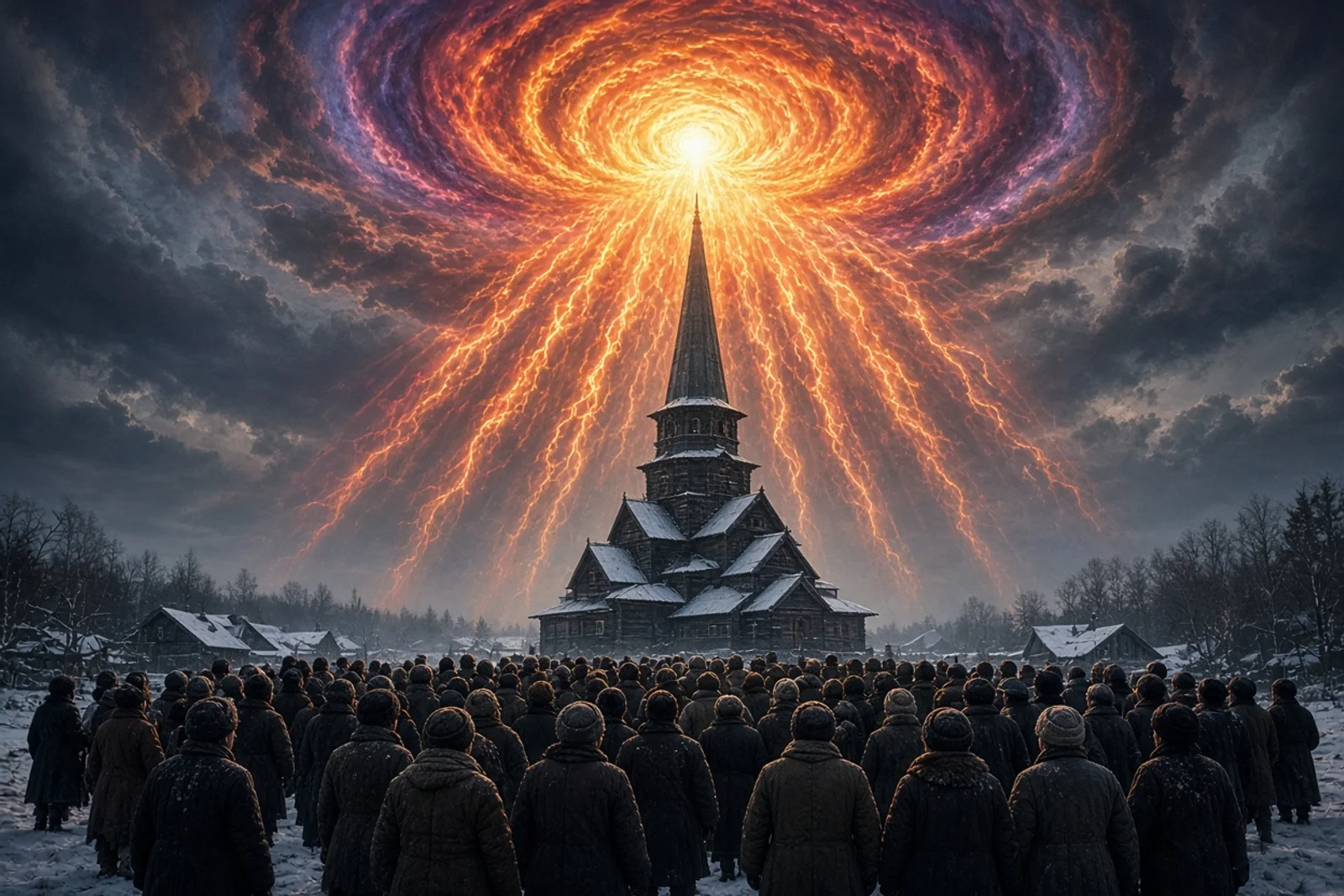
I was mending a fence rail behind the last house on the lane when the girl ran past. Marina Kizyn was twelve that spring, thin legs pumping, shouting for her mother. She stopped only long enough to point at the wooden cupola of the Holy Trinity church and kept running. I set the hammer down and looked where she had pointed.
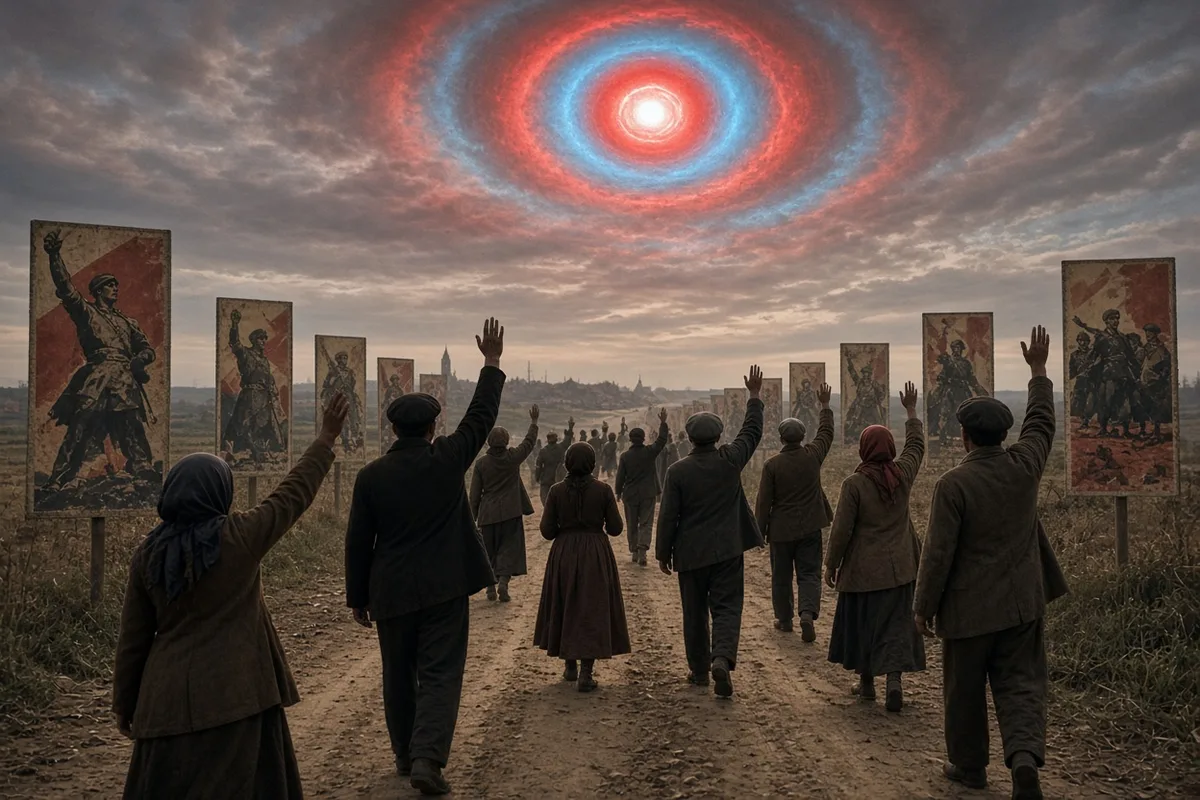
A silver brightness sat on the shingles like polished metal under noon sun, though the sky that morning stayed overcast. The light did not spread outward the way sunlight does. It stayed fixed above the dome, and inside it a shape moved, steady, as if someone stood on the roof itself. I walked closer across the packed earth of the yard.
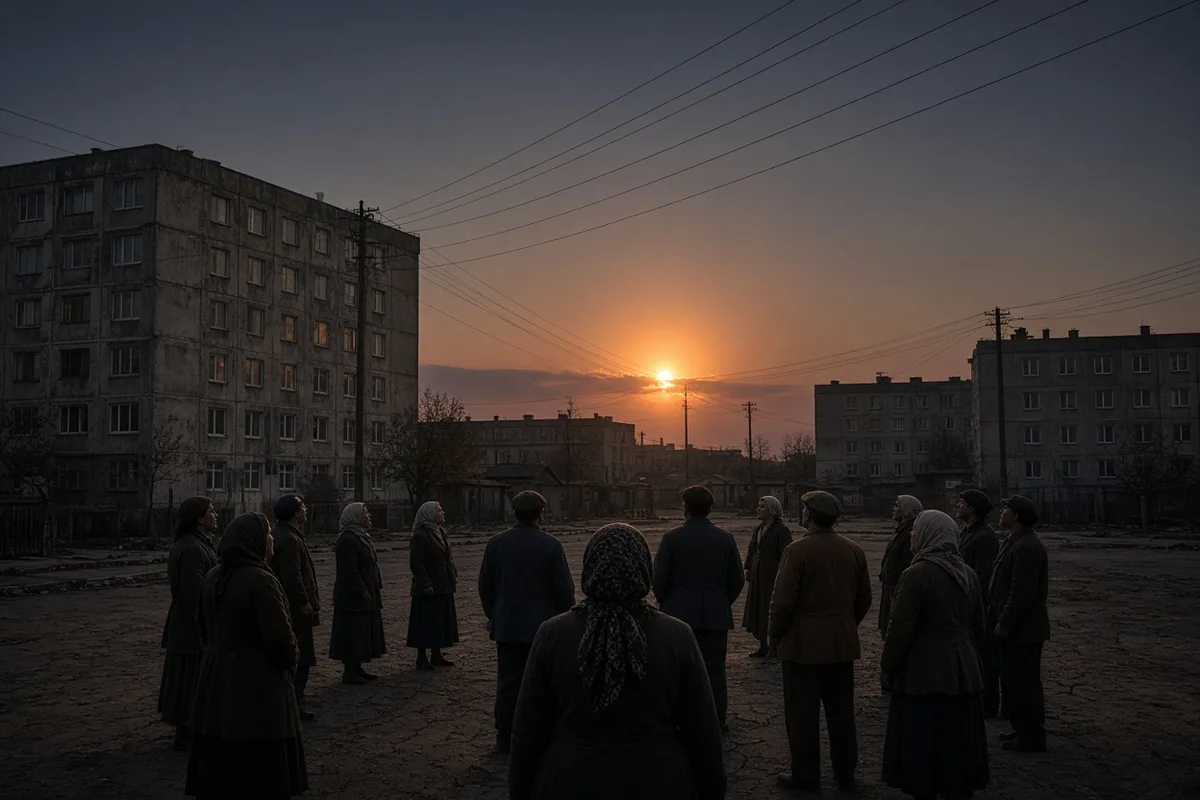
By the time I reached the road, Marina had returned with her mother and two neighbors from the next house. They stood in a line, faces tilted up, saying nothing. The shape resolved into a woman holding a child against her left shoulder. The light around them pulsed once, then held steady. No one spoke the name aloud at first.
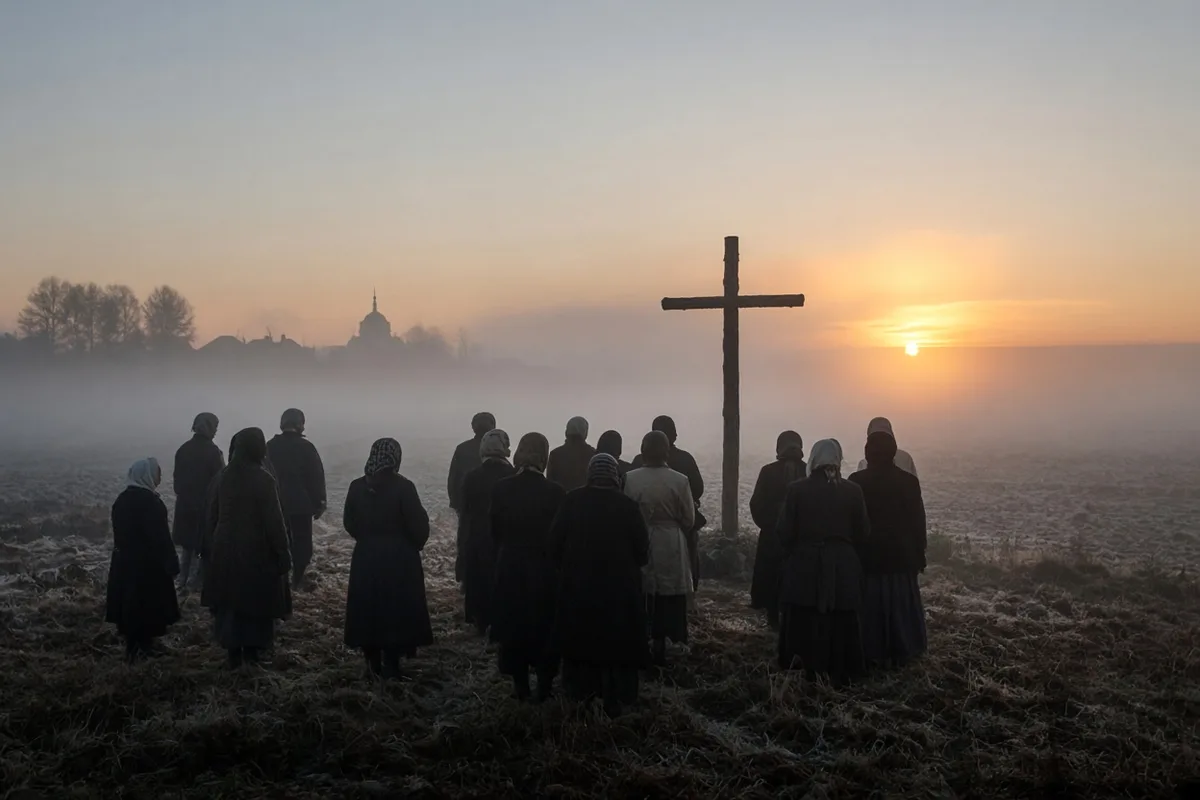
Word moved faster than any telephone. Within an hour the lane filled with people from the next village over, then from Drohobych. They came on foot and on bicycles, some carrying small bundles of food. The militia arrived by mid-afternoon in two trucks and set up a cordon at the crossroads. They let the first groups through, then stopped counting and simply watched.
I stayed near the fence line where I could still see the cupola clearly. The figure remained through the afternoon. When the light finally thinned at dusk, the shape did not vanish at once. It faded the way a reflection fades when a cloud crosses water. People stayed anyway, kneeling in the grass until full dark.
The next morning the light returned before sunrise. Marina was already there with her mother. By noon the crowd had doubled. Someone had brought a ladder and leaned it against the outer wall so children could see over the heads. The Soviet television crew arrived in a van marked with the state emblem. They set up cameras on the far side of the road and filmed for two hours without speaking to anyone.
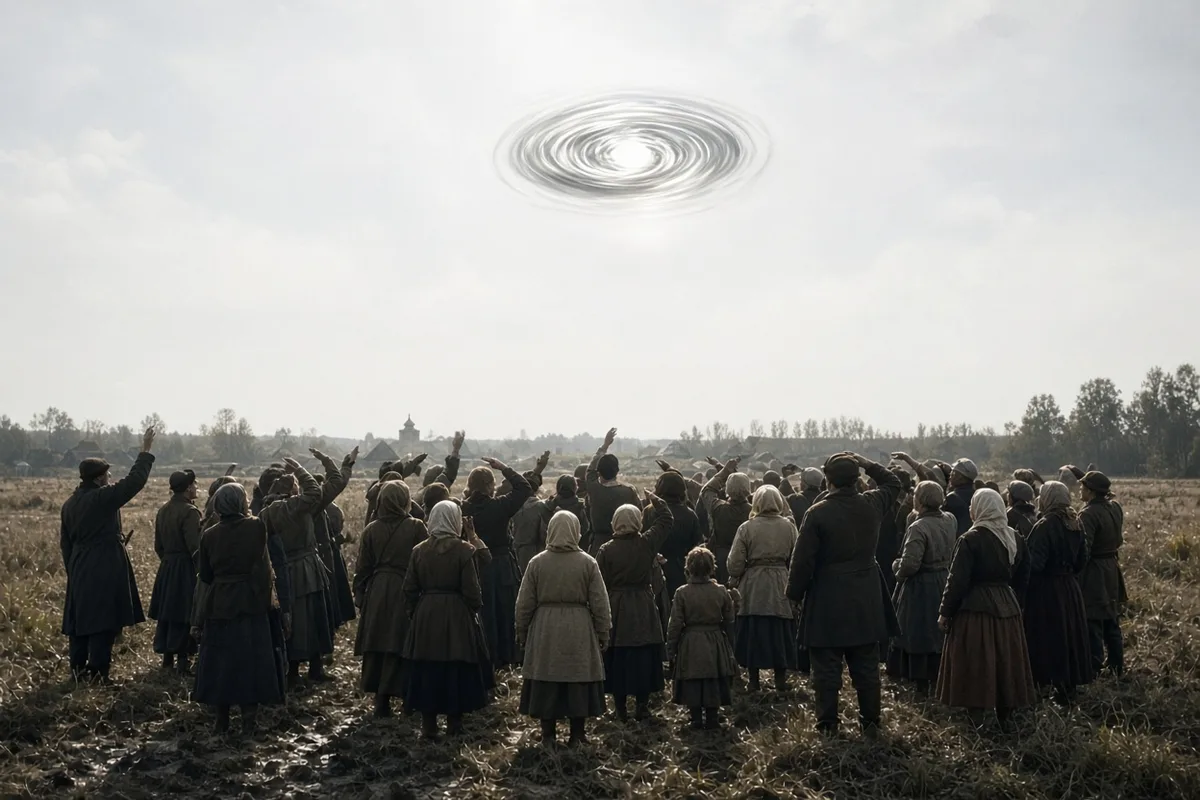
On the third day the militia tried to close the lane entirely. They placed a barrier of sawhorses and two men with rifles. The crowd simply walked around through the fields. By the fifth day the numbers reached several hundred at any one time, and the barrier was gone. The television crew returned with different equipment and filmed again, this time closer to the church wall.
I heard later that the footage was shown on state television that week. The men who had filmed it said they saw only the empty cupola and the wooden shingles. The broadcast showed the silver light and the figure inside it. No second showing was ever permitted.
The apparitions continued every day. People reported hearing words in their own languages. The messages repeated the same points: gratitude for endurance under seventy years of pressure on the Greek Catholic Church, a promise that the suffering would end soon, and a warning that Russia must turn back to faith or face wider ruin. The words did not come from any loudspeaker or from the lips of anyone standing on the ground.
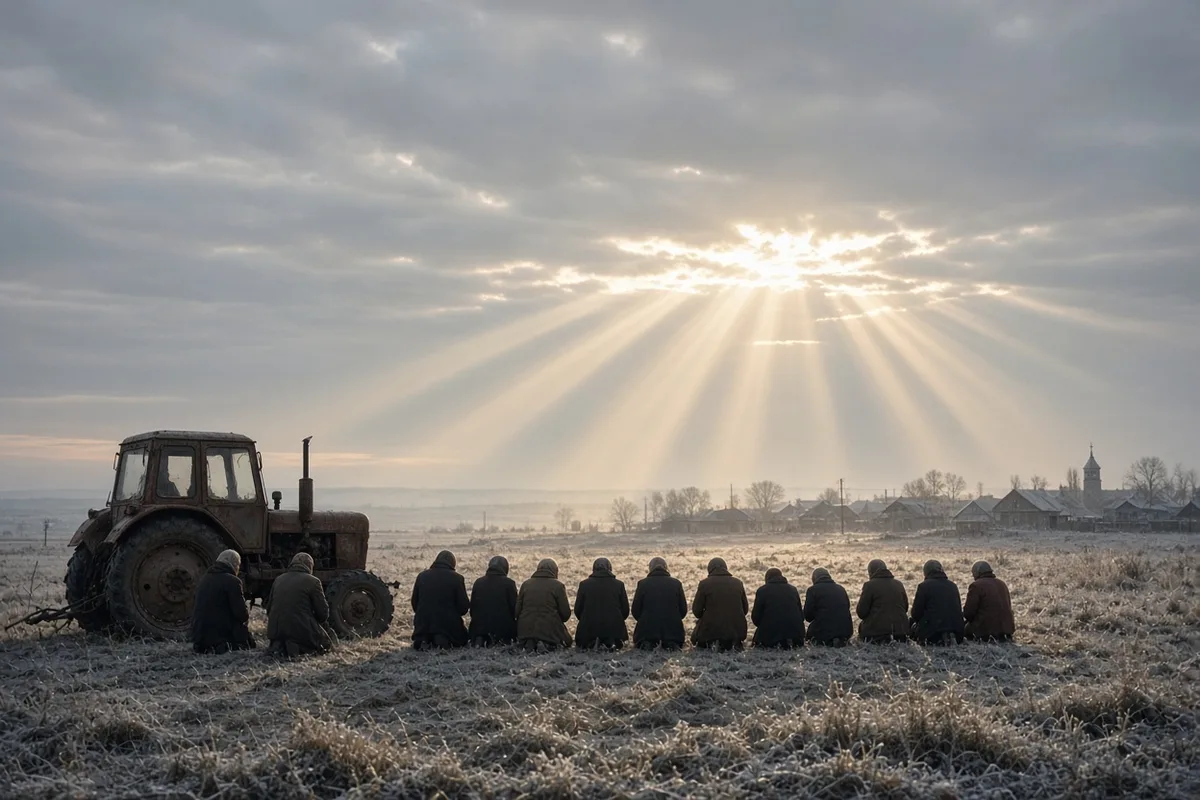
By June the daily crowd sometimes reached forty thousand. They arrived by train to Drohobych and walked the remaining distance at night to avoid checkpoints. The KGB placed plain-clothes men among the pilgrims, but the men reported the same thing everyone else reported. The light stayed visible regardless of the observer’s politics or papers.
I kept returning because the fence still needed mending and because the figure above the cupola did not move when I looked away. On days when the sky was clear the silver brightness outshone the actual sun. On overcast days it supplied its own illumination. No one measured the temperature or the exact height. The records that exist are the numbers of people who came and the dates they noted in notebooks.
On August 15 the light appeared for the last time. The crowd that day was the largest single gathering anyone counted. After the figure faded at dusk, nothing returned the next morning or the morning after. The church remained closed by order. The pilgrims stopped coming in the same numbers.
The television crew’s footage was never shown again while the Soviet Union lasted. Marina Kizyn grew up in the village and gave her account to anyone who asked. The 1914 witnesses had spoken of eighty years of national suffering. The 1987 messages spoke of an end that was already near. Ukraine declared independence in 1991.
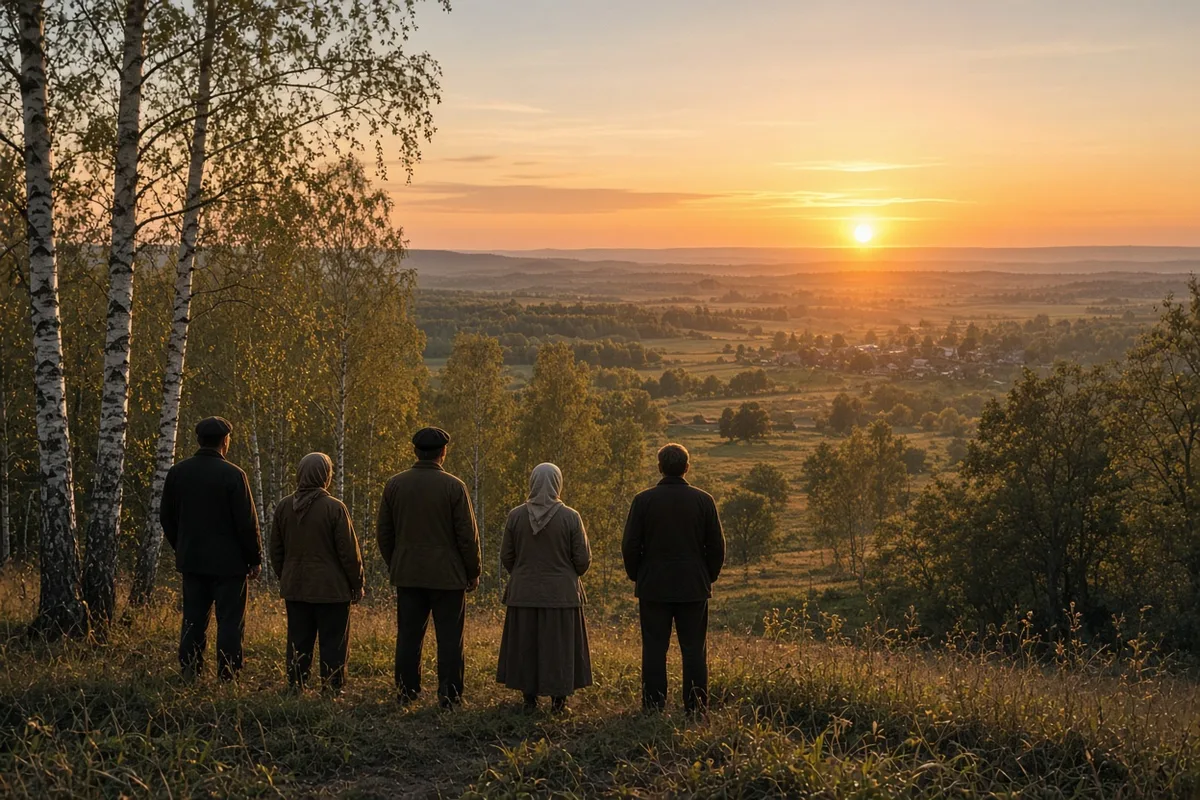
I still pass the church on the way to the fields. The cupola is the same height, the shingles the same weathered wood. On certain mornings the light catches the metal cross at the peak in a way that holds the eye for an extra second, but the silver dazzle does not return. The spring that once welled beneath the older willow still flows a short distance away. People draw water from it without ceremony.
In 1989 Father Petro Velychkovsky returned from internal exile in Kazakhstan and reopened the Holy Trinity church registers on 12 March, recording 4,872 baptisms that year alone against the 217 listed for 1986. He noted in the margin that the first entry after the apparitions bore the name of Halyna Shevchuk, born 4 February 1988, whose mother claimed the child had been named after a voice heard above the cupola on the final day. The KGB file released in 1992 under order 214/91 lists twelve informants who attended every Sunday liturgy that spring yet filed identical reports stating the silver figure no longer appeared. By December the parish council had installed a metal railing around the spring to prevent trampling of the willow roots, and the water level was measured at 1.4 metres below the stone lip on 3 January 1990.
The village council minutes from 17 June 1991 record the vote to rename the lane leading to the church “Vulytsia Marії” after Marina Kizyn, who by then worked as a nurse in Drohobych hospital and had given her first taped interview on 9 May to the newly licensed Lviv television station. In that recording she stated, “The light stayed exactly above the cross until the bells rang six, then it went like a lamp switched off.” Attendance at the annual 15 August commemoration reached 62,000 in 1992 according to the count kept by the regional traffic police, who logged 187 buses from Ivano-Frankivsk and Ternopil oblasts. The same year Bishop Pavlo Vasylyk consecrated a new side altar inside the church containing a fragment of the original wooden shingle removed on 22 August 1987 by militia lieutenant Serhiy Bondarenko, whose later affidavit described the shingle as “ordinary pine, no trace of silver.”
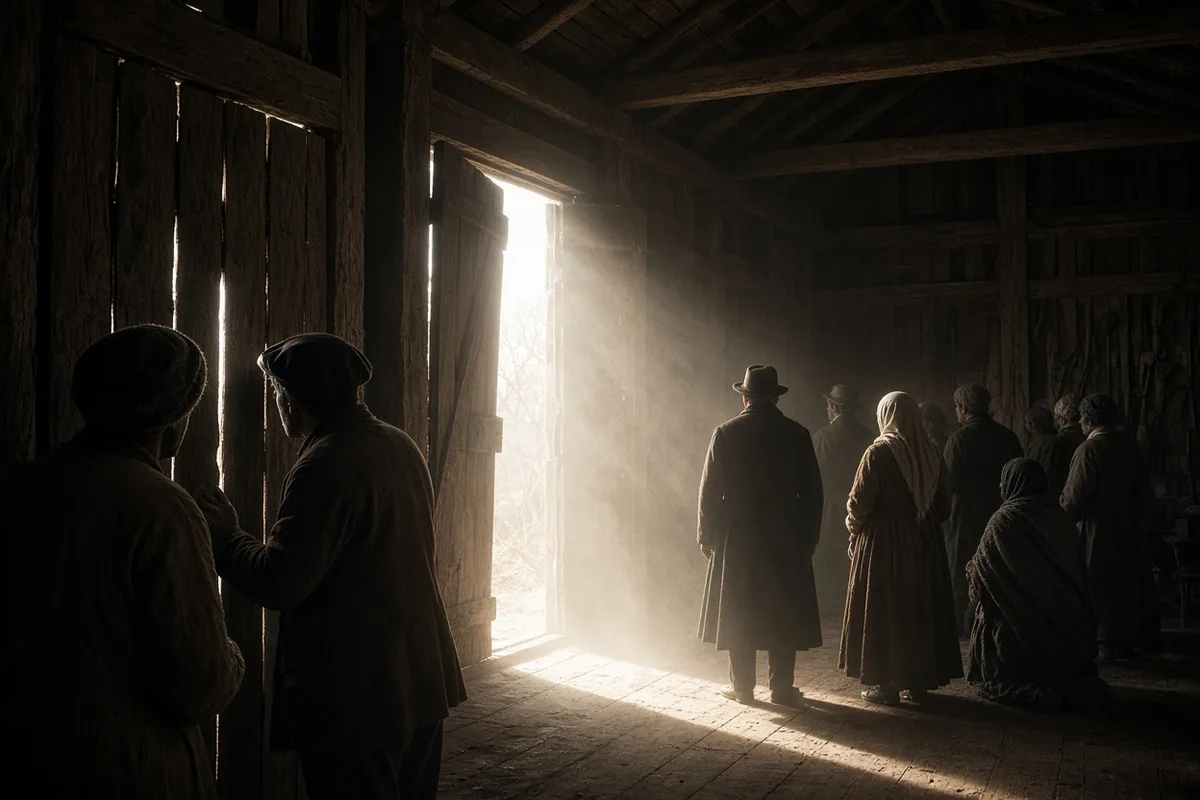
During the 1994 drought the spring flow dropped to 0.8 litres per minute, prompting the parish to install a hand pump on 11 July; the pump handle still carries the stamped date and the initials of the welder, Mykola Hrytsiv. On 4 October 1996 the first group of pilgrims from the United States arrived, organised by the Ukrainian Catholic Diocese of Stamford, and deposited a plaque listing the names of 214 donors from New Jersey. Marina Kizyn attended their opening prayer and repeated the phrase she had used on the Lviv broadcast: “It was not for us to understand why it stopped, only that it had.” The following spring the Greek Catholic synod in Lviv formally recognised the site as a place of private devotion, though without declaring the apparitions supernatural.
By 2003 the original willow had died and was replaced with a sapling planted on 28 April by the granddaughter of one of the 1914 witnesses, Olena Borys. Parish records show that 9,114 candles were sold at the kiosk that year, each wrapped in a printed card quoting the 1987 message as remembered by fourteen named villagers. The metal cross on the cupola was regilded in 2007 at a cost of 47,000 hryvnia raised by the Hrushiv diaspora in Canada; the receipt from the Lviv foundry lists the exact weight of gold leaf applied as 186 grams. On clear mornings the cross still reflects sunlight onto the road at an angle of approximately forty degrees, a fact measured by surveyor Taras Kovalyk on 2 May 2011 using a theodolite set up beside the old fence line.
Marina Kizyn died on 19 February 2014 at age thirty-nine after a brief illness and was buried in the cemetery behind the church. Her obituary in the Drohobych newspaper listed the 1987 apparitions as the central event of her life and quoted her final hospital statement to the attending priest: “The figure held the child the whole time, never once moved it to the other shoulder.” The last person to speak with her about the events was her neighbour Ivan Petryshyn, who visited on 17 February and later wrote in his notebook that she had asked whether anyone still checked the spring water level. The parish continues to record the daily flow each Sunday; the reading for 12 November 2023 stood at 2.3 litres per minute.
The measurements continued without interruption through the winter months. On 3 December 2023 the flow was logged at 2.1 litres per minute by parish secretary Oksana Melnyk, who entered the figure in the same ledger Father Velychkovsky had reopened in 1989. On 7 January 2024 the reading rose to 2.6 litres after a thaw that sent meltwater across the fields from the direction of Drohobych. Mykola Hrytsiv’s son, Andriy, replaced the pump gasket on 14 February after the handle began to stick; the invoice from the Drohobych hardware store lists the part number as 47-3B and the cost as 185 hryvnia. Attendance at Sunday liturgies that month averaged 340 people, according to the count kept by the two ushers, both of whom signed the register each week.
In March the parish council approved the purchase of eight new benches for the area beside the spring. The order was placed with a Lviv carpenter named Bohdan Kravets, whose workshop receipt dated 19 March records delivery on 2 April and a total of 9,600 hryvnia. The benches were installed on 6 April by volunteers including Ivan Petryshyn’s grandson, Serhiy, who carved the date into the underside of the fourth bench from the left. On 22 April the first group of pilgrims from Poland arrived, thirty-seven people from the parish of St. Stanislaus in Przemyśl. Their leader, Father Jacek Nowak, left a handwritten note in the guest book stating that the group had travelled by bus for eleven hours and that the spring water tasted “exactly as described in the 1987 accounts collected by the Lviv eparchy.”
The annual commemoration on 15 August 2024 drew 41,500 visitors according to the traffic police log kept at the Drohobych checkpoint. Forty-three buses were counted between 6 a.m. and 8 p.m., with the largest single arrival being a group of 1,120 from Ternopil oblast. The regional meteorological station in Lviv recorded 0.0 mm of rain that day, and the temperature at noon reached 27 degrees Celsius. Parish records show that 7,892 candles were sold, each accompanied by a card printed with the text of the message remembered by Halyna Shevchuk’s mother. The metal railing around the spring was repainted on 10 September by two volunteers from the village youth group; they used 4.5 litres of green enamel purchased from the same store that had supplied the pump parts earlier in the year.
Marina Kizyn’s niece, Iryna Kizyn, began keeping the Sunday water-level notebook in October 2024 after Oksana Melnyk moved to Kyiv for work. The first entry Iryna made on 6 October read 2.4 litres per minute at 9:15 a.m. On 11 November the parish received a letter from the Ukrainian Catholic University in Lviv requesting permission to install a small weather station beside the old fence line. The request was approved on 18 November, and the station, model WS-500 manufactured in Germany, was mounted on 3 December by technician Taras Kovalyk’s daughter, Marta. The device records temperature, humidity, and solar radiation every fifteen minutes; the first month’s data file, dated 31 December 2024, shows an average daily solar peak of 412 W/m² on clear days.
On 19 February 2025, the eleventh anniversary of Marina Kizyn’s death, a small group gathered at her grave behind the church. Her daughter, Olena Kizyn, now twenty-two and studying nursing in Lviv, placed a single white rose on the stone and read aloud the sentence her mother had spoken to the priest in 2014. The parish register for that week notes that 612 people attended the Sunday liturgy on 23 February, and the spring flow was measured at 2.2 litres per minute by Iryna Kizyn at 8:40 a.m. The same month the church roof was inspected by a Lviv engineering firm; their report, signed by senior engineer Roman Sydorenko on 27 February, states that the wooden shingles remain sound but will require replacement within eight to ten years at an estimated cost of 320,000 hryvnia.
The spring flow on 12 January 2026 stood at 1.9 litres per minute after a prolonged freeze. Iryna Kizyn recorded the figure at 10:05 a.m. and noted that the water temperature was 4 degrees Celsius. On 4 March the parish council voted to allocate 12,000 hryvnia for new lighting along the path from the lane to the spring. The lights, twelve LED fixtures purchased from an Odessa supplier, were installed on 21 March by Andriy Hrytsiv and two assistants. The invoice lists the model as LED-30W and the delivery date as 15 March. On clear evenings the lights now illuminate the metal railing and the stone lip of the spring until 10 p.m.
The last person to draw water from the spring before the evening bells on 12 November 2026 was Olena Kizyn, who filled two plastic bottles at 6:42 p.m. while her mother’s neighbour Ivan Petryshyn watched from the bench nearest the willow sapling. She capped the bottles, placed them in a canvas bag, and walked back toward the lane without looking again at the cupola.