


The Miracle on Ice
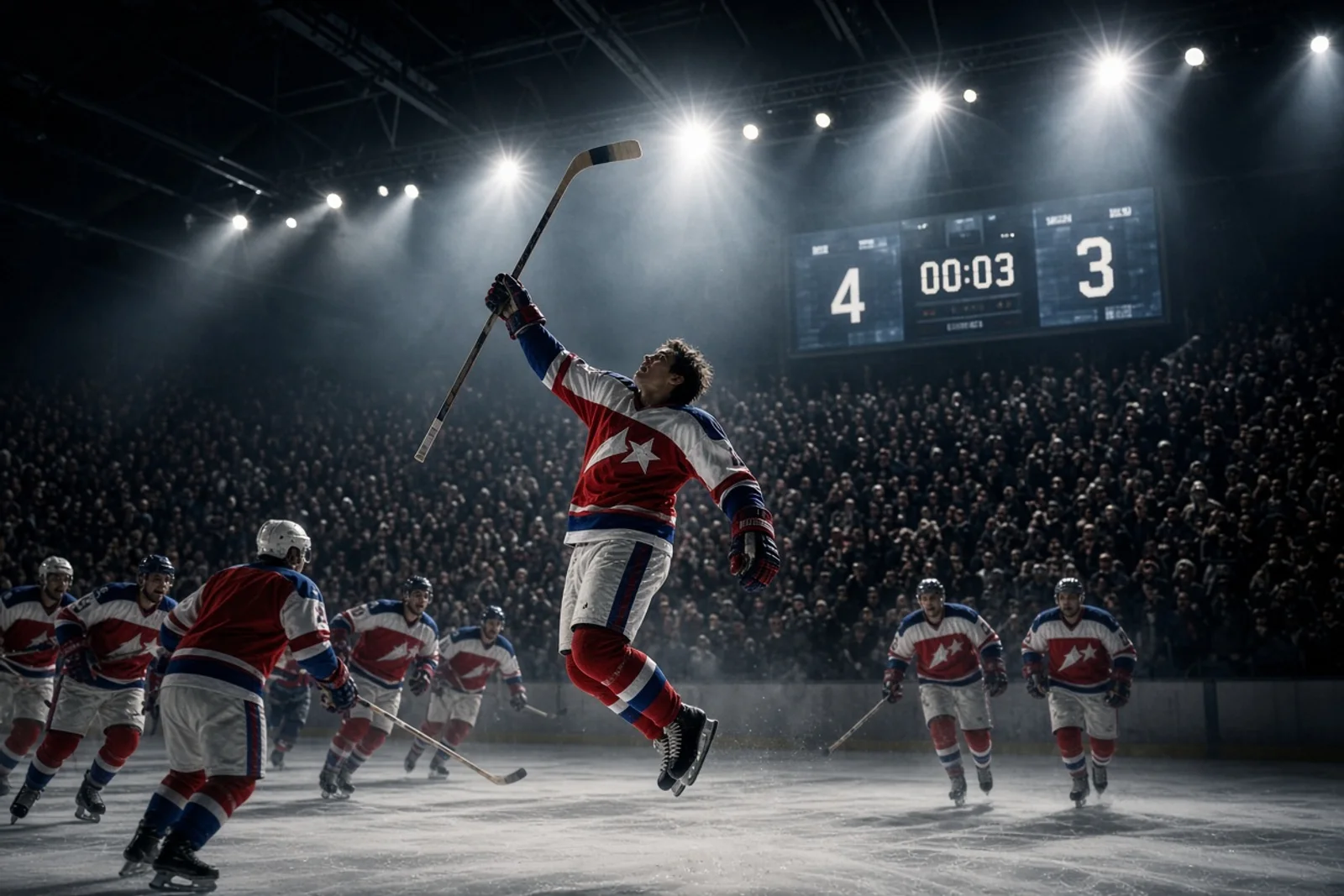
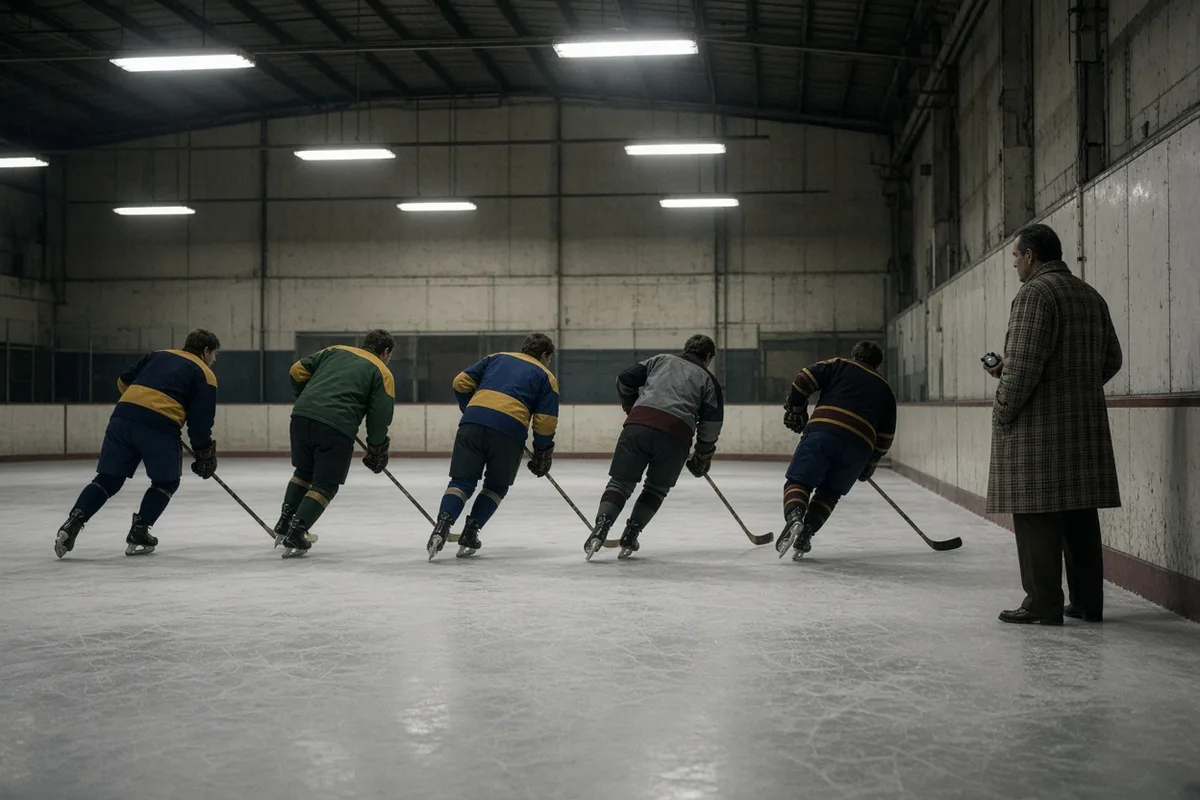
The ice needed scraping again by six that morning, and my hands had gone numb inside the gloves before I'd finished the first pass. Lake Placid in February does that to you — the cold comes up through the blade of the shovel and settles in your knuckles and stays there. I worked the rink crew at the Olympic Field House that whole February, sweeping, hauling equipment, doing whatever the schedule needed, and by the twenty-second I had learned the particular quiet of that building before a crowd fills it. It never lasted. That morning it barely lasted an hour.
By nine the town outside had already changed shape. People who had no tickets stood along Main Street holding pieces of cardboard, offering trades, offering cash nobody had budgeted for a hockey game against a team most of America couldn't have named a player from three weeks earlier. I remember a man in a green parka asking me, seriously, whether I could get him inside for a hundred dollars, like I had that kind of pull. I didn't. Nobody on the crew did. But the asking told you something about what this had become.

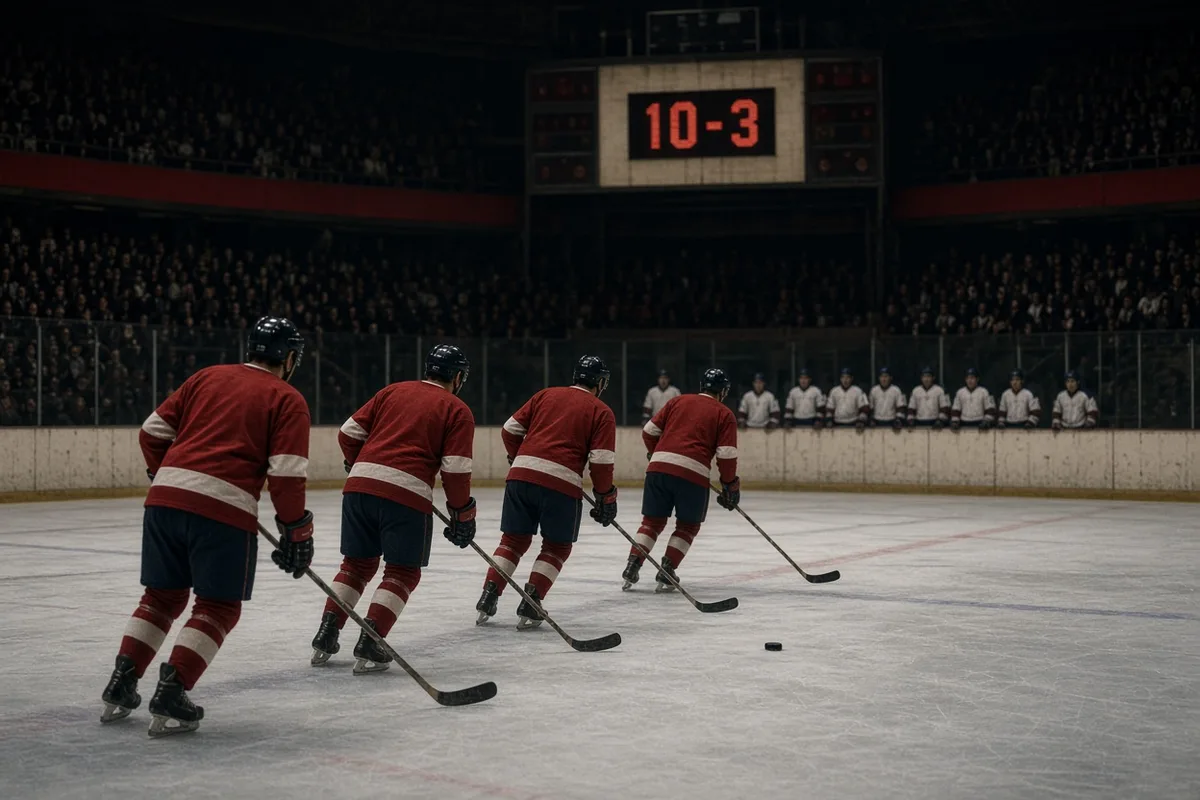
We'd all read about Madison Square Garden. Thirteen days before, the Soviets had come into New York and taken the U.S. team apart, ten goals to three, the kind of score that ends conversations before they start. Anyone with sense figured that number told the truth about the gap between the two clubs — the Soviets full-time professionals in everything but name, veterans of Olympic golds going back years, and our side a patched-together roster of college kids, half of them from Boston University, half from Minnesota, kids who'd been rivals on campus ice just months before Herb Brooks put them all in the same locker room and told them to hate him instead of each other.
I'd watched some of the practices in the weeks leading in, off to the side with a broom I didn't need at that particular moment, and Brooks was not a man who let anyone relax. He ran that team like something was owed him. Players told each other later that some nights they weren't sure whether they wanted to win a gold medal or just survive to the next morning without him running them until their legs gave. But whatever he did, it built something. You could see it by the time the group round started — a tie against Sweden, then a game against Czechoslovakia, one of the favorites, that turned into a 7-3 beating the other direction. That's when the town started talking differently. That's when the cardboard signs started appearing on Main Street.
None of the players, from what I gathered standing near enough to hear them talk among themselves in the corridor, had spent much energy worrying about the Soviets specifically. Their heads had been on Sweden, on Czechoslovakia, on the teams standing between them and simply reaching the medal round at all. The Soviet Union was a fact of hockey the way winter was a fact of Lake Placid — enormous, permanent, not something you spent your mental effort on because there was nothing to be gained by dwelling on it. But now the medal round had arrived, and there they were, first game, first opponent, the four-time defending gold medalists standing across the ice from a roster of kids in their early twenties.
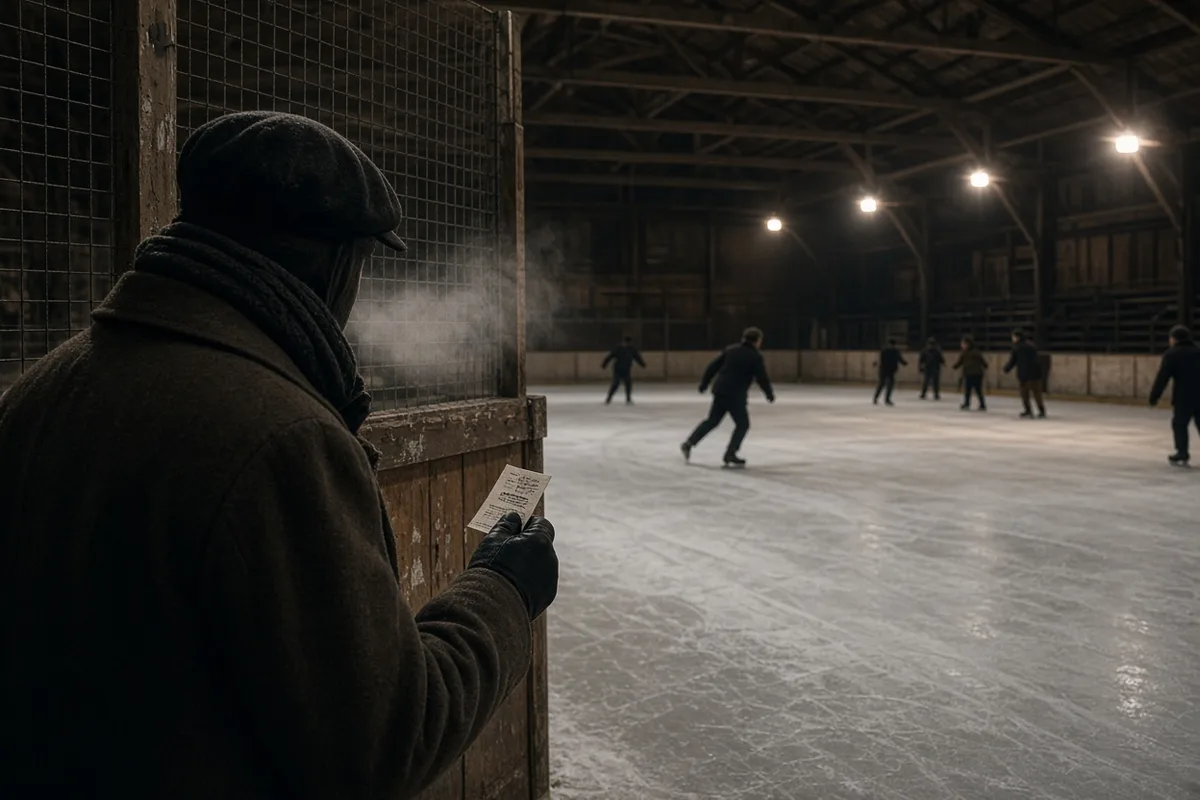
I found a spot standing along the boards near the tunnel entrance, close enough to feel the cold rolling off the surface, close enough to see the breath of both benches fogging in the arena air. The building was packed tighter than I'd seen it all Games — every seat gone, people standing wherever an usher would let them stand, and a noise in the air before the puck even dropped that felt less like anticipation and more like nerves held too tight.
Vladislav Tretiak stood in the Soviet net, and everyone in that building who followed the sport at all understood what that name meant. Best goaltender in the world, by most accounts, and behind him a roster that hadn't lost an Olympic hockey game in twelve years. Viktor Tikhonov paced their bench with the flat calm of a man who expected this to go the way it always went.
It did not start that way. The Soviets scored first, and I felt the sound in that building drop half a register, a held breath. But the U.S. didn't fold the way they had at the Garden. Buzz Schneider answered back before the period ended, a goal that tied it at one and sent a noise through the crowd that I felt in the boards under my hands. Back and forth it went through the first period, the U.S. matching them, and it ended tied two apiece — not the score anybody outside that building had dared imagine, and yet there it was, glowing on the board.
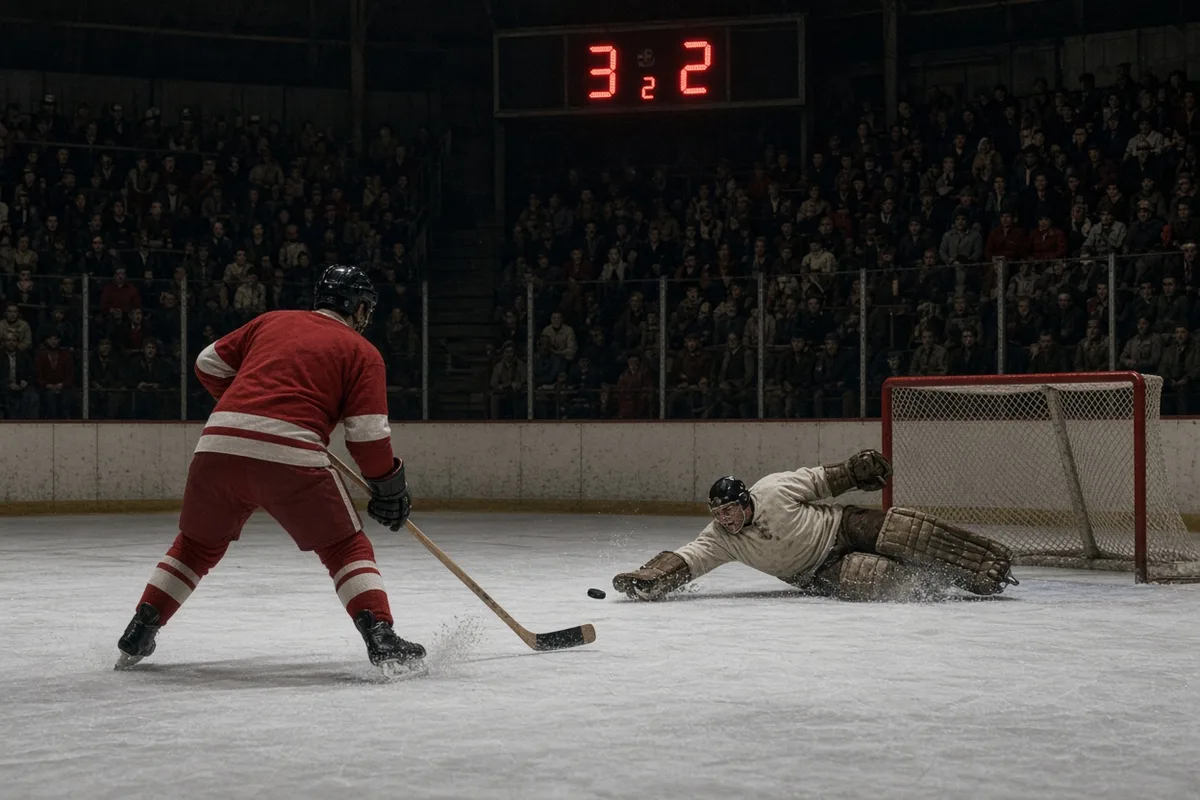
The second period belonged more to the Soviets, and by the time the horn sounded to end it, the board read 3-2, their favor. I remember standing near a knot of people who worked the Field House with me, nobody saying much, everybody watching that scoreboard like it might change on its own if we stared hard enough. A one-goal deficit against that team, going into the third period, still felt like the kind of gap that swallowed hope whole. Tretiak had been pulled after the first period, replaced in the Soviet net — a decision that rippled through the crowd the moment word of it passed along the boards, because it meant something, even if none of us standing there could say exactly what.
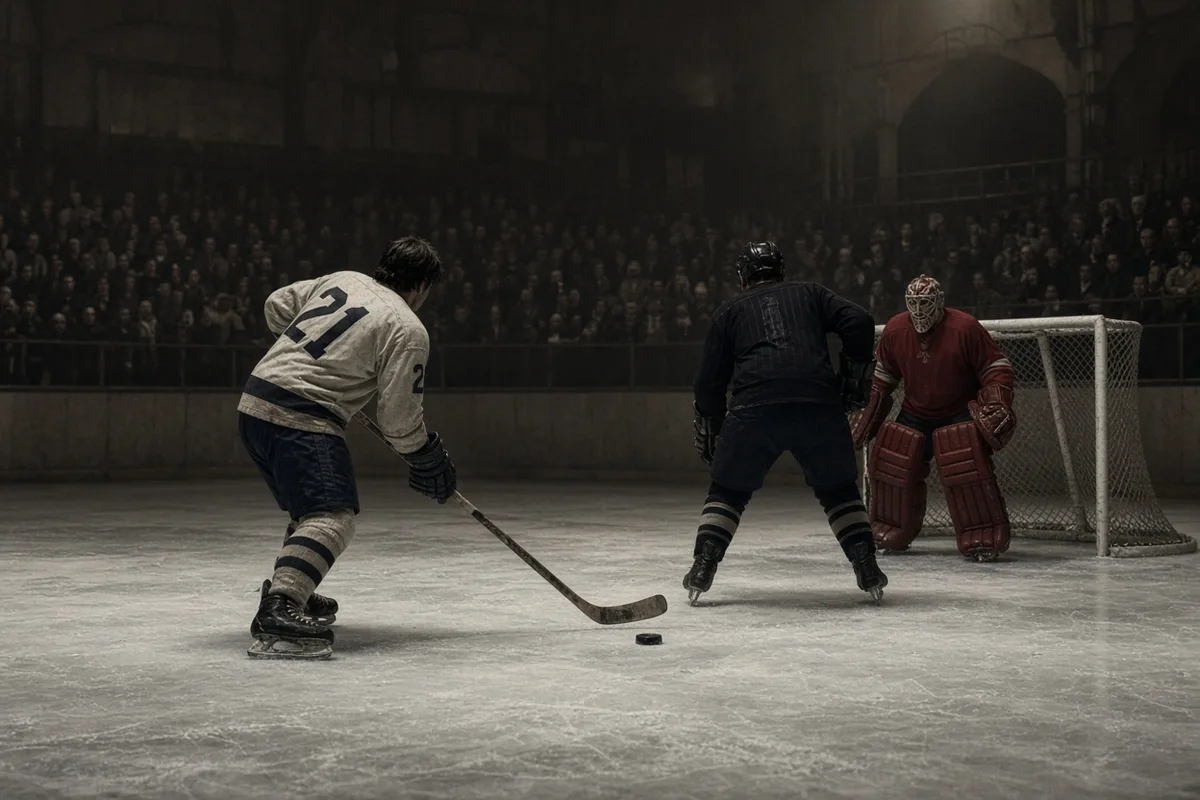
Mark Johnson tied it again early in the third, his second goal of the night, and the sound that came up out of that crowd was not like anything I'd heard in that building before — not a cheer exactly, more like something breaking loose that had been held down hard. I looked at the clock. Ten minutes remained after that, more or less, when Mike Eruzione found himself with the puck and space in front of the net that shouldn't have existed against a team like that, and he put it past the goaltender and the red light went on and the entire building came up off its seats at once, a single motion, like the building itself had decided something.
Eruzione has said since that his first thought wasn't triumph. It was time. Ten minutes left. Anyone who has ever tried to hold a lead against a superior opponent knows what ten minutes can do to a body, to a mind, to a bench full of players trying not to think about the clock. The U.S. did not sit back on that lead. They kept pushing, kept skating at a team that had spent years teaching the rest of the world what it meant to control a game from the opening whistle, and it was, in Eruzione's own words afterward, a long ten minutes. I believe every second of that description. I watched those minutes from the boards and they did not move like minutes are supposed to move. They dragged, and they also somehow evaporated, both at once, the way time behaves when you are watching something you are not allowed to look away from.
Jim Craig stood in the American net through all of it, and by the final horn he had turned away thirty-six shots. I watched him in the middle of that third period, tracking pucks through screens and bodies and sticks, and there was a stillness to him that didn't match the chaos around him. The Soviets threw everything at that net in the final minutes, the kind of pressure that had broken lesser teams before, and it did not break him.
The clock ran down and the crowd began to count it themselves, the numbers rolling off hundreds of throats at once, and somewhere in the broadcast booth above us Al Michaels was saying the words that would outlive every other sentence spoken in that building that week — asking the audience at home whether they believed in miracles, answering himself before anyone else could. I didn't hear it live over the noise around me. I heard it later, on tape, the way most of the country did, because thirty-four million people were watching this happen on television while I was standing at rink level feeling the boards vibrate under my palms.
When the horn finally sounded, the building did something I have never seen a building do before or since. It didn't erupt so much as detonate, slowly, in every direction at once — people who had been strangers an hour earlier grabbing each other by the shoulders, grown men crying without any apparent embarrassment about it, the American players piling onto each other at center ice in a heap that kept growing as more of them arrived from the bench. I stood at the boards and could not move for a moment, just watched it happen, the pile of players and sticks and gloves thrown into the air, the sound of the crowd not fading at all, if anything building.
Someone near me started singing, off-key, and within seconds half the section had joined, not because anyone organized it but because there was nowhere else for the feeling to go. I remember looking toward the ice and seeing Craig, mask pushed up, an American flag draped somehow across his shoulders, skating the length of the rink searching the stands, and I understood without anyone telling me that he was looking for his father, and that he found him, because the look on his face changed when he did.
It is worth saying plainly what this was not. It was not the gold medal. That came two days later, against Finland, in a game that mattered enormously to the players and somehow, in the memory of the country, mattered less than the one before it, because beating the Soviets had already become the story people would carry for the rest of their lives. I worked that Finland game too, and the building was full and loud, but it did not have that same quality in the air, that sense that something larger than a hockey score was being decided.
In the days after, I watched the town fill with reporters who hadn't been there for the Czechoslovakia game or the group round, who had shown up specifically because word had traveled fast about what happened on a sheet of ice in a small Adirondack town most of them couldn't have located on a map two weeks earlier. Brooks gave interviews standing near the same tunnel I'd swept out that morning, and he did not look like a man enjoying a victory lap. He looked like a man who had gotten exactly the outcome he had spent months demanding, at whatever cost it took out of him and the players both.
The players scattered in the years that followed the way athletes do — some into professional hockey, briefly, some into coaching, some into ordinary working lives that had nothing to do with rinks at all. Eruzione never played another competitive game after that Olympics, retiring at the peak of the only moment that mattered to most of the country, content, by his own account, to have been the one standing in the right spot with ten minutes on the clock. Craig went on to a career in professional hockey that never again touched the height of that one night in that one building. Brooks kept coaching, kept building teams, and never again matched what he built out of that particular group of twenty players pulled from eighty tryouts.
I stayed on rink crew until the closing ceremony, scraping ice in a building that never again, in all the years I worked there afterward, held a silence quite like the one it held that morning before the doors opened, and never again held a noise quite like the one that broke loose when the clock finally ran out. Some buildings just get one night like that. I happened to be standing in mine with a shovel in my hands, feeling the cold come up through the blade and into my knuckles, watching a scoreboard that read 4 to 3 and would not, for the rest of my life, need any further explanation to anyone who asked me where I was that February.