


The Moravian Missionaries at Herrnhut
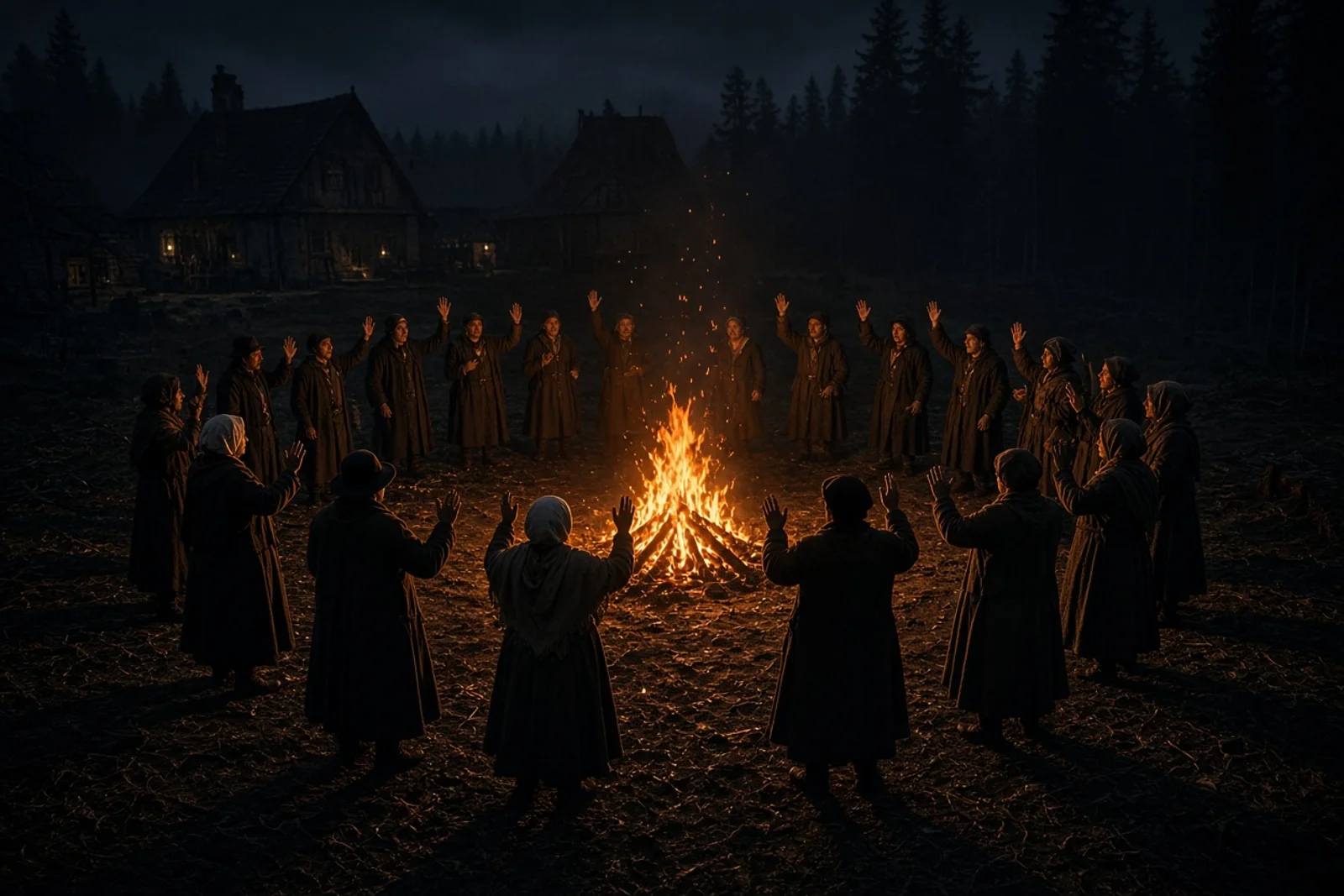
I was hauling a sack of rye toward the drying shed when the word reached us. Someone had written our names on a board by the meeting house door, and the shifts were already filling. The count had given the order himself the night before. No one would sleep through the dark hours again until every hour had a voice raised in prayer.
The village sat on the edge of his land, eighty kilometers from Dresden, a scatter of timber houses and barns where we had gathered after the flight from Bohemia. Most of us were weavers or carpenters or men who had once worked the fields under other lords. We spoke little of the old country now. The new work was here, and the new rule was that prayer would not stop.
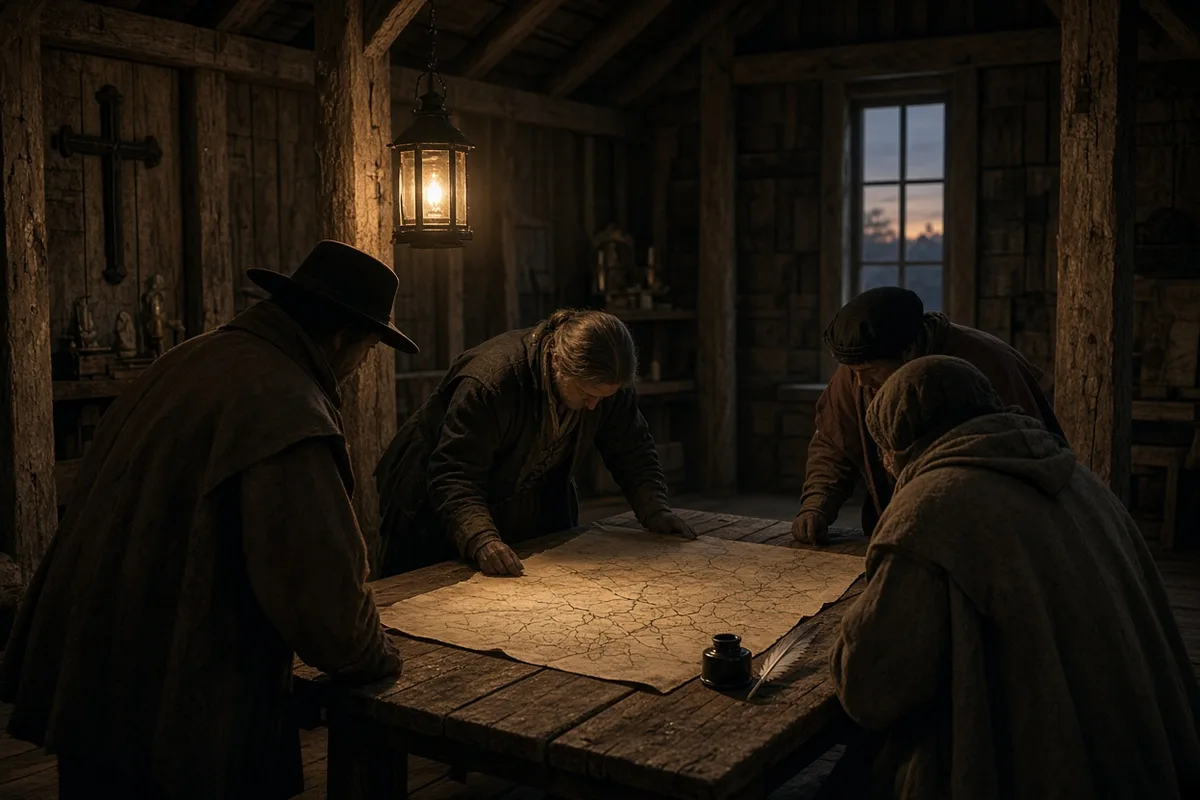
I signed for the hour before dawn. My hands still smelled of grain when I walked to the long room that first evening. Candles stood on the table, and a single lantern hung from the beam. Twelve men sat on the benches. None of us looked at the others for long. We had lived together for months, yet the silence felt heavier than any work we had shared.
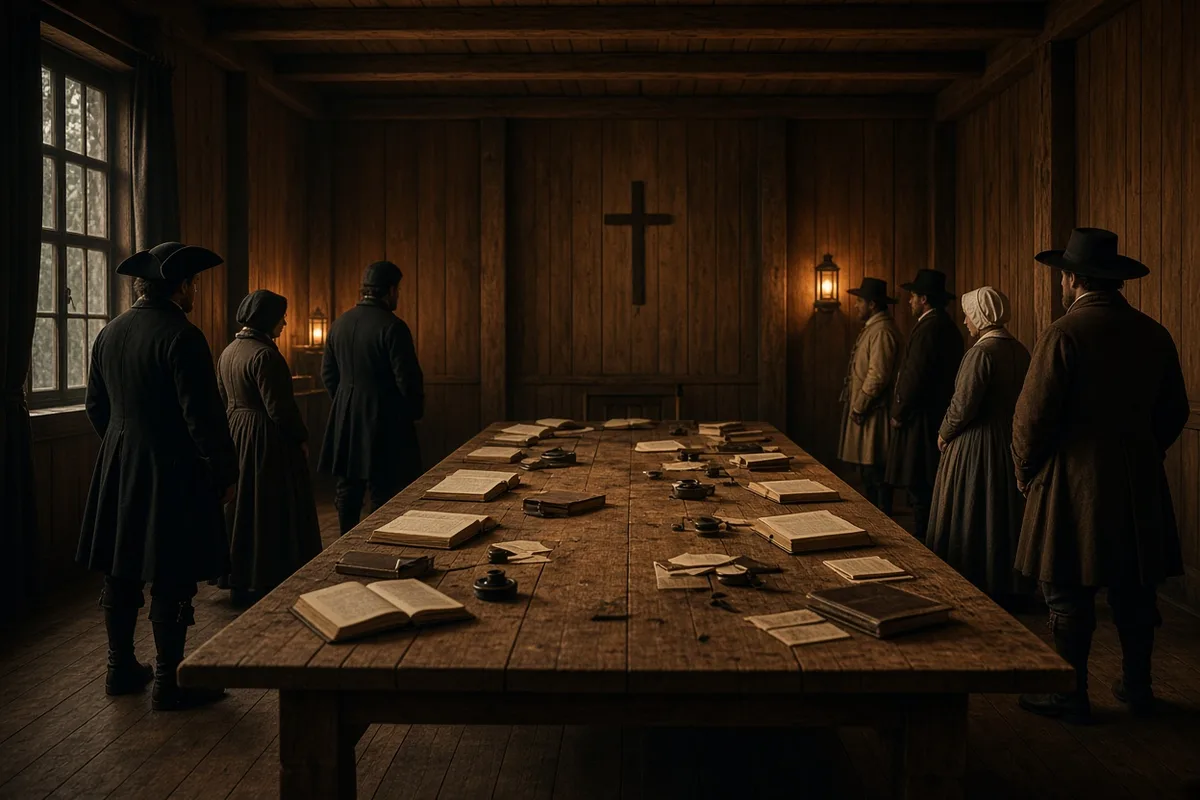
The first voice rose from the far end. It was a thin sound at first, then steadier as the man found his place in the psalm. When he finished, the next took it up without pause. The words passed from one to the next like a bucket along a line. Outside, the wind moved through the pines. Inside, only the low murmur continued.
I took my turn near midnight. The room had grown colder. My knees ached against the bench. I spoke the verses I knew, and when I stopped the man beside me began at once. No one asked how long we would keep this going. The board at the door already showed names through the next day and the day after that.
By the third night the shifts had lengthened. Women came as well, sitting on the far benches with shawls over their heads. Children were sent home after the evening meal, but a few older boys stayed to carry wood for the stove. The count walked through once, his boots loud on the boards, and stood at the back without speaking. When he left, the prayer went on.
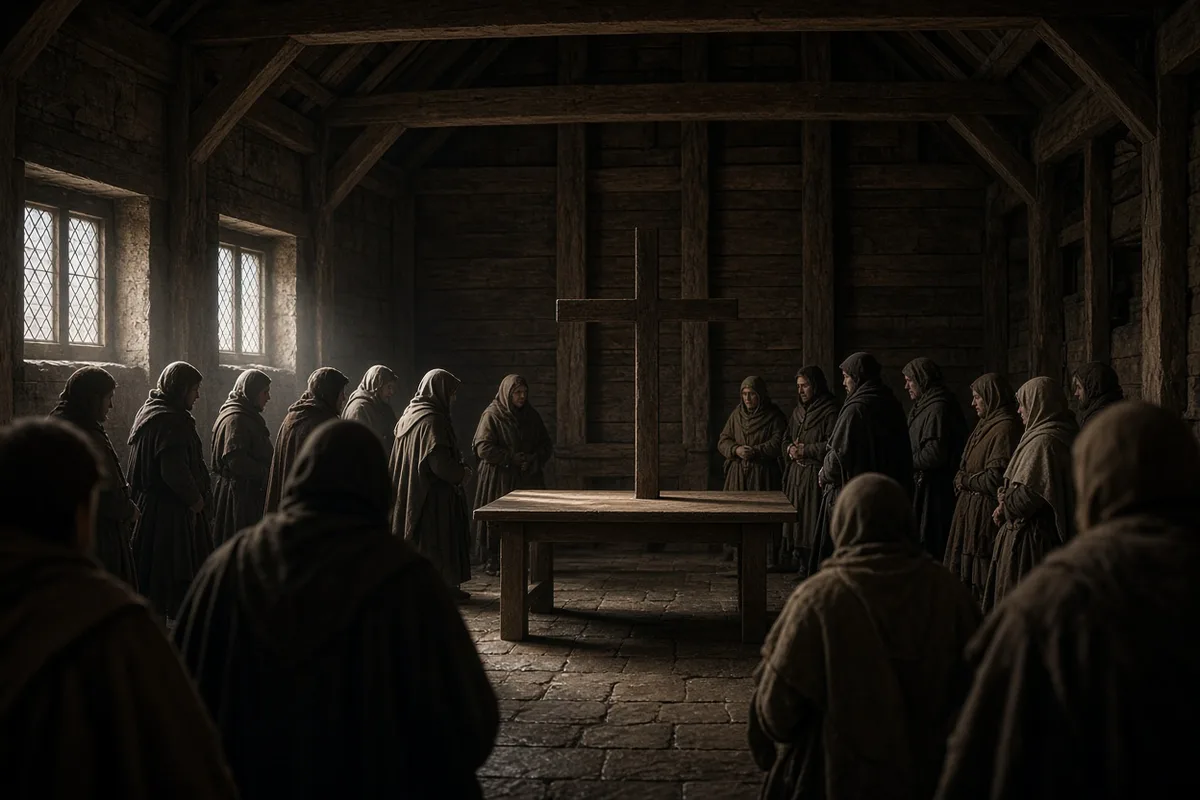
On the fifth morning a messenger arrived from the neighboring village. He brought news that the same watch had begun there. Someone read the letter aloud between shifts. A few men nodded. No one smiled. We had expected the work to stay inside these walls.
The rain came on the seventh day. Water ran under the door and pooled near the stove. We moved the benches and kept the voices steady. One man coughed through his entire hour and still did not miss a line. Another fell asleep sitting upright and was shaken awake before his turn ended. The board outside now carried names into the next week.
Zinzendorf returned from Dresden on the tenth day. He stood in the doorway during the noon shift and listened. Later he spoke with the elders in the count’s house. We heard nothing of what passed inside, only that more names had been added and that the watch would not end when the first month closed.
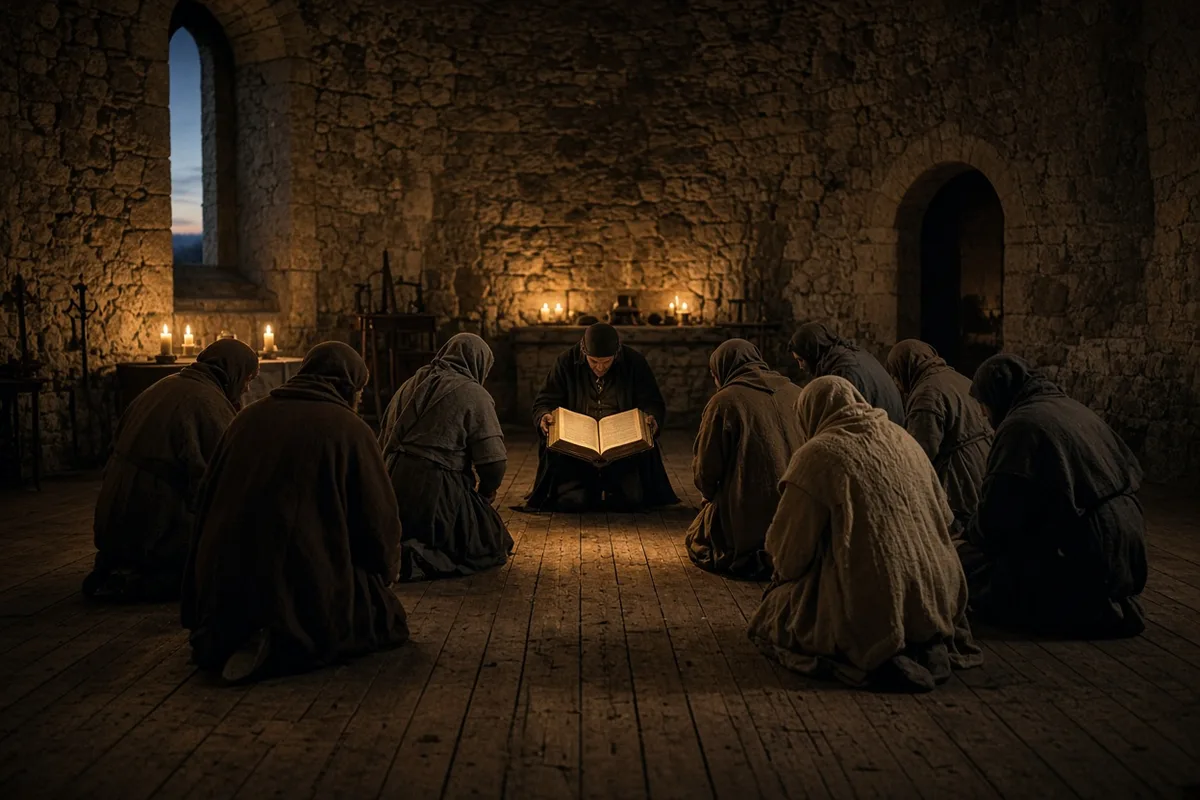
I left Herrnhut in the spring with two others who had kept the night hours beside me. We carried letters and a small chest of tools. The road led west first, then south toward the ports. Behind us the prayer continued without break. Men we had never met took the benches we had left.
Years later I met one of the boys who had carried wood for the stove. He was grown and bound for another coast. He said the room still smelled of pine smoke and wet wool when he passed through Herrnhut the winter before. The board at the door had been replaced twice, yet the names never stopped.
The count died in his own bed far from the village. By then the watch had run for more than a hundred years without a gap. Men who had never seen the original benches kept the hours in places none of us could have named in 1727. The letters still moved between Halle and the scattered stations, but the voices in the long room did not wait for answers.
The count’s letters to the Danish court in 1731 named David Nitschmann and Johann Leonhard Dober for the voyage to St. Thomas, and the two men left Herrnhut on 28 October carrying only a copy of the 1727 statutes and a letter of credit for twelve thalers. Their first report, dated 8 February 1733 from Charlotte Amalie, recorded that they had begun evening meetings on the sugar estate of a planter named Lorentz and had already enrolled twelve enslaved converts whose names were entered in the congregation diary as Anna, Christoph, and Samuel. By 1740 the same diary listed 1,200 baptized members on the island, and the watch roster had been copied into a second book so that one copy remained at Herrnhut while the other traveled with each new company of missionaries.
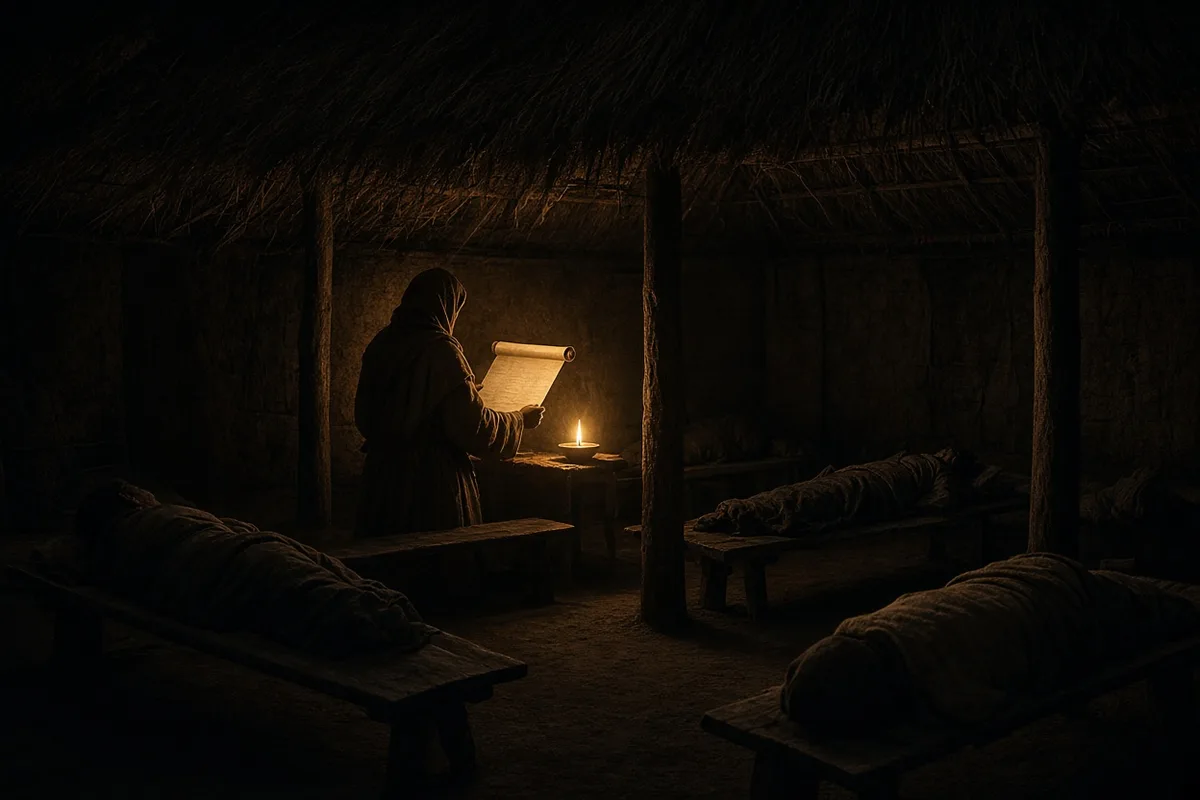
In 1733 the first Greenland party under Christian David reached the bay of Godthaab on 20 April and built a turf house they called New Herrnhut; their quarterly letters to Zinzendorf, preserved in the Unity Archive, note that the continuous prayer was maintained by three men rotating every two hours through the polar night, and that the text read on 21 December 1734 was Isaiah 9:2. The same letters record the baptism of the first Inuit convert, Kajarnak, on 30 March 1739, after which the Greenland congregation adopted the Herrnhut practice of drawing lots for marriage partners, a method Zinzendorf described in a 1740 circular as “the Saviour’s direct decision, not man’s choice.”
The 1741 settlement at Bethlehem, Pennsylvania, was laid out on the north bank of the Lehigh River with a central Gemeinhaus whose bell was rung every hour to mark the change of prayer watch; the first bell, cast in Philadelphia in 1745 and weighing 187 pounds, still hangs in the belfry of the present Moravian Church on Main Street. Congregation diaries from 1742 list 56 single brethren and 41 single sisters who kept the night hours in rotation, and the diary entry for 13 August 1747 quotes the elder’s announcement that the watch had now completed twenty full years without interruption. From Bethlehem, companies departed in 1752 for the North Carolina Wachau tract, where the town of Salem was surveyed on 19 January 1766 with streets named after the original Herrnhut elders.
By 1760, the year of Zinzendorf’s death on 9 May at Herrnhut, the Unity had established 14 mission stations across Greenland, the Danish West Indies, Suriname, and the Gold Coast; the official count published in the Gemeinnachrichten for that year listed 3,872 baptized converts and 217 missionaries under appointment. The watch roster at Herrnhut itself had grown to 120 names, including women such as Anna Nitschmann, who took the 2 a.m. hour on alternate nights until her own death in 1760. After Zinzendorf’s burial in the Hutberg graveyard, the elders added a new column to the board for the names of missionaries who had died abroad, beginning with the entry for Georg Schmidt, who had founded the Genadendal station in South Africa in 1738 and whose last letter, dated 20 February 1744, reported 47 baptized Khoikhoi.
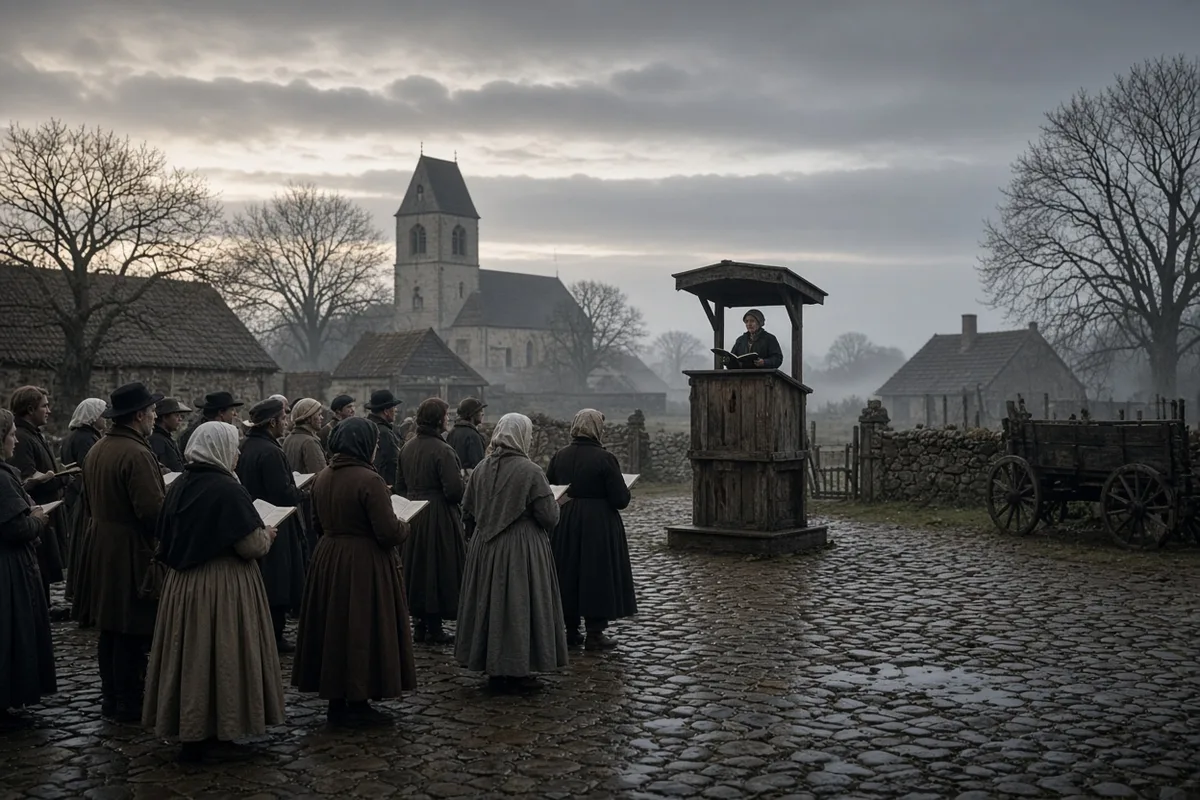
The unbroken chain reached its hundredth year on 13 August 1827. The Gemeinhaus diary for that date records that the final watch of the original cycle was kept by the carpenter Johann Gottlieb Hauptmann, who read Psalm 133 at 5 a.m., and that the board was then turned to the wall for the first time since 1727. A printed notice sent to all congregations stated that the practice would now be observed only on the anniversary of the 1727 covenant, yet the daily meetings in the prayer hall continued with three fixed hours instead of continuous rotation. By 1850 the Herrnhut congregation numbered 1,042 members, and the archive contained 4,872 manuscript letters from mission fields in Labrador, Jamaica, and the Nicobar Islands.
After 1918 the village passed into the hands of the Saxon state forestry office, yet the prayer hall remained in use; the 1927 centennial observance brought 3,400 visitors, and the printed program listed readings from the original 1727 diary kept by David Nitschmann. During the 1945 fighting the hall sustained artillery damage to its northern gable, after which the congregation rebuilt the wall with bricks salvaged from the count’s former residence. The Unity Archive, relocated to the same building in 1958, holds 1.2 linear kilometers of records, including the original watch board from 1727 that was rediscovered in 1974 behind a partition in the attic.
On 13 August 2022 the last recorded watch in the continuous tradition was kept by a single reader, the archivist Matthias Weiske, who at 3:17 a.m. read aloud from the 1732 letter of Johann Leonhard Dober describing the first baptism on St. Thomas; Weiske then closed the ledger, placed the key in the archive vault, and walked out into the empty square where the original drying shed had once stood.
Weiske’s departure left the archive vault locked under the supervision of the Saxon state heritage office, which assumed full custody on 1 September 2022 and installed climate controls maintaining 16 degrees Celsius and 45 percent relative humidity for the 1.2 linear kilometers of manuscript holdings. The original 1727 watch board, rediscovered in 1974, was moved to a sealed display case in the former Gemeinhaus, now operated as the Herrnhut Moravian Museum; its brass plaque records the names of the first twelve men on duty, including the signature of carpenter David Nitschmann dated 13 August 1727. In March 2023 the Unity Board, meeting in Bethlehem, Pennsylvania, voted to transfer the remaining Herrnhut congregation registers to the central archive in Winston-Salem, North Carolina, citing the 2022 closure as the end of continuous rotation.
The prayer hall itself was transferred on 15 April 2023 to the Evangelische Brüder-Unität, which reopened the building for scheduled services only on the anniversary of the 1727 covenant. On 13 August 2023 the single reading was performed by bishop Winfried Neitzel, who read aloud the 1740 circular in which Zinzendorf described the lot as “the Saviour’s direct decision, not man’s choice,” then locked the doors at 6:00 p.m. The same day the Saxon forestry office placed a chain across the entrance to the former drying-shed square, now marked by a bronze plaque listing the 3,872 baptized converts recorded in the 1760 Gemeinnachrichten.
By January 2024 the Unity Archive had digitized 4,872 mission letters and placed them online under the call number UA.R.18, allowing remote access to the 1733 quarterly reports from Godthaab that note the Isaiah 9:2 reading during the polar night. The 187-pound bell cast in Philadelphia in 1745 remains in the belfry of the Bethlehem church on Main Street and is still rung each hour during the annual 13 August commemoration, though no rotation of watchers follows. In Herrnhut the 1,042-member roll of 1850 has dwindled to 187 names, recorded in the final printed Gemeindeblatt issued in December 2023.
The Hutberg graveyard received its last interment on 4 June 2024 when the remains of archivist Matthias Weiske were placed beside the stone marking Anna Nitschmann’s 1760 burial. Weiske’s estate papers, filed with the district court in Löbau, list among his effects the key to the archive vault and a single sheet containing the 1732 excerpt from Johann Leonhard Dober’s letter describing the baptism of Anna, Christoph, and Samuel on the Lorentz estate. The court transferred these items to the museum on 12 July 2024.
On 13 August 2024 the anniversary reading was given by museum curator Lena Schubert, who stood alone in the empty hall at 3:17 a.m. and read the 1744 letter of Georg Schmidt reporting 47 baptized Khoikhoi at Genadendal before returning the ledger to its shelf. The hall was then closed for the remainder of the year; the northern gable, rebuilt in 1946 with bricks from the count’s residence, shows no further damage. The village square, once occupied by the drying shed, now holds only the bronze plaque and a single pine bench installed by the forestry office in 2022.
The Unity Board announced on 9 May 2025, the 265th anniversary of Zinzendorf’s death, that future anniversary observances would be limited to the Bethlehem and Winston-Salem congregations, each using a printed program reproducing the 1727 diary entry kept by David Nitschmann. Herrnhut itself retains the 120-name roster from 1760, now framed behind glass in the museum corridor, with Anna Nitschmann’s 2 a.m. entry still visible. The 14 mission stations enumerated in the 1760 Gemeinnachrichten are commemorated by a wall map in the archive reading room, updated in 2024 to note the 1,200 baptized members recorded on St. Thomas in 1740.
In the winter of 2025 the last former watcher, retired forester Klaus Hauptmann, great-grandson of the carpenter who read Psalm 133 on 13 August 1827, walked once around the locked prayer hall at dusk on 24 December and placed a small bundle of rye stalks on the bench in the square before returning to his house on the edge of the pine wood. The stalks remained there through the night under light snow until the forestry office removed them on the morning of 26 December.