


The Peace of Westphalia Ends Thirty Years' War
The hall smelled of wet wool and ink. I stood pressed against the back wall with the other clerks and servants, my shoulder against a pillar that had once held a banner of the bishop. Rain tapped the tall windows. Men in black and crimson moved below us, their voices low until the doors opened and the imperial delegation entered.
Maximilian von Trautmansdorff walked at the front, the chain of the Golden Fleece heavy on his chest. He carried the rolled treaty under one arm as if it were a dispatch that could still be recalled. Behind him came the Swedish envoys, their boots louder on the stone. The French followed last, the Duke of Longueville pausing to adjust his glove before he took his place at the table.

We had waited four years for this moment. The town had grown used to the sight of coaches arriving and leaving in the dark. Now the coaches stood empty outside. The horses stamped in the courtyard while the men inside prepared to sign.
A scribe read the first article in a voice that carried to the rafters. It spoke of ending the war that had begun in Bohemia and spread until no border remained untouched. When he reached the clause on religion, the room grew still. Catholic and Protestant princes would keep the lands they held on the first day of 1624. No ruler could force his subjects to change faith or leave. The words were plain. Men who had fought for thirty years heard them without interruption.

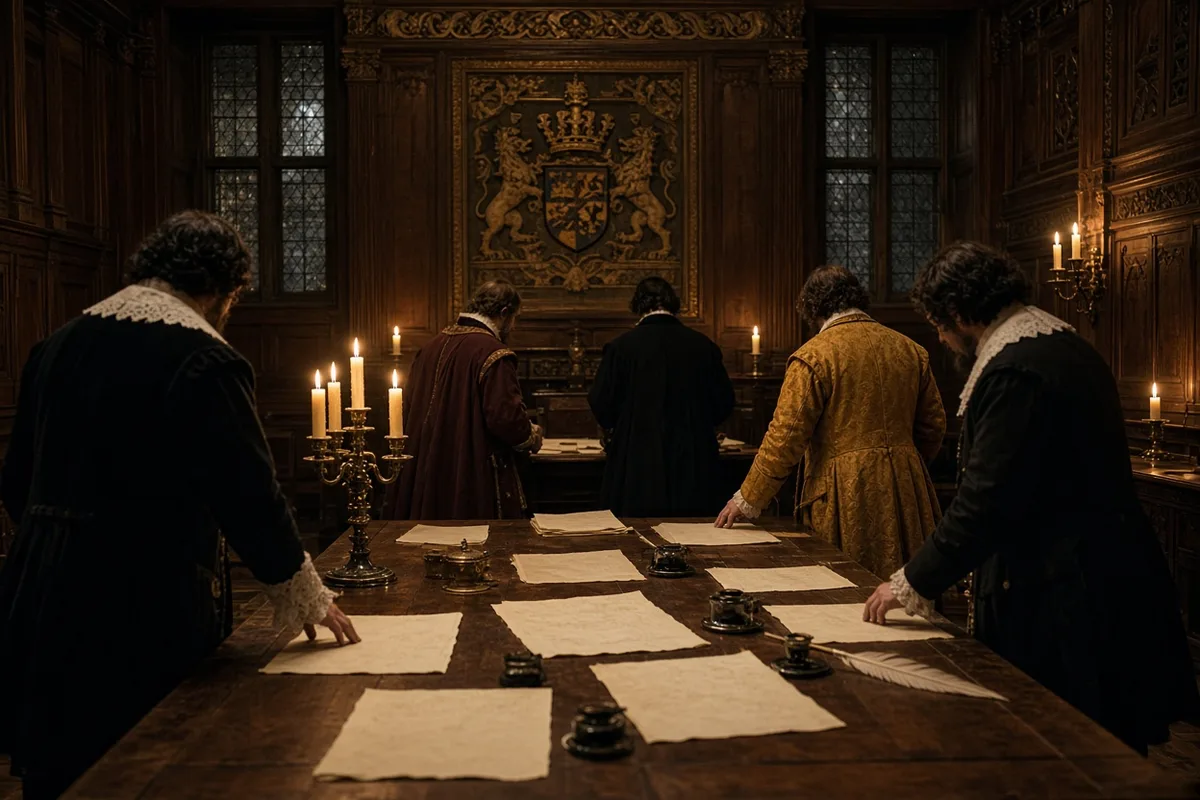
Trautmansdorff signed first for the Emperor. The quill scratched once, then again on the second copy. He stepped back and nodded to the Swedish side. Their representative dipped the same pen. The French followed. Each signature took only seconds, yet the line of men stretched long enough that my legs began to ache from standing.
Outside the windows the light faded. Servants lit candles along the walls. The smoke from the wicks drifted upward and mixed with the smell of damp cloaks. No one spoke of victory. The talk was of what would be sent north to Queen Christina and what would travel south to the young French king.
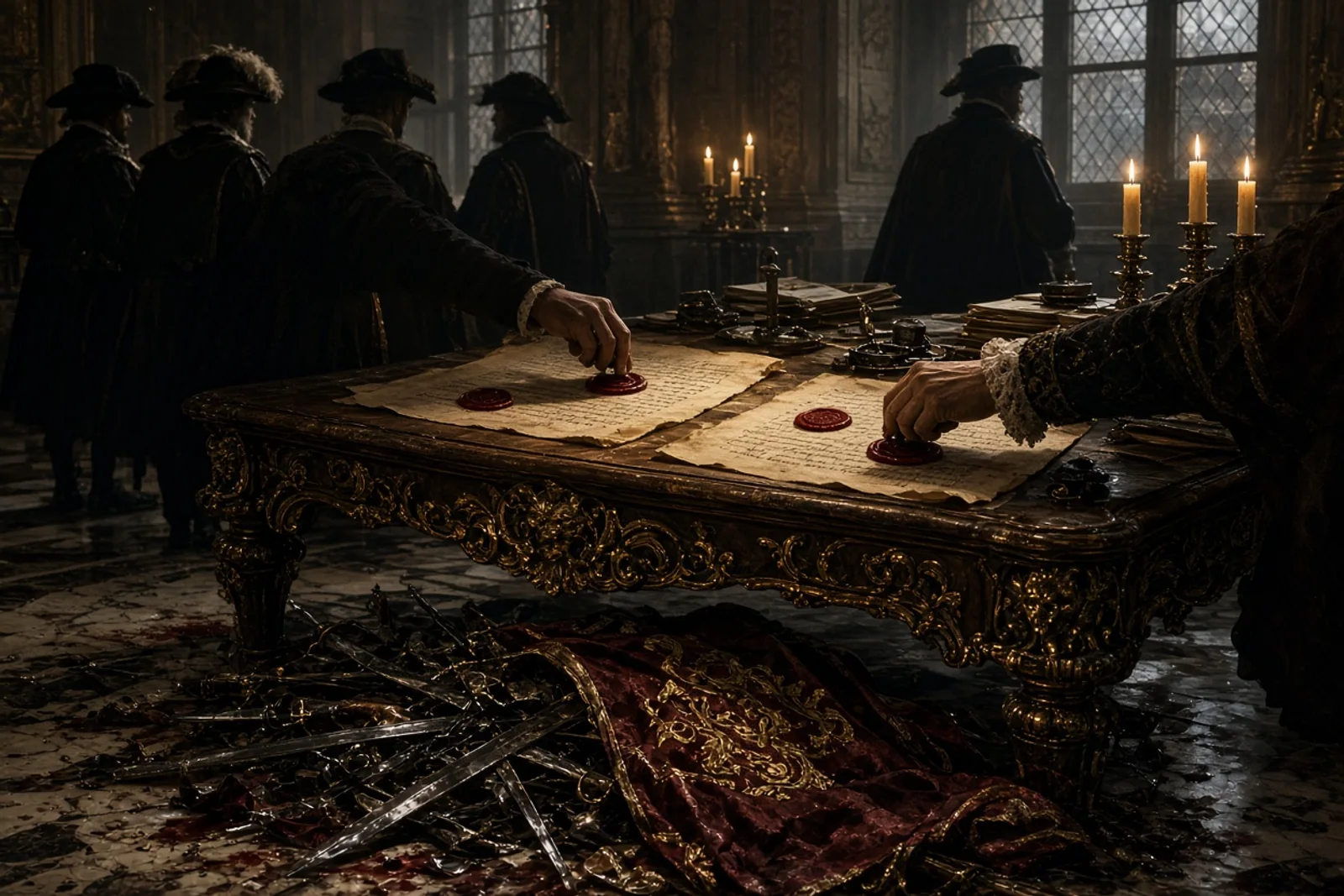
When the last seal was pressed into the wax, the doors opened again. Word moved through the corridors faster than any rider could carry it. By the time the delegates reached the street, people already waited with lanterns. Some had come from farms ten miles away. Others had lived in Münster through every year of the talks, watching prices rise and soldiers pass through.
I followed the crowd as far as the market square. A boy no older than twelve asked his father if the war was truly finished. The man answered that the paper said so. Neither of them smiled. They turned toward home while the bells began to ring from the cathedral.
That night the taverns stayed open later than usual. Soldiers who had been quartered in the town drank without fighting. One of them, a Swede whose regiment had marched from the Baltic, showed me a letter he meant to send home. It listed the villages he had seen burned and the one place where he hoped to find work now that campaigning had stopped.
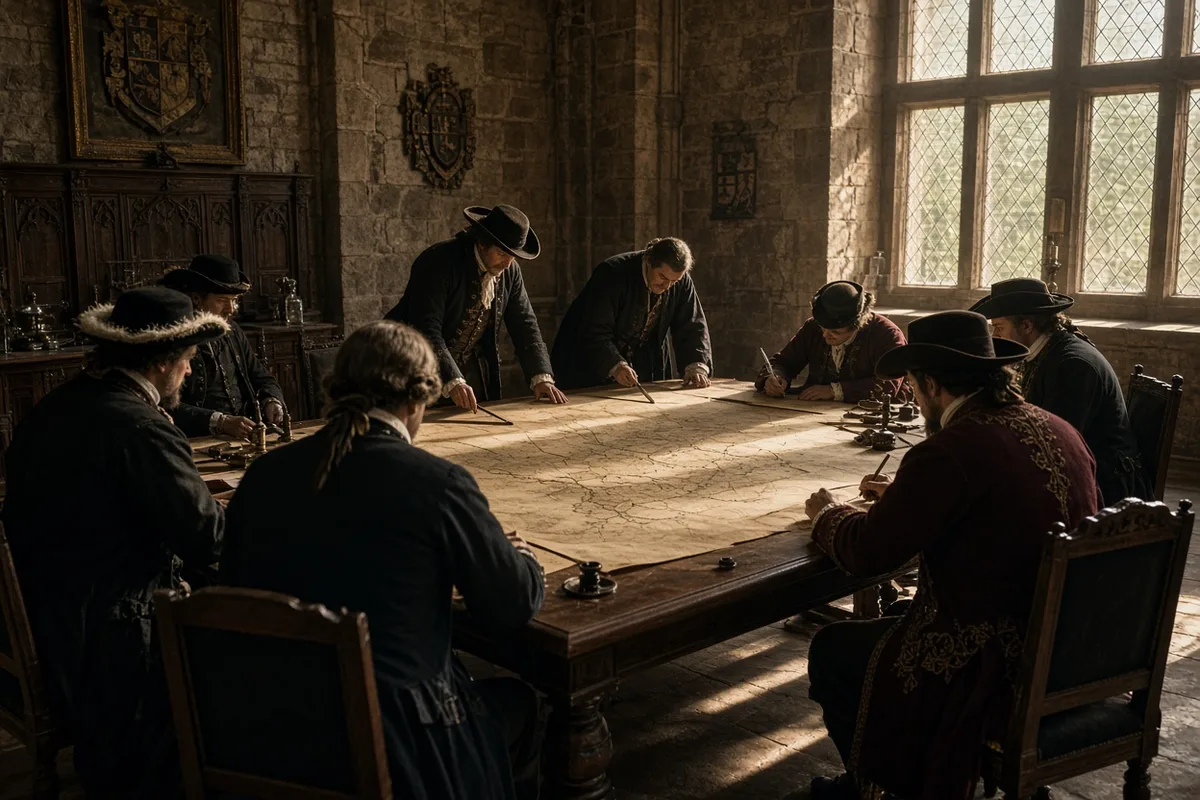
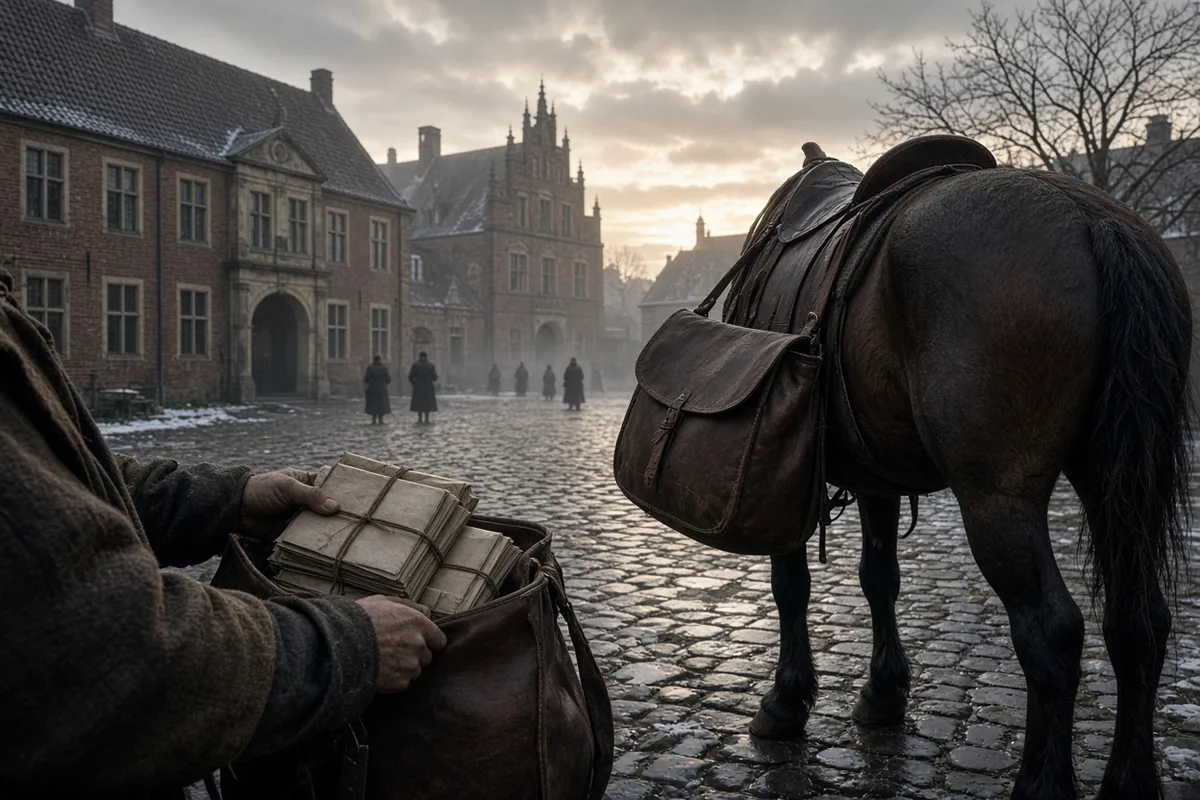
Over the next days messengers left in every direction. One carried the ratified text to Osnabrück, where another copy had already been signed the same afternoon. Another rode toward Vienna with the Emperor’s copy. A third set out for Paris. The roads were still dangerous, but the fighting had paused long enough for these packets to move.
In Münster the delegates began to pack their papers. Trautmansdorff left first, his carriage wheels cutting fresh tracks through the mud left by the rain. The French stayed another week, settling accounts with their quartermasters. The Swedish party waited for instructions from Stockholm.
I returned to my usual work copying dispatches for the city council. The new instructions carried different language. Instead of ordering levies or warning of approaching armies, they asked how many men could be released from service and where the remaining grain stores stood. The change was small on the page but altered the sound of the streets.
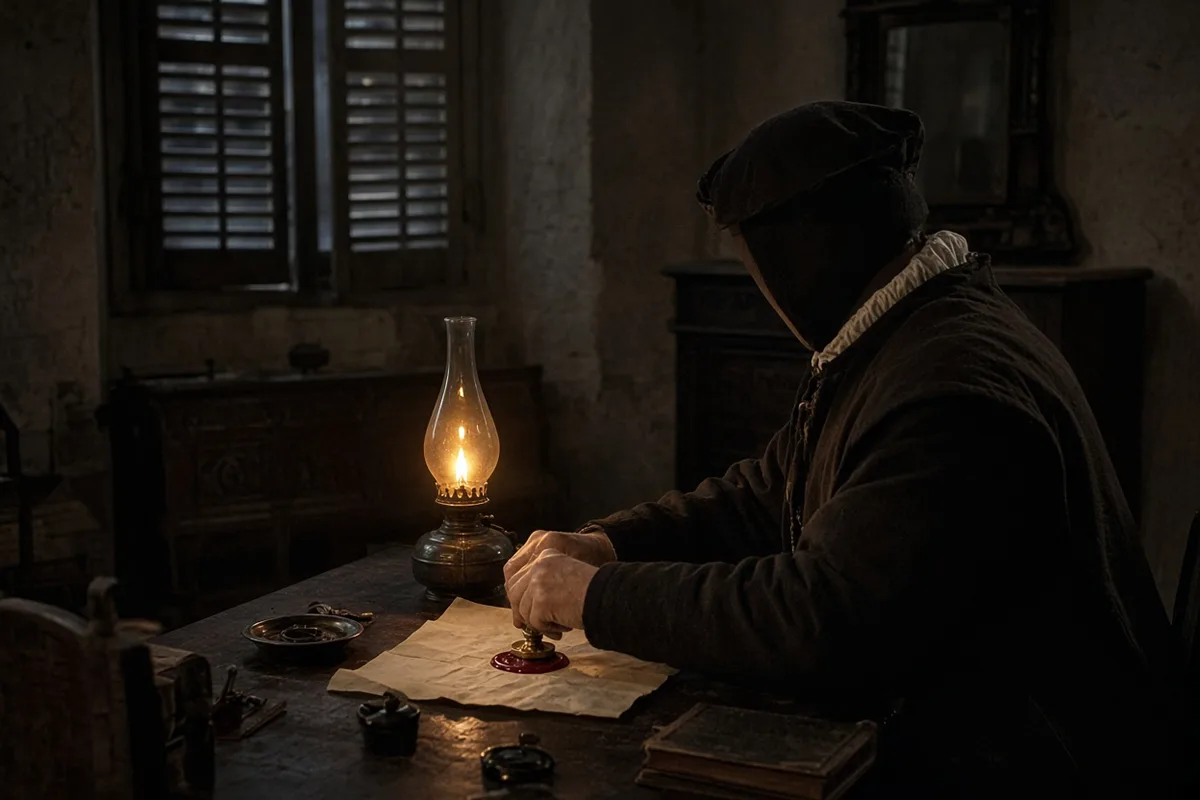
By November the last of the foreign envoys had gone. The town felt larger and quieter at once. Farmers brought produce to market without fear of seizure. A printer set up a broadsheet listing the main articles of the peace so that those who could read might explain them to those who could not.
Winter came early. Snow covered the fields where armies had camped only months before. In the villages the first reports arrived of men returning on foot, some missing an arm or a leg, most carrying only what they wore. They asked after families that had moved or died. The answers came slowly.
In Münster the cathedral chapter held a service of thanksgiving. The bishop spoke of endurance rather than triumph. Afterward the congregation filed out into cold air that smelled of woodsmoke. I stood with the rest and watched the last light leave the sky above the spires.
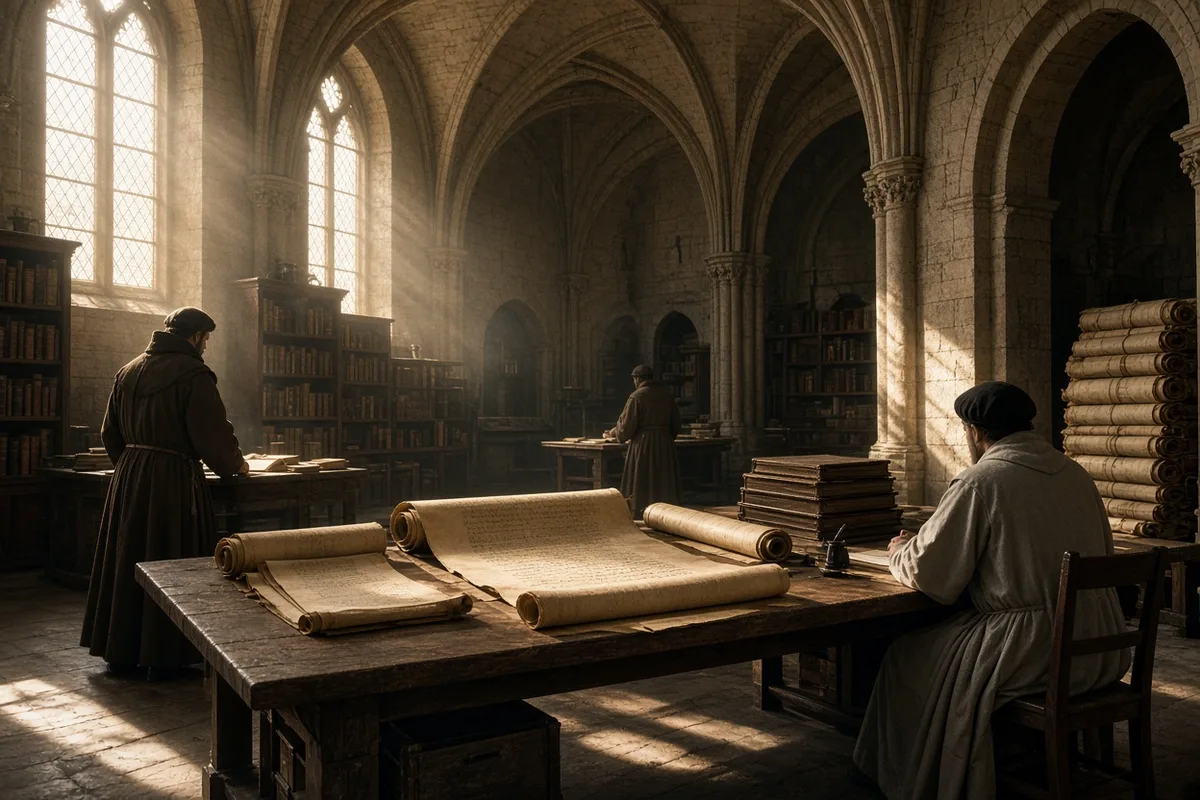
Years later, when travelers asked about the day the war ended, I could only describe the sound of the quill and the way the candles guttered in the draft. The paper itself stayed in chests and archives. What remained visible was the absence of new graves along the roads and the slower pace of carts moving between towns that no longer feared sudden seizure.
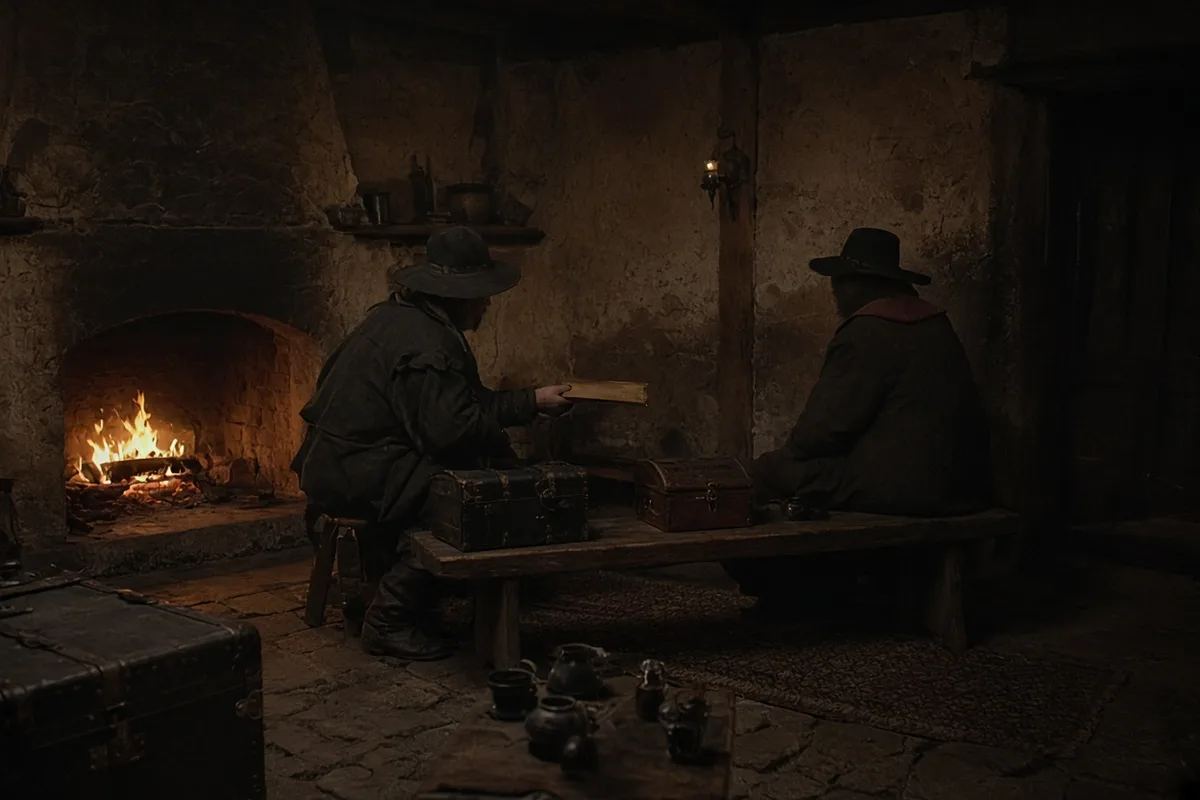
In 1650 the council ledger recorded the departure of 4,200 Swedish troops from the Münster garrison, each man issued a discharge payment of twelve Reichstaler drawn from the French subsidy still held in the civic chest. I copied the receipts myself, noting the names of captains who had arrived with Oxenstierna’s army in 1644 and now signed for passage money to return across the Baltic. One entry listed Hans von Königsmarck receiving an additional two hundred taler for the transport of his regiment’s widows and orphans to Stralsund. The same month a courier from Osnabrück brought word that the bishop there had reclaimed his seat on 1 January after the Swedish occupation ended; the document quoted the relevant clause granting him “the full exercise of spiritual and temporal authority within the diocese as held on 1 January 1624.” Farmers who had hidden seed grain in the cathedral crypts began selling rye again at the Wednesday market, the price fixed at eight pfennig per pound by a new municipal ordinance posted on the town hall door.
By the summer of 1653 messengers carried reports that Elector Frederick William of Brandenburg had issued an edict at Königsberg requiring every village in the Mark to register surviving male inhabitants between the ages of fifteen and fifty for labor on the dikes along the Oder. The edict cited the Westphalian article that restored his territories “in the state they stood before the war,” and the elector added a marginal note in his own hand ordering the construction of a new fortress at Küstrin with stone taken from ruined churches. That autumn a party of returning mercenaries from the Lorraine regiment passed through Münster on their way to enlist in the Polish service; their lieutenant, a man named de la Tour, showed me a copy of the treaty printed in The Hague that spring, the page open to the article granting Sweden the port of Wismar and the right to maintain a garrison there for forty years.
In the 1660s the French resident in Münster, a secretary named de Lionne, returned briefly to settle outstanding quartering accounts and left behind a letter from Cardinal Mazarin dated 12 March 1661 instructing him to remind the city that the cession of Breisach and Philippsburg remained in force “according to the literal sense of the Münster instrument.” I transcribed the letter for the council and added the date of the original signing, 24 October 1648, in the margin. Meanwhile the printer who had produced the broadsheet in 1648 now issued a second edition listing the territories awarded to the Landgrave of Hesse-Kassel; the new sheet noted that Amalie Elisabeth had received the abbey of Hersfeld and four hundred thousand Reichstaler in compensation, figures taken directly from the ratified text kept in the Hessian archive at Kassel.
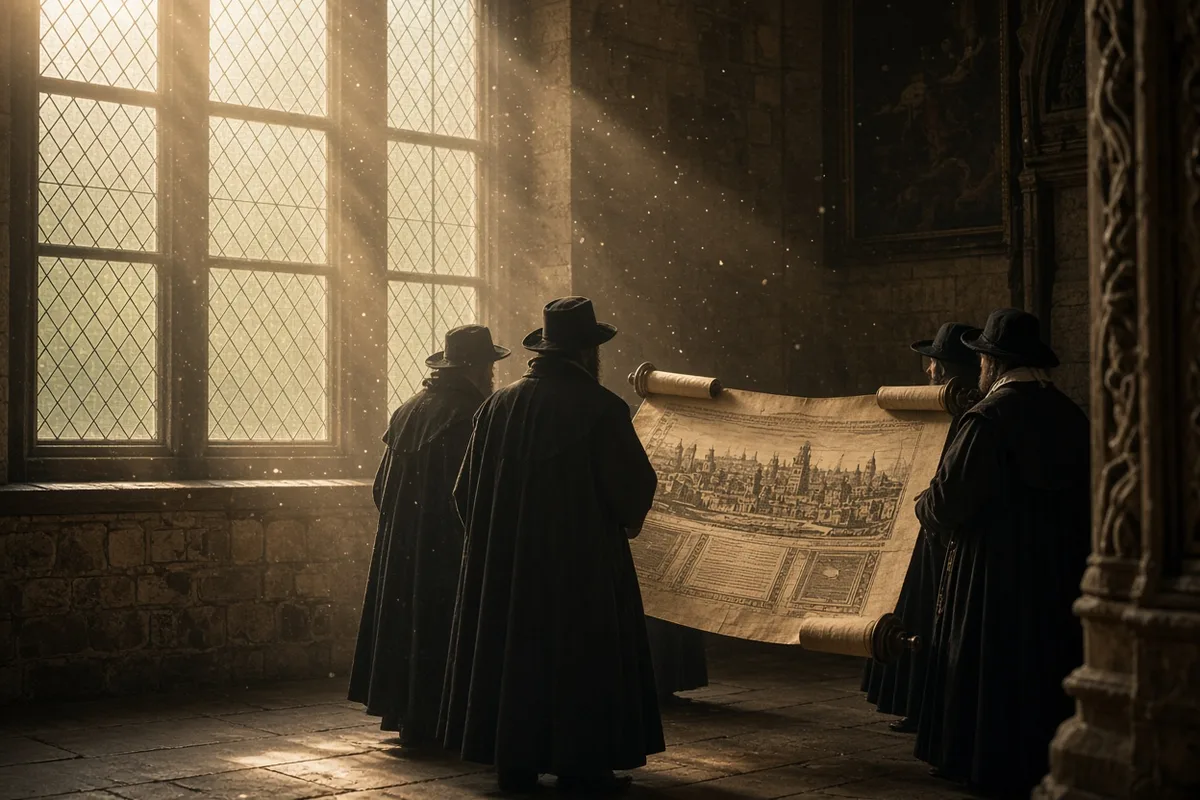
Travelers arriving from Vienna in 1678 spoke of the Reichstag that had opened the previous year in Regensburg, where the Emperor Leopold I confirmed the perpetual validity of the two treaties in an opening speech recorded by the secretary of the Imperial Chancery. The speech quoted the clause on the autonomy of the estates: “Each prince and each city shall enjoy the right to make alliances and conclude peace without hindrance from the Emperor or any other power.” One of those travelers, a clerk from the Swabian Circle, stayed three nights at the inn near the cathedral and showed me the printed acts of the diet, the pages still smelling of fresh ink, which listed the exact number of votes allocated to each estate under the new seating arrangement.
In 1713 a Dutch merchant passing through on the way to the Frankfurt fair carried a copy of the Utrecht treaty that ended the latest French war; he pointed out that its preamble referred back to the Westphalian settlement as the foundation for all subsequent European agreements and cited the precise article that had transferred sovereignty over the United Provinces from Spain. The merchant also mentioned that the bronze statue of the Emperor erected in Münster’s market square in 1660 had been regilded the previous spring at the expense of the cathedral chapter, the cost entered in the chapter accounts as 1,872 gulden and 14 kreuzer. By then the old roads between Münster and Osnabrück had been repaired with gravel taken from the abandoned siege works outside the walls, and the milestones erected in 1655 still stood, their inscriptions recording the distances in German miles rather than the old imperial leagues.
During the winter of 1815 a Prussian officer quartered in the same hall where the treaty had been signed left a journal entry describing how the Congress of Vienna had once more invoked the 1648 instruments to redraw the boundaries of the German states; he noted that the Prussian delegation had cited the article granting Brandenburg the bishoprics of Halberstadt and Minden. The officer’s orderly, a man from the village of Telgte, told me that the same article had been read aloud in the Prussian camp on the eve of the Battle of Leipzig two years earlier. In 1848, the centennial year, the Münster city council ordered a new plaque affixed to the west door of the town hall bearing the names of the original signatories—Trautmansdorff, Salvius, Servien—and the exact date and hour the seals were affixed.
On 24 October 1948 the mayor of Münster placed a wreath at the base of the 1660 statue while a small crowd stood in the square; the local newspaper printed the full text of the first article of the treaty alongside a photograph of the damaged spires of the cathedral, which had been struck by Allied bombs on 10 October 1944. A Dutch archivist who visited the following spring examined the surviving copy of the treaty kept in the city archive and noted that the parchment, though stained, still bore the original signatures of the French and Swedish plenipotentiaries. In the archive ledger for that year an entry records the loan of the document to the University of Münster for an exhibition that drew 3,412 visitors between May and September.
Today the market square fills each Wednesday with stalls selling apples from the orchards planted after the last Swedish troops left in 1650. An elderly man in a dark coat stands at the same pillar where I once leaned, watching the crowd; he carries a folded copy of the local paper whose front page reproduces the 1648 broadsheet, the ink now faded to the color of dried blood. He turns toward the west door of the town hall as the bells begin to ring at noon, the sound carrying across the roofs exactly as it did when the last seal was pressed into the wax.