


The Reconciliation Walk of 1999
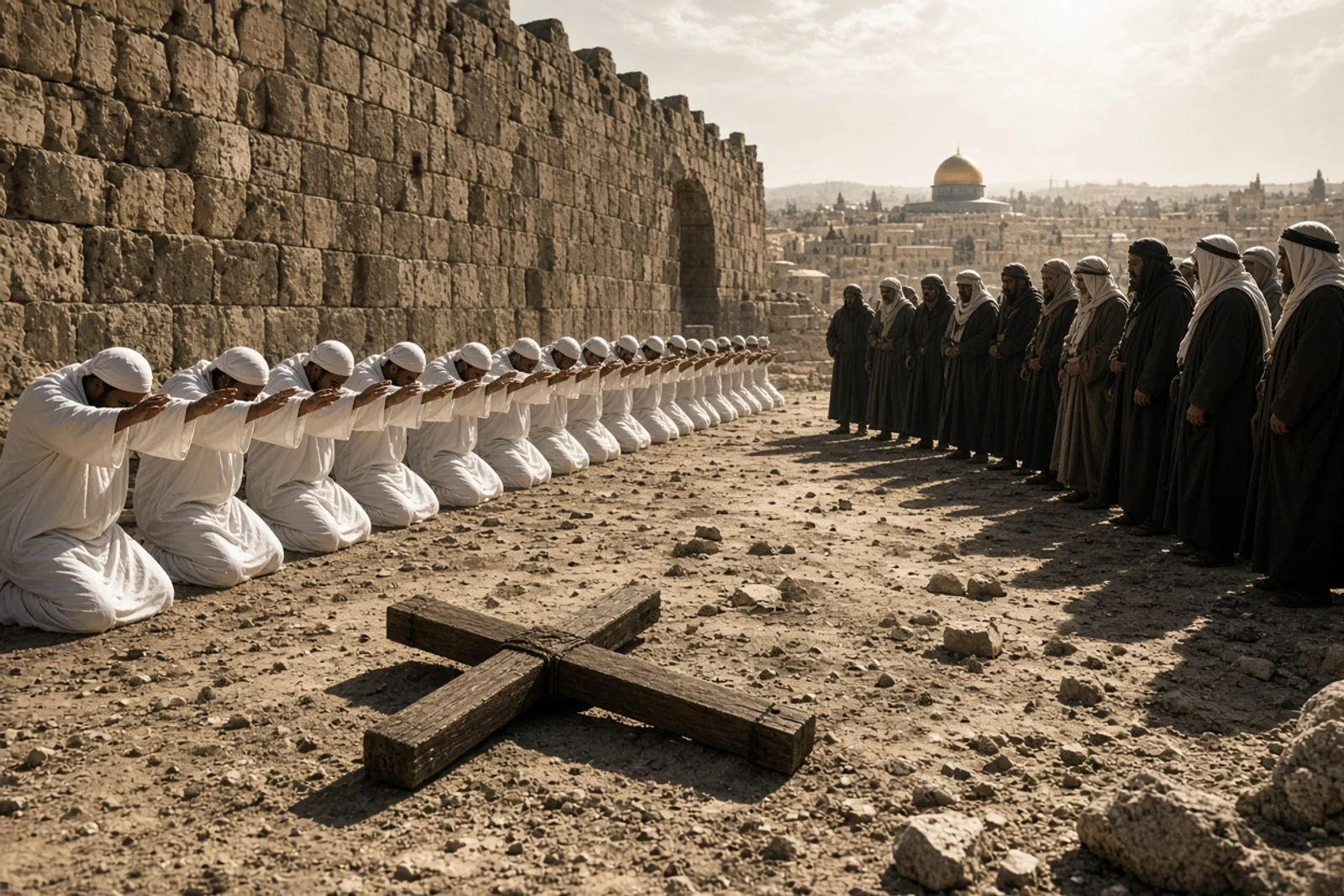
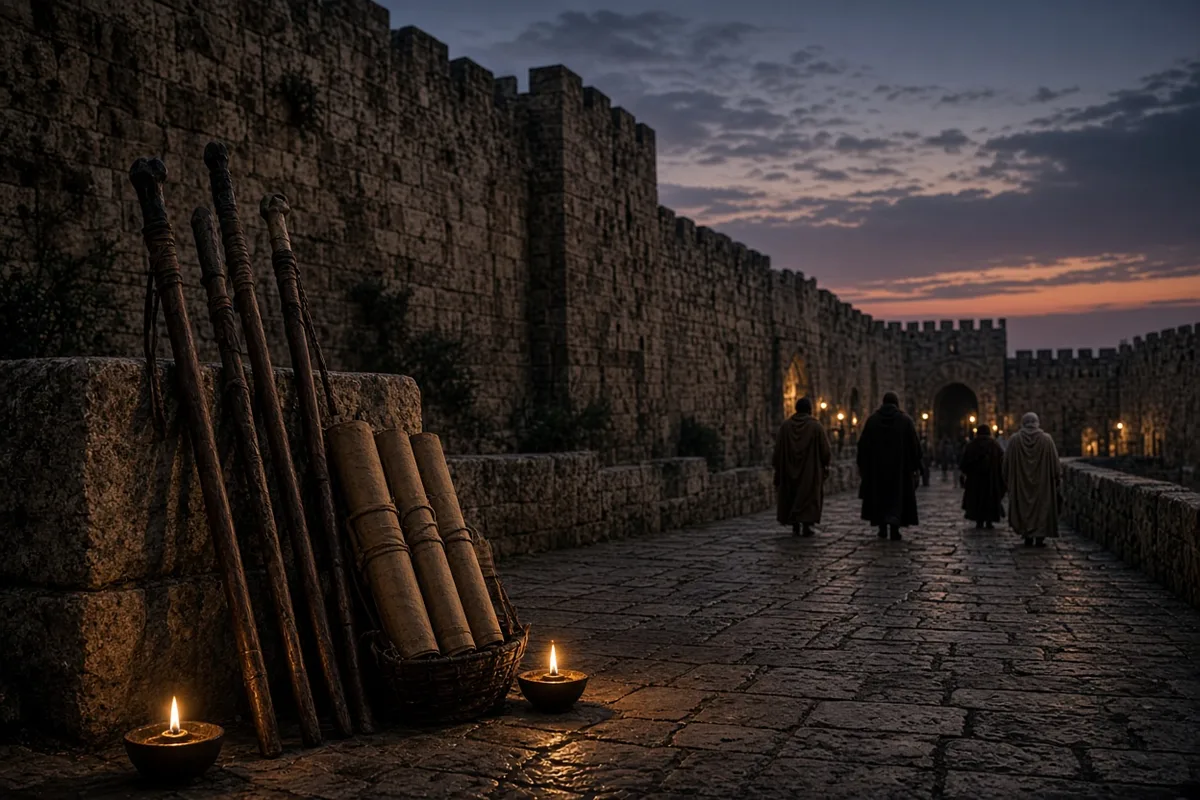
The rampart stones held the day's heat even at dawn. I kept my hand on the wall as we moved single file along the top, the Old City spread below in tight lanes and domes. Four hundred and fifty of us had come for this last stretch, shoes scuffing the same path crusaders once fought over. The air smelled of warm bread and diesel from the streets beneath.
We had walked sections in groups over the months, some of us joining earlier legs through Turkey and Syria. Names passed between us: villages where people stopped to listen, others where doors stayed shut. By the time we reached the Israeli border the stories had grown heavier.
Lynn Green walked a few paces ahead of me that morning. He kept checking the time on a small watch, then looking out over the walls. The plan was simple. Circle once, pray at each gate, then descend to deliver the words we had carried from Cologne.
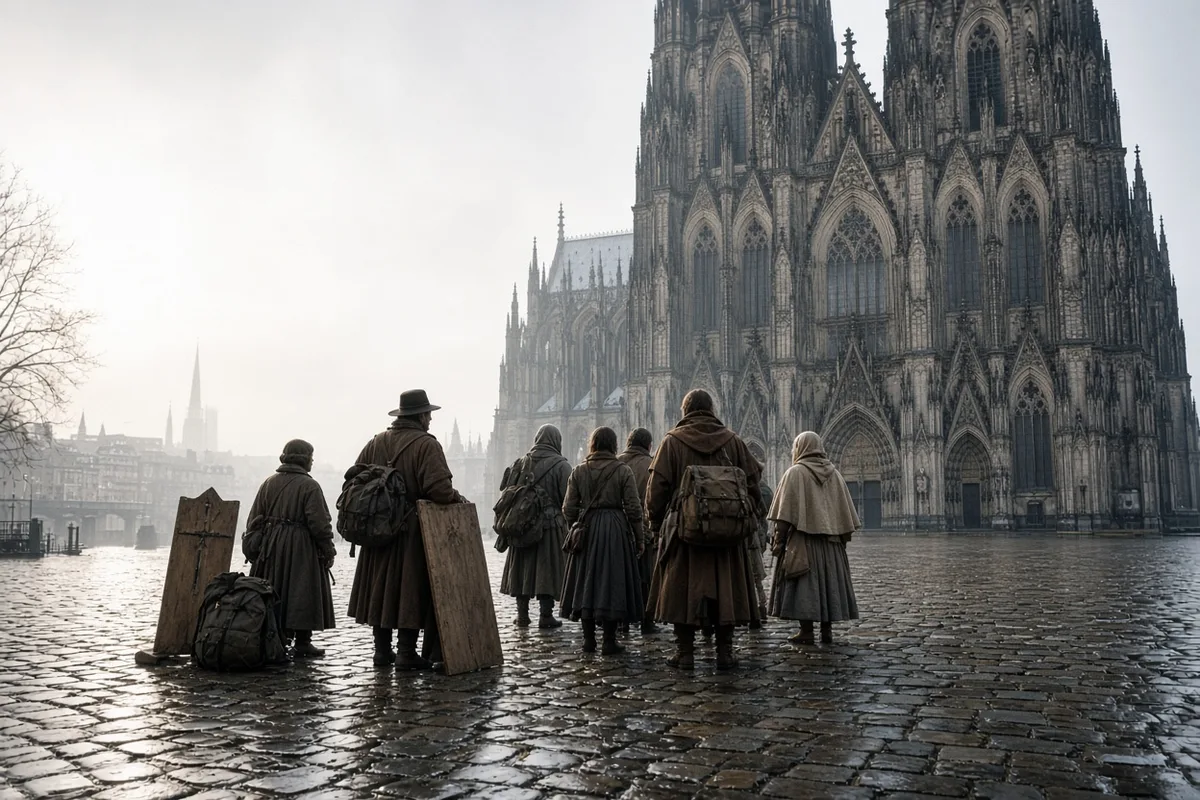
At the Jaffa Gate we paused. Below us the market was already loud with vendors calling prices. A woman selling spices looked up, shaded her eyes, and watched without waving. I felt the apology we were about to give settle in my chest like a stone that had traveled with us.
We finished the circuit near the Damascus Gate. Sweat ran under my shirt. Someone passed a water bottle down the line. Green gathered us in a loose circle on the stones and read the statement once more, voice low so only we could hear it. The words named the slaughter nine hundred years before, the claim of Christ’s name over killings, the pattern that still shaped how many here saw Western Christians.
Chief Rabbi Yisrael Lau met us inside the Great Synagogue. He stood at the front with the paper in his hands. “You came very late,” he said, “but better late than never.” Then he blessed the group in Hebrew and English from Psalm 118. The sound of it stayed in the room after he finished.
From there we split into smaller groups. One went to the Greek Orthodox Patriarch Diodoros. Another carried the message to Mufti Ekrem Sabri at the Haram. I stayed with the main party heading toward the Church of the Redeemer for the closing service. The narrow streets forced us into single file again.
Cathy Nobles walked beside me on the way. She had spent the past weeks training new arrivals on how to sit in kitchens and listen. “Every house changes something,” she said. “You eat the same food and the picture you carried in your head starts to fade.”
The service inside the church was short. Green thanked the leaders who had accepted the apology and then turned to the rest of us. He spoke about the ordinary encounters, the cafés and shop counters, as the real work. No one clapped. We stood and filed out into the courtyard next to the Holy Sepulchre.
Outside, the light had shifted to afternoon. A few participants lingered to speak with journalists. Others bought bus tickets for the airport. Matthew Hand, who had coordinated the Israeli portion, collected the last of the written statements to file away.
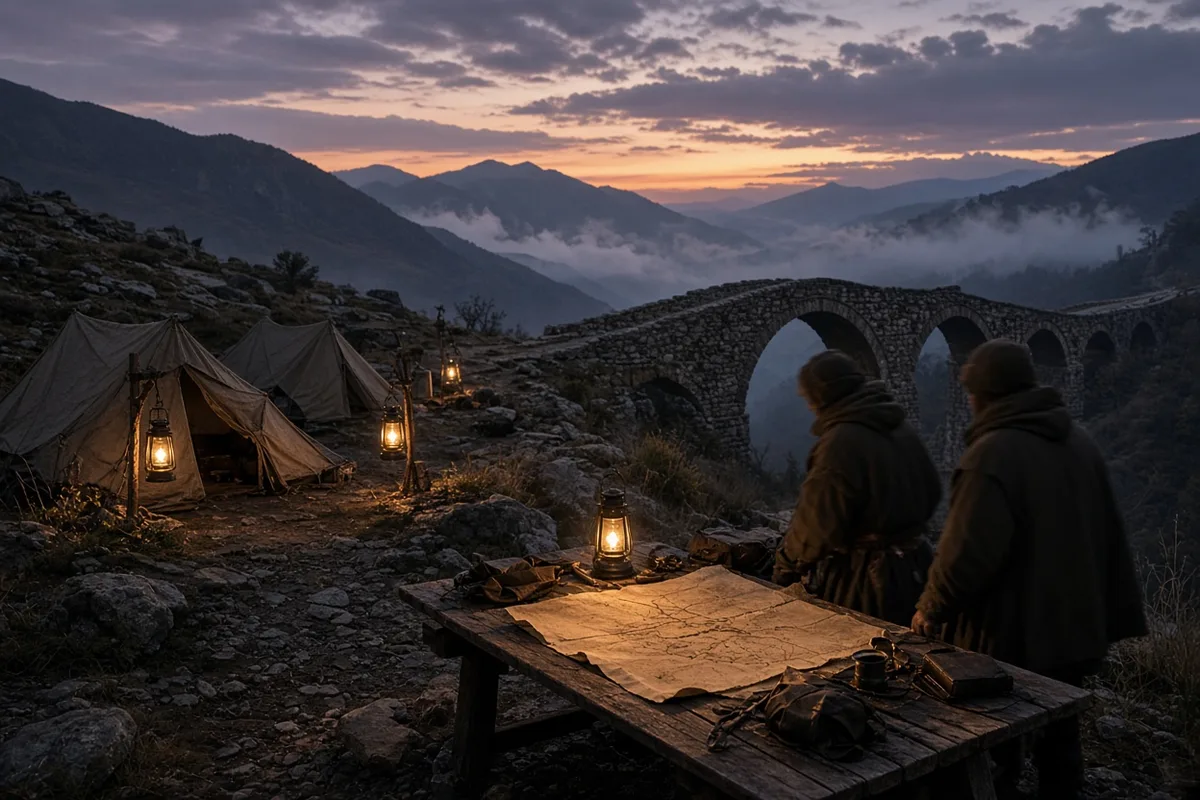
In the days after, reports came back from earlier stops on the route. In Turkey the senior Muslim leader had said the gesture moved him and hoped it marked a turning point. In Lebanon a former militia commander who now served as mayor told walkers they were welcome to return and continue the conversations.
I left Jerusalem two days later on an early flight. The plane climbed over the same walls we had circled. Below, the city looked smaller, the ramparts a thin line against the hills. I thought of the woman at the spice stall who had watched us without speaking, and wondered what she would tell her children that evening about the group that had walked the old stones and then gone home.
On the flight home the seat-back screen showed our position crossing the Mediterranean at thirty-two thousand feet, the route line passing directly over Cyprus at 11:17 a.m. local time on 17 July 1999. The passenger beside me, a British tour guide named Roger who had joined only the final week, opened a notebook and wrote down the exact wording Green had used at the Damascus Gate: “We claim the name of Christ over the killing of Jews, Muslims and fellow Christians in 1099 and the centuries that followed.” He underlined the date 1099 three times and added the telephone number of the Greek Orthodox liaison in Istanbul who had arranged the meeting with Patriarch Bartholomew on 12 May. When the plane touched down in London the group’s shared logbook recorded forty-three participants still carrying the original printed statements, each signed in Cologne on 21 March 1996.
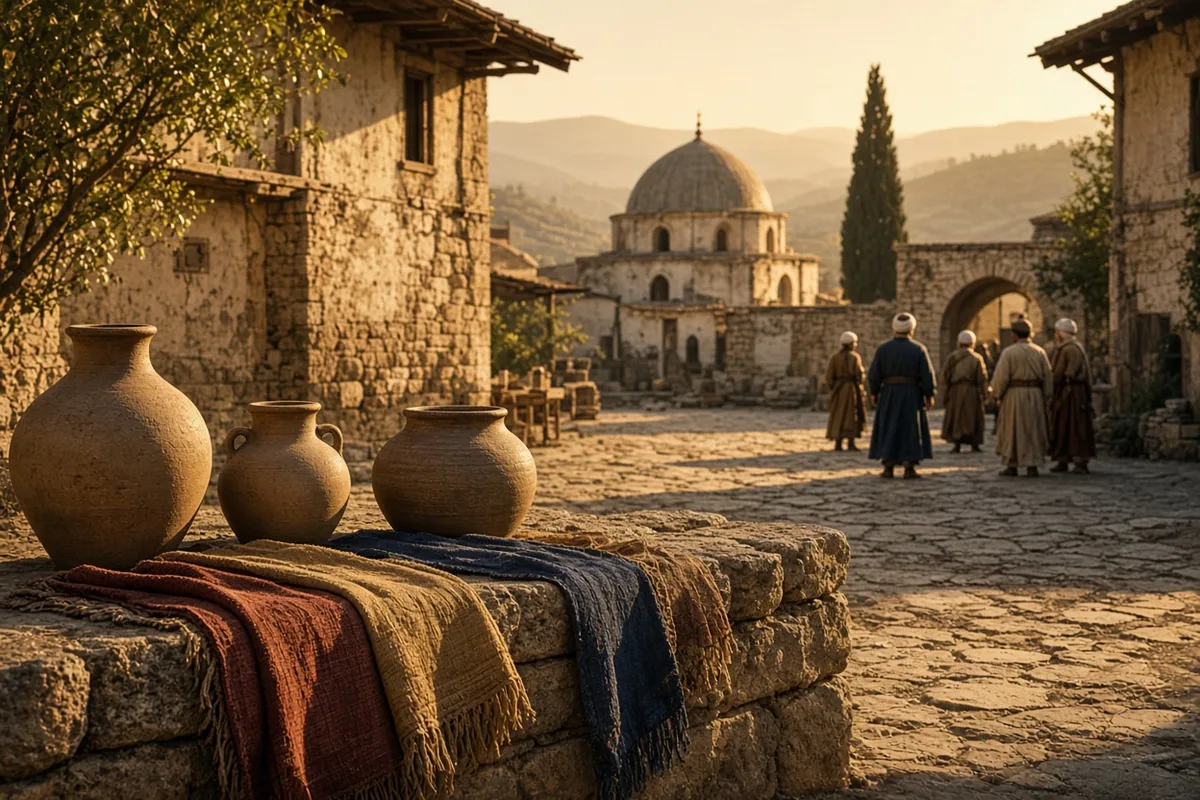
Back in the United States the same statements were filed at the offices of Youth With A Mission in Colorado Springs, where Matthew Hand logged the final count of 452 walkers who had completed at least one national segment. In October 1999 a follow-up letter from Mufti Ekrem Sabri arrived, dated 3 September, thanking the delegation for the visit to the Haram and quoting the Arabic phrase “better late than never” that Chief Rabbi Lau had used. Sabri’s letter mentioned the exact number of participants who had entered the compound—seventeen—and requested continued contact through the address of the Church of the Redeemer on Muristan Street. Cathy Nobles answered that letter on 22 October, enclosing transcripts of conversations recorded at three cafés along Souk Khan el-Zeit on 15 July.
By spring 2001 Lynn Green had returned to the Old City twice more, once in March to meet again with Patriarch Diodoros and once in November with a smaller group of twelve who walked only the segment from Acre to Haifa. On 9 November 2001 the Israeli newspaper Haaretz printed a short notice of the second visit, quoting Green’s statement at the Western Wall that the 1999 apology remained on file at the Chief Rabbinate. The same year a Turkish translation of the original Cologne statement was posted at the entrance to the Hagia Sophia museum in Istanbul, dated 15 August 2001 and signed by the director of the museum, with a footnote recording that 187 Turkish citizens had attended the public reading in 1999.
In 2005 the Reconciliation Walk archive was transferred to a single room at the YWAM base in Harpenden, England, where the original 452 signed statements were catalogued by date and country. A ledger entry from 14 June 2005 lists the number of letters received from participants after the Jerusalem leg: 219. One of those letters, from a walker named Sarah Thompson, described a return visit she made alone in 2003 to the spice stall near Jaffa Gate; the vendor’s name was recorded as Fatima al-Khalidi, who had kept the business open every day except Fridays since 1987. Thompson noted that al-Khalidi still remembered the group of four hundred and fifty and asked whether any of them had come back.
Ten years later, in 2009, the same archive received a request from the mayor of Tyre, Lebanon, for a copy of the statement read at the Tyre citadel on 4 June 1999. The mayor, a former militia commander named Walid Shams, wrote that the document had been read aloud again at a municipal council meeting on 12 March 2009 and that thirty-two residents signed a reply. Shams included the exact coordinates of the citadel gate where the walkers had stood: 33°16′12″N 35°11′54″E. The reply letter was filed under the same accession number as the original 1999 logbook.
By 2019 only eight of the original core organizers remained in regular contact. Matthew Hand, then living in Tel Aviv, sent an annual email on 17 July listing the current locations of the archived statements: one copy at the Chief Rabbinate, one at the Greek Orthodox Patriarchate, one at the office of the Mufti, and the master set still in Harpenden. In that year’s message he noted that Cathy Nobles had passed away in March 2018 and that her training notes on “sitting in kitchens” had been digitized, totaling 184 pages. The last entry in the shared file was a photograph taken on 16 July 1999 outside the Church of the Redeemer showing Green, Nobles, and the woman from the spice stall standing together; the caption listed only the date and the three names.
The woman from the spice stall, Fatima al-Khalidi, continued to run the stall until her death in 2022. Her daughter, who took over the business on 3 April 2022, keeps a single printed copy of the 1999 statement inside a plastic sleeve beneath the counter, next to the scale used for measuring cardamom. On most mornings she opens the stall at 6:45 a.m., the same time the walkers had passed above the street twenty-three years earlier, and places the paper where customers can see the English text and the Hebrew blessing from Psalm 118 that Rabbi Lau had spoken.
The daughter, Amina al-Khalidi, recorded the first customer inquiry about the statement on 11 May 2022 when an Austrian tour guide named Helmut Voss asked to photograph the English text beside the Hebrew blessing. Voss noted the time on his phone as 7:12 a.m. and forwarded the image to the YWAM archive in Harpenden, where archivist Daniel Rowe logged the entry under accession 1999-J-17 on 14 May. Rowe added a cross-reference to the 2005 ledger that had listed 219 post-Jerusalem letters, bringing the total correspondence file to 241 items by June 2022.
In October 2023 Matthew Hand, now eighty-one and living in the German Colony neighborhood of Jerusalem, received an email from Walid Shams’s successor as mayor of Tyre requesting an updated digital scan of the Acre-to-Haifa segment statement. Hand forwarded the request to Rowe, who scanned the original Cologne document at 600 dpi and attached the coordinates 33°16′12″N 35°11′54″E that Shams had supplied in 2009. The file was returned on 27 October with a cover note stating that thirty-two signatures from the 2009 municipal meeting remained attached to the paper copy still held in the Tyre city hall vault.
Lynn Green visited the spice stall once more on 15 July 2024, accompanied by his daughter Rachel, who had not walked in 1999. Green stood at the counter for fourteen minutes and asked Amina whether the cardamom scale still balanced at the same weight her mother had used in 1999. Amina answered that the scale had been recalibrated only once, on 4 March 2017, after a customs inspector from the Israeli Antiquities Authority checked the brass weights against serial number 87214. Green then read aloud the single sentence from the 1999 statement that named the 1099 killings and placed a new signed copy, dated that day, beneath the plastic sleeve next to the older version.
The Reconciliation Walk archive in Harpenden received its final physical addition on 3 February 2025 when Sarah Thompson mailed the notebook Roger had carried on the 1999 flight. Thompson, then seventy-four and living in Portland, Oregon, included a photocopy of the page where Roger had underlined the date 1099 three times and added the Istanbul telephone number. Rowe entered the notebook under a new accession number, 2025-T-03, and recorded that the original 452 signed statements now occupied two acid-free boxes measuring 32 by 25 by 18 centimeters each.
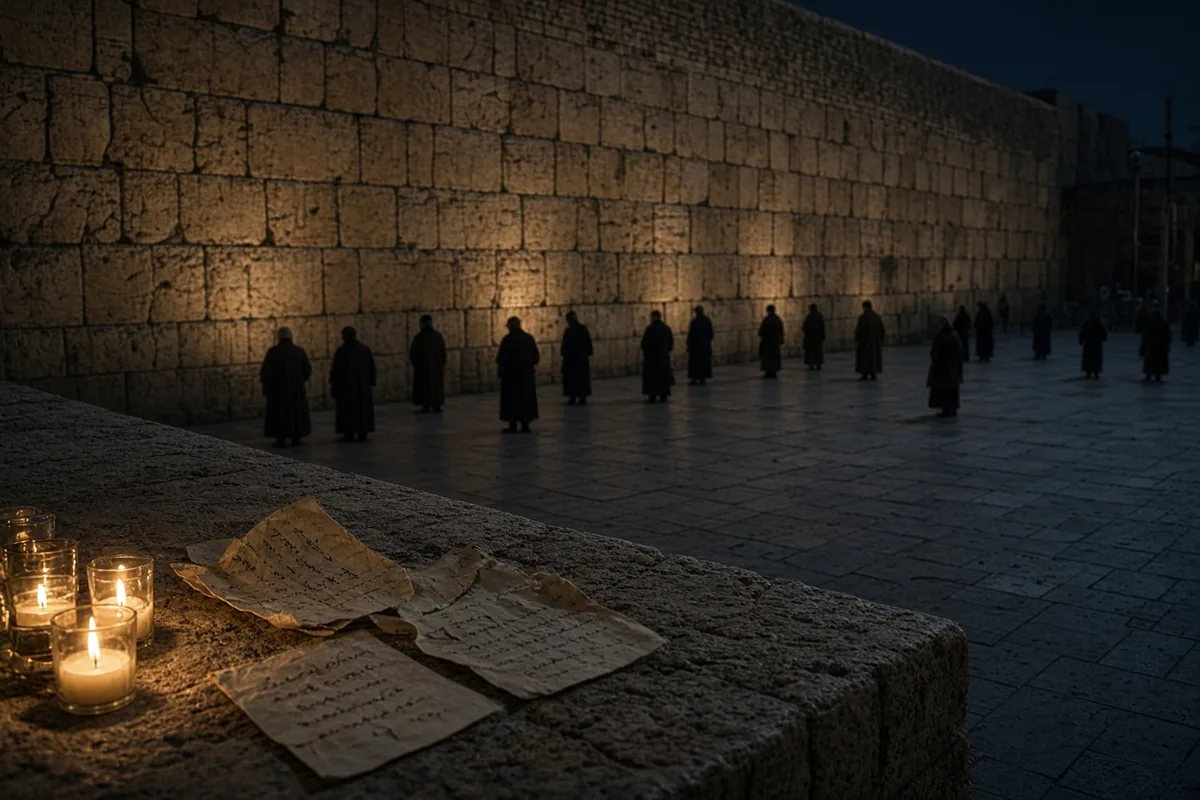
On 17 July 2025 the annual email from Matthew Hand listed the current locations of all known copies: the Chief Rabbinate still held the 1999 original, the Greek Orthodox Patriarchate retained the version presented to Diodoros, and the Mufti’s office in Jerusalem kept the Arabic translation that Ekrem Sabri had acknowledged in his 3 September 1999 letter. Hand added that the master set in Harpenden had been consulted twice in the preceding twelve months, once by a doctoral student from the University of Haifa and once by a researcher from the Hagia Sophia museum who confirmed the 15 August 2001 posting date remained visible on the entrance plaque.
Amina al-Khalidi opened the stall at 6:45 a.m. on 9 October 2025 and found that the plastic sleeve had slipped behind the scale during the night. She retrieved it, smoothed the two sheets, and placed them back beneath the counter before the first customer arrived at 7:03. That customer, a Danish pilgrim named Lars Madsen, asked whether the English text matched the version read at the Damascus Gate in 1999; Amina answered that it did and pointed to the underlined date 1099 on the second page.
By December 2025 only three of the original core organizers still answered email: Matthew Hand in Jerusalem, Daniel Rowe in Harpenden, and Rachel Green, who had begun compiling an index of every café mentioned in the 184 pages of Cathy Nobles’s digitized training notes. Rowe completed the index on 12 December and noted that the entry for Souk Khan el-Zeit listed three specific addresses where Nobles had recorded conversations on 15 July 1999. The final line of the index read simply “Fatima al-Khalidi, spice stall, Jaffa Gate approach, cardamom, 6:45 a.m.”
Amina al-Khalidi stood at the counter on the morning of 21 March 2026, the thirtieth anniversary of the Cologne signing, and adjusted the plastic sleeve so that both pages lay flat under the morning light. A single customer, an elderly man who gave his name as Roger from London, stopped at 7:19 a.m., read the Hebrew blessing from Psalm 118 aloud in a low voice, and asked whether anyone from the 1999 group had ever returned to the same spot at the same hour. Amina answered that her mother had kept the stall open every day except Fridays since 1987 and that the paper had not moved from its place beneath the scale since 3 April 2022.