



The Revolution survived 1776 on luck, mud, and endurance
In 60 seconds
- McCullough frames 1776 as the year the revolutionary cause nearly collapsed outright, not a confident founding year.
- Washington's early generalship showed costly misjudgment; his decisive value was absorbing catastrophe without quitting the field.
- A former bookseller's winter haul of heavy guns forced the British out of Boston without a shot at the city.
- After the Long Island rout, fog and Marblehead fishermen got the trapped remnant across the East River while Howe's fleet never moved.
- Howe's choice to enter winter quarters rather than finish the New Jersey chase left room for a counterstroke.
- Trenton's quick, lopsided Christmas win mattered chiefly because it reversed collapsing morale and enlistments.
The big idea
McCullough contends the real founding drama of 1776 was military near-collapse, not the signing in Philadelphia. Unplanned breaks plus Washington's refusal to yield the field, not destiny or early brilliance, carried the cause into 1777.
The book in brief
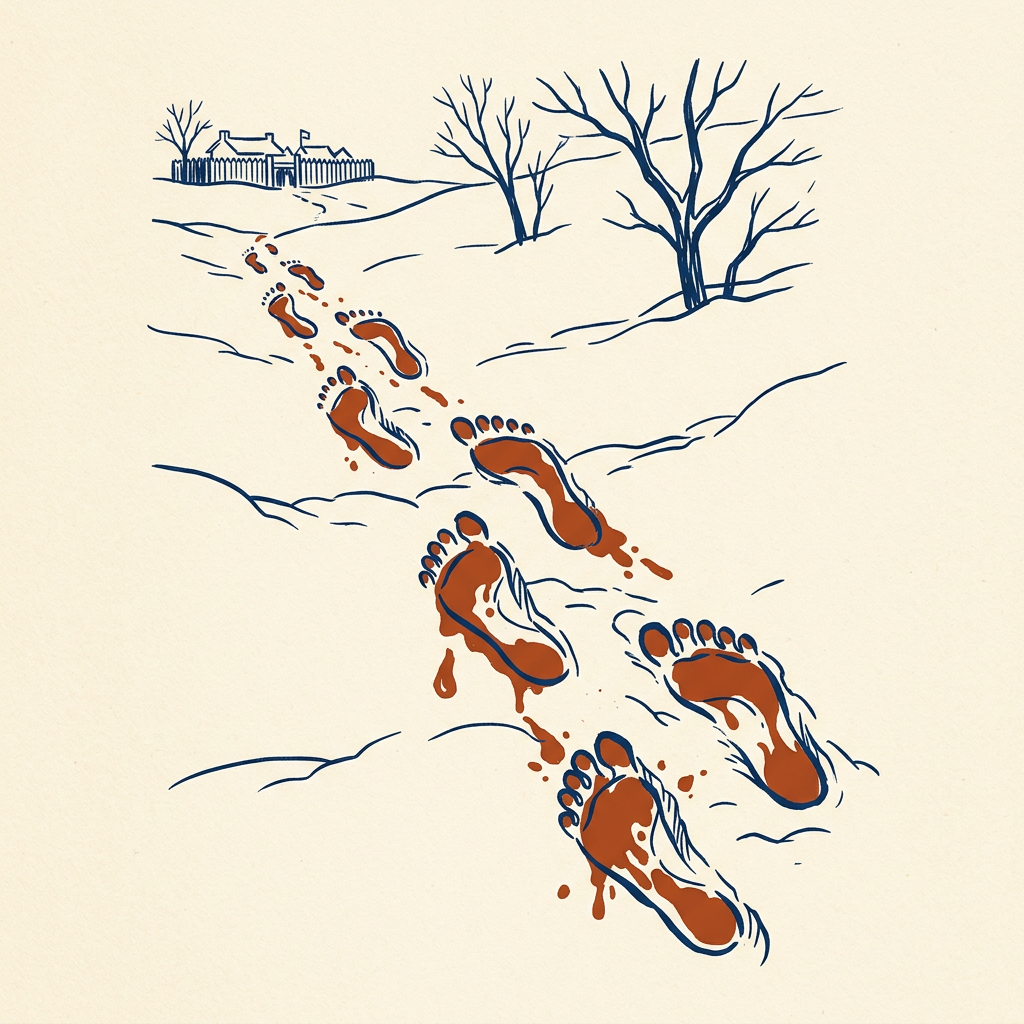
Bloody bare footprints marked the New Jersey roads as the Continental Army shrank toward nothing. McCullough starts earlier, at a hopeful siege of Boston, and ends with a Christmas gamble that barely kept the cause alive.
The Boston chapter turns on logistics, not glory. Heavy guns had to come from far-off Ticonderoga; once they crowned the heights over the harbor, Howe evacuated in March rather than risk bombardment. That bloodless success fed a dangerous optimism.
New York was a trap from the start—islands ringed by water the British navy owned. Washington defended it anyway. The August disaster on Long Island tore the position apart through an open pass. Only river fog and a regiment of fishermen got the survivors to Manhattan while the fleet sat still.
Autumn stripped what remained. Fort Washington fell with thousands captured and precious stores lost. The retreat across New Jersey left men without shoes and enlistments racing toward a New Year's cliff. Howe, holding the advantage, stopped for winter quarters instead of finishing the chase.
On a stormy Christmas night Washington risked the ice-choked Delaware. Trenton was over in about an hour; Princeton followed days later. The ground taken was small. The morale rescued was not. Letters from hungry privates and homesick Hessians carry the year: disease killed more than combat, and endurance among ordinary men mattered as much as any council of war. McCullough keeps the Declaration almost offstage so mud and fear can argue where the founding actually nearly failed.
Context
David McCullough published the book in 2005 as tightly focused narrative history drawn from published letters, diaries, and existing editions of papers from Washington, Nathanael Greene, and British officers. Reviewers credited narrative craft and accessibility rather than new archival discovery or fresh interpretation. The scope is deliberately narrow: one army, one northern year—Boston, New York, New Jersey—not the full Revolution.
The key ideas
1
A year almost lost
McCullough inverts 1776 from triumphant founding into the year the cause nearly died while Congress declared nationhood into a vacuum.
He spends almost no time in Philadelphia on drafting committees or Jefferson's language. The camera stays on the Continental Army—from a confident Boston siege to a December force whose enlistments were set to vanish at midnight on New Year's Eve.
Washington wrote privately that he thought the game was nearly up. The July Declaration gets almost no narrative weight beside the disaster unfolding on Long Island and Manhattan. Congress asserted nationhood while the army meant to defend it was chased across three colonies.
That structure is the argument. McCullough wants the year felt as retreat, disease, desertion, and doubt. Whether the cause reached 1777 was decided in camps and crossings, not in the document signed in summer.
In practice: By autumn Washington doubted the army could survive the winter as the New Year's Eve enlistment deadline closed in with no replacements in sight.
2
An untested commander
Washington's early generalship was marked by costly misjudgment; his real worth was perseverance that kept a defeated army in being.
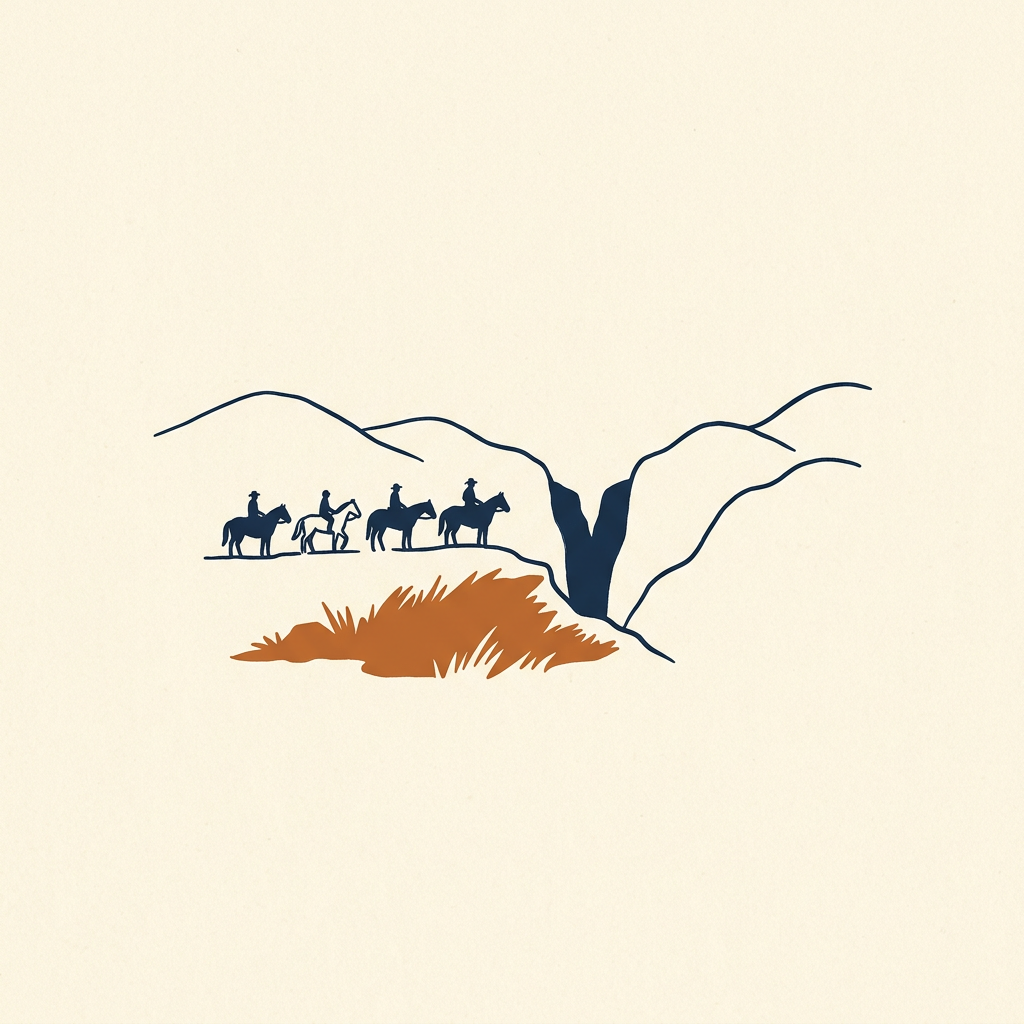
He had never commanded a force this large, and McCullough does not soften the record. At Long Island in August he divided his forces and left the eastern route around his position watched by only five officers on horseback. Howe's army, with Hessian auxiliaries, marched through overnight and rolled up the flank from behind.
The result was a rout that pinned the remnant against the East River with the British in place to finish them. McCullough reads the battle as a commander still learning courage from competence. Washington exposed himself to fire on the later New Jersey retreat, yet his early reads of British intentions were often wrong, and war councils talked him out of still worse ideas.
Other commanders in his spot resigned or were replaced. He kept the army alive, however diminished. McCullough treats that as the year's decisive fact: a Continental Army in retreat was still an army; an army destroyed ended the war.
In practice: Five horsemen were all that guarded Jamaica Pass the night Howe walked through it undetected.
3
Cannons over the mountains
The war's first clean American strategic success came from a bookseller's unglamorous winter logistics haul, not battlefield tactics.
- 1Find the guns59 cannons and mortars at captured Ticonderoga, 300 miles away
- 2Winter haulOx sledges over frozen rivers and the Berkshires in roughly six weeks
- 3Heights above BostonGuns overlook the harbor; Howe evacuates rather than face bombardment
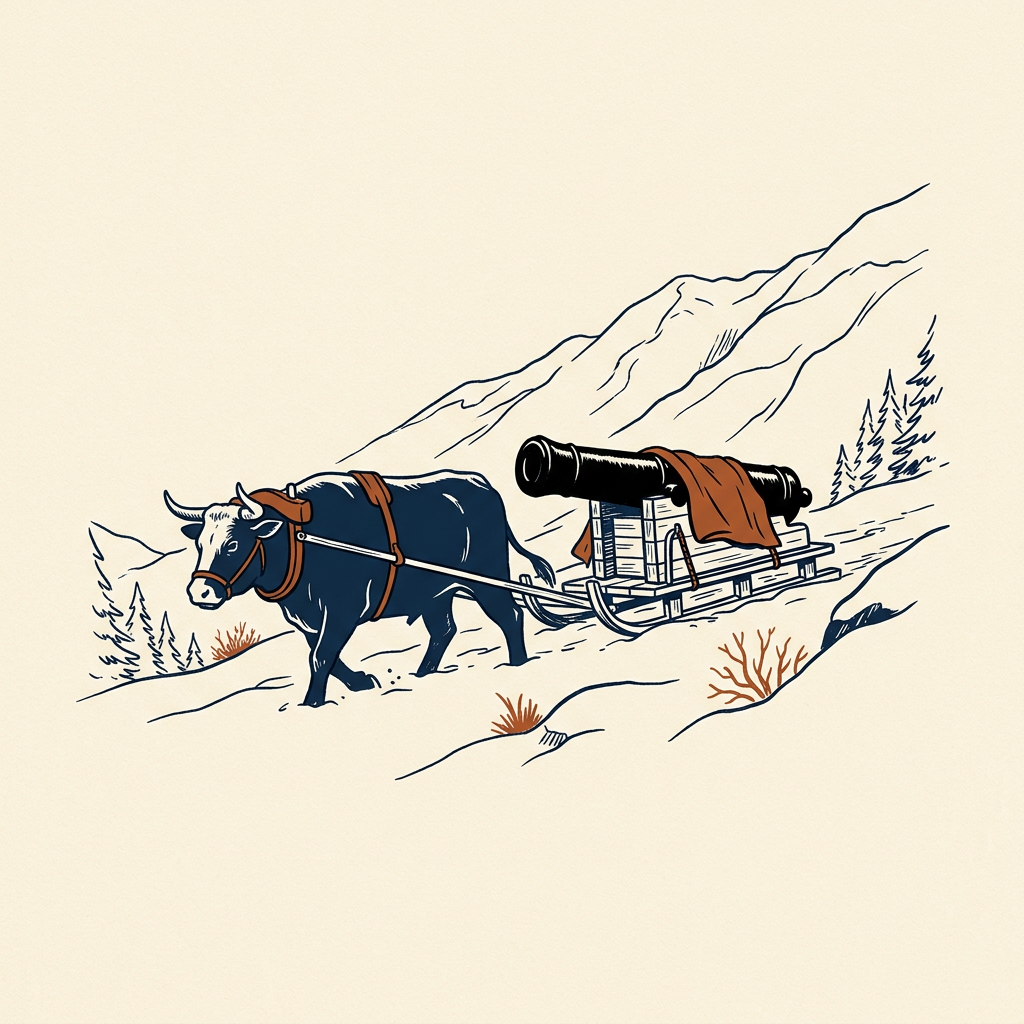
Before Washington could push the British from Boston he needed heavy artillery. The nearest guns sat 300 miles away at Fort Ticonderoga, already taken from the British. The job fell to Henry Knox, a 25-year-old former Boston bookseller with no formal military training and a self-taught grip on artillery.
Over the winter of 1775 to 1776 he moved 59 cannons and mortars, some weighing over a ton, on ox-drawn sledges across frozen rivers and through the Berkshires into Massachusetts. The run took roughly six weeks in brutal cold with no combat at all.
When the guns finally crowned Dorchester Heights over the harbor in early March, Howe saw fleet and garrison exposed and chose evacuation over battle. The British left without a shot fired at the city. McCullough treats the episode as the war's real character in miniature: teamsters and improvisers decided as much as muskets.
In practice: Howe evacuated Boston on March 17 after the guns appeared on the heights, ending the siege without urban combat.
4
False confidence after Boston
The easy Boston win bred optimism that nearly destroyed the army when Washington tried to hold indefensible New York.
- March 17, 1776British evacuate Boston with no American losses
- August 27, 1776Long Island collapses through undefended Jamaica Pass
- Night of August 29Fog and Glover's boats carry about 9,000 men to Manhattan
The March evacuation cost the Americans nothing and left Washington's circle too sure of what the war would look like. New York was another problem entirely: a city on islands, ringed by water the British navy controlled absolutely, almost impossible to hold without a fleet.
Washington defended it anyway, splitting forces between Manhattan and Brooklyn Heights—a choice McCullough calls strategically dubious from the start. On August 27, British and Hessian forces roughly 20,000 strong poured through the open pass and overwhelmed the position.
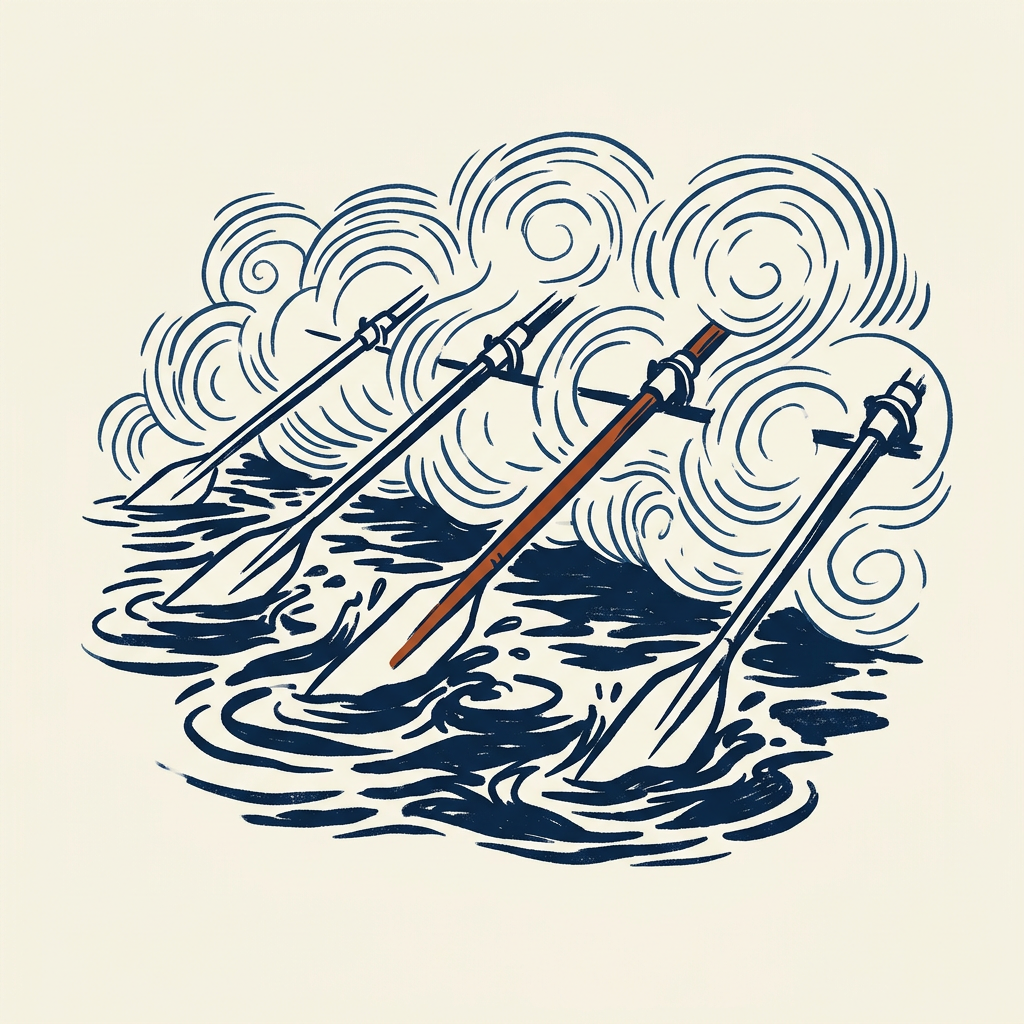
Total destruction was stopped by weather and improvisation, not plan. Thick fog settled on the East River the night of August 29. Colonel John Glover's Marblehead fishermen ferried about 9,000 survivors to Manhattan in secret, finishing as the fog lifted. Howe's fleet never moved. Boston had been preparation; Brooklyn was escape. McCullough is plain that luck of that kind cannot be counted on twice.
In practice: Glover's fishermen rowed the remnant army to Manhattan under fog while the British fleet stayed put.
5
Howe's winter pause
Survival through autumn 1776 owed more to British caution than American strategy; the halt into winter quarters left room for a counterstroke.
The conventional finish
Drive the broken army across the Delaware and end the rebellion before spring
What Howe did
Halt, take winter quarters, assume mop-up can wait
After the river escape the campaign only worsened. On November 16 Fort Washington on Manhattan fell to assault. Nearly 2,800 Americans were captured along with muskets, cannon, and supplies while Washington watched from across the Hudson, unable to intervene.
The retreat across New Jersey stripped the army to bone. Men marched without shoes. Desertion thinned the ranks daily. Enlistments neared year's end with no replacements coming.
Howe held a clear military advantage yet did not press the chase to its end. He settled troops into winter quarters across New Jersey and assumed, by conventional logic, that the rebellion could be mopped up in spring. McCullough treats the pause as a hinge: pursuit across the Delaware in December might have finished the war. The delay instead gave Washington space to plan a blow of his own.
In practice: Howe distributed his army into winter quarters and stopped, handing the remnant across the river time it should not have had.
6
Trenton's outsized small win
The Christmas attack mattered less for ground taken than for the collapse in morale and enlistments it reversed.
On the night of December 25 to 26 Washington moved roughly 2,400 men across the ice-choked Delaware in darkness and a rising storm. Artillery and horses were loaded onto flat-bottomed Durham boats in freezing conditions; the crossing nearly failed before it began.
The target was a Hessian garrison at Trenton. Surprise at dawn was near total. Colonel Johann Rall was slow to respond. Within roughly an hour American forces had taken close to 900 prisoners and suffered only a handful of casualties. A week later, on January 3, 1777, a night march slipped past a larger British force and won again at Princeton.
Neither fight was large by European standards, and neither reset the strategic balance alone. McCullough's point is psychological and political. News of Trenton checked the enlistment collapse, stiffened wavering legislatures and Congress, and gave European observers—including a French court quietly weighing help—reason to think the Americans might last. The army that recrossed in triumph was barely stronger in material terms than the one that had fled New Jersey weeks earlier.
In practice: Close to 900 Hessians were taken in about an hour while American losses stayed minimal.
7
Hunger over grand strategy
Soldiers' letters show the year decided as much by cold, disease, and endurance among ordinary men as by any commander's plan.
Much of the book's texture comes from junior officers, enlisted soldiers, and civilians in the path of both armies. They describe physical misery more than glory. Smallpox and dysentery killed more soldiers over the year than combat did. Camps on both sides were filthy enough that disease outran either army's ability to replace losses.
Men wrote home about missing shoes, blankets, and reliable food. Officers requisitioned supplies from local farms that could barely spare them, straining ties with civilians the army claimed to protect. The New Jersey retreat reads differently through a private's bleeding feet than through a general's report of maneuver.
McCullough also lets ordinary British and Hessian soldiers speak—cold, homesick, unconvinced of the political cause they were enforcing. The cumulative effect is an implicit claim: 1776 turned as much on which side's rank and file could suffer longer as on councils of war. That claim reframes the military narrative already told.
In practice: Disease, not battle, was the year's larger killer, and camp filth spread faster than recruitment could fill the gaps.

8
Myth against a near-run year
Stopping the story at Princeton in January 1777 leaves the founding's uncertainty intact instead of soothing it with later victory.
McCullough gathers the hinges that could have broken the other way and refuses to dress them as American masterstrokes. His larger case, built by accumulation, pushes against reading the founding as destiny calmly unfolding.
National mythology casts 1776 as the confident birth of a nation bound to succeed. The page shows a ragged, underfed, often beaten force that survived mainly by refusing to fully disband. Crediting inevitability, he implies, erases both the luck involved and the endurance required.
By ending at Princeton rather than carrying readers to 1783, he withholds the comfort of a known ending. The men inside that winter had no such comfort. The book becomes a brief against triumphalist history: outcomes that look locked in hindsight felt radically uncertain to the people living them.
In practice: McCullough closes the arc in January 1777 so readers sit with the same unresolved stakes the army faced after Princeton.
Key terms
- Jamaica Pass The eastern route around the American lines on Long Island, left almost unguarded and used by Howe to roll up the flank.
- Howe's pause The British decision to settle into New Jersey winter quarters instead of finishing the chase across the Delaware.
- Dorchester Heights High ground over Boston harbor where Knox's hauled guns forced Howe to evacuate rather than face bombardment.
- Durham boats Flat-bottomed craft that carried men, horses, and artillery across the ice-choked Delaware toward Trenton.
- Contingency McCullough's stress on weather, timing, and an opponent's caution—not master plans—as what kept the cause alive.
What to do
- Treat early setbacks as salvageable data, not final verdicts on the whole effort.
- After any sharp loss, ask what you can still reconvene with rather than whether to quit.
- Build slack into plans for the weather-like factor you cannot schedule.
- Prepare a fallback for that uncontrolled risk before you need it.
- After a bad stretch, hunt the nearest small achievable win that can restore morale out of proportion to its size.
Questions to think with
- Where has an outcome you call inevitable actually hinged on weather-like luck or an opponent's pause?
- Should perseverance without early tactical skill still count as decisive leadership?
- How does a war change shape when disease and shoes matter more than declarations?
- What happens to national myth if the story of 1776 always stops at Princeton?
- When is a small, well-timed win worth more than a decisive battle that may never come?
The other side
The book rests on published letters and existing paper editions rather than major new archives; reviewers saw craft and accessibility more than fresh interpretation. Its scope is one northern campaign year and says little about the South, the naval war, ideology, or political economy—the Declaration itself is nearly a footnote. It is largely silent on enslaved people (including those held by Washington and those who sought freedom with the British), Native nations, Loyalists, and women. Critics also note a great-man frame that centers Washington and understates militia, local committees, and Congress. Read it as vivid campaign narrative, not a full history of the Revolution.
Who it's for
Readers who assume the Revolution's outcome was inevitable and want to feel how close it came to failing; history readers who prefer narrative built from letters and diaries over ideological analysis; students of leadership watching how a commander survives repeated defeat without losing the army.