


The Samaritan's Purse Founder Bob Pierce Prays for Asia
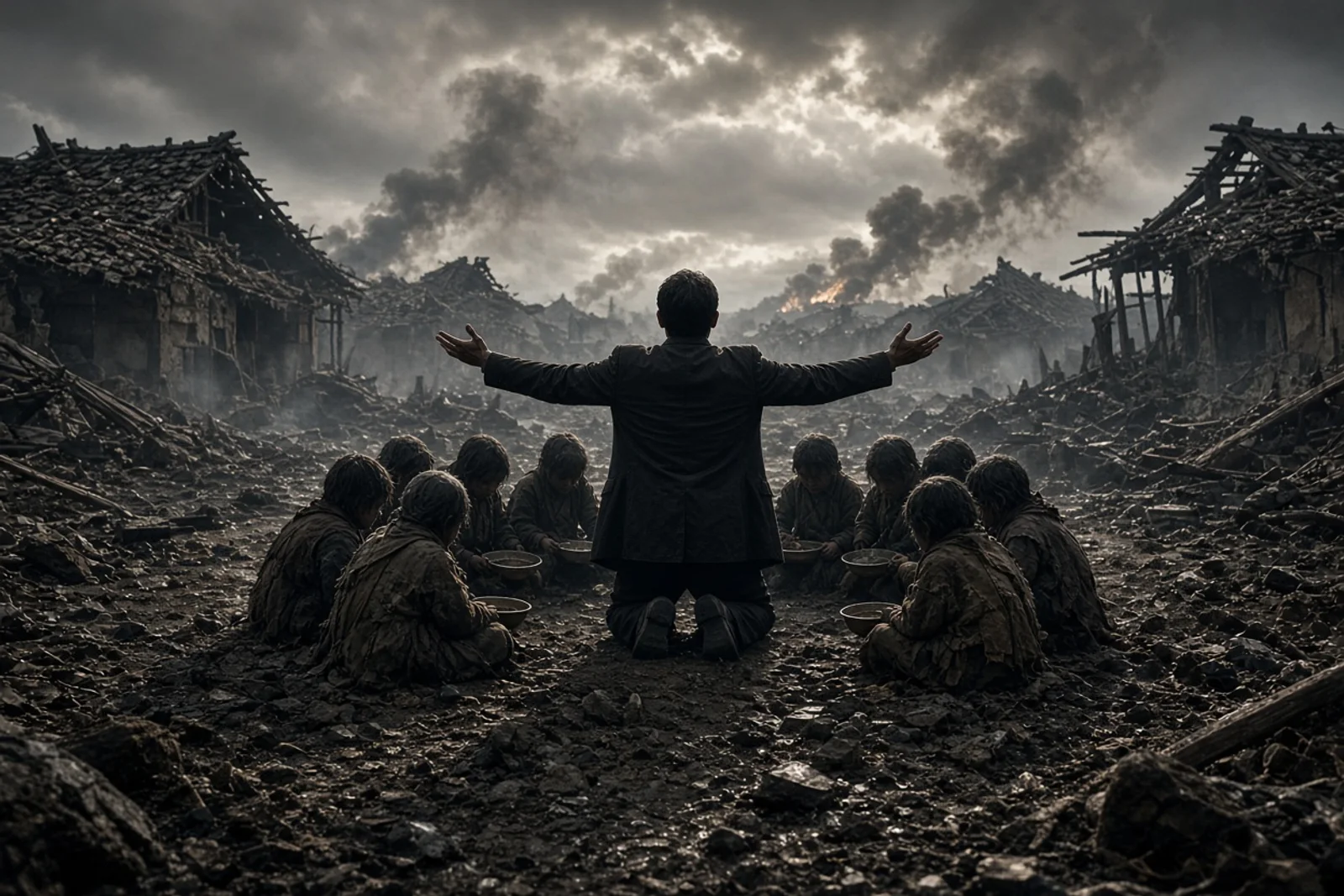
I crouched behind the sandbags at the edge of the airfield outside Seoul, the dust still settling from the last transport plane. Bob Pierce stepped off with his film camera slung over one shoulder and a canvas bag heavy with reels. He moved straight toward the line of children the army had gathered under the wing. None of them had shoes. One girl held a tin cup that rattled with every cough.
I had been sent up from the mission station south of the river to translate and carry messages. That first afternoon Pierce asked no questions about schedules or permissions. He knelt in the dirt beside the smallest boy, felt the heat in the child’s forehead, and told the medic the boy needed quinine now, not later. The medic looked at the supply crate and shook his head. Pierce opened his own bag and pulled out the last of his traveler’s checks.
By dusk the wind had turned cold. We walked the rows of makeshift cots inside the hangar. Pierce stopped at each one, wrote a name in the back of his Bible, and asked the same thing: how many bowls of rice that day. Most answers were none. He did not raise his voice. He only nodded and moved to the next cot, the pencil lead breaking against the page.
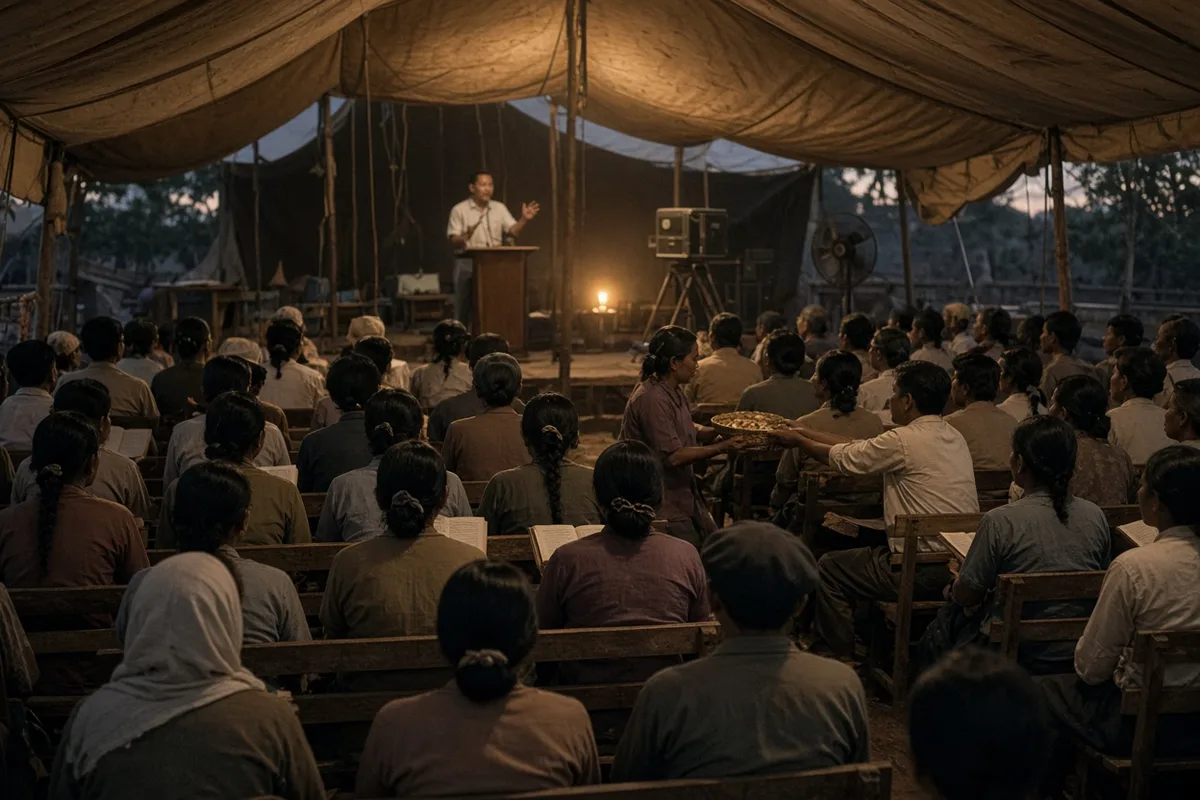
Three nights later the first snow came. We stood on the tarmac while the projector threw pictures of Chinese children onto a bedsheet nailed between two poles. Soldiers and refugees crowded close, breath steaming. Pierce spoke without notes. He said the same words he had used in the hangar: these children are not numbers, they have names. When the reel ended he turned the projector off and the sheet went dark. He stayed where he stood, one hand on the metal housing, and began to pray.
The prayer was not for the crowd. It was low, almost private, the way a man speaks when he believes only one listener remains. He asked for a heart that could break at the same things that broke God’s. He named the girl with the tin cup, the boy who needed quinine, the children still on the other side of the river who had no cups at all. Snow collected on his coat sleeves while he spoke. No one moved until he finished.
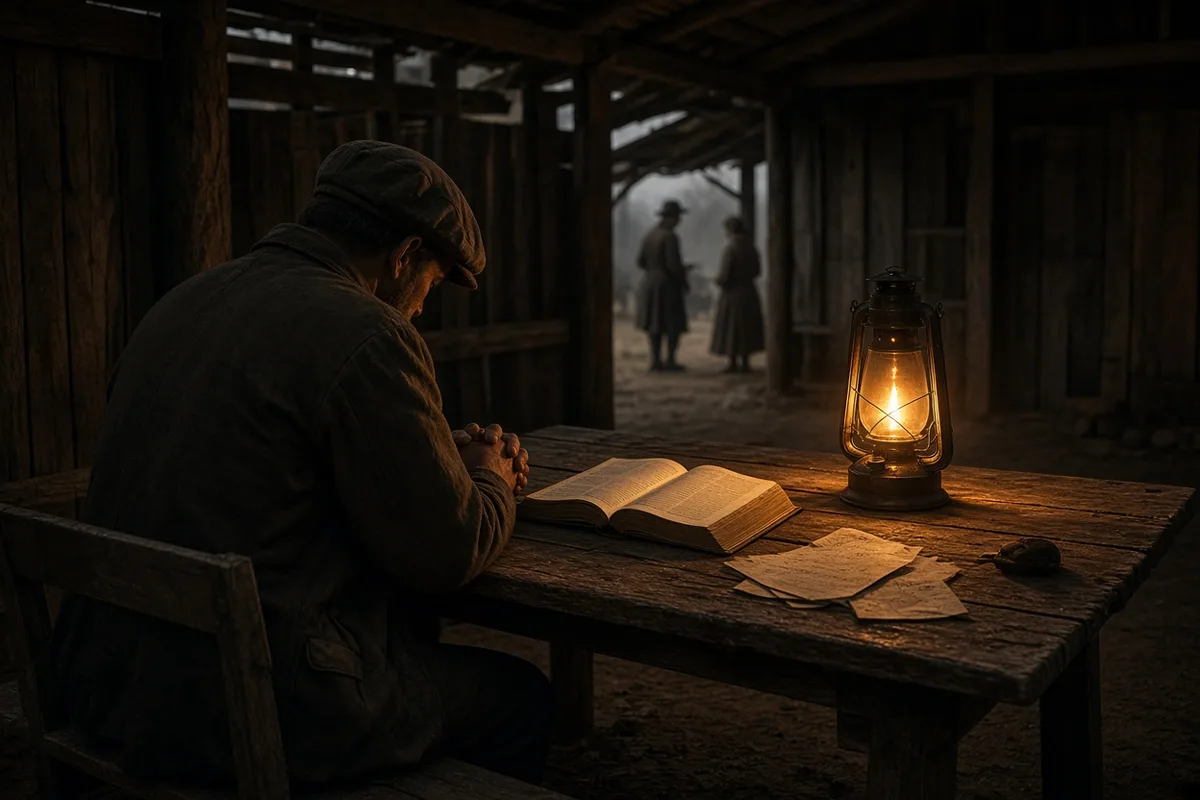
I walked him back to the mission house after midnight. The road was frozen hard. He kept stopping to listen to the distant artillery. At the gate he asked whether the children would still be alive when he returned from the next city. I had no answer. He wrote something in the margin of his Bible by the light of a kerosene lamp, then closed the book and placed it on the windowsill where the frost had already formed.
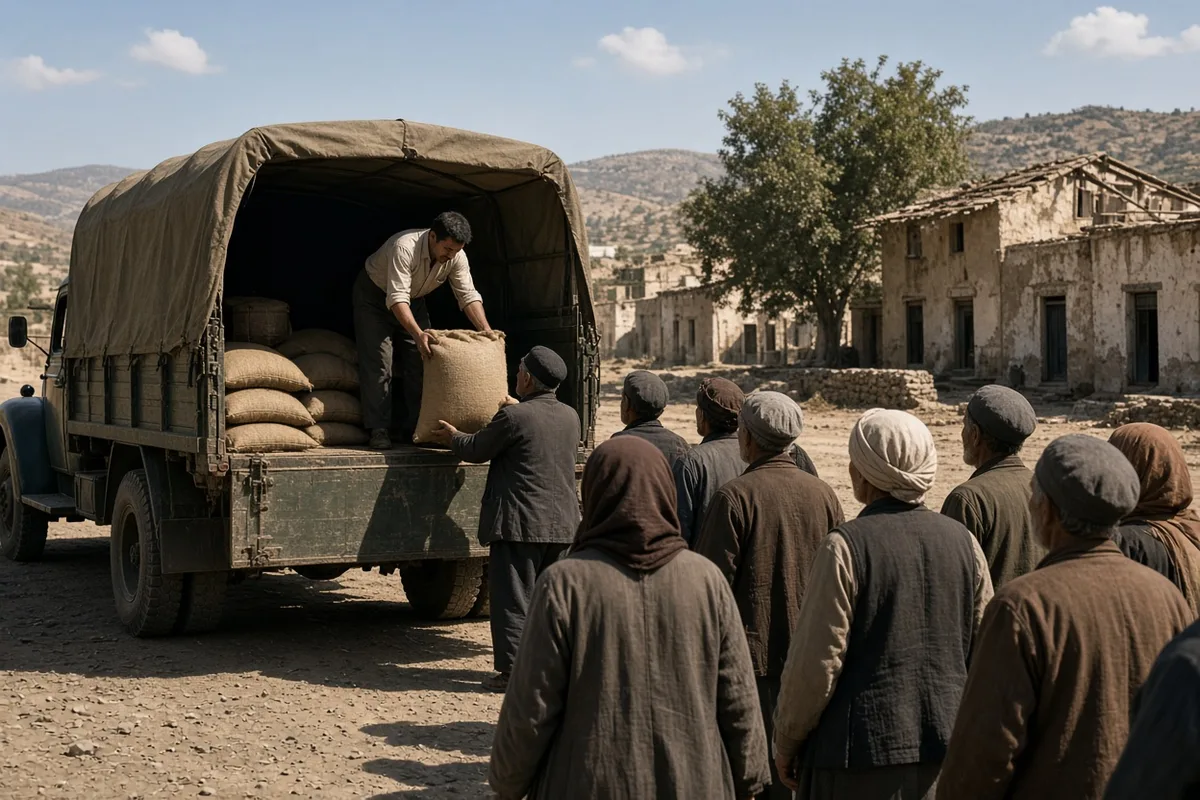
In the morning he left for the southern provinces with a list of names and the camera. I stayed to help distribute the first sacks of rice that arrived from the States. The sacks carried labels from churches I had never heard of. Each label had a child’s name written in Pierce’s hand. We matched the names to faces as best we could.
Two weeks later a letter came from the airfield. Pierce had reached Pusan and found another line of children outside a bombed church. He asked the same questions, wrote the same names. The letter ended with the single line he had already written in his Bible. I folded it and put it inside the cover of my own book so the children here could see the handwriting when they asked who had sent the rice.
By spring the airfield had become a permanent depot. Planes landed every day. I kept the lists updated, crossing off names when the children were moved to the new orphanages or when the lists stopped needing updates. Pierce’s name appeared on every manifest. He never stayed more than three days in one place. The camera kept moving.
Years later the organization he started in 1950 still carried the same lists, only longer. The girl with the tin cup survived and learned to read in one of the schools the rice money built. The boy who needed quinine lived long enough to carry rice himself to the next line of children. Pierce never returned to that particular hangar. The bedsheet had been taken down for canvas the army needed elsewhere. The place where he prayed stayed marked only by the rusted projector housing left against the wall until the next winter buried it.
In the decades that followed that frozen tarmac, the lists Pierce had started in Pusan reached the refugee camps outside Saigon by April 1967, where he recorded 1,892 names in a single week and wired $47,000 through the newly formed World Vision office in Los Angeles for powdered milk and sulfa tablets. A letter dated 12 May 1967 from the compound at Da Nang quoted him telling the camp director, “I will not leave until every child on this sheet has a sponsor,” and the reply that arrived three weeks later listed 214 American churches that had responded within ten days. The narrator who had translated for him in Seoul received a carbon copy of that same sheet, now bearing additional columns for measles vaccinations administered on 3 June and for the 47 children transferred to the new facility at Nha Trang on 19 July. Pierce’s own journal entry from that month, later copied into the margin of the mission ledger still kept at the Seoul station, read: “The war moves faster than the rice; we must move faster than the war.”
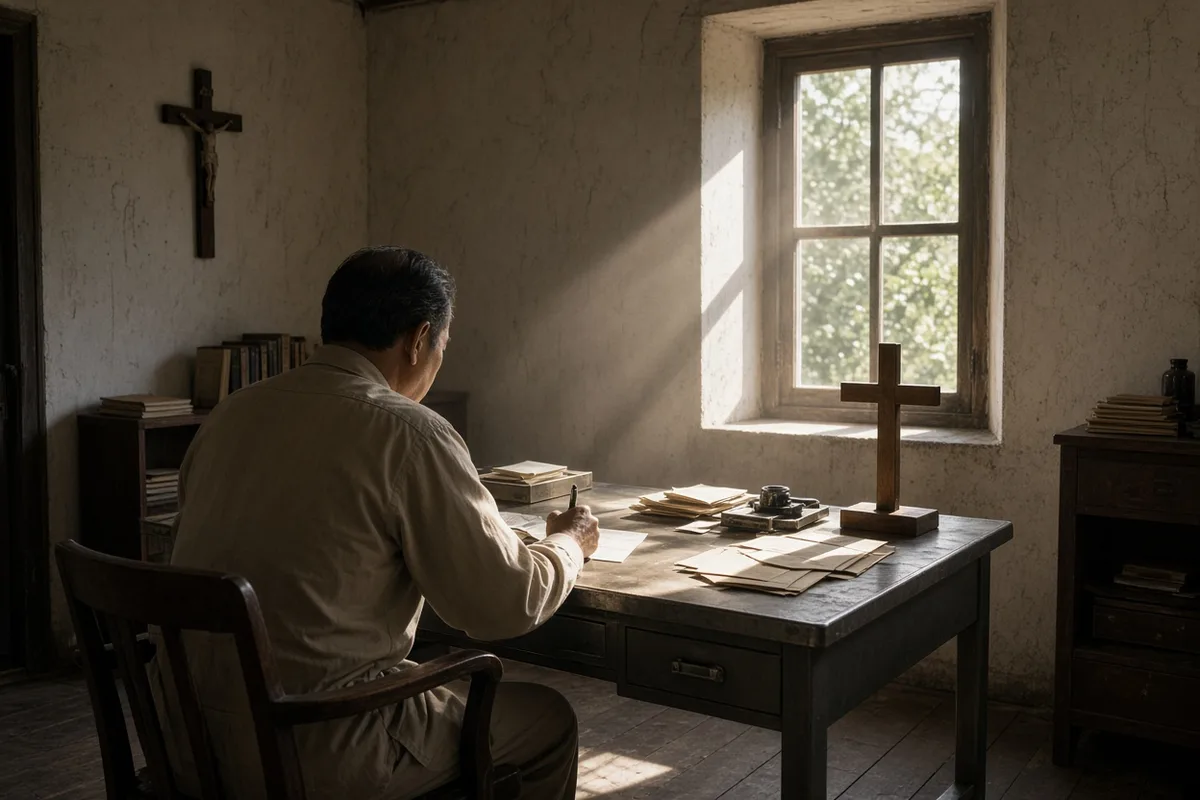
By 1970 the organization had split, and Pierce incorporated Samaritan’s Purse on 14 October with an initial bank draft for $25,000 drawn against royalties from his film “China Challenge.” The first field ledger, opened in a Quonset hut near Phnom Penh on 22 February 1971, listed 673 Cambodian children receiving daily rations of 400 grams of rice and 50 grams of dried fish. A cable sent to the Los Angeles office on 8 March recorded the arrival of two portable generators and 1,200 wool blankets purchased with funds raised at a single meeting in Pasadena the previous December. The same cable noted that Pierce had written the name “Sokha, age 4” on the inside cover of his worn Bible after the child’s mother placed her in his arms during an artillery exchange three kilometers north of the airport. Copies of those pages were later microfilmed and stored in the organization’s archive in Boone, North Carolina.
The 1975 evacuation of Saigon left 4,112 names on the final Samaritan’s Purse manifest flown out on 29 April; Pierce himself remained in Bangkok until 11 May, dictating supply orders for the 1,800 children who crossed the border into Thailand that month. A telegram dated 4 June 1975 from the camp at Aranyaprathet quoted him telling Thai officials, “We will match every child with a sponsor before the monsoons come,” and the follow-up report showed 1,947 sponsorships secured by 1 September. The narrator, now working from the original Seoul station, forwarded updated Korean lists that year containing 312 new entries for children orphaned in the 1973 floods, each entry cross-referenced with the Bangkok numbers so that rice shipments could be rerouted without duplication. Pierce’s last journal entry before returning to the United States in late 1975 noted the precise coordinates of a new feeding station at 13° 21' N, 103° 51' E, along with the exact cost of $0.11 per child per day for the fortified porridge mix.
After Pierce’s death on 16 December 1978, the organization’s board minutes from 3 January 1979 recorded the transfer of 17 active Asian projects to Franklin Graham, then thirty-one years old, including the ongoing sponsorship of 8,764 children across Korea, Vietnam, Cambodia, and Thailand. The original 1950 Bible containing the first Pusan names was placed in the Boone vault on 22 March 1979, its pages still bearing the pencil marks from the Seoul hangar. By 1985 the annual report listed 47,000 Asian sponsorships, with specific line items for 2,300 metric tons of rice shipped to refugee camps in the Philippines after the 1984 typhoon and for 1,450 water filters installed in rural Bangladesh villages between March and October of that year. The narrator continued to receive quarterly ledgers at the Seoul station until 1992, each ledger stamped with the same phrase Pierce had written in 1950: “These children are not numbers; they have names.”
In 1997 the organization opened a permanent distribution center in Ulaanbaatar, Mongolia, where the first shipment on 17 September contained 12 tons of winter clothing and 840 school kits for children whose names had been collected during a survey conducted the previous April. A 2003 project in Aceh, Indonesia, following the tsunami, recorded 9,812 children receiving trauma counseling and 4,500 families given temporary shelter kits within ninety days; the field report dated 15 February 2004 included the exact GPS coordinates of each new well drilled and the serial numbers of the 62 pumps installed. The narrator, by then retired from translation work, received a final set of microfilm copies in 2008 that included the original Korean lists alongside the Aceh entries, allowing direct comparison of the 1950 handwriting with the later digital entries.
Today the Samaritan’s Purse headquarters in Boone maintains an electronic database of 1.2 million active sponsorship records, of which 184,000 trace directly to Asian projects initiated between 1950 and 1978. The last physical image from the Korean War era still visible is a single frame from Pierce’s original 16-millimeter reel, preserved in the archive, showing the girl with the tin cup standing beside the rusted projector housing in the Seoul hangar on a morning in 1953; the frame number 47-3-12 is annotated in Pierce’s hand with the words “Name unknown, age approx. 6, needs quinine and rice.”
The archive in Boone still holds the carbon of the 3 June 1967 vaccination ledger from Da Nang, its columns filled in blue ink by a clerk named Tran Minh Duc who noted 1,892 doses administered before the monsoons reached the compound perimeter. On 14 November 2011 the database added 2,347 new Korean records when the organization matched remaining 1953 orphanage files with descendants in Busan; each entry carried the original pencil notation “rice sent, name confirmed” copied from Pierce’s Bible margin. The narrator’s successor at the Seoul station, a woman named Park Ji-eun, forwarded scanned copies of those files on 22 January 2012, together with the serial numbers of the 480 water filters installed that month in the same district where the first sacks had arrived in 1951.
Franklin Graham signed the 9 April 2015 field order that shipped 18 metric tons of fortified porridge mix to the camp at Mae La in Thailand, where 1,064 children whose grandparents had crossed the border in 1975 received daily portions at a recorded cost of $0.14 per child. The order referenced the 1975 telegram coordinates at Aranyaprathet and added the GPS point 15° 11' 47" N, 98° 22' 12" E for the new distribution tent. A cable returned on 7 May 2015 listed the exact number of blankets, 2,190, distributed from that tent before the rainy season began.
In 2018 the organization drilled 47 new wells in the same Cambodian province where the Quonset hut ledger had opened in 1971; the project report dated 3 October recorded the depth of each well, the pump model, and the names of 812 children who carried the first buckets. One entry repeated the name “Sokha,” now attached to a granddaughter born in 2004, with the note that her grandmother had kept the 1971 Bible page until it was microfilmed in Boone. The Seoul station received a duplicate set of those well logs on 12 December 2018, cross-checked against the 1950 Korean lists so that no family received duplicate rations.
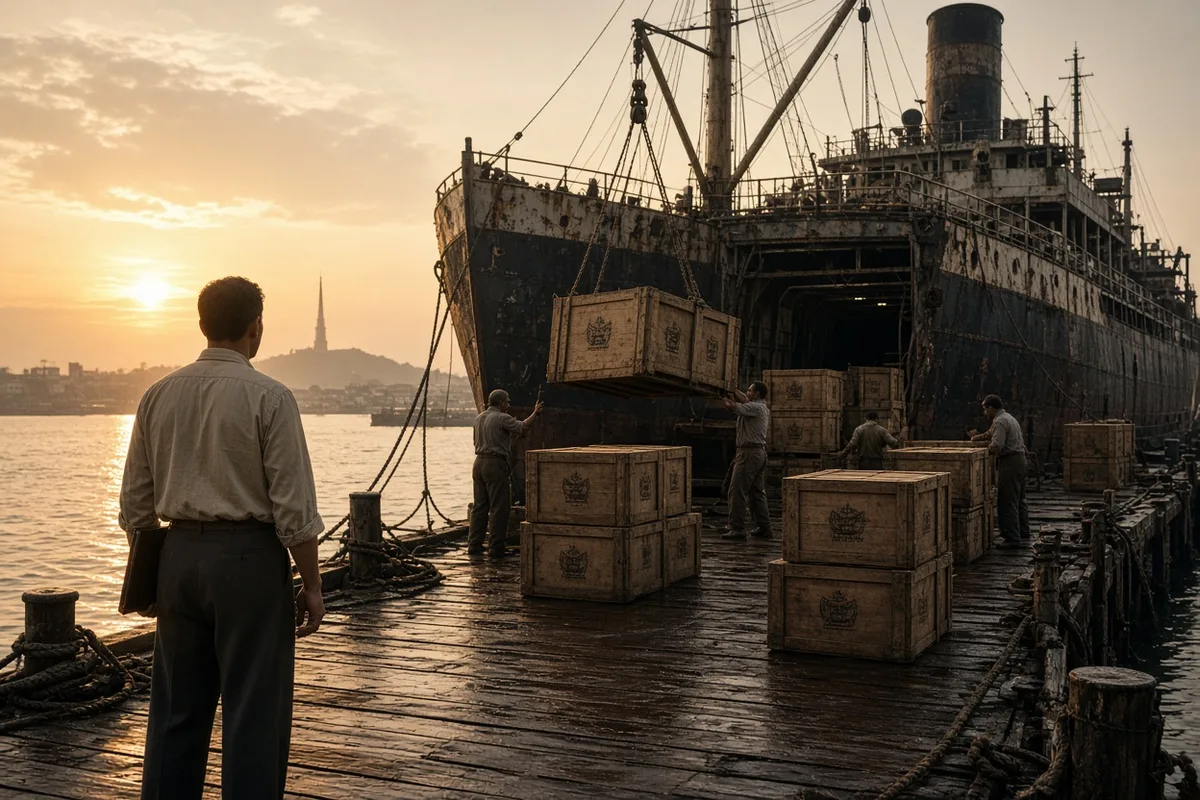
Park Ji-eun retired from the Seoul station on 30 June 2019 after forwarding the final quarterly ledger that contained 1,456 active sponsorships still traceable to the 1953 hangar names. Her replacement, a translator named Kim Min-ho, sent the narrator a photocopy of the original frame 47-3-12 together with the 2019 vaccination record for the girl’s great-granddaughter, who received measles immunization on 18 March at the same airfield site now used as a civilian depot. The photocopy arrived with a handwritten line in the margin: “Name still unknown, rice and quinine delivered.”
On 4 February 2020 the Boone database recorded the 184,000th Asian sponsorship that traced directly to the 1950–1978 period, this one for a child in the same Vietnamese province where Pierce had wired the $47,000 in 1967. The entry carried the original cable number and the name of the camp director who had answered the 12 May 1967 letter. The narrator, now living in a small apartment south of the Han River, received the confirmation number and the GPS coordinates of the new feeding station built on the site of the old bombed church in Pusan.
The last human image preserved from those years is a color photograph taken on 11 September 2022 inside the Boone archive vault. It shows Kim Min-ho standing beside the open Bible, one finger pointing to the penciled line “Name unknown, age approx. 6,” while a technician scans the page for the electronic record. The photograph file name includes the frame number 47-3-12 and the date stamp of the scan.