



Harris argues the felt self is a brain-made construction testable by attention

In 60 seconds
- Harris argues spiritual experiences of ego-dissolution and unity are real mental events religion monopolized but does not own.
- The felt 'I' perched behind the eyes, he claims, cannot be found under honest looking and is a construction, not bedrock identity.
- Split-brain work and default-mode findings, in his reading, show unified selfhood as a brain-generated appearance whose intensity training can change.
- Meditation is framed as a repeatable introspective experiment; psychedelics can force the same insight but fade without ongoing practice.
- Contemplative insight, he warns, confers no moral authority—gurus can dissolve the self and still exploit students.
- Everyday suffering, on his account, comes from identifying with the voice in the head; that grip can loosen without rebirth, karma, or a church.
The big idea
Harris argues that the ordinary sense of a fixed, separate self is a mental construction rather than a given fact, and that careful attention can verify this directly. Spiritual insight is real and can ease suffering, he claims, yet it needs no supernatural metaphysics, guru worship, or institutional religion to be worth pursuing.
The book in brief
Harris starts by prying apart two things usually glued together: raw experiences of self-transcendence and the metaphysical stories religions tell about them. Ego-dissolution, boundless love, and unity are, he insists, real events in the mind—reportable, sometimes measurable—and fellow atheists who toss them out with dogma are throwing away data.
From there he turns the knife on the most basic assumption most people never check: that a unified 'I' sits behind the eyes watching life happen. Under close inspection that witness, he says, cannot be found. Neuroscience is then brought in as corroboration—split brains and quieted self-referential networks—to treat the self as a brain-generated appearance rather than an immovable core.
The practical method is meditation reframed as experiment: sit, look, notice whether the separate watcher shows up. Psychedelics enter as a chemical proof-of-concept and a warning—they can force the insight and still leave you unchanged by Wednesday. Teachers get the same empirical standard: genuine insight into consciousness does not equal moral or intellectual authority, and the guru model is structurally prone to abuse.
The payoff is nonduality stripped of mystique: suffering, Harris claims, is generated by identifying with thought, not by thought itself, and that identification can loosen. He closes by arguing secular life can keep the practice and the psychological shift while discarding rebirth, souls, karma, and institutional packaging. The final stance is modest—decades of practice have not delivered certainty about ultimate reality, only a changed relationship to his own mind.
Context
Harris writes as a secular-raised neuroscientist and philosopher who began meditating and using psychedelics as a teenager, then spent years trying to understand those experiences without accepting the cosmologies his teachers attached to them. The 2014 book aims to rescue contemplative claims about the illusory self from religious traditions and place them on footing compatible with reason and science, addressing fellow skeptics who dismiss spiritual experience as fantasy.
The key ideas
1
Experience without dogma
Harris claims genuine spiritual experience is a legitimate domain of mind that religion monopolized but does not own.
Religious packaging
Karma, soul, guru cosmology offered as the meaning of the experience
Harris's cut
Raw ego-dissolution and unity treated as investigable mental events
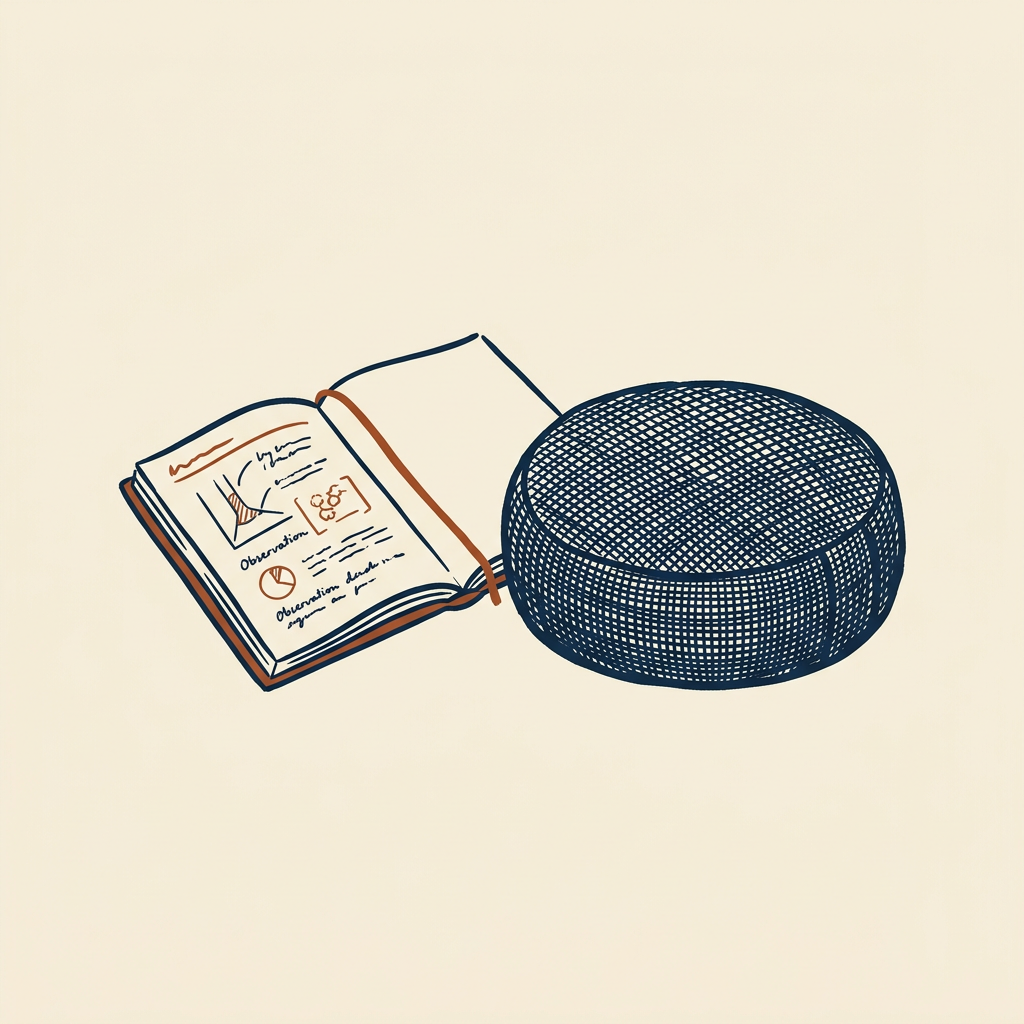
Harris pries apart the raw event of self-transcendence from the metaphysical stories usually glued to it. Experiences of ego-dissolution, boundless love, or unity are, on his account, real mental events—reportable and in some cases neurally measurable. Dismissing them as religious fantasy, a move he sees as common among fellow atheists, discards data along with dogma.
The methodological claim is simple: study altered states the way you study any other mental phenomenon, through careful first-person report plus third-person brain science. Doing so does not require granting that a guru's account of karma or a soul is true.
That separation sets the book's entire project. Contemplative claims get stripped down to what can actually be verified about the mind, starting with the assumption almost no one questions—that a unified self is doing the experiencing.
In practice: Raised secular, Harris began meditating and taking psychedelics as a teenager, had experiences that felt more meaningful than ordinary life, and spent years trying to understand them without accepting the teachers' cosmologies.

2
The missing witness
The felt sense of a unified 'I' behind the eyes is, Harris argues, a construction that vanishes under honest inspection.
Harris's central claim is that the self most people take for granted—a persistent witness sitting somewhere in the head, observing thoughts and directing action—cannot be found when you actually look. Notice a thought arising, he asks, and try to locate the thinker separate from the thought. Done honestly, the exercise tends to yield absence, not discovery.
He leans on the same report appearing in William James and in Buddhist Abhidharma writers centuries apart as a sign that something structural is being noticed, not a cultural Buddhist artifact. Bodies and brains clearly exist and produce behavior; the narrower claim is that the specific feeling of being a subject perched behind the eyes is a psychological event that appears and disappears with how attention is used.
Everyone, he notes, has already had moments absorbed in music, sex, crisis, or flow where that sense of separation vanished without dysfunction. That alone, he argues, should raise doubt about how essential the ordinary self really is—and opens the practical promise that careful attention can loosen its grip and reduce suffering.
In practice: Harris asks the reader to watch a thought arise and hunt for the separate thinker; the honest result, he says, is not finding one.
3
Brain-made unity
Neuroscience, in Harris's reading, shows unified selfhood as a brain-generated appearance rather than an underlying fact.
Assumed starting point
One unified self sitting in the brain as given
Harris's reading of the data
Confederation of processes that outputs a feeling of unity
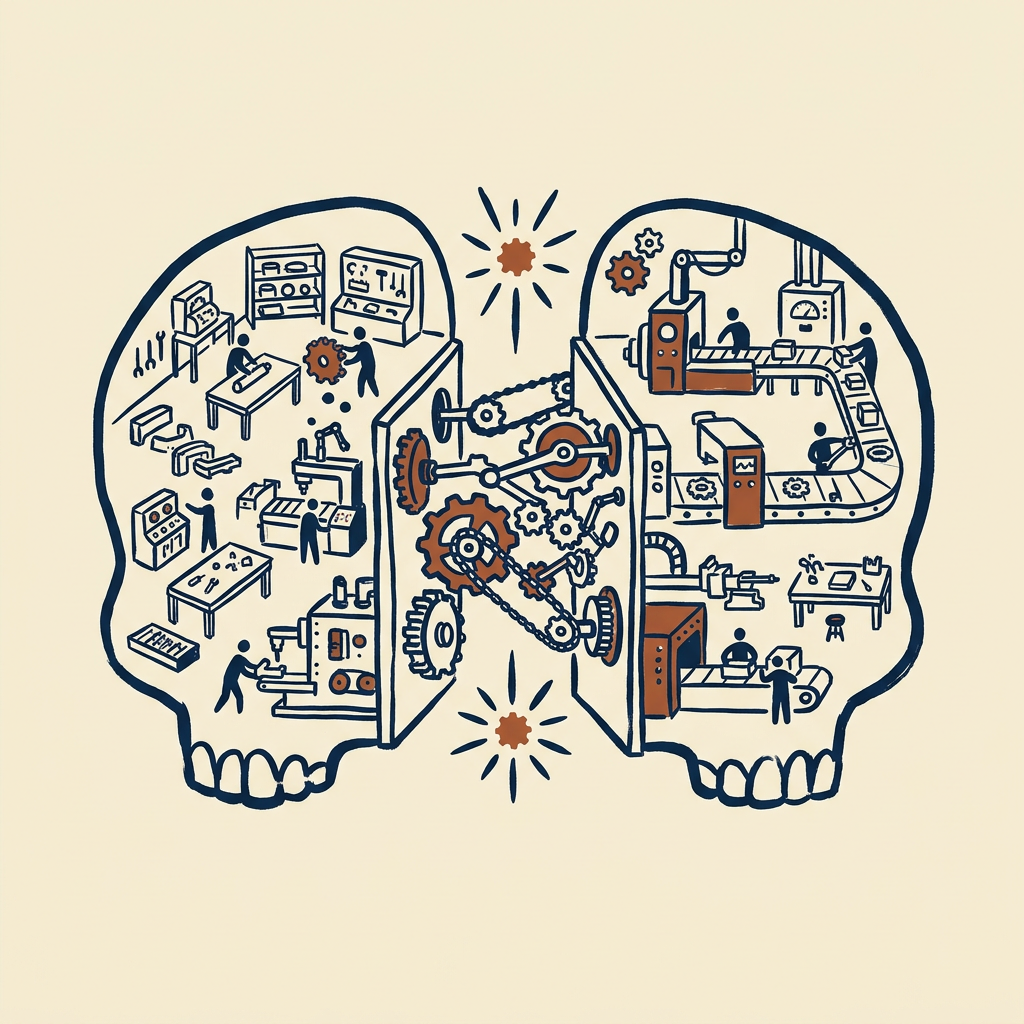
Harris turns from introspection to physiology. He cites split-brain research from Roger Sperry and later Michael Gazzaniga: patients with a severed corpus callosum behave as though two semi-independent decision-making systems share one skull, each able to initiate action without the other's knowledge. A single unified self literally sitting in the brain should make that division impossible; instead the brain looks like a confederation that ordinarily outputs the feeling of unity.
He also draws on default-mode network work, later expanded by Judson Brewer's fMRI studies of meditators, showing self-referential mind-wandering regions quiet during sustained meditative attention, correlating with reduced reports of a separate self. The sense of self, on this view, is a specific pattern of brain activity whose intensity varies with mental training.
That move converts a private-sounding claim about ego dissolution into something with observable correlates. It is meant to make the reader trust that meditation changes measurable brain function, not imagination.
In practice: Split-brain patients, in the research Harris cites, can act from one hemisphere without the other knowing—hard to square with one immovable self in the head.
4
Meditation as experiment
Meditation, properly framed, is an introspective experiment anyone can run—not a religious ritual.
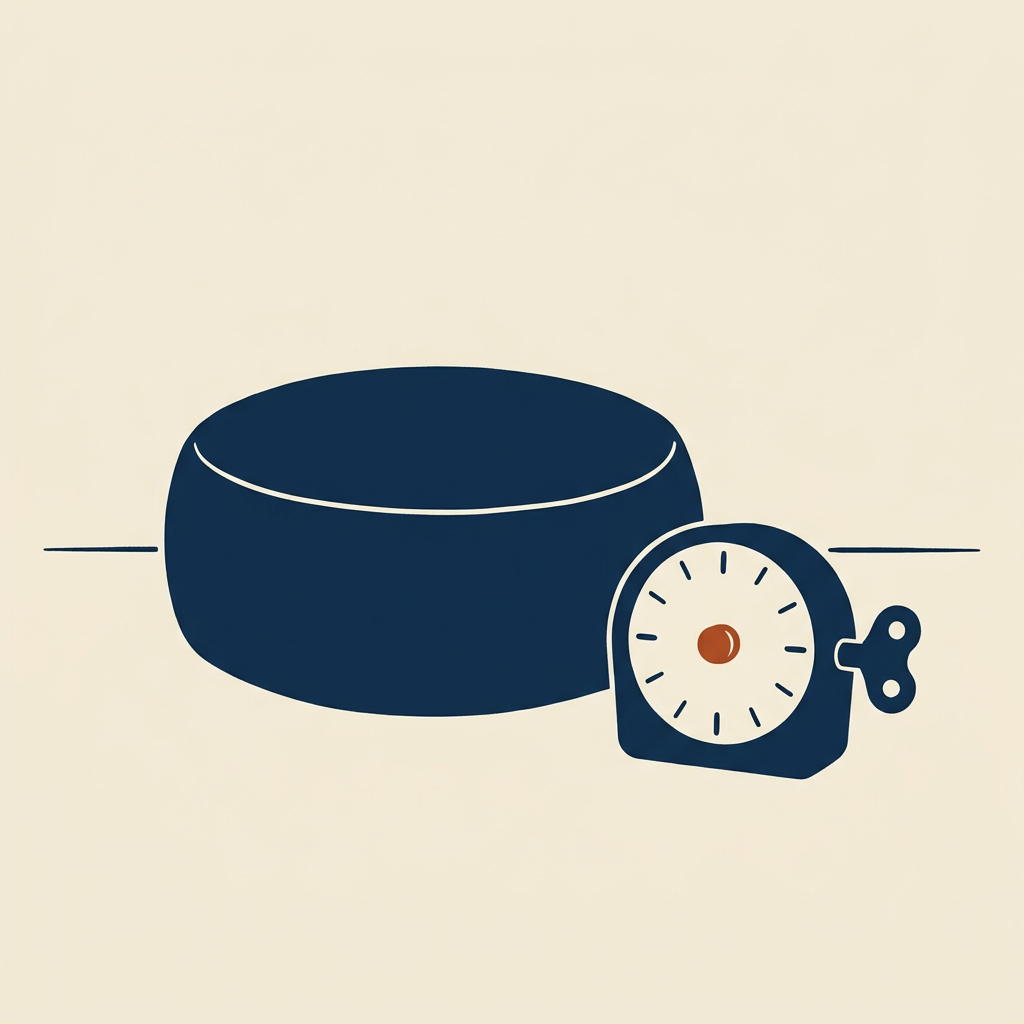
Once the self is treated as constructed and neurally tractable, Harris presents meditation—especially vipassana-style mindfulness and later nondual pointing-out instructions—as the tool for testing the claims directly. The basic instruction: sit, attend to breath or sensation, and notice what happens to the sense of being a separate watcher when attention turns on the watching itself.
He treats each sitting as a small experiment rather than devotion. You check, this time and every time, whether the self shows up when looked for. That is why, he argues, the practice keeps its value without Buddhist cosmology, karma, or rebirth: its claims are checkable in one's own experience within minutes, not only after a lifetime of faith.
The reframe is the pivot the book needs. A religiously derived technique becomes recommendable to secular readers because it is empirical in method even when its historical packaging was not.
In practice: On long silent vipassana retreats, including ten-day courses, sustained attention produced moments for Harris where the felt boundary between subject and object briefly collapsed, then ordinary self-concern returned.
5
Chemical proof, fading grip
Psychedelics can force the same insight into the constructed self that meditation aims for, yet remain unreliable as a substitute for practice.
Psychedelic shortcut
Rapid ego-dissolution that proves the self can reconfigure—then often fades
Trained attention
Slower insight built to stay usable in ordinary daily life
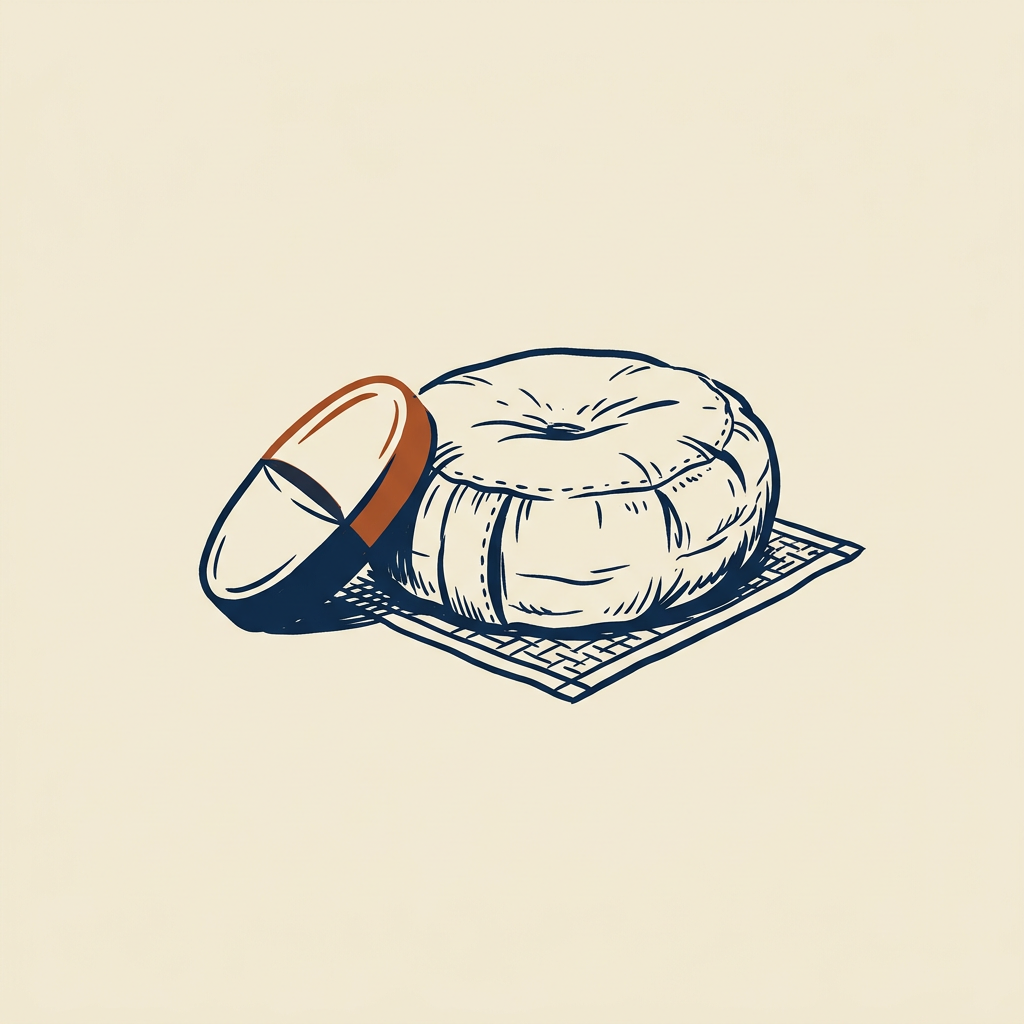
Harris gives psychedelics a full chapter because his first taste of self-transcendence came from MDMA and LSD as a teenager, not from the cushion. He treats the nervous system's capacity for radical reconfiguration on demand as scientifically respectable, citing later clinical work on psilocybin associated with Roland Griffiths at Johns Hopkins—single high-dose sessions linked to lasting rises in reported well-being and drops in fear of death among participants.
Limits matter as much as the proof. The drugs are unpredictable, can trigger prolonged anxiety or psychosis in vulnerable people, and the insight, however vivid, tends to fade without a framework or ongoing practice. Profound Saturday dissolution can leave someone exactly as anxious and self-absorbed by Wednesday.
So the real argument is hierarchical: chemicals can show the self is not fixed, which is valuable; they cannot replace the trained attention that makes the insight usable day to day. That is what meditation is built to supply.
In practice: An early LSD trip with a close friend dissolved ordinary self-concern and interpersonal boundaries into what felt like undivided love—evidence, for Harris, that the change is neural, not earned only by years of discipline.
6
Insight is not authority
Contemplative insight does not confer moral or intellectual authority; the guru model is structurally prone to abuse.
Harris turns critical on the traditions he drew from. A person can have a genuine, verifiable insight into consciousness and still be a liar, a predator, or simply wrong about metaphysics, because the skill of dissolving the sense of self is separable from moral character and factual knowledge.
He describes years with teachers in Tulku Urgyen's Dzogchen-influenced lineage and with students of H.W.L. Poonja in Advaita, and recounts warnings and secondhand witnessing of teachers who used enlightenment claims to justify sexual exploitation, financial control, or cult-like isolation. Figures such as Chögyam Trungpa and Sogyal Rinpoche stand as named examples of how spiritual attainment and ethical behavior can come fully apart.
The failure mode is predictable wherever students must submit to authority without independent verification—the failure mode religion is most prone to. His answer is not to abandon teachers but to test every claim, including claims of enlightenment, against one's own experience rather than accepting them on someone's word.
In practice: Harris cites concerns around Chögyam Trungpa and Sogyal Rinpoche as cases where alleged attainment and ethical conduct diverged sharply.

7
Suffering as mis-identification
The deepest traditions converge, Harris says, on one practical discovery: suffering is generated by identifying with thought, not by thought itself.
Across Dzogchen, Zen, and Advaita Vedanta, Harris finds the same claim: psychological suffering is not caused directly by unpleasant thoughts or circumstances but by automatic identification with the voice in the head as though it were the self. Nondual pointing-out instructions aim at a specific shift—noticing that awareness has no location, no edge, and is not other than what it knows—so thoughts keep arising without being mistaken for a thinker.
He treats this as a repeatable change in the relationship to experience, one he says he can access more reliably now than in early practice, and one that reduces reactivity to pain, anger, and desire without requiring those states to vanish. It is not numbness or detachment from life.
Suffering is optional only in a narrow technical sense: it is layered on top of unavoidable pain by the mind's habit of narrating itself as a separate victim. If there is no fixed self to protect, much of the effort spent protecting it becomes unnecessary—the payoff the earlier chapters were building toward.
In practice: In nondual pointing-out moments Harris describes, a teacher directs attention until thoughts continue but stop being taken as a thinker, easing reactivity without erasing feeling.
8
Keep the fruit, drop the church
Secular life can absorb contemplative fruits—honesty about impermanence and non-self—without supernatural claims or religious institutions.
Discard
Rebirth, karma, souls, ritual authority, institutional religion
Keep
Practice, attentional skill, reduced identification, ethics from shared vulnerability
Harris closes by insisting none of the preceding insights require rebirth, karma, souls, or other supernatural furniture. What transfers is the practice and the psychological shift; what should be discarded is the metaphysical packaging that accrued because these traditions grew up inside prescientific cultures.
A purely secular meditation practice, stripped of ritual and belief, still delivers the changes in attention and reactivity described earlier, he argues. Ethical behavior toward others is better grounded in shared vulnerability to suffering than in commandment.
The personal register returns at the end: decades of practice have not given him certainty about ultimate reality, but they have changed his relationship to his own mind—less mercy to passing moods, more real-time noticing that the self doing the suffering is not as solid as it feels. Spiritual life is real and worth pursuing on its own terms; it does not need a church, a prophet, or an afterlife to justify the effort.
In practice: Harris's own decades of practice, as he tells it, left him without final metaphysical certainty yet less at the mercy of moods and more able to see the self's lack of solidity in real time.
Key terms
- Self (ordinary) The felt sense of a persistent 'I' behind the eyes watching thoughts and directing action—what Harris says does not survive inspection.
- Ego-dissolution A real mental event in which the sense of being a separate subject temporarily collapses.
- Default mode network Brain regions active in self-referential mind-wandering that, in the studies Harris cites, quiet during sustained meditation.
- Vipassana Mindfulness-style meditation Harris treats as a repeatable experiment on whether a separate watcher appears.
- Nondual pointing-out Instructions that direct attention to awareness as without location or edge, so thoughts arise without being taken as a thinker.
- Guru model Teaching built on submitting to a teacher's authority without independent verification—structurally prone, Harris argues, to abuse.
- Identification The automatic taking of the voice in the head as the self; the habit Harris says generates much psychological suffering.
What to do
- Sit ten minutes each morning before checking your phone, attending to the breath and noticing thoughts without following their stories.
- Once a day, when a strong emotion arises, pause and try to locate the self that is supposedly feeling it; notice what you actually find.
- Treat one sitting as a small experiment: look specifically for the separate watcher and record whether it shows up.
- Read one primary contemplative account and handle its claims as testable hypotheses about your mind, not doctrine to accept or reject on authority.
- When a psychedelic or peak experience fades, return to trained attention rather than chasing the chemical shortcut again.
Questions to think with
- If you look for the thinker behind the next thought, what exactly do you find?
- Where have you already lost the sense of a separate self—music, crisis, flow—and what does that imply about how essential it is?
- How would you test a teacher's claim of insight without handing them moral authority?
- What portion of a current frustration is the raw unpleasantness, and what portion is the story of a self stuck with it?
- If rebirth and karma were false, which parts of contemplative practice would you still keep and why?
The other side
Harris's weakest point, the summary's critique notes, is evidentiary: he leans heavily on first-person introspective report even though work since Nisbett and Wilson in the 1970s shows people routinely confabulate about their own mental states, and his neuroscience citations (split-brain, default-mode correlations) show links between attention and self-referential activity without proving the strong philosophical claim that the self is illusory. Critics such as Evan Thompson argue he conflates the psychological sense of self with deeper problems of subjectivity and consciousness the book mostly sets aside; the treatment of religion underweights communal and ethical functions for people not seeking mystical experience; the psychedelics chapter predates fuller clinical literature of the later 2010s; readers wanting systematic no-self philosophy are pointed toward Dennett or Metzinger as more rigorous if less accessible.
Who it's for
Readers drawn to meditation or mystical experience but put off by religious packaging; skeptics and atheists curious whether contemplative claims about the self have empirical substance; people who have tried psychedelics or retreats and want a secular framework for what happened.