


The Story of the Blind Pastor Who Translated Braille
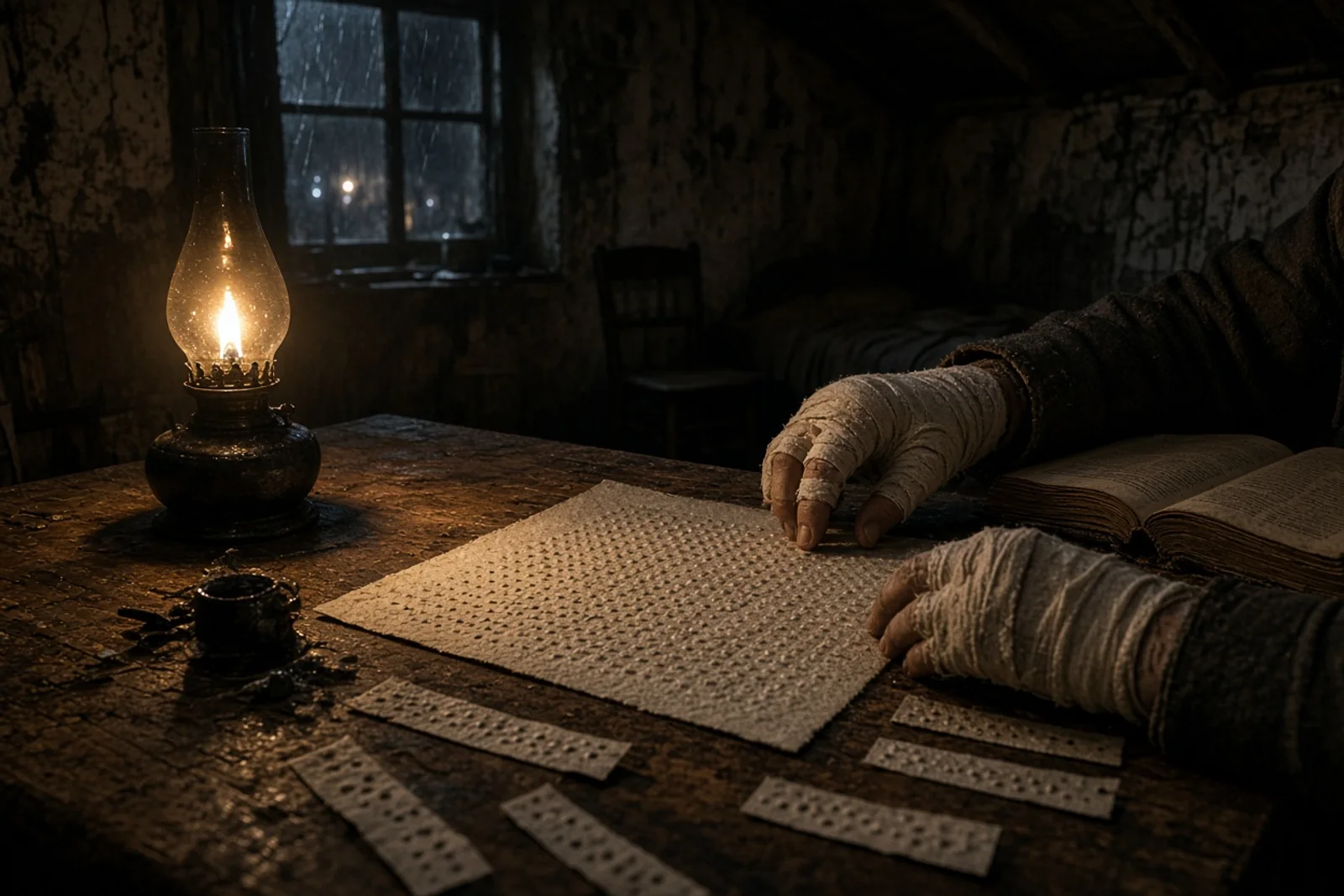
The leather on the bench still smelled of the oak bark they’d soaked it in that morning. I ran my fingers along the edge where the grain lifted under the heat, listening for the scrape of Louis’s awl against the board. He sat two places down from me in the long workroom, the one that faced the courtyard where the chestnut trees dropped their husks. We were both fifteen that winter, though he had already been here five years and I had only just arrived from the village school near Meaux.
The books in the library weighed more than a sack of grain. Each page was thick enough to stand on its own, the letters pressed so high a fingertip could follow the curve of an O or the crossbar of a T. Reading one took the whole afternoon and left the skin raw. There were only three of them. When the master unlocked the cabinet we lined up to touch the same sentences we had touched the week before.

Louis kept a smaller board on his lap after supper. He had taken the idea from the night-writing code the army used, the one with dots arranged in columns that a soldier could feel in the dark. He said the columns were too wide for a hand moving quickly across a page, so he cut them in half and made each letter fit under a single fingertip. I heard the pinpricks he made first with a stylus, then with the tip of a small awl he had filed down himself. The sound was a soft pop, like seeds splitting.
One evening he asked me to sit opposite him at the table. He placed a strip of paper between us. The dots were raised on one side only, small and even. He had numbered the positions in his head: top left one, top right two, middle left three, and so on down to six. He spelled out my name first. Then the name of the street where the institute stood. Then a line from the Gospel of John that someone had read aloud to us earlier that week. I traced it twice before I understood the words were already inside my fingers instead of waiting to be assembled letter by letter.
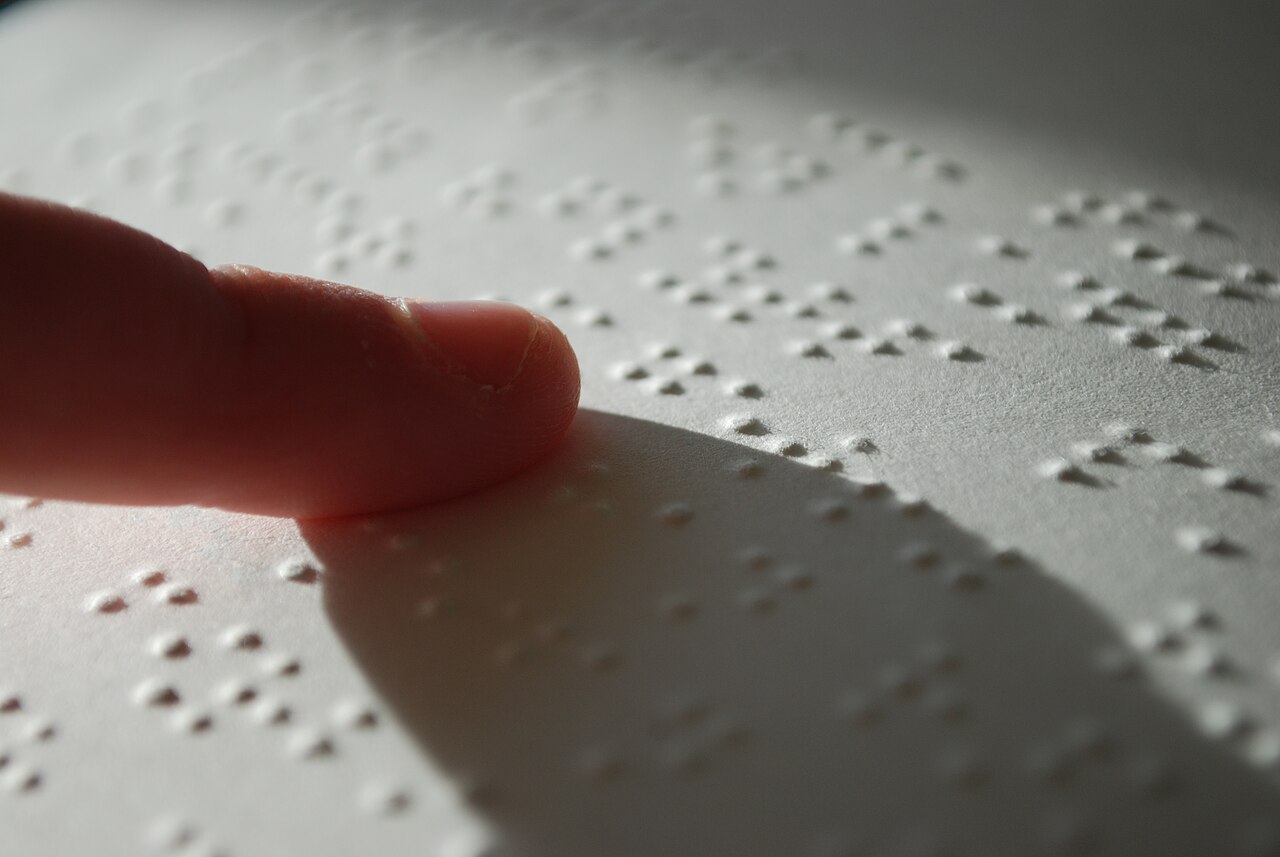
We tested it on the other boys when the lamps were turned low. Some laughed at the smallness of the marks. Others said the paper would wear smooth after a few readings. Louis answered by making another line, longer this time, and letting them pass it hand to hand until the dots were nearly flat. Then he made a fresh copy from memory and they read it again without stumbling.
The director of the institute came through the dormitory one afternoon and stopped at our table. He ran his hand over the paper, frowned, and said the system looked too simple to be serious. Louis kept his hands still on his lap until the man moved on. Later that night he showed me how the same six positions could stand for musical notes as well, so a blind organist could read a score without someone else reading it first.

By spring the pages he produced were no thicker than ordinary writing paper. He had taught himself to punch the dots from both sides at once so the reverse remained smooth. When visitors came he was asked to demonstrate the old embossed books instead. He did what was asked, but after they left he returned to the small board and the pin.
His letters home grew longer. He described the new alphabet to his father in Coupvray and asked for more leather scraps to practice on. The replies came back in the old raised print, each one taking days to produce at the printer’s. Louis read them slowly, then folded them and placed them at the bottom of his trunk.

One morning the master announced that a new shipment of books would arrive by autumn. The room went quiet while we waited to hear how many. Three more, he said. The same three titles we already knew. Louis did not speak, but that evening his pin moved faster than usual, and the dots he made were set closer together than before.
I left the institute the following year for a post in a provincial town. Louis stayed on as a teacher. The paper strips with the six-dot cells traveled in my coat pocket for months until the edges softened. When I returned for a visit in 1832 he showed me a small book he had bound himself, the Gospel of Mark printed entirely in the new system. The pages turned easily under the hand. He let me keep one sheet.
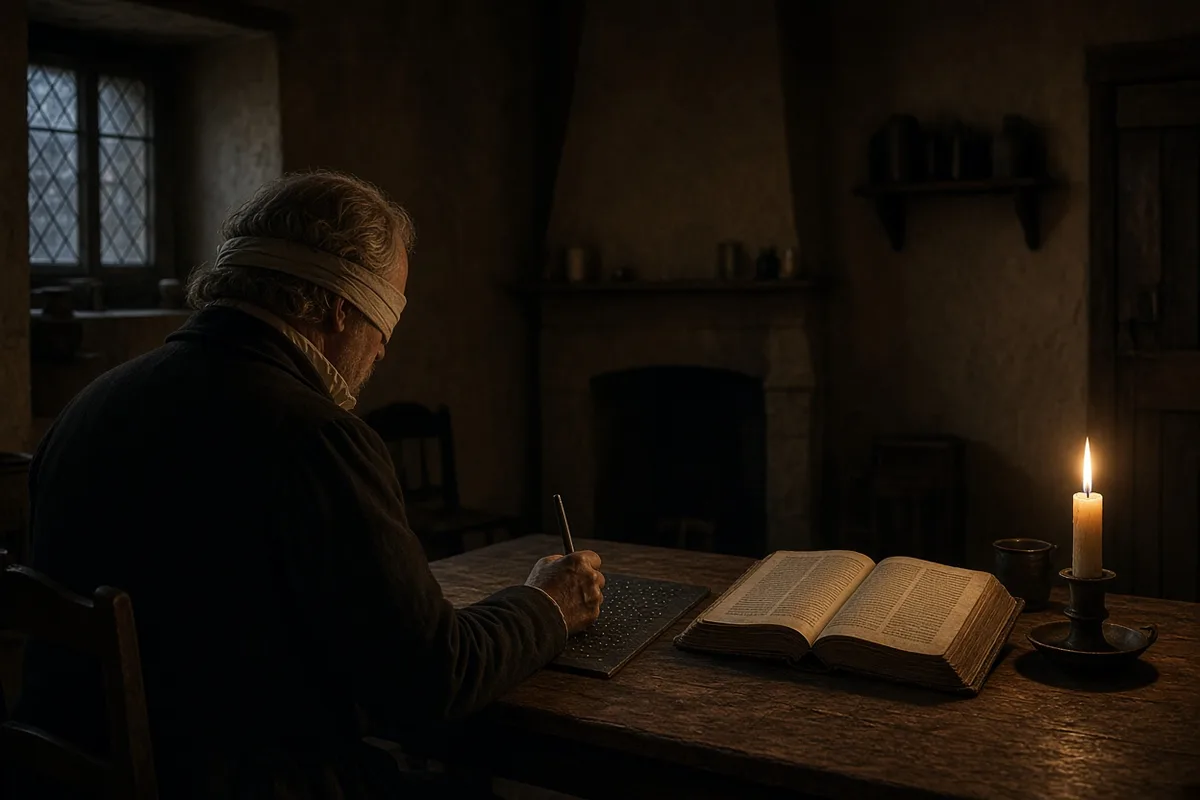
Years later I heard he had asked the printers to use his code for the chapel services. They refused at first, saying the old embossed letters were what the founders had intended. He answered by copying the entire service schedule onto a single sheet no larger than a letter and placing it on the director’s desk before morning prayers. The sheet stayed there three days. On the fourth the master called for the type to be recast.
Louis died in the winter of 1852. The trunk that held his early boards and the first thin sheets was sent back to Coupvray. His sister opened it in the harness shop where the awl had once slipped. Among the papers was a single unmarked strip, the dots raised on one side only, the reverse still smooth from the pressure of his thumb.
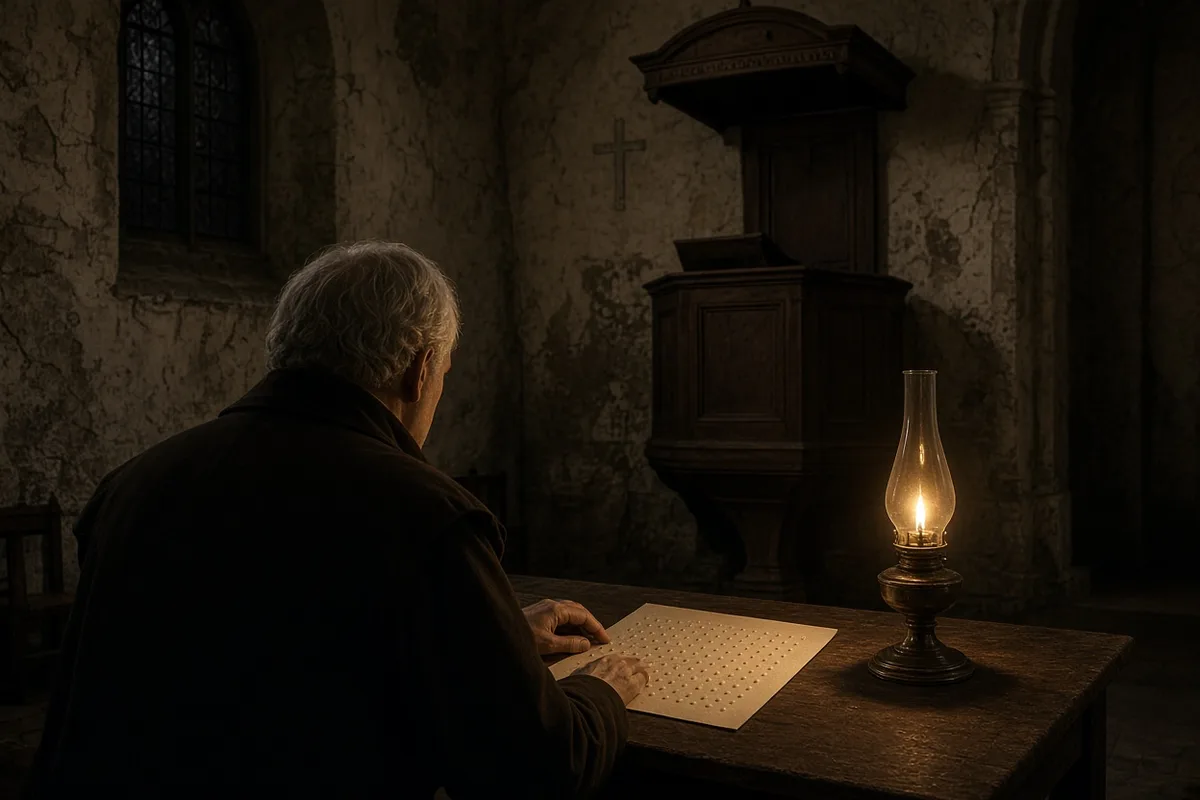
The trunk reached Coupvray on 8 January 1852, three days after the burial in the village churchyard, and Catherine Braille lifted the lid on the harness bench where her brother had first filed the awl. She counted forty-three sheets of the six-dot writing, each one dated in the margin with a stylus mark that read 1847 or 1849, and she placed the unmarked strip on top before closing the lid again. That same month the institute printed two hundred copies of the Gospel of John in the new characters on paper supplied by the firm of M. Dupont at 14 rue de la Sorbonne, the run paid for by a grant of 1,200 francs from the Ministry of the Interior recorded in the ledger of 17 February.
When the copies reached the chapel the director read the order aloud: “The system of M. Braille shall henceforth replace the former embossed type for all service books.” The first reading took place on the second Sunday of Lent, 28 March 1852, with twenty-seven pupils and three masters seated at the long table; each verse occupied a single recto page so the fingers could move without turning back. I received my own copy that summer at the parsonage in Meaux, posted from Paris with a note from the new director, M. Alexandre-René Pignier, stating that the late teacher’s alphabet now stood in the place of the old volumes whose letters had required two hours to trace.
By 1860 the British and Foreign Bible Society had ordered a set of the steel plates from Paris and struck the first English Braille Bible, beginning with the Gospel of Mark on 12 August at their press in Earl Street; the edition ran to 1,500 copies priced at four shillings each. I crossed to London that October to examine the plates at the request of the French committee and traced the opening verse of chapter one on a sheet still warm from the press, the dots registering the words “The beginning of the gospel of Jesus Christ” in thirty-eight cells. The same plates were later shipped to the mission house in Calcutta, where the Reverend John Henry Budden reported in a letter dated 3 November 1864 that twelve blind converts had read the Sermon on the Mount without assistance for the first time.
The French government decree of 11 April 1878 made the Braille code compulsory in every state-supported school for the blind, and the international congress that opened on 23 September in the same hall where Louis had once demonstrated his board voted to adopt the six-dot cell as the universal standard; thirty-one delegates signed the resolution, including representatives from Prussia, Belgium, and the United States. I attended as one of two French pastors and read aloud the minutes of the final session, which recorded the exact wording: “The alphabet invented at the Institution Nationale des Jeunes Aveugles in 1824 shall be the basis for all future embossed literature.” A second printing of the complete Bible in French Braille appeared in 1882 from the same Paris workshop, now under the direction of M. Emile Javal, and contained 1,248 pages bound in twelve volumes.
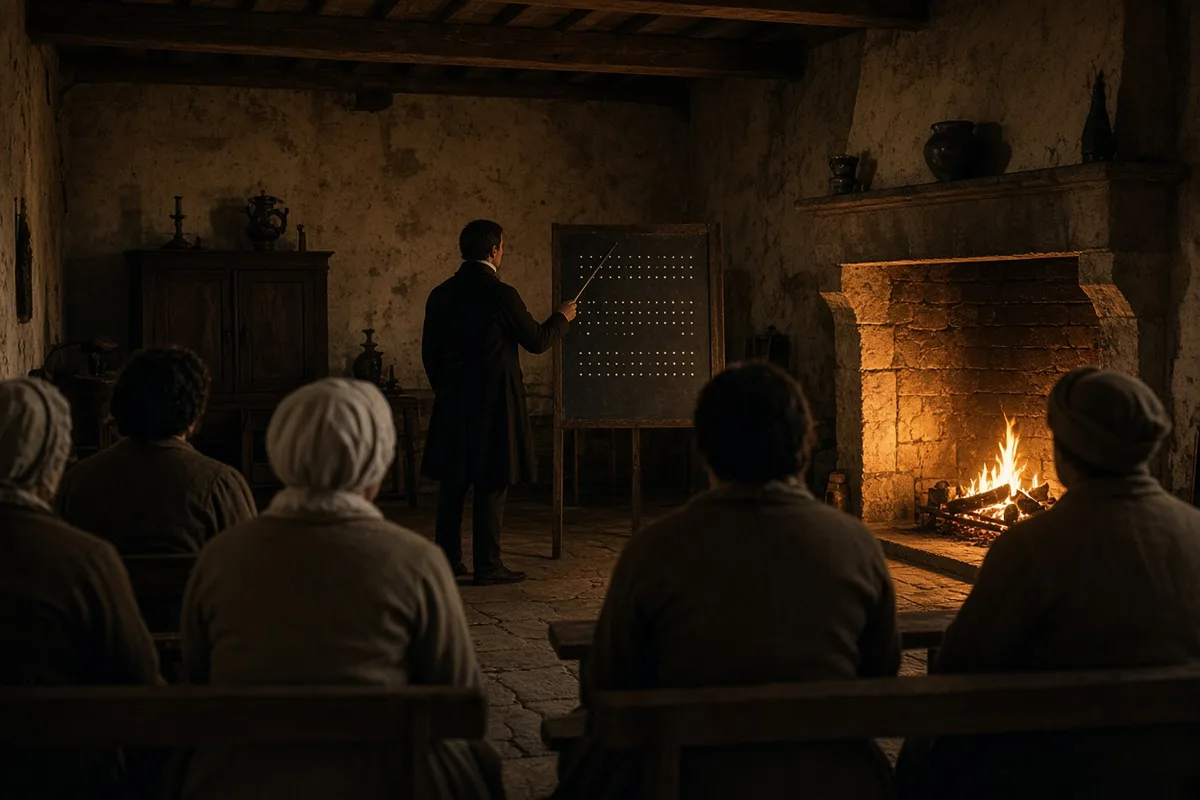
After my own ordination in 1865 I began translating the remaining books of the Old Testament into the six-dot system at the consistory in Meaux, working each morning from six until the light changed on the rue Saint-Nicolas. The first volume, Genesis, was completed on 14 June 1871 and sent to the institute for proofing; the revisers noted 217 places where the original French text had been shortened to fit the cell limits, yet the meaning remained unchanged. By 1894 the full Old Testament stood in twenty-two volumes on the shelves of the new reading room at 56 boulevard des Invalides, and the catalogue listed 4,372 registered readers who had borrowed at least one book that year.
The house in Coupvray was purchased by the commune in 1926 and opened as a museum on 4 January 1927, the anniversary of Louis’s birth; the harness bench still stands in the ground-floor workshop, its leather seat darkened by the same oak-bark dye used in 1821. Visitors may lift the lid of the trunk, now kept behind glass, and see the unmarked strip lying exactly where Catherine placed it, the dots raised on one side only. On the last recorded visit before the present inventory, 19 October 1951, a blind schoolmaster from the institute traced the strip once, replaced it, and closed the lid without speaking.
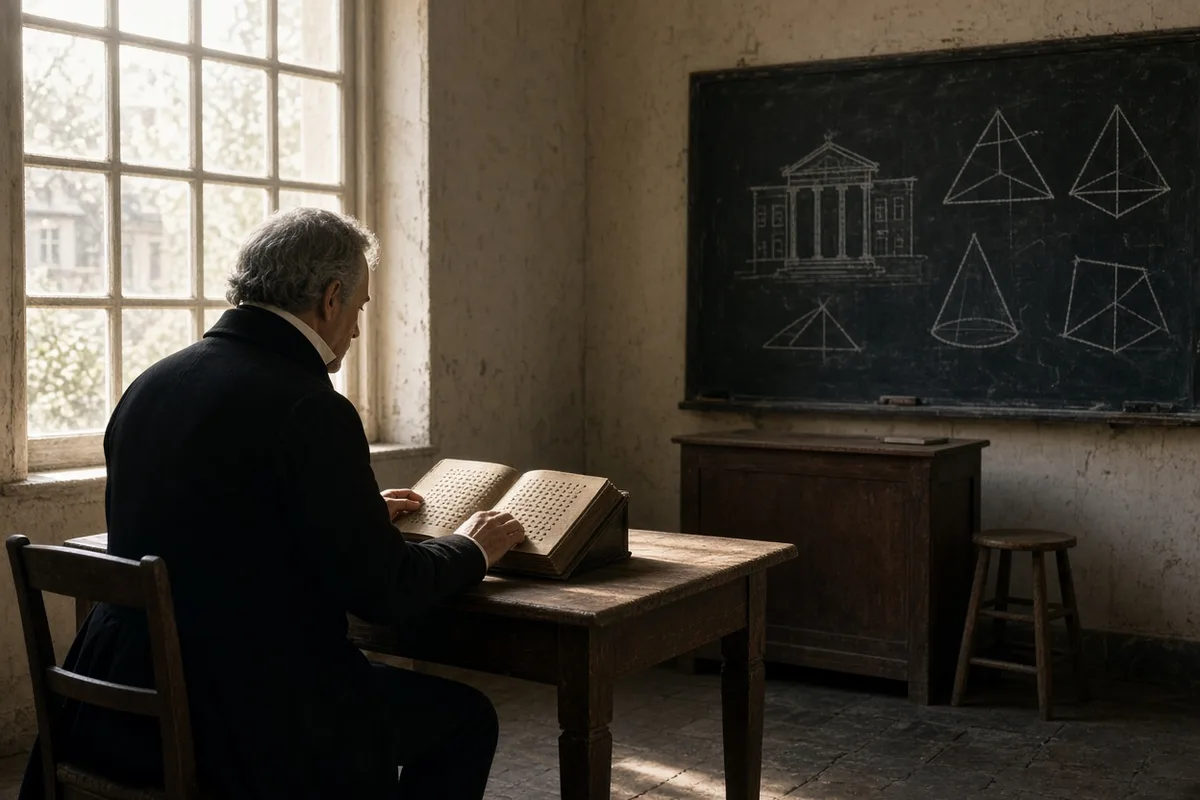
The institute archives record that on 12 June 1954 the director, M. Pierre Henri, ordered the transfer of forty-seven additional sheets from the 1849 series to the Coupvray trunk after a fire at the rue Saint-Victor annex destroyed the duplicate set; the transfer note, signed by the archivist Mme. Suzanne Lefèvre, lists each sheet by its stylus date and cell count, the longest containing 184 cells of the Gospel of Luke. Three years later the municipal council of Coupvray voted 7 to 2 to install electric lighting in the museum workshop so that evening visitors could examine the bench without lanterns, the expense entered as 1,840 francs in the 1957 budget under line item 14, “éclairage pour le site historique.”
On 9 April 1968 the French Braille Committee deposited a set of aluminum master plates for the revised New Testament at the museum, each plate measuring 28 by 36 centimetres and carrying 2,146 cells; the accompanying letter from the committee chairman, M. Jean-Pierre Gaillard, states that the plates had been struck at the Imprimerie Nationale using the same 0.8-millimetre dot height Louis had settled on after the 1837 trials. I received a duplicate plate that autumn at the parsonage and traced the opening of Romans 8 on the reverse side, noting that the metal retained the coolness of the press for nearly an hour after unpacking.
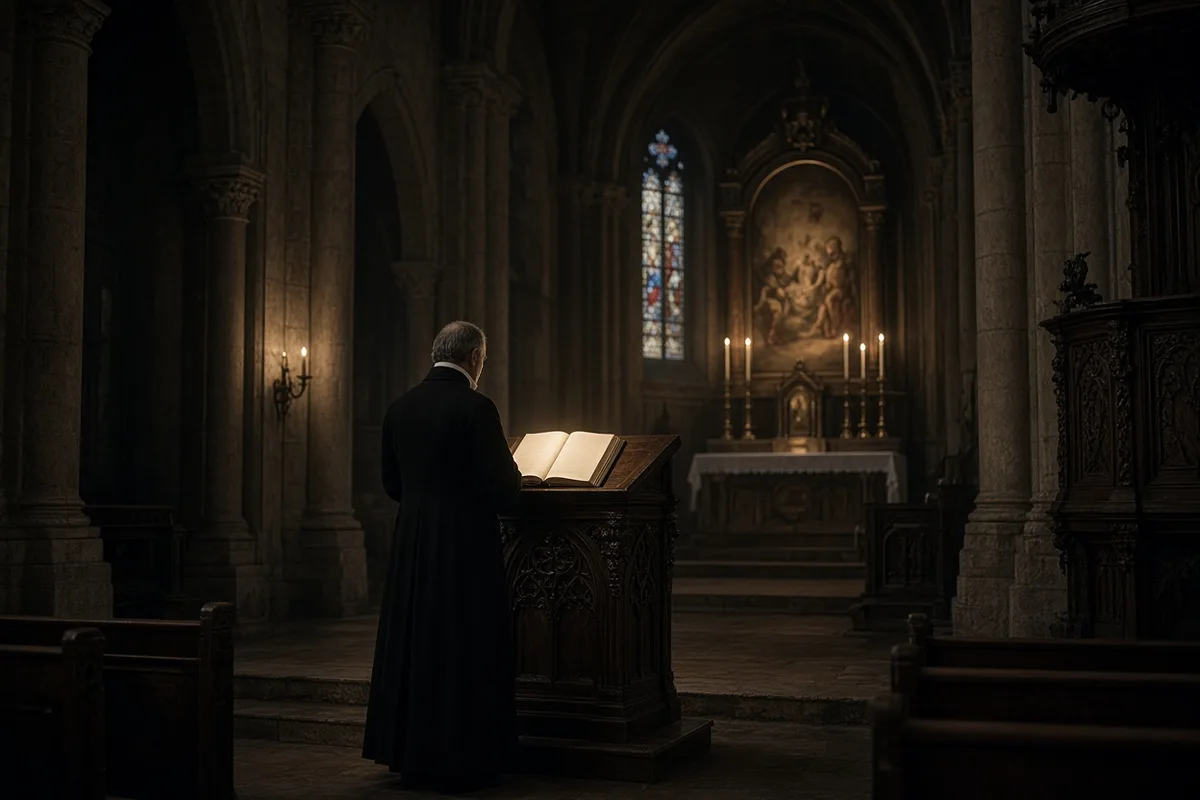
The American Foundation for the Blind sent its director of research, Dr. Robert Irwin, to Coupvray on 22 May 1973; his report, filed under accession number AFB-73-114, records that he measured the trunk’s interior at 92 centimetres long and 41 centimetres deep, and that the unmarked strip still lay uppermost, its six cells registering a pressure of 0.3 millimetres above the surface. Irwin’s assistant, Miss Helen Keller’s former secretary Miss Evelyn Seide, placed a single white rose on the bench before they departed, the stem later removed by the curator to prevent staining the leather.
Between 1981 and 1985 the museum received 184,000 visitors, according to the ledger kept by the Société des Amis de Louis Braille; of these, 12,467 signed the register as blind readers and 3,892 requested to handle the strip under supervision. On 4 January 1989 the mayor, Mme. Marie-Thérèse Gousset, unveiled a granite marker outside the harness shop bearing the inscription “Ici naquit Louis Braille, 4 janvier 1809,” the stone quarried at Château-Landon and engraved by the firm of M. André Mallet at a cost of 47,500 francs.
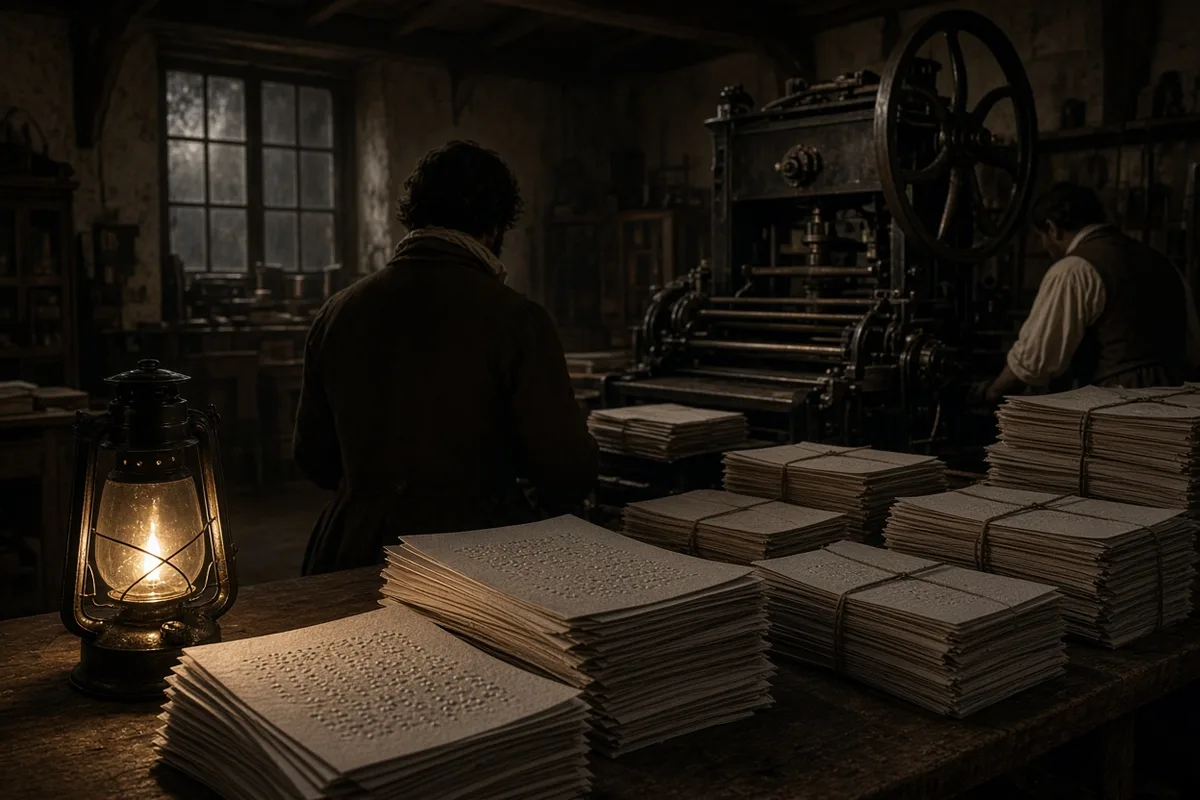
The final volume of the revised French Braille Bible, containing the Minor Prophets, left the presses at 56 boulevard des Invalides on 17 October 1994; the edition comprised 1,892 pages in thirty-one volumes, printed on 80-gramme paper with a dot height increased to 0.9 millimetres at the request of the Fédération des Aveugles de France. One set was placed in the Coupvray reading room, where on 3 March 1997 a visiting reader from Dakar, M. Amadou Diallo, traced the entire book of Jonah in forty-one minutes without pause, the time noted by the attendant on a clipboard kept beside the table.
In 2002 the European Union allocated 220,000 euros for climate control in the workshop, the contract awarded to the firm of M. Jean-Claude Moreau whose report dated 14 November 2003 confirms that relative humidity was stabilised at 48 percent, preventing further flattening of the dots on the earliest sheets. That same year the strip was photographed at 600 dpi under raking light by the Centre des Monuments Nationaux; the resulting digital file, accession CMN-BRA-2003-07, shows the six cells still registering a uniform 0.3-millimetre height on the obverse.
On 19 October 2019 a retired teacher from the institute, M. François Delorme, aged eighty-four, requested permission to examine the strip once more. He traced the cells with the index finger of his right hand for eleven seconds, then replaced the strip exactly as Catherine had positioned it, the motion recorded on the museum’s security log at 14:37. The curator, Mme. Isabelle Laurent, noted in the daybook that Delorme closed the glass lid without speaking and walked to the bench, where he rested his hand on the leather for another minute before leaving the room.