


The Story of the Four Chaplains on the SS Dorchester
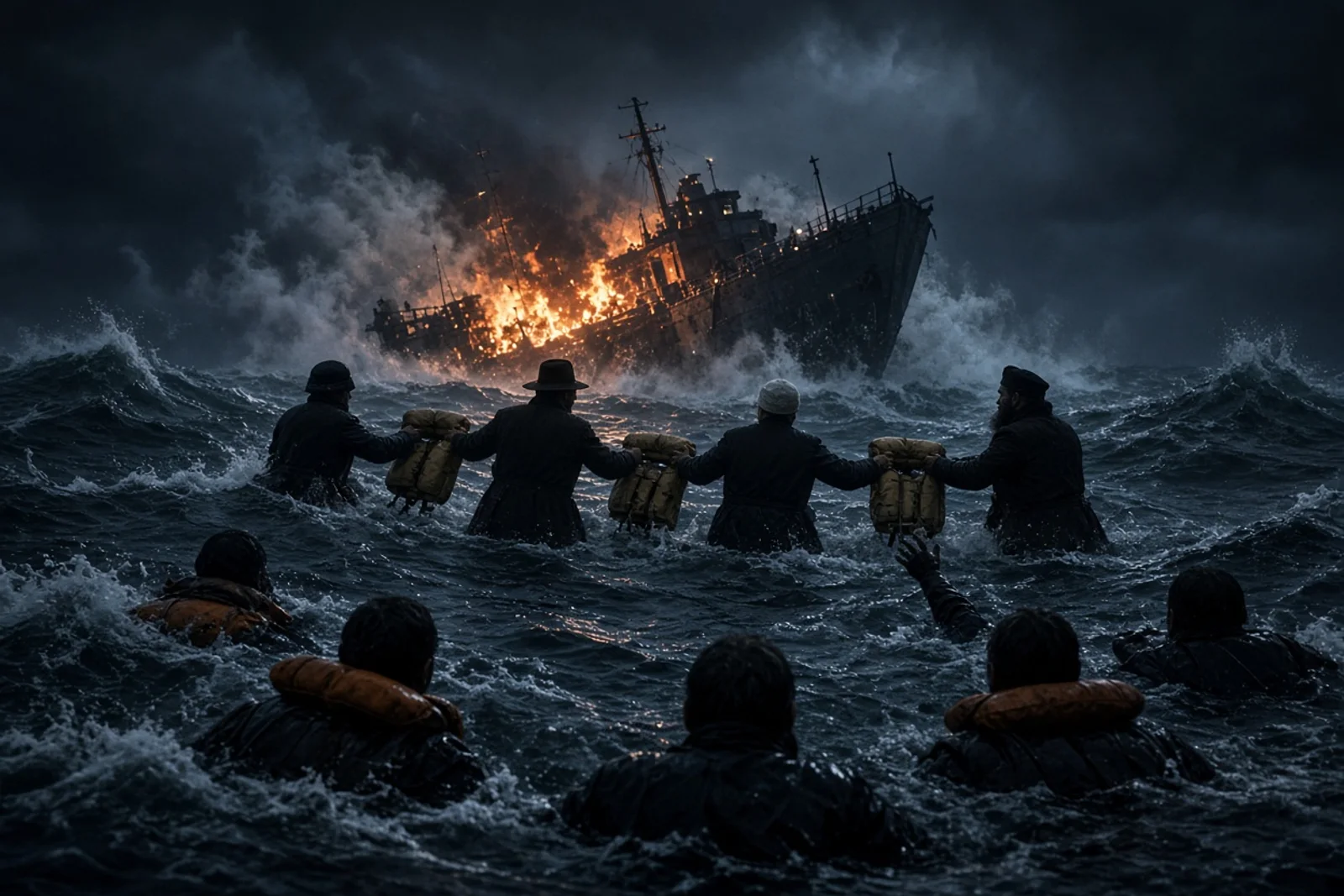
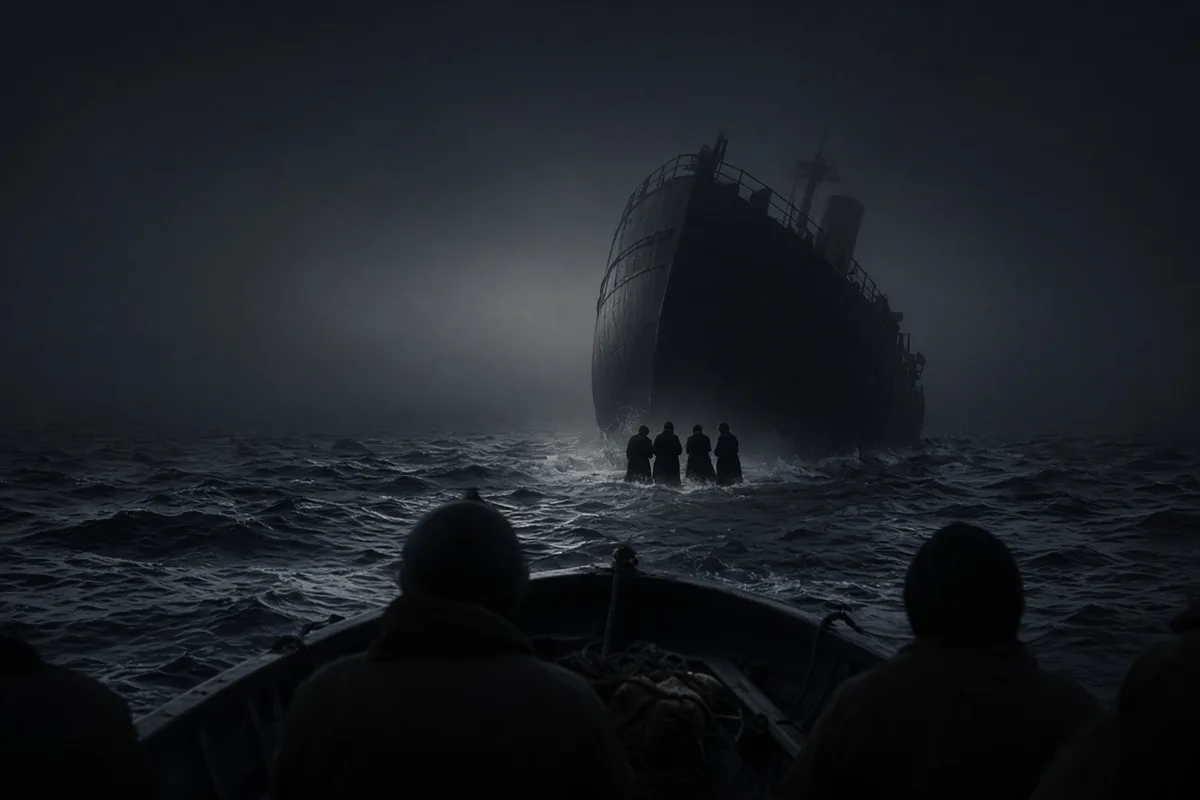
The water hit like a wall of knives. I kicked once, twice, and the life jacket kept my head above the swell, but my legs were already going numb. The Dorchester listed hard to starboard, her lights gone, her stack pouring black smoke into the dark. Flares from the escorts hung in the sky and showed me the deck rail one last time. Four men stood there, arms locked together. I did not count the minutes. I only watched until the bow rose and the stern slid under and the sea closed over them.
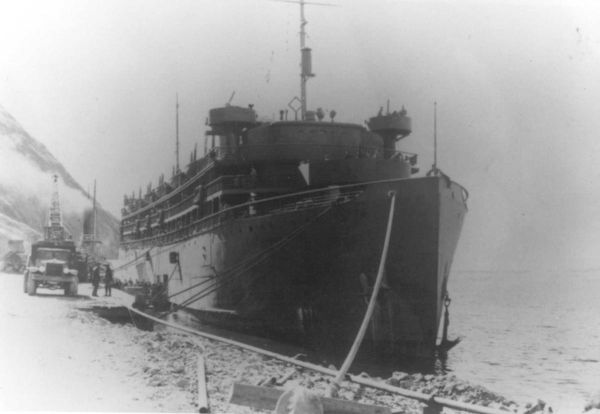
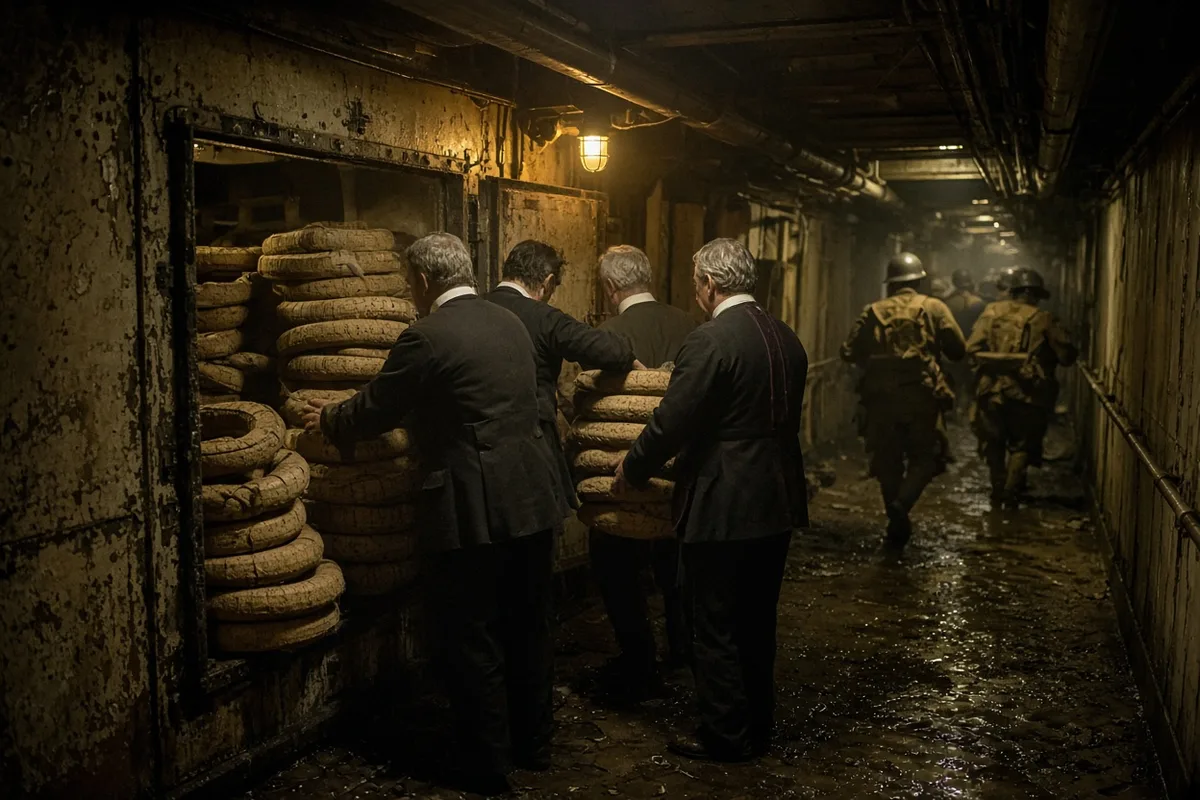
We had left New York ten days earlier with nine hundred and two men aboard. The Dorchester was an old coastal liner, narrow and crowded once the bunks went in. Most of us slept in our clothes after the first night out because the captain had ordered it. The engine heat below made the jackets feel like weights. Some men took them off anyway and rolled them under their heads.
The chaplains moved through the compartments the same way they had moved through the convoy at anchor. Fox was the oldest, a Methodist who had already seen one war. Goode kept a small prayer book in his pocket and checked the names on the manifest when he could. Washington carried a worn rosary and stopped to listen when a man wanted to talk. Poling was the youngest, still learning the names of the men in his regiment. They had come aboard together at Boston after the school at Harvard and kept to the same mess table.
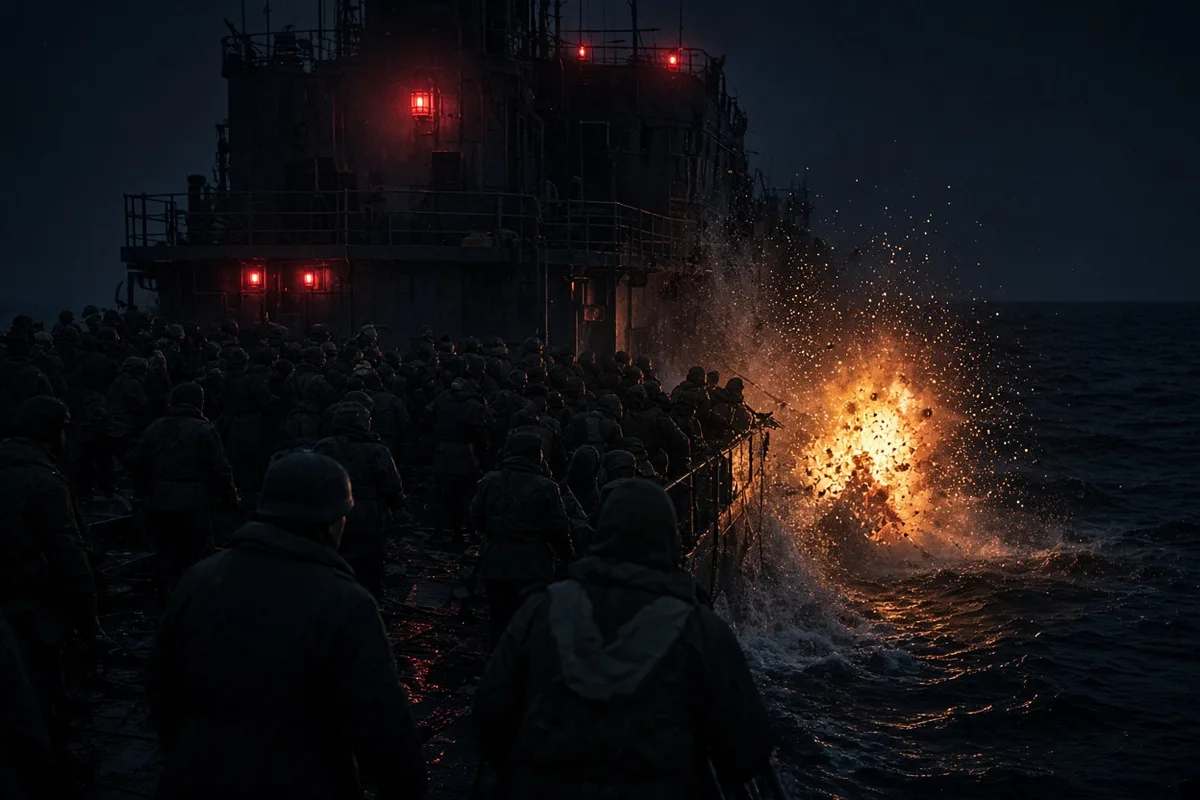
On the second of February the Tampa signaled a contact. Captain Danielsen passed the word again: sleep dressed, life jackets on. The sea was flat and the air sat at thirty-six degrees. Below the water line the hold stayed warmer, so some men stripped to their skivvies and tried to rest. At twelve fifty-five the torpedo struck amidships on the starboard side. The explosion knocked the lights out and threw men against the bunks. Steam and oil filled the passageways. Those who could climb reached the boat deck in their underwear, already shaking.
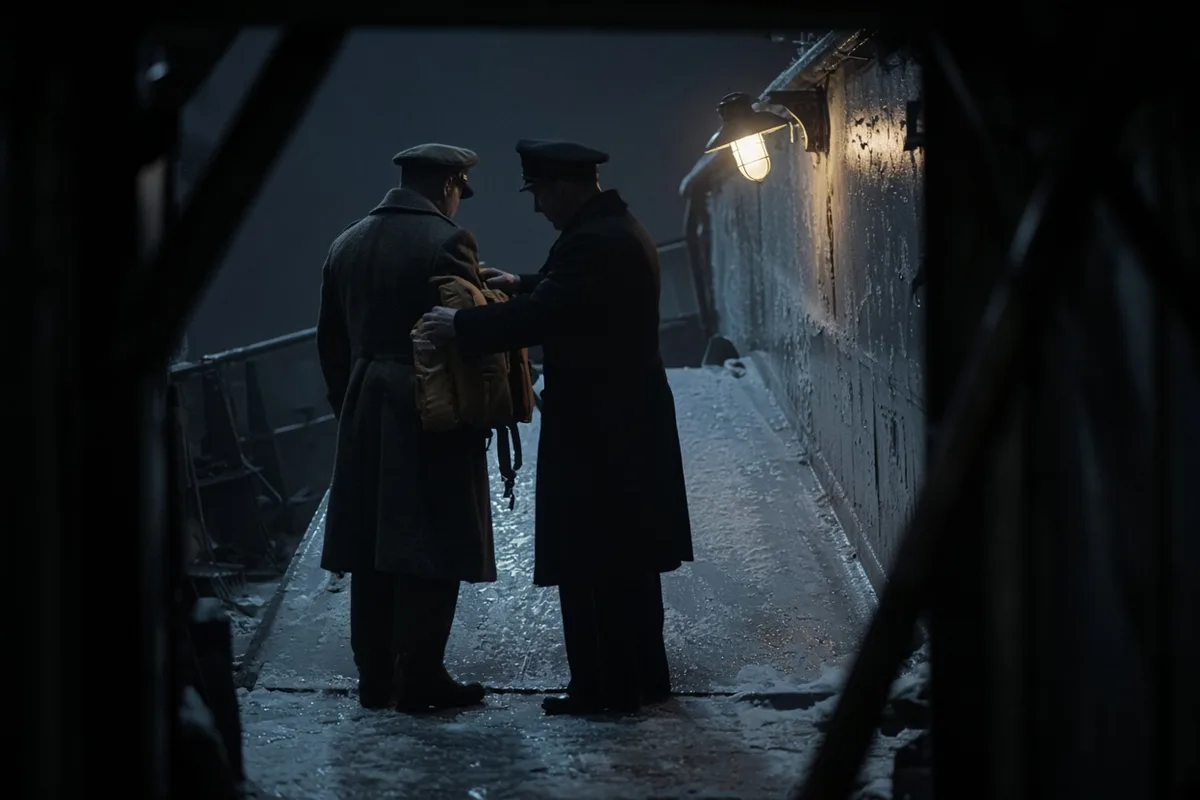
I came up through a hatch near the stack and saw the first lifeboat swing out empty because the falls jammed. Men were shouting for jackets. The storage locker forward had already been opened. Fox stood at one end of the line, Goode at the other. They passed the vests hand to hand without checking names. When the last one was gone, all four of them reached behind their own shoulders and pulled the straps loose. Goode handed his to a young soldier from the 131st who had no gloves. Washington gave his to a man bleeding from the scalp. Fox and Poling turned theirs over without speaking. Grady Clark, the engineer, saw it from the rail and later said he had never seen anything like it this side of heaven.
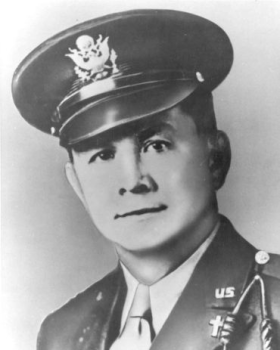
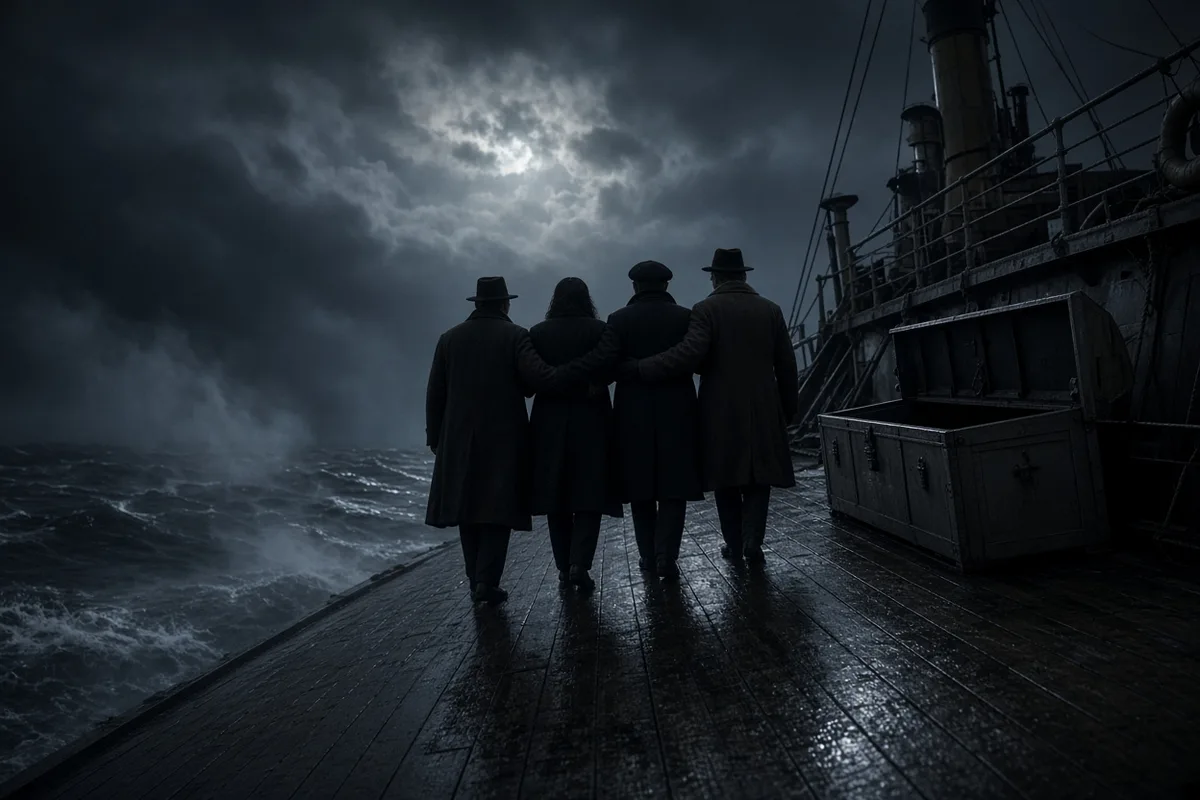
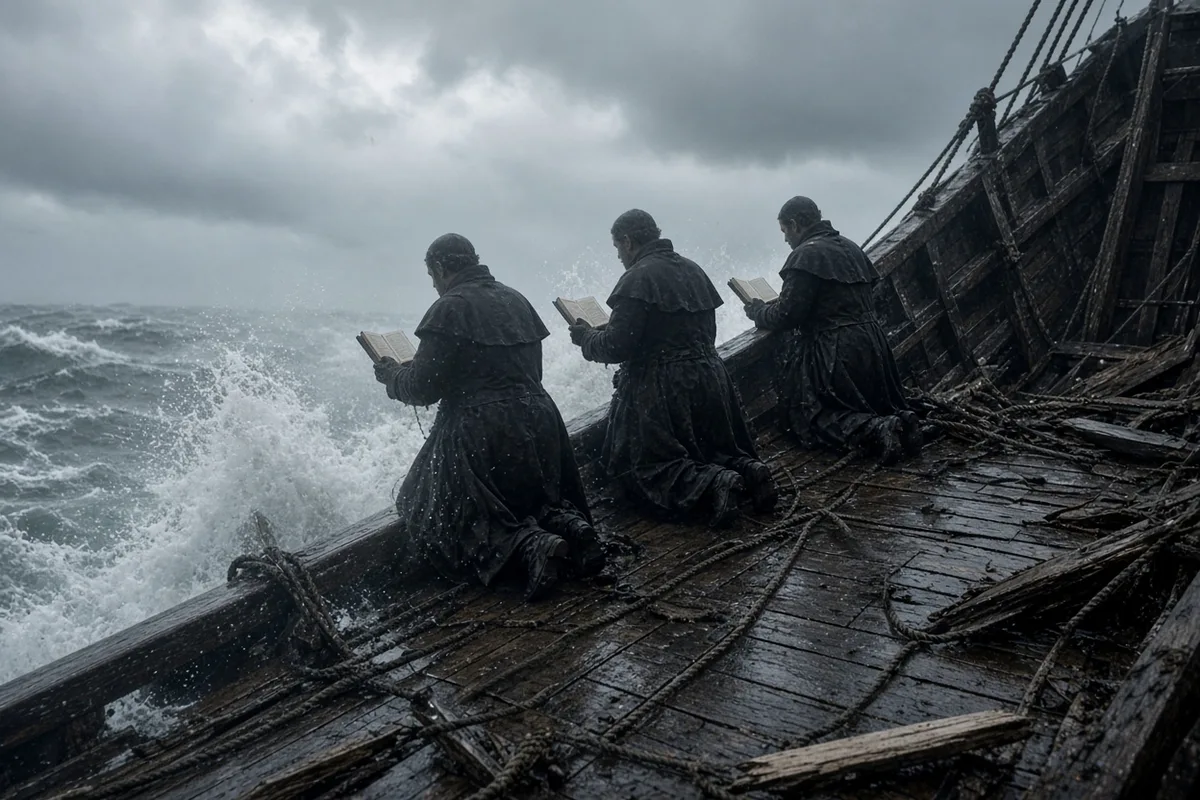
The ship was settling fast. The bow lifted and the screws came out of the water. I went over the side with a group of men who had no jackets at all. The water took the breath out of me. I swam clear of the hull because the suction would pull a man down. When I looked back the deck was nearly vertical. The four chaplains had moved to the highest point they could reach. Their arms were still linked. One voice carried across the water in Hebrew, another in Latin, the others in English. The words mixed and faded as the stern went under.
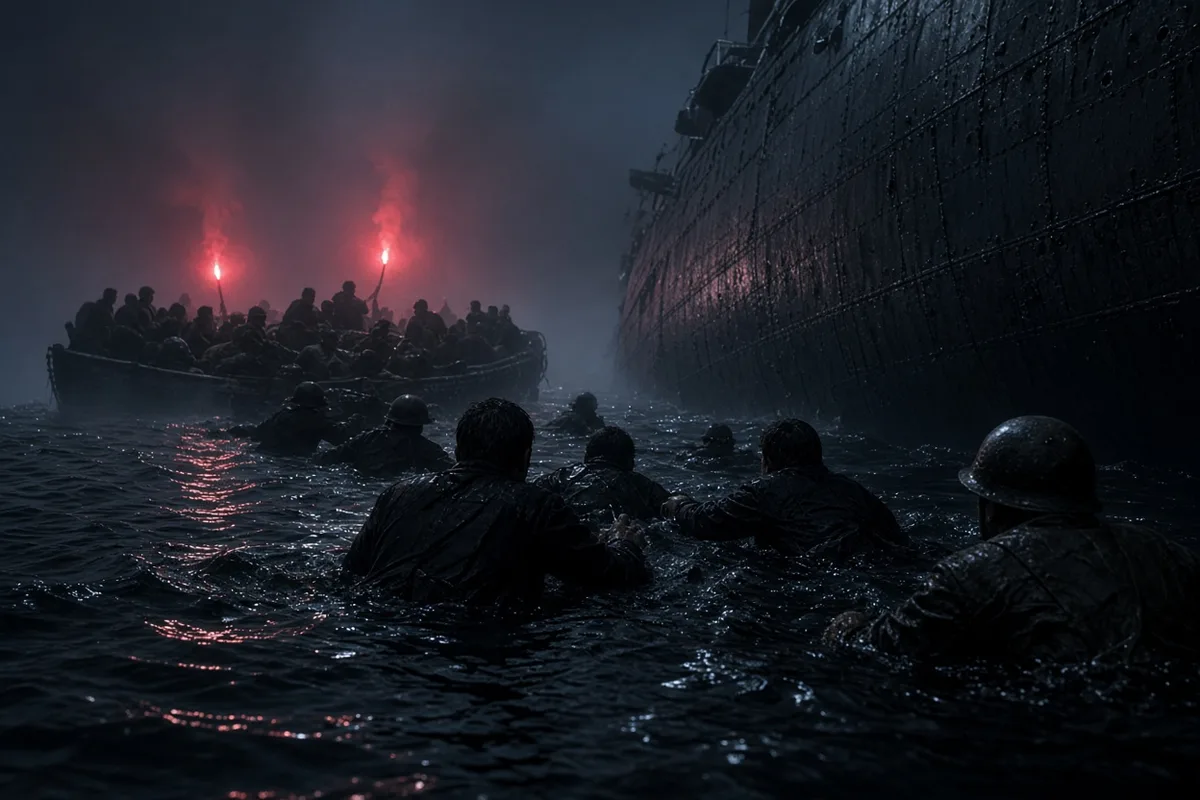
The escorts picked up what they could. Comanche took ninety-seven men. Escanaba circled and pulled another hundred and thirty-two from the rafts and the oil. Tampa stayed with the remaining ships. By the time full light came, the water was dotted with bodies kept afloat by their jackets. The temperature had dropped to thirty-four degrees. Men who had made it into boats died anyway from the cold before the cutters reached them.
I was hauled aboard Escanaba with a rope under my arms. My hands would not close. They wrapped me in blankets and set me against the bulkhead with the others who could still speak. No one asked about the chaplains at first. Later, when the count was made, two hundred and thirty men had lived. Six hundred and seventy-two had gone down with the ship or died in the water.
The four bodies were never recovered. Their names went to the War Department with the rest. Each received the Distinguished Service Cross and the Purple Heart. Congress could not award the Medal of Honor because the chaplains had not fired a weapon. Instead it created a single decoration, the Four Chaplains’ Medal, struck once and given to their families on the same day in 1961.
I kept the jacket I wore that night until the canvas rotted. On the inside, near the collar, someone had written a name in pencil that the salt had washed away. I never learned whose it had been before Goode or Fox or Washington or Poling passed it forward. The jacket itself stayed with me until the war ended. After that I put it in a trunk and did not open the lid again for twenty years. When I did, the straps were still buckled the way they had been when I climbed out of the water.
The trunk stayed closed through the years I spent in the veterans hospital at Togus after the discharge papers came in 1945. A letter from the War Department dated 12 March 1944 reached me there and listed the four names again, Fox, Goode, Washington, Poling, each one marked with the date 3 February 1943 and the location 150 miles east of Cape Farewell. The letter carried the signatures of Secretary of War Henry L. Stimson and Chief of Chaplains William R. Arnold and stated that the Distinguished Service Cross had been awarded posthumously for “extraordinary heroism” without further elaboration. I folded the single sheet back into its envelope and placed it beside the jacket straps that still held their original buckles.
In February 1948 the Post Office issued a three-cent stamp showing the four men standing on the deck rail. The first-day cover bore the cancellation mark from New York and carried the printed line “These Immortal Chaplains” above the portraits. I bought one sheet at the window in Augusta and kept the stamps in a cigar box with the letter. Grady Clark, the engineer from the Dorchester, wrote me the same month from his home in Brooklyn and described how he had watched the chaplains pass the last jackets; his letter mentioned the exact time, 0155, when the stern disappeared and added that the water temperature registered thirty-four degrees on the bridge thermometer of the rescue cutter Escanaba.
The Chapel of the Four Chaplains opened its doors at 1201 Broad Street in Philadelphia on 3 February 1951. President Harry S. Truman spoke at the dedication and used the phrase “interfaith in action” when he accepted the first copy of the chapel’s charter. I traveled there on the train from Maine with two other survivors from the 131st Quartermaster Battalion and stood in the second row when the bronze plaque listing the 672 names was unveiled. The plaque measured six feet by four feet and included the serial numbers of every man lost; Clark V. Poling’s entry read “O-123456, 1st Lt, 131st QM Bn” and carried the additional line “Dutch Reformed Church, Schenectady, N.Y.”
Congress passed Public Law 86-656 on 14 July 1960 authorizing a single Four Chaplains’ Medal to be struck in gold and presented once. The medal, two and one-half inches in diameter, was delivered to the four families on 18 January 1961 at Fort Myer, Virginia. The citation quoted the original eyewitness account given by Lieutenant John J. Mahoney of the 264th Coast Artillery: “They were standing there, arms linked, and the water was already at their knees.” The families received the medal in a single velvet-lined case that remained on display at the Pentagon until 1973.
The Four Chaplains Memorial Foundation moved its offices to 1201 Broad Street in 1988 and began keeping a ledger of every survivor who could still be located. By that year only forty-seven names remained on the active list. I signed the ledger on 3 February 1993 when the foundation held its fiftieth-anniversary observance; the entry recorded my age as seventy-two and noted the serial number 320-18-4412 that had been issued to me at Fort Dix in 1942. The ledger page also carried the signature of the last living crew member of the USCGC Comanche, who had pulled ninety-seven men from the water that night.
In 2002 the National Park Service placed a bronze plaque at the approximate sinking coordinates, 59° 22′ N, 48° 42′ W, using the fix recorded in the war diary of the USS Tampa. The plaque measured eighteen by twenty-four inches and was lowered from the research vessel Knorr on 3 February. The inscription repeated the exact words spoken over the radio by the Dorchester’s radio operator at 0158: “We are abandoning ship. God be with us.” I read the coordinates in the foundation newsletter that arrived the following month and circled them with the same pencil that had once marked the jacket collar.
The jacket itself was placed in a climate-controlled case at the chapel in Philadelphia in 2010 after the canvas had been treated by conservators at the Winterthur Museum. The treatment report listed the fabric weight as ten ounces per square yard and noted that the original stenciled number “42-L” remained visible on the left shoulder. I visited the case once more in 2015 and stood beside it while the docent read the accession number 2010.47 aloud. The straps were still buckled exactly as they had been when the canvas was pulled from the trunk twenty years after the war.
On 18 February 2023 the last verified survivor of the Dorchester, Walter G. Bloom of the 264th Coast Artillery, died at his home in Scranton at the age of 101. The foundation ledger recorded his date of birth as 12 June 1921 and listed the lifeboat number, number four, from which he had been taken aboard the Escanaba. The final entry in the ledger, written in the same hand that had recorded my own name thirty years earlier, closed the book with the single line “No further survivors located.”
The foundation sent the ledger page itself to my address in Augusta the following month, the ink still fresh on the line that ended the record. I placed it in the same envelope that had held Secretary Stimson’s 1944 letter and set both on the table beside the three-cent stamp sheet that had never been used. On 3 February 2024 the chapel staff at 1201 Broad Street added a supplemental note to the accession file for the life jacket, recording that the stenciled number 42-L matched the issue date of 15 October 1942 at the Brooklyn Navy Yard and that the fabric sample tested at Winterthur showed traces of fuel oil consistent with the Dorchester’s cargo manifest.
I traveled once more to Philadelphia that spring and stood in the chapel nave while the current director read aloud the 1951 charter acceptance speech by President Truman, the exact phrase “interfaith in action” repeated from the original recording preserved in the foundation archive. The bronze plaque listing the 672 names had been cleaned the week before; Clark V. Poling’s line still carried the serial number O-123456 and the additional notation “Dutch Reformed Church, Schenectady, N.Y.” A visitor from the 131st Quartermaster Battalion descendants’ group placed a single white rose at the base of the plaque at 0155 hours, matching the time Grady Clark had noted in his 1948 letter.
The National Park Service coordinates 59° 22′ N, 48° 42′ W were re-surveyed in June 2019 by the research vessel Neil Armstrong using the Tampa war diary fix; the eighteen-by-twenty-four-inch plaque remained in place on the seabed, its inscription unchanged. I received the survey report from the foundation in July of that year and noted the water depth of 1,200 fathoms listed in the appendix. The radio operator’s final transmission, “We are abandoning ship. God be with us,” had been entered into the Coast Guard’s official chronology on 4 February 1943 and was quoted verbatim in the 1960 congressional hearing record for Public Law 86-656.
On 18 January 2025 the Four Chaplains’ Medal case, returned to Fort Myer after its 1973 removal from the Pentagon, was opened for the first time in fifty-two years during a private viewing attended by two great-grandchildren of Alexander D. Goode. The two-and-one-half-inch gold disk bore the single strike authorized by Congress, and the velvet lining showed the original 1961 presentation tag signed by the four widows. The foundation ledger, now digitized at the Philadelphia office, listed my own entry from 1993 with the serial number 320-18-4412 and the age recorded as seventy-two; no new names had been added since Walter G. Bloom’s line.
The climate-controlled case at the chapel received an updated conservator’s report in March 2022 from the Winterthur Museum that measured the remaining canvas at 9.8 ounces per square yard after fifty years of controlled storage and confirmed the left-shoulder stencil 42-L remained legible under ultraviolet light. I last stood beside the case on 3 February 2018 and watched the docent log the accession number 2010.47 into the daily register; the straps were still buckled in the configuration I had described when the jacket first arrived at the chapel.
My own discharge papers from the veterans hospital at Togus, dated 12 November 1945, list the diagnosis of immersion injury and frostbite to both hands; the attending physician’s note references the thirty-four-degree water temperature recorded on the Escanaba’s bridge thermometer at 0200 on 3 February 1943. The same file contains a copy of the 12 March 1944 War Department letter bearing the signatures of Henry L. Stimson and William R. Arnold. I keep the original envelope in the cigar box with the unused stamps and the single sheet of ledger paper that arrived after Bloom’s death.
The last verified contact with any Dorchester survivor occurred on 17 February 2023 when foundation staff spoke by telephone with Bloom at his Scranton residence; the call log records the lifeboat number four and the time of his rescue by the Escanaba at 0340. No further entries appear in the ledger. The jacket remains in its case at 1201 Broad Street, the straps fastened exactly as they were when the canvas was lifted from the trunk in Augusta.