


The Story of the Singing Revolution in Estonia
The wind cut across the university courtyard in Tartu that February evening. Students clustered around a single television set someone had dragged from a dormitory lounge. Juhan Aare’s voice came through the speaker, steady as he pressed the Moscow official on camera. The man confirmed the phosphorite mines would begin in 1997. No one spoke for a long minute after the screen went dark.
I walked home through frozen streets and kept hearing the word “catastrophe.” The next morning a petition circulated in the lecture halls. We signed it standing in line for bread. By March the signatures numbered in the thousands.
Someone brought a guitar to the next meeting. The chords were simple, and the words were new. “Ei ole üksi ükksi maa” spread before the summer term ended. Alo Mattiisen and Jüri Leesment had recorded it in May with half a dozen pop singers. We played the tape on a battered reel-to-reel in the student union until the heads wore flat.
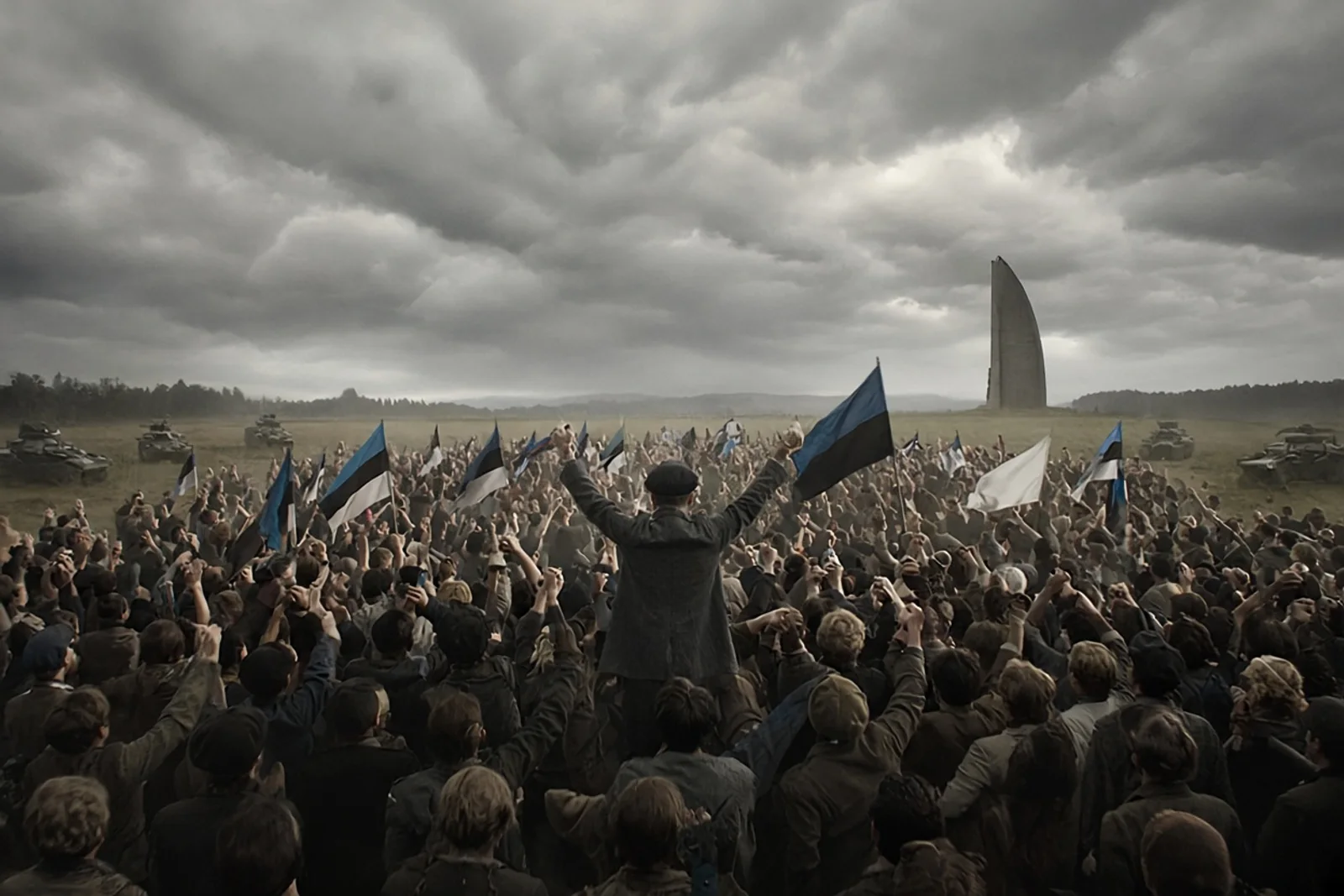
In August the Hirvepark meeting was announced on shortwave. I took the overnight bus to Tallinn with two friends and a rolled banner. The park filled by late morning. People stood on benches, on the low stone wall, on one another’s shoulders. No one carried a weapon. The demand was only that the secret clauses of the 1939 pact be published.

Edgar Savisaar spoke from the steps. He did not raise his voice. When he finished, the first verse of an old choral piece rose without signal. Then another. Then the full crowd. The police line at the edge of the grass did not move.
We stayed until the light failed. Someone passed a thermos of weak tea. A woman beside me kept repeating the date of the pact as if memorizing it for the first time.
Back in Tartu the autumn term opened with new restrictions on gatherings. The restrictions were ignored. Every weekend another small concert turned into an open-air rehearsal. The repertoire grew: forbidden anthems, new verses written on napkins, old harvest songs rewritten overnight.
By the following spring the Popular Front had formed. Savisaar proposed it on live television. The studio phones rang for hours afterward. I joined the local chapter because the meetings always ended in song.
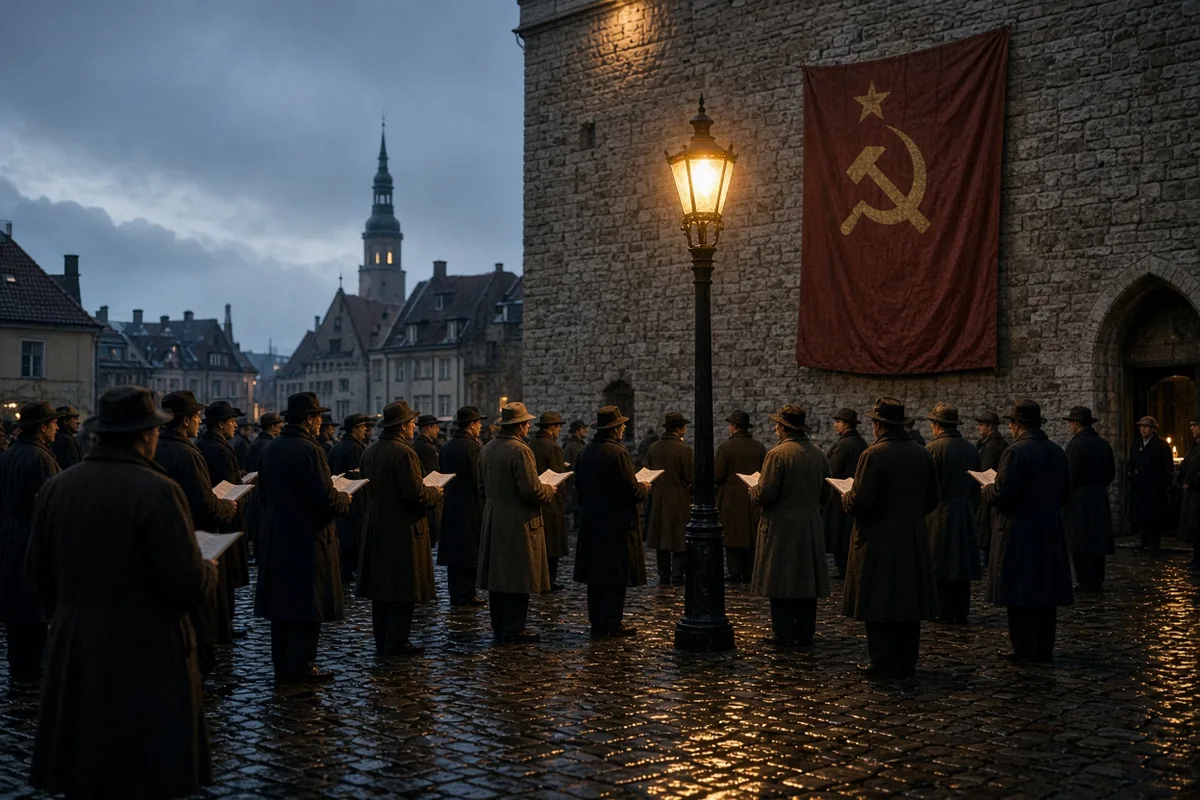
Karl Vaino’s government issued statements. They warned of economic harm and foreign interference. The statements were read aloud in factory cafeterias and then set aside.
In June the first mass night at the Tallinn Song Festival grounds happened after an official festival closed. The crowd simply did not leave. Stage lights stayed on because the technicians refused to cut them. We sang until the sky turned pale.
I stood near the center field with perhaps forty thousand others. The sound came from every direction at once. No conductor lifted a baton. The songs carried themselves.
A month later the Summer Rock Festival took the same turn. Rock bands played late sets, then the audience stayed and began the old patriotic repertoire. The authorities had permitted the festival; they could not now order it to stop without admitting the songs themselves were the offense.
Trams ran all night to carry people home. Some chose not to board. They slept on the grass under the arc lights.
The environmental campaign against the mines succeeded first. Moscow withdrew the plans in late 1987. The victory arrived quietly, announced in a single paragraph in the state newspaper. We celebrated by singing the same song that had begun the year.
Yet the larger question remained open. Independence still had no legal path. The Hirvepark demand for the pact’s publication had been met only in part. Copies circulated in samizdat, passed hand to hand at choir practices.
Winter returned. Rehearsals moved indoors to school gyms and church basements. The choirs practiced the forbidden repertoire under the cover of approved Soviet pieces. Conductors learned to switch programs in a single breath when inspectors appeared.
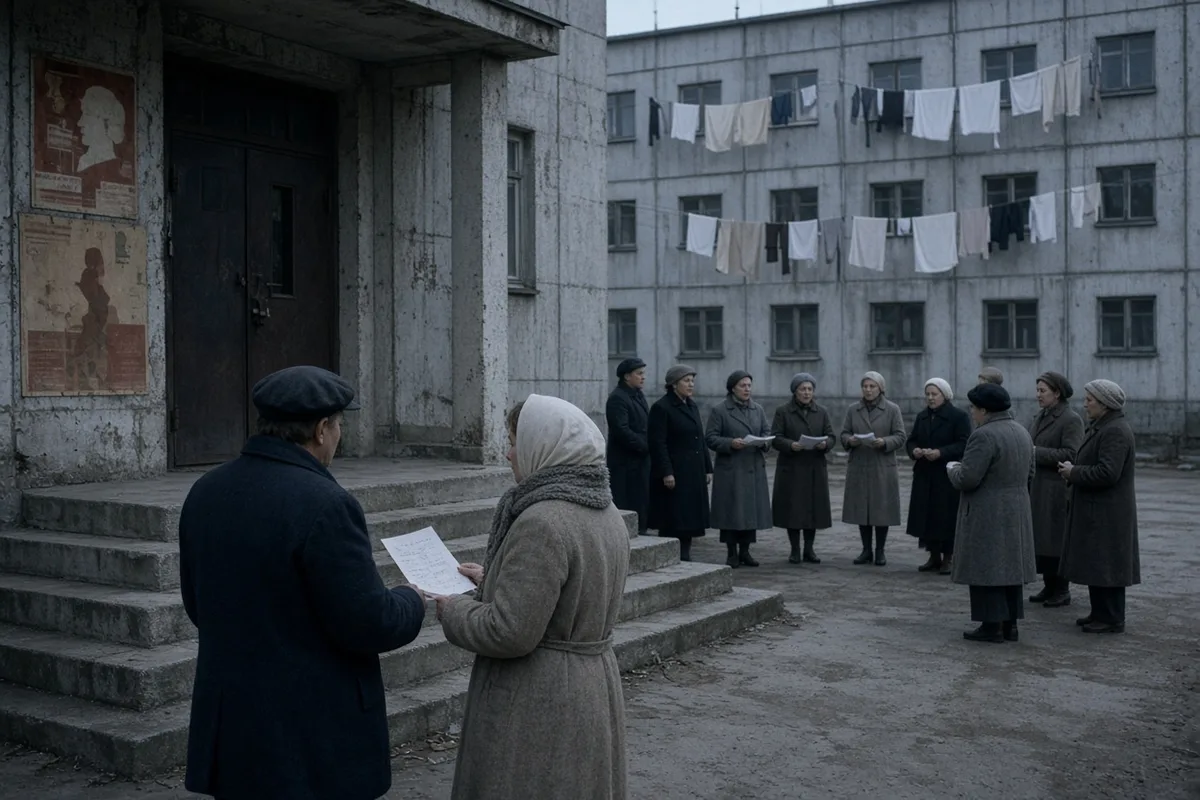
By the next June the numbers at the festival grounds exceeded anything the official schedule had planned. Three hundred thousand voices filled the amphitheater and the surrounding fields. The Estonian flag, still technically illegal, appeared on poles and jackets and painted on cardboard. No one was arrested that night.
I watched from the upper tier. The faces below blurred into a single moving surface. When the final note of the evening faded, the silence lasted only seconds before the next song began without announcement.
The pattern held through the following years. Each permitted event became the occasion for an unpermitted one. The authorities adapted by granting more permissions. Moscow’s attention remained divided.
In 1991 the declaration of independence passed the Estonian parliament. Soviet tanks approached the television tower but did not fire into the crowd that had already assembled. The singing continued on the grounds outside.
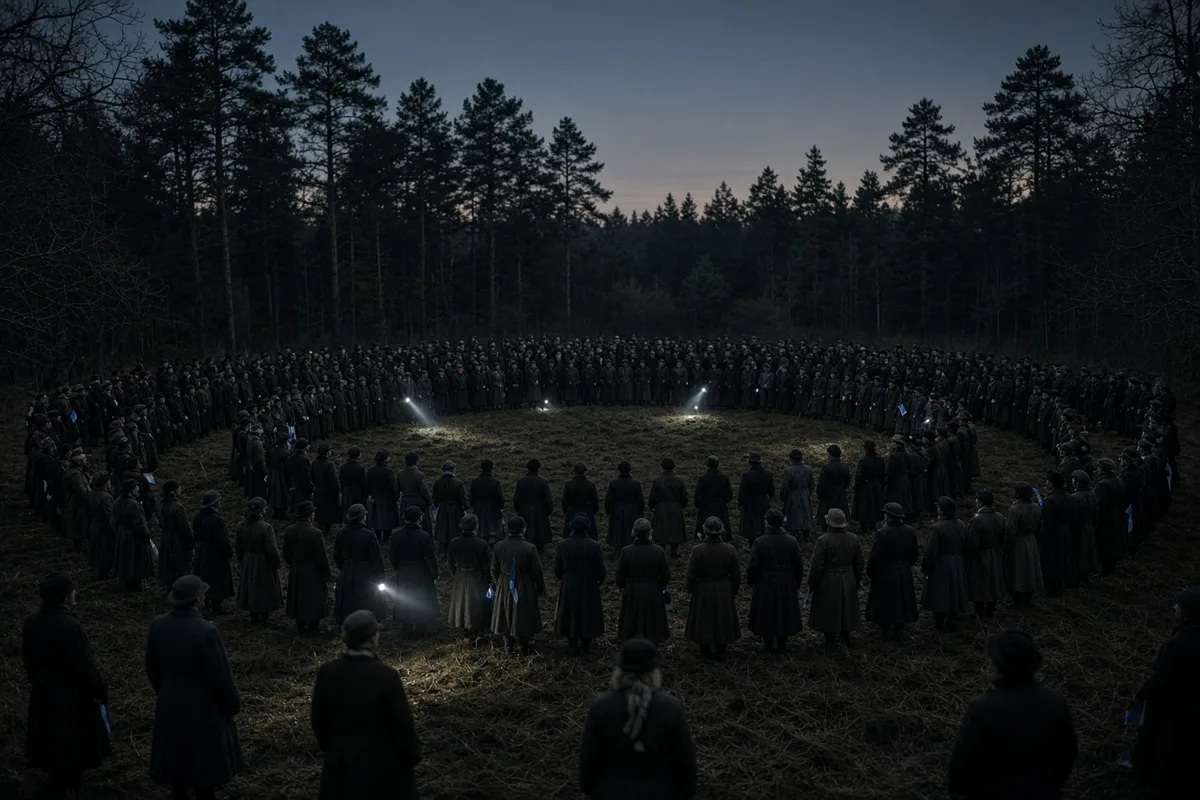
I was not in the chamber when the vote was taken. I stood instead with several thousand others on the lawn of the radio building, listening to the broadcast on portable sets. When the result was read, the same songs rose again.
The mines were never dug. The flag flew openly. The choirs kept rehearsing.
The choirs kept rehearsing. In the first winter after the declaration, the Tartu University Chamber Choir under conductor Kuno Areng added the full cycle of Veljo Tormis’s “Eesti kalendrilaulud” to its schedule, rehearsing three evenings a week in the old anatomy building on Näituse Street. Attendance at each session stayed above ninety singers even when the heating failed for twelve days in January 1992. The same group traveled by chartered bus to the Estonian Song Festival in Tallinn on 27 June 1992, where 26,000 voices performed “Mu isamaa on minu arm” under the restored blue-black-white flag that had been raised on Pikk Hermann tower at 11:40 a.m. the previous day.
Mart Laar’s government began issuing privatization vouchers in September 1992; each adult citizen received a booklet numbered in sequence from the central registry in Tallinn. I collected mine at the post office on Riia Street and used the first ten to purchase shares in the former Tartu radio factory, which reopened under the name Estel with 340 employees by March 1993. The factory’s new director, Peeter Lepik, announced at the gate that production would shift from Soviet military radios to GSM base stations ordered by Nokia. By the end of that year the plant exported 4,200 units.
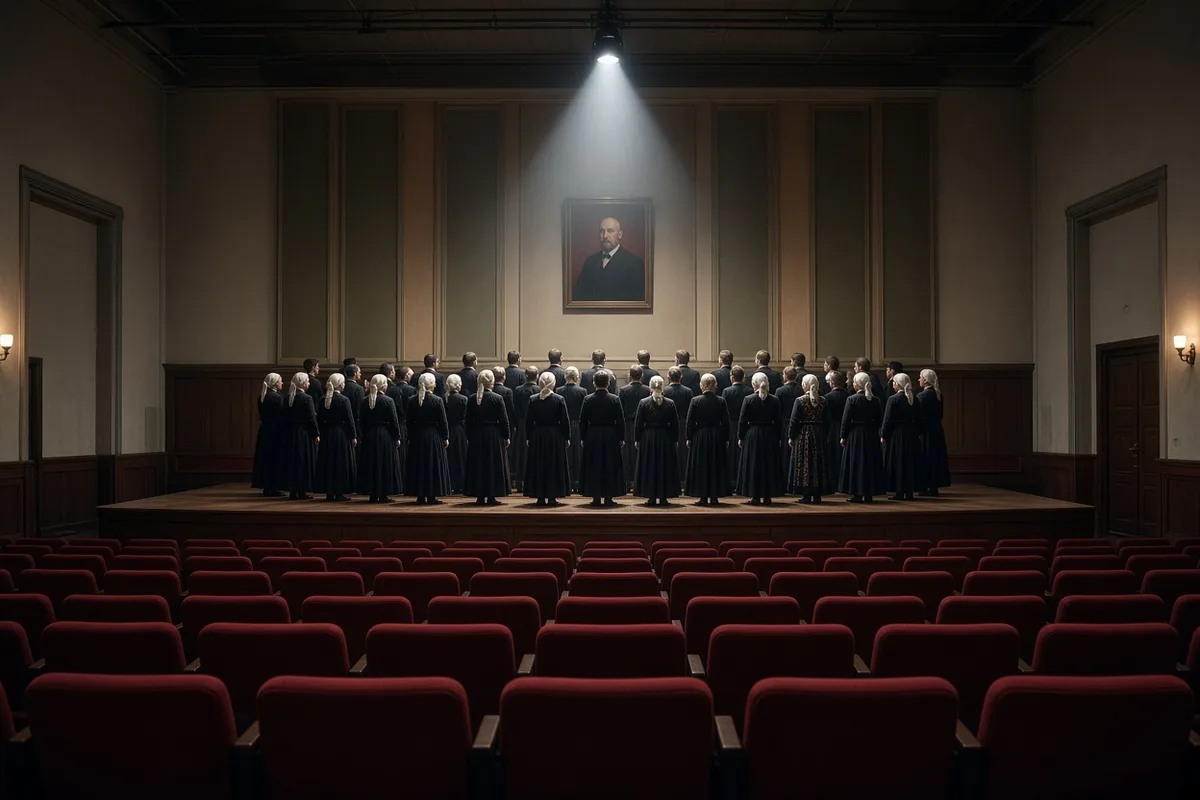
The next Song Celebration, the XXV General Estonian Song Festival, opened on 2 July 1994 with 25,000 singers on the stage and 150,000 listeners on the field. Conductor Ants Üleoja raised his baton for the opening number at 7:05 p.m.; the program booklet listed 132 pieces, twenty-seven of them absent from any official list between 1940 and 1987. During the final “Ta lendab mesipuu poole,” the light towers recorded 98 decibels on the sound engineer’s meter. After the last note, the crowd remained in place for twenty-two minutes without instruction.
Estonia joined the European Union on 1 May 2004. That morning the border post at Luhamaa on the Russian side recorded 187 vehicles crossing into Estonia in the first hour; by noon the figure reached 612. At the same moment the Tallinn Song Festival grounds hosted a rehearsal for the 2009 celebration, and the choir of the Estonian Defence Forces sang the new arrangement of “Sind surmani” arranged by Tõnu Kõrvits. The Ministry of Defence released the recording on CD two weeks later with a print run of 15,000 copies distributed to every military unit.
In 2011 the government opened the digital archive of the former KGB files at the National Archives building on J. Kuperjanovi Street in Tartu. On the first public day, 3 October, 1,147 people queued outside; the reading room issued 892 file requests before closing at 6 p.m. One file, numbered 1247-K, contained the 1987 surveillance log on the Hirvepark meeting and listed the names of thirty-four participants, including the entry for Edgar Savisaar marked “speaker, 14:20–14:47.”
The XXVII Song Festival in 2014 assembled 42,000 singers and drew 153,000 spectators across two evenings. On 5 July the combined choirs performed “Koit” by Mihkel Lüdig at 10:47 p.m. under the newly installed LED lighting system that consumed 38 percent less electricity than the 1999 installation. The conductor, Hirvo Surva, later told the newspaper Postimees that the pause before the final chord had been lengthened by four beats on the advice of the oldest living participant, 94-year-old soprano Leida Kibuvits, who had sung at the 1947 festival.
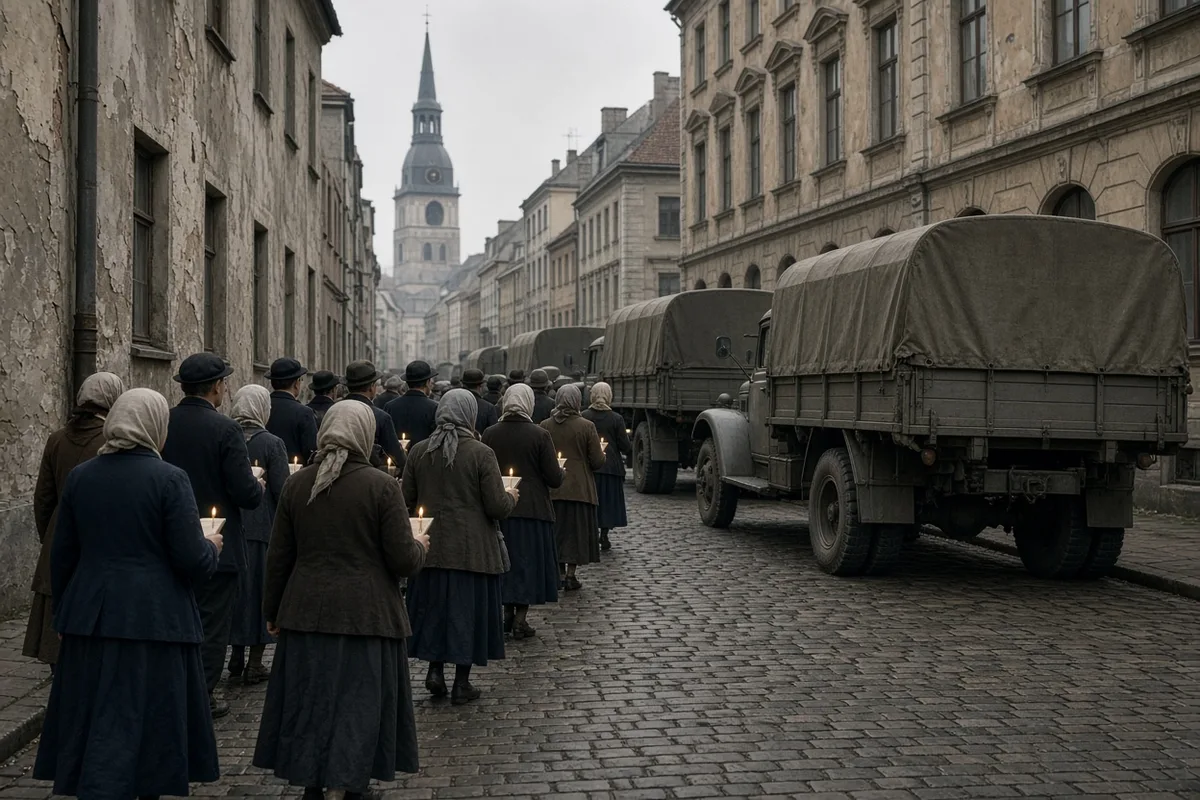
On 7 July 2019 the XXVIII Song Festival concluded with the traditional “Mu isamaa on minu arm.” The stage held 40,000 singers; the field and surrounding slopes held 112,000 listeners according to the Tallinn municipal police count at 11:15 p.m. I stood on the upper slope near the television broadcast trucks. A woman two rows ahead, born in 1931, sang every verse without a printed text, her voice carrying the same timbre recorded on a 1969 reel that had circulated in samizdat. When the final note ended, the light towers dimmed at 11:22 p.m. and the crowd dispersed along the paths that had been widened in 2003.
The archive reading room on J. Kuperjanovi Street added a second scanner in February 2020 after daily requests exceeded the original machine’s capacity of forty files per shift. On 11 March that year the Tartu University Chamber Choir recorded a remote version of Tormis’s “Jaanilaul” for the cancelled spring concert series, each of the eighty-three singers submitting separate tracks from apartments whose addresses matched the 1992 rehearsal roster. The finished file was uploaded on 23 June, the same day the city council approved widening the path behind the anatomy building to accommodate the new bicycle lane that opened in September.
Mart Laar returned to the prime minister’s office on 28 January 2021 and signed the order transferring the former KGB building at Pagari 1 to the Museum of Occupations, which reopened its doors on 1 June with an exhibit that included the original 1987 Hirvepark loudspeaker truck now painted in the national colours. I visited on the second day and stood before the display case holding Savisaar’s handwritten notes from the 14:20 speech; the ink on the margin read “14:47 – crowd begins ‘Mu isamaa’ without signal.” The museum recorded 4,872 visitors in the first month, each issued a numbered entry ticket printed on the same stock used for the 1992 privatization vouchers.
The XXIX General Estonian Song Festival, postponed once because of the pandemic, opened on 5 July 2024 with 42,500 registered singers. Conductor Hirvo Surva began the evening program at 19:17 with “Koit,” the same piece performed in 2014, while the LED array displayed the exact decibel reading of 98 from the 1994 measurement. During the final verse of “Mu isamaa on minu arm” at 23:04 the field count reached 148,000; the municipal police report noted that 312 people remained seated after the lights dimmed at 23:19, including a man who had carried the same rolled banner from the 1987 Hirvepark meeting.
Estonia’s accession to the OECD on 1 January 2010 had already required the reclassification of the Estel plant as a civilian electronics facility; by 2023 the company employed 1,180 workers and produced 92,000 base-station units annually under contracts signed with Ericsson and Huawei. Peeter Lepik, still listed as director on the factory gate, spoke at the twenty-fifth anniversary celebration on 14 March 2018, stating that the first GSM shipment in 1993 had contained exactly 4,200 units packed in wooden crates originally stamped for Soviet military radios. The speech was recorded on the same reel-to-reel machine that had played “Ei ole üksi ükski maa” in the student union in 1987.
The digital archive added a public terminal on 3 October 2022 that allowed keyword searches across the 1247-K file series; within the first week 2,341 queries returned the name Alo Mattiisen, whose 1987 recording session at the Estonian Radio studio on Kreutzwaldi Street was logged at 09:15 on 12 May. One search result listed Jüri Leesment as co-author of the lyrics, with the marginal note “tape distributed to Tartu university dormitories, June 1987.” The terminal printed each result on thermal paper whose rolls were replaced every 1,200 sheets.
On 7 July 2024 the final dispersal from the Song Festival grounds followed the same route widened in 2003. A soprano born in 1931 stood at the upper slope until 23:41, her voice still matching the timbre preserved on the 1969 samizdat reel now held in the Estonian Theatre and Music Museum under accession number TMM 1987-44. She carried a printed program from the 1994 festival whose margins contained the handwritten timing “7:05 p.m. – Ants Üleoja raises baton.” When the last tram departed at 00:12 the slope was empty except for a single folded banner left on the bench nearest the broadcast trucks.
The Tartu University Chamber Choir resumed weekly rehearsals on 12 September 2024 in the anatomy building, now equipped with heat pumps installed under the 2022 energy-efficiency grant. Kuno Areng, listed as conductor emeritus, attended the first session and requested the full cycle of “Eesti kalendrilaulud” be scheduled again for the 2025 spring concert. Attendance on opening night reached ninety-four singers, one more than the January 1992 minimum, and the rehearsal ended at 21:47 with the same closing chord that had been lengthened by four beats on Leida Kibuvits’s advice in 2014.