



The study methods that feel worst usually work best

In 60 seconds
- Rereading and highlighting build familiarity that feels like mastery but fades fast; real tasks demand retrieval, not recognition.
- Forcing recall without looking strengthens the memory itself, so low-stakes self-testing beats passive review even when answers are wrong.
- Spacing sessions so you partially forget between them builds memories that last years; identical total time spent cramming does not.
- Mixing related skills or problem types feels clumsier in practice yet produces far stronger later performance than blocked drills.
- Generating answers or explanations before seeing the correct ones forces connections passive reading skips.
- Full confidence after studying is often a warning sign; sessions that raise real competence often leave you less certain.
The big idea
Brown, Roediger, and McDaniel argue that comfortable habits—rereading, highlighting, cramming—create a false fluency that disappears within days. Durable learning comes from desirable difficulties such as self-testing, spaced practice, interleaved skills, and generating answers, which feel harder now but build knowledge that lasts and transfers.
The book in brief
Most people study the way they were taught: read, underline, reread, cram. Each pass feels easier, and easier feels like knowing. The authors open by calling that feeling an illusion. Familiarity with a text is not the same as retrieving its content without the page in front of you, and retrieval is what real tests and real work demand. They borrow Robert Bjork’s idea of desirable difficulties: methods that slow you down and make you struggle a little now so knowledge survives delay and transfers later. A 2006 study they highlight had students either reread short passages or read once and practice recalling; right after studying the rereaders felt more confident and did slightly better, but a week later the recall group remembered close to fifty percent more.
The middle of the book builds the toolkit. Retrieval practice is the load-bearing idea: every forced recall, even a failed one, reorganizes and strengthens the memory trace rather than merely checking it. Brief ungraded quizzes woven through learning beat end-of-unit review. Spacing those attempts so some forgetting sets in forces reconstruction instead of shallow reactivation; cramming feels smooth precisely because it never demands that work. Interleaving mixes related problem types or skills inside one session so you must diagnose which method applies, rather than pattern-match to the last item. Generation and elaboration push you to produce an answer or explanation before you are shown it, wiring new material into what you already know.
They then draw a line that keeps the argument from becoming “harder is always better.” Desirable difficulty comes from retrieval and reconstruction; disorganized instruction, missing prerequisites, or bad design just produce frustration with no payoff. Parallel to that, they name the confidence trap. Massed rereading makes material feel fluent, so learners rate future performance high; self-quizzed learners feel less sure yet score better. Instructors who trust fluent talk or self-reports can be misled the same way. Low-stakes objective checks serve as calibration tools, not punishment.
Later chapters clear two popular beliefs. Matching teaching to visual, auditory, or kinesthetic “styles” has essentially no solid supporting evidence in the 2008 review they cite; match the format to the content for every learner instead. Some people extract underlying structure more readily than others, but the authors treat that as a developable skill, not a fixed trait. On ability, they draw on mindset research to argue that believing talent is fixed makes people quit when practice gets hard, while treating ability as built through effort keeps them in the struggle that improves performance—without claiming effort erases every limit.
The close is implementation. None of these techniques happen naturally, and all compete with habits that feel better in the moment. Replace rereading with blank-page recall or flashcards; build expanding review gaps; mix problem types in one sitting; judge a plan by delayed, realistic performance rather than how smooth practice felt. The same logic extends to professional training: varied cases for diagnostic judgment, simulated difficulty for high-stakes skills. Institutional pressure to keep learners comfortable works against retention; discomfort during practice is a signal to check, not automatically abandon.
Context
Journalist Peter C. Brown wrote with cognitive scientists Henry L. Roediger III and Mark A. McDaniel. The 2014 book mattered because it translated decades of memory research into a direct challenge to how students, teachers, and trainers actually study and teach.
The key ideas
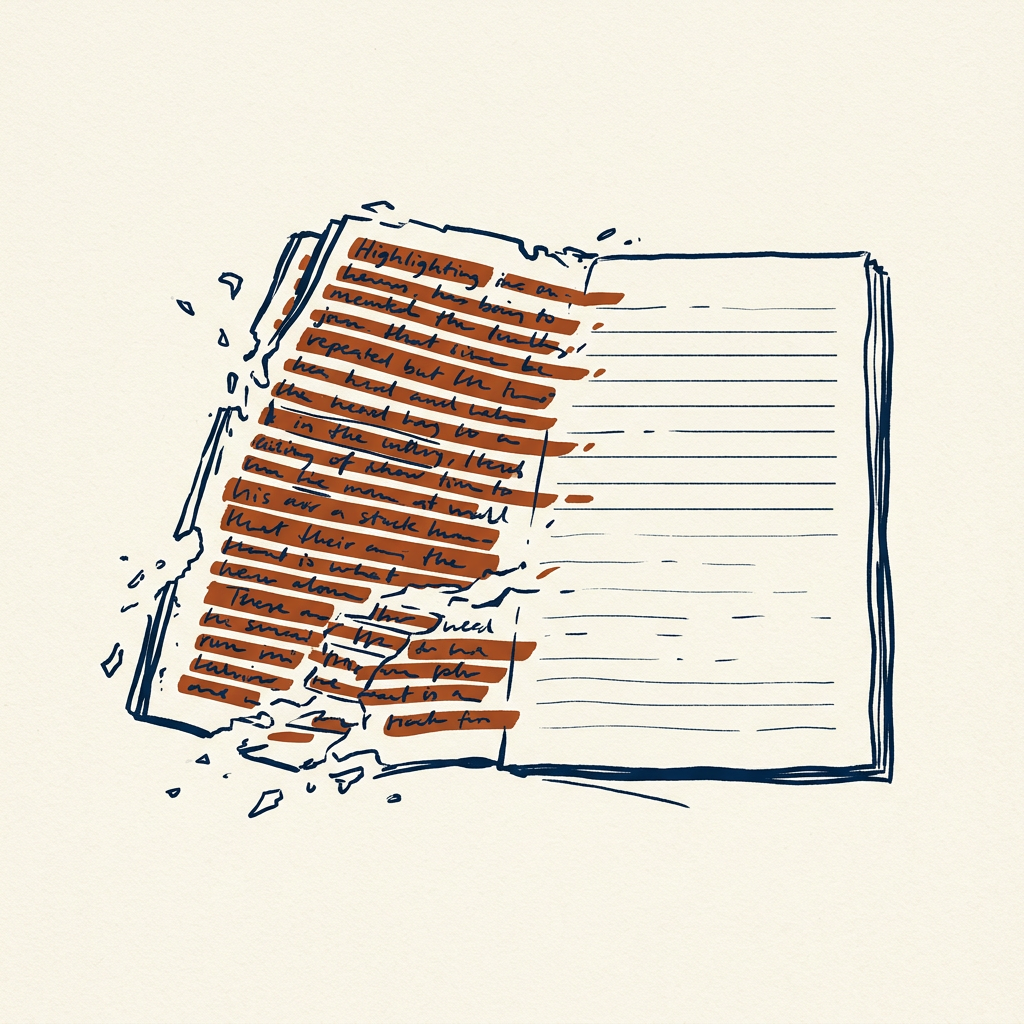
1
Familiarity is not mastery
Rereading and highlighting feel efficient because each pass gets easier, yet that fluency rarely survives a real test days later.
Rereading feels like
Growing ease and confidence that fade within days
Retrieval builds
Harder practice that leaves knowledge usable a week later
The authors hold that the default study loop—read the chapter, underline the important parts, read it again—trains recognition, not retrieval. Recognition is what you do when the answer sits on the page in front of you. Retrieval is what you do when the page is gone and a question, a patient, or a problem demands the content in a new form.
Easier processing on each reread is a false signal. The material becomes perceptually fluent, so you feel you own it. That feeling collapses when the support disappears. The organizing frame is Bjork’s desirable difficulties: slow down and struggle a little now in exchange for knowledge that lasts and transfers.
This reversal runs through the whole book. Methods that feel best while you do them often leave the least behind. Methods that feel effortful and uncertain often build what you can actually use later under pressure.
In practice: In the 2006 Roediger and Karpicke study, students who practiced recalling passages remembered close to fifty percent more a week later than students who reread, even though the rereaders felt more confident right after studying.
2
Testing rewrites memory
Every time you force a recall without looking, you change and strengthen the memory itself, which is why low-stakes self-testing beats passive review.
The authors treat the testing effect as the book’s central mechanism. Retrieval is not a neutral dipstick for what you already know. It is a learning event that reorganizes the memory trace and makes the next retrieval easier.
Failed attempts still help. They show exactly what you do not yet own—something rereading cannot do, because rereading hands you the answer before you search. Flashcards, practice questions, and self-generated quizzes therefore belong throughout learning, not only as a final check after the unit feels “done.”
Early, even unsuccessful, retrieval sets up stronger learning on the next pass. Waiting until material feels comfortable before you test yourself wastes the diagnostic and strengthening work retrieval does.
In practice: At Columbia Middle School, brief ungraded “brain drills” on older material, with immediate feedback, were tied to higher unit-test and standardized scores than conventional review in matched classes—though the case involved one school and a collaborating teacher, so it is illustrative rather than a large trial.
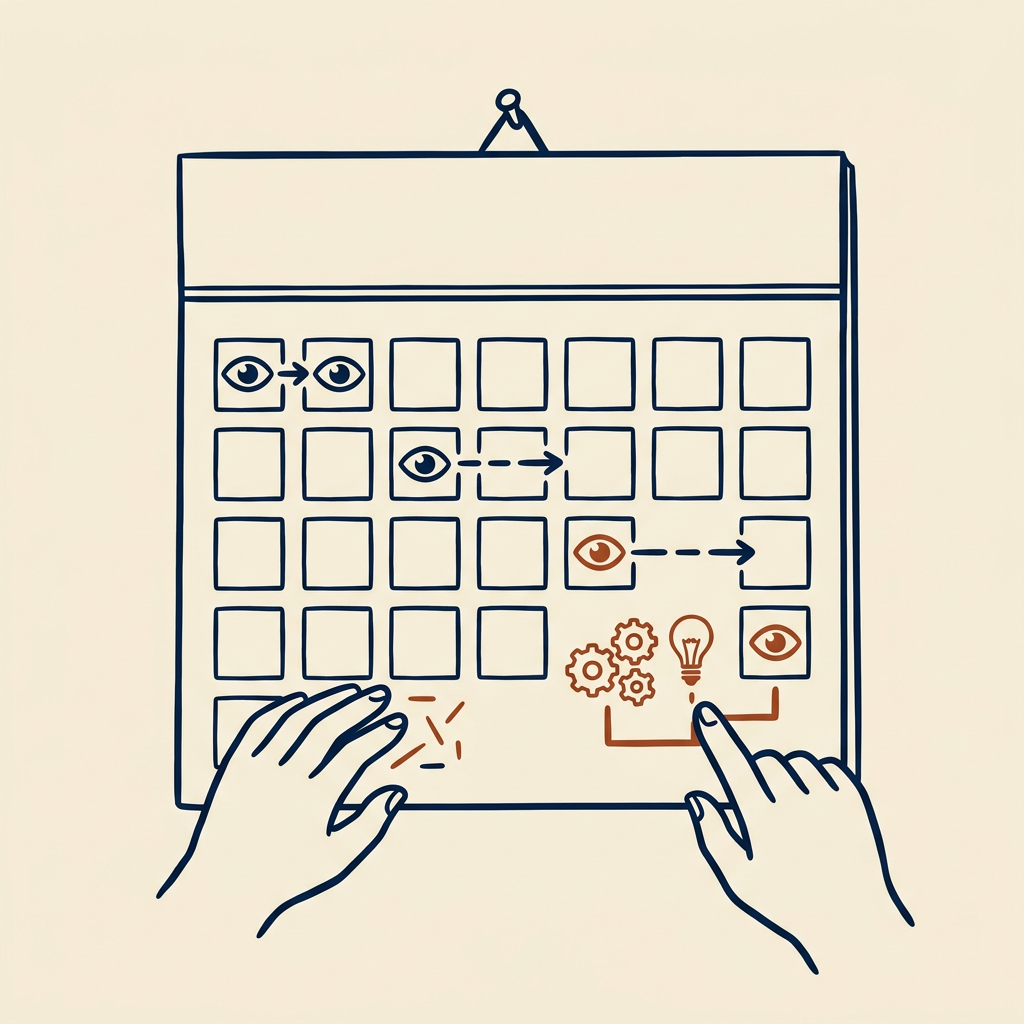
3
Leave room to forget
Letting yourself partially forget between sessions forces reconstruction that builds memories lasting years instead of days.
- Day 0First learning session
- A few days laterReview after some forgetting
- About a weekAnother retrieval pass
- About a monthLonger-gap relearning
- Years laterFar more retained than after cramming
Once retrieval is the engine, timing matters. The authors draw on the spacing effect: the same total study time spread across days or weeks beats one massed block. Cramming feels smooth because the material is still warm; that smoothness is the fluency trap from the opening chapter.
Partial forgetting between sessions is not a bug. It is the feature. Re-encountering half-faded material feels effortful and uncertain, sometimes discouraging. That effort is the brain reconstructing the trace rather than merely reactivating it, and reconstruction is what makes the trace sturdier.
A study plan should therefore space reviews far enough that some forgetting has set in, not close enough that every pass still feels easy. A plan built only around the night before a deadline is, on this logic, close to the least efficient way to keep anything past the test.
In practice: Harry Bahrick’s work tracking Spanish vocabulary over periods as long as fifty years found substantially better long-term retention when reviews used gradually increasing intervals rather than a compressed burst.
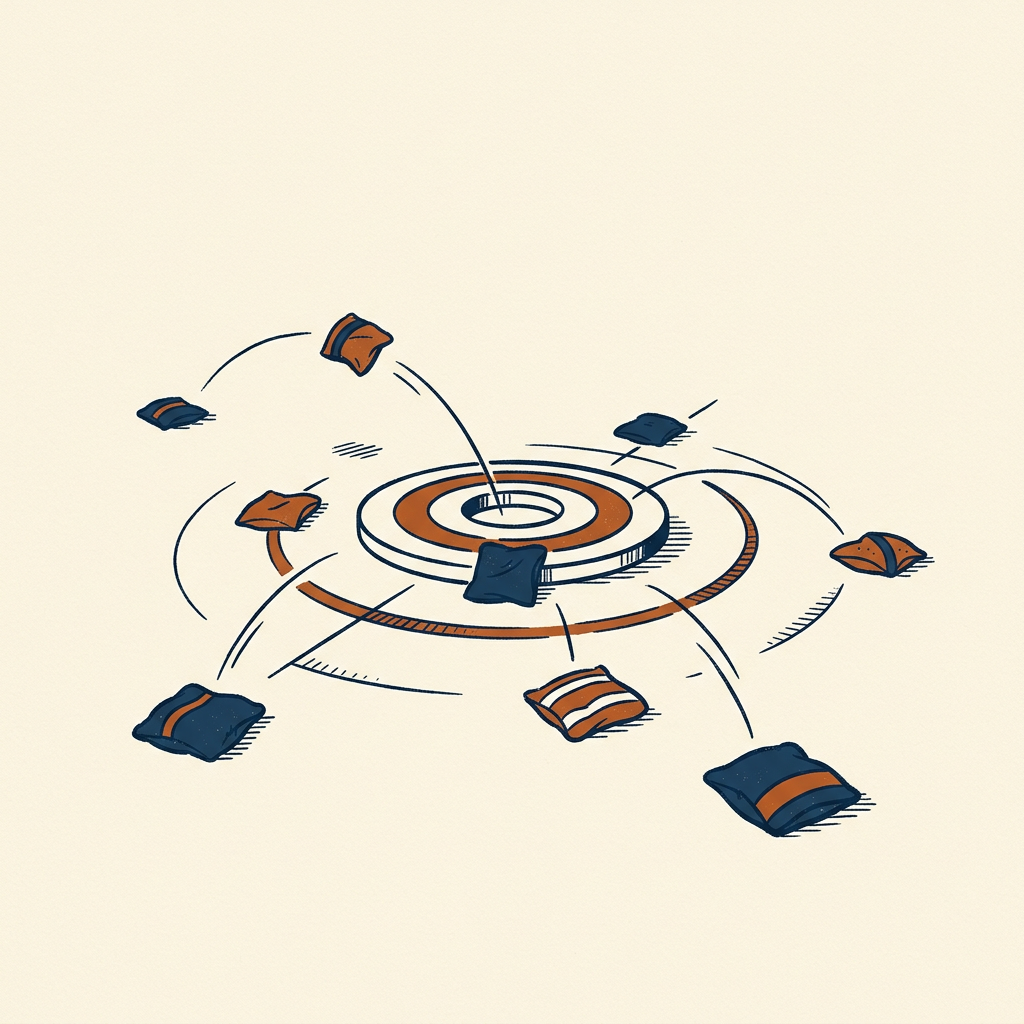
4
Mix related skills
Practicing several related skills in mixed order builds the ability to tell them apart and pick the right one later, even though blocked drills feel cleaner in the moment.
Blocked practice
Feels polished; succeeds by matching the last problem; weaker later
Interleaved practice
Feels clumsy; forces diagnosis each time; stronger delayed transfer
Spacing answers when; interleaving answers in what order. The common instinct is to master one type in a block of twenty before moving on. The authors argue that often runs backward.
Blocked practice lets you succeed by copying the pattern of the problem you just finished. Interleaving forces a fresh diagnosis every time: which method belongs to this item? That diagnosis is the skill real tests and real work actually score.
The short-run cost is real. Mixed practice feels clumsier and produces worse scores during the session. The later payoff is discriminating judgment that transfers, including to items you never drilled in exactly that form.
In practice: In Rohrer and Taylor’s 2007 study, college students who practiced volumes of geometric solids in mixed sets did worse during practice than blocked groups but scored roughly twice as well on a test several days later; a 1978 beanbag study with eight-year-olds found varied-distance practice beat fixed-distance practice even on the exact distance never drilled in the varied group.
5
Produce the answer first
Material sticks better when you generate an answer or explanation yourself before being told it, because production forces connections passive reception skips.
Beyond retrieval, spacing, and interleaving, the authors describe techniques that make the learner do cognitive work passive study never demands. Elaboration means restating ideas in your own words, linking them to what you already know, or asking why a fact would be true. Generation means attempting a solution or even a guess before the correct version appears.
Both work through active construction. Knowledge you build around your existing understanding is easier to find later than knowledge you only received. A failed attempt is still useful: it primes you to notice exactly what the eventual solution does differently from your approach.
Mnemonic structures such as the method of loci fit the same pattern. They are not magic tricks; they force elaborate, structured encoding of what would otherwise arrive as a flat list. The shared structure with earlier chapters is simple: replace easy exposure with effortful engagement.
In practice: Learners asked to solve a problem first, even unsuccessfully, tend to understand and remember the worked solution better than learners shown the solution from the start.
6
Only some difficulty helps
Difficulty improves learning only when it comes from retrieval or reconstruction; difficulty from confusion, missing basics, or poor design does not.
Desirable difficulty
Retrieval after delay, reconstruction, mixed diagnosis
Useless difficulty
Missing prerequisites, unclear instructions, material far beyond readiness
After pushing testing, spacing, interleaving, and generation, the authors pause so the argument does not collapse into “make everything harder.” Bjork’s desirable difficulty is specific: the hard part arises from the structure of practice—retrieving after a delay, reconstructing a faded trace—and that hard part measurably improves later performance even while it worsens performance in the moment.
Other hard parts are worthless or harmful. Disorganized instruction, absent prerequisites, or badly designed problems produce frustration without a compensating memory benefit. Those should be fixed, not celebrated.
The practical filter is simple. Ask whether the difficulty makes your brain retrieve or rebuild, or whether it comes from ambiguity and unreadiness. Keep the first. Remove the second. One correct recall is also not proof of durability; it is closer to the fluency illusion than to mastery.
In practice: In Karpicke and Roediger experiments on vocabulary pairs, students preferred dropping a card after one correct recall, yet those who kept all cards in rotation—including ones already gotten right—outscored the droppers on a test a week later.
7
Confidence misreads learning
Your sense of how well you know something is a poor guide to later performance, and the methods that feel best often mislead you most.
This chapter names what earlier ones implied. People are bad judges of their own learning. The techniques most prefer are the ones that wreck calibration between confidence and performance.
Massed rereading makes processing feel easy; people mistake that ease for comprehension and retention. Retrieval practice does the opposite: it exposes gaps at once, which feels uncomfortable and often lowers confidence while raising actual performance.
The classroom cost is real. Instructors who rely on self-reported understanding or on the most fluent voices in discussion can mistake smooth talk for solid knowledge. The antidote is objective low-stakes checks—quizzes, practice problems, explain-it-now prompts—used as calibration instruments. If a session leaves you entirely confident and unchallenged, treat that as a warning, not a reassurance.
In practice: In experiments the authors describe, students who reread rated their expected test performance higher than students who quizzed themselves on the same material, yet the self-quizzed group performed better on the actual test.
8
Learning styles lack evidence
Matching instruction to a supposed visual or auditory style has no solid evidence behind it; the same effective techniques work across nearly all learners.
The authors treat popular learning-style matching as a myth the evidence does not support. A comprehensive 2008 review by Pashler, McDaniel, Rohrer, and Bjork looked for studies showing that matching method to a learner’s identified style beat a mismatch. It found essentially none that met basic scientific standards, despite wide adoption in schools and training.
What matters is matching mode to content, for everyone: diagrams for spatial material, verbal explanation for verbal material. Preference is not the same as what the material requires.
They also note that some learners extract underlying structure more readily—“structure builders”—while others stick on surface details. They present that difference as a skill you can develop through generating summaries, explaining to someone else, and quizzing on principles rather than isolated facts, not as a fixed trait some people simply lack. The answer to “what works for me” is not a personal style label; it is the same small set of general techniques applied consistently.
In practice: The 2008 Pashler review in Psychological Science in the Public Interest found essentially no rigorous evidence that style-matching improved outcomes compared with mismatch.
9
Frame struggle as building
Believing ability is fixed talent discourages the effortful practice that grows skill; treating ability as built through effort changes how people answer difficulty—though later replications found smaller effects than early studies.
Fixed view
Hard practice means “I lack talent”; retreat to easy methods
Built-through-effort view
Hard practice is information; stay with retrieval and spacing
The final conceptual turn moves from technique to belief, drawing on Carol Dweck’s mindset work. When struggle is read as proof you lack the gift, people quit or retreat to comfortable, weak habits such as rereading. When struggle is read as the normal cost of building skill, they stay with retrieval, spacing, and the other difficulties the book recommends.
The authors’ claim is behavioral and bounded. They do not say ability is infinitely malleable or that effort alone guarantees expertise. They say a fixed-ability belief changes what people attempt and how long they persist, which limits what they become capable of, whatever ceiling innate factors might set.
Feedback and self-talk should therefore emphasize process and strategy after a result, not a verdict on inherent smartness. A failed quiz becomes data about what to practice next, not a final ranking of capacity. Treat this pillar with some caution: large later replication efforts on mindset interventions have found smaller effects than the earlier studies the book leans on.
In practice: In the 1998 Mueller and Dweck work with fifth graders, children praised for being smart after success later avoided harder challenges and gave up faster after failure than children praised for effort or strategy.
10
Install the harder routine
Retrieval, spacing, and interleaving only work when built into habit, because none happen naturally and all lose to methods that feel better right now.
- 1Replace rereadingBlank-page recall, flashcards, or practice questions first
- 2Schedule gapsRevisit after days, then a week, then longer
- 3Mix typesInterleave related skills or problems in one sitting
- 4Judge delayed performanceScore the plan by a later realistic test, not by how smooth practice felt
Knowing the science does not automatically change behavior. The closing chapter therefore turns to concrete swaps. Close the book and write or say everything you remember before checking. Put material back on a calendar after a few days, then a week, then longer; half-forgetting when you return is the mechanism, not a failure of the plan. Mix problem types inside one session even though early performance looks worse.
The same principles show up in professional training the authors discuss: medical residents build judgment on varied, unpredictable cases rather than blocks of similar ones; pilots and other high-stakes roles train under simulated difficulty rather than smooth error-free rehearsal, because real performance rarely arrives tidy and blocked.
Institutions often push the wrong way. Learners prefer comfortable methods; instructors are often judged on satisfaction rather than delayed retention. Evaluate any plan by how performance holds on a delayed, realistic test, and treat practice discomfort as a signal to verify the method—not an automatic reason to abandon it.
In practice: The authors’ practical list is direct: self-generated quizzing instead of rereading, expanding review gaps instead of the night-before cram, and mixed problem types inside a single session despite messier short-run scores.
Key terms
- desirable difficulties Practice that feels harder now—retrieval, spacing, mixing—because that effort builds knowledge that lasts and transfers
- testing effect The finding that retrieving information from memory strengthens and reorganizes it more than studying it again
- spacing effect Spreading the same study time across sessions separated by days or weeks beats one massed block
- interleaving Mixing related skills or problem types in one session so you must choose which method applies each time
- generation Attempting an answer or solution before you are shown the correct one
- elaboration Explaining material in your own words and linking it to what you already know
- illusion of fluency Mistaking the ease of rereading familiar material for real mastery that will survive a delay
- structure builder Someone who extracts the underlying organizing principle from new material rather than only surface details
- learning styles myth The unsupported claim that people learn best when teaching matches a preferred visual, auditory, or kinesthetic style
What to do
- Close the notes and write or say everything you remember before you look back.
- Schedule a revisit a few days out, then about a week, then about a month, and accept half-forgetting as the point.
- Mix related problem types or skills inside one session instead of finishing one block first.
- Keep flashcards in rotation after a correct recall instead of dropping them on first success.
- Treat a session that felt fully smooth and confident as a cue to add retrieval, not as proof you are done.
- Judge this week’s study plan by a short delayed quiz that looks like the real use conditions.
Questions to think with
- Which of your current study or training habits feel best in the moment, and what would a delayed test show about them?
- Where could you replace one reread pass this week with blank-page recall or a short self-quiz?
- Are the difficulties in your practice coming from retrieval work or from missing background and unclear design?
- How would your response to a failed quiz change if you treated it as data about the next practice rather than a verdict on ability?
- If learner satisfaction and long-term retention pulled apart in your classroom or workplace, which one are you currently optimizing?
The other side
The strongest fair criticism is that the book rests heavily on tight lab studies of verbal and simple procedural material, then stretches toward complex professional judgment and creative work where evidence is thinner; the Columbia Middle School example is a useful case, not a large randomized trial; two authors are major producers of the cited lab findings; elaborative methods have more mixed support in the 2013 Dunlosky review than the book’s tone sometimes suggests; growth-mindset effects look smaller in later large replications than in the earlier studies used here; and the book says little about high anxiety, weak foundations, or scarce time, where added difficulty can tip into discouragement.
Who it's for
Students who study for hours the night before and forget within a week, teachers and corporate trainers who want lessons built on evidence rather than habit, and anyone learning a skill later in life who has been told talent or age already fixed their ceiling.